
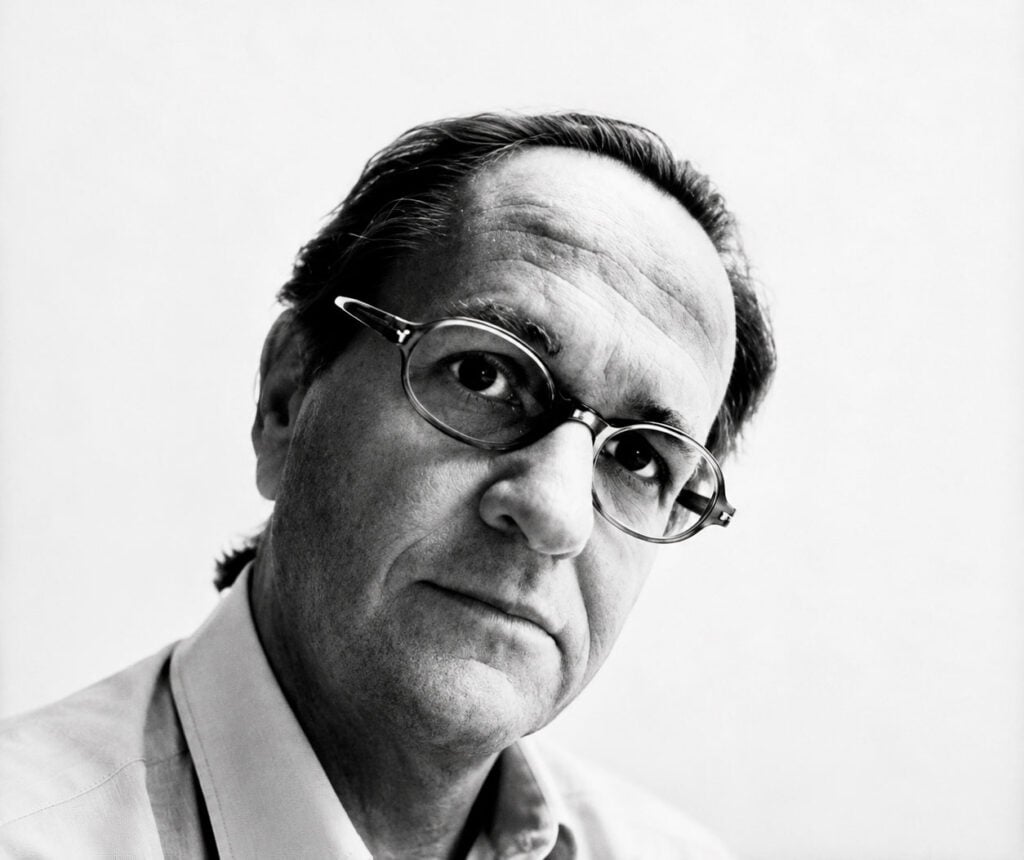
“The lack of empathy and solidarity with the 11 million citizens of the Federal Republic of Yugoslavia whose society is being destroyed is as amazing as it is deplorable. Remember when people of culture, science, politics, media and humanism flocked to Sarajevo when it was under siege? Where are they now? Journalists flock to Macedonia and Albania – admittedly for very good reasons – and they flock to NATO’s well-staged press briefings. But seeing for oneself what it means to be the object of the worst military, economic and social destruction in Europe since 1945 seems, remarkably, not to be as good a reason,” says TFF director Jan Oberg.

Where are those who believe Yugoslavia is a dictatorship? Supporting fellow human beings suffering under dictatorship is a noble reason to go but those around the world who hold this view stay away. Where are the human rights activists when numerous human rights are being violated by NATO? Where is the sympathy with innocent citizens who endure the systematic destruction of a European society and capital in the name of Western civilization?

So much for humanism, intellectualism and civil courage at the end of the 20th century. In spite of the war, it is perfectly possible to go there and freely meet anyone you like. I did that,” says Dr. Oberg. “It is mind-boggling that even intellectuals seem to be able to hold only two categories in their head at a time: if you are anti-NATO’s bombings, you must automatically be pro-Milosevic or pro-Serb. Or, if you go there, you support the regime and are disloyal to the West. I am afraid that those who hide behind such banal dichotomies are responsible for a gross civilisational injustice done to every and all citizens in today’s Yugoslavia.

I believe it is possible to be against all the violence – Yugoslav/Serbia’s, that of the Albanians and NATO’s. None of them will help solve the original problem of mistrust between Serbs and Albanians. All of them have made the situation worse. And I believe it should be possible to recognise and respect the human suffering of all sides – that of the Albanians, the Serbs and that of every other group in all of Serbia and Montenegro.

Yugoslavia has 25 national/ethnic categories, a majority of Serbs and Yugoslavs and 650,000 Serb refugees from Croatia, Bosnia, Macedonia and the Kosovo province. Evidently, in international politics and media their lives and human rights do not count – as refugees in, say, Africa don’t count – as much as those of other peoples’. Painful to say, this tendential racism – the view that Third World people, Serbs and Yugoslavs are ‘Untermenschen’ – is a fact of today’s Western civilization. UNHCR spends about 11 cents a day per refugee in Africa. In the Balkans, the figure is $1.23, more than 11 times greater, as Los Angeles Times recently reported [see: http://www.transnational.org/features/contrasts.html].

The international so-called ‘community’ indicts President Milosevic and a handful of leaders. It’s doubtful that they will ever end up in The Hague. But those who are suffering under this leadership are being killed, punished, isolated and humiliated by NATO. Any taxi driver in Belgrade will tell you with sardonic humour: “We only have two problems: 12 years with Milosevic and now NATO’s bombs, otherwise everything is fine here!”

Yugoslavia’s opposition, independent intellectuals and peace movements will tell you exactly the same: “You, the West, are making everything so much more difficult for us now – and for a generation’s time ahead. What are your real interests? We are the ones who WANT to be part of the modern world, who STRUGGLE for a democratic Yugoslavia and DESIRE integration with the West. Don’t you understand how counterproductive these bombs are to us?”

Oberg continues, “I watch the heavy bombs and cruise missiles fall at night – ‘successfully’ according to NATO’s spokesmen a few hours later. I hear the roaring thunder of the explosions. I feel the shaking of the building and ground. I note sirens at any time of the day and the night, NATO permits no one to sleep for long. I feel the rage inside, the utter meaninglessness, my own powerlessness and humiliation in the face of mighty high-tech destruction and I think, ‘this is my culture, it is my political leaders who do or support this.’ I know now how true it is that one has to be there to sense it and I experience how much stops working when we are without electricity – water pumps, cookers, street lights, computers, phones. There is only one word for what I feel: I am ashamed of the culture that does this.”

“I walk around Belgrade and Novi Sad to see the surreal landscapes of destroyed buildings, bridges, ministries, police stations, hotels, radio and TV stations, apartment houses, schools and embassies. The oil refinery in Novi Sad is still burning, three weeks after the hit. What were once big trees are now black, charred stumps. I know it is different, but it reminds me of images of Hiroshima.

I experience how life becomes harder by the day. People don’t sleep at home if it is close to a potential target. They queue for cigarettes and other luxuries. They shop for hours for certain foodstuffs and medicine and care for the old, the sick and the handicapped in ways they didn’t have to before. So many ask me what the chances are to get their children out – thousands already have fled abroad. Men between 18 and 65 may be called up any day. Below-the-minimum-of-existence salaries and pensions are paid, months after they should have been. Life is ruined when big industries in small towns are destroyed. People plan what to do to get their parents, their children, their animals and themselves in safety, if… Life is now one big IF.

People generally put up a brave face, quite defiant, actually. They seem not aggressive but rather pitying countries with so much military and so little intellectual and moral power. Many find Western civilization barbaric and ridiculous, its leaders conceited. Should anybody think that this is a citizenry that will give up soon, a visit to Yugoslavia will help cure that delusion.

I listen to courageous, independent-minded people in academia and NGOs telling me that I must no longer expect constructive social activism, not even anti-NATO protests on the bridges at night. “We are at war, it’s dangerous, we may be seen as fifth column; hardline politicians have published lists of potential ‘traitors’.” They refer not only to the last sixty-some days but to the last 10–12 years when Yugoslavia has been demonized, under sanctions and otherwise isolated. “We can’t travel, we no longer know what the future will bring – land invasion, civil war, poverty? More than one million demonstrated for change in 1997 but we got no Western support. We are simply exhausted.”

BBC reports that, according to Serb sources – that we have been told we can’t trust – a hospital has been hit. It’s pretty easy to verify the truth when in Belgrade. I find less propaganda here than in the West and this place is at war, the West is not. It bombs Yugoslav media and forces Eutelsat to stop broadcasting Serbian television, so they cannot inform citizens in the West of the consequences of NATO’s aggression. The Dutch government refused to grant visas to anyone with a Yugoslav passport seeking to participate in the Hague Peace Conference earlier this month – while Kosovo-Albanian refugees correctly got theirs.”

Says Jan Oberg, “I have begun to wonder whether there is any decency, any sense of fairness, any true humanity left when all the above causes little protest throughout the West. Perhaps Western leaders had become too ecstatic with their own triumphalist power after 1989 and could use a wake-up call to reality: that there are limits to naked power, double standards, ignorance and pop ideology. NATO’s getting stuck here may be it. After all, the Yugoslavs have helped the West before.”

© TFF 1999

• You are welcome to re-print, copy, archive, quote from or re-post this item, but please retain the source.
• TFF’s website has all the relevant links to Iraq, the Balkans, including media there + peace research, and non-violence.
• Teacher, activist, journalist?? You’ll always find something interesting at TFF.
• Get your daily global news from the leading media on TFF’s site, all in one place.

Peace & future researcher + ‌Art Photographer

Related Posts

The agreement is catastrophic both because of what it says and what it doesn’t mention. It reduces further the major asset of security policies: Freedom of action. Jan Oberg TFF director September 25, 2026 A couple of hours before the agreement was signed on September 22, 2026, I published the following 13 hypotheses about what it would most likely contain on TFF Substack (in English). I was wrong on only the first point. Contrary to what Trump had written on his Truth Social platform, it does not appear to come into force immediately. In fact, it turned out to be worse than even I had anticipated. After these hypotheses now come a number of reflections in light of what the agreement actually contains, and does not contain, as well as the way in which it has generally been presented by major media outlets and by the public-service broadcaster DR. My...
Below are TFF-related media mentions, comments, videos and social media posts published elsewhere but not on this homepage. We happen to catch and list only a fraction. Regarding video comments and debates, we recommend that you go to the TFF Video Channel on Substack where many of them are reproduced. Jan Oberg is a contributor to China Daily – 52 million daily clicks – and Global Times, CGTN and CCTV (the national television), China Investment, Xinhua News Agency and several others. Articles and videos on these media very often multiply into countless Chinese (and Western media) that re-post them from these main media. Thanks to The China Academy, his analyses, interviews and comments are frequently posted on YouTube channels such as Thinkers Forum and Wave Media. These videos are often re-posted on Bilibili (China’s YouTube), the China Content Center on TikTok, and on the Chinese edition of TikTok, Douyin.com. This means reaching hundreds of millions of viewers worldwide over a year. While there are too many to catch on all these...
Jan Oberg May 15, 2026 Go to this Fox News page and scroll the whole way down: President Donald Trump tells the world that his meeting with President Xi Jinping yielded a lot of very concrete political and economic results – of course, only where the Chinese side, according to him, agreed with him. He does not mention the Taiwan issue, but Secretary of State, Marco Rubio, says that it did not feature prominently in their talks and that the US policy on Taiwan has not changed. Then go to China Daily – or Global Times – and you will see that for the Chinese it is framework, principles, structure of cooperation etc. that matters – all embedded in the overall idea of “constructive bilateral relationship of strategic stability.” Nowhere is any concrete agreement or deal – all that Trump refers to – mentioned. At the general level, this gives you insights into the very different social...

Recent Articles

Tony Robinson October 4, 2026 Violence is easy to recognise when someone is being beaten, shot or killed. It becomes more difficult when nobody is holding a weapon. Poverty, discrimination, exploitation and repression can restrict a human life just as effectively, although they do so in very different ways and with very different consequences. Simply adding more categories to an ever-growing list of forms of violence does not really solve the problem. The more interesting question is what all these different situations have in common and why it makes sense to describe them using the same word. Human beings do not simply react to what happens around them. They remember the past, imagine things that do not yet exist, make plans and undertake projects. Workers organise because they imagine different working conditions; people migrate because they imagine another life somewhere else; social movements emerge because people refuse to accept the...
It’s a matter of principles, courage, vision and pulling together – while the militarist world is falling apart… Peter Langille October 3, 2026 “Here, then, is the problem which we present to you, stark and dreadful and inescapable: Shall we put an end to the human race; or shall mankind renounce war?”The Bertrand Russell—Albert Einstein Manifesto, July 9, 1955 ⁕ The forecast for what’s ahead is worrisome. The sharp rise in armed conflicts over the past three years is adding to what was already the highest level in over seventy years. Genocides, which should be prevented are supported. A shared climate emergency that jeopardises survival is ignored. Diverse polls now suggest that people are war-weary, worried and interested in a more effective United Nations. And, there are viable policy options for a more secure world! Yet governments are doubling-down, betting on more war and investing heavily. If current trends persist,...
Johan Galtung 1930-2024October 2015 Published here on October 3, 2026 Let us focus on Civilization for conflict analysis and remedies. Major forms of disorder use violence; war is state organized violence. The most belligerent states are the United States of America and Israel, both with civilization roots. National Evangelism, the US Protestant Christian civilization– more national than evangelical–justifies US warfare as exceptionalism of a people chosen by God, with a manifest destiny to run the world. Orthodox Judaism justifies Israeli warfare to conquer and expand from Nile to Euphrates as a religious right and duty to the Eternal One. The third most belligerent country, the UK, no longer believes it is God-chosen but chosen by the USA; not quite the same but something. But the root cause of global disorder lies in the Occident–with Islam–seeing itself as the single, universal civilization valid for all at all times, all others being...

TFF on Substack

Discover and subscribe to more peace materials on TFF Substack

Most Popular

Tony Robinson October 4, 2026 Violence is easy to recognise when someone is being beaten, shot or killed. It becomes more difficult when nobody is holding a weapon. Poverty, discrimination, exploitation and repression can restrict a human life just as effectively, although they do so in very different ways and with very different consequences. Simply adding more categories to an ever-growing list of forms of violence does not really solve the problem. The more interesting question is what all these different situations have in common and why it makes sense to describe them using the same word. Human beings do not simply react to what happens around them. They remember the past, imagine things that do not yet exist, make plans and undertake projects. Workers organise because they imagine different working conditions; people migrate because they imagine another life somewhere else; social movements emerge because people refuse to accept the...
It’s a matter of principles, courage, vision and pulling together – while the militarist world is falling apart… Peter Langille October 3, 2026 “Here, then, is the problem which we present to you, stark and dreadful and inescapable: Shall we put an end to the human race; or shall mankind renounce war?”The Bertrand Russell—Albert Einstein Manifesto, July 9, 1955 ⁕ The forecast for what’s ahead is worrisome. The sharp rise in armed conflicts over the past three years is adding to what was already the highest level in over seventy years. Genocides, which should be prevented are supported. A shared climate emergency that jeopardises survival is ignored. Diverse polls now suggest that people are war-weary, worried and interested in a more effective United Nations. And, there are viable policy options for a more secure world! Yet governments are doubling-down, betting on more war and investing heavily. If current trends persist,...
Johan Galtung 1930-2024October 2015 Published here on October 3, 2026 Let us focus on Civilization for conflict analysis and remedies. Major forms of disorder use violence; war is state organized violence. The most belligerent states are the United States of America and Israel, both with civilization roots. National Evangelism, the US Protestant Christian civilization– more national than evangelical–justifies US warfare as exceptionalism of a people chosen by God, with a manifest destiny to run the world. Orthodox Judaism justifies Israeli warfare to conquer and expand from Nile to Euphrates as a religious right and duty to the Eternal One. The third most belligerent country, the UK, no longer believes it is God-chosen but chosen by the USA; not quite the same but something. But the root cause of global disorder lies in the Occident–with Islam–seeing itself as the single, universal civilization valid for all at all times, all others being...
Read More
Living-Peace-Sign-Budapest-copy
Tony Robinson October 4, 2026 Violence is easy to recognise when someone is being beaten, shot or killed. It becomes more difficult when nobody is holding a weapon. Poverty, discrimination, exploitation and repression can restrict a human life just as effectively, although they do so in very different ways and with very different consequences. Simply adding more categories to an ever-growing list of forms of violence does not really solve the problem. The more interesting question is what all these different situations have in common and why it makes sense to describe them using the same word. Human beings do not simply react to what happens around them. They remember the past, imagine things that do not yet exist, make plans and undertake projects. Workers organise because they imagine different working conditions; people migrate because they imagine another life somewhere else; social movements emerge because people refuse to accept the...
b54a1f10-8c65-4f0b-9dd5-4abc0a7d04cc_2659x2659
It’s a matter of principles, courage, vision and pulling together – while the militarist world is falling apart… Peter Langille October 3, 2026 “Here, then, is the problem which we present to you, stark and dreadful and inescapable: Shall we put an end to the human race; or shall mankind renounce war?”The Bertrand Russell—Albert Einstein Manifesto, July 9, 1955 ⁕ The forecast for what’s ahead is worrisome. The sharp rise in armed conflicts over the past three years is adding to what was already the highest level in over seventy years. Genocides, which should be prevented are supported. A shared climate emergency that jeopardises survival is ignored. Diverse polls now suggest that people are war-weary, worried and interested in a more effective United Nations. And, there are viable policy options for a more secure world! Yet governments are doubling-down, betting on more war and investing heavily. If current trends persist,...
010
Johan Galtung 1930-2024October 2015 Published here on October 3, 2026 Let us focus on Civilization for conflict analysis and remedies. Major forms of disorder use violence; war is state organized violence. The most belligerent states are the United States of America and Israel, both with civilization roots. National Evangelism, the US Protestant Christian civilization– more national than evangelical–justifies US warfare as exceptionalism of a people chosen by God, with a manifest destiny to run the world. Orthodox Judaism justifies Israeli warfare to conquer and expand from Nile to Euphrates as a religious right and duty to the Eternal One. The third most belligerent country, the UK, no longer believes it is God-chosen but chosen by the USA; not quite the same but something. But the root cause of global disorder lies in the Occident–with Islam–seeing itself as the single, universal civilization valid for all at all times, all others being...
Screenshot 2026-10-02 011738
Jan ObergPhD, director, The Transnational Foundation for Peace and Future Research, TFFLund, Sweden October 2, 2026 This is my full original manuscript. The Chinese Academy of Social Science, CASS, makes two publications out if it. 1. China’s Five-year plan emphasized the capabilities of basic research and original innovation. It is regarded as the goal of the future social development, which, as required, should be significantly enhanced. Can you comment on the importance of original innovation in research and academic study? I believe it is easier to define “original innovation” in the natural sciences than in social sciences. The breaking points of what constitutes something new, or innovative, are not quite as sharp in the latter. But in both fields it is about opening up something that was closed, unseen, unexplored before – making manifest what was earlier latent. Innovations come in many forms and shapes – naming something that was not...
arctic-circle-map
The agreement is catastrophic both because of what it says and what it doesn’t mention. It reduces further the major asset of security policies: Freedom of action. Jan Oberg TFF director September 25, 2026 A couple of hours before the agreement was signed on September 22, 2026, I published the following 13 hypotheses about what it would most likely contain on TFF Substack (in English). I was wrong on only the first point. Contrary to what Trump had written on his Truth Social platform, it does not appear to come into force immediately. In fact, it turned out to be worse than even I had anticipated. After these hypotheses now come a number of reflections in light of what the agreement actually contains, and does not contain, as well as the way in which it has generally been presented by major media outlets and by the public-service broadcaster DR. My...
girl-5894831_1280
Below are TFF-related media mentions, comments, videos and social media posts published elsewhere but not on this homepage. We happen to catch and list only a fraction. Regarding video comments and debates, we recommend that you go to the TFF Video Channel on Substack where many of them are reproduced. Jan Oberg is a contributor to China Daily – 52 million daily clicks – and Global Times, CGTN and CCTV (the national television), China Investment, Xinhua News Agency and several others. Articles and videos on these media very often multiply into countless Chinese (and Western media) that re-post them from these main media. Thanks to The China Academy, his analyses, interviews and comments are frequently posted on YouTube channels such as Thinkers Forum and Wave Media. These videos are often re-posted on Bilibili (China’s YouTube), the China Content Center on TikTok, and on the Chinese edition of TikTok, Douyin.com. This means reaching hundreds of millions of viewers worldwide over a year. While there are too many to catch on all these...




