

Även krig är terror – anmälan av en viktig bok

Stora koalitioner mellan stater, mellan partier i ett land, etc. brukar upplösas tämligen snabbt när de har löst den uppgift de bildats för. Det skedde t.ex. efter Napoleonkrigen, första och andra världskriget; i många länder efter deras befrielse – och för den delen i Sverige sommaren 1945.

En teoretisk förklaring gavs 1962 av statsvetaren Howard Riker. Hans princip om “minimala vinnande koalitioner” säger att koalitioner tenderar att bli så stora som behövs för att vinna enligt spelets regler: militärt starkare än motståndaren, nationell enighet mot en främmande ockupant eller kolonimakt, enkel eller kvalificerad majoritet i ett parlament. De blir inte större än så, eftersom segerns frukter då skall delas med flera än nödvändigt. Var en koalition tillräcklig i en svår situation, så blir den klart för stor när situationen ändras.

Här finns ett intressant undantag: NATO efter det kalla kriget. Någon sade: “Kalla kriget är slut – och Japan vann”. Även om vi inte köper det, gäller det i varje fall att det mesta har försvunnit av de uppgifter för avskräckning (och i värsta fall försvar) som i medlemmarnas och de flesta av deras medborgares ögon motiverade NATO. Hur kommer det sig att det då är kvar?

En förklaring till det kan också hämtas från samhällsvetenskap. Det finns en klassisk sociologisk studie av vad som hände med en stor USA-organisation mot tuberkulos när denna i stort sett försvann: i stället för att nedlägga sig själv skiftade den uppgift till cancer och överlevde därigenom framgångsrikt.

NATO var nu ingen stor organisation (dess byråkrati i Bryssel är mycket blygsam jämfört med EU:s), men det fanns mäktiga intressen i dess överlevnad. Mäktigast var USA, som var vant att använda det för att styra Västeuropa. Det fanns också stater (t.ex. Holland) som hellre såg detta än att bli styrda av ett europeisk stormaktsdirektorat, och andra (t.ex. Danmark) där lydnad gentemot USA hade hunnit bli en andra natur.

Tre överlevnadsstrategier har använts, alla med ursprung i USA. Den första var “europeisering”: att NATO´s politiska del skulle få mera omfattande uppgifter i Europa. Detta hade EU föga intresse av; den försvann snabbt, åtminstone i den formen.

Den andra strategin var utvidgning. Alla västliga ledare hade högtidligt försäkrat Gorbatjov om att något sådant inte var påtänkt, vilket möjliggjorde Tysklands förening. Snart nog dök frågan dock upp igen. Ryssland uppträdde så klumpigt gentemot polska spekulationer 1993-94 att många polacker plötsligt kom att se NATO-medlemskap som ett kriterium på polsk suveränitet. Med många miljoner polsk-amerikanska väljare i USA föll Clinton för frestelsen att göra det till ett tema i valkampanjen. De första kommande medlemmarna utpekades i Madrid 1997 och kom in i början av mars 1999: Polen, Ungern och Tjeckiet. Mötet i Prag i slutet av 2002 utpekade en lång rad kommande nya medlemmar. Eftersom alla dessa är vana att vara lydstater sedan Sovjet-tiden, har de snabbt anpassat sig till att bli USA-lydstater i stället. Därmed stärker USA åter sitt grepp om NATO, och eftersom många också blir EU-medlemmar om ett par år försvagas också tendenserna inom EU till europeisk självständighet. Ett pinfärskt exempel: när Tyskland och Frankrike gick mot det krig USA planerar mot Irak, ställde alla lydstaterna upp för USA.

Den tredje strategin är “det nya NATO”, kort karakteriserat av en slogan: “Out of area or out of business”. Det “gamla” NATO var enligt sina stadgar en ren försvarsorganisation som inte skulle verka utanför sitt nordatlantiska område (sina kolonial- eller liknande krig fick en rad europeiska kolonimakter och USA sköta på egen hand) och som aldrig skulle gå till oprovocerat angrepp på någon annan stat. Mars 1999 var avgörande även här: efter tre veckor såg de nya medlemmarna NATO gå i sitt första krig: angreppet på Jugoslavien, och ett par veckor senare beslutade NATO om en “ny strategi” som i efterhand legitimerade detta stadgebrott genom att i praktiken upphäva begränsningarna i stadgan. Efter 11 september 2001 förklarade NATO för första gången att paragraf 5 (“ett angrepp på en är ett angrepp på alla”) hade trätt i kraft; dock föredrog USA, snopet nog, att sköta sitt krig mot Afghanistan på egen hand med enstaka frivilliga, snarare än att bindas ens av NATO´s beslutsapparat. I skrivande stund (7.2.03) avslutas dragkampen inom NATO om hur långt det skall bli indraget i, eller åtminstone legitimera, USA´s hett önskade krig mot Irak.

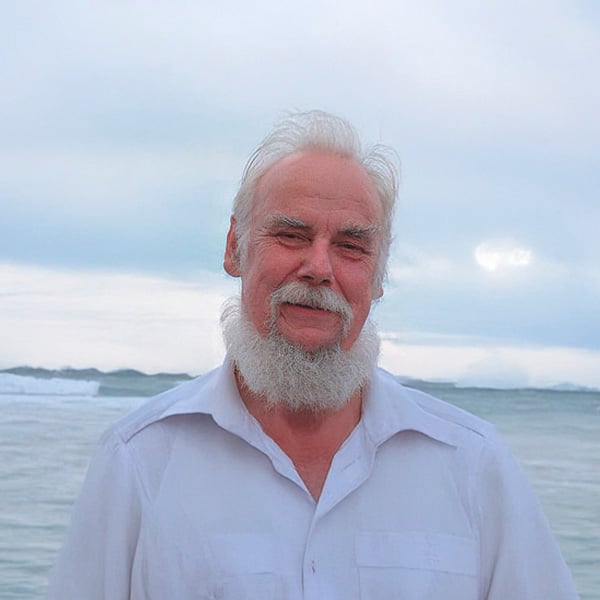
Mot detta nya NATO har en hel del traditionella NATO-anhängare reagerat. I Norge finns det t.o.m. en kampanjorganisation “Nei til nyt NATO”. En av de viktiga personerna är Gunnar Garbo, som har författat en bok om detta: OGSÅ KRIG ER TERROR.

Garbo ligger långt från den bild av långhåriga och pacifistiska vänsteraktivister som motståndarna brukar ge av NATO-kritiker. Hans far var motståndsman under kriget och blev skjuten när Gunnar var sjutton år. Själv gjorde han sin militärtjänst i den norska rikspolisen på läger i Sverige under kriget, och talade för norskt NATO-medlemskap redan 1948. Han har varit ledare för partiet Venstre (som till skillnad från Vänsterpartiet är ett mittenparti, men långt ifrån danska Venstre, som är ett utpräglat högerparti). Och han har varit norsk ambassadör i många år innan han pensionerades.

Hans stöd för NATO-medlemskapet hindrade honom inte från att se att NATO ledde kapprustningen, att Vietnamkriget innebar att bomba en frihetsrörelse i kamp mot en brutal och korrupt regim, eller att ibland “de kan ha rett, og vi kan ta feil”. Allt detta märks också i hans bok, som enligt undertiteln är en kritisk uppgörelse med det nya NATO, krigen i Afghanistan och Kosovo och Norges egen roll. Här talar en erfaren och engagerad man, och hans engagemang gäller folkrätten och freden, snarare än att komma åt det ena eller andra folket eller staten. Han bemödar sig om att fördela rätt och orätt proportionellt, snarare än lika, och ser till att belägga sina påståenden med hänvisningar till juridiska, politiska eller historiska källor.

Boken kan förefalla “obalanserad”, men till detta har Garbo en mycket bra förklaring: “Jeg har med god samvittighet gitt mindre plass til de momentene som NATO-tilhengerne helst ville trekke frem; de har så allikevel fått massevis av opmerksomhet i medierne. Forrangen er gitt til kritiske motforestillinger og til forhold som til dels er blitt utelatt i den offisielle fremstillingen.”

Stora delar av boken är av intresse för envar. Där dokumenterar han hur USA´s regering i bägge fallen systematiskt skapade situationer för att få krig: genom att öppet eller dolt ställa krav garanterat oacceptabla för regeringarna i Kabul resp. Belgrad (eller vilken som helst suverän stat), totalt vägra förhandla, vilseleda allierade och sin egen befolkning på viktiga punkter, o.s.v. Med detta gjort, proklamerade den så att “alla andra möjligheter nu var uttömda”, vilket Garbo dokumenterar som lögnaktigt och i strid med folkrätten. I det afghanska fallet förklarade landets regering t.ex. att man visst kunde tänka sig att utleverera Osama bin Laden, men till en islamisk domstol och förutsatt att USA presenterade några bevis för hans delaktighet i förbrytelsen den 11 september. T.o.m. det sista vägrade USA, gick i krig för att fånga honom – och misslyckades med det.

I fallet Jugoslavien understödde man det (som Interpol väl visste) ytterst dubiösa UCK mot både Jugoslavien och den legitime albanske ledaren Ibrahim Rugova, som hade lett en i många avseenden mycket framgångsrik ickevåldskamp, samtidigt som man länge refererade till dem som “terrorister”. Man visste också att det i betydande grad var UCK som trappade upp våldet – med avsikten att provokera våldsamma serbiska överreaktioner, vilka i sin tur kunde användas till att få NATO som allierad. Man kommenderade parterna till “förhandlingar” i Rambouillet – och lade sedan fram en avtalstext som i huvudsak förklarades vara icke förhandlingsbar. Båda parter sade Nej, även om Jugoslavien faktiskt visade förhandlingsvilja genom att komma med detaljförslag. Då lade man till en rad nya betingelser för att göra den garanterat oacceptabel i Belgrad (de facto NATO-ockupation av hela Jugoslavien och garanterad självständighet för Kosovo, men ingen roll för FN) – och förklarade för albanerna att om de inte skrev under, så skulle man inte bomba serberna. Efter att under skiftande förevändningar (den första, att visa att man menade allvar, fick överges redan efter ett par dagar) ha bombat Jugoslaviens ekonomi i stumpar och stycken i 78 dagar, vilket det kommer att ta landet en generation att resa sig ifrån, blev man så tvungen att dra tillbaka alla de nya betingelserna för att få ett avtal – vilket man med något förhandlande alltså redan möjligen kunde ha fått utan en bomb.

Styrkan i Garbos bok ligger bland annat i att han detaljerat påvisar på vilka punkter USA med allierade bröt mot FN-stadgans påbud att söka andra lösningar, anger vad som kunde ha gjorts och visar hur man i bägge fallen på viktiga punkter manövrerade sig utom FN för att få det eftertraktade kriget. Han redogör även för de enorma skador som vållades av krigen – även i Kosovo – och reser frågan om dessa står i någon proportion till vad som skulle åstadkommas med krigen, som kom att innebära en ännu värre terror än den de skulle göra något åt. Och han diskuterar vad som skulle kunna ha åstadkommits av fredliga lösningar om man hade använt bara en bråkdel av kostnaderna för militäroperationerna till andra ting med erfarenhetsmässigt långt större utdelning för konfliktlösning.

Andra delar kunde tyckas ha intresse främst för norska läsare: hur norska regeringen och politiker i båda fallen smög sig undan offentlig debatt, kom med markant felaktiga påståenden om hur besluten hade gått till, sakfrågor bakom besluten eller vad FN-stadgan faktiskt säger. När det gäller de politiska partier eller politiker som avhandlas, är det självfallet riktigt. Däremot känns mycket av det igen från den danska, eller t.o.m. svenska regeringens agerande: åtskilliga av de argument som Garbo effektivt torpederar användes även av dem.

Den pågående debatten om Irak-kriget visar att USA:s egna allierade vid det här laget har lärt sig en del om hur de blev vilseledda av USA tidigare och därför har blivit försiktigare när trumpetstötarna kommer från Washington. Det lönar sig att argumentera, även om det ibland kan förefalla tröstlöst trögt. Ett tecken på det är att det nu är Norge som vägrar vara med i USA:s krig, samtidigt som Danmark uppträder som ren lydstat och Sverige försöker vara allt på en gång.

HÅKAN WIBERG

Gunnar Garbo: Krig er også terror.
Oslo: Eget forlag, 2002.
ISBN 82-996370-0-7.

Boken kan beställas genom att inbetala NOK 150 på det norska kontot
0539 1033449 till Gunnar Garbo, Postbox 33, 1459 Fjellstrand, Norge.

Och man kan skriva till Gunnar Garbo på garbo@online.no
Related Posts

LONDON – So far so good, at least on the wider level. While internally Iraq seems on the edge of chaos, the much heralded clash of civilizations between the Muslim and Judaeo-Christian worlds has yet to become apparent. We have anger and despair aplenty in the Arab and Muslim worlds. But very little rushing to the standard and there was no great pilgrimage of warriors to join the fight, as happened when the Soviet Union invaded Afghanistan twenty years ago, and then, having driven the Red Army out, were left to ferment in that mountainous redoubt. With the armaments supplied by the CIA the mujahidin were transformed into Al Qaeda that became, for a relatively brief moment as these things go, ‘the greatest threat to the homeland that America has ever known.’ Nevertheless a ‘Cold War’ between much of the Muslim world and the West is certainly in full swing. Winston...
The Challenge of Nuclear Weaponsin the Twenty-first CenturyA Path Forward The peoples and governments of the world face an urgent challenge relating to weaponry of mass destruction and particularly to nuclear weaponry.  At the crossroads of technology, terrorism, geopolitical ambition, and policies of preemption are new and potent dangers for humanity. Despite ending the nuclear standoff of the Cold War era, nuclear weaponry is again menacing the peoples of the world with catastrophic possibilities.  We recognize the need for any government to pursue its security interests in accordance with international law; and further, we recognize that distinctive threats to these interests now exist as a result of an active international terrorist network having declared war on the United States and its allies. Nonetheless, we reject the assessment of the current US administration that upgrading a reliance on nuclear weapons is in any sense justified as a response. We find it...
By Karin Wegestal MP, the Social Democratic Partyon behalf of the Swedish Committee for Solidarity with the Yugoslav People During the last decade, the Federal Republic of Yugoslavia has received more than 500,000 refugees from Croatia and Bosnia, and another 300,000 internally displaced persons, mainly from the province Kosovo and Metohia. For a country with about ten million inhabitants, such an influx of homeless people is obviously a very heavy burden – even under peaceful conditions. But in addition to that, the Federal Republic of Yugoslavia has been the subject to sanctions from the western powers for close to ten years and its infrastructure was badly hurt through Nato’s intense bombardment during 78 days in 1999. The result of all this is that Yugoslavia, once the most developed industrial country in Eastern Europe, is today the poorest country in Europe. In Serbia excluding Kosovo, with about ten million inhabitants and...

Recent Articles

Tony Robinson October 4, 2026 Violence is easy to recognise when someone is being beaten, shot or killed. It becomes more difficult when nobody is holding a weapon. Poverty, discrimination, exploitation and repression can restrict a human life just as effectively, although they do so in very different ways and with very different consequences. Simply adding more categories to an ever-growing list of forms of violence does not really solve the problem. The more interesting question is what all these different situations have in common and why it makes sense to describe them using the same word. Human beings do not simply react to what happens around them. They remember the past, imagine things that do not yet exist, make plans and undertake projects. Workers organise because they imagine different working conditions; people migrate because they imagine another life somewhere else; social movements emerge because people refuse to accept the...
It’s a matter of principles, courage, vision and pulling together – while the militarist world is falling apart… Peter Langille October 3, 2026 “Here, then, is the problem which we present to you, stark and dreadful and inescapable: Shall we put an end to the human race; or shall mankind renounce war?”The Bertrand Russell—Albert Einstein Manifesto, July 9, 1955 ⁕ The forecast for what’s ahead is worrisome. The sharp rise in armed conflicts over the past three years is adding to what was already the highest level in over seventy years. Genocides, which should be prevented are supported. A shared climate emergency that jeopardises survival is ignored. Diverse polls now suggest that people are war-weary, worried and interested in a more effective United Nations. And, there are viable policy options for a more secure world! Yet governments are doubling-down, betting on more war and investing heavily. If current trends persist,...
Johan Galtung 1930-2024October 2015 Published here on October 3, 2026 Let us focus on Civilization for conflict analysis and remedies. Major forms of disorder use violence; war is state organized violence. The most belligerent states are the United States of America and Israel, both with civilization roots. National Evangelism, the US Protestant Christian civilization– more national than evangelical–justifies US warfare as exceptionalism of a people chosen by God, with a manifest destiny to run the world. Orthodox Judaism justifies Israeli warfare to conquer and expand from Nile to Euphrates as a religious right and duty to the Eternal One. The third most belligerent country, the UK, no longer believes it is God-chosen but chosen by the USA; not quite the same but something. But the root cause of global disorder lies in the Occident–with Islam–seeing itself as the single, universal civilization valid for all at all times, all others being...

TFF on Substack

Discover and subscribe to more peace materials on TFF Substack

Most Popular

Tony Robinson October 4, 2026 Violence is easy to recognise when someone is being beaten, shot or killed. It becomes more difficult when nobody is holding a weapon. Poverty, discrimination, exploitation and repression can restrict a human life just as effectively, although they do so in very different ways and with very different consequences. Simply adding more categories to an ever-growing list of forms of violence does not really solve the problem. The more interesting question is what all these different situations have in common and why it makes sense to describe them using the same word. Human beings do not simply react to what happens around them. They remember the past, imagine things that do not yet exist, make plans and undertake projects. Workers organise because they imagine different working conditions; people migrate because they imagine another life somewhere else; social movements emerge because people refuse to accept the...
It’s a matter of principles, courage, vision and pulling together – while the militarist world is falling apart… Peter Langille October 3, 2026 “Here, then, is the problem which we present to you, stark and dreadful and inescapable: Shall we put an end to the human race; or shall mankind renounce war?”The Bertrand Russell—Albert Einstein Manifesto, July 9, 1955 ⁕ The forecast for what’s ahead is worrisome. The sharp rise in armed conflicts over the past three years is adding to what was already the highest level in over seventy years. Genocides, which should be prevented are supported. A shared climate emergency that jeopardises survival is ignored. Diverse polls now suggest that people are war-weary, worried and interested in a more effective United Nations. And, there are viable policy options for a more secure world! Yet governments are doubling-down, betting on more war and investing heavily. If current trends persist,...
Johan Galtung 1930-2024October 2015 Published here on October 3, 2026 Let us focus on Civilization for conflict analysis and remedies. Major forms of disorder use violence; war is state organized violence. The most belligerent states are the United States of America and Israel, both with civilization roots. National Evangelism, the US Protestant Christian civilization– more national than evangelical–justifies US warfare as exceptionalism of a people chosen by God, with a manifest destiny to run the world. Orthodox Judaism justifies Israeli warfare to conquer and expand from Nile to Euphrates as a religious right and duty to the Eternal One. The third most belligerent country, the UK, no longer believes it is God-chosen but chosen by the USA; not quite the same but something. But the root cause of global disorder lies in the Occident–with Islam–seeing itself as the single, universal civilization valid for all at all times, all others being...
Read More
Living-Peace-Sign-Budapest-copy
Tony Robinson October 4, 2026 Violence is easy to recognise when someone is being beaten, shot or killed. It becomes more difficult when nobody is holding a weapon. Poverty, discrimination, exploitation and repression can restrict a human life just as effectively, although they do so in very different ways and with very different consequences. Simply adding more categories to an ever-growing list of forms of violence does not really solve the problem. The more interesting question is what all these different situations have in common and why it makes sense to describe them using the same word. Human beings do not simply react to what happens around them. They remember the past, imagine things that do not yet exist, make plans and undertake projects. Workers organise because they imagine different working conditions; people migrate because they imagine another life somewhere else; social movements emerge because people refuse to accept the...
b54a1f10-8c65-4f0b-9dd5-4abc0a7d04cc_2659x2659
It’s a matter of principles, courage, vision and pulling together – while the militarist world is falling apart… Peter Langille October 3, 2026 “Here, then, is the problem which we present to you, stark and dreadful and inescapable: Shall we put an end to the human race; or shall mankind renounce war?”The Bertrand Russell—Albert Einstein Manifesto, July 9, 1955 ⁕ The forecast for what’s ahead is worrisome. The sharp rise in armed conflicts over the past three years is adding to what was already the highest level in over seventy years. Genocides, which should be prevented are supported. A shared climate emergency that jeopardises survival is ignored. Diverse polls now suggest that people are war-weary, worried and interested in a more effective United Nations. And, there are viable policy options for a more secure world! Yet governments are doubling-down, betting on more war and investing heavily. If current trends persist,...
010
Johan Galtung 1930-2024October 2015 Published here on October 3, 2026 Let us focus on Civilization for conflict analysis and remedies. Major forms of disorder use violence; war is state organized violence. The most belligerent states are the United States of America and Israel, both with civilization roots. National Evangelism, the US Protestant Christian civilization– more national than evangelical–justifies US warfare as exceptionalism of a people chosen by God, with a manifest destiny to run the world. Orthodox Judaism justifies Israeli warfare to conquer and expand from Nile to Euphrates as a religious right and duty to the Eternal One. The third most belligerent country, the UK, no longer believes it is God-chosen but chosen by the USA; not quite the same but something. But the root cause of global disorder lies in the Occident–with Islam–seeing itself as the single, universal civilization valid for all at all times, all others being...
Screenshot 2026-10-02 011738
Jan ObergPhD, director, The Transnational Foundation for Peace and Future Research, TFFLund, Sweden October 2, 2026 This is my full original manuscript. The Chinese Academy of Social Science, CASS, makes two publications out if it. 1. China’s Five-year plan emphasized the capabilities of basic research and original innovation. It is regarded as the goal of the future social development, which, as required, should be significantly enhanced. Can you comment on the importance of original innovation in research and academic study? I believe it is easier to define “original innovation” in the natural sciences than in social sciences. The breaking points of what constitutes something new, or innovative, are not quite as sharp in the latter. But in both fields it is about opening up something that was closed, unseen, unexplored before – making manifest what was earlier latent. Innovations come in many forms and shapes – naming something that was not...
arctic-circle-map
The agreement is catastrophic both because of what it says and what it doesn’t mention. It reduces further the major asset of security policies: Freedom of action. Jan Oberg TFF director September 25, 2026 A couple of hours before the agreement was signed on September 22, 2026, I published the following 13 hypotheses about what it would most likely contain on TFF Substack (in English). I was wrong on only the first point. Contrary to what Trump had written on his Truth Social platform, it does not appear to come into force immediately. In fact, it turned out to be worse than even I had anticipated. After these hypotheses now come a number of reflections in light of what the agreement actually contains, and does not contain, as well as the way in which it has generally been presented by major media outlets and by the public-service broadcaster DR. My...
girl-5894831_1280
Below are TFF-related media mentions, comments, videos and social media posts published elsewhere but not on this homepage. We happen to catch and list only a fraction. Regarding video comments and debates, we recommend that you go to the TFF Video Channel on Substack where many of them are reproduced. Jan Oberg is a contributor to China Daily – 52 million daily clicks – and Global Times, CGTN and CCTV (the national television), China Investment, Xinhua News Agency and several others. Articles and videos on these media very often multiply into countless Chinese (and Western media) that re-post them from these main media. Thanks to The China Academy, his analyses, interviews and comments are frequently posted on YouTube channels such as Thinkers Forum and Wave Media. These videos are often re-posted on Bilibili (China’s YouTube), the China Content Center on TikTok, and on the Chinese edition of TikTok, Douyin.com. This means reaching hundreds of millions of viewers worldwide over a year. While there are too many to catch on all these...





