
When the Clinton campaign started bitching about Russia interfering in US elections by hacking into the DNC I was struck by their excesses of outrage and the virtual absence of any acknowledgement that the United States has been interfering in dozens of foreign elections for decades with no apparent second thoughts.

CNN and other media brings one national security expert after another to mount various cases against Putin and the Kremlin, and to insist that Russia is up to similar mischief in relation to the upcoming French elections.

And never do they dare discuss whether such interference is a rule of the game, similar to espionage, or whether what was alleged to have been done by the Russians might lead the US political leaders and its intelligence agencies to reconsider its own reliance on such tactics to help sway foreign elections.

Is this selective perception merely one more instance of American exceptionalism?

We can hack away, but our elections and sovereign space are hallowed ground, which if encroached upon, should be resisted by all possible means. It is one thing to argue that democracy and political freedom are jeopardized by such interference as is being attributed to Moscow, and if their behavior influenced the outcome, it makes Russia responsible for a disaster not only in the United States but in the world.

The disaster is named Trump.

Assuming this Russian engagement by way of what they evidently call ‘active measures’ occurred is, first of all, an empirical matter of gathering evidence and reaching persuasive conclusions.

Assuming the allegations are to some extent validated, it hardly matters whether by what means the interference was accomplished, whether done by cyber technology, electronic eavesdropping, dirty tricks, secret financial contributions, or otherwise.

What is diversionary and misleading is to foster the impression that the Russians breached solemn rules of international law by disrupting American democracy and doing their best to get Trump elected or weaken the Clinton presidency should she have been elected.

The integrity of American democratic procedures may have been seriously compromised, and this is deeply regrettable and should be remedied to the extent possible, but whatever happened should not be greeted with shock and consternation as if some inviolate international red line had been provocatively crossed.

There are three appropriate questions to pose:

(1) What can we do to increase cyber defences to prevent future intrusions, and restore domestic confidence that elections in the United States reflect the unimpeded will of the citizenry and are not the result of machinations by outsiders?

(2) Do we possess the means to ascertain the impact of such intrusions on the outcome of the 2016 national elections, and if such investigation points beyond a reasonable doubt to the conclusion that without the intrusion Clinton would have won, should that void the result, and impose on Congress the duty to arrange for a new emergency electoral procedure for selecting a president free from taint (especially if the Trump campaign aided and abetted the Russian intrusion)?

(3) Are there ways to bolster norms against interventions in the internal affairs of sovereign states that offer protection against such interference? Note that giving convincing answers to these questions is not a simple matter, and requires serious reflection and debate.

To illustrate the moral and political complexity we can consider the core dilemma that is present for a government with a dog in the fight. Suppose the Kremlin had reason to believe that a Clinton presidency would lead to a new cold war, would it not have been reasonable, and even responsible, for Russians leaders to support Trump, and if the situation were reversed, shouldn’t the US do all it can do to avoid the election of a belligerent Russian leader?

Wouldn’t millions of people have been thankful if Western interference in the German elections of 1933 were of sufficient magnitude to avoid the triumph of the National Socialist Party?

There are good and bad precedents arising from past international behavior, especially if established by important states by repeated action, that then empower others to act in a similar manner.

Without governmental institutions to oversee political behavior, the development of international law proceeds by way of international practice.

Thus when the United States claims the right to interfere and even engage in regime-changing interventions, we greatly weaken any objections when others do the same sort of thing. What is sauce for the goose is sauce for the gander.

The logic of reciprocity contributes to a normative process that reflects international practice as much as it does international lawmaking treaties.

Some equally serious and worrisome parallel issues are raised by recent disclosures of serious cyber attacks by the US Government on the North Korean nuclear program.

The American media and government officialdom treat the conduct of cyber warfare against North Korea’s nuclear program as something to be judged exclusively by its success or failure, not whether its right or wrong, prudent or reckless.

We interfered with the North Korean nuclear program without seeking authorization from the UN, and certainly without any willingness to tolerate reciprocal behavior by others that disrupted any of our nuclear activities.

It can be plausibly argued that North Korea and its wily leader, Kim Jong-un, are dangerous, reprehensible, and irresponsible, and that it is intolerable for such a government to possess nuclear weapons and long-range missiles. That such a circumstance creates a ‘right of exception,’ suspending international law and considerations of reciprocity, would seem a far more responsible way to proceed, preserving a sense that the US is normally respectful of and accountable to international law, but North Korea poses such a dire threat to humanity as to make all means of interference acceptable.

But apparently so intoxicated by geopolitical hubris the thought never occurs to either our leaders or the compliant mainstream media that puts out its own version of ‘fake news’ night after night. It is instructive to realize how bipartisan is this disregard of the relevance of international law to a sustainable world order.

These new disclosures relating to North Korea assert that Trump ‘inherited’ an ongoing cyber war program from Obama, who had in earlier years been unabashedly complicit with Israel’s cyber efforts to disrupt Iran’s nuclear program.

Does it serve the interests of the United States to set the rules of the game in international relations with respect to nuclear policy, making little pretense of being bound by the standards imposed on other sovereign states, especially those non-nuclear states accused of taking steps to acquire the weaponry?

The tigers control the mice, and the idea of a rule of law that treats equals equally is completely foreign to the American mindset in the 21st century when it comes to the role of hard power, security policy, and grand strategy in international life, but interestingly, but much less so in the context of trade and investment. This distinction is worth pondering.

In other words when it comes to security policy and grand strategy, there are two basic rules of contemporary geopolitics that contravene the golden rule of ethical behavior:

Rule #1: Do not allow others to do unto you what you frequently do to others (the Russian hacking discourse);

Rule #2: Do unto other what you would never accept others doing unto you (cyber attacks on Iran and North Korea).

It is arguable that this normative asymmetry is the only way that world order can be sustained given the absence of world government, or even a strong enough UN to enact and implement common behavioral standards in these domains traditionally reserved for sovereign discretion.

A golden rule governing the way states are expected to act toward one another with respect to war/peace issues is certainly currently situated in global dream space.

If this is so or so believed, let us at least lift the fog of self-righteous rhetoric, plan to defend our political space as well as we can, and rethink the unintended consequences of interfering in foreign elections and engaging in regime-changing interventions.

At least, let us not deceive ourselves into believing that we are responsible custodians of peace and decency in the world.

Do we really have grounds for believing that Donald Trump is less dangerous to the world than Kim Jong-un or the Supreme Guide of Iran?

Even if their outlook on political engagement overlaps and their swagger is similar, the US is far more powerful, has alone used nuclear weapons against civilian targets and overthrown numerous foreign governments, including those elected in fair and free elections, and has its own house in a condition of disorder, although despite all this admittedly humanly far more desirable than the order experienced within totalitarian North Korea.

Is it not time for the peoples of the world to rise up and put some restraints on the strong as well as the weak?

The UN veto power confers on the most powerful states a constitutional free ride when it comes to compliance with international law and the UN Charter.

In effect, the UN back in 1945 institutionalized a topsy-turvy structure that curbs the weak, while granting impunity to the predatory behavior of the strong.

If we grant that this is the way things are and are likely to remain, can’t we at least look in the mirror, and no longer pretend to be that innocent damsel that can only be protected by slaying the dragons roaming the jungles of the world.

Trump had his singular moment of truth when he responded on February 4th to Bill O’Reilly’s assertion that Putin was “a killer”:

“There are a lot of killers. We’ve got a lot of killers. What do you think? Our country is so innocent.”

And unlike Trump’s frequent journeys into dark thickets of falsehood that are dismissed by the injunction “let Trump be Trump,” when the man speaks truly for once, his words were scorched, and erased even from the influential media blackboards of the alt right.
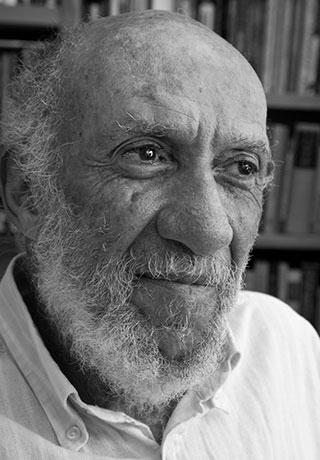

Professor Falk became an adviser to TFF when it was established in 1985.

Related Posts

Tony Robinson October 4, 2026 Violence is easy to recognise when someone is being beaten, shot or killed. It becomes more difficult when nobody is holding a weapon. Poverty, discrimination, exploitation and repression can restrict a human life just as effectively, although they do so in very different ways and with very different consequences. Simply adding more categories to an ever-growing list of forms of violence does not really solve the problem. The more interesting question is what all these different situations have in common and why it makes sense to describe them using the same word. Human beings do not simply react to what happens around them. They remember the past, imagine things that do not yet exist, make plans and undertake projects. Workers organise because they imagine different working conditions; people migrate because they imagine another life somewhere else; social movements emerge because people refuse to accept the...
It’s a matter of principles, courage, vision and pulling together – while the militarist world is falling apart… Peter Langille October 3, 2026 “Here, then, is the problem which we present to you, stark and dreadful and inescapable: Shall we put an end to the human race; or shall mankind renounce war?”The Bertrand Russell—Albert Einstein Manifesto, July 9, 1955 ⁕ The forecast for what’s ahead is worrisome. The sharp rise in armed conflicts over the past three years is adding to what was already the highest level in over seventy years. Genocides, which should be prevented are supported. A shared climate emergency that jeopardises survival is ignored. Diverse polls now suggest that people are war-weary, worried and interested in a more effective United Nations. And, there are viable policy options for a more secure world! Yet governments are doubling-down, betting on more war and investing heavily. If current trends persist,...
Johan Galtung 1930-2024October 2015 Published here on October 3, 2026 Let us focus on Civilization for conflict analysis and remedies. Major forms of disorder use violence; war is state organized violence. The most belligerent states are the United States of America and Israel, both with civilization roots. National Evangelism, the US Protestant Christian civilization– more national than evangelical–justifies US warfare as exceptionalism of a people chosen by God, with a manifest destiny to run the world. Orthodox Judaism justifies Israeli warfare to conquer and expand from Nile to Euphrates as a religious right and duty to the Eternal One. The third most belligerent country, the UK, no longer believes it is God-chosen but chosen by the USA; not quite the same but something. But the root cause of global disorder lies in the Occident–with Islam–seeing itself as the single, universal civilization valid for all at all times, all others being...

Recent Articles

Tony Robinson October 4, 2026 Violence is easy to recognise when someone is being beaten, shot or killed. It becomes more difficult when nobody is holding a weapon. Poverty, discrimination, exploitation and repression can restrict a human life just as effectively, although they do so in very different ways and with very different consequences. Simply adding more categories to an ever-growing list of forms of violence does not really solve the problem. The more interesting question is what all these different situations have in common and why it makes sense to describe them using the same word. Human beings do not simply react to what happens around them. They remember the past, imagine things that do not yet exist, make plans and undertake projects. Workers organise because they imagine different working conditions; people migrate because they imagine another life somewhere else; social movements emerge because people refuse to accept the...
It’s a matter of principles, courage, vision and pulling together – while the militarist world is falling apart… Peter Langille October 3, 2026 “Here, then, is the problem which we present to you, stark and dreadful and inescapable: Shall we put an end to the human race; or shall mankind renounce war?”The Bertrand Russell—Albert Einstein Manifesto, July 9, 1955 ⁕ The forecast for what’s ahead is worrisome. The sharp rise in armed conflicts over the past three years is adding to what was already the highest level in over seventy years. Genocides, which should be prevented are supported. A shared climate emergency that jeopardises survival is ignored. Diverse polls now suggest that people are war-weary, worried and interested in a more effective United Nations. And, there are viable policy options for a more secure world! Yet governments are doubling-down, betting on more war and investing heavily. If current trends persist,...
Johan Galtung 1930-2024October 2015 Published here on October 3, 2026 Let us focus on Civilization for conflict analysis and remedies. Major forms of disorder use violence; war is state organized violence. The most belligerent states are the United States of America and Israel, both with civilization roots. National Evangelism, the US Protestant Christian civilization– more national than evangelical–justifies US warfare as exceptionalism of a people chosen by God, with a manifest destiny to run the world. Orthodox Judaism justifies Israeli warfare to conquer and expand from Nile to Euphrates as a religious right and duty to the Eternal One. The third most belligerent country, the UK, no longer believes it is God-chosen but chosen by the USA; not quite the same but something. But the root cause of global disorder lies in the Occident–with Islam–seeing itself as the single, universal civilization valid for all at all times, all others being...

TFF on Substack

Discover and subscribe to more peace materials on TFF Substack

Most Popular

Tony Robinson October 4, 2026 Violence is easy to recognise when someone is being beaten, shot or killed. It becomes more difficult when nobody is holding a weapon. Poverty, discrimination, exploitation and repression can restrict a human life just as effectively, although they do so in very different ways and with very different consequences. Simply adding more categories to an ever-growing list of forms of violence does not really solve the problem. The more interesting question is what all these different situations have in common and why it makes sense to describe them using the same word. Human beings do not simply react to what happens around them. They remember the past, imagine things that do not yet exist, make plans and undertake projects. Workers organise because they imagine different working conditions; people migrate because they imagine another life somewhere else; social movements emerge because people refuse to accept the...
It’s a matter of principles, courage, vision and pulling together – while the militarist world is falling apart… Peter Langille October 3, 2026 “Here, then, is the problem which we present to you, stark and dreadful and inescapable: Shall we put an end to the human race; or shall mankind renounce war?”The Bertrand Russell—Albert Einstein Manifesto, July 9, 1955 ⁕ The forecast for what’s ahead is worrisome. The sharp rise in armed conflicts over the past three years is adding to what was already the highest level in over seventy years. Genocides, which should be prevented are supported. A shared climate emergency that jeopardises survival is ignored. Diverse polls now suggest that people are war-weary, worried and interested in a more effective United Nations. And, there are viable policy options for a more secure world! Yet governments are doubling-down, betting on more war and investing heavily. If current trends persist,...
Johan Galtung 1930-2024October 2015 Published here on October 3, 2026 Let us focus on Civilization for conflict analysis and remedies. Major forms of disorder use violence; war is state organized violence. The most belligerent states are the United States of America and Israel, both with civilization roots. National Evangelism, the US Protestant Christian civilization– more national than evangelical–justifies US warfare as exceptionalism of a people chosen by God, with a manifest destiny to run the world. Orthodox Judaism justifies Israeli warfare to conquer and expand from Nile to Euphrates as a religious right and duty to the Eternal One. The third most belligerent country, the UK, no longer believes it is God-chosen but chosen by the USA; not quite the same but something. But the root cause of global disorder lies in the Occident–with Islam–seeing itself as the single, universal civilization valid for all at all times, all others being...
Read More
Living-Peace-Sign-Budapest-copy
Tony Robinson October 4, 2026 Violence is easy to recognise when someone is being beaten, shot or killed. It becomes more difficult when nobody is holding a weapon. Poverty, discrimination, exploitation and repression can restrict a human life just as effectively, although they do so in very different ways and with very different consequences. Simply adding more categories to an ever-growing list of forms of violence does not really solve the problem. The more interesting question is what all these different situations have in common and why it makes sense to describe them using the same word. Human beings do not simply react to what happens around them. They remember the past, imagine things that do not yet exist, make plans and undertake projects. Workers organise because they imagine different working conditions; people migrate because they imagine another life somewhere else; social movements emerge because people refuse to accept the...
b54a1f10-8c65-4f0b-9dd5-4abc0a7d04cc_2659x2659
It’s a matter of principles, courage, vision and pulling together – while the militarist world is falling apart… Peter Langille October 3, 2026 “Here, then, is the problem which we present to you, stark and dreadful and inescapable: Shall we put an end to the human race; or shall mankind renounce war?”The Bertrand Russell—Albert Einstein Manifesto, July 9, 1955 ⁕ The forecast for what’s ahead is worrisome. The sharp rise in armed conflicts over the past three years is adding to what was already the highest level in over seventy years. Genocides, which should be prevented are supported. A shared climate emergency that jeopardises survival is ignored. Diverse polls now suggest that people are war-weary, worried and interested in a more effective United Nations. And, there are viable policy options for a more secure world! Yet governments are doubling-down, betting on more war and investing heavily. If current trends persist,...
010
Johan Galtung 1930-2024October 2015 Published here on October 3, 2026 Let us focus on Civilization for conflict analysis and remedies. Major forms of disorder use violence; war is state organized violence. The most belligerent states are the United States of America and Israel, both with civilization roots. National Evangelism, the US Protestant Christian civilization– more national than evangelical–justifies US warfare as exceptionalism of a people chosen by God, with a manifest destiny to run the world. Orthodox Judaism justifies Israeli warfare to conquer and expand from Nile to Euphrates as a religious right and duty to the Eternal One. The third most belligerent country, the UK, no longer believes it is God-chosen but chosen by the USA; not quite the same but something. But the root cause of global disorder lies in the Occident–with Islam–seeing itself as the single, universal civilization valid for all at all times, all others being...
Screenshot 2026-10-02 011738
Jan ObergPhD, director, The Transnational Foundation for Peace and Future Research, TFFLund, Sweden October 2, 2026 This is my full original manuscript. The Chinese Academy of Social Science, CASS, makes two publications out if it. 1. China’s Five-year plan emphasized the capabilities of basic research and original innovation. It is regarded as the goal of the future social development, which, as required, should be significantly enhanced. Can you comment on the importance of original innovation in research and academic study? I believe it is easier to define “original innovation” in the natural sciences than in social sciences. The breaking points of what constitutes something new, or innovative, are not quite as sharp in the latter. But in both fields it is about opening up something that was closed, unseen, unexplored before – making manifest what was earlier latent. Innovations come in many forms and shapes – naming something that was not...
arctic-circle-map
The agreement is catastrophic both because of what it says and what it doesn’t mention. It reduces further the major asset of security policies: Freedom of action. Jan Oberg TFF director September 25, 2026 A couple of hours before the agreement was signed on September 22, 2026, I published the following 13 hypotheses about what it would most likely contain on TFF Substack (in English). I was wrong on only the first point. Contrary to what Trump had written on his Truth Social platform, it does not appear to come into force immediately. In fact, it turned out to be worse than even I had anticipated. After these hypotheses now come a number of reflections in light of what the agreement actually contains, and does not contain, as well as the way in which it has generally been presented by major media outlets and by the public-service broadcaster DR. My...
girl-5894831_1280
Below are TFF-related media mentions, comments, videos and social media posts published elsewhere but not on this homepage. We happen to catch and list only a fraction. Regarding video comments and debates, we recommend that you go to the TFF Video Channel on Substack where many of them are reproduced. Jan Oberg is a contributor to China Daily – 52 million daily clicks – and Global Times, CGTN and CCTV (the national television), China Investment, Xinhua News Agency and several others. Articles and videos on these media very often multiply into countless Chinese (and Western media) that re-post them from these main media. Thanks to The China Academy, his analyses, interviews and comments are frequently posted on YouTube channels such as Thinkers Forum and Wave Media. These videos are often re-posted on Bilibili (China’s YouTube), the China Content Center on TikTok, and on the Chinese edition of TikTok, Douyin.com. This means reaching hundreds of millions of viewers worldwide over a year. While there are too many to catch on all these...




