
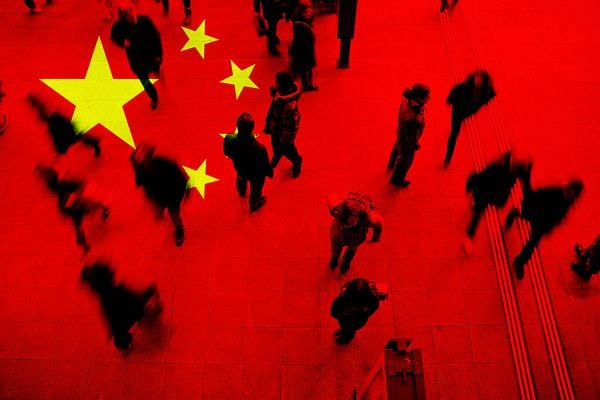
Anti-China Rhetoric Is Off the Charts in Western Media

Chandran Nair

March 14, 2023

The mass hysteria reflects the biases inherent in the world’s most powerful media outlets. 

A key feature of mainstream Western media today is the relentless China-bashing. It is off the charts and tiring, often involving regurgitated trivia or fabricated stories with no evidence to support callous statements about the country, demonstrating a deep lack of understanding. But such stories continue to be churned out with no end in sight.

Countering this in international media by offering more balanced views for a global audience is near impossible as censorship is rife. There almost seems to be a global compact to control the narrative, a propaganda war powered by today’s digital technology.

Just try looking for a positive story on China any day of the week in any of the leading global media outlets. Apart from reports in January about the Lunar New Year, there will hardly be any, and these too are likely to have a negative spin. It would appear there is a confidential memo circulating within Western media groups that guides reporters and editors to ensure there cannot be any positive news arising from a country with 1.4 billion people.

Typically, the negative stories adhere to three core ideas, which inform the unspoken guidelines within these press rooms when it comes to reporting on China.

Originally published at The Diplomat on February 21, 2023

First is the belief that China is a threat to the world and that this belief must be relentlessly reinforced at every available opportunity. How and why China is a threat is never explored; such is the deep-rooted and almost religious nature of the belief. Sound arguments do not matter. The basic tenets of good journalism are ignored when it comes to a China story. There is no need to explain or give evidence of why China is a global threat.

Left ignored is the plentiful evidence that shows China is not a global threat – even if one can point to mistakes and overreach in certain areas. China has not invaded any country in decades, or imposed sanctions that have devastated the lives of millions in poor countries, unlike the West, led by the United States.

Second is that China must be linked to every possible global event that affects the West. This provides an opportunity for the West to bash China while simultaneously burnishing its own credentials as the supposed arbiters of what is right and wrong in international relations. From the pandemic to the Russia-Ukraine war to carbon emissions; from rising sea levels to the scramble for rare earths; from the building of infrastructure in Africa to the production of vaccines – there must be an angle to demonize the country and instill fear in Western nations (and beyond).

Indeed, media outlets are reverting to the “yellow peril” of the late 1800s. There is no subtle and nuanced approach to instilling fear like this. It is full-on and very often blatantly racist – but it is now acceptable for one to be racist about the Chinese in Western media, despite the fact that Black-White relations are very carefully described.

The third part of this phenomenon, which is surprisingly not challenged by liberal readers of mainstream media, is the sentiment that everything must be done – even illegal and unfair methods – to arrest the rise of China. Never mind the rights of hundreds of millions of Chinese to have a better life after a century of poverty and deprivation.

Headline after headline that captures this sentiment has normalized the view that there is a need to curb the rise of China, and that this is a legitimate geopolitical objective.

There is no explanation about why or if it is even morally acceptable. It has become a feature of Western commentary on China to say that its rise is a concern and a threat. With this assumption unassailably in place, the West has the right to galvanize – and even bully – its allies and ask the absurd question, “what should be done about China’s rise?” – as if China does not have the right to carve its own place in the new world.

There is even a school of thought in the United States that it was America that magnanimously allowed China its first baby steps into the globalized economy and that, in hindsight, the U.S. was too nice to China. This view betrays everything that is imperial about the West and why it is unable to come to terms with the legitimate rights of other nations to grow and become powers in their own right. The assumption is that the rise of others is a gift from the West, and accordingly, they must never challenge its supremacy. The deeply entrenched view in the West from centuries of domination is that it will decide which nations will be permitted to be participants in the global economy according to its self-serving “rules-based order.”

Indeed, Western media seem wholly tied to the hegemonic competition view of geopolitics, constantly referencing the “Thucydides Trap” and being stuck in the Western canon as if there are no other ways of looking at geopolitics and world order. This view assumes conflict is inevitable and helps to demonize China while justifying the hegemonic position of the West – and the United States in particular – as a globally stabilizing force.

Needless to say, this is an extremely belligerent position to take, and not something media should be egging on. Whatever happened to promoting multilateralism? And why are people who speak to multilateralism side-lined as idealists or China apologists? This flies in the face of fair reporting.

So, how to fix this?

First, people in China and the non-Western world must realize that when it comes to the workings of the mainstream media we are in a new era – a propaganda war the likes of which the world has never seen before, powered by today’s digital technology. The media war is real, and tech-driven, and it is not a fight for eyeballs to deliver fair, honest, and educational news. It is almost everything else but that, especially when it comes to China or enemies of the West.

On one side is sheer propaganda aimed at the preservation of Western power. Participants include the most well-known brands in the Western media world, which are household names across the world.

The idea that Western media is run by fair-minded people who are independent, driven only by a desire to talk truth to power, is a mirage. It is a myth, and it is a bitter pill that needs to be swallowed. The idea that the Western journalist is a paragon of virtue also needs to be banished from the minds of consumers of media.

That is the first stage in enabling one to step out of the propaganda mist we are engulfed in on a daily basis, so that one can examine different viewpoints as news is consumed. This is not easy, given the current dominance of Western media outlets and their apparently collective mission.

The next step is to dismantle the dominance of Western media.

This, too, will be a long, hard fight. Mainstream Western media are the most powerful in the world, and for close to a century, Western media have had a stranglehold on the dissemination of international news and viewpoints across the world. Many had their origins in colonialism, the preservation of empire and later the spread of Western ideas about how the world should be run. These outlets are a powerful economic force, and dislodging them will require investments.

Across the world, there is an opportunity to contribute to this effort, not necessarily by building large media companies but by investing in media companies that are committed to fair and objective analysis, so that local audiences in the first instance, have choices and are not inundated by the propaganda of mainstream Western media.

This, too, will not be an easy task, and there are many hurdles to overcome, but this is not the space to dive into those details. Ultimately, it is all about readers becoming more aware of global issues by having more non-Western sources to rely on, so they are not victims of the current propaganda war. This is beginning to happen as more alternatives flourish.

It is an urgent need in the West too so that the mass hysteria generated by mainstream media is prevented from creating fear and pitting Western societies against the rest of the world. Today the target is China; tomorrow India and then maybe Africa.

Originally published at The Diplomat on February 21, 2023

Please help TFF remain truly independent by contributing if you benefited from this article

About the author
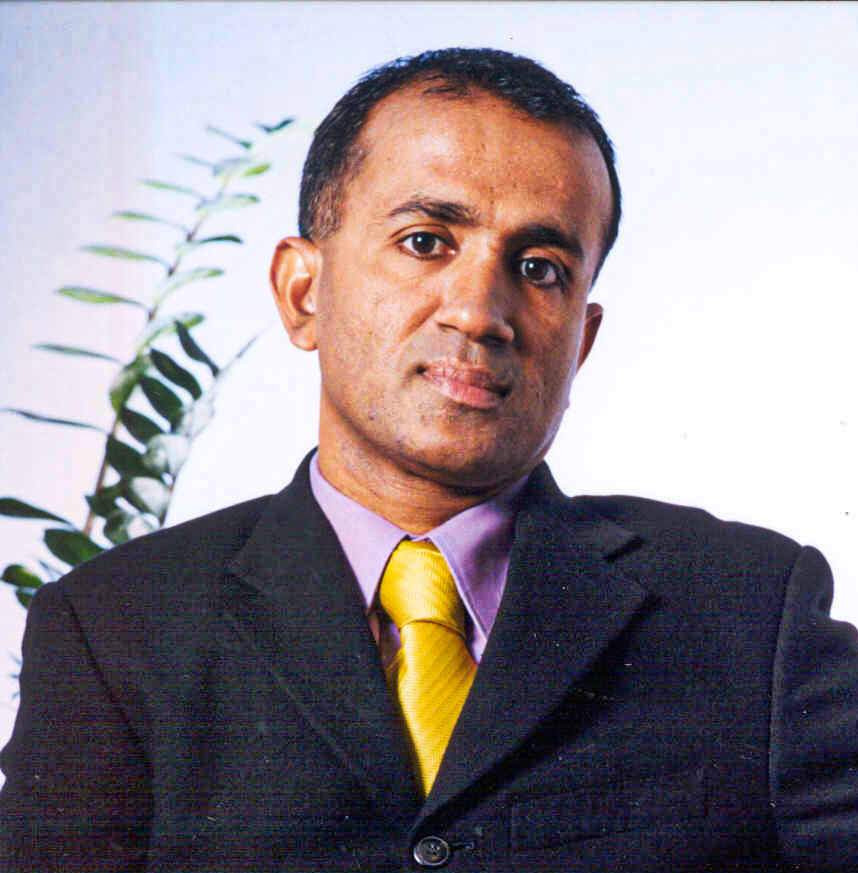
Chandran Nair is the founder and CEO of the Global Institute for Tomorrow. He is the author of “Dismantling Global White Privilege: Equity for a Post-Western World” (Penguin Random House, 2022).


Related Posts

Tony Robinson October 4, 2026 Violence is easy to recognise when someone is being beaten, shot or killed. It becomes more difficult when nobody is holding a weapon. Poverty, discrimination, exploitation and repression can restrict a human life just as effectively, although they do so in very different ways and with very different consequences. Simply adding more categories to an ever-growing list of forms of violence does not really solve the problem. The more interesting question is what all these different situations have in common and why it makes sense to describe them using the same word. Human beings do not simply react to what happens around them. They remember the past, imagine things that do not yet exist, make plans and undertake projects. Workers organise because they imagine different working conditions; people migrate because they imagine another life somewhere else; social movements emerge because people refuse to accept the...
Johan Galtung 1930-2024October 2015 Published here on October 3, 2026 Let us focus on Civilization for conflict analysis and remedies. Major forms of disorder use violence; war is state organized violence. The most belligerent states are the United States of America and Israel, both with civilization roots. National Evangelism, the US Protestant Christian civilization– more national than evangelical–justifies US warfare as exceptionalism of a people chosen by God, with a manifest destiny to run the world. Orthodox Judaism justifies Israeli warfare to conquer and expand from Nile to Euphrates as a religious right and duty to the Eternal One. The third most belligerent country, the UK, no longer believes it is God-chosen but chosen by the USA; not quite the same but something. But the root cause of global disorder lies in the Occident–with Islam–seeing itself as the single, universal civilization valid for all at all times, all others being...
Jan Oberg May 15, 2026 Go to this Fox News page and scroll the whole way down: President Donald Trump tells the world that his meeting with President Xi Jinping yielded a lot of very concrete political and economic results – of course, only where the Chinese side, according to him, agreed with him. He does not mention the Taiwan issue, but Secretary of State, Marco Rubio, says that it did not feature prominently in their talks and that the US policy on Taiwan has not changed. Then go to China Daily – or Global Times – and you will see that for the Chinese it is framework, principles, structure of cooperation etc. that matters – all embedded in the overall idea of “constructive bilateral relationship of strategic stability.” Nowhere is any concrete agreement or deal – all that Trump refers to – mentioned. At the general level, this gives you insights into the very different social...

Recent Articles

Below are TFF-related media mentions, comments, videos and social media posts published elsewhere but not on this homepage. We happen to catch and list only a fraction. Regarding video comments and debates, we recommend that you go to the TFF Video Channel on Substack where many of them are reproduced. Jan Oberg is a contributor to China Daily – 52 million daily clicks – and Global Times, CGTN and CCTV (the national television), China Investment, Xinhua News Agency and several others. Articles and videos on these media very often multiply into countless Chinese (and Western media) that re-post them from these main media. Thanks to The China Academy, his analyses, interviews and comments are frequently posted on YouTube channels such as Thinkers Forum and Wave Media. These videos are often re-posted on Bilibili (China’s YouTube), the China Content Center on TikTok, and on the Chinese edition of TikTok, Douyin.com. This means reaching hundreds of millions of viewers worldwide over a year. While there are too many to catch on all these...
Jan Oberg TFF director October 13, 2026 According to Alfred Nobel’s will, the Nobel Peace Prize shall be awarded: ”to the person who has done the most or best to advance fellowship among nations, the abolition or reduction of standing armies, and the establishment and promotion of peace congresses.” Further down, he also expresses how the prize for the “champions of peace” shall be decided: “that for champions of peace by a committee of five persons to be selected by the Norwegian Storting. Alfred Nobel’s will is remarkably short and clear. But few seem to have read it. Nobel did not say that the committee itself should consist of members of parliament. He entrusted the Storting with appointing five persons. In principle, it could have selected diplomats, mediators, peace researchers, conflict-resolution specialists, or other individuals with recognised expertise in matters of peace from around the world. Instead, the Storting gradually...
The Quest for Humane Survival Richard Falk Professor emeritus, Princeton UniversityTFF Associate since 1986October 12, 2026 After decades of teaching and writing about international law in academic frameworks that were not institutionally situated within law school environments—at Princeton and the University of California, Santa Barbara—I found myself most receptive to the TWAIL outlook. It has been especially illuminating in clarifying the extent to which international law evolved as a dialogical critique of Europe’s efforts to legitimize its colonial undertakings. In particular, TWAIL has exposed how international law has functioned to legalize the subjugation of Third World peoples, securing conditions for exploitative investment and trade relations, the coercive enforcement of public debts, and an ideology of cultural superiority. TWAIL’s exposure of these economic legacies of colonialism has influenced my understanding of the history and development of international law, broadly conceived, as an ideological project of the Western sub-system of the world...

TFF on Substack

Discover and subscribe to more peace materials on TFF Substack

Most Popular

Below are TFF-related media mentions, comments, videos and social media posts published elsewhere but not on this homepage. We happen to catch and list only a fraction. Regarding video comments and debates, we recommend that you go to the TFF Video Channel on Substack where many of them are reproduced. Jan Oberg is a contributor to China Daily – 52 million daily clicks – and Global Times, CGTN and CCTV (the national television), China Investment, Xinhua News Agency and several others. Articles and videos on these media very often multiply into countless Chinese (and Western media) that re-post them from these main media. Thanks to The China Academy, his analyses, interviews and comments are frequently posted on YouTube channels such as Thinkers Forum and Wave Media. These videos are often re-posted on Bilibili (China’s YouTube), the China Content Center on TikTok, and on the Chinese edition of TikTok, Douyin.com. This means reaching hundreds of millions of viewers worldwide over a year. While there are too many to catch on all these...
Jan Oberg TFF director October 13, 2026 According to Alfred Nobel’s will, the Nobel Peace Prize shall be awarded: ”to the person who has done the most or best to advance fellowship among nations, the abolition or reduction of standing armies, and the establishment and promotion of peace congresses.” Further down, he also expresses how the prize for the “champions of peace” shall be decided: “that for champions of peace by a committee of five persons to be selected by the Norwegian Storting. Alfred Nobel’s will is remarkably short and clear. But few seem to have read it. Nobel did not say that the committee itself should consist of members of parliament. He entrusted the Storting with appointing five persons. In principle, it could have selected diplomats, mediators, peace researchers, conflict-resolution specialists, or other individuals with recognised expertise in matters of peace from around the world. Instead, the Storting gradually...
The Quest for Humane Survival Richard Falk Professor emeritus, Princeton UniversityTFF Associate since 1986October 12, 2026 After decades of teaching and writing about international law in academic frameworks that were not institutionally situated within law school environments—at Princeton and the University of California, Santa Barbara—I found myself most receptive to the TWAIL outlook. It has been especially illuminating in clarifying the extent to which international law evolved as a dialogical critique of Europe’s efforts to legitimize its colonial undertakings. In particular, TWAIL has exposed how international law has functioned to legalize the subjugation of Third World peoples, securing conditions for exploitative investment and trade relations, the coercive enforcement of public debts, and an ideology of cultural superiority. TWAIL’s exposure of these economic legacies of colonialism has influenced my understanding of the history and development of international law, broadly conceived, as an ideological project of the Western sub-system of the world...
Read More
girl-5894831_1280
Below are TFF-related media mentions, comments, videos and social media posts published elsewhere but not on this homepage. We happen to catch and list only a fraction. Regarding video comments and debates, we recommend that you go to the TFF Video Channel on Substack where many of them are reproduced. Jan Oberg is a contributor to China Daily – 52 million daily clicks – and Global Times, CGTN and CCTV (the national television), China Investment, Xinhua News Agency and several others. Articles and videos on these media very often multiply into countless Chinese (and Western media) that re-post them from these main media. Thanks to The China Academy, his analyses, interviews and comments are frequently posted on YouTube channels such as Thinkers Forum and Wave Media. These videos are often re-posted on Bilibili (China’s YouTube), the China Content Center on TikTok, and on the Chinese edition of TikTok, Douyin.com. This means reaching hundreds of millions of viewers worldwide over a year. While there are too many to catch on all these...
Nobel-Prize-Plaque
Jan Oberg TFF director October 13, 2026 According to Alfred Nobel’s will, the Nobel Peace Prize shall be awarded: ”to the person who has done the most or best to advance fellowship among nations, the abolition or reduction of standing armies, and the establishment and promotion of peace congresses.” Further down, he also expresses how the prize for the “champions of peace” shall be decided: “that for champions of peace by a committee of five persons to be selected by the Norwegian Storting. Alfred Nobel’s will is remarkably short and clear. But few seem to have read it. Nobel did not say that the committee itself should consist of members of parliament. He entrusted the Storting with appointing five persons. In principle, it could have selected diplomats, mediators, peace researchers, conflict-resolution specialists, or other individuals with recognised expertise in matters of peace from around the world. Instead, the Storting gradually...
law-419057_1280
The Quest for Humane Survival Richard Falk Professor emeritus, Princeton UniversityTFF Associate since 1986October 12, 2026 After decades of teaching and writing about international law in academic frameworks that were not institutionally situated within law school environments—at Princeton and the University of California, Santa Barbara—I found myself most receptive to the TWAIL outlook. It has been especially illuminating in clarifying the extent to which international law evolved as a dialogical critique of Europe’s efforts to legitimize its colonial undertakings. In particular, TWAIL has exposed how international law has functioned to legalize the subjugation of Third World peoples, securing conditions for exploitative investment and trade relations, the coercive enforcement of public debts, and an ideology of cultural superiority. TWAIL’s exposure of these economic legacies of colonialism has influenced my understanding of the history and development of international law, broadly conceived, as an ideological project of the Western sub-system of the world...
images-2
Advocates of nuclear disarmament are regularly dismissed by the champions of nuclear deterrence as naïve and unrealistic, utopian or even irresponsible. Yet this ‘doctrine’ of deterrence, regarded by France as the ‘cornerstone’ of its national security, is based on quasi-religious beliefs, a theory that cannot be proven, risky gambles and fragile assumptions. So much so that one might legitimately ask which side the ‘Care Bears’ are on. Marc FinaudVice-President of Initiatives for Nuclear Disarmament (IDN) October 9, 2026 This article was originally published on Pressenza When it comes to these things being treated as religious concepts, look here. Idealists and realists It was Hubert Védrine, François Mitterrand’s former Foreign Minister, who repeatedly coined the phrase: ‘Europeans are a sort of Care Bears who don’t realise they’re living in Jurassic Park’. He applies this reference to the cartoon for well-behaved children not only to what he regards as weakness or idealism...
8824b09f-33a5-43f9-9fd0-550f28cda24d_1536x1024
What the West Borrowed from Asia and What It Left Behind Jan Krikke October 8, 2026 The article was originally published here In the late 1960s, the musical Hair announced that the Age of Aquarius was dawning. Its opening anthem promised a transformation of human consciousness: an era of peace, harmony and understanding. Half a century later, a familiar echo of that promise is a meditation app offered by your employer. You can find it in the same list of benefits as the pension plan and the gym discount. How did a spiritual revolution become an employee benefit? The answer lies in the history of the movement known as New Age: where it came from, what it borrowed from Asia, and why the meaning of what it borrowed changed in the process. Two definitions will help. New Age is a loose label for a wide range of spiritual practices and...
Screenshot 2026-10-04 210142
Small and different + among the 10% most active + 9,000 texts + 150 Associates + 60 000 a day — and a stubborn belief that peace is smarter and must be secured by peaceful means. In 2026, the Transnational Foundation for Peace and Future Research (TFF) turns 40. On Monday, October 5, 2026, a new TFF homepage will go live — a new gateway to more than 9,000 articles, analyses, research papers and other contributions produced over four decades of independent peace research. But this is not simply a new website. For four decades, TFF has worked from a simple conviction: peace is smarter than militarism and can be brought about by peaceful means. This is not merely an aspiration. It is the principle expressed in the UN Charter and the Gandhian tradition that has guided our work from the beginning. TFF is a research-based, independent and people-financed foundation....



