
Fast Times in Palestine: A Love Affair with a Homeless Homeland
By Pamela Olson (Berkeley, CA: Seal Press)

I realize that without knowing it, I have long waited for this book, although I could not have imagined its lyric magic in advance of reading. It is a triumph of what I would call ‘intelligent innocence,’ the great benefits of a clear mind, an open and warm heart, and a trustworthy moral compass that draws sharp lines between good and evil while remaining ever sensitive to the contradictory vagaries of lives and geographic destinies.

Pamela Olson exhibits an endearing combination of humility and overall emotional composure that makes her engaged witnessing of the Palestinian ordeal so valuable for me as I believe and hope it will be for others.

Early on, she acknowledges her lack of background with refreshing honesty: “Green and wide-eyed, I wandered into the Holy Land, an empty vessel.” But don’t be fooled. Olson, who had recently graduated from Stanford, almost immediately dives deeply into the daily experience of Palestine and Palestinians, with luminous insight and a sensibility honed on an anvil of tenderness, truthfulness, and a readiness for adventure and romance.

Upon crossing the border that separates Israel from the West Bank, enduring routine yet frightening difficulties at the checkpoint, she find herself in the Palestinian village of Jayyous, not far from the Palestinian city of Jenin. Her first surprise is the welcoming warmth of the villagers whose hospitality makes her feel almost as if she is on a homecoming visit to Stigler, the small town in eastern Oklahoma where she grew up. Almost at once Olson finds herself in the midst of a social circle in Jayyous that harvests olives during the day and sits together on porches in the evening puffing on a nargila (water pipe) and conversing about the world.

Olson’s authenticity pervades the book, whether it is a matter of adoring the cuisine or acknowledging her infatuation with a Palestinian young man who crosses her path. She learns to speak a bit of Arabic, reads up on the struggle, and stays alert. The style of the book is an enchanting mixture of personal journal, travelogue, political primer on the conflict, and coming of age memoir. She writes with clarity, humor, and self-scrutiny (in a tone of almost asking herself, ‘Who is this girl from rural Oklahoma who is experiencing this extraordinary encounter with people and the sad conditions of their lives?’).

As the title implies, it is primarily a book about Palestine and what occupation means for Palestinians trapped under Israeli military rule for more than 45 years, and how their extraordinary qualities of humane coping make Jayyous and Ramallah so inspirational for her. It instills an intense longing to return and share the dangers and deprivations, which are more powerfully satisfying than the pleasures of ‘freedom.’ (I am reminded of a friend from Gaza, a leading human rights activist, whose family has been living in Cairo in recent years. He tells me that when he plans a vacation, his university age children who are studying abroad insist on going to Gaza rather than Paris or London.)

Yet the book is sensitive to the tragic experiences of both peoples. Through the whole of her experience, Olson remains open to her Israeli friend, Dan, as well as to a Christian appreciation of the Holy Land, not as a believer but as someone whose identity was formed in a religiously Christian community.

Early on in the book, when she tells Dan how disturbed she is by the occupation, he reminds her of Israeli grief and distress. Dan’s words: “Last year there was a suicide bombing practically every week, it was… unbelievable. The mall we went to yesterday was bombed last year. Three weeks ago a suicide bomber killed twenty people in a restaurant in Haifa. Just innocent people having a meal.” Olson’s response is characteristically empathetic: “I sighed and looked out over the water. What I had seen in the West Bank was terrible, but there was another side to the story, after all. I tried to imagine the horror of people sitting around having a meal, and then all of a sudden—” But in the end it becomes clear that Israel’s human rights violations have, if anything, a negative impact on Israeli security.

One of the most moving chapters is a description of a visit by Olson’s mother and stepfather. She pressured them to come so that “they would never have to wonder whether I had exaggerated either the beauty or the horror.” Because this was her mother’s first trip outside of America, she saw what was to be seen with fresh eyes. This experience produced joy and wonder along with tearful reactions at checkpoints, such as: “Good Lord… How can this be happening over here and no one in America even knows or cares?” Is this not the question we should all have been asking for decades? During the visit, they also spend time touring the Christian sites in and around Jerusalem and the Galilee that are particularly meaningful to her religious mother.

The timeline of the book covers 2003-2005. But the essentials of the occupation emerge, especially the encroachment of the separation wall, the settlements, and checkpoints, and what it means for a Palestinian to live day by day under systematic violations of human rights that show no sign of ending in the foreseeable future. When Olson inserts information about history, Israeli and Palestinian politics, international law and elementary morality, she is accurate, concise, and perceptive. She also is honest enough not to suppress her emotional responses to some extreme situations.

In the end what gives the book its special value is the compelling credibility of her “love affair with a homeless homeland,” a sub-title that says it all! It is one thing to lament the suffering and humiliation of the Palestinians or to condemn the cruelty and harshness of the Israeli occupation. It is quite another to be able to observe these defining realities and yet see beyond to a proud and gracious people with a generous sense of humor who manage to live as vibrantly as possible even under almost unimaginable circumstances of oppression.

It is this combination of feeling the Palestinian hurt while celebrating the warmth and genuineness of the Palestinian embrace that allows a reader to achieve what I had previously thought impossible without an immersion in the place itself. Olson is a twenty-first century example of how a reassuringly normal American woman might best visit the Arab world.

She is intensely curious, with a gift for observation and dialogue and a sensibility that is not afraid of danger or to acknowledge shades of gray or to register her disappointments with others, and above all with herself. Her own evolution is also relevant, from a ‘Bible-centric’ youth in Oklahoma to a scientifically oriented skepticism to a wonderfully caring person who managed to have this incredible ‘love affair’ with occupied Palestine, amid the ruins. In her words, “I couldn’t imagine a better university of human nature.”

Obviously Pamela Olson is blessed with talent. A girl from rural Oklahoma who had to struggle to find the funds to attend college does not make it to the likes of Stanford very often, where she majors in physics and political science, nor does the typical graduate defer entering the job market and go about exploring the world to find out what it is like, and how best to live her life. It is thus not entirely surprising that after her experiences in Palestine, Olson returned to work for a ‘Defense Department think tank’ to try to understand why American foreign policy was so dysfunctional, and found it ‘educational but disillusioning.’ She lasted less than two years before deciding to write Fast Times in Palestine, her attempt to bring what she learned in Palestine directly to the American people.

I have the following daydream: If everyone in America could just sit down quietly and read this book, there would be such an upsurge of outrage and empathy that the climate of opinion on the Israel/Palestine conflict would finally change for the better — even in the polluted air that now prevails within the Beltway. At the very least, as many people as possible should read the book, and if your reaction is similar to mine, give a copy to friends and encourage them to spread the word.

We in America should stop subsidizing and facilitating the systematic creation of ‘a homeless homeland.’ As a close friend in Jayyous named Rania tells Pamela, “Imagine if there was no occupation! Palestine would be like paradise.”

The book can be pre-ordered from Amazon. It will be available in mid-March.

I urge you to do so!
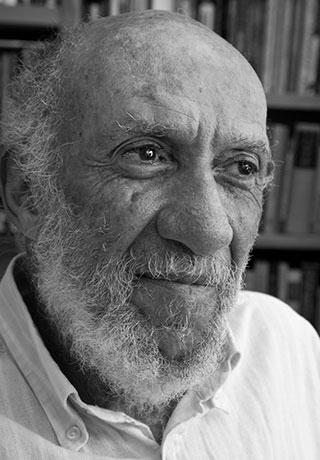
Professor Falk became an adviser to TFF when it was established in 1985.

Related Posts

Tony Robinson October 4, 2026 Violence is easy to recognise when someone is being beaten, shot or killed. It becomes more difficult when nobody is holding a weapon. Poverty, discrimination, exploitation and repression can restrict a human life just as effectively, although they do so in very different ways and with very different consequences. Simply adding more categories to an ever-growing list of forms of violence does not really solve the problem. The more interesting question is what all these different situations have in common and why it makes sense to describe them using the same word. Human beings do not simply react to what happens around them. They remember the past, imagine things that do not yet exist, make plans and undertake projects. Workers organise because they imagine different working conditions; people migrate because they imagine another life somewhere else; social movements emerge because people refuse to accept the...
It’s a matter of principles, courage, vision and pulling together – while the militarist world is falling apart… Peter Langille October 3, 2026 “Here, then, is the problem which we present to you, stark and dreadful and inescapable: Shall we put an end to the human race; or shall mankind renounce war?”The Bertrand Russell—Albert Einstein Manifesto, July 9, 1955 ⁕ The forecast for what’s ahead is worrisome. The sharp rise in armed conflicts over the past three years is adding to what was already the highest level in over seventy years. Genocides, which should be prevented are supported. A shared climate emergency that jeopardises survival is ignored. Diverse polls now suggest that people are war-weary, worried and interested in a more effective United Nations. And, there are viable policy options for a more secure world! Yet governments are doubling-down, betting on more war and investing heavily. If current trends persist,...
Johan Galtung 1930-2024October 2015 Published here on October 3, 2026 Let us focus on Civilization for conflict analysis and remedies. Major forms of disorder use violence; war is state organized violence. The most belligerent states are the United States of America and Israel, both with civilization roots. National Evangelism, the US Protestant Christian civilization– more national than evangelical–justifies US warfare as exceptionalism of a people chosen by God, with a manifest destiny to run the world. Orthodox Judaism justifies Israeli warfare to conquer and expand from Nile to Euphrates as a religious right and duty to the Eternal One. The third most belligerent country, the UK, no longer believes it is God-chosen but chosen by the USA; not quite the same but something. But the root cause of global disorder lies in the Occident–with Islam–seeing itself as the single, universal civilization valid for all at all times, all others being...

Recent Articles

Tony Robinson October 4, 2026 Violence is easy to recognise when someone is being beaten, shot or killed. It becomes more difficult when nobody is holding a weapon. Poverty, discrimination, exploitation and repression can restrict a human life just as effectively, although they do so in very different ways and with very different consequences. Simply adding more categories to an ever-growing list of forms of violence does not really solve the problem. The more interesting question is what all these different situations have in common and why it makes sense to describe them using the same word. Human beings do not simply react to what happens around them. They remember the past, imagine things that do not yet exist, make plans and undertake projects. Workers organise because they imagine different working conditions; people migrate because they imagine another life somewhere else; social movements emerge because people refuse to accept the...
It’s a matter of principles, courage, vision and pulling together – while the militarist world is falling apart… Peter Langille October 3, 2026 “Here, then, is the problem which we present to you, stark and dreadful and inescapable: Shall we put an end to the human race; or shall mankind renounce war?”The Bertrand Russell—Albert Einstein Manifesto, July 9, 1955 ⁕ The forecast for what’s ahead is worrisome. The sharp rise in armed conflicts over the past three years is adding to what was already the highest level in over seventy years. Genocides, which should be prevented are supported. A shared climate emergency that jeopardises survival is ignored. Diverse polls now suggest that people are war-weary, worried and interested in a more effective United Nations. And, there are viable policy options for a more secure world! Yet governments are doubling-down, betting on more war and investing heavily. If current trends persist,...
Johan Galtung 1930-2024October 2015 Published here on October 3, 2026 Let us focus on Civilization for conflict analysis and remedies. Major forms of disorder use violence; war is state organized violence. The most belligerent states are the United States of America and Israel, both with civilization roots. National Evangelism, the US Protestant Christian civilization– more national than evangelical–justifies US warfare as exceptionalism of a people chosen by God, with a manifest destiny to run the world. Orthodox Judaism justifies Israeli warfare to conquer and expand from Nile to Euphrates as a religious right and duty to the Eternal One. The third most belligerent country, the UK, no longer believes it is God-chosen but chosen by the USA; not quite the same but something. But the root cause of global disorder lies in the Occident–with Islam–seeing itself as the single, universal civilization valid for all at all times, all others being...

TFF on Substack

Discover and subscribe to more peace materials on TFF Substack

Most Popular

Tony Robinson October 4, 2026 Violence is easy to recognise when someone is being beaten, shot or killed. It becomes more difficult when nobody is holding a weapon. Poverty, discrimination, exploitation and repression can restrict a human life just as effectively, although they do so in very different ways and with very different consequences. Simply adding more categories to an ever-growing list of forms of violence does not really solve the problem. The more interesting question is what all these different situations have in common and why it makes sense to describe them using the same word. Human beings do not simply react to what happens around them. They remember the past, imagine things that do not yet exist, make plans and undertake projects. Workers organise because they imagine different working conditions; people migrate because they imagine another life somewhere else; social movements emerge because people refuse to accept the...
It’s a matter of principles, courage, vision and pulling together – while the militarist world is falling apart… Peter Langille October 3, 2026 “Here, then, is the problem which we present to you, stark and dreadful and inescapable: Shall we put an end to the human race; or shall mankind renounce war?”The Bertrand Russell—Albert Einstein Manifesto, July 9, 1955 ⁕ The forecast for what’s ahead is worrisome. The sharp rise in armed conflicts over the past three years is adding to what was already the highest level in over seventy years. Genocides, which should be prevented are supported. A shared climate emergency that jeopardises survival is ignored. Diverse polls now suggest that people are war-weary, worried and interested in a more effective United Nations. And, there are viable policy options for a more secure world! Yet governments are doubling-down, betting on more war and investing heavily. If current trends persist,...
Johan Galtung 1930-2024October 2015 Published here on October 3, 2026 Let us focus on Civilization for conflict analysis and remedies. Major forms of disorder use violence; war is state organized violence. The most belligerent states are the United States of America and Israel, both with civilization roots. National Evangelism, the US Protestant Christian civilization– more national than evangelical–justifies US warfare as exceptionalism of a people chosen by God, with a manifest destiny to run the world. Orthodox Judaism justifies Israeli warfare to conquer and expand from Nile to Euphrates as a religious right and duty to the Eternal One. The third most belligerent country, the UK, no longer believes it is God-chosen but chosen by the USA; not quite the same but something. But the root cause of global disorder lies in the Occident–with Islam–seeing itself as the single, universal civilization valid for all at all times, all others being...
Read More
Living-Peace-Sign-Budapest-copy
Tony Robinson October 4, 2026 Violence is easy to recognise when someone is being beaten, shot or killed. It becomes more difficult when nobody is holding a weapon. Poverty, discrimination, exploitation and repression can restrict a human life just as effectively, although they do so in very different ways and with very different consequences. Simply adding more categories to an ever-growing list of forms of violence does not really solve the problem. The more interesting question is what all these different situations have in common and why it makes sense to describe them using the same word. Human beings do not simply react to what happens around them. They remember the past, imagine things that do not yet exist, make plans and undertake projects. Workers organise because they imagine different working conditions; people migrate because they imagine another life somewhere else; social movements emerge because people refuse to accept the...
b54a1f10-8c65-4f0b-9dd5-4abc0a7d04cc_2659x2659
It’s a matter of principles, courage, vision and pulling together – while the militarist world is falling apart… Peter Langille October 3, 2026 “Here, then, is the problem which we present to you, stark and dreadful and inescapable: Shall we put an end to the human race; or shall mankind renounce war?”The Bertrand Russell—Albert Einstein Manifesto, July 9, 1955 ⁕ The forecast for what’s ahead is worrisome. The sharp rise in armed conflicts over the past three years is adding to what was already the highest level in over seventy years. Genocides, which should be prevented are supported. A shared climate emergency that jeopardises survival is ignored. Diverse polls now suggest that people are war-weary, worried and interested in a more effective United Nations. And, there are viable policy options for a more secure world! Yet governments are doubling-down, betting on more war and investing heavily. If current trends persist,...
010
Johan Galtung 1930-2024October 2015 Published here on October 3, 2026 Let us focus on Civilization for conflict analysis and remedies. Major forms of disorder use violence; war is state organized violence. The most belligerent states are the United States of America and Israel, both with civilization roots. National Evangelism, the US Protestant Christian civilization– more national than evangelical–justifies US warfare as exceptionalism of a people chosen by God, with a manifest destiny to run the world. Orthodox Judaism justifies Israeli warfare to conquer and expand from Nile to Euphrates as a religious right and duty to the Eternal One. The third most belligerent country, the UK, no longer believes it is God-chosen but chosen by the USA; not quite the same but something. But the root cause of global disorder lies in the Occident–with Islam–seeing itself as the single, universal civilization valid for all at all times, all others being...
Screenshot 2026-10-02 011738
Jan ObergPhD, director, The Transnational Foundation for Peace and Future Research, TFFLund, Sweden October 2, 2026 This is my full original manuscript. The Chinese Academy of Social Science, CASS, makes two publications out if it. 1. China’s Five-year plan emphasized the capabilities of basic research and original innovation. It is regarded as the goal of the future social development, which, as required, should be significantly enhanced. Can you comment on the importance of original innovation in research and academic study? I believe it is easier to define “original innovation” in the natural sciences than in social sciences. The breaking points of what constitutes something new, or innovative, are not quite as sharp in the latter. But in both fields it is about opening up something that was closed, unseen, unexplored before – making manifest what was earlier latent. Innovations come in many forms and shapes – naming something that was not...
arctic-circle-map
The agreement is catastrophic both because of what it says and what it doesn’t mention. It reduces further the major asset of security policies: Freedom of action. Jan Oberg TFF director September 25, 2026 A couple of hours before the agreement was signed on September 22, 2026, I published the following 13 hypotheses about what it would most likely contain on TFF Substack (in English). I was wrong on only the first point. Contrary to what Trump had written on his Truth Social platform, it does not appear to come into force immediately. In fact, it turned out to be worse than even I had anticipated. After these hypotheses now come a number of reflections in light of what the agreement actually contains, and does not contain, as well as the way in which it has generally been presented by major media outlets and by the public-service broadcaster DR. My...
girl-5894831_1280
Below are TFF-related media mentions, comments, videos and social media posts published elsewhere but not on this homepage. We happen to catch and list only a fraction. Regarding video comments and debates, we recommend that you go to the TFF Video Channel on Substack where many of them are reproduced. Jan Oberg is a contributor to China Daily – 52 million daily clicks – and Global Times, CGTN and CCTV (the national television), China Investment, Xinhua News Agency and several others. Articles and videos on these media very often multiply into countless Chinese (and Western media) that re-post them from these main media. Thanks to The China Academy, his analyses, interviews and comments are frequently posted on YouTube channels such as Thinkers Forum and Wave Media. These videos are often re-posted on Bilibili (China’s YouTube), the China Content Center on TikTok, and on the Chinese edition of TikTok, Douyin.com. This means reaching hundreds of millions of viewers worldwide over a year. While there are too many to catch on all these...





