A year or so ago, it was still possible to avoid the worst in Iraq. It made sense for the United States to set a timetable for withdrawal, and use its leverage to encourage Iraqi political rivals to seek an accommodation as the alternative to a bloody civil war that might have either lasted indefinitely or produced what would have amounted to an oppressive re-Baathification of the country.

It is still likely even now that if the American and British forces leave Iraq over a period of some months one of these two alternatives will shape the future of the country.

But with each passing month and regional conflagration the more positive outcome of accommodation becomes less likely, civil war has already become a fact of life in Iraq, and a wider regional conflagration can happen at any time. If this is so, Iraq probably faces a long violent political stalemate involving a tangle of ethnic, sectarian, geographic, and interventionary fault lines. If the Kurds are lucky and smart they will be able to remain mostly on the sidelines, doing their best to consolidate their position in the North without agitating their Turkish neighbor, and await the political outcome in the rest of Iraq.

Unfortunately, the more positive set of Iraqi futures depends on a willingness of the United States to commit itself at the earliest possible moment unconditionally to phased withdrawal over a period of a year or less. American willingness to withdraw is not likely, despite the repudiation of the policies in Iraq being pursued by the Bush/Cheney presidency in the American elections that surprisingly handed over control of Congress to the Democratic Party.

But George W. Bush remains president and commander-in-chief, and the Democrats are split on every aspect of Iraq policy except to assert that a change is needed. Bush has so often insisted that withdrawal is not an option that it is difficult to envision a political scenario in which the White House does an about face, adopting withdrawal as its policy.

Many observers place their hopes on the Baker/Hamilton ‘Iraq Study Group’ that is expected to propose a number of pragmatic adjustments, including an effort to enlist regional actors, including Iran and Syria, and hopefully, Turkey, in a major diplomatic conference. Such a step would be welcome, but it is unlikely to make much of a difference unless it is linked to American withdrawal. The depth and intensity of the civil war now ravaging Iraq cannot be settled by outsiders ever, and it is highly unlikely to be resolved by insiders so long as the country is occupied, a consensus of the population supports a war of resistance, and the most respected religious leaders appear to prefer resistance to occupation.

Besides, it is far from clear that President Bush will go along even with the Baker/Hamilton recommendations, which are likely to be modest, far short of what is needed to have some realistic hope of restoring normalcy to Iraq in the near future. The White House has also encouraged independent studies to be produced by the Pentagon and the intelligence community. It is likely that it will pick and choose in such a way as to blunt the recommendations calling for a reversal of policy, while essentially persisting with its increasingly pathetic efforts to nurture Iraqi ‘democracy’ amid the bombings and fires.

Vietnam was “the exact opposite”

There are many comparisons with Vietnam being drawn these days, including even by President Bush after his recent visit there. If the situation in Iraq was not an unfolding tragedy, we could smile knowingly in response to Bush’s comic misreading of history, claiming that the American experience in Vietnam lent support to his claim that ‘staying the course’ eventually produces positive results. Of course what took place in Vietnam was the exact opposite, the American refusal to change course by acknowledging defeat, producing years of heavy casualties after the realities of failure were obvious.

Finally, the United States abandoned South Vietnam in a humiliating fashion, with a defining image of Vietnamese collaborators hanging onto to the rails of a helicopter taking flight from the roof of the American embassy in Saigon (now Ho Chi Minh City). Those in Vietnam that Washington had backed were utterly defeated, North Vietnam prevailed, and the war was decisively lost. If the United States had announced its withdrawal a few years earlier tens of thousands of lives would have been saved, and the outcome would have been seen as an example of brave and prudent diplomacy because the leaders at the time would have admitted the failure of the policy, and taken responsibility for an abrupt change of course.


Would you be reading this now,
if it wasn’t useful to you?
Then please make an honour payment to TFF

But there is one sense in which the Vietnam story might be helpful. Despite the outcome of the war, and the extraordinary death and devastation over a period of more than a decade (not counting the earlier anti-colonial war against the French), Vietnam has recovered, and is now flourishing.

This was the irony underneath Bush’s false analogy drawn between Iraq and Vietnam. But what should be also encouraging is that the United States is today Vietnam’s leading trading partner, that relations between the two countries are friendly and positive, and that the political difference between winning and losing in Vietnam is happily blurred in the mists of historical memory.

Against this background, what is the best way forward?

As argued, the way forward seems rather decisively blocked by the American refusal to withdraw combined with a double political move: encouraging internal compromise within Iraq and convening an ambitious gathering of regional actors that will connect Iraq with the precarious situation in Lebanon, the ordeal of the Palestinian people, the risks of confrontation with Iran, a regional nuclear arms race, and the distinct possibility that sectarian violence in Iraq will spill over the borders, igniting an ugly struggle between Sunnis and Shi’ia throughout the Middle East.

This is a formidable agenda, but acknowledging these policy challenges is the first step toward alleviating the severe risks that are present and growing. Such a regional initiative would have to include all the players in the region, including Israel, Turkey, and Palestinian representation, and the major external actors with regional interests, including the United States, Europe, Russia, and possibly India and China.

It would be foolish to expect solutions to flow immediately from such a regional conference, but if the convening parties could be seen as seriously committed to addressing the legitimate grievances that beset the region, especially finding a way to bring stability to Iraq and produce viable statehood for Palestine, the whole atmosphere in the Middle East might change for the better, and the various escalating pressures might begin to diminish giving rise to hope for the future.

Of course, this kind of regional conference contains many risks if it ever did get off the ground, which is unlikely, but it also offers the only possibility of the comprehensive approach to the inter-connected problems region that alone offers hope of a better future. It is should be clear that such a regional approach goes far beyond the Baker-Hamilton proposal to enlist regional actors to bring stability to Iraq.

Calling for such a regional conclave seems like a pipedream at present. Yet the region is at a tipping-point, and requires urgent and drastic diplomatic initiatives to avert catastrophe.

Alternative: the Middle East as a gigantic war zone

The Middle East is at risk of becoming a gigantic war zone. The Lebanon War of last summer suggests one dimension of the worsening security environment. The inflamed relations between Iran, Israel, and the United States may be the greatest menace of all. As the civil tensions in Iraq intensify, with mass religious massacres occurring with alarming frequency, the prospect of repercussions beyond Iraq are daily growing.

At such a tipping-point the choices are stark: either allow the lethal drift continue or acknowledge urgency by undertaking a drastic change of course.

It may not be wise in such circumstance to wait until Washington is ready, or put differently, waiting for Washington appears to be waiting for Godot!
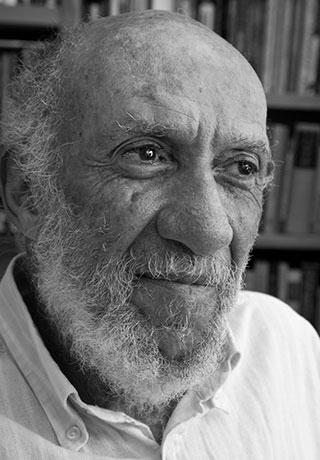

Professor Falk became an adviser to TFF when it was established in 1985.

Related Posts

LONDON – So far so good, at least on the wider level. While internally Iraq seems on the edge of chaos, the much heralded clash of civilizations between the Muslim and Judaeo-Christian worlds has yet to become apparent. We have anger and despair aplenty in the Arab and Muslim worlds. But very little rushing to the standard and there was no great pilgrimage of warriors to join the fight, as happened when the Soviet Union invaded Afghanistan twenty years ago, and then, having driven the Red Army out, were left to ferment in that mountainous redoubt. With the armaments supplied by the CIA the mujahidin were transformed into Al Qaeda that became, for a relatively brief moment as these things go, ‘the greatest threat to the homeland that America has ever known.’ Nevertheless a ‘Cold War’ between much of the Muslim world and the West is certainly in full swing. Winston...
The Challenge of Nuclear Weaponsin the Twenty-first CenturyA Path Forward The peoples and governments of the world face an urgent challenge relating to weaponry of mass destruction and particularly to nuclear weaponry.  At the crossroads of technology, terrorism, geopolitical ambition, and policies of preemption are new and potent dangers for humanity. Despite ending the nuclear standoff of the Cold War era, nuclear weaponry is again menacing the peoples of the world with catastrophic possibilities.  We recognize the need for any government to pursue its security interests in accordance with international law; and further, we recognize that distinctive threats to these interests now exist as a result of an active international terrorist network having declared war on the United States and its allies. Nonetheless, we reject the assessment of the current US administration that upgrading a reliance on nuclear weapons is in any sense justified as a response. We find it...
By Karin Wegestal MP, the Social Democratic Partyon behalf of the Swedish Committee for Solidarity with the Yugoslav People During the last decade, the Federal Republic of Yugoslavia has received more than 500,000 refugees from Croatia and Bosnia, and another 300,000 internally displaced persons, mainly from the province Kosovo and Metohia. For a country with about ten million inhabitants, such an influx of homeless people is obviously a very heavy burden – even under peaceful conditions. But in addition to that, the Federal Republic of Yugoslavia has been the subject to sanctions from the western powers for close to ten years and its infrastructure was badly hurt through Nato’s intense bombardment during 78 days in 1999. The result of all this is that Yugoslavia, once the most developed industrial country in Eastern Europe, is today the poorest country in Europe. In Serbia excluding Kosovo, with about ten million inhabitants and...

Recent Articles

Tony Robinson October 4, 2026 Violence is easy to recognise when someone is being beaten, shot or killed. It becomes more difficult when nobody is holding a weapon. Poverty, discrimination, exploitation and repression can restrict a human life just as effectively, although they do so in very different ways and with very different consequences. Simply adding more categories to an ever-growing list of forms of violence does not really solve the problem. The more interesting question is what all these different situations have in common and why it makes sense to describe them using the same word. Human beings do not simply react to what happens around them. They remember the past, imagine things that do not yet exist, make plans and undertake projects. Workers organise because they imagine different working conditions; people migrate because they imagine another life somewhere else; social movements emerge because people refuse to accept the...
It’s a matter of principles, courage, vision and pulling together – while the militarist world is falling apart… Peter Langille October 3, 2026 “Here, then, is the problem which we present to you, stark and dreadful and inescapable: Shall we put an end to the human race; or shall mankind renounce war?”The Bertrand Russell—Albert Einstein Manifesto, July 9, 1955 ⁕ The forecast for what’s ahead is worrisome. The sharp rise in armed conflicts over the past three years is adding to what was already the highest level in over seventy years. Genocides, which should be prevented are supported. A shared climate emergency that jeopardises survival is ignored. Diverse polls now suggest that people are war-weary, worried and interested in a more effective United Nations. And, there are viable policy options for a more secure world! Yet governments are doubling-down, betting on more war and investing heavily. If current trends persist,...
Johan Galtung 1930-2024October 2015 Published here on October 3, 2026 Let us focus on Civilization for conflict analysis and remedies. Major forms of disorder use violence; war is state organized violence. The most belligerent states are the United States of America and Israel, both with civilization roots. National Evangelism, the US Protestant Christian civilization– more national than evangelical–justifies US warfare as exceptionalism of a people chosen by God, with a manifest destiny to run the world. Orthodox Judaism justifies Israeli warfare to conquer and expand from Nile to Euphrates as a religious right and duty to the Eternal One. The third most belligerent country, the UK, no longer believes it is God-chosen but chosen by the USA; not quite the same but something. But the root cause of global disorder lies in the Occident–with Islam–seeing itself as the single, universal civilization valid for all at all times, all others being...

TFF on Substack

Discover and subscribe to more peace materials on TFF Substack

Most Popular

Tony Robinson October 4, 2026 Violence is easy to recognise when someone is being beaten, shot or killed. It becomes more difficult when nobody is holding a weapon. Poverty, discrimination, exploitation and repression can restrict a human life just as effectively, although they do so in very different ways and with very different consequences. Simply adding more categories to an ever-growing list of forms of violence does not really solve the problem. The more interesting question is what all these different situations have in common and why it makes sense to describe them using the same word. Human beings do not simply react to what happens around them. They remember the past, imagine things that do not yet exist, make plans and undertake projects. Workers organise because they imagine different working conditions; people migrate because they imagine another life somewhere else; social movements emerge because people refuse to accept the...
It’s a matter of principles, courage, vision and pulling together – while the militarist world is falling apart… Peter Langille October 3, 2026 “Here, then, is the problem which we present to you, stark and dreadful and inescapable: Shall we put an end to the human race; or shall mankind renounce war?”The Bertrand Russell—Albert Einstein Manifesto, July 9, 1955 ⁕ The forecast for what’s ahead is worrisome. The sharp rise in armed conflicts over the past three years is adding to what was already the highest level in over seventy years. Genocides, which should be prevented are supported. A shared climate emergency that jeopardises survival is ignored. Diverse polls now suggest that people are war-weary, worried and interested in a more effective United Nations. And, there are viable policy options for a more secure world! Yet governments are doubling-down, betting on more war and investing heavily. If current trends persist,...
Johan Galtung 1930-2024October 2015 Published here on October 3, 2026 Let us focus on Civilization for conflict analysis and remedies. Major forms of disorder use violence; war is state organized violence. The most belligerent states are the United States of America and Israel, both with civilization roots. National Evangelism, the US Protestant Christian civilization– more national than evangelical–justifies US warfare as exceptionalism of a people chosen by God, with a manifest destiny to run the world. Orthodox Judaism justifies Israeli warfare to conquer and expand from Nile to Euphrates as a religious right and duty to the Eternal One. The third most belligerent country, the UK, no longer believes it is God-chosen but chosen by the USA; not quite the same but something. But the root cause of global disorder lies in the Occident–with Islam–seeing itself as the single, universal civilization valid for all at all times, all others being...
Read More
Living-Peace-Sign-Budapest-copy
Tony Robinson October 4, 2026 Violence is easy to recognise when someone is being beaten, shot or killed. It becomes more difficult when nobody is holding a weapon. Poverty, discrimination, exploitation and repression can restrict a human life just as effectively, although they do so in very different ways and with very different consequences. Simply adding more categories to an ever-growing list of forms of violence does not really solve the problem. The more interesting question is what all these different situations have in common and why it makes sense to describe them using the same word. Human beings do not simply react to what happens around them. They remember the past, imagine things that do not yet exist, make plans and undertake projects. Workers organise because they imagine different working conditions; people migrate because they imagine another life somewhere else; social movements emerge because people refuse to accept the...
b54a1f10-8c65-4f0b-9dd5-4abc0a7d04cc_2659x2659
It’s a matter of principles, courage, vision and pulling together – while the militarist world is falling apart… Peter Langille October 3, 2026 “Here, then, is the problem which we present to you, stark and dreadful and inescapable: Shall we put an end to the human race; or shall mankind renounce war?”The Bertrand Russell—Albert Einstein Manifesto, July 9, 1955 ⁕ The forecast for what’s ahead is worrisome. The sharp rise in armed conflicts over the past three years is adding to what was already the highest level in over seventy years. Genocides, which should be prevented are supported. A shared climate emergency that jeopardises survival is ignored. Diverse polls now suggest that people are war-weary, worried and interested in a more effective United Nations. And, there are viable policy options for a more secure world! Yet governments are doubling-down, betting on more war and investing heavily. If current trends persist,...
010
Johan Galtung 1930-2024October 2015 Published here on October 3, 2026 Let us focus on Civilization for conflict analysis and remedies. Major forms of disorder use violence; war is state organized violence. The most belligerent states are the United States of America and Israel, both with civilization roots. National Evangelism, the US Protestant Christian civilization– more national than evangelical–justifies US warfare as exceptionalism of a people chosen by God, with a manifest destiny to run the world. Orthodox Judaism justifies Israeli warfare to conquer and expand from Nile to Euphrates as a religious right and duty to the Eternal One. The third most belligerent country, the UK, no longer believes it is God-chosen but chosen by the USA; not quite the same but something. But the root cause of global disorder lies in the Occident–with Islam–seeing itself as the single, universal civilization valid for all at all times, all others being...
Screenshot 2026-10-02 011738
Jan ObergPhD, director, The Transnational Foundation for Peace and Future Research, TFFLund, Sweden October 2, 2026 This is my full original manuscript. The Chinese Academy of Social Science, CASS, makes two publications out if it. 1. China’s Five-year plan emphasized the capabilities of basic research and original innovation. It is regarded as the goal of the future social development, which, as required, should be significantly enhanced. Can you comment on the importance of original innovation in research and academic study? I believe it is easier to define “original innovation” in the natural sciences than in social sciences. The breaking points of what constitutes something new, or innovative, are not quite as sharp in the latter. But in both fields it is about opening up something that was closed, unseen, unexplored before – making manifest what was earlier latent. Innovations come in many forms and shapes – naming something that was not...
arctic-circle-map
The agreement is catastrophic both because of what it says and what it doesn’t mention. It reduces further the major asset of security policies: Freedom of action. Jan Oberg TFF director September 25, 2026 A couple of hours before the agreement was signed on September 22, 2026, I published the following 13 hypotheses about what it would most likely contain on TFF Substack (in English). I was wrong on only the first point. Contrary to what Trump had written on his Truth Social platform, it does not appear to come into force immediately. In fact, it turned out to be worse than even I had anticipated. After these hypotheses now come a number of reflections in light of what the agreement actually contains, and does not contain, as well as the way in which it has generally been presented by major media outlets and by the public-service broadcaster DR. My...
girl-5894831_1280
Below are TFF-related media mentions, comments, videos and social media posts published elsewhere but not on this homepage. We happen to catch and list only a fraction. Regarding video comments and debates, we recommend that you go to the TFF Video Channel on Substack where many of them are reproduced. Jan Oberg is a contributor to China Daily – 52 million daily clicks – and Global Times, CGTN and CCTV (the national television), China Investment, Xinhua News Agency and several others. Articles and videos on these media very often multiply into countless Chinese (and Western media) that re-post them from these main media. Thanks to The China Academy, his analyses, interviews and comments are frequently posted on YouTube channels such as Thinkers Forum and Wave Media. These videos are often re-posted on Bilibili (China’s YouTube), the China Content Center on TikTok, and on the Chinese edition of TikTok, Douyin.com. This means reaching hundreds of millions of viewers worldwide over a year. While there are too many to catch on all these...