After the sudden death of the “Realo” of the Rose Revolution, will Georgia collapse again?

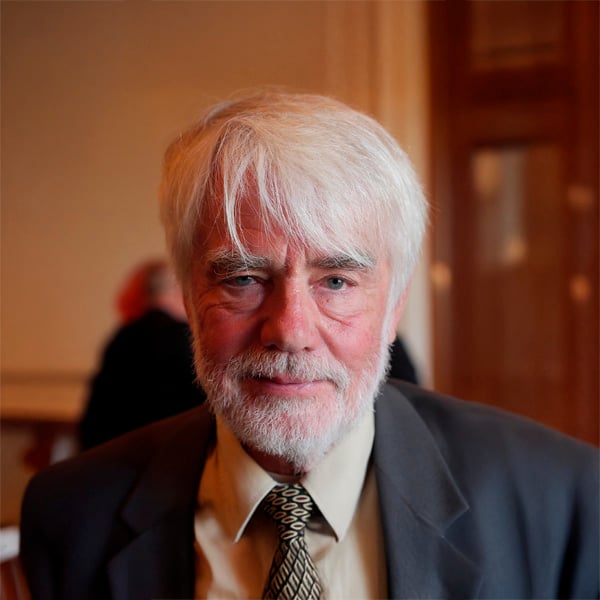
The first time I met Zurab Zhvania was at a Conference for Green Parliamentarians in Stockholm in 1990. He came from a distant and unknown country and told us that he had formed a successful Green Party – in the Soviet Union. We thought that was impossible – but Zurab did it! To overcome the impossible became his personal brand. However, at last, if available information is correct, he fell victim to one of the most mundane everyday aspects of the crisis of Georgia – the energy shortage. Nothing works as planned; everyone has to “make it for oneself”, amateurish, with what is at hand. So it seems that Zurab Zhvania tragically died by a leaking gas fuelled heating device. Thereby becoming a symbol for the paradoxes of his country in life as well as in death.

Relations with Shevardnadze

Next time I saw him was in 1993. Georgia was on the verge of collapse because of the chaotic rule of the nationalist fanatic, Zvia Gamsakhurdia, which led to separatism and civil war. Zurab then had joined forces with Shevardnadze, to the dismay of some Greens. But he believed that Shevardnadze was the only one who could unite the ravaged country. He brought me from Tbilisi to Kutaisi. There I was introduced to 17 generals from he government forces supposed to mobilise against Gamsakhurdias counter-attacks.”And how many soldiers do you have”, I asked. The answer was, Maybe fifty. Zurab liked to tell this story over and over again whenever we met. He saw the absurd numerical relation between generals and soldiers as symbolic for Georgia.

Since I became the rapporteur for South Caucasus in 1999 we met once or twice annually. When I met him in his State Minister office the day after the landslide victory of his partner Mischa Saakashvili in the presidential election of January 4, 2004, I couldn´t help testing his patience by forwarding some of the criticism directed at him and his colleagues, for example the fact hat he had cooperated with the defunct president Shevardnadze for almost a decade. Zhvania just smiled mildly at my question.

– In 1992 we had a civil war, Shevardnadze was the only possibility and I am not ashamed of having brought him back, but proud of it. But I am also proud to be one of the very few politicians in a former Communist Country to have resigned from such a high position as I did in 2001 without any type of “parachute”.

After his resignation from his position as Speaker and head of the ruling Citizens Union in the fall of 2001 because of Shevardnadze’s inability and lack of will to take forceful action against corruption – a resignation that was triggered by physical attacks by the authorities against TV-station Rusavi 2 – Zhvania suddenly found himself in a political desert, even being barred from presenting candidates for the local election of June 2002. He was rather close to ending up in the dustbin of history.

He interrupted our conversation of January 4th 2004 for a short telephone talk with Nino Burjanadse, who was speaker of the parliament and still interim president. On the agenda was a rapid amendment to the Constitution in order to replace the post of State Minister with a real position as Prime Minister and Chief of Government. Some predicted that the new president would like to retain the American-style presidential power he had just been given by more than nine out of ten Georgians. But Zhvania had no doubt that the agreed change would take place. As a matter of fact it did, Zhvania was appointed Prime Minster on February 17.

– We have no alternative but to keep together, he said. That is best for Georgia. And the people would not forgive anybody who would damage the new ruling coalition for personal gains. The voters have not given us eternal power. They have opened a unique window of opportunity. If we don´t use that with responsibility, we will be punished – and rightly so, he said.

I am convinced he was right. The new leaders have needed each other. What will happen now? When I met Zhvania last time, in September 2004, I confronted him with the mounting criticism against legal abuses during the fight against corruption, not only from small Georgian oppositions parties, like the Labour and his old partners in the Greens, but also from Amnesty and other Human Rights organisations. Saakashvili likes the dramatic style, arresting accused tax dodgers or smugglers in front of TV-cameras, then giving them a chance to get out after paying a handsome sum, not to anybody personally but to the state. Zurab admitted: The legal system is still too politised, we must change that.

Theatre of the Absurd in Ajara

My most intense experience with Zurab was on the day of the repeated parliamentary elections in March 2004. He invited me to go with him to the autonomous Ajara, where the local feudal leader Aslan Abashidse was still ruling. We arrived with a few cars, the local guards let us in – it was very tense. We visited many polling stations where people were astonished, but happy, to see the leader of the Tbilisi-government in their province. Zurab feared violent actions from Abashidse later in the evening; he expected him to try to destroy ballot boxes when it would turn out that he had lost. So Zurab had a meeting with him in the afternoon.

It was like a scene from the threatre of the absurd. And it went on for more than twelve hours. Abashidse at one moment showed a video with small armed boats from his personal factory, at another moment cried that Tbilisi “Speznaz” fighters, disguised as election observers, were tracking him to kill him. He even claimed that Georgian airplanes were hovering over his palace at night (which nobody else could observe) in order to drop bombs on him.

It was the opinion of some observers that Abashidse was mad. In any case Zurab acted as a psycho therapist in order to save the elections in Ajara from too much fraud and violence. He actually succeeded, and set an example for the two other recalcitrant provinces. If his policy should rule, Tbilisi would use anything but violence to restore the unity of the state.

It doesn’t bode well…

With Zhvania gone, who knows what actions will be taken? Just some weeks ago Saakashvili suddenly fired Minister of Defence Baramidse who was one of Zurab’s loyal friends. In came instead a “hawk”, former minister of the Interior, Okruashvili. Saakashvili immediately gave him the order to reinforce the army and give highest priority to the reintegration of separatist regions.

The nomination of Okruashvili took place in the middle of night in front of the entire Kodori Brigade that had been put on alert with short notice. And, of course, in front of TV-cameras. That is not the way Zurab Zhvania would have done it.

Some say that the Rose Revolution was a US-sponsored action to safeguard American interests in a sensitive region at the frontier of the “clash of civilisations”. But those who suspect the new Georgian leaders of establishing a US satellite forget several facts. For example, Zhvania was one of very few state leaders outside Russia’s circle of closest allies to welcome the outcome of the Duma elections in December 2003 (See Svobodnaja Gruzia Dec 8th, 2003). Not because he found those elections commendable, but because he is a realo. Zhvania told me that he was sceptical about a rapid NATO-membership for Georgia. But on that point he apparently had to give in to stronger forces.

His relation to the US is as “realo” as the one with Russia. In September 2002, arriving back home after a CIS summit in Astana, where he also met with Vladimir Putin, he complained that the Russians have difficulties not to behave as an imperialistic power. “Just like the U.S.”, he added. And he compared the Russian exploitation of Shamil Basajev against Georgia in Abkhazia with the US-exploitation of Usama bin Laden against communists in Afghanistan. Both cases had fired back against the sponsor! Usama bin Laden in Manhattan, Basajev in Beslan.Get free articles & updates

My impression is that Zurab wanted genuine Georgian independence from both the U.S. and Russia, but cooperation with both of them. With Europe it was a different matter. He was not satisfied with balance, he always emphasised that Georgia is heading for full membership of the European Union.

The Rose Revolution – still a long way to go

The peacefulness of the Rose Revolution has created a unique situation, without the hatred and bitterness and revengefulness that makes so many bloody revolutions deteriorate into brutal prisons that “eat their own children”. But the problems of the country remain enormous. Fourteen months after the Rose Revolution the country is still divided, millions of people are very poor, the economic growth is not bad, but far from sufficient for the needs. Patience is running out. In late January this year, Russian Izvestia commented on the visit of President Saakashvili to the Council of Europe by reminding readers that “Georgia´s honeymoon with Europe is over” because CoE observers have criticised Human Rights abuses by the new regime. And in International Herald Tribune a disappointed Georgian activist from November 2003, Tinatin Khidasheli from Young Lawyers Association complained: “The Rose Revolution has wilted” (Dec 8, 2004).

Thus, the political Saakashvili-style theatre will not be enough. More down-to- earth actions are needed. Maybe that is what Schevarnadse had in mind when he admitted that he had voted for Saakashvili (!) as president on January 4, 2004, but added: “He should talk less, act more”.

Saakashvili probably understood that. He has made good use of the acting realo at his side, Zurab Zhvania. Nobody knows what will happen now. In Georgia the distance between hope and desperation has often been extremely short.

Related Posts

LONDON – So far so good, at least on the wider level. While internally Iraq seems on the edge of chaos, the much heralded clash of civilizations between the Muslim and Judaeo-Christian worlds has yet to become apparent. We have anger and despair aplenty in the Arab and Muslim worlds. But very little rushing to the standard and there was no great pilgrimage of warriors to join the fight, as happened when the Soviet Union invaded Afghanistan twenty years ago, and then, having driven the Red Army out, were left to ferment in that mountainous redoubt. With the armaments supplied by the CIA the mujahidin were transformed into Al Qaeda that became, for a relatively brief moment as these things go, ‘the greatest threat to the homeland that America has ever known.’ Nevertheless a ‘Cold War’ between much of the Muslim world and the West is certainly in full swing. Winston...
The Challenge of Nuclear Weaponsin the Twenty-first CenturyA Path Forward The peoples and governments of the world face an urgent challenge relating to weaponry of mass destruction and particularly to nuclear weaponry.  At the crossroads of technology, terrorism, geopolitical ambition, and policies of preemption are new and potent dangers for humanity. Despite ending the nuclear standoff of the Cold War era, nuclear weaponry is again menacing the peoples of the world with catastrophic possibilities.  We recognize the need for any government to pursue its security interests in accordance with international law; and further, we recognize that distinctive threats to these interests now exist as a result of an active international terrorist network having declared war on the United States and its allies. Nonetheless, we reject the assessment of the current US administration that upgrading a reliance on nuclear weapons is in any sense justified as a response. We find it...
By Karin Wegestal MP, the Social Democratic Partyon behalf of the Swedish Committee for Solidarity with the Yugoslav People During the last decade, the Federal Republic of Yugoslavia has received more than 500,000 refugees from Croatia and Bosnia, and another 300,000 internally displaced persons, mainly from the province Kosovo and Metohia. For a country with about ten million inhabitants, such an influx of homeless people is obviously a very heavy burden – even under peaceful conditions. But in addition to that, the Federal Republic of Yugoslavia has been the subject to sanctions from the western powers for close to ten years and its infrastructure was badly hurt through Nato’s intense bombardment during 78 days in 1999. The result of all this is that Yugoslavia, once the most developed industrial country in Eastern Europe, is today the poorest country in Europe. In Serbia excluding Kosovo, with about ten million inhabitants and...

Recent Articles

Tony Robinson October 4, 2026 Violence is easy to recognise when someone is being beaten, shot or killed. It becomes more difficult when nobody is holding a weapon. Poverty, discrimination, exploitation and repression can restrict a human life just as effectively, although they do so in very different ways and with very different consequences. Simply adding more categories to an ever-growing list of forms of violence does not really solve the problem. The more interesting question is what all these different situations have in common and why it makes sense to describe them using the same word. Human beings do not simply react to what happens around them. They remember the past, imagine things that do not yet exist, make plans and undertake projects. Workers organise because they imagine different working conditions; people migrate because they imagine another life somewhere else; social movements emerge because people refuse to accept the...
It’s a matter of principles, courage, vision and pulling together – while the militarist world is falling apart… Peter Langille October 3, 2026 “Here, then, is the problem which we present to you, stark and dreadful and inescapable: Shall we put an end to the human race; or shall mankind renounce war?”The Bertrand Russell—Albert Einstein Manifesto, July 9, 1955 ⁕ The forecast for what’s ahead is worrisome. The sharp rise in armed conflicts over the past three years is adding to what was already the highest level in over seventy years. Genocides, which should be prevented are supported. A shared climate emergency that jeopardises survival is ignored. Diverse polls now suggest that people are war-weary, worried and interested in a more effective United Nations. And, there are viable policy options for a more secure world! Yet governments are doubling-down, betting on more war and investing heavily. If current trends persist,...
Johan Galtung 1930-2024October 2015 Published here on October 3, 2026 Let us focus on Civilization for conflict analysis and remedies. Major forms of disorder use violence; war is state organized violence. The most belligerent states are the United States of America and Israel, both with civilization roots. National Evangelism, the US Protestant Christian civilization– more national than evangelical–justifies US warfare as exceptionalism of a people chosen by God, with a manifest destiny to run the world. Orthodox Judaism justifies Israeli warfare to conquer and expand from Nile to Euphrates as a religious right and duty to the Eternal One. The third most belligerent country, the UK, no longer believes it is God-chosen but chosen by the USA; not quite the same but something. But the root cause of global disorder lies in the Occident–with Islam–seeing itself as the single, universal civilization valid for all at all times, all others being...

TFF on Substack

Discover and subscribe to more peace materials on TFF Substack

Most Popular

Tony Robinson October 4, 2026 Violence is easy to recognise when someone is being beaten, shot or killed. It becomes more difficult when nobody is holding a weapon. Poverty, discrimination, exploitation and repression can restrict a human life just as effectively, although they do so in very different ways and with very different consequences. Simply adding more categories to an ever-growing list of forms of violence does not really solve the problem. The more interesting question is what all these different situations have in common and why it makes sense to describe them using the same word. Human beings do not simply react to what happens around them. They remember the past, imagine things that do not yet exist, make plans and undertake projects. Workers organise because they imagine different working conditions; people migrate because they imagine another life somewhere else; social movements emerge because people refuse to accept the...
It’s a matter of principles, courage, vision and pulling together – while the militarist world is falling apart… Peter Langille October 3, 2026 “Here, then, is the problem which we present to you, stark and dreadful and inescapable: Shall we put an end to the human race; or shall mankind renounce war?”The Bertrand Russell—Albert Einstein Manifesto, July 9, 1955 ⁕ The forecast for what’s ahead is worrisome. The sharp rise in armed conflicts over the past three years is adding to what was already the highest level in over seventy years. Genocides, which should be prevented are supported. A shared climate emergency that jeopardises survival is ignored. Diverse polls now suggest that people are war-weary, worried and interested in a more effective United Nations. And, there are viable policy options for a more secure world! Yet governments are doubling-down, betting on more war and investing heavily. If current trends persist,...
Johan Galtung 1930-2024October 2015 Published here on October 3, 2026 Let us focus on Civilization for conflict analysis and remedies. Major forms of disorder use violence; war is state organized violence. The most belligerent states are the United States of America and Israel, both with civilization roots. National Evangelism, the US Protestant Christian civilization– more national than evangelical–justifies US warfare as exceptionalism of a people chosen by God, with a manifest destiny to run the world. Orthodox Judaism justifies Israeli warfare to conquer and expand from Nile to Euphrates as a religious right and duty to the Eternal One. The third most belligerent country, the UK, no longer believes it is God-chosen but chosen by the USA; not quite the same but something. But the root cause of global disorder lies in the Occident–with Islam–seeing itself as the single, universal civilization valid for all at all times, all others being...
Read More
Living-Peace-Sign-Budapest-copy
Tony Robinson October 4, 2026 Violence is easy to recognise when someone is being beaten, shot or killed. It becomes more difficult when nobody is holding a weapon. Poverty, discrimination, exploitation and repression can restrict a human life just as effectively, although they do so in very different ways and with very different consequences. Simply adding more categories to an ever-growing list of forms of violence does not really solve the problem. The more interesting question is what all these different situations have in common and why it makes sense to describe them using the same word. Human beings do not simply react to what happens around them. They remember the past, imagine things that do not yet exist, make plans and undertake projects. Workers organise because they imagine different working conditions; people migrate because they imagine another life somewhere else; social movements emerge because people refuse to accept the...
b54a1f10-8c65-4f0b-9dd5-4abc0a7d04cc_2659x2659
It’s a matter of principles, courage, vision and pulling together – while the militarist world is falling apart… Peter Langille October 3, 2026 “Here, then, is the problem which we present to you, stark and dreadful and inescapable: Shall we put an end to the human race; or shall mankind renounce war?”The Bertrand Russell—Albert Einstein Manifesto, July 9, 1955 ⁕ The forecast for what’s ahead is worrisome. The sharp rise in armed conflicts over the past three years is adding to what was already the highest level in over seventy years. Genocides, which should be prevented are supported. A shared climate emergency that jeopardises survival is ignored. Diverse polls now suggest that people are war-weary, worried and interested in a more effective United Nations. And, there are viable policy options for a more secure world! Yet governments are doubling-down, betting on more war and investing heavily. If current trends persist,...
010
Johan Galtung 1930-2024October 2015 Published here on October 3, 2026 Let us focus on Civilization for conflict analysis and remedies. Major forms of disorder use violence; war is state organized violence. The most belligerent states are the United States of America and Israel, both with civilization roots. National Evangelism, the US Protestant Christian civilization– more national than evangelical–justifies US warfare as exceptionalism of a people chosen by God, with a manifest destiny to run the world. Orthodox Judaism justifies Israeli warfare to conquer and expand from Nile to Euphrates as a religious right and duty to the Eternal One. The third most belligerent country, the UK, no longer believes it is God-chosen but chosen by the USA; not quite the same but something. But the root cause of global disorder lies in the Occident–with Islam–seeing itself as the single, universal civilization valid for all at all times, all others being...
Screenshot 2026-10-02 011738
Jan ObergPhD, director, The Transnational Foundation for Peace and Future Research, TFFLund, Sweden October 2, 2026 This is my full original manuscript. The Chinese Academy of Social Science, CASS, makes two publications out if it. 1. China’s Five-year plan emphasized the capabilities of basic research and original innovation. It is regarded as the goal of the future social development, which, as required, should be significantly enhanced. Can you comment on the importance of original innovation in research and academic study? I believe it is easier to define “original innovation” in the natural sciences than in social sciences. The breaking points of what constitutes something new, or innovative, are not quite as sharp in the latter. But in both fields it is about opening up something that was closed, unseen, unexplored before – making manifest what was earlier latent. Innovations come in many forms and shapes – naming something that was not...
arctic-circle-map
The agreement is catastrophic both because of what it says and what it doesn’t mention. It reduces further the major asset of security policies: Freedom of action. Jan Oberg TFF director September 25, 2026 A couple of hours before the agreement was signed on September 22, 2026, I published the following 13 hypotheses about what it would most likely contain on TFF Substack (in English). I was wrong on only the first point. Contrary to what Trump had written on his Truth Social platform, it does not appear to come into force immediately. In fact, it turned out to be worse than even I had anticipated. After these hypotheses now come a number of reflections in light of what the agreement actually contains, and does not contain, as well as the way in which it has generally been presented by major media outlets and by the public-service broadcaster DR. My...
girl-5894831_1280
Below are TFF-related media mentions, comments, videos and social media posts published elsewhere but not on this homepage. We happen to catch and list only a fraction. Regarding video comments and debates, we recommend that you go to the TFF Video Channel on Substack where many of them are reproduced. Jan Oberg is a contributor to China Daily – 52 million daily clicks – and Global Times, CGTN and CCTV (the national television), China Investment, Xinhua News Agency and several others. Articles and videos on these media very often multiply into countless Chinese (and Western media) that re-post them from these main media. Thanks to The China Academy, his analyses, interviews and comments are frequently posted on YouTube channels such as Thinkers Forum and Wave Media. These videos are often re-posted on Bilibili (China’s YouTube), the China Content Center on TikTok, and on the Chinese edition of TikTok, Douyin.com. This means reaching hundreds of millions of viewers worldwide over a year. While there are too many to catch on all these...