

Added responses to questions of the Turkish Daily News (VIII/6/2003)

Question 16: What is your view of the current conditions of Greek/Turkish relations? Is the conflict likely to be resolved peacefully?

My impression of the current Turkish/Greek conflict is based on visits to both countries over the years. I was particularly convinced after a visit to Greece a few weeks ago to give some talks at two conferences that a sea change in the Greek approach to its relationship with Turkey had occurred. Previously Turkey had been a preoccupation of Greeks and Greece. Only several years earlier the sense of Greek grievance with respect to Turkey was always present in serious discussions, during which the participants often exhibited an obsessive concern with the allegedly illegal Turkish occupation of Northern Cyprus, but also were quite ready to discuss the Greek their highly emotional understanding of the events after World War I that led to the departure of most Greek inhabitants from Turkish territory and an elaborate arrangement for the transfer of population in both directions. Now Greek intellectual and political figures seem far less interested in the Cyprus conflict, and when it emerges in conversation, their views about its resolution are generally hopeful and balanced, being especially positive about the recent opening of the Cypriot borders leading to the surprisingly successful moves of Cypriots in both directions without any the violent incidents predicted by pessimists. On the Turkish side there seems a comparable shift in outlook, but it is less dramatic. The tensions with Greece were never as important to Turkey as the other way around, as Turkey had a range of other regional concerns, held most of the cards in relation to the Greek conflict, and was in fact a far bigger country with greater weight in international relations

Of course, in the realm of diplomacy, especially if over-laden with contradictory historical memories as is the case for Greece and Turkey and perceptions of fair solutions confused by intense nationalist pride on both sides there is still much room for slippage in the relationship. Diplomats in Turkey and Greece should not assume that the present window of opportunity will remain open forever. It is important to maintain the impression of forward momentum by taking further positive steps. If the Annan UN-backed plan for Cyprus seems too detailed and inflexible, then the Turkish government should come forward with specific responses or alternative ideas that seem sensitive to the concerns of sensitive and reasonable Greek officials. It needs to be appreciated that there will always be extremists on both sides that will never agree to a compromise, but for this reason it is more important than ever not to allow such views to shape the dynamics of diplomacy.

The secondary issues that have served as flashpoints in past Turkish/Greek relations, such as those involving security zones in the Aegean Sea, the territorial waters of Greek islands, the authority over and width of the continental shelf of the two countries in the Aegean, and the status of unoccupied islets, are manageable or not depending on the overall relationship between the two countries. If the bilateral relations are generally good, and the leadership in Ankara and Athens wants them to get better, then these Aegean problems can be handled by imaginative diplomacy to the satisfaction of both countries, but if the political climate is negative then any of these questions that seem technical and somewhat peripheral could flare up in a crisis and even become a casus belli between the two countries. Actually, Turkey and Greece have much common ground, geographically, culturally, and economically, and share an Eastern Mediterranean relationship to the growing relevance of a Greater Europe, a commonality that will become more pronounced as Turkey moves closer to European Union membership in the coming years. It is my further impression that for a variety of reasons the Greek mainstream political leadership believes it is more beneficial at this point to have Turkey within the EU than without. Of course, should Turkey find the European door slammed closed for whatever reason, it could turn toward its Central Asian hinterland, and embark on a Greater Turkey project that would be received as an unwelcome geopolitical turn by Turkey, but one that does not seem likely at this point.

If one moves from the level of political relations to that of human relations there is an impressive confirmation of my sense that a favorable wind blows in both countries at this time. In Greece with my Turkish wife, Hilal Elver, accentuated this observation. As soon as our Greek contacts discovered that Hilal was Turkish their faces lit up, and an additional surge of warmth and hospitality was exhibited. It was quite moving, and again different from my experience in earlier years where personal interactions among representatives of the two peoples could often, although not invariably, be as frosty as the diplomatic relations between the two countries. Both countries will be prominent on the global stage during 2003, Turkey with the Year of Turkey in Europe being celebrated and Greece with the summer Olympics. Would it not be a fine historical moment to celebrate a resolution of the Cyprus conflict? And would not such a resolution have an uplifting effect on future prospects for both of these great peoples?

17. What about the future of Turkey in relation to Europe? Will Turkey be welcomed into the EU in the years ahead? What are the visible and what are the invisible obstacles?

It is evident that the European pull on the Turkish future is strong at present. I think several forces are pulling Turkey in the same direction: the practical economic advantages about being part of the European market for goods, services, and labor; the important political benefits of having a European alternative to the sort of bilateral relationship with the United States that has so shaped Turkish security policy for the past several decades; and the enormous political and economic gains for domestic life in Turkey by accepting European guidelines on human rights, civil/military relations, democratic governing procedures, environmental safety, and fiscal and monetary policy. The self-disciplining influence of this European framework can help Turkey achieving its full potential as a sovereign state among states, giving Turkey a clearer image of its own positive future just as the recovery of the Ottoman heritage gives Turkey a better appreciation of its own positive past.

But there are obstacles to this optimistic picture, both internal and external obstacles. It may be that there exist strong internal pressures to resist the European guidelines either based on traditional ideas of the relevance of religion to the practice of politics, arising from anxieties that distinctive elements of Turkish cultural identity would be lost if Turkey becomes part of Europe, associated with a feared further fraying of relations with the United States, and arising from vested interests in the present arrangements of wealth and power, including even the operations of hyper-inflation, and a laughably debased currency. There may also be deep pockets of bureaucratic resistance to the European scenario associated with the prison system, the military establishment, parts of the civil service.

But the external obstacles seem no less daunting. Europe may impose such exacting requirements on Turkish entry as to make it impossible to comply, or it may interpret Turkish compliance as unsatisfactory in response to unacknowledged racist and discriminatory beliefs that exhibit discomfort at the prospect of having a country of more than 70 million Muslims in its midst. European identity is surely challenged by Turkey. Will Europe remain overwhelmingly Christian, with large non-Christian minorities, or will Europe become as cosmopolitan in its practices as its overall worldview claims to be? And how will European leaders and their citizens interpret the economic gains and losses of Turkish membership, increased labor and tourist mobility, as well as an enlargement that implicates Europe more directly in the future of the Middle East?

These are momentous issues whose resolution will affect deeply both Europe and the Middle East, as well as determine whether and to what extent Turkey pursues its Asian option, modifies its American relationship, affirms its Islamic identity, and shapes its domestic, regional, and global policy priorities and grand strategy in the coming years.
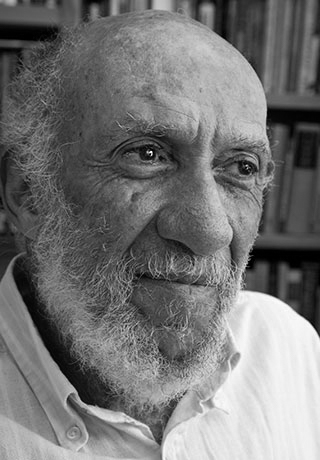

Professor Falk became an adviser to TFF when it was established in 1985.

Related Posts

LONDON – So far so good, at least on the wider level. While internally Iraq seems on the edge of chaos, the much heralded clash of civilizations between the Muslim and Judaeo-Christian worlds has yet to become apparent. We have anger and despair aplenty in the Arab and Muslim worlds. But very little rushing to the standard and there was no great pilgrimage of warriors to join the fight, as happened when the Soviet Union invaded Afghanistan twenty years ago, and then, having driven the Red Army out, were left to ferment in that mountainous redoubt. With the armaments supplied by the CIA the mujahidin were transformed into Al Qaeda that became, for a relatively brief moment as these things go, ‘the greatest threat to the homeland that America has ever known.’ Nevertheless a ‘Cold War’ between much of the Muslim world and the West is certainly in full swing. Winston...
The Challenge of Nuclear Weaponsin the Twenty-first CenturyA Path Forward The peoples and governments of the world face an urgent challenge relating to weaponry of mass destruction and particularly to nuclear weaponry.  At the crossroads of technology, terrorism, geopolitical ambition, and policies of preemption are new and potent dangers for humanity. Despite ending the nuclear standoff of the Cold War era, nuclear weaponry is again menacing the peoples of the world with catastrophic possibilities.  We recognize the need for any government to pursue its security interests in accordance with international law; and further, we recognize that distinctive threats to these interests now exist as a result of an active international terrorist network having declared war on the United States and its allies. Nonetheless, we reject the assessment of the current US administration that upgrading a reliance on nuclear weapons is in any sense justified as a response. We find it...
By Karin Wegestal MP, the Social Democratic Partyon behalf of the Swedish Committee for Solidarity with the Yugoslav People During the last decade, the Federal Republic of Yugoslavia has received more than 500,000 refugees from Croatia and Bosnia, and another 300,000 internally displaced persons, mainly from the province Kosovo and Metohia. For a country with about ten million inhabitants, such an influx of homeless people is obviously a very heavy burden – even under peaceful conditions. But in addition to that, the Federal Republic of Yugoslavia has been the subject to sanctions from the western powers for close to ten years and its infrastructure was badly hurt through Nato’s intense bombardment during 78 days in 1999. The result of all this is that Yugoslavia, once the most developed industrial country in Eastern Europe, is today the poorest country in Europe. In Serbia excluding Kosovo, with about ten million inhabitants and...

Recent Articles

Photo above: Carl Fredrik Reuterswärd’s Non-Violence outside UN Headquarters in New York. Kirill Levin, CC BY-NC-SA 2. Jan Oberg November 3, 2026 I am happy to be published in Horizons which is produced by the Center for International Relations and Sustainable Development, CIRSD, in Belgrade. My contribution brings out a radical re-thinking of what concepts such as defence, security, deterrence – and peace – may mean if we want to create a more peaceful world. It also summarises a few things I have been working with the last few decades. Please read it here Og her er den på dansk, takket være Johnny Baltzersens lynhurtige oversættelse
UNITE-tillid, DREAM-velstand og andre konstruktive komponenter Normally we publish articles in English here. But this is a translation of a very important TFF document that should reach as many as possible in Denmark since this country’s government has been one of the most hardline in Europe and, up till now at least, has refused to use diplomacy and, instead, spent tremendous sums on arming Ukraine with the express goal of defeating Russia. Thus this – unique – article is in Danish. Vi er Johnny Baltzersen og hans Fælles Sikkerhed – Fælles Fremtid på Substack overmåde taknemmelige for at have oversat og publiceret TFF’s 2025-portfølje for fredsidéer med henblik på Ukraines fremtid. Vi håber den nu kan nå mange flere danskere – som også vil sprede den og skabe debat – nu den danske regerings og folketingspartiernes politik på dette område siden 2022 står nu – forudsigeligt – ved vejs ende....
Jan Oberg TFF director October 28, 2026 Exactly one month has now passed since I published my criticism of the introduction to the special issue on Johan Galtung published by the Journal of Global Security Studies, JoGSS, and of Tor Egil Førland’s chapter about Galtung which serves as a preview to his forthcoming biography of Galtung to be published by PRIO. See the original on The Transnational here and the same article on TFF Substack with many general and critical comments and, in particular, the people who decided to withdraw from the biography project in protest. The special issue itself was extraordinary. It was devoted to the intellectual legacy of one of the founders of peace research and contained a number of strong assessments of his personality, scholarship, intellectual trajectory, and public role. Such assessments are, of course, entirely legitimate. No scholar is beyond criticism, and neither was Johan Galtung....

TFF on Substack

Discover and subscribe to more peace materials on TFF Substack

Most Popular

Photo above: Carl Fredrik Reuterswärd’s Non-Violence outside UN Headquarters in New York. Kirill Levin, CC BY-NC-SA 2. Jan Oberg November 3, 2026 I am happy to be published in Horizons which is produced by the Center for International Relations and Sustainable Development, CIRSD, in Belgrade. My contribution brings out a radical re-thinking of what concepts such as defence, security, deterrence – and peace – may mean if we want to create a more peaceful world. It also summarises a few things I have been working with the last few decades. Please read it here Og her er den på dansk, takket være Johnny Baltzersens lynhurtige oversættelse
UNITE-tillid, DREAM-velstand og andre konstruktive komponenter Normally we publish articles in English here. But this is a translation of a very important TFF document that should reach as many as possible in Denmark since this country’s government has been one of the most hardline in Europe and, up till now at least, has refused to use diplomacy and, instead, spent tremendous sums on arming Ukraine with the express goal of defeating Russia. Thus this – unique – article is in Danish. Vi er Johnny Baltzersen og hans Fælles Sikkerhed – Fælles Fremtid på Substack overmåde taknemmelige for at have oversat og publiceret TFF’s 2025-portfølje for fredsidéer med henblik på Ukraines fremtid. Vi håber den nu kan nå mange flere danskere – som også vil sprede den og skabe debat – nu den danske regerings og folketingspartiernes politik på dette område siden 2022 står nu – forudsigeligt – ved vejs ende....
Jan Oberg TFF director October 28, 2026 Exactly one month has now passed since I published my criticism of the introduction to the special issue on Johan Galtung published by the Journal of Global Security Studies, JoGSS, and of Tor Egil Førland’s chapter about Galtung which serves as a preview to his forthcoming biography of Galtung to be published by PRIO. See the original on The Transnational here and the same article on TFF Substack with many general and critical comments and, in particular, the people who decided to withdraw from the biography project in protest. The special issue itself was extraordinary. It was devoted to the intellectual legacy of one of the founders of peace research and contained a number of strong assessments of his personality, scholarship, intellectual trajectory, and public role. Such assessments are, of course, entirely legitimate. No scholar is beyond criticism, and neither was Johan Galtung....
Read More
knotted gun
Photo above: Carl Fredrik Reuterswärd’s Non-Violence outside UN Headquarters in New York. Kirill Levin, CC BY-NC-SA 2. Jan Oberg November 3, 2026 I am happy to be published in Horizons which is produced by the Center for International Relations and Sustainable Development, CIRSD, in Belgrade. My contribution brings out a radical re-thinking of what concepts such as defence, security, deterrence – and peace – may mean if we want to create a more peaceful world. It also summarises a few things I have been working with the last few decades. Please read it here Og her er den på dansk, takket være Johnny Baltzersens lynhurtige oversættelse
TFFPortfolioVign
UNITE-tillid, DREAM-velstand og andre konstruktive komponenter Normally we publish articles in English here. But this is a translation of a very important TFF document that should reach as many as possible in Denmark since this country’s government has been one of the most hardline in Europe and, up till now at least, has refused to use diplomacy and, instead, spent tremendous sums on arming Ukraine with the express goal of defeating Russia. Thus this – unique – article is in Danish. Vi er Johnny Baltzersen og hans Fælles Sikkerhed – Fælles Fremtid på Substack overmåde taknemmelige for at have oversat og publiceret TFF’s 2025-portfølje for fredsidéer med henblik på Ukraines fremtid. Vi håber den nu kan nå mange flere danskere – som også vil sprede den og skabe debat – nu den danske regerings og folketingspartiernes politik på dette område siden 2022 står nu – forudsigeligt – ved vejs ende....
JoGSS-Silent
Jan Oberg TFF director October 28, 2026 Exactly one month has now passed since I published my criticism of the introduction to the special issue on Johan Galtung published by the Journal of Global Security Studies, JoGSS, and of Tor Egil Førland’s chapter about Galtung which serves as a preview to his forthcoming biography of Galtung to be published by PRIO. See the original on The Transnational here and the same article on TFF Substack with many general and critical comments and, in particular, the people who decided to withdraw from the biography project in protest. The special issue itself was extraordinary. It was devoted to the intellectual legacy of one of the founders of peace research and contained a number of strong assessments of his personality, scholarship, intellectual trajectory, and public role. Such assessments are, of course, entirely legitimate. No scholar is beyond criticism, and neither was Johan Galtung....
Screenshot 2026-10-26 115647
An aspect of Iran’s culture and civilisation you’ve probably never heard about. Don’t be surprised if the US and Israel also try to bomb them. Jan ObergTFF director October 26, 2026 Today – under the “USraeli” threat of new “annihilating” bombings – opens the 7th International Conference on Peace and Conflict Resolution at Tehran’s University. As far as I can tell, this is the only permanent, advanced peace research institution in West Asia/the Middle East. Perhaps more countries in that region could be inspired? I mean, how many military “security” institutes and military academies do they have? Many peace research institutes and university departments have been established since the 1950s in the West. They are now all under attack; some have closed down, some have gone mainstream, yet others kept the name but do nothing to research peace and disseminate results or advice; instead, they cooperate with militarism’s platforms such...
Screenshot 2026-10-15 141837
Let’s discuss using AI to create peace – in contrast to boring geopolitics devoid of creative healing and visions. Jan Oberg TFF director October 15, 2026 I asked VEED to create a short video exemplifying how peace is preferable to war, then chose the lady as a template. Simple as that. In less than a minute, it produced this video, which any peace-loving person would appreciate. The only problem is that human intelligence (HI), at least the one that exists among Western decision-makers, isn’t half as moral or smart as AI. I have used AI to dialogue about peace and peace plans, creative conflict resolution and visions of a better future for humankind. It so happens that I am having more stimulating, intelligent, creative and moral discussions with AI than I could possibly have with any EU or NATO leader today. Yes, AI has very problematic and dangerous aspects; used...
girl-5894831_1280
Below are TFF-related media mentions, comments, videos and social media posts published elsewhere but not on this homepage. We happen to catch and list only a fraction. Regarding video comments and debates, we recommend that you go to the TFF Video Channel on Substack where many of them are reproduced. Jan Oberg is a contributor to China Daily – 52 million daily clicks – and Global Times, CGTN and CCTV (the national television), China Investment, Xinhua News Agency and several others. Articles and videos on these media very often multiply into countless Chinese (and Western media) that re-post them from these main media. Thanks to The China Academy, his analyses, interviews and comments are frequently posted on YouTube channels such as Thinkers Forum and Wave Media. These videos are often re-posted on Bilibili (China’s YouTube), the China Content Center on TikTok, and on the Chinese edition of TikTok, Douyin.com. This means reaching hundreds of millions of viewers worldwide over a year. While there are too many to catch on all these...




