
Recently I participated in a conference on global inequality and human rights held at the University of Texas in Austin, a lively quite cosmopolitan city. During the lunch break I was talking with a young PhD student from Israel who had just presented an informative paper on inequality in the Philippines. I asked her about her career plans and how it was like to be living in Israel these days. She told me that she was married to an Israeli and planned to return to finish her studies in Tel Aviv after a fellowship year at UT.

I tried to engage her in conversation about evolving Israeli attitudes toward the Palestinians and the related failed diplomacy, but she seemed rather uninformed and perhaps even disinterested as if the peace agenda was not really present in her active consciousness. Then all at once she said something that surprised me. “I am not looking forward to returning to Israel, it is becoming a fascist state.”

What made this strong statement surprising was that it contrasted with the blandness of everything that had preceded it. I asked inquisitively, neither agreeing nor disagreeing, “What makes you say that?”

She pondered the question as if it had come to her from the wild blue yonder. It seemed as if she had never thought about it before, and maybe it was just a spontaneous assertion that she was articulating for the first time. After a pause, she answered somewhat hesitantly: “Because the army is the most powerful and admired institution in Israel, and the government controls everything, it is acting as a totalizing force.”

I suppose that gets you to Franco-style fascism that prevailed for so long in Spain, but not the more virulent forms of fascism associated with Mussolini’s Italy and especially Hitler’s Germany.

I agreed with the young woman about the hegemony of the armed forces, both institutionally and psychologically, but I was less sure about the totalizing reach of the government.

After all, Haaretz continues to publish Gideon Levy and Amira Hass, and they are both outspoken critics of Israeli policies and leaders, but then again there seems to be mounting pressure in Israel against human rights NGOs and peaceful protests, and an official tone of belligerence toward the BDS movement that even South African apartheid racists never exhibited.

The Israeli young woman in Texas never mentioned the oppression of the Palestinians as one dimension of this Israeli drift from democracy to fascism, although many progressive Israelis believe that it is the prolonged occupation of Palestinian territory that has pushed the country toward or over the precipice of fascism.

Jeff Halper, author of War Against the People: Israel, Palestinians, and Global Pacification (2015), a leading Israeli activist scholar who emigrated from the U.S. decades ago and has fearlessly placed his body in front of bulldozers to block the demolitions of Palestinian homes, has a different way of putting his concerns about what is happening to the Israeli governing process. “Israel is a vibrant democracy if you are Jewish.” But even for Jews there is pushback, according to Halper, making it “harder and harder to protest.”

What of others living in Israel, especially the Palestinians?

Those living in Israel or under occupation are given a fugitive identity by being called ‘Arabs,’ a designation that functions as a way of denying nationalist claims based on a ‘Palestinian’ primary identity. As is well known, Israel uses the legalities of citizenship strategically.

It has been recently offering the 25,000 Druze residents of the Golan Heights Israeli citizenship, apparently to neutralize their antagonism toward Netanyahu’s land grab, which defies international law by insisting on permanent Israeli sovereignty over conquered and occupied Syrian territory. So far few Druze have accepted this offer of Israeli citizenship, but this could change if Israel is able to sustain its claim.

As Palestinians know from bitter experience, the privileged societal status of Jews within and without Israel is mostly achieved by way of nationality laws that are ethnically framed to favor Jews, while Israeli citizens, whether or not Jewish, enjoy formal equality that doesn’t count for much when it comes to rights and legal protection.

The most notorious of the many ethnographic discriminations in Israeli law is between Jews who are granted an unlimited right of return wherever they live in the world and however tenuous their links to Israel, while Palestinians and other minorities do not have any right of return even if the Palestinian roots of their families go back many generations. Israeli apologists contend that as a Jewish state Israel can do what many other states do, and be selective about its policies toward immigration, and privilege whoever it wishes, and further that the historical context of Zionist was shaped by the aspiration to create a sanctuary for Jews so long targeted for persecution.

What this rationale leaves out is that this sanctuary was created by the displacement of the majority of the indigenous population of Palestine, and surely those Palestinians who remain in Israel should not be disadvantaged in their own homeland.

There are other ways in which the fascist tendency toward racism and purification are manifest.

The apartheid structures of occupation, differently maintained in the West Bank and Gaza impose systematic and severe discrimination and a miserable status of stateless rightlessness on the Palestinians while according internationally unlawful Israeli settlers in the West Bank and Jerusalem the full panoply of rights associated with ‘the rule of law’ as bestowed by most constitutional democracies.

Also, Israel’s consistent reliance on excessive force against Palestinian protests and resistance activities is also a sign of fascist disrespect for adversary ethnic and religious identities, and even of the right to dissent and display a posture of opposition to the state.

Of course, whether Israel is or is becoming fascist or not in the end is a matter of interpretation, but sadly, it is no longer an extremist assertion or a sign of anti-Semitism to regard Israel as a fascist state.

And by way of contrast, it is extreme whitewashing to keep insisting that Israel is ‘the only democracy in the Middle East.’

Some years ago, Henry Seigman, seemed to imply a similar set of circumstances when he argued that Israel had become an ‘ethnocracy,’ that is, a Jewish state in which non-Jews were at best subordinated, and at worst scapegoated in such a way as to make involuntary population transfers an increasingly popular option with the public. Seigman, former head of the American Jewish Congress, also wrote that instead of being the only democracy Israel has become the ‘only apartheid regime in the Western world.”

Of course, the question of the American drift toward fascism has also been noted for several decades.

To some extent, the awareness that ‘perpetual war’ is incompatible with the maintenance of real democracy was part of this concern. Peter Dale Scott’s explorations of ‘the deep state’ with its unaccountable dark forces of secrecy that pulled the strings of the national security was an indictment of the merger of covert intelligence and special ops with the underworld of crime and drugs that have intensified fears of the erosion of democratic governance.

And we not must overlook Edward Snowden’s brave disclosures of the webs spun by the surveillance state that potentially entangle every person on the face of the earth or the special bonds connections the hedge fund moguls of Wall Street with the bureaucratic elites in Washington that are doing their assigned job of keeping the citizenry on an extremely short leash.

This may help explain the anger in America bubbling to the surface during a time when profits continue to rise geometrically while wages remain either flat or keep declining in constant dollars.

And then came Trump, unleashing the dormant underbelly of populist fascism in America, surfacing in various virulent forms: Islamophobia and xenophobia being the most obvious.

Just as some understanding of white racism was finally seeping into liberal consciousness by the much belated recognition that ‘black lives matter,’ it was also becoming clear that Muslim lives don’t matter, or matter even less, and Latino lives were becoming problematized by the sudden passion for upholding the law that was sweeping across the American plains, lending strident support to those calling for the punishment, and the massive deportation of those categorized as ‘the illegals.’

The caustic cultural critic and ardent American Zionist, Leon Wieseltier, recently commented on Trump: “Someone asked me if I thought he was a fascist, and I said, ‘he says fascistic things, but to call him a fascist imputes too great a degree of intellectual coherence to him.” And then condescendingly added, “There is no belief system there. I mean he is not wrong. He’s pre-wrong.”

He went on to say that Clinton also worried him as a candidate, not because of her hawkish views and record, but people might not vote for her because she was unlovable. As Wieseltier caustically put it, “I’m getting exceedingly nervous about her ability to beat that monster Trump. She’s not very nimble and nobody loves her.” Of course, no mention of Sanders as a glimmer of light, at least on the American horizon.

Instead Wieseltier instructs his 13-year old son “that presidential elections are lesser of evil exercises. I have never once voted happily.” Of course, this is not such an outlandish assessment, although as a candidate eight years ago, I still feel that Barack Obama was not the lesser of evils, but his candidacy represented an extraordinary breakthrough.

Although often deeply disappointing later, as president, especially in the domains of security, neoliberalism, and the Middle East, the Republican extreme antipathy toward the man and his policies has fascist, as well as racist, undertones. And why wouldn’t even Wieseltier want to cheer his son up a bit by mentioning Bernie Sanders, who may not be the revolutionary he claims to be, but he is authentically talking some truth to power in ways that defy the mores of the American plutocracy?

The American media and liberal mainstream, especially among older folks, is understandably preoccupied with the rightist surge, and is unabashedly counting on a Clinton victory. It is not nearly ready to ditch Democrats linked to Wall Street, Pentagon, and Israel in the manner of Clinton.

In fact, most Clinton supporters see little, if any, substantive problem with her, but if critical at all, lament her lack of charm or go ‘tut, tut’ if anyone brings up her past support for the Iraq War, the Libyan intervention, and various authoritarian moves in Central America, most notably Honduras.

Robert Paxton, the author of one of the best books on fascism, The Anatomy of Fascism (2004), is reluctant to give a definition of fascism, both because there are many varieties and because it tends to essentialize fascism, which is better comprehended, he believes, as a process that evolves rather than as a system with certain defining attributes.

Paxton at the very end of his book relents, offering a list of characteristics that he believes are shared by historical instances of fascism. I believe it is worth reproducing Paxton’s list [p. 219-220], although its application to the U.S. and Israel depends on nuanced interpretation:

• “a sense of overwhelming crisis beyond the reach of any traditional solution;”

• “the primacy of the group, toward which one has duties superior to every right, whether individual or universal, and the subordination of the individual to it;”

• “the belief that one’s group is a victim, a sentiment that justifies any action, without legal or moral limits, against its enemies, both internal and external;”

• “dread of the group’s decline under the corrosive effects of individualistic liberalism, class conflict, and alien influences;”

• “the need for closer integration of a purer community, by consent if possible, by exclusionary violence if necessary;”

• “the need for authority by natural chiefs (always male), culminating in a national chieftain who alone is capable of incarnating the group’s historical destiny;”

• “the superiority of the leader’s instincts over abstract and universal reason;”

• “the beauty of violence and the efficacy of will, when they are devoted to the group’s success;”

• “the right of the chosen people to dominate others without restraint from any kind of human or divine law, right being decided by the sole criterior of the group’s prowess within a Darwinian struggle.”

It makes little difference as to whether we explain this militarist drift observed in Israel and the United States as the outcome of decades of high alert geopolitics or the impoverishment of tens of millions due to the cruel dynamics of neoliberal capitalism or primarily as a response to the changing paradigm of global conflict with its borderless battlefields and extremist non-state, transnational political actors.

Widespread violent discontent and highly coercive security structures of state power seem here to stay, and so it becomes prudent to fear resurgent forms of fascism reconfigured to correspond with the parameters of the digital age.

Reading through Paxton’s list is a chilling reminder of how fascist regimes destroy the fabric of humane societies, but the list also may be read as a cautionary reminder that what exists in Israel and the United States is best understood as pre-fascist, and that there remain anti-fascist political spaces to turn the tide of events in more progressive directions.
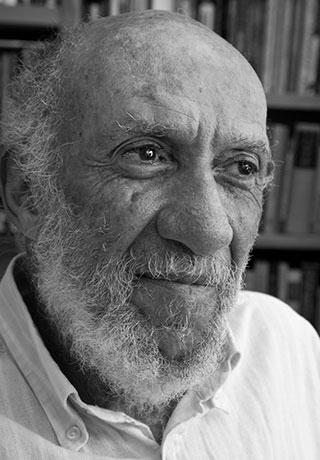

Professor Falk became an adviser to TFF when it was established in 1985.

Related Posts

Tony Robinson October 4, 2026 Violence is easy to recognise when someone is being beaten, shot or killed. It becomes more difficult when nobody is holding a weapon. Poverty, discrimination, exploitation and repression can restrict a human life just as effectively, although they do so in very different ways and with very different consequences. Simply adding more categories to an ever-growing list of forms of violence does not really solve the problem. The more interesting question is what all these different situations have in common and why it makes sense to describe them using the same word. Human beings do not simply react to what happens around them. They remember the past, imagine things that do not yet exist, make plans and undertake projects. Workers organise because they imagine different working conditions; people migrate because they imagine another life somewhere else; social movements emerge because people refuse to accept the...
It’s a matter of principles, courage, vision and pulling together – while the militarist world is falling apart… Peter Langille October 3, 2026 “Here, then, is the problem which we present to you, stark and dreadful and inescapable: Shall we put an end to the human race; or shall mankind renounce war?”The Bertrand Russell—Albert Einstein Manifesto, July 9, 1955 ⁕ The forecast for what’s ahead is worrisome. The sharp rise in armed conflicts over the past three years is adding to what was already the highest level in over seventy years. Genocides, which should be prevented are supported. A shared climate emergency that jeopardises survival is ignored. Diverse polls now suggest that people are war-weary, worried and interested in a more effective United Nations. And, there are viable policy options for a more secure world! Yet governments are doubling-down, betting on more war and investing heavily. If current trends persist,...
Johan Galtung 1930-2024October 2015 Published here on October 3, 2026 Let us focus on Civilization for conflict analysis and remedies. Major forms of disorder use violence; war is state organized violence. The most belligerent states are the United States of America and Israel, both with civilization roots. National Evangelism, the US Protestant Christian civilization– more national than evangelical–justifies US warfare as exceptionalism of a people chosen by God, with a manifest destiny to run the world. Orthodox Judaism justifies Israeli warfare to conquer and expand from Nile to Euphrates as a religious right and duty to the Eternal One. The third most belligerent country, the UK, no longer believes it is God-chosen but chosen by the USA; not quite the same but something. But the root cause of global disorder lies in the Occident–with Islam–seeing itself as the single, universal civilization valid for all at all times, all others being...

Recent Articles

Tony Robinson October 4, 2026 Violence is easy to recognise when someone is being beaten, shot or killed. It becomes more difficult when nobody is holding a weapon. Poverty, discrimination, exploitation and repression can restrict a human life just as effectively, although they do so in very different ways and with very different consequences. Simply adding more categories to an ever-growing list of forms of violence does not really solve the problem. The more interesting question is what all these different situations have in common and why it makes sense to describe them using the same word. Human beings do not simply react to what happens around them. They remember the past, imagine things that do not yet exist, make plans and undertake projects. Workers organise because they imagine different working conditions; people migrate because they imagine another life somewhere else; social movements emerge because people refuse to accept the...
It’s a matter of principles, courage, vision and pulling together – while the militarist world is falling apart… Peter Langille October 3, 2026 “Here, then, is the problem which we present to you, stark and dreadful and inescapable: Shall we put an end to the human race; or shall mankind renounce war?”The Bertrand Russell—Albert Einstein Manifesto, July 9, 1955 ⁕ The forecast for what’s ahead is worrisome. The sharp rise in armed conflicts over the past three years is adding to what was already the highest level in over seventy years. Genocides, which should be prevented are supported. A shared climate emergency that jeopardises survival is ignored. Diverse polls now suggest that people are war-weary, worried and interested in a more effective United Nations. And, there are viable policy options for a more secure world! Yet governments are doubling-down, betting on more war and investing heavily. If current trends persist,...
Johan Galtung 1930-2024October 2015 Published here on October 3, 2026 Let us focus on Civilization for conflict analysis and remedies. Major forms of disorder use violence; war is state organized violence. The most belligerent states are the United States of America and Israel, both with civilization roots. National Evangelism, the US Protestant Christian civilization– more national than evangelical–justifies US warfare as exceptionalism of a people chosen by God, with a manifest destiny to run the world. Orthodox Judaism justifies Israeli warfare to conquer and expand from Nile to Euphrates as a religious right and duty to the Eternal One. The third most belligerent country, the UK, no longer believes it is God-chosen but chosen by the USA; not quite the same but something. But the root cause of global disorder lies in the Occident–with Islam–seeing itself as the single, universal civilization valid for all at all times, all others being...

TFF on Substack

Discover and subscribe to more peace materials on TFF Substack

Most Popular

Tony Robinson October 4, 2026 Violence is easy to recognise when someone is being beaten, shot or killed. It becomes more difficult when nobody is holding a weapon. Poverty, discrimination, exploitation and repression can restrict a human life just as effectively, although they do so in very different ways and with very different consequences. Simply adding more categories to an ever-growing list of forms of violence does not really solve the problem. The more interesting question is what all these different situations have in common and why it makes sense to describe them using the same word. Human beings do not simply react to what happens around them. They remember the past, imagine things that do not yet exist, make plans and undertake projects. Workers organise because they imagine different working conditions; people migrate because they imagine another life somewhere else; social movements emerge because people refuse to accept the...
It’s a matter of principles, courage, vision and pulling together – while the militarist world is falling apart… Peter Langille October 3, 2026 “Here, then, is the problem which we present to you, stark and dreadful and inescapable: Shall we put an end to the human race; or shall mankind renounce war?”The Bertrand Russell—Albert Einstein Manifesto, July 9, 1955 ⁕ The forecast for what’s ahead is worrisome. The sharp rise in armed conflicts over the past three years is adding to what was already the highest level in over seventy years. Genocides, which should be prevented are supported. A shared climate emergency that jeopardises survival is ignored. Diverse polls now suggest that people are war-weary, worried and interested in a more effective United Nations. And, there are viable policy options for a more secure world! Yet governments are doubling-down, betting on more war and investing heavily. If current trends persist,...
Johan Galtung 1930-2024October 2015 Published here on October 3, 2026 Let us focus on Civilization for conflict analysis and remedies. Major forms of disorder use violence; war is state organized violence. The most belligerent states are the United States of America and Israel, both with civilization roots. National Evangelism, the US Protestant Christian civilization– more national than evangelical–justifies US warfare as exceptionalism of a people chosen by God, with a manifest destiny to run the world. Orthodox Judaism justifies Israeli warfare to conquer and expand from Nile to Euphrates as a religious right and duty to the Eternal One. The third most belligerent country, the UK, no longer believes it is God-chosen but chosen by the USA; not quite the same but something. But the root cause of global disorder lies in the Occident–with Islam–seeing itself as the single, universal civilization valid for all at all times, all others being...
Read More
Living-Peace-Sign-Budapest-copy
Tony Robinson October 4, 2026 Violence is easy to recognise when someone is being beaten, shot or killed. It becomes more difficult when nobody is holding a weapon. Poverty, discrimination, exploitation and repression can restrict a human life just as effectively, although they do so in very different ways and with very different consequences. Simply adding more categories to an ever-growing list of forms of violence does not really solve the problem. The more interesting question is what all these different situations have in common and why it makes sense to describe them using the same word. Human beings do not simply react to what happens around them. They remember the past, imagine things that do not yet exist, make plans and undertake projects. Workers organise because they imagine different working conditions; people migrate because they imagine another life somewhere else; social movements emerge because people refuse to accept the...
b54a1f10-8c65-4f0b-9dd5-4abc0a7d04cc_2659x2659
It’s a matter of principles, courage, vision and pulling together – while the militarist world is falling apart… Peter Langille October 3, 2026 “Here, then, is the problem which we present to you, stark and dreadful and inescapable: Shall we put an end to the human race; or shall mankind renounce war?”The Bertrand Russell—Albert Einstein Manifesto, July 9, 1955 ⁕ The forecast for what’s ahead is worrisome. The sharp rise in armed conflicts over the past three years is adding to what was already the highest level in over seventy years. Genocides, which should be prevented are supported. A shared climate emergency that jeopardises survival is ignored. Diverse polls now suggest that people are war-weary, worried and interested in a more effective United Nations. And, there are viable policy options for a more secure world! Yet governments are doubling-down, betting on more war and investing heavily. If current trends persist,...
010
Johan Galtung 1930-2024October 2015 Published here on October 3, 2026 Let us focus on Civilization for conflict analysis and remedies. Major forms of disorder use violence; war is state organized violence. The most belligerent states are the United States of America and Israel, both with civilization roots. National Evangelism, the US Protestant Christian civilization– more national than evangelical–justifies US warfare as exceptionalism of a people chosen by God, with a manifest destiny to run the world. Orthodox Judaism justifies Israeli warfare to conquer and expand from Nile to Euphrates as a religious right and duty to the Eternal One. The third most belligerent country, the UK, no longer believes it is God-chosen but chosen by the USA; not quite the same but something. But the root cause of global disorder lies in the Occident–with Islam–seeing itself as the single, universal civilization valid for all at all times, all others being...
Screenshot 2026-10-02 011738
Jan ObergPhD, director, The Transnational Foundation for Peace and Future Research, TFFLund, Sweden October 2, 2026 This is my full original manuscript. The Chinese Academy of Social Science, CASS, makes two publications out if it. 1. China’s Five-year plan emphasized the capabilities of basic research and original innovation. It is regarded as the goal of the future social development, which, as required, should be significantly enhanced. Can you comment on the importance of original innovation in research and academic study? I believe it is easier to define “original innovation” in the natural sciences than in social sciences. The breaking points of what constitutes something new, or innovative, are not quite as sharp in the latter. But in both fields it is about opening up something that was closed, unseen, unexplored before – making manifest what was earlier latent. Innovations come in many forms and shapes – naming something that was not...
arctic-circle-map
The agreement is catastrophic both because of what it says and what it doesn’t mention. It reduces further the major asset of security policies: Freedom of action. Jan Oberg TFF director September 25, 2026 A couple of hours before the agreement was signed on September 22, 2026, I published the following 13 hypotheses about what it would most likely contain on TFF Substack (in English). I was wrong on only the first point. Contrary to what Trump had written on his Truth Social platform, it does not appear to come into force immediately. In fact, it turned out to be worse than even I had anticipated. After these hypotheses now come a number of reflections in light of what the agreement actually contains, and does not contain, as well as the way in which it has generally been presented by major media outlets and by the public-service broadcaster DR. My...
girl-5894831_1280
Below are TFF-related media mentions, comments, videos and social media posts published elsewhere but not on this homepage. We happen to catch and list only a fraction. Regarding video comments and debates, we recommend that you go to the TFF Video Channel on Substack where many of them are reproduced. Jan Oberg is a contributor to China Daily – 52 million daily clicks – and Global Times, CGTN and CCTV (the national television), China Investment, Xinhua News Agency and several others. Articles and videos on these media very often multiply into countless Chinese (and Western media) that re-post them from these main media. Thanks to The China Academy, his analyses, interviews and comments are frequently posted on YouTube channels such as Thinkers Forum and Wave Media. These videos are often re-posted on Bilibili (China’s YouTube), the China Content Center on TikTok, and on the Chinese edition of TikTok, Douyin.com. This means reaching hundreds of millions of viewers worldwide over a year. While there are too many to catch on all these...




