
PressInfo #152 – A U.S. war against Iraqmust be prevented now

We had just driven the 900 kilometres-long, desert highway from Baghdad to Amman and boarded the plane from Amman to Sweden via Paris. Having lived in a free media free-zone for two weeks during our fact-finding mission to Baghdad, we eagerly grabbed The Wall Street Journal of May 28. The top headline read, Military Strategists Favor Large Iraq Invasion Force. At Least 200,000 Troops Would Be Needed to Oust Saddam, U.S. Suggests. So, they are going to bomb, to destroy, to impose their will on Iraq, the country and the people, that we have just visited?

Now that we have been there, our reaction is different than it would have been had we read that headline back home in Sweden. We met a young woman in her wheelchair in Babylon, south of Baghdad. She had just been helped by the United Nations Development Program (UNDP) and the Iraqi Ministry of Labour to start a small shop where she prints publications from a computer and holds computer classes for university students and other citizens. Will her dream, already realised, be shattered by a new war?

We think of the dozens of children and older citizens in the street who greeted us with, Welcome to Iraq and Salam Aleikum – Hello = peace be upon you – and wanted us to take pictures of them, smiling all over, in spite of the way we look, strangers in their eyes. We have both travelled a bit and few peoples can compete with the Iraqis when it comes to being kind, helpful, hospitable and paying respect to the stranger. We think of the scholars we met on the last evening when we gave lectures on preventive diplomacy, peace-building and non-violent conflict-resolution at Baytol Hikma, The House of Wisdom, a beautiful, newly renovated, blue compound on the bank of the Tigris. Will Baytol Hikma be destroyed in new raids, will these scholars and their families be killed or further deprived of their right to pursue scholarly work the way they used to?

What sentimentality, you may think. But the problem with the West and its media, including The Wall Street Journal, is that the only Iraqi mentioned among 25 million is President Saddam Husayn. The only approach they have to one of the world’s oldest and most sophisticated cultures is devastating sanctions and military enforcement. The only perspective they have is their own and it seems to be beyond dispute that they have a moral right to bomb societies and oust leaders they just do not like. How the Iraqis think and feel after the wars with Iran, with Kuwait, with each other, with the West and after 12 years of utterly inhuman sanctions is of no concern.

If The Wall Street Journal cared to do investigative research and go to Iraq, it would have a hard time finding anyone in Iraq, citizen or foreigner, who favours the present sanctions or a future US war against Iraq. If it cared about objectivity, we would have had the anti-war viewpoints represented in the same article or hitting the front page of the next edition.

The whole war project is counterproductive; less diplomatically expressed, it’s absurd, perverse, pathetic and morally indefensible. If the U.S. starts a war against Iraq, it will be most divisive for NATO, which is still licking its wounds after the bombing of Yugoslavia in 1999, and the U.S., with its “we-don’t-need-you” policies when targeting Afghanistan. In terms of public opinion, the United States will end up being, unfortunately, even more isolated and the Atlantic gap will increase further.

Saddam Husayn will gain from such a war and know how to exploit it to his own benefit. True, there may be many in Iraq and outside who dream about the day he is gone. But in times of crisis and war, citizens tend to rally around their leaders; we saw that in Serbia during the bombing. Most likely, internal opposition elements will be labelled as traitors and treated accordingly by a regime that is not known to use soft gloves. As far as we know, there are no governments in the Middle East, with the exception of Israel, that favour a new war against Iraq, not even Kuwait. If that is so, rest assured that the Arab in the street is even more strongly against it. The fact is that the Iraqis have managed extremely well to re-build diplomatic and economic relations with neighbours. The opening of the border with Saudi Arabia in May is one of many examples.

Although Iraq is devastated and nowadays only a shadow of its past military might, it is not Afghanistan. It will not be possible for any foreign-imposed regime to control Baghdad and its immediate surroundings, about 5 million inhabitants, let alone control all of the country.

With 200,000 U.S. troops and possibly some more sucked in during the fighting, what will the U.S. and the West do to control and run the affairs of Iraq? In short, how do you govern 25 million people, many, if not the majority, of whom are vehemently opposed to the West and do not trust the U.S. after all they have been through? You can’t even argue that you liberated the women, because Iraq is a secular society in which women play a more “Western” role than in virtually any other Arab state.

From where do the war planners and responsible foreign-policy makers expect to gather enough well-educated, experienced and honest Iraqis to run the post-Saddam Iraq they hope for? It should be pretty obvious that the Iraqi opposition does not constitute a credible, viable alternative. Would they serve a foreign Governement for anything but the money and privileges they expect and would they, with that main motivation, be the leaders and civil servants the citizens need? Or would we end up witnessing civil war, coups, plots and uprisings – of which there exists plenty in Iraq’s modern history – in the wake of a U.S. invasion and departure?

What would it mean for the citizens of Iraq if the UN and the incredibly hardworking humanitarian organisations, Care, Unicef, Caritas, Red Cross Federation, ICRC, etc. were forced to evacuate? The Oil for Food program (to which we shall return in a later PressInfo) operates efficiently thanks to both the Iraqi government – whose distribution of food and medicine in the words of a high-ranking international is “second to none in actually reaching those in need” – and to the wide variety of national and international humanitarian organisations. No one who has visited Iraq can possibly doubt that a new war will have unspeakably cruel consequences for the civilian population. Everybody also knows that the Iraqi elite has not exactly suffered at any point due to the sanctions or the bombings.

But Saddam Husayn too is making a series of mistakes. The biggest may be that he thinks that military preparation is the only way to defend Iraq. We have no illusions that he studies Gandhi, but he and his advisers should be aware that there is no way they can win a military war against history’s strongest military power – which, by the way, also does not mean that the United States can win, because that takes more than military might. You can still win militarily and lose morally and politically…

War must be prevented by all possible means. The only large and acceptable to all mediator that could, perhaps, help avert war is the European Union, in some kind of co-operation with Russia and China. The latter two have full embassies in Iraq and monitor the situation at close range. However, EU countries have withdrawn their ambassadors from the country. Only the French uphold a significant de facto presence, focussing on business and culture. So there is low-level representation and a low-level of knowledge about what is really going on, a violation of the first rule of thumb of conflict resolution: keep yourself well informed about your opponent and keep a door open for communication.

Iraq signalled a wish for dialogue with the EU, but here again, the EU proved incapable of mustering a coherent, relevant and far-sighted common policy. Instead the EU left it again for the U.S. to do the spectacular thing and for itself to pay for the future rebuilding of the country – so much, regrettably, for the EU’s civilian crisis management facility and common foreign and security policy vis-à-vis one of the most serious conflicts on earth.

So, articles in the Western media report matter-of-factly about the planning of what cannot but lead to utter chaos and cruelty for the Iraqis. Allegedly, it will finally rid the world of Saddam, but even so: what is the likelihood of a better, more prosperous, secure and democratic Iraq after bombings, invasions and occupation?

Our answer is: zero probability. Military conflict-resolution in Croatia, Bosnia, Kosovo, Macedonia, Somalia and Afghanistan can be summarised as quick-fixes with no long-term improvement possible. The politicians and military people behind the conflict-management in these hot spots seem to have forgotten von Clausewitz’s brilliant formulation: “before you go to war you must decide what kind of peace you want.”

Any type of war against Iraq will cause more problems and solve none of them in the long run. If free media focussed on the 24,999,999 other Iraqis rather than on Saddam Husayn, ask policy-makers critical questions about the assumed post-Saddam scenario for Iraq and the region, and finally give the anti-war majority in the West and in Iraq a voice, there would be a chance of avoiding the impending catastrophe.

The conflict between Iraq and the United States and the West is one of the most tightly locked. Stereotypes abound on both sides, and we, the authors, do not profess to have the solution. But if the debate could be re-started from a new point of departure – i.e. no more wars against Iraq – other possibilities may gain ground. When we know that war is not an option, we can begin to move away from smart sanctions and smart wars and explore whether there are smarter ways to solve conflicts.

The following TFF PressInfos will explore these possibilities from a variety of angles.

© TFF 2002

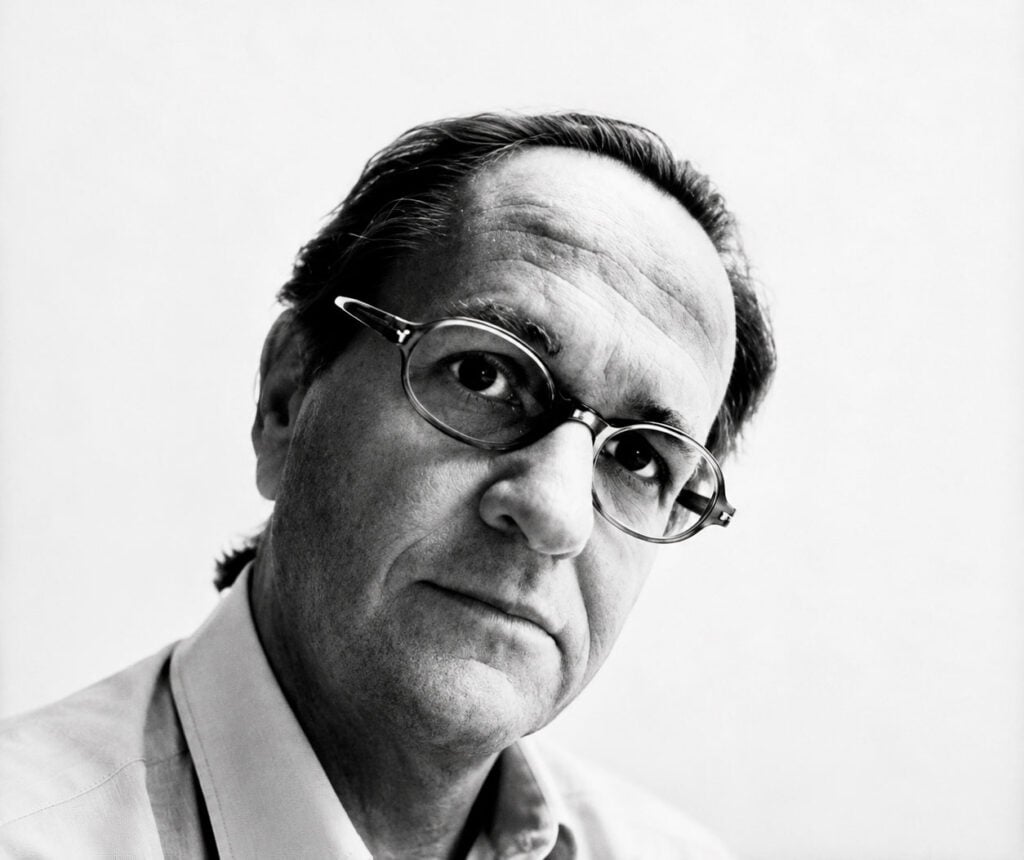
Peace & future researcher + ‌Art Photographer

Related Posts

LONDON – So far so good, at least on the wider level. While internally Iraq seems on the edge of chaos, the much heralded clash of civilizations between the Muslim and Judaeo-Christian worlds has yet to become apparent. We have anger and despair aplenty in the Arab and Muslim worlds. But very little rushing to the standard and there was no great pilgrimage of warriors to join the fight, as happened when the Soviet Union invaded Afghanistan twenty years ago, and then, having driven the Red Army out, were left to ferment in that mountainous redoubt. With the armaments supplied by the CIA the mujahidin were transformed into Al Qaeda that became, for a relatively brief moment as these things go, ‘the greatest threat to the homeland that America has ever known.’ Nevertheless a ‘Cold War’ between much of the Muslim world and the West is certainly in full swing. Winston...
The Challenge of Nuclear Weaponsin the Twenty-first CenturyA Path Forward The peoples and governments of the world face an urgent challenge relating to weaponry of mass destruction and particularly to nuclear weaponry.  At the crossroads of technology, terrorism, geopolitical ambition, and policies of preemption are new and potent dangers for humanity. Despite ending the nuclear standoff of the Cold War era, nuclear weaponry is again menacing the peoples of the world with catastrophic possibilities.  We recognize the need for any government to pursue its security interests in accordance with international law; and further, we recognize that distinctive threats to these interests now exist as a result of an active international terrorist network having declared war on the United States and its allies. Nonetheless, we reject the assessment of the current US administration that upgrading a reliance on nuclear weapons is in any sense justified as a response. We find it...
By Karin Wegestal MP, the Social Democratic Partyon behalf of the Swedish Committee for Solidarity with the Yugoslav People During the last decade, the Federal Republic of Yugoslavia has received more than 500,000 refugees from Croatia and Bosnia, and another 300,000 internally displaced persons, mainly from the province Kosovo and Metohia. For a country with about ten million inhabitants, such an influx of homeless people is obviously a very heavy burden – even under peaceful conditions. But in addition to that, the Federal Republic of Yugoslavia has been the subject to sanctions from the western powers for close to ten years and its infrastructure was badly hurt through Nato’s intense bombardment during 78 days in 1999. The result of all this is that Yugoslavia, once the most developed industrial country in Eastern Europe, is today the poorest country in Europe. In Serbia excluding Kosovo, with about ten million inhabitants and...

Recent Articles

Tony Robinson October 4, 2026 Violence is easy to recognise when someone is being beaten, shot or killed. It becomes more difficult when nobody is holding a weapon. Poverty, discrimination, exploitation and repression can restrict a human life just as effectively, although they do so in very different ways and with very different consequences. Simply adding more categories to an ever-growing list of forms of violence does not really solve the problem. The more interesting question is what all these different situations have in common and why it makes sense to describe them using the same word. Human beings do not simply react to what happens around them. They remember the past, imagine things that do not yet exist, make plans and undertake projects. Workers organise because they imagine different working conditions; people migrate because they imagine another life somewhere else; social movements emerge because people refuse to accept the...
It’s a matter of principles, courage, vision and pulling together – while the militarist world is falling apart… Peter Langille October 3, 2026 “Here, then, is the problem which we present to you, stark and dreadful and inescapable: Shall we put an end to the human race; or shall mankind renounce war?”The Bertrand Russell—Albert Einstein Manifesto, July 9, 1955 ⁕ The forecast for what’s ahead is worrisome. The sharp rise in armed conflicts over the past three years is adding to what was already the highest level in over seventy years. Genocides, which should be prevented are supported. A shared climate emergency that jeopardises survival is ignored. Diverse polls now suggest that people are war-weary, worried and interested in a more effective United Nations. And, there are viable policy options for a more secure world! Yet governments are doubling-down, betting on more war and investing heavily. If current trends persist,...
Johan Galtung 1930-2024October 2015 Published here on October 3, 2026 Let us focus on Civilization for conflict analysis and remedies. Major forms of disorder use violence; war is state organized violence. The most belligerent states are the United States of America and Israel, both with civilization roots. National Evangelism, the US Protestant Christian civilization– more national than evangelical–justifies US warfare as exceptionalism of a people chosen by God, with a manifest destiny to run the world. Orthodox Judaism justifies Israeli warfare to conquer and expand from Nile to Euphrates as a religious right and duty to the Eternal One. The third most belligerent country, the UK, no longer believes it is God-chosen but chosen by the USA; not quite the same but something. But the root cause of global disorder lies in the Occident–with Islam–seeing itself as the single, universal civilization valid for all at all times, all others being...

TFF on Substack

Discover and subscribe to more peace materials on TFF Substack

Most Popular

Tony Robinson October 4, 2026 Violence is easy to recognise when someone is being beaten, shot or killed. It becomes more difficult when nobody is holding a weapon. Poverty, discrimination, exploitation and repression can restrict a human life just as effectively, although they do so in very different ways and with very different consequences. Simply adding more categories to an ever-growing list of forms of violence does not really solve the problem. The more interesting question is what all these different situations have in common and why it makes sense to describe them using the same word. Human beings do not simply react to what happens around them. They remember the past, imagine things that do not yet exist, make plans and undertake projects. Workers organise because they imagine different working conditions; people migrate because they imagine another life somewhere else; social movements emerge because people refuse to accept the...
It’s a matter of principles, courage, vision and pulling together – while the militarist world is falling apart… Peter Langille October 3, 2026 “Here, then, is the problem which we present to you, stark and dreadful and inescapable: Shall we put an end to the human race; or shall mankind renounce war?”The Bertrand Russell—Albert Einstein Manifesto, July 9, 1955 ⁕ The forecast for what’s ahead is worrisome. The sharp rise in armed conflicts over the past three years is adding to what was already the highest level in over seventy years. Genocides, which should be prevented are supported. A shared climate emergency that jeopardises survival is ignored. Diverse polls now suggest that people are war-weary, worried and interested in a more effective United Nations. And, there are viable policy options for a more secure world! Yet governments are doubling-down, betting on more war and investing heavily. If current trends persist,...
Johan Galtung 1930-2024October 2015 Published here on October 3, 2026 Let us focus on Civilization for conflict analysis and remedies. Major forms of disorder use violence; war is state organized violence. The most belligerent states are the United States of America and Israel, both with civilization roots. National Evangelism, the US Protestant Christian civilization– more national than evangelical–justifies US warfare as exceptionalism of a people chosen by God, with a manifest destiny to run the world. Orthodox Judaism justifies Israeli warfare to conquer and expand from Nile to Euphrates as a religious right and duty to the Eternal One. The third most belligerent country, the UK, no longer believes it is God-chosen but chosen by the USA; not quite the same but something. But the root cause of global disorder lies in the Occident–with Islam–seeing itself as the single, universal civilization valid for all at all times, all others being...
Read More
Living-Peace-Sign-Budapest-copy
Tony Robinson October 4, 2026 Violence is easy to recognise when someone is being beaten, shot or killed. It becomes more difficult when nobody is holding a weapon. Poverty, discrimination, exploitation and repression can restrict a human life just as effectively, although they do so in very different ways and with very different consequences. Simply adding more categories to an ever-growing list of forms of violence does not really solve the problem. The more interesting question is what all these different situations have in common and why it makes sense to describe them using the same word. Human beings do not simply react to what happens around them. They remember the past, imagine things that do not yet exist, make plans and undertake projects. Workers organise because they imagine different working conditions; people migrate because they imagine another life somewhere else; social movements emerge because people refuse to accept the...
b54a1f10-8c65-4f0b-9dd5-4abc0a7d04cc_2659x2659
It’s a matter of principles, courage, vision and pulling together – while the militarist world is falling apart… Peter Langille October 3, 2026 “Here, then, is the problem which we present to you, stark and dreadful and inescapable: Shall we put an end to the human race; or shall mankind renounce war?”The Bertrand Russell—Albert Einstein Manifesto, July 9, 1955 ⁕ The forecast for what’s ahead is worrisome. The sharp rise in armed conflicts over the past three years is adding to what was already the highest level in over seventy years. Genocides, which should be prevented are supported. A shared climate emergency that jeopardises survival is ignored. Diverse polls now suggest that people are war-weary, worried and interested in a more effective United Nations. And, there are viable policy options for a more secure world! Yet governments are doubling-down, betting on more war and investing heavily. If current trends persist,...
010
Johan Galtung 1930-2024October 2015 Published here on October 3, 2026 Let us focus on Civilization for conflict analysis and remedies. Major forms of disorder use violence; war is state organized violence. The most belligerent states are the United States of America and Israel, both with civilization roots. National Evangelism, the US Protestant Christian civilization– more national than evangelical–justifies US warfare as exceptionalism of a people chosen by God, with a manifest destiny to run the world. Orthodox Judaism justifies Israeli warfare to conquer and expand from Nile to Euphrates as a religious right and duty to the Eternal One. The third most belligerent country, the UK, no longer believes it is God-chosen but chosen by the USA; not quite the same but something. But the root cause of global disorder lies in the Occident–with Islam–seeing itself as the single, universal civilization valid for all at all times, all others being...
Screenshot 2026-10-02 011738
Jan ObergPhD, director, The Transnational Foundation for Peace and Future Research, TFFLund, Sweden October 2, 2026 This is my full original manuscript. The Chinese Academy of Social Science, CASS, makes two publications out if it. 1. China’s Five-year plan emphasized the capabilities of basic research and original innovation. It is regarded as the goal of the future social development, which, as required, should be significantly enhanced. Can you comment on the importance of original innovation in research and academic study? I believe it is easier to define “original innovation” in the natural sciences than in social sciences. The breaking points of what constitutes something new, or innovative, are not quite as sharp in the latter. But in both fields it is about opening up something that was closed, unseen, unexplored before – making manifest what was earlier latent. Innovations come in many forms and shapes – naming something that was not...
arctic-circle-map
The agreement is catastrophic both because of what it says and what it doesn’t mention. It reduces further the major asset of security policies: Freedom of action. Jan Oberg TFF director September 25, 2026 A couple of hours before the agreement was signed on September 22, 2026, I published the following 13 hypotheses about what it would most likely contain on TFF Substack (in English). I was wrong on only the first point. Contrary to what Trump had written on his Truth Social platform, it does not appear to come into force immediately. In fact, it turned out to be worse than even I had anticipated. After these hypotheses now come a number of reflections in light of what the agreement actually contains, and does not contain, as well as the way in which it has generally been presented by major media outlets and by the public-service broadcaster DR. My...
girl-5894831_1280
Below are TFF-related media mentions, comments, videos and social media posts published elsewhere but not on this homepage. We happen to catch and list only a fraction. Regarding video comments and debates, we recommend that you go to the TFF Video Channel on Substack where many of them are reproduced. Jan Oberg is a contributor to China Daily – 52 million daily clicks – and Global Times, CGTN and CCTV (the national television), China Investment, Xinhua News Agency and several others. Articles and videos on these media very often multiply into countless Chinese (and Western media) that re-post them from these main media. Thanks to The China Academy, his analyses, interviews and comments are frequently posted on YouTube channels such as Thinkers Forum and Wave Media. These videos are often re-posted on Bilibili (China’s YouTube), the China Content Center on TikTok, and on the Chinese edition of TikTok, Douyin.com. This means reaching hundreds of millions of viewers worldwide over a year. While there are too many to catch on all these...





