
A stronger ‘political Europe’ might save a stumbling ‘economic Europe’

It was only a few years ago that Europe was being praised as the savior of world order, and heralded as the hope for the future of world order. Books with such titles as The European Superpower and Why Europe Will Run the 21st Century were widely read. They celebrated the realities of a European post-colonial recovery, even a new type of ascendancy, results that were welcomed by many who hoped for a more peaceful and equitable world.

I shared much of this enthusiasm, believing that the European Union was a bold and generally progressive experiment in regionalism that was better suited to our era of intensifying globalization than a state-centric world of sovereign territorial communities habituated to the dynamics of warfare. This statist world order had been evolving through the centuries, but always with the premise that the sovereign state was not subject to external authorities and law if its fundamental security interests were at stake. The origins of this state system are conveniently associated with the Peace of Westphalia in 1648 that brought to an end the bloody Thirty Years War, a struggle between Catholics and Protestants to determine primacy within Christendom.

A world of regions provided a structural vision that seemed an attractive sequel to a world of sovereign states. It seemed more attainable than a quixotic leap in the direction of world government, which neither political nor business leaders took seriously. Populist forces were also suspicious of any advocacy of world government, generally fearing it was intended as or would turn out to be a scheme for Western dominance. From these perspectives the EU seemed to be the most interesting world order game in town!

It was an exciting experiment in world order that had grown through the years far beyond its early modest post-1945 beginnings as an instrument for limited economic cooperation on matters of coal and steel among a small number of European countries. By stages the EU had become the most impressive supranational presence in modern times, seemingly a far more significant alternative to state-centricism than the UN or even the international financial institutions (World Bank, IMF, WTO).

European regionalism was mainly applauded in mainstream circles because of its achievements associated with economic integration that produced benefits in trade and investment, as well as overall economic growth. EU was not only a clever adjustment to European participation in a globalizing world economy that featured the expanding role of such major actors as the United States, Japan, and China, it also seemed to facilitate a positive European future.

Perhaps, most notably, Europe had become a culture of peace, not a small accomplishment on a continent long ravaged by devastating wars, particularly in the 20th century. In a stimulating book, Where Have All the Soldiers Gone, its author James Sheehan informs us that “[t]he eclipse of the willingness and ability to use violence that was once so central to statehood has created a new kind of European state, firmly rooted in new forms of public and private identity.” (p. 221) Most especially, this new European outlook, while certainly not pacifist, was generally seemed disinclined to endorse global militarism.

Such a shift in Europe was not without ambiguities. Europe’s habits of obedience to Washington acquired during the long Cold War often led European governments to give priority to their alliance relations with the United States rather than give expression to this altered political consciousness. Some skeptics suggested that Europe had not really adopted a culture of peace, but rather found it expedient to concentrate their collective energies on meeting the perceived threat posed by the Soviet Union.

NATO waged war in 1999 to end the oppressive Serb occupation of Kosovo in a situation in which there did exist credible dangers of ethnic cleansing and the encouragement of an Albanian majority population that welcomed the intervention. Although European governments were split on backing the Iraq War in 2003, the public opinion in every European country was strongly opposed to the war. NATO had been a defensive regional alliance generated by concerns about Soviet expansionist ambitions and anchored in the military capabilities of the United States that seemed dedicated to the defense of Europe even if meant enduring the onslaught of a third world war.

Above all, the EU evolution confirmed the view that intra-European relations were now insulated from war, that open borders did not pose security threats, and that a common European foreign policy was likely to be achieved in the near future. To some extent, the EU reinforced this positive image by taking the lead in efforts to shape a responsible global policy on climate change.

Their efforts were so successful that the United States at the 2009 Copenhagen UN Conference on Climate Change tried to build a new coalition of pro-growth economies with the intention of marginalizing the European insistence on cutting back drastically on greenhouse gas emissions.

Europe veered in a wrong direction after the 9/11 attacks when it allowed NATO to express solidarity with the United States decision to respond by way of launching a global war on terror that persists.

This implicated Europe in the dubious approach by the neoconservatives in Washington to pursue a worldwide grand strategy aimed at global domination. It completely transformed NATO into an instrument of post-colonial Western interventionary diplomacy, having nothing to do with the defense of Europe, and engaged in warfare in such non-European battlefields as Afghanistan and Libya.

The claims to achieve a culture of peace were deeply compromised by this participation in these non-defensive wars, and as a result the idea of an emergent progressive European alternative to state-centricism has almost vanished from the imaginary of a preferred future for humanity.

But more than peace, Europe also showcased the realities of a humane form of capitalism in which the mass of society could enjoy a secure and satisfying life, a welfare state in which high quality education and health care was provided, human rights upheld and implemented by a regional judicial process that had the mandate to override national policy, and an economic space that combined robust growth with the free flow of capital, goods, and labor.

This 21st century social contract between the state and its citizenry that emerged in Europe seemed to provide a model for others to follow, or at least to be challenged by. Other nearby countries seemed eager to join the EU to benefit economically and politically from such an association of states in which the whole seemed definitely to exceed the value of the parts, and extremist politics of either left or right seemed precluded.

Disappointment with developments pertaining to Europe can be expressed schematically. The preoccupation with economic Europe produced an accommodation with populist insistence on a decent life to produce advances in ‘social Europe’ and this produced a climate of opinion that allowed the radical step of monetary integration. This process proceeded but without corresponding political integration needed to establish a strong European identity.

Political Europe, while enjoying some governmental presence in the form of the European Court of Justice, European Court of Human Rights, and the European Parliament, never generated a sense of Europeanness that extended beyond market ambitions, and perhaps the aggrandizing moves that prompted the enlargement of the EU to encompass the countries formerly part of the Soviet Bloc.

As the great French Europeanist, Jacques Delors, well understood, without congruence between economic and political integration, the onset of a crisis affecting money and markets will revive fierce nationalist sentiments and accompanying blame games. Instead of a bold experiment in regional identity politics, we seem faced once again with Europe as a collection of separate sovereignties.

All is not yet lost, but there is a message beyond that of the obsessive bailout/default dialogue. It is that Europe to ensure its future must renovate its political architecture. This means overcoming the peculiar capitalist brand of economic materialism that seems perversely convinced that if money and banks are the problem, then money and banks must be the solution.

No, the solution a political, ethical, and psychological leap of faith that a European sense of community is necessary to save the EU and the constraints of obsolete nationalism, and therefore it is possible.


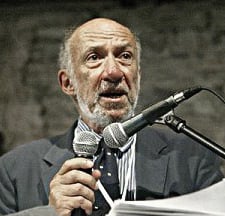
Professor Falk became an adviser to TFF when it was established in 1985.

Related Posts

LONDON – So far so good, at least on the wider level. While internally Iraq seems on the edge of chaos, the much heralded clash of civilizations between the Muslim and Judaeo-Christian worlds has yet to become apparent. We have anger and despair aplenty in the Arab and Muslim worlds. But very little rushing to the standard and there was no great pilgrimage of warriors to join the fight, as happened when the Soviet Union invaded Afghanistan twenty years ago, and then, having driven the Red Army out, were left to ferment in that mountainous redoubt. With the armaments supplied by the CIA the mujahidin were transformed into Al Qaeda that became, for a relatively brief moment as these things go, ‘the greatest threat to the homeland that America has ever known.’ Nevertheless a ‘Cold War’ between much of the Muslim world and the West is certainly in full swing. Winston...
The Challenge of Nuclear Weaponsin the Twenty-first CenturyA Path Forward The peoples and governments of the world face an urgent challenge relating to weaponry of mass destruction and particularly to nuclear weaponry.  At the crossroads of technology, terrorism, geopolitical ambition, and policies of preemption are new and potent dangers for humanity. Despite ending the nuclear standoff of the Cold War era, nuclear weaponry is again menacing the peoples of the world with catastrophic possibilities.  We recognize the need for any government to pursue its security interests in accordance with international law; and further, we recognize that distinctive threats to these interests now exist as a result of an active international terrorist network having declared war on the United States and its allies. Nonetheless, we reject the assessment of the current US administration that upgrading a reliance on nuclear weapons is in any sense justified as a response. We find it...
By Karin Wegestal MP, the Social Democratic Partyon behalf of the Swedish Committee for Solidarity with the Yugoslav People During the last decade, the Federal Republic of Yugoslavia has received more than 500,000 refugees from Croatia and Bosnia, and another 300,000 internally displaced persons, mainly from the province Kosovo and Metohia. For a country with about ten million inhabitants, such an influx of homeless people is obviously a very heavy burden – even under peaceful conditions. But in addition to that, the Federal Republic of Yugoslavia has been the subject to sanctions from the western powers for close to ten years and its infrastructure was badly hurt through Nato’s intense bombardment during 78 days in 1999. The result of all this is that Yugoslavia, once the most developed industrial country in Eastern Europe, is today the poorest country in Europe. In Serbia excluding Kosovo, with about ten million inhabitants and...

Recent Articles

Tony Robinson October 4, 2026 Violence is easy to recognise when someone is being beaten, shot or killed. It becomes more difficult when nobody is holding a weapon. Poverty, discrimination, exploitation and repression can restrict a human life just as effectively, although they do so in very different ways and with very different consequences. Simply adding more categories to an ever-growing list of forms of violence does not really solve the problem. The more interesting question is what all these different situations have in common and why it makes sense to describe them using the same word. Human beings do not simply react to what happens around them. They remember the past, imagine things that do not yet exist, make plans and undertake projects. Workers organise because they imagine different working conditions; people migrate because they imagine another life somewhere else; social movements emerge because people refuse to accept the...
It’s a matter of principles, courage, vision and pulling together – while the militarist world is falling apart… Peter Langille October 3, 2026 “Here, then, is the problem which we present to you, stark and dreadful and inescapable: Shall we put an end to the human race; or shall mankind renounce war?”The Bertrand Russell—Albert Einstein Manifesto, July 9, 1955 ⁕ The forecast for what’s ahead is worrisome. The sharp rise in armed conflicts over the past three years is adding to what was already the highest level in over seventy years. Genocides, which should be prevented are supported. A shared climate emergency that jeopardises survival is ignored. Diverse polls now suggest that people are war-weary, worried and interested in a more effective United Nations. And, there are viable policy options for a more secure world! Yet governments are doubling-down, betting on more war and investing heavily. If current trends persist,...
Johan Galtung 1930-2024October 2015 Published here on October 3, 2026 Let us focus on Civilization for conflict analysis and remedies. Major forms of disorder use violence; war is state organized violence. The most belligerent states are the United States of America and Israel, both with civilization roots. National Evangelism, the US Protestant Christian civilization– more national than evangelical–justifies US warfare as exceptionalism of a people chosen by God, with a manifest destiny to run the world. Orthodox Judaism justifies Israeli warfare to conquer and expand from Nile to Euphrates as a religious right and duty to the Eternal One. The third most belligerent country, the UK, no longer believes it is God-chosen but chosen by the USA; not quite the same but something. But the root cause of global disorder lies in the Occident–with Islam–seeing itself as the single, universal civilization valid for all at all times, all others being...

TFF on Substack

Discover and subscribe to more peace materials on TFF Substack

Most Popular

Tony Robinson October 4, 2026 Violence is easy to recognise when someone is being beaten, shot or killed. It becomes more difficult when nobody is holding a weapon. Poverty, discrimination, exploitation and repression can restrict a human life just as effectively, although they do so in very different ways and with very different consequences. Simply adding more categories to an ever-growing list of forms of violence does not really solve the problem. The more interesting question is what all these different situations have in common and why it makes sense to describe them using the same word. Human beings do not simply react to what happens around them. They remember the past, imagine things that do not yet exist, make plans and undertake projects. Workers organise because they imagine different working conditions; people migrate because they imagine another life somewhere else; social movements emerge because people refuse to accept the...
It’s a matter of principles, courage, vision and pulling together – while the militarist world is falling apart… Peter Langille October 3, 2026 “Here, then, is the problem which we present to you, stark and dreadful and inescapable: Shall we put an end to the human race; or shall mankind renounce war?”The Bertrand Russell—Albert Einstein Manifesto, July 9, 1955 ⁕ The forecast for what’s ahead is worrisome. The sharp rise in armed conflicts over the past three years is adding to what was already the highest level in over seventy years. Genocides, which should be prevented are supported. A shared climate emergency that jeopardises survival is ignored. Diverse polls now suggest that people are war-weary, worried and interested in a more effective United Nations. And, there are viable policy options for a more secure world! Yet governments are doubling-down, betting on more war and investing heavily. If current trends persist,...
Johan Galtung 1930-2024October 2015 Published here on October 3, 2026 Let us focus on Civilization for conflict analysis and remedies. Major forms of disorder use violence; war is state organized violence. The most belligerent states are the United States of America and Israel, both with civilization roots. National Evangelism, the US Protestant Christian civilization– more national than evangelical–justifies US warfare as exceptionalism of a people chosen by God, with a manifest destiny to run the world. Orthodox Judaism justifies Israeli warfare to conquer and expand from Nile to Euphrates as a religious right and duty to the Eternal One. The third most belligerent country, the UK, no longer believes it is God-chosen but chosen by the USA; not quite the same but something. But the root cause of global disorder lies in the Occident–with Islam–seeing itself as the single, universal civilization valid for all at all times, all others being...
Read More
Living-Peace-Sign-Budapest-copy
Tony Robinson October 4, 2026 Violence is easy to recognise when someone is being beaten, shot or killed. It becomes more difficult when nobody is holding a weapon. Poverty, discrimination, exploitation and repression can restrict a human life just as effectively, although they do so in very different ways and with very different consequences. Simply adding more categories to an ever-growing list of forms of violence does not really solve the problem. The more interesting question is what all these different situations have in common and why it makes sense to describe them using the same word. Human beings do not simply react to what happens around them. They remember the past, imagine things that do not yet exist, make plans and undertake projects. Workers organise because they imagine different working conditions; people migrate because they imagine another life somewhere else; social movements emerge because people refuse to accept the...
b54a1f10-8c65-4f0b-9dd5-4abc0a7d04cc_2659x2659
It’s a matter of principles, courage, vision and pulling together – while the militarist world is falling apart… Peter Langille October 3, 2026 “Here, then, is the problem which we present to you, stark and dreadful and inescapable: Shall we put an end to the human race; or shall mankind renounce war?”The Bertrand Russell—Albert Einstein Manifesto, July 9, 1955 ⁕ The forecast for what’s ahead is worrisome. The sharp rise in armed conflicts over the past three years is adding to what was already the highest level in over seventy years. Genocides, which should be prevented are supported. A shared climate emergency that jeopardises survival is ignored. Diverse polls now suggest that people are war-weary, worried and interested in a more effective United Nations. And, there are viable policy options for a more secure world! Yet governments are doubling-down, betting on more war and investing heavily. If current trends persist,...
010
Johan Galtung 1930-2024October 2015 Published here on October 3, 2026 Let us focus on Civilization for conflict analysis and remedies. Major forms of disorder use violence; war is state organized violence. The most belligerent states are the United States of America and Israel, both with civilization roots. National Evangelism, the US Protestant Christian civilization– more national than evangelical–justifies US warfare as exceptionalism of a people chosen by God, with a manifest destiny to run the world. Orthodox Judaism justifies Israeli warfare to conquer and expand from Nile to Euphrates as a religious right and duty to the Eternal One. The third most belligerent country, the UK, no longer believes it is God-chosen but chosen by the USA; not quite the same but something. But the root cause of global disorder lies in the Occident–with Islam–seeing itself as the single, universal civilization valid for all at all times, all others being...
Screenshot 2026-10-02 011738
Jan ObergPhD, director, The Transnational Foundation for Peace and Future Research, TFFLund, Sweden October 2, 2026 This is my full original manuscript. The Chinese Academy of Social Science, CASS, makes two publications out if it. 1. China’s Five-year plan emphasized the capabilities of basic research and original innovation. It is regarded as the goal of the future social development, which, as required, should be significantly enhanced. Can you comment on the importance of original innovation in research and academic study? I believe it is easier to define “original innovation” in the natural sciences than in social sciences. The breaking points of what constitutes something new, or innovative, are not quite as sharp in the latter. But in both fields it is about opening up something that was closed, unseen, unexplored before – making manifest what was earlier latent. Innovations come in many forms and shapes – naming something that was not...
arctic-circle-map
The agreement is catastrophic both because of what it says and what it doesn’t mention. It reduces further the major asset of security policies: Freedom of action. Jan Oberg TFF director September 25, 2026 A couple of hours before the agreement was signed on September 22, 2026, I published the following 13 hypotheses about what it would most likely contain on TFF Substack (in English). I was wrong on only the first point. Contrary to what Trump had written on his Truth Social platform, it does not appear to come into force immediately. In fact, it turned out to be worse than even I had anticipated. After these hypotheses now come a number of reflections in light of what the agreement actually contains, and does not contain, as well as the way in which it has generally been presented by major media outlets and by the public-service broadcaster DR. My...
girl-5894831_1280
Below are TFF-related media mentions, comments, videos and social media posts published elsewhere but not on this homepage. We happen to catch and list only a fraction. Regarding video comments and debates, we recommend that you go to the TFF Video Channel on Substack where many of them are reproduced. Jan Oberg is a contributor to China Daily – 52 million daily clicks – and Global Times, CGTN and CCTV (the national television), China Investment, Xinhua News Agency and several others. Articles and videos on these media very often multiply into countless Chinese (and Western media) that re-post them from these main media. Thanks to The China Academy, his analyses, interviews and comments are frequently posted on YouTube channels such as Thinkers Forum and Wave Media. These videos are often re-posted on Bilibili (China’s YouTube), the China Content Center on TikTok, and on the Chinese edition of TikTok, Douyin.com. This means reaching hundreds of millions of viewers worldwide over a year. While there are too many to catch on all these...




