
One year later, September 11 has certainly lived up to the early claim of being a transformative moment, at least for Americans. One of the least noticed sea changes has been the abrupt shift in the past year from diplomacy to war talk as the foundation of national security. And what is most surprising about this shift is that it bears only the loosest connection with the genuine threat that continues to be directed at the well being of the nation by the deadly al Qaeda challenge. It is extraordinary that the US Government at such a time seems to be recklessly determined to wage a preemptive war against Iraq that is contrary to international law and morality, constitutionally dubious, and strategically imprudent, risking catastrophic side effects.

A disturbing element in this gathering war momentum is the deeply disappointing quality of the debate on policy toward Iraq. President Bush most clearly delimited the broad strokes of his post-Afghanistan policy in his 2002 State of the Union Address when he identified Iraq, Iran, and North Korea as “axis of evil” countries that posed a threat linked in vague, and essentially unconvincing, ways to the September 11 attacks on the United States. This focus was then set forth with great specificity in Bush’s speech to the graduating class at West Point last June. It was there that Bush articulated the necessity for preemption, given the prospect that Iraq would shortly acquire nuclear weapons, and would then serve as conduit for their transfer to al Qaeda, which clearly seems prepared to use the most deadly weapons it can get its hands on. While addressing the cadets Bush made his basic pledge: “We will not leave the safety of America and the peace of the planet at the mercy of a few mad terrorists and tyrants. We will lift this dark threat from our country and the world.”

Behind this pledge was the assertion that deterrence and containment, so central to the avoidance of war with the Soviet Union during the cold war, would not work in the post-September 11 world. In Bush’s words at West Point, “[d]eterrence-the promise of massive retaliation against nations-means nothing against shadowy terrorist networks with no nation or citizens to defend. Containment is not possible when unbalanced dictators with weapons of mass destruction can deliver those weapons on missiles or secretly provide them to terrorist allies.” This alleged need to move from deterrence and defense to preemption represents a startling shift from policies designed to avoid war to an approach that relies on preventive war.

In response to such a momentous change in American security policy one would have hoped for a vigorous debate that addressed fundamental issues of fact and law. This has not happened, at least not yet. Instead, there have been questions raised about the means of waging such a war: issues of timing, costs, and feasibility. Lots of attention was given a few weeks back to the public doubt about a war against Iraq that were expressed by Republican heavyweights, including Brent Scowcroft, James Baker, and Lawrence Eagleburger, even Henry Kissinger. But rather than undermining the case for waging war, these establishment voices, whether wittingly or not, were providing the hawks in the White House and Pentagon with a roadmap, that is, with a politically savvy way to mobilize the country and the world for the war. It was based on two key ideas designed to soften the impression, but not alter the reality, of unilateralism: an American insistence on the renewal of intrusive inspection in a form that Iraq, or any sovereign state on the face of the earth, was bound to reject; and the call to the United Nations to insist that Iraq uphold the letter of harsh resolutions agreed upon at the time of 1991 ceasefire, which if not done by the UN, would then open the way for authorized American enforcement operations.

In his widely discussed Wall Street Journal article of August 15 Scowcroft spelled out his recommended course of action so that even a schoolboy could understand what to do: “..we should be pressing the United Nations Security Council to insist on an effective no-notice inspection regime for Iraq-any time, anywhere, no permission required…senior administration officials have opined that Saddam Hussein would never agree to such an inspection regime…And if he refused, his rejection would provide the persuasive casus belli which many claim we do not now have.” Even Jimmy Carter in an otherwise intelligent dissent from the Bush approach fell into the inspection trap by acknowledging that “[t]here is an urgent need for U.N. action to force unrestricted inspections in Iraq.”

Joining this mainstream chorus was the respected president of the Carnegie Endowment for International Peace, Jessica Mathews, who called for “coercive inspections in Iraq.” According to Mathews, “[i]nspections backed by a force authorized by the UN Security Council would carry unimpeachable legitimacy and command broad international support.” In her view, “[I]f successful, it would reduce Iraq’s WMD threat to negligible levels. If a failure, it would lay an operational and political basis for a transition to a war to oust Saddam.”

The White House heeded these friendly critics, reshaping their tactics as exemplified by the president’s speech of September 12 to the UN General Assembly. There he called for the establishment of unrestricted inspection as prescribed by the Security Council, which if rejected by Iraq, would authorize the use of force to achieve a regime change in Baghdad, the stated goal of American policy all along. Even while doing this the hardliners were busy creating fallback positions, especially Vice President Dick Cheney. Cheney argued that inspections had not worked in the past, and that it was not very likely that they could achieve American aims even if accepted by Iraq, thereby keeping open the prospect of an American recourse to war even in the unlikely event that Saddam Hussein accepts the demand for a resumption of inspection, this time on a completely unrestricted basis.

World public opinion, especially in Europe, had been so upset with the clamor for war coming from the Bush administration that it was relieved by this seeming change of course, grateful for recourse to the United Nations, and the new indications of a willingness to work with other leading governments. Even the admirable Secretary General, Kofi Annan, played along by sternly admonishing Baghdad: “If Iraq’s defiance continues, the Security Council must face its responsibilities.” Although not explicitly counseling war, Annan’s implication is the same as Scowcroft and the others-if a no holds barred inspection is refused or fails, then recourse to force would be appropriate. For the Secretary General, such an initiative retain a formal multilateral imprimatur of the United Nations at all stages, a precondition that the American advocates of the inspection path do not mention, and clearly do not want. Even France and Russia immediately responded approvingly to the Bush speech at the United Nations, suggesting the probability of their support for a Security Council demand that Iraq agree to unrestricted inspection, or face an annihilating war.

The issue of Iraq policy has now been crystallized in a most dangerous manner that seems likely to produce a destructive and unnecessary war. In the debate there has been virtually no serious discussion of whether a preemptive war policy directed at Iraq is consistent with international law or somehow justified by the exceptional dangers posed. On the first issue, international law has only authorized action in self-defense if a prior armed attack has occurred. True, there may be a tolerance of preemption if an attack is imminent, as was the case with Israel’s initiation of war against its Arab neighbors massed on its borders back in 1967. But the facts here do not begin to create that case for an exceptional right to wage preemptive war as an extension of self-defense. There is no indication that Iraq is likely even after the passage of several years to acquire more than a nominal nuclear weapons arsenal, and to the extent acquired, its role would almost certainly be one of deterrence and defense. However distasteful Saddam Hussein’s rule, there is no evidence that he possesses either a visionary agenda or a disposition to engage in suicidal politics. Iraq’s regional behavior is indeed lamentable in many respects, but it should be recalled that America backed the Iraqi attack on Iran in 1980, and seemed non-committal about Kuwait a decade later until after the fact. What the record suggests is that Iraq is fully susceptible to deterrence and containment, that what worked against a far more formidable and ideologically driven Soviet regime, would certainly succeed against a severely weakened and hopelessly outgunned Iraq. What should clinch the prudential argument is that the most dangerous of all scenarios is if Iraq finds itself under attack this becomes the only likely occasion on which Iraq might use whatever lethal weaponry at its disposal or hand it over to America’s terrorist enemies. The administration war advocates never address this argument when they blandly conclude in the much noticed words of Cheney that “the risks of inaction are greater than the risks of action.”

The US Government should at this time be focusing on al Qaeda instead of Iraq. There are indications that its main forces are regrouping in the aftermath of the Afghanistan War. There are fresh suggestions that the situation in Afghanistan remains unsettled, and requires a major American effort to ensure that the country is not challenged anew by Taliban and al Qaeda forces. This is the time also to address other extremely volatile situations associated with the megaterrorist danger. Nothing would soften anti-Americanism in the Islamic world more than the clear resolve of Washington to find at last a fair and balanced solution for the Israel/Palestine encounter. Far more menacing than Iraq are dangers of a South Asian war between India and Pakistan that could easily be triggered in the aftermath of an attack on Baghdad, with Islamic militants taking power from the West-leaning General Pervez Musharaff, and India responding with its own version of preemption. The perplexing and non-territorial character of the al Qaeda network seems to have baffled the Bush leadership to the point of substituting irrelevant territorial enemies susceptible to the American form of military dominance, which creates an illusion of “victory,” while contributing nothing to the daunting task of reducing the megaterrorist threat.

The challenge before the American people is the most serious faced since the rise of fascism and the long encounter with the Soviet Union. It is a time to reaffirm American faith in the values of law, justice, peace, as well as confidence in its own constitutional arrangements. President Bush has been acting all along as if the decision to go to war is his alone, even though there is not even a claim of immediacy that might justify circumventing Congress. The White House seems to believe that consulting Congress, whatever that might turn out to mean in practice, is mainly a matter of courtesy, and not required by the separation of powers that alone vests in Congress the power to declare war and appropriate the funds for its conduct. Similarly, the apparent bipartisan consensus within the Beltway that American foreign policy pertaining to the use of international force is free from the prohibitions of international law is a frightening repudiation of the efforts throughout the last century to make aggressive war a Crime Against the Peace, and its perpetrators punishable as war criminals. Such was the American stand at Nuremberg and Tokyo after World War II with respect to German and Japanese leaders, with a promise by the victors that they would in the future be held to the same standards of accountability. Instead of passively watching on the sidelines as the government goes down this war path, citizen resistance is urgently needed. A first symbolic step would be the formation of a panel of inquiry consisting of moral authority figures from here and abroad that would address issues of law, morality, and security in the context of American foreign policy toward Iraq.

There is no doubt that the Bush Administration has painted itself into a bad corner, especially given the Bush Texan pride in making his words serve as prelude to action. Are there ways out? At this stage, only a tempered renewal of inspection combined with a phased lifting of sanctions on Iraq can have a reasonable chance of acceptance in Baghdad without humbling the White House. That is, not unrestricted inspection, but inspection appropriate to the task that is reasonably respectful of Iraq’s sovereign rights. To make Iraqi non-compliance with burdensome UN resolutions imposed a decade ago a casus belli is to make a mockery of UN authority, given the abject refusal to implement far clearer Security Council resolutions 35 years ago ordering Israel to withdraw from occupied Palestinian territory, to uphold international humanitarian law in its administration of the West Bank and Gaza, and to desist from the construction of illegal settlements.
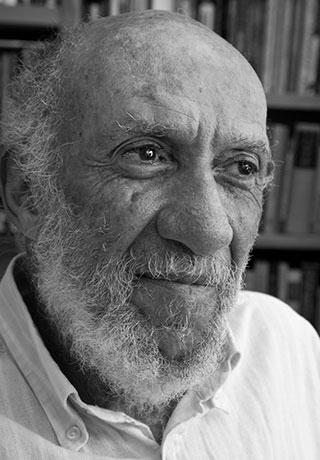

Professor Falk became an adviser to TFF when it was established in 1985.

Related Posts

LONDON – So far so good, at least on the wider level. While internally Iraq seems on the edge of chaos, the much heralded clash of civilizations between the Muslim and Judaeo-Christian worlds has yet to become apparent. We have anger and despair aplenty in the Arab and Muslim worlds. But very little rushing to the standard and there was no great pilgrimage of warriors to join the fight, as happened when the Soviet Union invaded Afghanistan twenty years ago, and then, having driven the Red Army out, were left to ferment in that mountainous redoubt. With the armaments supplied by the CIA the mujahidin were transformed into Al Qaeda that became, for a relatively brief moment as these things go, ‘the greatest threat to the homeland that America has ever known.’ Nevertheless a ‘Cold War’ between much of the Muslim world and the West is certainly in full swing. Winston...
The Challenge of Nuclear Weaponsin the Twenty-first CenturyA Path Forward The peoples and governments of the world face an urgent challenge relating to weaponry of mass destruction and particularly to nuclear weaponry.  At the crossroads of technology, terrorism, geopolitical ambition, and policies of preemption are new and potent dangers for humanity. Despite ending the nuclear standoff of the Cold War era, nuclear weaponry is again menacing the peoples of the world with catastrophic possibilities.  We recognize the need for any government to pursue its security interests in accordance with international law; and further, we recognize that distinctive threats to these interests now exist as a result of an active international terrorist network having declared war on the United States and its allies. Nonetheless, we reject the assessment of the current US administration that upgrading a reliance on nuclear weapons is in any sense justified as a response. We find it...
By Karin Wegestal MP, the Social Democratic Partyon behalf of the Swedish Committee for Solidarity with the Yugoslav People During the last decade, the Federal Republic of Yugoslavia has received more than 500,000 refugees from Croatia and Bosnia, and another 300,000 internally displaced persons, mainly from the province Kosovo and Metohia. For a country with about ten million inhabitants, such an influx of homeless people is obviously a very heavy burden – even under peaceful conditions. But in addition to that, the Federal Republic of Yugoslavia has been the subject to sanctions from the western powers for close to ten years and its infrastructure was badly hurt through Nato’s intense bombardment during 78 days in 1999. The result of all this is that Yugoslavia, once the most developed industrial country in Eastern Europe, is today the poorest country in Europe. In Serbia excluding Kosovo, with about ten million inhabitants and...

Recent Articles

Tony Robinson October 4, 2026 Violence is easy to recognise when someone is being beaten, shot or killed. It becomes more difficult when nobody is holding a weapon. Poverty, discrimination, exploitation and repression can restrict a human life just as effectively, although they do so in very different ways and with very different consequences. Simply adding more categories to an ever-growing list of forms of violence does not really solve the problem. The more interesting question is what all these different situations have in common and why it makes sense to describe them using the same word. Human beings do not simply react to what happens around them. They remember the past, imagine things that do not yet exist, make plans and undertake projects. Workers organise because they imagine different working conditions; people migrate because they imagine another life somewhere else; social movements emerge because people refuse to accept the...
It’s a matter of principles, courage, vision and pulling together – while the militarist world is falling apart… Peter Langille October 3, 2026 “Here, then, is the problem which we present to you, stark and dreadful and inescapable: Shall we put an end to the human race; or shall mankind renounce war?”The Bertrand Russell—Albert Einstein Manifesto, July 9, 1955 ⁕ The forecast for what’s ahead is worrisome. The sharp rise in armed conflicts over the past three years is adding to what was already the highest level in over seventy years. Genocides, which should be prevented are supported. A shared climate emergency that jeopardises survival is ignored. Diverse polls now suggest that people are war-weary, worried and interested in a more effective United Nations. And, there are viable policy options for a more secure world! Yet governments are doubling-down, betting on more war and investing heavily. If current trends persist,...
Johan Galtung 1930-2024October 2015 Published here on October 3, 2026 Let us focus on Civilization for conflict analysis and remedies. Major forms of disorder use violence; war is state organized violence. The most belligerent states are the United States of America and Israel, both with civilization roots. National Evangelism, the US Protestant Christian civilization– more national than evangelical–justifies US warfare as exceptionalism of a people chosen by God, with a manifest destiny to run the world. Orthodox Judaism justifies Israeli warfare to conquer and expand from Nile to Euphrates as a religious right and duty to the Eternal One. The third most belligerent country, the UK, no longer believes it is God-chosen but chosen by the USA; not quite the same but something. But the root cause of global disorder lies in the Occident–with Islam–seeing itself as the single, universal civilization valid for all at all times, all others being...

TFF on Substack

Discover and subscribe to more peace materials on TFF Substack

Most Popular

Tony Robinson October 4, 2026 Violence is easy to recognise when someone is being beaten, shot or killed. It becomes more difficult when nobody is holding a weapon. Poverty, discrimination, exploitation and repression can restrict a human life just as effectively, although they do so in very different ways and with very different consequences. Simply adding more categories to an ever-growing list of forms of violence does not really solve the problem. The more interesting question is what all these different situations have in common and why it makes sense to describe them using the same word. Human beings do not simply react to what happens around them. They remember the past, imagine things that do not yet exist, make plans and undertake projects. Workers organise because they imagine different working conditions; people migrate because they imagine another life somewhere else; social movements emerge because people refuse to accept the...
It’s a matter of principles, courage, vision and pulling together – while the militarist world is falling apart… Peter Langille October 3, 2026 “Here, then, is the problem which we present to you, stark and dreadful and inescapable: Shall we put an end to the human race; or shall mankind renounce war?”The Bertrand Russell—Albert Einstein Manifesto, July 9, 1955 ⁕ The forecast for what’s ahead is worrisome. The sharp rise in armed conflicts over the past three years is adding to what was already the highest level in over seventy years. Genocides, which should be prevented are supported. A shared climate emergency that jeopardises survival is ignored. Diverse polls now suggest that people are war-weary, worried and interested in a more effective United Nations. And, there are viable policy options for a more secure world! Yet governments are doubling-down, betting on more war and investing heavily. If current trends persist,...
Johan Galtung 1930-2024October 2015 Published here on October 3, 2026 Let us focus on Civilization for conflict analysis and remedies. Major forms of disorder use violence; war is state organized violence. The most belligerent states are the United States of America and Israel, both with civilization roots. National Evangelism, the US Protestant Christian civilization– more national than evangelical–justifies US warfare as exceptionalism of a people chosen by God, with a manifest destiny to run the world. Orthodox Judaism justifies Israeli warfare to conquer and expand from Nile to Euphrates as a religious right and duty to the Eternal One. The third most belligerent country, the UK, no longer believes it is God-chosen but chosen by the USA; not quite the same but something. But the root cause of global disorder lies in the Occident–with Islam–seeing itself as the single, universal civilization valid for all at all times, all others being...
Read More
Living-Peace-Sign-Budapest-copy
Tony Robinson October 4, 2026 Violence is easy to recognise when someone is being beaten, shot or killed. It becomes more difficult when nobody is holding a weapon. Poverty, discrimination, exploitation and repression can restrict a human life just as effectively, although they do so in very different ways and with very different consequences. Simply adding more categories to an ever-growing list of forms of violence does not really solve the problem. The more interesting question is what all these different situations have in common and why it makes sense to describe them using the same word. Human beings do not simply react to what happens around them. They remember the past, imagine things that do not yet exist, make plans and undertake projects. Workers organise because they imagine different working conditions; people migrate because they imagine another life somewhere else; social movements emerge because people refuse to accept the...
b54a1f10-8c65-4f0b-9dd5-4abc0a7d04cc_2659x2659
It’s a matter of principles, courage, vision and pulling together – while the militarist world is falling apart… Peter Langille October 3, 2026 “Here, then, is the problem which we present to you, stark and dreadful and inescapable: Shall we put an end to the human race; or shall mankind renounce war?”The Bertrand Russell—Albert Einstein Manifesto, July 9, 1955 ⁕ The forecast for what’s ahead is worrisome. The sharp rise in armed conflicts over the past three years is adding to what was already the highest level in over seventy years. Genocides, which should be prevented are supported. A shared climate emergency that jeopardises survival is ignored. Diverse polls now suggest that people are war-weary, worried and interested in a more effective United Nations. And, there are viable policy options for a more secure world! Yet governments are doubling-down, betting on more war and investing heavily. If current trends persist,...
010
Johan Galtung 1930-2024October 2015 Published here on October 3, 2026 Let us focus on Civilization for conflict analysis and remedies. Major forms of disorder use violence; war is state organized violence. The most belligerent states are the United States of America and Israel, both with civilization roots. National Evangelism, the US Protestant Christian civilization– more national than evangelical–justifies US warfare as exceptionalism of a people chosen by God, with a manifest destiny to run the world. Orthodox Judaism justifies Israeli warfare to conquer and expand from Nile to Euphrates as a religious right and duty to the Eternal One. The third most belligerent country, the UK, no longer believes it is God-chosen but chosen by the USA; not quite the same but something. But the root cause of global disorder lies in the Occident–with Islam–seeing itself as the single, universal civilization valid for all at all times, all others being...
Screenshot 2026-10-02 011738
Jan ObergPhD, director, The Transnational Foundation for Peace and Future Research, TFFLund, Sweden October 2, 2026 This is my full original manuscript. The Chinese Academy of Social Science, CASS, makes two publications out if it. 1. China’s Five-year plan emphasized the capabilities of basic research and original innovation. It is regarded as the goal of the future social development, which, as required, should be significantly enhanced. Can you comment on the importance of original innovation in research and academic study? I believe it is easier to define “original innovation” in the natural sciences than in social sciences. The breaking points of what constitutes something new, or innovative, are not quite as sharp in the latter. But in both fields it is about opening up something that was closed, unseen, unexplored before – making manifest what was earlier latent. Innovations come in many forms and shapes – naming something that was not...
arctic-circle-map
The agreement is catastrophic both because of what it says and what it doesn’t mention. It reduces further the major asset of security policies: Freedom of action. Jan Oberg TFF director September 25, 2026 A couple of hours before the agreement was signed on September 22, 2026, I published the following 13 hypotheses about what it would most likely contain on TFF Substack (in English). I was wrong on only the first point. Contrary to what Trump had written on his Truth Social platform, it does not appear to come into force immediately. In fact, it turned out to be worse than even I had anticipated. After these hypotheses now come a number of reflections in light of what the agreement actually contains, and does not contain, as well as the way in which it has generally been presented by major media outlets and by the public-service broadcaster DR. My...
girl-5894831_1280
Below are TFF-related media mentions, comments, videos and social media posts published elsewhere but not on this homepage. We happen to catch and list only a fraction. Regarding video comments and debates, we recommend that you go to the TFF Video Channel on Substack where many of them are reproduced. Jan Oberg is a contributor to China Daily – 52 million daily clicks – and Global Times, CGTN and CCTV (the national television), China Investment, Xinhua News Agency and several others. Articles and videos on these media very often multiply into countless Chinese (and Western media) that re-post them from these main media. Thanks to The China Academy, his analyses, interviews and comments are frequently posted on YouTube channels such as Thinkers Forum and Wave Media. These videos are often re-posted on Bilibili (China’s YouTube), the China Content Center on TikTok, and on the Chinese edition of TikTok, Douyin.com. This means reaching hundreds of millions of viewers worldwide over a year. While there are too many to catch on all these...




