
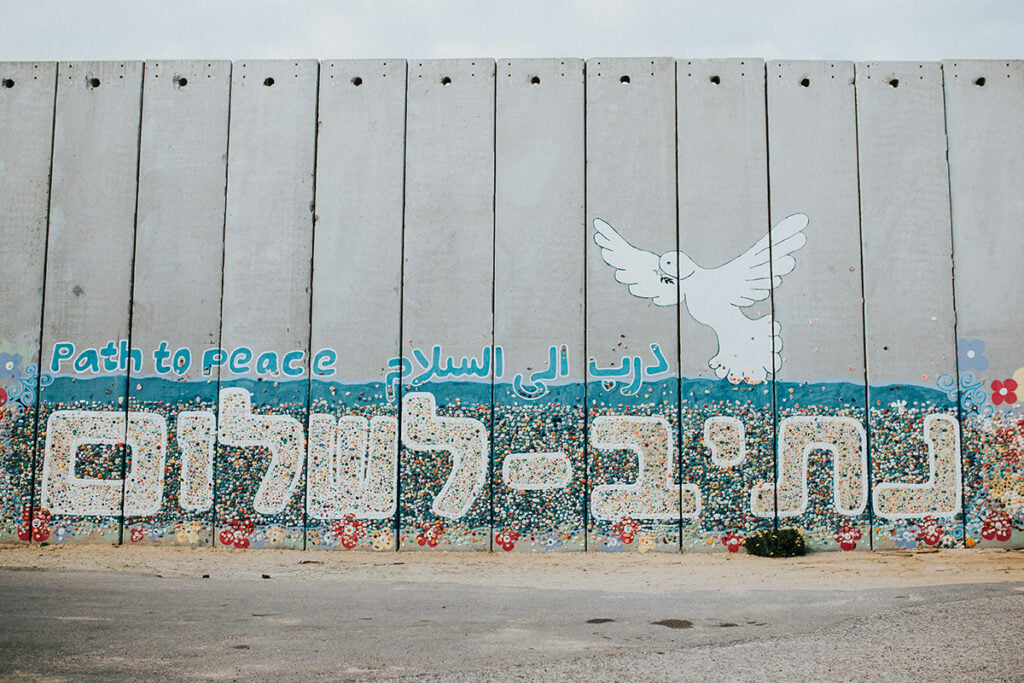
A regional strategy for sustainable peace for Israel & Palestine: [1]-[2]-[6]-[20]

Cole Keister on Unsplash

Johan Galtung (1930-2024)

February 20, 2024

Intro
Johan Galtung published a comprehensive peace plan for the Middle East as early as 1971 – in the Journal of Peace Research (JPR). However, today SAGE Publications seems not ashamed to charge you £ 29 to download single articles. So here is a 2015 short summary of Johan’s insights and thoughts on the issue.

While everybody is focused on disappointing Israeli election results and the liberals and progressives of this world are justifiably fearful of a future pregnant with “more of the same – or worse”, it may be useful to take a look at the solution-indicative policy proposal below, to muster an idea of what measures may eventually usher in a more desirable future. Whatever the current situation may yield; releasing the peoples of the region from the grips of structurally oppressive, culturally alienating and directly destructive violence for good remains the priority.

First: Washington and Tel Aviv continue to make the same mistake over and over again: the conflict between Israel and Palestine is only a small part of a larger conflict complex between:

  1. USA & Israel on one side, against;
  2. Pretty much all Arab and Muslim states on another, their internal discrepancies notwithstanding – and;
  3. The clear majority of UN member states in the UN General Assembly. Just look at all the votes recognizing Palestine as a non-member state, it’s practically the whole world.

Then: A genuine approach to peace would exclude all talk of the USA as a dispassionate honest “broker” and engage in Israel & Palestine negotiations by honestly:

  1. Pointing out that the USA & Israel are in alignment on almost everything but the settlements, and;
  2. Working on how to integrate Israel into a regional community with its five Arab border states and the states bordering on the latter.
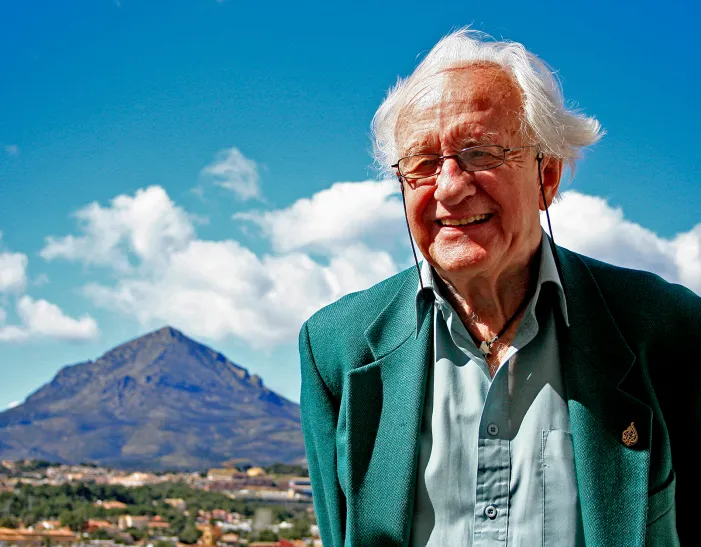
Johan Galtung in 2010 © Jan Oberg

Honest negotiations in this matter will focus on the regional dimension and heed the UN General Assembly, in a “Uniting for Peace” setting.  Peace work will be required on all levels of politics and diplomacy: At the sub-state-level, at the state-level and at the regional level. Anything less encompassing is shortsighted and probably disingenuous. 

To wit: Working on the sub-state-level would surely include disproving the visceral prejudices against Israel in the proverbial Arab Street. But remember, Saudi Arabia, the Arab & Muslim cultural legitimizer par excellence, delivered the most promising building block for peace with its 2002 proposal clarifying that an Israeli withdrawal to the 1967 borders would be the guarantee for recognition by all Arab states. Haven’t heard of that? Blame your media; but do look it up.

An image of a reasonable solution with secure, recognized borders for both Israel and Palestine according to the above would yield the following “[1]-[2]-[6]-[20] peace agenda” to be worked on synchronically:

[1] Still relevant: A sovereign Palestinian State (hence [1]) fully recognized according to international law, as a UN member state, and bilaterally, by an ever increasing number of states.

[2] A two-state (hence [2]) Israel/Palestine nucleus with borders as empirically extant between 1948 & 1967 and some swaps of culturally neuralgic non-negotiable land. The respective sacred territories may become Israeli cantons on the West Bank and Palestinian cantons in Northwest Israel, which was heavily Palestinian before the Nakba. What about the capitals? Why not have capitals in both Jerusalems? What about a Palestinian executive branch? Palestinian Statehood could be protected by means of defensive defense, a concept recently presented by this author to the Italian Senate. Here, the resolution by the Palestine National Council of November 15, 1988 explicitly accepting a two-state solution is a fundamental building block for sustainable equity.

This article was originally published by Mondoweiss on March 25, 2015

[6] A Middle East Community of Israel plus its five neighboring countries (Palestine, Egypt, Lebanon, Syria, Jordan; hence [6]) modelled on the European Community of 1958 with Israel and the five Arab border countries. The endgame would be: open borders for goods and people; a joint council of ministers and a commission for the most pressing conflicts & contradictions, say:

(a) Water

(b) The right of return

(c) Joint patrolling

(d) Rule by consensus

(e) Etc..

[20] Overarching and including the above: A Conference, gradually to evolve into an Organization for Security and Cooperation in the Middle East of the six [6] plus the countries bordering on them, and where necessary plus some of the countries bordering these. This Organization would extend its work all the way to Libya, Turkey, Cyprus and Greece. Obviously, this would be modelled on the OSCE -Organization for Security and Cooperation for Europe of 1975. This is not rocket science, and even if it were, humanity has successfully done this before. We can, and for the sake of peace, must learn from and improve on such past experiences.

The Lieberman-Netanyahu one-state non-solution remains an anachronistic nonstarter in this 21st century. There is no reason why Jews in Israel should not have a right to a real democracy with Jewish characteristics. But a state exclusively for Jews with second or third-class citizen “Others”? No modern democratic state is only democratic for one nation within it, and states are being absorbed into regions anyhow.

High acceptance for the above proposal may be found all over the world, except perhaps among Israel’s current leaders and a US administration stuck with such political counterparts. So far, peace has not accrued from forcing Palestine into the current pseudo-two-state setting with its excessive Israeli military-political-economic-cultural control over Palestinians and the deleterious US interventions in the neighboring countries.

Along this US-Israeli roadMAP, there has been no stable equilibrium, only endless strife and spiraling chaos. Today, we see demands and solidarity for BDS — Boycott, Divestment, Sanctions — growing and growing; and tomorrow? No true friend of Israel would argue for the current modus operandi; nor would they defend Israeli occupation, colonization and expansion, impeding a Palestinian state. But some in powerful quarters may have ulterior religious motives inspired by the old Anglican-Protestant tradition of fomenting an Armageddon for the Second Coming of Christ. True story.

Jewish Israelis and hard right-wing Zionists in the USA have added political and military influence to their economic and cultural power through alliances with US evangelicals and neocons, which makes them strong but far from majoritarian. A minority of less than 2% of the US population, American Jews are increasingly divided on the question of Zionism. Revisionist Zionism’s efforts at stamping out all criticism as anti-Semitic is unstable and will collapse. 

One bad way it backfires is by leading to real anti-Semitism – a terrible phenomenon defined as being against Jews as Jews, regardless of what they think, say and do: pars pro toto – which has already reached frightening levels on the internet, where hate speech abounds under the cover of anonymity – or so they think. This may play out two ways: (a) Anti-Semites may get into power –may all gods forbid– or (b) somebody else gets into power to forestall that. That somebody is not Obama – “lame duck” is too lively to characterize his presidency – but could be Kerry when Israel/Palestine-Syria-Iran negotiations collapse, also due to Israeli-Neocon sabotage.

The road to something like [1]-[2]-[6]-[20] spells constructive peace and will necessitate profound cultural and policy changes both in Israel and the USA, each separately, but also together, namely within their relationship. With regards to the latter, history – not so far removed – has shown a precedent in the way the USA declared South Africa a liability after decades of shameful support.

Maybe constructive change towards peace in West Asia must pass through a change in this relation first? It may start with a US administration identifying Israel as a liability and distancing itself. If this were to happen broad support for BDS in the US could follow. Time will tell.

No dramatic or highly visible inner change is needed in the USA for this foreign policy change to happen.  In Israel, there will probably have to be a regime change from Netanyahu-Lieberman type extremism to moderation; which has not been brought about by this election. Be that as it may, their “They are all against us” mantra feeds the autistic siege mentality backed by ‘Chosen People’ and ‘Masada’ complexes; a reason that BDS should never exclude contact, also in Israel, with peace on the agenda. 

Of course, somewhere under the horizon, there are still the Mondoweiss’ and Uri Avnery’s and other moderates and anti-extremists, also in Israel, who could bring about a change. BDS does not have to bite economically for that to happen. In South Africa it was the moral message that had an impact. 

What really helps to bring about change, is an alternative that spells out a concrete political vision. In South Africa it was the one-person-one-vote democracy; in Israel it is pre-June 1967 with democracy, minority rights and webs of equitable cooperative relations in politics and economics throughout the neighborhood, that will pave the way to a [1]-[2]-[6]-[20] setting.

Someone once famously said the best way to predict the future, is to design it. [1]-[2]-[6]-[20] is a concrete and constructive proposal towards reciprocity in the region.

A word of caution: The window for the above peace plan may very well be narrowing. The Islamic State and the nostalgic political fervours that aliment its machinations desire a future for the region modelled on a very different and very concrete image of a Khalifat (minus the Ottomans) dating back to a period preceding the Balfour declaration and all that has flowed from it.

Indeed, it is in the best interest of Israelis of all creeds for the region to act constructively and cohesively along the lines described above now. The key here is to understand that no peace will be attained through the obsession with “security” policies,  but rather, security and safety will flow from institutions and patterns of peaceful cooperation.

Related Posts

Tony Robinson October 4, 2026 Violence is easy to recognise when someone is being beaten, shot or killed. It becomes more difficult when nobody is holding a weapon. Poverty, discrimination, exploitation and repression can restrict a human life just as effectively, although they do so in very different ways and with very different consequences. Simply adding more categories to an ever-growing list of forms of violence does not really solve the problem. The more interesting question is what all these different situations have in common and why it makes sense to describe them using the same word. Human beings do not simply react to what happens around them. They remember the past, imagine things that do not yet exist, make plans and undertake projects. Workers organise because they imagine different working conditions; people migrate because they imagine another life somewhere else; social movements emerge because people refuse to accept the...
It’s a matter of principles, courage, vision and pulling together – while the militarist world is falling apart… Peter Langille October 3, 2026 “Here, then, is the problem which we present to you, stark and dreadful and inescapable: Shall we put an end to the human race; or shall mankind renounce war?”The Bertrand Russell—Albert Einstein Manifesto, July 9, 1955 ⁕ The forecast for what’s ahead is worrisome. The sharp rise in armed conflicts over the past three years is adding to what was already the highest level in over seventy years. Genocides, which should be prevented are supported. A shared climate emergency that jeopardises survival is ignored. Diverse polls now suggest that people are war-weary, worried and interested in a more effective United Nations. And, there are viable policy options for a more secure world! Yet governments are doubling-down, betting on more war and investing heavily. If current trends persist,...
Johan Galtung 1930-2024October 2015 Published here on October 3, 2026 Let us focus on Civilization for conflict analysis and remedies. Major forms of disorder use violence; war is state organized violence. The most belligerent states are the United States of America and Israel, both with civilization roots. National Evangelism, the US Protestant Christian civilization– more national than evangelical–justifies US warfare as exceptionalism of a people chosen by God, with a manifest destiny to run the world. Orthodox Judaism justifies Israeli warfare to conquer and expand from Nile to Euphrates as a religious right and duty to the Eternal One. The third most belligerent country, the UK, no longer believes it is God-chosen but chosen by the USA; not quite the same but something. But the root cause of global disorder lies in the Occident–with Islam–seeing itself as the single, universal civilization valid for all at all times, all others being...

Recent Articles

Tony Robinson October 4, 2026 Violence is easy to recognise when someone is being beaten, shot or killed. It becomes more difficult when nobody is holding a weapon. Poverty, discrimination, exploitation and repression can restrict a human life just as effectively, although they do so in very different ways and with very different consequences. Simply adding more categories to an ever-growing list of forms of violence does not really solve the problem. The more interesting question is what all these different situations have in common and why it makes sense to describe them using the same word. Human beings do not simply react to what happens around them. They remember the past, imagine things that do not yet exist, make plans and undertake projects. Workers organise because they imagine different working conditions; people migrate because they imagine another life somewhere else; social movements emerge because people refuse to accept the...
It’s a matter of principles, courage, vision and pulling together – while the militarist world is falling apart… Peter Langille October 3, 2026 “Here, then, is the problem which we present to you, stark and dreadful and inescapable: Shall we put an end to the human race; or shall mankind renounce war?”The Bertrand Russell—Albert Einstein Manifesto, July 9, 1955 ⁕ The forecast for what’s ahead is worrisome. The sharp rise in armed conflicts over the past three years is adding to what was already the highest level in over seventy years. Genocides, which should be prevented are supported. A shared climate emergency that jeopardises survival is ignored. Diverse polls now suggest that people are war-weary, worried and interested in a more effective United Nations. And, there are viable policy options for a more secure world! Yet governments are doubling-down, betting on more war and investing heavily. If current trends persist,...
Johan Galtung 1930-2024October 2015 Published here on October 3, 2026 Let us focus on Civilization for conflict analysis and remedies. Major forms of disorder use violence; war is state organized violence. The most belligerent states are the United States of America and Israel, both with civilization roots. National Evangelism, the US Protestant Christian civilization– more national than evangelical–justifies US warfare as exceptionalism of a people chosen by God, with a manifest destiny to run the world. Orthodox Judaism justifies Israeli warfare to conquer and expand from Nile to Euphrates as a religious right and duty to the Eternal One. The third most belligerent country, the UK, no longer believes it is God-chosen but chosen by the USA; not quite the same but something. But the root cause of global disorder lies in the Occident–with Islam–seeing itself as the single, universal civilization valid for all at all times, all others being...

TFF on Substack

Discover and subscribe to more peace materials on TFF Substack

Most Popular

Tony Robinson October 4, 2026 Violence is easy to recognise when someone is being beaten, shot or killed. It becomes more difficult when nobody is holding a weapon. Poverty, discrimination, exploitation and repression can restrict a human life just as effectively, although they do so in very different ways and with very different consequences. Simply adding more categories to an ever-growing list of forms of violence does not really solve the problem. The more interesting question is what all these different situations have in common and why it makes sense to describe them using the same word. Human beings do not simply react to what happens around them. They remember the past, imagine things that do not yet exist, make plans and undertake projects. Workers organise because they imagine different working conditions; people migrate because they imagine another life somewhere else; social movements emerge because people refuse to accept the...
It’s a matter of principles, courage, vision and pulling together – while the militarist world is falling apart… Peter Langille October 3, 2026 “Here, then, is the problem which we present to you, stark and dreadful and inescapable: Shall we put an end to the human race; or shall mankind renounce war?”The Bertrand Russell—Albert Einstein Manifesto, July 9, 1955 ⁕ The forecast for what’s ahead is worrisome. The sharp rise in armed conflicts over the past three years is adding to what was already the highest level in over seventy years. Genocides, which should be prevented are supported. A shared climate emergency that jeopardises survival is ignored. Diverse polls now suggest that people are war-weary, worried and interested in a more effective United Nations. And, there are viable policy options for a more secure world! Yet governments are doubling-down, betting on more war and investing heavily. If current trends persist,...
Johan Galtung 1930-2024October 2015 Published here on October 3, 2026 Let us focus on Civilization for conflict analysis and remedies. Major forms of disorder use violence; war is state organized violence. The most belligerent states are the United States of America and Israel, both with civilization roots. National Evangelism, the US Protestant Christian civilization– more national than evangelical–justifies US warfare as exceptionalism of a people chosen by God, with a manifest destiny to run the world. Orthodox Judaism justifies Israeli warfare to conquer and expand from Nile to Euphrates as a religious right and duty to the Eternal One. The third most belligerent country, the UK, no longer believes it is God-chosen but chosen by the USA; not quite the same but something. But the root cause of global disorder lies in the Occident–with Islam–seeing itself as the single, universal civilization valid for all at all times, all others being...
Read More
Living-Peace-Sign-Budapest-copy
Tony Robinson October 4, 2026 Violence is easy to recognise when someone is being beaten, shot or killed. It becomes more difficult when nobody is holding a weapon. Poverty, discrimination, exploitation and repression can restrict a human life just as effectively, although they do so in very different ways and with very different consequences. Simply adding more categories to an ever-growing list of forms of violence does not really solve the problem. The more interesting question is what all these different situations have in common and why it makes sense to describe them using the same word. Human beings do not simply react to what happens around them. They remember the past, imagine things that do not yet exist, make plans and undertake projects. Workers organise because they imagine different working conditions; people migrate because they imagine another life somewhere else; social movements emerge because people refuse to accept the...
b54a1f10-8c65-4f0b-9dd5-4abc0a7d04cc_2659x2659
It’s a matter of principles, courage, vision and pulling together – while the militarist world is falling apart… Peter Langille October 3, 2026 “Here, then, is the problem which we present to you, stark and dreadful and inescapable: Shall we put an end to the human race; or shall mankind renounce war?”The Bertrand Russell—Albert Einstein Manifesto, July 9, 1955 ⁕ The forecast for what’s ahead is worrisome. The sharp rise in armed conflicts over the past three years is adding to what was already the highest level in over seventy years. Genocides, which should be prevented are supported. A shared climate emergency that jeopardises survival is ignored. Diverse polls now suggest that people are war-weary, worried and interested in a more effective United Nations. And, there are viable policy options for a more secure world! Yet governments are doubling-down, betting on more war and investing heavily. If current trends persist,...
010
Johan Galtung 1930-2024October 2015 Published here on October 3, 2026 Let us focus on Civilization for conflict analysis and remedies. Major forms of disorder use violence; war is state organized violence. The most belligerent states are the United States of America and Israel, both with civilization roots. National Evangelism, the US Protestant Christian civilization– more national than evangelical–justifies US warfare as exceptionalism of a people chosen by God, with a manifest destiny to run the world. Orthodox Judaism justifies Israeli warfare to conquer and expand from Nile to Euphrates as a religious right and duty to the Eternal One. The third most belligerent country, the UK, no longer believes it is God-chosen but chosen by the USA; not quite the same but something. But the root cause of global disorder lies in the Occident–with Islam–seeing itself as the single, universal civilization valid for all at all times, all others being...
Screenshot 2026-10-02 011738
Jan ObergPhD, director, The Transnational Foundation for Peace and Future Research, TFFLund, Sweden October 2, 2026 This is my full original manuscript. The Chinese Academy of Social Science, CASS, makes two publications out if it. 1. China’s Five-year plan emphasized the capabilities of basic research and original innovation. It is regarded as the goal of the future social development, which, as required, should be significantly enhanced. Can you comment on the importance of original innovation in research and academic study? I believe it is easier to define “original innovation” in the natural sciences than in social sciences. The breaking points of what constitutes something new, or innovative, are not quite as sharp in the latter. But in both fields it is about opening up something that was closed, unseen, unexplored before – making manifest what was earlier latent. Innovations come in many forms and shapes – naming something that was not...
arctic-circle-map
The agreement is catastrophic both because of what it says and what it doesn’t mention. It reduces further the major asset of security policies: Freedom of action. Jan Oberg TFF director September 25, 2026 A couple of hours before the agreement was signed on September 22, 2026, I published the following 13 hypotheses about what it would most likely contain on TFF Substack (in English). I was wrong on only the first point. Contrary to what Trump had written on his Truth Social platform, it does not appear to come into force immediately. In fact, it turned out to be worse than even I had anticipated. After these hypotheses now come a number of reflections in light of what the agreement actually contains, and does not contain, as well as the way in which it has generally been presented by major media outlets and by the public-service broadcaster DR. My...
girl-5894831_1280
Below are TFF-related media mentions, comments, videos and social media posts published elsewhere but not on this homepage. We happen to catch and list only a fraction. Regarding video comments and debates, we recommend that you go to the TFF Video Channel on Substack where many of them are reproduced. Jan Oberg is a contributor to China Daily – 52 million daily clicks – and Global Times, CGTN and CCTV (the national television), China Investment, Xinhua News Agency and several others. Articles and videos on these media very often multiply into countless Chinese (and Western media) that re-post them from these main media. Thanks to The China Academy, his analyses, interviews and comments are frequently posted on YouTube channels such as Thinkers Forum and Wave Media. These videos are often re-posted on Bilibili (China’s YouTube), the China Content Center on TikTok, and on the Chinese edition of TikTok, Douyin.com. This means reaching hundreds of millions of viewers worldwide over a year. While there are too many to catch on all these...




