
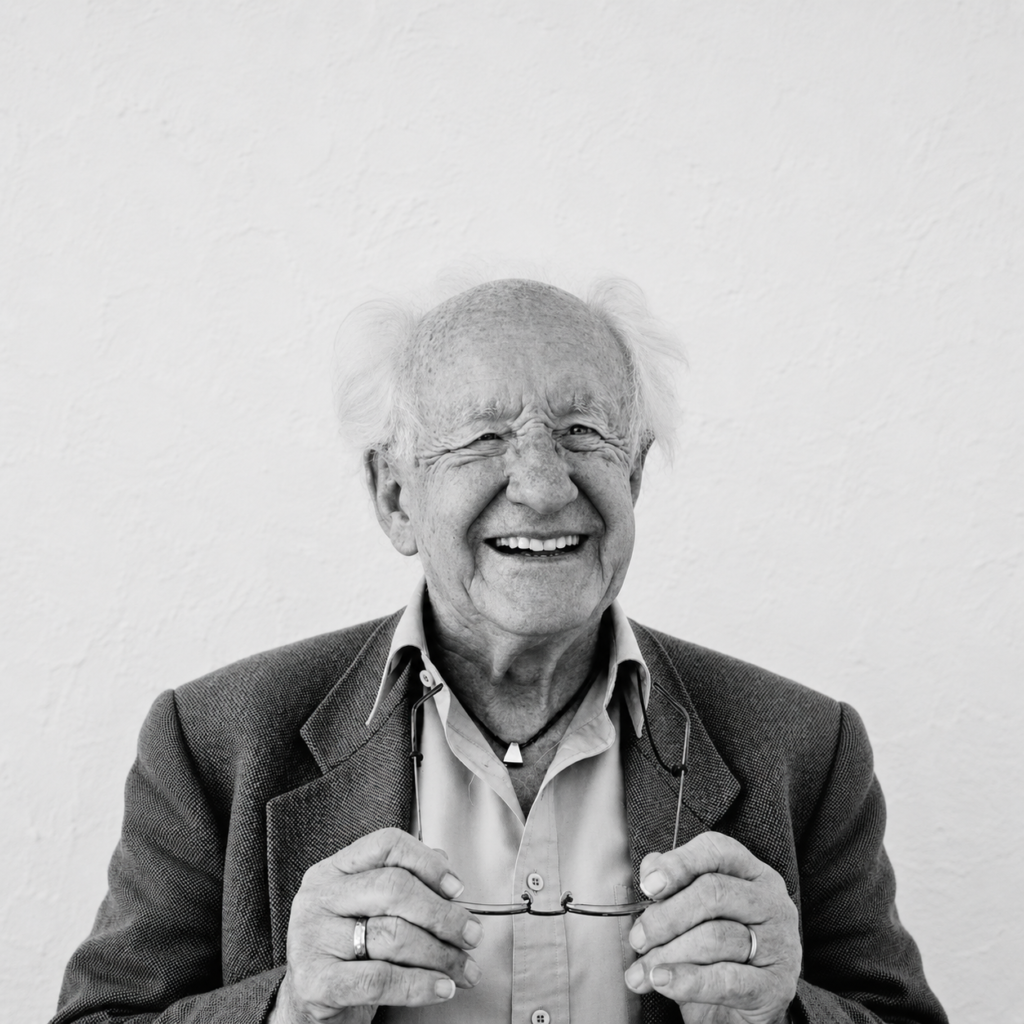
johangaltung

From Washington, DC on Election Night

One of them won, of course, even if the real winners as usual were the non-voters, for whatever reason: men more than women. About 23:15 Obama passed the magic 50 percent mark, not of popular votes but of electoral colleges, with 302-206, well above 270; it turned into a landslide. Net result: status quo, no change.

The media did their best to make the presidential election look important, being the pinnacle, the altar on which democracy is built. Some democracy. Bad enough with a Supreme Court washing the process in six billion dollars as one more freedom of expression like talking words; any kind of words, libelous, often neither true nor relevant. Stupid TV spots. But many issues were somehow articulated, there were real disagreements, there was some kind of rhetorical left-right.

However, the real problem lies somewhere else, not in what was said but in what was not said. The list is long. Washington Post on election day (Manuel Roig-Fanza) wrote: “A tough day for causes without a candidate”. The article mentions climate change, gun control, immigration as issues not picked up either by the party conventions or in the debates. But there are many more issues; and they are among the most pressing problems confronting the country.

Two major lobbies advocating use of force were left untouched; the National Rifle Association-NRA, for violence in the USA, and the American-Israeli Political Action Committee-AIPAC, for violence abroad. They both exercise power through their impact on the media, denying critical politicians access to political power, thereby removing obstacles to violence.

Press campaigns and gerrymandering (as in the case of Dennis J. Kucinich) reduce fatally the political spectrum in Congress and elsewhere. Both candidates knew that to take on these two would be as suicidal for themselves as the lobbies are inside the country, through massive murders at home and anti-Muslim wars abroad.

Foreign policy regarding economic relations with China was actually twisted in the debates, trying to sound tough. The fact of the matter is that the majority in the US cannot live without affordable Chinese goods with adequate quality/price ratios. Unless – a big unless – the USA restructures its economy from below, with cooperatives and self-employment, activating the countryside and the local communities with numerous small enterprises focused on basic needs, food above all, housing and clothing, health and education; direct from producers to consumers.

Almost no country in the world has a population so creative and cooperative; but the blossoming Occupy Movement has so far limited itself to occupation and critique, not to constructive discourse and action.

They left untouched the basic change happening in the world: the US grip on the elites of other countries is loosening in Latin America and even in Africa following the Arab awakening. Instead, they recite the mantras “the world’s largest economy” (EU, not only the euro zone, is larger, and China will overtake the US soon) and “the strongest military power in the world” (losing in Vietnam-Afghanistan-Pakistan-Iraq-Yemen-Somalia-Sudan is a strange concept of “strongest”). Truth might have liberated the USA rather than catching up in disagreeable, repressive ways.

Climate change: The USA is dragging their feet, delaying action everywhere in international fora. Not the candidates but Nature, in the shape of Sandy, talked; a brutal reminder of climate reality, another one taking shape. How much of it is man-made is uncertain; but the change is certain enough. And the self-proclaimed world leader country does not lead.

Then, incredible: the issues of 16 percent of the population being in misery and hunger whereas the 1 percent lives in opulence and feeding on speculation were drowned in glib talk about the “middle class”. Yes, they are large; but stagnant. And far from representing 100 percent of the population.

Neither candidate had answers, possibly agreeing to be silent. The USA needs desperately more parties that are less afraid of truths. They will not win anyhow but are indispensable for democratic transparency and open dialogue.

Does the election make a difference? What newness will the second Obama term bring? Obama said in his victory speech that he will focus on the deficit, the taxation system, and immigration. None of the above. In foreign policy Romney, like Bush, might have been more reckless, accelerating the fall of the empire. But Obama, like Clinton, is better informed, more sophisticated, holding up the fall a little longer. And democrats are more inclined to do what Israel wants; Christian Zionists, who wish to accelerate the return of the Messiah, playing a role.

Obamacare will continue whatever its worth, given the rise in costs for any medical care–possibly because “the state will pay”.

On January 1, 2013 the budget deficit reduction will strike, according to a Congressional consensus, with major “austerity” for those who can least afford it but touching the military very gently.

Misery will accelerate as will too the military deployments and wars the Obama way, drones and SEALs, extrajudicial executions – Obama repeatedly boasted killing Osama (with no evidence that he masterminded 9/11). Imagine a Politburo committee in China studying portfolios, briefs and photos to decide whom to kill abroad for anti-Chinese activity and/or threat to China’s security.

Or China’s arming Cuba and Haiti to the teeth at the same time that a Chinese fleet cruises the Caribbean, being those countries as close to the US as Taiwan is to China. Too asymmetric to stand.

But Obama will play “I am above the parties, uniting the country”. In his first term he was leaning over to the Republicans, backwards, and was badly punished in mid-term elections; this time, that makes Romney a de facto co-president. The Dodd-Frank finance economy reforms will be very bland as Wall Street will by and large continue their credit swaps and other lethal games. The rich may be taxed but may find further loopholes, including settling abroad. Much like the French super-rich in London?

Is the US democracy a two-party system becoming a one-party state? If so, other countries beware! Do not imitate. Democracy is more than just elections. It is also transparency and dialogue. For real change.

First published here.
Related Posts

The agreement is catastrophic both because of what it says and what it doesn’t mention. It reduces further the major asset of security policies: Freedom of action. Jan Oberg TFF director September 25, 2026 A couple of hours before the agreement was signed on September 22, 2026, I published the following 13 hypotheses about what it would most likely contain on TFF Substack (in English). I was wrong on only the first point. Contrary to what Trump had written on his Truth Social platform, it does not appear to come into force immediately. In fact, it turned out to be worse than even I had anticipated. After these hypotheses now come a number of reflections in light of what the agreement actually contains, and does not contain, as well as the way in which it has generally been presented by major media outlets and by the public-service broadcaster DR. My...
Photos © TFF 2000 Read PressInfo 90 “Lift the Sanctions and Bring More Aid to Yugoslavia” See Pictures from Belgrade © TFF 2000 Please reprint, copy, archive, quote or re-post this item, but please retain the source.
By Jan ObergTFF co-founder and director February 11, 2026 PART 3 — ECONOMICS, TRADE & FINANCIAL SOVEREIGNTY A. Trade Measures & Market Signaling Economic pressure can be applied instantly and scaled without violence. Immediate Measures (within a week) Government boycott US goods and services  A very powerful signal which over time will be felt. Targeted tariffs on selected U.S. goods Symbolic but high-visibility sectors send a clear message. Suspend trade facilitation talks A peaceful pause that signals deep concern. Freeze U.S. participation in public procurement – military procurement in particular A nonviolent way to reduce influence. Competition law review of U.S. corporations A legal tool to scrutinise market dominance. Longer-Term Measures EU–Asia–Africa trade corridors Reducing reliance on U.S. markets. European supply chains for critical minerals Strategic autonomy in resource access. European Strategic Trade Authority Monitoring coercive practices globally. Euro-denominated commodity markets Weakening the dollar’s pricing monopoly. The EU must resume contacts and negotiations with Russia, focusing on energy cooperation To...

Recent Articles

Jan Oberg TFF director October 28, 2026 Exactly one month has now passed since I published my criticism of the introduction to the special issue on Johan Galtung published by the Journal of Global Security Studies, JoGSS, and of Tor Egil Førland’s chapter about Galtung which serves as a preview to his forthcoming biography of Galtung to be published by PRIO. See the original on The Transnational here and the same article on TFF Substack with many general and critical comments and, in particular, the people who decided to withdraw from the biography project in protest. The special issue itself was extraordinary. It was devoted to the intellectual legacy of one of the founders of peace research and contained a number of strong assessments of his personality, scholarship, intellectual trajectory, and public role. Such assessments are, of course, entirely legitimate. No scholar is beyond criticism, and neither was Johan Galtung....
An aspect of Iran’s culture and civilisation you’ve probably never heard about. Don’t be surprised if the US and Israel also try to bomb them. Jan ObergTFF director October 26, 2026 Today – under the “USraeli” threat of new “annihilating” bombings – opens the 7th International Conference on Peace and Conflict Resolution at Tehran’s University. As far as I can tell, this is the only permanent, advanced peace research institution in West Asia/the Middle East. Perhaps more countries in that region could be inspired? I mean, how many military “security” institutes and military academies do they have? Many peace research institutes and university departments have been established since the 1950s in the West. They are now all under attack; some have closed down, some have gone mainstream, yet others kept the name but do nothing to research peace and disseminate results or advice; instead, they cooperate with militarism’s platforms such...
Let’s discuss using AI to create peace – in contrast to boring geopolitics devoid of creative healing and visions. Jan Oberg TFF director October 15, 2026 I asked VEED to create a short video exemplifying how peace is preferable to war, then chose the lady as a template. Simple as that. In less than a minute, it produced this video, which any peace-loving person would appreciate. The only problem is that human intelligence (HI), at least the one that exists among Western decision-makers, isn’t half as moral or smart as AI. I have used AI to dialogue about peace and peace plans, creative conflict resolution and visions of a better future for humankind. It so happens that I am having more stimulating, intelligent, creative and moral discussions with AI than I could possibly have with any EU or NATO leader today. Yes, AI has very problematic and dangerous aspects; used...

TFF on Substack

Discover and subscribe to more peace materials on TFF Substack

Most Popular

Jan Oberg TFF director October 28, 2026 Exactly one month has now passed since I published my criticism of the introduction to the special issue on Johan Galtung published by the Journal of Global Security Studies, JoGSS, and of Tor Egil Førland’s chapter about Galtung which serves as a preview to his forthcoming biography of Galtung to be published by PRIO. See the original on The Transnational here and the same article on TFF Substack with many general and critical comments and, in particular, the people who decided to withdraw from the biography project in protest. The special issue itself was extraordinary. It was devoted to the intellectual legacy of one of the founders of peace research and contained a number of strong assessments of his personality, scholarship, intellectual trajectory, and public role. Such assessments are, of course, entirely legitimate. No scholar is beyond criticism, and neither was Johan Galtung....
An aspect of Iran’s culture and civilisation you’ve probably never heard about. Don’t be surprised if the US and Israel also try to bomb them. Jan ObergTFF director October 26, 2026 Today – under the “USraeli” threat of new “annihilating” bombings – opens the 7th International Conference on Peace and Conflict Resolution at Tehran’s University. As far as I can tell, this is the only permanent, advanced peace research institution in West Asia/the Middle East. Perhaps more countries in that region could be inspired? I mean, how many military “security” institutes and military academies do they have? Many peace research institutes and university departments have been established since the 1950s in the West. They are now all under attack; some have closed down, some have gone mainstream, yet others kept the name but do nothing to research peace and disseminate results or advice; instead, they cooperate with militarism’s platforms such...
Let’s discuss using AI to create peace – in contrast to boring geopolitics devoid of creative healing and visions. Jan Oberg TFF director October 15, 2026 I asked VEED to create a short video exemplifying how peace is preferable to war, then chose the lady as a template. Simple as that. In less than a minute, it produced this video, which any peace-loving person would appreciate. The only problem is that human intelligence (HI), at least the one that exists among Western decision-makers, isn’t half as moral or smart as AI. I have used AI to dialogue about peace and peace plans, creative conflict resolution and visions of a better future for humankind. It so happens that I am having more stimulating, intelligent, creative and moral discussions with AI than I could possibly have with any EU or NATO leader today. Yes, AI has very problematic and dangerous aspects; used...
Read More
JoGSS-Silent
Jan Oberg TFF director October 28, 2026 Exactly one month has now passed since I published my criticism of the introduction to the special issue on Johan Galtung published by the Journal of Global Security Studies, JoGSS, and of Tor Egil Førland’s chapter about Galtung which serves as a preview to his forthcoming biography of Galtung to be published by PRIO. See the original on The Transnational here and the same article on TFF Substack with many general and critical comments and, in particular, the people who decided to withdraw from the biography project in protest. The special issue itself was extraordinary. It was devoted to the intellectual legacy of one of the founders of peace research and contained a number of strong assessments of his personality, scholarship, intellectual trajectory, and public role. Such assessments are, of course, entirely legitimate. No scholar is beyond criticism, and neither was Johan Galtung....
Screenshot 2026-10-26 115647
An aspect of Iran’s culture and civilisation you’ve probably never heard about. Don’t be surprised if the US and Israel also try to bomb them. Jan ObergTFF director October 26, 2026 Today – under the “USraeli” threat of new “annihilating” bombings – opens the 7th International Conference on Peace and Conflict Resolution at Tehran’s University. As far as I can tell, this is the only permanent, advanced peace research institution in West Asia/the Middle East. Perhaps more countries in that region could be inspired? I mean, how many military “security” institutes and military academies do they have? Many peace research institutes and university departments have been established since the 1950s in the West. They are now all under attack; some have closed down, some have gone mainstream, yet others kept the name but do nothing to research peace and disseminate results or advice; instead, they cooperate with militarism’s platforms such...
Screenshot 2026-10-15 141837
Let’s discuss using AI to create peace – in contrast to boring geopolitics devoid of creative healing and visions. Jan Oberg TFF director October 15, 2026 I asked VEED to create a short video exemplifying how peace is preferable to war, then chose the lady as a template. Simple as that. In less than a minute, it produced this video, which any peace-loving person would appreciate. The only problem is that human intelligence (HI), at least the one that exists among Western decision-makers, isn’t half as moral or smart as AI. I have used AI to dialogue about peace and peace plans, creative conflict resolution and visions of a better future for humankind. It so happens that I am having more stimulating, intelligent, creative and moral discussions with AI than I could possibly have with any EU or NATO leader today. Yes, AI has very problematic and dangerous aspects; used...
girl-5894831_1280
Below are TFF-related media mentions, comments, videos and social media posts published elsewhere but not on this homepage. We happen to catch and list only a fraction. Regarding video comments and debates, we recommend that you go to the TFF Video Channel on Substack where many of them are reproduced. Jan Oberg is a contributor to China Daily – 52 million daily clicks – and Global Times, CGTN and CCTV (the national television), China Investment, Xinhua News Agency and several others. Articles and videos on these media very often multiply into countless Chinese (and Western media) that re-post them from these main media. Thanks to The China Academy, his analyses, interviews and comments are frequently posted on YouTube channels such as Thinkers Forum and Wave Media. These videos are often re-posted on Bilibili (China’s YouTube), the China Content Center on TikTok, and on the Chinese edition of TikTok, Douyin.com. This means reaching hundreds of millions of viewers worldwide over a year. While there are too many to catch on all these...
Nobel-Prize-Plaque
Jan Oberg TFF director October 13, 2026 According to Alfred Nobel’s will, the Nobel Peace Prize shall be awarded: ”to the person who has done the most or best to advance fellowship among nations, the abolition or reduction of standing armies, and the establishment and promotion of peace congresses.” Further down, he also expresses how the prize for the “champions of peace” shall be decided: “that for champions of peace by a committee of five persons to be selected by the Norwegian Storting. Alfred Nobel’s will is remarkably short and clear. But few seem to have read it. Nobel did not say that the committee itself should consist of members of parliament. He entrusted the Storting with appointing five persons. In principle, it could have selected diplomats, mediators, peace researchers, conflict-resolution specialists, or other individuals with recognised expertise in matters of peace from around the world. Instead, the Storting gradually...
law-419057_1280
The Quest for Humane Survival Richard Falk Professor emeritus, Princeton UniversityTFF Associate since 1986October 12, 2026 After decades of teaching and writing about international law in academic frameworks that were not institutionally situated within law school environments—at Princeton and the University of California, Santa Barbara—I found myself most receptive to the TWAIL outlook. It has been especially illuminating in clarifying the extent to which international law evolved as a dialogical critique of Europe’s efforts to legitimize its colonial undertakings. In particular, TWAIL has exposed how international law has functioned to legalize the subjugation of Third World peoples, securing conditions for exploitative investment and trade relations, the coercive enforcement of public debts, and an ideology of cultural superiority. TWAIL’s exposure of these economic legacies of colonialism has influenced my understanding of the history and development of international law, broadly conceived, as an ideological project of the Western sub-system of the world...





