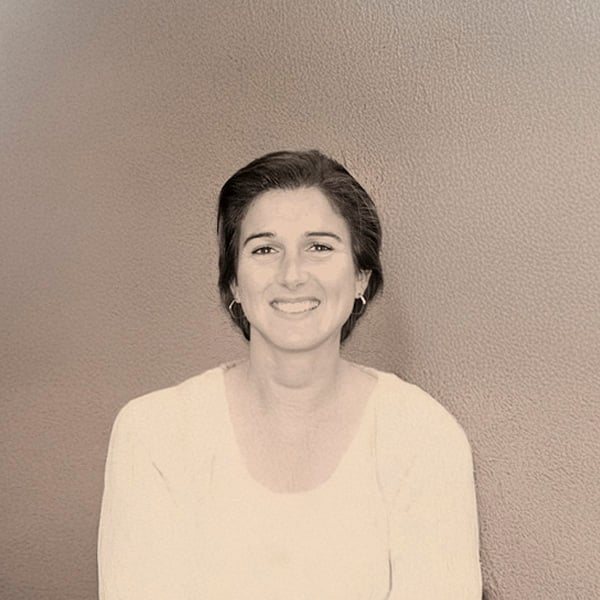
Interview with Prof. Dr. Muhammad Machasin, former Director of Graduate Studies at the Islamic State University, Yogyakarta, Indonesia, on the subject of “civil Islam”. On the occasion of the globethics.net1 conference on “Ethics and Fundamentalism”, held in Huissen, Netherlands, 27-31 August 2006, I spoke to the former director of Graduate Studies at the Islamic State University, Prof. Muhammad Machasin, about his ideas on “civil Islam”. Prof. Machasin is the acting head of consultative leadership of Nahdlatul Ulama (NU) in Yogyakarta, Indonesia. He is also an author and teacher on Islam and fundamentalism. His publications include:
1. The Concept of Human Being in Islam, paper presented in the International Conference on Islam and Humanism, IAIN Walisongo Semarang, November 5-8, 2001.
2. Faith and Identity, paper presented in “Consultation on Christian-Muslim Dialogue” held by The Lutheran World Federation and Protestant University Duta Wacana, Yogyakarta, April 4-6, 2002.
3. Democracy and Shari’a in Islamic Doctrine and History, paper presented in conference “The Challenge of Democracy in Muslim Countries”, held by IRCOS in Yogyakarta, March 25, 2002.
4. Sunan Kalijaga State Islamic University as an Institution of Islamic Leader Training in Indonesia, paper presented at Workshop on the Education of Southeast Asian Islamic Leadership, ISEAS Singapore, 19-20 May 2005.
5. Struggle for Authority between Formal Religious Institution and Informal-Local Leaders, paper presented at Final Conference “the Dissemination of Religious Authority in 20th Century Indonesia”, jointly organized by IIAS (Leiden) and UIN (Jakarta), in cooperation with the KITLV (Leiden/Jakarta), in Bogor, Indonesia, July 6-9, 2005.
Vicky Rossi: What is your definition of the term “fundamentalism”? In your view is fundamentalism always related to religious intolerance or can it also be of a secular nature?
Muhammad Machasin: For me a fundamentalist is anyone who holds fast an opinion or stance and closes himself/herself to any possibility of reviewing it. This can be of a religious or secular nature. It can be economic or cultural. There is even state fundamentalism.
Vicky Rossi: With economic fundamentalism are you referring to neoliberal tendencies? And what would be an example of cultural fundamentalism?
Muhammad Machasin: Yes, neoliberalism. With regard cultural fundamentalism, in the past in the Netherlands, for example, you weren’t considered a good citizen if you didn’t speak Dutch or didn’t behave in the same way as the Dutch, but this has changed a little now.
Vicky Rossi: In the West the media and government have a tendency to present the general public with the idea that only Muslims are fundamentalists. In your opinion is this done for geo-political purposes or is it simply out of ignorance of the Islamic religious tradition?
Muhammad Machasin: I think that there is something behind this idea that Muslims are stereotyped as fundamentalists, but I think also that it is possibly down to simple ignorance. Many lay people don’t really know what Islam is. Maybe they only know Muslims from stories, from books, from the media, that sometimes are not fair in the way they portray Muslims. We must not forget that there have been conflicts between the West and Muslims….
Vicky Rossi: The West in the sense of Christians?
Muhammad Machasin: Christians, yes, but not only Christians. The West in the sense of imperialism also. When we were struggling for independence we used Islam as one of the means to mobilise the people. Nowadays, some Muslims use religion as their means to fight against globalization or against the discontents that they feel in the modern situation.
Vicky Rossi: Globalization has many connotations. Are you using it to refer to global economic power?
Muhammad Machasin: Not only economic power, but also media influence. Sometimes the media broadcasts or publishes something which is not in accordance with Islamic sensitivity or Islamic rules. This can lead to a reaction in the form of some kind of Islamic fundamentalist action.
Vicky Rossi: How much of a link do you think there is between religious fundamentalist movements and structural violence? Is it because people feel marginalized that they assume fundamentalist tendencies?
Muhammad Machasin: As I mentioned in my paper (2) for this Globethics.net conference, the fundamentalist movement is an indication that there is something wrong in the structures that form the basis of our lives: in the relations between cultures, between states, between corporations, between people and so on. When you are marginalized, you seek something that will enable you to become incorporated into the system of decision-making. But if the system refuses, maybe you will use whatever means you have at your disposal. There is religion which can give you emotional support for whatever you do, in the name of God for example. This is very important. Many politicians don’t understand that although it is true that fundamentalism comes from religion, this is not the core of the problem. The problem is the system that marginalizes some people.
Vicky Rossi: You are saying then that some people are disempowered and that through religion they can gain a sense of empowerment because they feel that they can do something to change their situation?
Muhammad Machasin: Exactly, yes.
Vicky Rossi: In additional to structural violence, how much is identity a motivating factor in fundamentalism, that is, the need to express an individual or group identity?
Muhammad Machasin: I think this need to express an identity only comes when you are not acknowledged, when you are not received by any of the systems that you operate within. If you are considered equal with others identity doesn’t have such a hold over you. Identity only becomes an issue when you are treated unfairly. For example, a person might be poor because he/she doesn’t have a good enough education, but they might not understand this. They might think it is because they are Muslim that they have not been given a better education. This can make them feel that they have been treated unfairly. I am talking about the definition of the problem here. Sometimes people define the problem in too simplistic a way. None of us is without prejudice or historical burden or vested interest. These things can lead people to take a simplistic view of the contributing factors in their definition of the problem. It can be wrong, but satisfying for those who feel marginalized.
Vicky Rossi: You are promoting the concept of “civil Islam”. From where does this concept originate and what are its main tenets?
Muhammad Machasin: The term “civil Islam” comes wrongly, in fact, from the definition of the concept of civil society. This idea of civil society – namely, a society that is independent or equal to the government and that monitors the government’s actions in the name of the people – is an idea that came from the West. This concept was translated into Islam, into Arabic, with the word madany. Madany comes from the word madinah, which means city, but Madinah is also the name of the city where our Prophet Mohammad lived in the second part of his life. Madany is the adjective of the word Madinah and it means that you are related to the city of the Prophet Mohammad. The word then refers to Islam at the time of the Prophet Mohammad in the city of Madinah.
But for me this is wrong. Civil Islam does not refer to the time of the Prophet Mohammad. It must be related to how people in the city manage to live in plural societies – you have to acknowledge others and you have to have a common platform on which all the members of the society can live. This is the idea and I am not the first to use this term. I mention in my paper, it is Robert W. Hefner, from Boston University, who used Civil Islam as the title of his book.
Vicky Rossi: Does civil Islam call for the separation of state and religion, that is, does it call for secular government?
Muhammad Machasin: No because in Islam there is no concept of the Church, therefore, we need the government to carry out some of our religious duties. But it is complicated. If it is carried too far, it means you will have a religious state. But if it is not carried out far enough then it means that many of your religious duties cannot be observed. I would say you have to create a measure by which you can observe the obligations of your religion while making others happy. It is not easy. First you have to look to your own religion. Then you have to see what is accepted by others from other religious traditions. Then you have to have a discussion or debate in order for all people to come to an agreement on common points.
Vicky Rossi: Are you referring to inter-religious dialogue?
Muhammad Machasin: Not as such, but people of religion should be able to meet together within the frame of society and within the frame of the state. The state should be used as an arena in which people can practise the goods of their religion. Not just for their co-religionists, but for all of society. This is a bit different from the secular state. In the secular state you preserve the ideals of your religion for your congregation, but in civil Islam the ideals of religion are offered to the life of society as a whole. You have to be aware that there is a need for compromise. There might be something you’d like to do, but it might not be immediately acceptable to others, so you have to convince others that it is a good thing to have such and such values or such and such rules, for example. This can be done through discussion and debate.
Vicky Rossi: How accepted is the concept of civil Islam in the Muslim world and what are the obstacles to it becoming more widely accepted and established?
Muhammad Machasin: Firstly, there are many Muslims who fear they will loose their identity as Muslims. However, in a country like Indonesia you do not need to be afraid of this because it is a country with a Muslim majority. Secondly, it is sometimes not easy to find a neutral language with which to promote what is best for the community from your own tradition. Thirdly, many have a prejudiced belief that they will be betrayed by others, but if there is no trust, you can never establish civil Islam.
Vicky Rossi: Is that distrust within the Muslim community itself?
Muhammad Machasin: Not only within the Muslim community, also from non-Muslim communities.
Vicky Rossi: In order to build up the sense of trust would you suggest the use of dialogue as you mentioned before?
Muhammad Machasin: Yes, dialogue and encounters.
Vicky Rossi: What kind of encounters? Academic encounters? Joint projects?
Muhammad Machasin: Even the small encounters which result from living together in a neighbourhood. Joint projects are important of course and then not so long ago we suffered from the disaster [the 27 May 2006 earthquake that hit Yogyakarta and Middle Java, killing more than 6,000 people and destroying more that 200,000 houses]. These kinds of things break down the walls of our identity and enable people to see that we are all the same.
Vicky Rossi: You are the acting head of consultative leadership of Nahdlatul Ulama (NU) in Yogyakarta, Indonesia. Is the concept of civil Islam one associated exclusively with this organisation?
Muhammad Machasin: The NU as an organisation is something new. Well, when I say new it was established in 1926. For me civil Islam was there long before that date, when Muslims were confident enough to live with others without enforcing their identity as Muslims. This is what I want to revive – Islam and Muslims before the coming of what is perceived as a global threat that makes them feel cornered and causes them to fight against others. The NU is gathering up what was already there in the country’s heritage. However, it is unfortunate that many NU members are not aware that this heritage of Islam is actually something that can solve our problem now. Many will seek the solution from the hardliners in the Middle East.
Vicky Rossi: Can you explain the scholarly and social role played by the NU in Indonesian society?
Muhammad Machasin: I don’t know if we play any significant role in the scholarly field. You see you have to distinguish between the NU as an organisation and the NU as a community. The NU as a community has much to offer, but with regard the NU as an organisation I am more pessimistic. I am now talking about the NU as a community. You can be a member of the NU community without any need to be linked to the organisation. To distinguish we use the terms cultural NU and structural NU. I am not talking here about the structural NU. I am talking about the culture of Nahdlatul Ulama. It is here that the NU has a role to play in maintaining the middle path attitude. At the grassroots level the NU has a hold on the people to maintain that middle path and not to be extreme, or too far left or right.
Vicky Rossi: Is the NU only an Indonesian movement or does it have a worldwide network?
Muhammad Machasin: Well, it is an Indonesian movement, but you can see the same thing everywhere, especially in South East Asia. You’ll find it in Malaysia, in Thailand, for example. But it is an open community, so you will still find hardliners sometimes within this community of what I will call South East Asian Islam. It is different with Middle Eastern Islam.
Vicky Rossi: You mention the NU is about the middle path, not taking an extreme left or right stance. Is it a political movement or political party then?
Muhammad Machasin: No, it is not a political party. It is a cultural movement. I would even say that it is a practice.
Vicky Rossi: Does it have educational aims?
Muhammad Machasin: Yes. There are many boarding houses. We call them pesantren. They are a bit like monasteries. Children are sent to these pesantren, where they spend six or so years studying. They get their elementary and secondary education there, an Islamic education. But they can receive a good general education too in the pesantren. Through these pesantren the values of Islam are spread.
Vicky Rossi: In your presentation you spoke of “the absence of an authoritative body [in the Islamic system] that may make decisions on religious matters” 3, and you said that this was the reason why it is so easy for individuals to legitimize their own and their fellow believers’ personal opinions on religious matters. What are the difficulties in creating such an authoritative body?
Muhammad Machasin: Firstly, in Muslim society we have aspirations and we have interests which are sometimes very different. For example, in Indonesia in some local Muslim communities there is a poor economic situation, whilst in other communities the focus is more on the prevalence of health problems and it can be difficult to find a link between these 2 interests. Secondly, the relationship with the government is not that good – the government can choose just one or two people to represent the community without asking the community who they want as their representatives. Some Muslims think it is enough for them to take their own position for that position to then be applicable to all of the community. Thirdly, the question of leadership is not one which is clearly worked out by Islamic teaching. There is no training in leadership that can unite all the elements within the Islamic community.
Vicky Rossi: You say that the four sources of Islamic teaching, especially of religious rules, are consecutively (1) the Qur’an, (2) the Tradition of the Prophet Muhammad, (3) the Consensus and (4) the Analogy. Could you briefly explain the last 2 points?
Muhammad Machasin: “Consensus” simply means the agreement of all members of the community. But there is some disagreement on the definition of this concept. Firstly, some say that it does not refer to the consensus of the present community but rather to the consensus of the 1st and 2nd generation of Islam, 1,500- 1,600 years ago. I don’t agree. Secondly, there is the fact that not all Muslims know the tenets of Islam. They don’t know Arabic. They don’t know how to read properly or to come to a considered conclusion, so some confine consensus to the consensus of scholars only. I want to return to the first definition of consensus, which is the agreement of the community.
For me, the agreement of the community does not imply the agreement of the Muslims only, but of all the people who live together, including the Muslims. So in Indonesia it is the agreement of all of the citizens of Indonesia on certain things. On such things as ritual and personal life Muslims can have their own agreements, but on issues related to public life the agreement must be open to all of the members of the community.
With regard the term “analogy”, if there is something new of which there is no mention at all in the Qur’an or the hadith [Tradition of the Prophet Muhammad], then you try to find some rule from the Qur’an or the hadith which has a similar condition. For example it is prohibited to drink khamr. Khamr means any drink that makes you drunk, but khamr is specific to the 7th century Arabic world.
Nowadays we have alcohol. Khamr is prohibited because it makes you drunk and now we have alcohol, so the same reason which is applied for the prohibition of khamr can be applied to prohibit the consumption of alcohol. Let’s take the example of alms giving, in the Tradition of the Prophet Muhammad wheat is the ingredient normally associated with alms giving, so what do you do if you only have rice? In Indonesia, for example, there is wheat but it is not so common. There is a lot of rice instead, so any of the rules applicable to wheat and alms giving, can be transferred to rice.
Vicky Rossi: Can you explain what is meant by the term “jihad” – a term which I believe has been much misinterpreted and misrepresented in Western society?
Muhammad Machasin: Well, the first thing is that the word jihad means determination – to force yourself to do something heavy. That is jihad. Like when you are waging a war, you must be determined because there are two possibilities: you can win or you can be killed/injured, so you have to make a determined decision. This determined decision is jihad. But this idea of jihad is not only applicable to warfare. For example, if you are hungry at the time of fasting and in front of you is food, it is hard for you to keep fasting so you have to do jihad in this instance too. The Prophet Mohammad said that there are two kinds of jihad: jihad against others – this means war – and jihad against yourself. The second jihad is actually heavier than the first type of jihad. The first type of jihad is the lesser jihad; the second type of jihad is considered the greater jihad – it is the jihad against your own desire.
Vicky Rossi: Which methods would you suggest that governments and civil society should use to transform fundamentalist tendencies within society?
Muhammad Machasin: I think generally speaking we have to achieve a good distribution of wealth. Not only wealth, but also opportunity. I believe that if there is global justice, fundamentalism will tend to decrease. But this is not enough. I do not deny that there are people who want to use violence in the struggle for their aspirations and ideals. To deal with this, there needs to be a good system of law enforcement with the firm implementation of rules. The rules I refer to here should be discussed first by all of the people and then if somebody does not comply with those rules, they must be punished.
Vicky Rossi: Are you referring here to a system of law at the local level, or the national level or enforced through the “international community” via a body like the United Nations?
Muhammad Machasin: I am not convinced that the UN has any capability in this area. I think this is something that begins at the local level and then gets broader to the national, governmental level. Perhaps at the international level, we need to create new ways of protecting all members of the community of nations against anyone who wants to be a superpower.
Vicky Rossi: On that point, in your opinion, how much is religious fundamentalism a reaction to US imperialism?
Muhammad Machasin: Now many Muslims in Indonesia see the US as something of a big devil. Well, look at what has happened in Iraq, in Afghanistan. The US is not bringing any peace at all, although it is done in the name of peace. Also inside America itself there is widespread injustice, but many people don’t know this. In Indonesia, for example, they know only that in 1997 $1 was worth 300 Rupiah; then within a week in 1998 $1 cost 8,000 Rupiah. What happened? Some people will say that this is not the fault of the US, but many simple folk will put the blame on America. They see that their currency is getting higher and higher, so the enemy is there in the United States. I don’t know how to resolve this problem. All I know is that Islam has many ways other than violence to converse with others.
*This transcript represents an accurate but non-verbatim representation of the original interview.
For further information, please contact:
Prof. Dr. Muhammad Machasin
Email: mmachasin@yahoo.com
Tel: +62 274 510137; Mobile: +62 813 2870 4558
Links
1 Globethics.net
2 Please see here
3 Ibid.
4 Ibid.
NU
Muhammadiyah, moderate reformist Muslim organization in Indonesia
International Centre for Islam and Pluralism
Vicky Rossi’s blog
Visions of Peace and Reconciliation