The Dar al-Kalima College is a Christian college in Bethlehem offering 2-year degree courses in arts, multimedia, communications and tourism related studies. Its mission statement reads: “Through establishing an institution for higher learning the Dar al-Kalima College is committed to building a culture of democracy, critical thinking and free expression, thus contributing to the strengthening of the civil society in Palestine.”
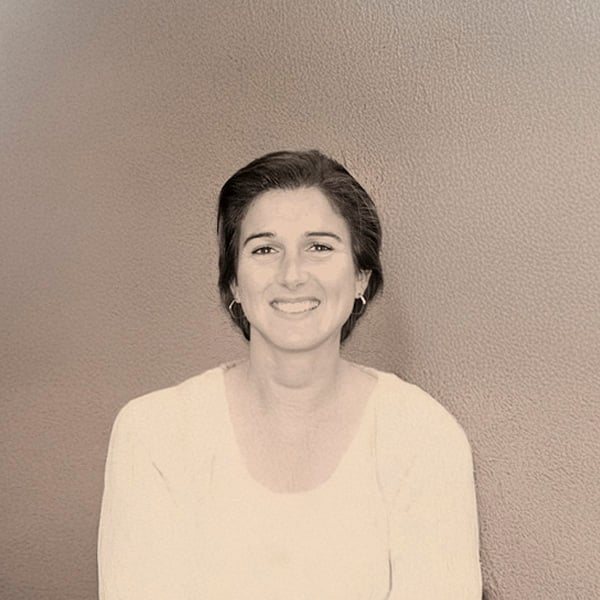
Nuha Khoury is dean of the College.
Vicky S Rossi: Can you explain to me the relationship between the International Center of Bethlehem (ICB) and the Dar al-Kalima College?
Nuha Khoury: The International Center of Bethlehem (ICB) is a cultural institution that has been in existence for the past eleven years. In that time it has created offshoots, one of which is the Dar al-Kalima College, which is its newest creation. Now the Dar al-Kalima College is slowly developing an identity of its own: it started with only a few programmes, but is looking to become a university ultimately.
Vicky S Rossi: Is the College exclusively for Christians or is it open to all denominations?
Nuha Khoury: The Dar al-Kalima College is an institution that is under the umbrella of the Lutheran Church, but it does not have a Christian agenda – none whatsoever. We follow the guidelines of the Palestinian Ministry of Higher Education. Our curriculum is not compiled by priests or other religious figures. It is created by artists, musicians and film makers. We consider the Dar al-Kalima College to be an ecumenical institution in the sense that it is open to all: Palestinians and non-Palestinians. We have amongst our students, Germans for example. Half of our students are Muslim and half of them are Christian. Whoever has the talent and the capability is welcome. The staff is also mixed: Muslim/Christian. Talent and ability are the main criteria.
Vicky S Rossi: The Dar al-Kalima College is offering degree courses in arts, multi-media, communications and tourism. Why were these particular subjects chosen?
Nuha Khoury: For several reasons; to begin with the ICB started a pilot project in art, multi-media, communications, etc. and we have been slowly working towards the institutionalization of that pilot programme. We felt that although it’s good to offer non-formal education, that is not enough and it is necessary to offer formal courses to people who want degrees in higher education, thereby offering them new opportunities. Palestinian society needs more art education, music education – things that can convey the Palestinian story in another way, for Palestinians themselves as well as for the outside world. There are so many ways of expressing an issue. We believe art, film and other forms of modern media and communication is one way and a very effective way of telling the Palestinian story.
Vicky S Rossi: There is a link here with what you are saying and the Dar al-Kalima College’s stated commitment to “maintaining and developing a contextual, vibrant and dynamic cultural identity for the empowerment of the Palestinian people.” Can you explain this goal a little further and tell me why you think it is so important?
Nuha Khoury: There is nobody better to tell the story of Palestinians than Palestinians themselves. We have our own particular perspective on things. The person who had the vision to set up the Dar al-Kalima College is a Palestinian contextual theologian. His vision continues to affect the development of the College.
Palestinians have something to share with the rest of the world. They have a certain view on life. They have arts and crafts that can be communicated to the outside world. They have a story to tell which needs to be told through their own eyes. I think it is important that we remain in contact with the outside world even if we are surrounded by a Wall. We should not take the Wall as a given. We must show that we are a people who are part of the human civilization and that we have something to offer the rest of humanity.
We don’t expect change to come from outside. Palestinians have great sources of strength. In Palestine institutions are being built to empower the young and women, to provide people with skills, and to hold up a vision for the future.
Vicky S Rossi: Can you explain what is meant by contextual theology?
Nuha Khoury: Contextual theology considers the Bible to be our heritage. It asks the question, “How can we get a contextual reading of the Bible that helps people to see the hope at a time when there is no hope, that helps them to struggle and work for a better life?” For the Palestinians this means resistance, but resistance is not only about carrying a gun and fighting. We believe that staying on the land is an act of resistance; trying to create jobs and a future for people so that they don’t leave this country is an act of resistance.
Vicky S Rossi: If it is possible to generalize, could you depict what it is like for young people in Palestine today? What prospects for the future do they have in terms of employment and life opportunities?
Nuha Khoury: Prospects for Palestinian young people, this is a problem. Besides the Occupation, which is the biggest problem that all of the people face, especially the young people because they cannot plan for the future, there are problems like increasing poverty. If you look at the situation solely from an intellectual perspective, the prospects don’t look good since you need security, you need a government that can plan and you need institutions that can take care of the young. This is especially important as we have a society that is very young – over 54% of the population is under the age of 15. People might say that the resources we need to keep this sector of the population productive are minimal and getting smaller and smaller. So on the intellectual level, you can see all of these facts and you might think the prospects are terrible.
But with young people you can never give up. You shouldn’t, you can’t, it’s not allowed to give up and therefore we have a responsibility toward these young people, all of us have this responsibility. It is a double-edged sword: if you don’t take care of them the society will be ruined, if you take care of them the sky is the limit. This is the motto of the ICB and the Dar al-Kalima College. That’s why we start working at the ICB with children at a very young age. We have a programme called Bright Stars, where we encourage children to seek and look for their own talents – art, music, anything that they are good at. These children are the future of Palestine. If this programme were replicated everywhere, the children would have a sense of normalcy under very abnormal circumstances because these circumstances [the Israeli Occupation of Palestine] cannot last for ever.
Vicky S Rossi: In what ways is the Dar al-Kalima College focusing on the empowerment of women in Palestinian society?
Nuha Khoury: Given that women are the “forgotten majority” in a patriarchal society, what we do is we give them preferential treatment. We believe that women have a right to participate and a very important role to play so both the Dar al-Kalima College and the ICB offer women preferential treatment in all the courses and programmes. For example, tourism and tour guiding is a male dominated profession here. From the moment we started offering this course, we have tried to make the student participation ratio 50% men 50% women. We think this is important also because women will bring the feminine perspective on Palestine to their tour guiding work. To see Palestine through a woman’s eyes is different than seeing Palestine through a male’s eyes.
In all the Dar al-Kalima College programmes you will see a 50-50 men-women ratio. For example, the film industry is traditionally male dominated, but here in the college there are 8 men and 7 young women currently enrolled on the documentary film course. This is important for us.
Vicky S Rossi: The Dar al-Kalima College “is committed to building a culture of democracy, critical thinking and free expression, thus contributing to the strengthening of civil society in Palestine.” How developed is civil society currently in Palestine? In which ways does the Dar al-Kalima College envisage facilitating a strengthened civil society?
Nuha Khoury: I would argue that civil society development in Palestine is not complete and needs much work. Although there are lots of non-governmental organizations (NGOs) working in Palestine, these NGOs are linked usually to political factions or religious groups. They have not done their jobs correctly up until now. If they had done their jobs correctly, we would not be in the mess that we are now in.
As a society we have so many issues to deal with and the Occupation has been a useful excuse for some people to neglect issues that needed to be addressed. People blame the Occupation for all their problems when there are so many problems that are not caused by the Occupation. The Occupation is a horrible fact that we live with every day, but there are many issues that we have created for ourselves and we have not stood and critically faced them. What we need is to be self-critical and to ask ourselves, “Why are these things happening?” and “What can we as a society do to get ourselves out of this situation?”
My understanding of civil society is that it stands for pluralism, democracy, dialogue, transparency and openness to ideas. If the NGOs in Palestine had promoted these concepts, civil society would be much more developed today, so I would say that we have not yet reached a level where civil society can play an important role on the political and the social level. Why is this the case you might ask? One reason has to do with funding policies, where many donors have had their own agendas at the expense of the real issues at hand.
What we are trying to do here at the ICB is to create a space where people can have a dialogue. We are, for example, a founding member of the MEATRC (Middle East Association of Training and Retreat Centers) through which the Dialogue for Peaceful Change programme is being implemented here in Bethlehem.
Also earlier this year we participated in the legislative elections as observers. We did not participate as members of this faction or that faction. We want people to understand that you can still be an important player in society without having to be factionalized.
One of the questions we ask our documentary film students is, “Which problem in society leaves you sleepless at night – you can’t sleep because you want so much to resolve it?” It doesn’t interest me if they say the Occupation because this is a fact for all Palestinians. If, however, they tell me it is how generations interact, if they tell me that it bothers them that institutions are not playing their roles properly, if they tell me that schools are still being violent towards children, if they tell me that there is no room for discussion, that democracy is a value only when people go and vote and then it is forgotten once the voting is over, if they tell me that they are worried about environmental issues and they think they have a role to play, then you can say that we have hope on our side.
In all of the interviews with these documentary film students very few of them had an independent vision of what they would like their society to look like. To me this means that their vision of society is being manipulated by others, including political factions.
Civil society needs to promote independent thought – to have the courage to hold opinions that might not be pleasing to others, but that could move “the street” [the people]. If we don’t have that, if institutions of civil society are not addressing issues that are important for the everyday life of people – through democracy, the right to speak and dialogue – then we have not done our job correctly.
Vicky S Rossi: And the Dar al-Kalima College is promoting these concepts of civil society through the courses and programmes it runs?
Nuha Khoury: Yes. Let me give you an example. We have a document for our students to sign when they enroll on a course. They have to agree to respect freedom of expression and artistic expression. They can object to something, but they cannot use violence, they cannot ruin somebody else’s work if they don’t like it. They have to agree to discuss with their colleagues any disagreements they might have. Let’s say we have nudity depicted in paintings and somebody doesn’t like that because they come with preconceived notions; or a documentary film student makes a film that ideologically doesn’t suit another student. Should the artist or the film maker stop their creativity because somebody else doesn’t like their work? No. That would be unacceptable. Here at the Dar al-Kalima College we say that you learn how to respect others so that your ideas can also be respected.
Vicky S Rossi: Do you find resistance to that idea initially from the students?
Nuha Khoury: Not at all. They just accept it. I think it is the adults who ruin young people. The general reaction when I ask the students what they would do if they didn’t agree with another student’s work is first they say that they might tell the teacher and then if that had no effect they would just let the student get on with it. So there has been no resistance from students to signing this document. They understand that if they want to enjoy freedom of expression they must accept that other people have that same freedom.
Vicky S Rossi: Do you think that the pressures of living under Israeli Occupation have deepened tensions between Christians and Muslims? This divide along religious lines never used to be an issue in Palestine and yet it seems to be coming to the surface of late.
Nuha Khoury: I don’t think the Occupation is the reason for this religious tension because both Christians and Muslims are subject to the Occupation and suffering the same fate. Occupation is bad for everybody.
For the Muslims it is as though the rest of the world is attacking the Muslim identity. As a Christian, Palestinian Arab living in Bethlehem, I sympathize and understand this feeling. There is an attack on that identity.
In Palestine, we have the longest history of peaceful relations between Muslims and Christians. Although of course there have been cyclical moments of tension, the level of religious tolerance has always been high. Christians who had Muslims friends, for example, would invite them to a baptism, a wedding or a funeral in the church and the Muslims would go.
What happened recently with the burning of churches following the Pope’s comments was something totally out of character here in Palestine. For me it comes down to ignorance. Ignorance is the enemy. The more people know about each other, the more people value each other and the fewer problems there are.
The “war on terror” and media channels like CNN have propagated a great deal of misinformation about Muslims. When Muslims see the way the media is presenting them, they rebel. It is understandable. I don’t like the way Muslims are being portrayed either. How can the media say this about my neighbour? The image they portray is not my neighbour, it is not my friend. Having said this, I don’t condone actions like the burning of churches by Muslims or the burning of mosques by Christians. Those actions are done by people who are ignorant, who are not true believers. Those actions are done by people who are not nationalists because somebody who believes in the Palestinian nation would never do something like that.
*This transcript represents an accurate but non-verbatim representation of the original interview.
For further information, please contact:
Dr. Nuha Khoury
Dean, Dar al-Kalima College
The International Center of Bethlehem
Dar Annadwa Addawliya
P. O. Box 162, 109 Paul VI St.
Bethlehem, Palestine
Tel: +972-2-2770047 or +972-2-2764876
Fax: +972-2-2770048
E-mail: nkhoury@annadwa.org
Website: http://www.college.daralkalima.org/
Links
International Center of Bethlehem http://www.annadwa.org/
Bethlehem Media Net http://www.bethlehemmedia.net/
Dialogue for Peaceful Change, ICB http://www.annadwa.org/intercultural/dpc.htm
Dialogue for Peaceful Change http://www.dialogueforpeacefulchange.net/