Migrated from the TFF legacy site archive.
War on Ignorance
By
Maria Ahmed, Bangkok Post
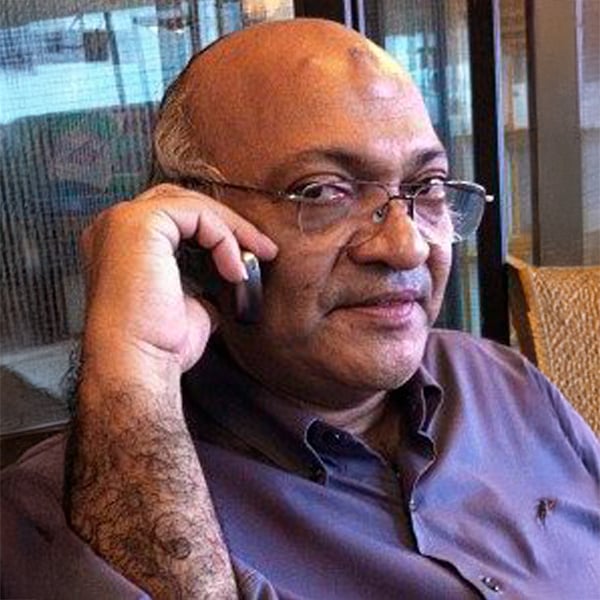
Interview with Chaiwat Satha-Anand, TFF associate
October 17, 2003
PERSPECTIVE – Sunday 28 September 2003 Bangkok Post
Reforming Islam Conservative Muslims have so sidelined moderates and liberals that an Asian-style economic miracle is needed to break their grip on Islamic politics and religion
Neither a lackey of the United States nor historically an oppressor of Muslims, Thailand nevertheless finds itself on the frontline of the War on Terror.
The arrest in July of al-Qaeda suspect Hambali in Ayutthaya – and reports suggesting that the Jemaah Islamiyah terrorist network has over 100 recruits here – exposed the indiscriminate violence planned by Islamic extremists.
Like football hooligans, Muslim terrorists are said to ruin the match for all the real fans, the mainstream Islamists who claim to be peace-loving democrats. But a recent Economist survey of Islam and the West describes how ostensibly nonviolent Islamic groups such as the Muslim Brothers in Egypt create an "atmosphere of militancy in which the men of violence flourish.”
More insidious is that these mainstream parties routinely propose legislation that restricts the rights of women and religious minorities in their countries, in contravention of the Universal Declaration of Human Rights. Perhaps Muslim terrorists are more like the violent skinheads of Europe who tarnish the reputations of "clean racists” such as Le Pen and Haider – who are racists nonetheless.
Tapping into Injustice
The causes to which all Islamists lay claim are well known: the continuing injustice committed against Palestinians under Israeli occupation, independence struggles against bigger powers in Chechnya and Kashmir and (increasingly since 9/11) the open hostility displayed by the US establishment towards Muslims and Arabs, with Afghanistan and Iraq at the sharp end.
Dr Chaiwat Satha-Anand, a professor of political science at Thammasat University, argues that these causes are a large part of the popularity of Islamist groups:
"Whether these grievances are true or not is a separate issue. People feel that they have been treated unfairly. The umma (worldwide body of Muslims) that they identify with is under siege.”
As director of the university’s Institute for Peace Studies, Dr Chaiwat has recently published articles on non-violent resistance and studies of terrorists’ writings.
He said that Islamists tap into this widespread feeling that outsiders are inflicting injustice. "They feel that the world is not confronting the truth. For example, the killing of Palestinian children is not reported on TV to the same extent as the killing of Israeli children.”
But it can’t be denied that, with the stagnant economies and the gaping inequalities between rich and poor, the failures of governments in Muslim countries to meet the aspirations of their people create the conditions where the rhetoric of an Islamist solution is powerful.
The much-cited 2002 UN Arab Human Development Report focuses on the lamentable performance of Arab economies, particularly in comparison with their East Asian counterparts.
"I don’t think that Islam is a religion for Muslims. The Prophet was sent to this world as the Rahman (merciful or compassionate). And not Rahmat almoninoon (for Muslims only), but Rahmat alameen (for the whole world). Total compassion. The notion of citizenship on this basis needs to be more inclusive and not exclusive." – Dr Chaiwat Satha-Anand, Professor of political science at Thammasat University in Bangkok.
In 1981 China was producing half the output of the Arab world – it now produces double their output: between 1975 and 1998 GDP in the Arab world grew at an average annual rate of 3.3 percent, whereas the countries of East Asia and the Pacific grew at 7.4 percent.
The total GDP of all Arab countries in 1999 was less than that of Spain.
As Dr Chaiwat puts it: "If a nation-state is able to give you a home, then the tie to the umma will not be very strong. But if that nation-state and its government and society abuse you, this creates a sense of homelessness, and naturally one will seek another home.”
Fortunately for Islamists, neither the United States nor former imperial powers – nor present-day occupiers – show signs of acknowledging their wrongs or seeking forgiveness. No unilateral offers of territory or vast compensation sums are forthcoming.
So the question remains: how can Muslim societies recapture the political discourse from the domain of religious extremists?
There are two fronts: the economic, where Muslim states must provide their citizens with a home worth living in, and the intellectual, where the tolerant version of Islam (wherever it is) finally has to get its act together.
A Destructive Simplicity
"I don’t avoid confusion, I create it,” reads a sign in Dr Chaiwat’s office, amid stacks of political philosophy and religious theory.
As a Thai Muslim with a Western education who attended Catholic school and has many Chinese friends, he has a term for the intellectual shift that is needed in Islamist politics and elsewhere: "creative confusion.”
He explains: "Creative confusion is what is needed in this world. Destructive confusion causes a lot of problems. I am confused by who I am at times.
"That puts me in an advantaged position. I’m not quite sure who I am and therefore I cannot make enemies. So in a state of creative confusion I create peace with the world.
"A lot of people try to reduce the complex roots of who they are, they try to avoid all kinds of confusion. What they are left with is: I am a Muslim and you are a Jew.”
The remedy for this destructive-reductive view of the world is "cultural literacy,” understanding the roots from which the world, others and oneself arrive.
Islamists need to develop this sort of literacy sooner rather than later if they are to have a hope of dealing with the realities of 21st century societies.
A spanner in the works for the umma is that they all happen to be citizens of nation-states with mixed populations that include religious and ethnic minorities.
In Dr Chaiwat’s view: "A Muslim theorist will say that you ask them to pay taxes and he will provide examples of how Muslim civilisation treated non-Muslims, such as the 12th-century Muslim rule of Spain. Now I think that the nature of population and citizenship has changed a lot and we are looking at having political participation for all members of society.”
In fact, Islamist parties such as Jammat-e-Islami in Pakistan hold the view that religious minorities cannot participate in making the rules that govern the lives of the Muslim majority.
This is despite the fact that Muslim minorities in non-Muslim democracies demand and receive these rights as a matter of course. There are even state-funded Islamic schools in Britain.
Tying God’s Hands
It is inspiring that Chaiwat does not feel that a democratic system need be antithetical to the spirit of Islam: "I don’t think that Islam is a religion for Muslims. The Prophet was sent to this world as the Rahman (merciful or compassionate). And not Rahmat almominoon (for Muslims only), but Rahmat alameen (for the whole world). Total compassion. The notion of citizenship on this basis needs to be more inclusive and not exclusive.”
However, it is on this crucial point of interpreting Islamic principles that Islamic politics come unstuck. If reverence for the Quran, Hadith and Sunna co-existed with an atmosphere of genuine inquiry, there might be acceptance that no single interpretation can claim to be correct. A reformed, tolerant Islam could be built on accepting this uncertainty, which is at the heart of all religion.
After all, even if the Quran is the verbatim revelation of Allah, who are mere mortals to tie God’s hands with a single interpretation? Unhappily, there are numerous examples across the Muslim world of the conservative Islamic establishment tying God’s hands in this way, and rendering the critical study of the Quran off limits.
Christoph Luxenberg, a German expert on Middle Eastern languages, has completed a study of the language and history of the Quran.
It is based on the thesis that the Arabic in which the Quran was revealed to the Prophet was a spoken Arabic closer to ancient Aramaic than the classical Arabic in which it was eventually written down.
He reinterprets Sura 33, commonly taken to name the Prophet Muhammad as the "seal of the prophets,” as naming him as the "witness of the prophets.”
What appears to be a piece of theological trivia is actually at the heart of a religious dispute that has seen a large group of Muslims declared non-Muslims. The Ahmadi sect believes that Muhammad was the last law-bearing prophet and that a promised Mahdi (or Messiah) was sent to reinforce his message.
Ironically, one of only two Muslims to have won a Nobel prize in science – Professor Abdus Salam (physics, 1979) – was an Ahmadi who, despite his protestations and exemplary lifestyle, was not even permitted to call himself a Muslim.
In his native Pakistan, Ahmadis were declared non-Muslims by a "secular” government under pressure from mullahs in 1974, with all the restrictions in rights that that entailed.
Another example is the prohibition of interest in financial transactions by the Sharia Advisory Board of the Islamic Development Bank in Saudi Arabia. Despite continuing debate over whether the precise meaning of the Arabic term riba is "interest” or "money-lending,” the board has ruled that this question is not subject to further interpretation.
While conservative self-styled Muslim leaders make arbitrary and highly politicised decisions in the name of Islam, another paradoxical feature of the Muslim world strengthens their hand.
The Westernised elites at the top of the economic heap sit idly by – out of misplaced solidarity with Islamists on common issues such as Palestine and Iraq, sheer stupidity, or abject cowardice? – mugs of whisky hanging from their limp wrists, murmuring assent. Maybe they don’t want to rule out the afterlife virgins?
They might be gravely disappointed to read Luxenberg’s study, which suggests that the virgins are actually raisins. What a bore.
Asian Fusion
Against such odds, liberal Islam has been unable to mount much of a defence. However, Dr Chaiwat observes that while the worst religious extremism is found in parts of the Middle East, the situation is different in outposts of the Muslim world.
For instance, a South African Muslim scholar has argued that homosexuals have a place in Islam. And in Malaysia, the government protects the rights of the Chinese and Indian minorities.
In fact, the governments and Muslims of Southeast Asia often prove to be inspiring examples of how Muslims can join the wider world without losing their identity.
Relations between successive Thai governments and Thai Muslims are a good blueprint for how Muslim states might treat their own minorities.
The Muslim communities of southern Thailand have accepted the development of many of their islands for tourism purposes, and have seen a return in improved employment and standards of living.
The Thai government also retracted a regulation requiring Muslim women (among others) to be photographed with their heads uncovered on identity cards.
Dr Chaiwat cites the 50,000-strong demonstration by Thai Muslims in the southern province of Songhkla after the US attacked Iraq: "This society provided a space for these people to express their dissension. This is one way to construct that sense of home.”
That sense of home is shared by Abdul Rahman Karimee, a member of the Muslim community at the Annsorissunan Mosque in Bangkok.
The community is over 200 years old – his ancestors came to Bangkok from Ayutthaya, fleeing the invading Burmese. They then fought alongside King Taksin at Thon Buri.
Karimee, who rehabilitates young drug addicts, says he is proud to be a Thai Muslim.
Dr Chaiwat admits that it will be a great challenge for liberal Muslims to get their message across: "This is what I am trying to do by talking to the media.
"The media is important but the more important thing is religious education. That is beyond my capabilities because I am not trained as a religious scholar.
"As a social scientist I can say that we have to start questioning the authority of current Islamic teachers and scholars."
"How to do it politely – that is the art.”
His personal bone of contention is the weak response to terrorist acts: "I would like to see Muslim intellectuals and communities call into question the myth of violence, to reveal the causes of atrocities. Call a spade a spade – if something bad is committed by Muslims, accept it, then try to resolve it.”
Wanted: Trade Miracle Part Two
The relatively peaceful co-existence, on an equal basis, of Muslims and non-Muslims in Singapore, Thailand and Malaysia has to be viewed in the context of the leap in economic prosperity that these societies have made over the last 30 years.
Economic growth, with most citizens sharing the benefits, is the only possible basis for a sustainable social contract between state and citizens.
In economic growth and its precursor – building a productive and well-educated labour force – the Muslim world has failed miserably.
The UN Human Development Report exposes the lamentable state of education in the Arab world; education in other, poorer countries must be even worse.
In any case, the Muslim world has no world-class university. While China collaborated with America and Britain on the human genome project, Arab funding of scientific research and development is among the lowest in the world.
The cumulative total of translated books since the time of the Caliph Maa’ moun (the ninth century) is around 100,000, about the average that Spain translates in one year.
The Report is clear about the link between quality education and economic growth, and the implications for Arab countries. Forty years ago, Arab countries had a higher per capita output than the three Asian Tigers (Hong Kong, Singapore and Korea).
However, workers in the Tiger economies possessed on average three more years of education – a differential that has since risen to six years.
At the same time, per capita output in South Korea has risen to double that in the Arab world. As a result, the Report states, Arab countries find themselves "isolated from global knowledge, information and technology.” They need to develop "high-quality human resources in order to compete in the global economy.”
Of course, UN economists are excited at the prospect of lifting millions out of poverty, as has taken place in East Asia.
However the example of China shows that economic power, more than military power, is also a key to political autonomy.
Muslim economies that lock in Western firms and consumers will find it easier to bargain for a favourable resolution of conflicts such as Palestine and Iraq.
On the question of Palestine, lessened dependence on the American oil market might even precipitate some of that elusive pan-Arab coordination on which so many hopes rest.
A Deadly Tango
Governments that fail to deliver the goods have no power base of their own. From Morocco to Pakistan they find themselves dependent on the support of a "culturally-illiterate” Islamic establishment – conservative groups that persecute liberal Islamists.
Economic growth must get started first to break this deadly tango before issues of political participation can be resolved.
Intellectuals can say what they like and the media can report what it wants, but it will not make much of an impact on struggling, disenfranchised populations. Dr Chaiwat and others like him will be rowing against the tide.
Unfortunately, developing "high-quality human resources to compete in the global economy” is much easier said than done, requiring as a start massive investment in education, of the right kind, over a sustained period.
The chances of this materialising against a backdrop of poor governance and corruption – other problem areas identified by the UNDP – are slim. Sadly, poor governance means poor policy decisions across the board: by politicians, heads of industry and public servants. A miracle of leadership is required.
The disingenuous ruling elite and rag-tag religious establishments of the Islamic world have failed in the leadership stakes, and there is no good reason to think that they will change.
Certainly, the United States, a global superpower with deteriorating social services and appalling income inequality, a presidency for sale and foreign policy featuring violent regime change in self-defined rogue states, is no example.
But nor should it be a convenient excuse.
Taking in this motley crew of incompetents charged with leading Muslims, and the world, out of the current morass, bearing in mind that establishing a functioning democracy requires even more hard work, despondency seems to be the realistic response right now.
© TFF & the author 2003
Tell a friend about this article Send to:
From:
Message and your name
SPECIALS Photo galleries Nonviolence Forum TFF News Navigator Become a TFF Friend TFF Online Bookstore Reconciliation project Make an online donation Foundation update and more TFF Peace Training Network Make a donation via bank or postal giro Menu below
Home
New
PressInfo
TFF
Forums
Features
Publications
Kalejdoskop
Links