
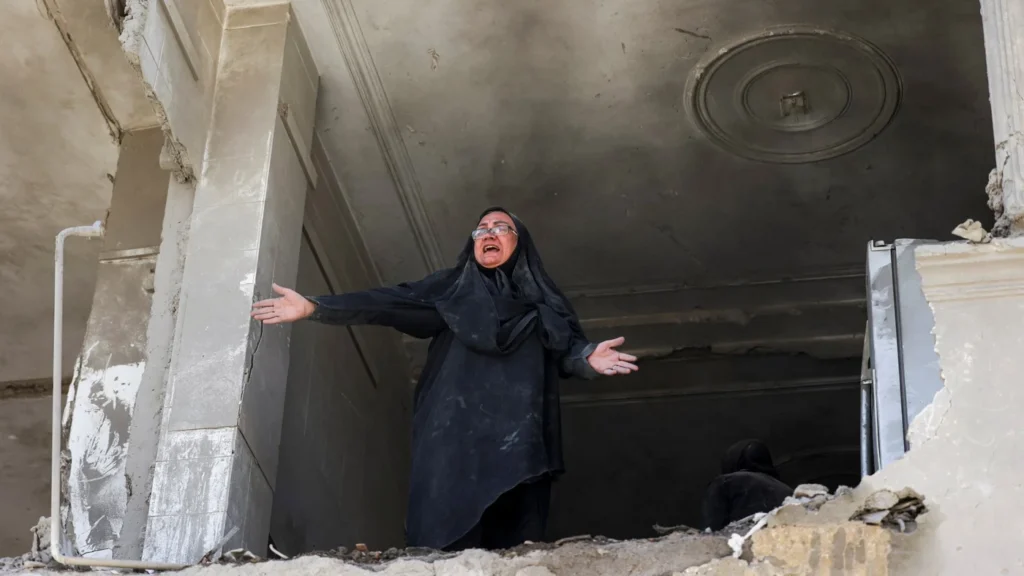
Guatemala’s murderous past and this month’s belated justice

By Jonathan Power

Guatemala’s claim to fame, apart from the ruins of the highly sophisticated Mayan civilization which present generations had nothing to do with, is that it is the country with the worst human rights record in the twentieth century among all the countries in the western hemisphere.

I recall once going to interview the then secretary-general of Amnesty International, Thomas Hammarberg, and asking him the country I should visit that had the worst human rights record in the world. He said “Guatemala”. I then asked how many political prisoners did it have. (Amnesty has a well tried and successful system of adopting political prisoners and then showering the authorities with demands they be released.) He replied “There are no political prisoners only political killings”.

Only in 1996 did the country emerge from a 36 year long civil war which pitted Mayan Indian insurgents against the army which was backed by the US, even during the presidency of that most pacific of all recent presidents, Jimmy Carter. Later, to his credit, President Bill Clinton, on a visit to this Central American republic, apologised for America’s role. It would have been shameful if he hadn’t because a UN investigation had revealed not long before that it was the Guatemalan authorities who had done by far the larger part of the killings.

It was Amnesty International who brought to the world’s attention Guatemala’s murderous one-sided war, the torture and the ravines packed with bodies over large parts of the countryside. And it was me, writing for the New York Times, after a visit to see it for myself, who tracked down the former vice-president, Francisco Villagran Kramer, who had fled to Washington DC, disgusted with what he had observed in the top echelons of the government.

He told me the killings were organised not by rogue militias nor by landowners, as the government propaganda said, but out of the president’s office itself. Amnesty had come, by a different route, to the same conclusion. My article, prominently displayed, brought no senator to his feet, triggered no other newspaper or TV program and disappeared, forgotten, almost overnight.

The incumbent president, Ronald Reagan, was called “The Teflon president”. So urbane, radiating goodwill, was he that he was somehow beyond reproach even though his government was pouring in weapons and army trainers. Over the years when the occasional reporter asked a question he would say that the Guatemalan army was fighting communism just as US-supported governments were right through Central America. Communism’s reach had to be stopped, he argued publicly, or the red menace would be on Texas’ doorstep in no time at all. Cuba and Moscow were behind it, he would say. Yet there was only modest Cuban involvement and none at all from Moscow.

The International Criminal Court has no authority to deal with the war crimes of Guatemala because these horrific events happened long before the treaty establishing the Court was agreed. But in the last year Guatemala has begun to prosecute some of those involved. Last week a court sentenced to 70 years in prison a former head of the country’s police force, Pedro Garcia Arredondo, for the kidnapping of a student three decades ago. He also faces separate murder charges in connection with the 1980 burning of the Spanish embassy in which 36 people died.

In March a former soldier, Pedro Pimental Ross, was sentenced to a jail term of 6,060 years for his role in the massacre of the village of Dos Erres in 1982, one of the most violent events in the civil war. Over three days soldiers systematically killed hundreds of men, women and children, shooting and bludgeoning them to death and throwing the bodies down a deep well. But it would have been better to prosecute 6,060 officers than one soldier singled out as a scapegoat.

In January a court ruled that the former military leader and later the country’s “elected” president, General Rios Montt, aged 85, should face charges for genocide and crimes against humanity.

Belatedly Guatemala is dealing with its terrible past. But most of the murderers continue their lives untouched. It will take decades to recover. The army and police, besides the mass killings of peasants, targeted the many Catholic priests who worked behind the scenes to oppose the government, local elected officials, mayors and teachers. Without them it has been hard for villagers to pick up the pieces and start a new life. The gangs once affiliated to the government are now deep into the drug trade. The new president, Otto Perez Molina, was a former head of military intelligence and some say a party to mass murder. However he is allowing the attorney-general and former human rights worker, Claudia Paz y Paz, a free hand to prosecute war criminals.

One step forward. One step back?

Copyright: Jonathan Power
Foreign affairs columnist, film-maker and author

Related Posts

It’s a matter of principles, courage, vision and pulling together – while the militarist world is falling apart… Peter Langille October 3, 2026 “Here, then, is the problem which we present to you, stark and dreadful and inescapable: Shall we put an end to the human race; or shall mankind renounce war?”The Bertrand Russell—Albert Einstein Manifesto, July 9, 1955 ⁕ The forecast for what’s ahead is worrisome. The sharp rise in armed conflicts over the past three years is adding to what was already the highest level in over seventy years. Genocides, which should be prevented are supported. A shared climate emergency that jeopardises survival is ignored. Diverse polls now suggest that people are war-weary, worried and interested in a more effective United Nations. And, there are viable policy options for a more secure world! Yet governments are doubling-down, betting on more war and investing heavily. If current trends persist,...
Johan Galtung 1930-2024October 2015 Published here on October 3, 2026 Let us focus on Civilization for conflict analysis and remedies. Major forms of disorder use violence; war is state organized violence. The most belligerent states are the United States of America and Israel, both with civilization roots. National Evangelism, the US Protestant Christian civilization– more national than evangelical–justifies US warfare as exceptionalism of a people chosen by God, with a manifest destiny to run the world. Orthodox Judaism justifies Israeli warfare to conquer and expand from Nile to Euphrates as a religious right and duty to the Eternal One. The third most belligerent country, the UK, no longer believes it is God-chosen but chosen by the USA; not quite the same but something. But the root cause of global disorder lies in the Occident–with Islam–seeing itself as the single, universal civilization valid for all at all times, all others being...
How Oxford University Press allowed a personality‑driven narrative to masquerade as scholarship. Jan Oberg, dr hc, TFF director This article has also been published on TFF Substack where more readers react and withdraw their interviews from the project. A Special Issue in a scholarly journal is not an ordinary publication. It is a collective, curated […]

Recent Articles

Tony Robinson October 4, 2026 Violence is easy to recognise when someone is being beaten, shot or killed. It becomes more difficult when nobody is holding a weapon. Poverty, discrimination, exploitation and repression can restrict a human life just as effectively, although they do so in very different ways and with very different consequences. Simply adding more categories to an ever-growing list of forms of violence does not really solve the problem. The more interesting question is what all these different situations have in common and why it makes sense to describe them using the same word. Human beings do not simply react to what happens around them. They remember the past, imagine things that do not yet exist, make plans and undertake projects. Workers organise because they imagine different working conditions; people migrate because they imagine another life somewhere else; social movements emerge because people refuse to accept the...
It’s a matter of principles, courage, vision and pulling together – while the militarist world is falling apart… Peter Langille October 3, 2026 “Here, then, is the problem which we present to you, stark and dreadful and inescapable: Shall we put an end to the human race; or shall mankind renounce war?”The Bertrand Russell—Albert Einstein Manifesto, July 9, 1955 ⁕ The forecast for what’s ahead is worrisome. The sharp rise in armed conflicts over the past three years is adding to what was already the highest level in over seventy years. Genocides, which should be prevented are supported. A shared climate emergency that jeopardises survival is ignored. Diverse polls now suggest that people are war-weary, worried and interested in a more effective United Nations. And, there are viable policy options for a more secure world! Yet governments are doubling-down, betting on more war and investing heavily. If current trends persist,...
Johan Galtung 1930-2024October 2015 Published here on October 3, 2026 Let us focus on Civilization for conflict analysis and remedies. Major forms of disorder use violence; war is state organized violence. The most belligerent states are the United States of America and Israel, both with civilization roots. National Evangelism, the US Protestant Christian civilization– more national than evangelical–justifies US warfare as exceptionalism of a people chosen by God, with a manifest destiny to run the world. Orthodox Judaism justifies Israeli warfare to conquer and expand from Nile to Euphrates as a religious right and duty to the Eternal One. The third most belligerent country, the UK, no longer believes it is God-chosen but chosen by the USA; not quite the same but something. But the root cause of global disorder lies in the Occident–with Islam–seeing itself as the single, universal civilization valid for all at all times, all others being...

TFF on Substack

Discover and subscribe to more peace materials on TFF Substack

Most Popular

Tony Robinson October 4, 2026 Violence is easy to recognise when someone is being beaten, shot or killed. It becomes more difficult when nobody is holding a weapon. Poverty, discrimination, exploitation and repression can restrict a human life just as effectively, although they do so in very different ways and with very different consequences. Simply adding more categories to an ever-growing list of forms of violence does not really solve the problem. The more interesting question is what all these different situations have in common and why it makes sense to describe them using the same word. Human beings do not simply react to what happens around them. They remember the past, imagine things that do not yet exist, make plans and undertake projects. Workers organise because they imagine different working conditions; people migrate because they imagine another life somewhere else; social movements emerge because people refuse to accept the...
It’s a matter of principles, courage, vision and pulling together – while the militarist world is falling apart… Peter Langille October 3, 2026 “Here, then, is the problem which we present to you, stark and dreadful and inescapable: Shall we put an end to the human race; or shall mankind renounce war?”The Bertrand Russell—Albert Einstein Manifesto, July 9, 1955 ⁕ The forecast for what’s ahead is worrisome. The sharp rise in armed conflicts over the past three years is adding to what was already the highest level in over seventy years. Genocides, which should be prevented are supported. A shared climate emergency that jeopardises survival is ignored. Diverse polls now suggest that people are war-weary, worried and interested in a more effective United Nations. And, there are viable policy options for a more secure world! Yet governments are doubling-down, betting on more war and investing heavily. If current trends persist,...
Johan Galtung 1930-2024October 2015 Published here on October 3, 2026 Let us focus on Civilization for conflict analysis and remedies. Major forms of disorder use violence; war is state organized violence. The most belligerent states are the United States of America and Israel, both with civilization roots. National Evangelism, the US Protestant Christian civilization– more national than evangelical–justifies US warfare as exceptionalism of a people chosen by God, with a manifest destiny to run the world. Orthodox Judaism justifies Israeli warfare to conquer and expand from Nile to Euphrates as a religious right and duty to the Eternal One. The third most belligerent country, the UK, no longer believes it is God-chosen but chosen by the USA; not quite the same but something. But the root cause of global disorder lies in the Occident–with Islam–seeing itself as the single, universal civilization valid for all at all times, all others being...
Read More
Living-Peace-Sign-Budapest-copy
Tony Robinson October 4, 2026 Violence is easy to recognise when someone is being beaten, shot or killed. It becomes more difficult when nobody is holding a weapon. Poverty, discrimination, exploitation and repression can restrict a human life just as effectively, although they do so in very different ways and with very different consequences. Simply adding more categories to an ever-growing list of forms of violence does not really solve the problem. The more interesting question is what all these different situations have in common and why it makes sense to describe them using the same word. Human beings do not simply react to what happens around them. They remember the past, imagine things that do not yet exist, make plans and undertake projects. Workers organise because they imagine different working conditions; people migrate because they imagine another life somewhere else; social movements emerge because people refuse to accept the...
b54a1f10-8c65-4f0b-9dd5-4abc0a7d04cc_2659x2659
It’s a matter of principles, courage, vision and pulling together – while the militarist world is falling apart… Peter Langille October 3, 2026 “Here, then, is the problem which we present to you, stark and dreadful and inescapable: Shall we put an end to the human race; or shall mankind renounce war?”The Bertrand Russell—Albert Einstein Manifesto, July 9, 1955 ⁕ The forecast for what’s ahead is worrisome. The sharp rise in armed conflicts over the past three years is adding to what was already the highest level in over seventy years. Genocides, which should be prevented are supported. A shared climate emergency that jeopardises survival is ignored. Diverse polls now suggest that people are war-weary, worried and interested in a more effective United Nations. And, there are viable policy options for a more secure world! Yet governments are doubling-down, betting on more war and investing heavily. If current trends persist,...
010
Johan Galtung 1930-2024October 2015 Published here on October 3, 2026 Let us focus on Civilization for conflict analysis and remedies. Major forms of disorder use violence; war is state organized violence. The most belligerent states are the United States of America and Israel, both with civilization roots. National Evangelism, the US Protestant Christian civilization– more national than evangelical–justifies US warfare as exceptionalism of a people chosen by God, with a manifest destiny to run the world. Orthodox Judaism justifies Israeli warfare to conquer and expand from Nile to Euphrates as a religious right and duty to the Eternal One. The third most belligerent country, the UK, no longer believes it is God-chosen but chosen by the USA; not quite the same but something. But the root cause of global disorder lies in the Occident–with Islam–seeing itself as the single, universal civilization valid for all at all times, all others being...
Screenshot 2026-10-02 011738
Jan ObergPhD, director, The Transnational Foundation for Peace and Future Research, TFFLund, Sweden October 2, 2026 This is my full original manuscript. The Chinese Academy of Social Science, CASS, makes two publications out if it. 1. China’s Five-year plan emphasized the capabilities of basic research and original innovation. It is regarded as the goal of the future social development, which, as required, should be significantly enhanced. Can you comment on the importance of original innovation in research and academic study? I believe it is easier to define “original innovation” in the natural sciences than in social sciences. The breaking points of what constitutes something new, or innovative, are not quite as sharp in the latter. But in both fields it is about opening up something that was closed, unseen, unexplored before – making manifest what was earlier latent. Innovations come in many forms and shapes – naming something that was not...
arctic-circle-map
The agreement is catastrophic both because of what it says and what it doesn’t mention. It reduces further the major asset of security policies: Freedom of action. Jan Oberg TFF director September 25, 2026 A couple of hours before the agreement was signed on September 22, 2026, I published the following 13 hypotheses about what it would most likely contain on TFF Substack (in English). I was wrong on only the first point. Contrary to what Trump had written on his Truth Social platform, it does not appear to come into force immediately. In fact, it turned out to be worse than even I had anticipated. After these hypotheses now come a number of reflections in light of what the agreement actually contains, and does not contain, as well as the way in which it has generally been presented by major media outlets and by the public-service broadcaster DR. My...
girl-5894831_1280
Below are TFF-related media mentions, comments, videos and social media posts published elsewhere but not on this homepage. We happen to catch and list only a fraction. Regarding video comments and debates, we recommend that you go to the TFF Video Channel on Substack where many of them are reproduced. Jan Oberg is a contributor to China Daily – 52 million daily clicks – and Global Times, CGTN and CCTV (the national television), China Investment, Xinhua News Agency and several others. Articles and videos on these media very often multiply into countless Chinese (and Western media) that re-post them from these main media. Thanks to The China Academy, his analyses, interviews and comments are frequently posted on YouTube channels such as Thinkers Forum and Wave Media. These videos are often re-posted on Bilibili (China’s YouTube), the China Content Center on TikTok, and on the Chinese edition of TikTok, Douyin.com. This means reaching hundreds of millions of viewers worldwide over a year. While there are too many to catch on all these...





