
Can U.S. Citizens End Israel’s Legal Impunity?

By Stephen Zunes

Each time international law has attempted to censure Israel for its recent violations of human rights, the United States has stepped in to stop the process. If anyone is in a position to do something about this, it’s the U.S. public.

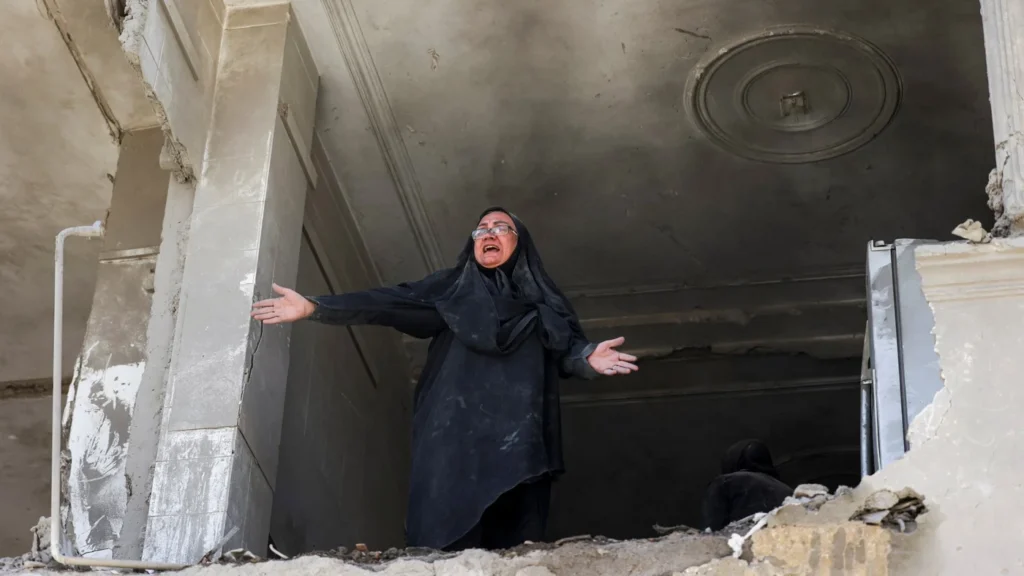
The great wish of the early Zionist leader Theodor Herzl was that Israel would be treated like “any other state.” Were that the case, there might be more rational and productive discourse regarding the Israeli-Palestinian conflict, which is particularly critical in light of Israel launching yet another devastating attack against civilian-populated areas of nearby Arab lands.

What we are witnessing from the Obama administration, however is the unfair phenomenon of exempting Israel from criticism.

There are certainly those who do unfairly single out Israel, the world’s only predominantly Jewish state, for criticism. There is a tendency by some to minimize Israel’s legitimate security concerns and place inordinate attention on the Israeli government’s transgressions, relative to other governments that abuse human rights. There are also those who, in light of the five-year siege of the Gaza Strip and the enormous suffering of the Palestinian people, try to rationalize terrorism and other crimes by Hamas, the reactionary Islamist group currently in control there.

What we are witnessing from the Obama administration, however—as Hamas rains rockets into Israel and Israel rains bombs, missiles, and mortars into the crowded and besieged Gaza Strip—is the similarly unfair phenomenon of exempting Israel from criticism. While most of the international community has criticized both Hamas and Israel for their attacks on areas populated by civilians, the Obama administration has restricted its condemnation to the Palestinian side.

U.S. ambassador to the United Nations Susan Rice—widely considered to be the president’s first choice to succeed Hillary Clinton as Secretary of State—correctly noted that there is “no justification for the violence that Hamas and other terrorist organizations are employing against the people of Israel.” However, she had absolutely no criticism of Israel’s far more devastating attacks against the people of the Gaza Strip, simply saying that “Israel, like any nation, has the right to defend itself against such vicious attacks.”

Late last week, both the U.S.Senate and House passed, by unanimous voice votes, resolutions defending Israel’s ongoing war on the Gaza Strip.

The real issue, however, is not Israel’s right to self-defense but its attacks on crowded residential neighborhoods, which as of Tuesday had killed more than 70 civilians (as compared with three Israeli civilians killed by Hamas rockets). The Obama administration’s position is ironic given that, while both sides share the blame for the tragedy, it appears that it is Israel which has been primarily responsible for breaking the recent fragile ceasefires, through acts such as its assassination of a leading Hamas official and attacks that killed a number of boys playing soccer.

In the face of growing calls from throughout the world for both sides to de-escalate the violence, the White House said on Saturday that it would leave it to Israel to decide whether it is appropriate to launch a ground invasion. Similarly, in response to the outcry at the growing number of civilian casualties from the Israeli bombardment of civilian areas of the Gaza Strip, Obama’s Deputy National Security Adviser Ben Rhodes insisted, “The Israelis are going to make decisions about their own military tactics and operations.”

Late last week, both the U.S. Senate and House passed, by unanimous voice votes, resolutions defending Israel’s ongoing war on the Gaza Strip. Unlike some of the statements from the Obama administration supporting the Israel’s attacks, these resolutions failed to call on both sides to exercise restraint or to express any regret at the resulting casualties.

History repeats

This position is not a new one among U.S. elected officials. Back in February 2009, following the devastating three-week war between Israeli and Hamas forces—named “Operation Cast Lead” by the Israelis—in which three Israeli civilians and more than 800 Palestinian civilians were killed, Amnesty International called for an international arms embargo on both Israel and Hamas to prevent the kind of tragic attacks on civilians in which both sides are currently engaging. President Barack Obama, who had just taken office, categorically rejected Amnesty’s proposal, and instead increased U.S. military aid to Israel to record levels.

Israel was no doubt emboldened in launching its current offensive as a result of the strong support it received from the United States during that time. For example, the U.S. House of Representatives—in a direct challenge to the credibility of Amnesty International, Human Rights Watch, the International Red Cross, and other reputable humanitarian organizations—passed a resolution in January of 2009 declaring that the Israeli armed forces bore no responsibility for the large numbers of civilian casualties from their assault on the Gaza Strip.

The resolution put forward a disturbing interpretation of international humanitarian law: that, by allegedly breaking the cease-fire, Hamas was responsible for all subsequent deaths, and that the presence of Hamas officials or militia members in mosques, hospitals, or residential areas made those locations legitimate targets.

Human rights reports condemned

Unusual interpretations of international law have long played a role in the special treatment Israel receives from the United States. In the fall of 2009, when a blue-ribbon panel of prominent international jurists—veterans of human rights investigations in Sudan, Rwanda, and the former Yugoslavia—led a meticulously detailed U.N.-sponsored investigation that confirmed previous human rights reports by documenting possible war crimes on both sides, Congress passed another lopsided bipartisan resolution condemning the investigation for failing to absolve Israel of any responsibility. The Obama administration succeeded in blocking the United Nations from acting on the report’s recommendations that both sides be investigated for possible war crimes.

The human rights investigations from 2009 and earlier examined Israeli claims that Hamas’ alleged use of “human shields” was responsible for the large number of civilian casualties. While these probes criticized Hamas for at times having men and materiel too close to civilian-populated areas, they were unable to find even one incident of Hamas deliberately holding civilians against their will in an effort to deter Israeli attacks.

The administration’s criticism of Hamas rocket attacks would have more credibility if they didn’t also oppose nonviolent means of challenging the siege of Gaza.

The Obama administration and Congressional leaders, however, insisted that they knew more about what happened inside the Gaza Strip than these on-the-ground investigations by expert human rights monitors and respected international jurists. As a renewed round of attacks is unleashed upon this small and heavily populated Palestinian enclave, they are now making similar claims to justify the ongoing Israeli attacks on civilian population centers.

As Amnesty and other human rights groups have observed, however, even if Hamas were using human shields, it would still not justify Israel killing Palestinian civilians.

The United States has not been hesitant to criticize Russia in its attacks on Chechnya and Georgia, or Syria in its more recent attacks against its own people. Yet both Congress and the administration seem willing to bend over backwards to rationalize for Israel when it attacks civilians.

The administration’s criticism of Hamas rocket attacks would also have more credibility if they didn’t also oppose nonviolent means of challenging the siege of Gaza and the occupation and colonization of West Bank lands, such as boycotts and divestment against companies supporting the occupation, UN recognition of Palestinian statehood, humanitarian aid flotillas to Gaza, and targeted sanctions against Israeli violations of international humanitarian law

Fair application of universal principles

While the Israeli-Palestinian conflict certainly has unique aspects, it is critical for those supportive of peace and human rights to underscore universal principles, such as those enshrined in international humanitarian law.
While it is important to recognize the special sensitivity some people have toward Israel, this should not deter those who care about human rights from speaking out.

The fact that Israel is perceived as an important strategic ally of the United States does not mean we should ignore its violations of well-established legal norms any more than those committed by a perceived adversary like Hamas. Those of us in the peace movement should challenge elected officials who currently support unconditional U.S. military aid to the Israeli government and rationalize its attacks on civilians just as vigorously as we did those who in earlier years supported unconditional U.S. military aid to El Salvador, Indonesia, and other repressive Cold War allies of the United States.

Israel’s Benjamin Netanyahu may be attempting to shore up his damaged political position .

And while it is important to recognize the special sensitivity some people have regarding the subject of Israel, this should not deter those who care about human rights from speaking out. Indeed, even putting aside the important moral and legal critiques of Israel’s current offensive against the Gaza Strip and the ongoing siege of the crowded enclave, such policies ultimately harm Israel by encouraging extremism among Palestinians struggling for the right of national self-determination.

It is also important to recognize that, while both sides have committed great wrongs against the other’s people, there exists a gross asymmetry in power. Israel—the occupying power, which possesses by far the strongest military in the region, one of the world’s higher standards of living, and the backing of the world’s one remaining superpower—has a huge advantage over the impoverished Gaza Strip, with its weak and isolated Hamas government struggling under a five-year air, land, and sea blockade, and without an air force, navy, or standing army.

Fortunately, thousands of Israelis have taken to the streets in protest of their government’s attacks on the Gaza Strip. Israeli peace and human rights activists have called on the Obama administration to end its support for Netanyahu’s militarism. As citizens of the country that has provided Israel with the military, financial, and diplomatic support that has made the renewed killing possible, those of us in the United States have a special obligation to challenge the administration and Congress to end its unconscionable support for the ongoing destruction.

As we would such policies toward any other state.

Original published here.
Related Posts

It’s a matter of principles, courage, vision and pulling together – while the militarist world is falling apart… Peter Langille October 3, 2026 “Here, then, is the problem which we present to you, stark and dreadful and inescapable: Shall we put an end to the human race; or shall mankind renounce war?”The Bertrand Russell—Albert Einstein Manifesto, July 9, 1955 ⁕ The forecast for what’s ahead is worrisome. The sharp rise in armed conflicts over the past three years is adding to what was already the highest level in over seventy years. Genocides, which should be prevented are supported. A shared climate emergency that jeopardises survival is ignored. Diverse polls now suggest that people are war-weary, worried and interested in a more effective United Nations. And, there are viable policy options for a more secure world! Yet governments are doubling-down, betting on more war and investing heavily. If current trends persist,...
Johan Galtung 1930-2024October 2015 Published here on October 3, 2026 Let us focus on Civilization for conflict analysis and remedies. Major forms of disorder use violence; war is state organized violence. The most belligerent states are the United States of America and Israel, both with civilization roots. National Evangelism, the US Protestant Christian civilization– more national than evangelical–justifies US warfare as exceptionalism of a people chosen by God, with a manifest destiny to run the world. Orthodox Judaism justifies Israeli warfare to conquer and expand from Nile to Euphrates as a religious right and duty to the Eternal One. The third most belligerent country, the UK, no longer believes it is God-chosen but chosen by the USA; not quite the same but something. But the root cause of global disorder lies in the Occident–with Islam–seeing itself as the single, universal civilization valid for all at all times, all others being...
How Oxford University Press allowed a personality‑driven narrative to masquerade as scholarship. Jan Oberg, dr hc, TFF director This article has also been published on TFF Substack where more readers react and withdraw their interviews from the project. A Special Issue in a scholarly journal is not an ordinary publication. It is a collective, curated […]

Recent Articles

Tony Robinson October 4, 2026 Violence is easy to recognise when someone is being beaten, shot or killed. It becomes more difficult when nobody is holding a weapon. Poverty, discrimination, exploitation and repression can restrict a human life just as effectively, although they do so in very different ways and with very different consequences. Simply adding more categories to an ever-growing list of forms of violence does not really solve the problem. The more interesting question is what all these different situations have in common and why it makes sense to describe them using the same word. Human beings do not simply react to what happens around them. They remember the past, imagine things that do not yet exist, make plans and undertake projects. Workers organise because they imagine different working conditions; people migrate because they imagine another life somewhere else; social movements emerge because people refuse to accept the...
It’s a matter of principles, courage, vision and pulling together – while the militarist world is falling apart… Peter Langille October 3, 2026 “Here, then, is the problem which we present to you, stark and dreadful and inescapable: Shall we put an end to the human race; or shall mankind renounce war?”The Bertrand Russell—Albert Einstein Manifesto, July 9, 1955 ⁕ The forecast for what’s ahead is worrisome. The sharp rise in armed conflicts over the past three years is adding to what was already the highest level in over seventy years. Genocides, which should be prevented are supported. A shared climate emergency that jeopardises survival is ignored. Diverse polls now suggest that people are war-weary, worried and interested in a more effective United Nations. And, there are viable policy options for a more secure world! Yet governments are doubling-down, betting on more war and investing heavily. If current trends persist,...
Johan Galtung 1930-2024October 2015 Published here on October 3, 2026 Let us focus on Civilization for conflict analysis and remedies. Major forms of disorder use violence; war is state organized violence. The most belligerent states are the United States of America and Israel, both with civilization roots. National Evangelism, the US Protestant Christian civilization– more national than evangelical–justifies US warfare as exceptionalism of a people chosen by God, with a manifest destiny to run the world. Orthodox Judaism justifies Israeli warfare to conquer and expand from Nile to Euphrates as a religious right and duty to the Eternal One. The third most belligerent country, the UK, no longer believes it is God-chosen but chosen by the USA; not quite the same but something. But the root cause of global disorder lies in the Occident–with Islam–seeing itself as the single, universal civilization valid for all at all times, all others being...

TFF on Substack

Discover and subscribe to more peace materials on TFF Substack

Most Popular

Tony Robinson October 4, 2026 Violence is easy to recognise when someone is being beaten, shot or killed. It becomes more difficult when nobody is holding a weapon. Poverty, discrimination, exploitation and repression can restrict a human life just as effectively, although they do so in very different ways and with very different consequences. Simply adding more categories to an ever-growing list of forms of violence does not really solve the problem. The more interesting question is what all these different situations have in common and why it makes sense to describe them using the same word. Human beings do not simply react to what happens around them. They remember the past, imagine things that do not yet exist, make plans and undertake projects. Workers organise because they imagine different working conditions; people migrate because they imagine another life somewhere else; social movements emerge because people refuse to accept the...
It’s a matter of principles, courage, vision and pulling together – while the militarist world is falling apart… Peter Langille October 3, 2026 “Here, then, is the problem which we present to you, stark and dreadful and inescapable: Shall we put an end to the human race; or shall mankind renounce war?”The Bertrand Russell—Albert Einstein Manifesto, July 9, 1955 ⁕ The forecast for what’s ahead is worrisome. The sharp rise in armed conflicts over the past three years is adding to what was already the highest level in over seventy years. Genocides, which should be prevented are supported. A shared climate emergency that jeopardises survival is ignored. Diverse polls now suggest that people are war-weary, worried and interested in a more effective United Nations. And, there are viable policy options for a more secure world! Yet governments are doubling-down, betting on more war and investing heavily. If current trends persist,...
Johan Galtung 1930-2024October 2015 Published here on October 3, 2026 Let us focus on Civilization for conflict analysis and remedies. Major forms of disorder use violence; war is state organized violence. The most belligerent states are the United States of America and Israel, both with civilization roots. National Evangelism, the US Protestant Christian civilization– more national than evangelical–justifies US warfare as exceptionalism of a people chosen by God, with a manifest destiny to run the world. Orthodox Judaism justifies Israeli warfare to conquer and expand from Nile to Euphrates as a religious right and duty to the Eternal One. The third most belligerent country, the UK, no longer believes it is God-chosen but chosen by the USA; not quite the same but something. But the root cause of global disorder lies in the Occident–with Islam–seeing itself as the single, universal civilization valid for all at all times, all others being...
Read More
Living-Peace-Sign-Budapest-copy
Tony Robinson October 4, 2026 Violence is easy to recognise when someone is being beaten, shot or killed. It becomes more difficult when nobody is holding a weapon. Poverty, discrimination, exploitation and repression can restrict a human life just as effectively, although they do so in very different ways and with very different consequences. Simply adding more categories to an ever-growing list of forms of violence does not really solve the problem. The more interesting question is what all these different situations have in common and why it makes sense to describe them using the same word. Human beings do not simply react to what happens around them. They remember the past, imagine things that do not yet exist, make plans and undertake projects. Workers organise because they imagine different working conditions; people migrate because they imagine another life somewhere else; social movements emerge because people refuse to accept the...
b54a1f10-8c65-4f0b-9dd5-4abc0a7d04cc_2659x2659
It’s a matter of principles, courage, vision and pulling together – while the militarist world is falling apart… Peter Langille October 3, 2026 “Here, then, is the problem which we present to you, stark and dreadful and inescapable: Shall we put an end to the human race; or shall mankind renounce war?”The Bertrand Russell—Albert Einstein Manifesto, July 9, 1955 ⁕ The forecast for what’s ahead is worrisome. The sharp rise in armed conflicts over the past three years is adding to what was already the highest level in over seventy years. Genocides, which should be prevented are supported. A shared climate emergency that jeopardises survival is ignored. Diverse polls now suggest that people are war-weary, worried and interested in a more effective United Nations. And, there are viable policy options for a more secure world! Yet governments are doubling-down, betting on more war and investing heavily. If current trends persist,...
010
Johan Galtung 1930-2024October 2015 Published here on October 3, 2026 Let us focus on Civilization for conflict analysis and remedies. Major forms of disorder use violence; war is state organized violence. The most belligerent states are the United States of America and Israel, both with civilization roots. National Evangelism, the US Protestant Christian civilization– more national than evangelical–justifies US warfare as exceptionalism of a people chosen by God, with a manifest destiny to run the world. Orthodox Judaism justifies Israeli warfare to conquer and expand from Nile to Euphrates as a religious right and duty to the Eternal One. The third most belligerent country, the UK, no longer believes it is God-chosen but chosen by the USA; not quite the same but something. But the root cause of global disorder lies in the Occident–with Islam–seeing itself as the single, universal civilization valid for all at all times, all others being...
Screenshot 2026-10-02 011738
Jan ObergPhD, director, The Transnational Foundation for Peace and Future Research, TFFLund, Sweden October 2, 2026 This is my full original manuscript. The Chinese Academy of Social Science, CASS, makes two publications out if it. 1. China’s Five-year plan emphasized the capabilities of basic research and original innovation. It is regarded as the goal of the future social development, which, as required, should be significantly enhanced. Can you comment on the importance of original innovation in research and academic study? I believe it is easier to define “original innovation” in the natural sciences than in social sciences. The breaking points of what constitutes something new, or innovative, are not quite as sharp in the latter. But in both fields it is about opening up something that was closed, unseen, unexplored before – making manifest what was earlier latent. Innovations come in many forms and shapes – naming something that was not...
arctic-circle-map
The agreement is catastrophic both because of what it says and what it doesn’t mention. It reduces further the major asset of security policies: Freedom of action. Jan Oberg TFF director September 25, 2026 A couple of hours before the agreement was signed on September 22, 2026, I published the following 13 hypotheses about what it would most likely contain on TFF Substack (in English). I was wrong on only the first point. Contrary to what Trump had written on his Truth Social platform, it does not appear to come into force immediately. In fact, it turned out to be worse than even I had anticipated. After these hypotheses now come a number of reflections in light of what the agreement actually contains, and does not contain, as well as the way in which it has generally been presented by major media outlets and by the public-service broadcaster DR. My...
girl-5894831_1280
Below are TFF-related media mentions, comments, videos and social media posts published elsewhere but not on this homepage. We happen to catch and list only a fraction. Regarding video comments and debates, we recommend that you go to the TFF Video Channel on Substack where many of them are reproduced. Jan Oberg is a contributor to China Daily – 52 million daily clicks – and Global Times, CGTN and CCTV (the national television), China Investment, Xinhua News Agency and several others. Articles and videos on these media very often multiply into countless Chinese (and Western media) that re-post them from these main media. Thanks to The China Academy, his analyses, interviews and comments are frequently posted on YouTube channels such as Thinkers Forum and Wave Media. These videos are often re-posted on Bilibili (China’s YouTube), the China Content Center on TikTok, and on the Chinese edition of TikTok, Douyin.com. This means reaching hundreds of millions of viewers worldwide over a year. While there are too many to catch on all these...





