

By Richard Falk

The fertile mythic mind of ancient Greece gave us a tragically relevant tale, told in different versions, of how the Greek god Apollo laid a curse of the beautiful and humanly captivating Cassandra. According to the myth Apollo was so moved by Cassandra’s beauty and presence that he conferred the gift of prophesy enabling her to apprehend accurately the future. Yet the gift came with a rather large macho string attached: he expected in return that Cassandra would agree to become his love partner, but she by tradition was sufficiently attached to her virginity and pride as to refuse Apollo’s crude entreaty.

Angered by such defiance, Apollo laid upon this innocent young woman a lethal curse: she would continue to foretell the future but she would never be believed. Such a twin destiny drove Cassandra insane, surely a punishment of virtue that was perversely exacted. Or are we as mortals expected always to cast aside our morals and virtue whenever the gods so demand?

The sad story of Cassandra is suggestive of the dilemma confronting the climate change scientific community. In modern civilization, interpreting scientific evidence and projecting trends, is as close to trustworthy prophesy as this civilization is likely to get. Modernity has proceeded on this basis, applying knowledge to bring greater material benefits to humanity, including longer and healthier lives. The culture is supposed to place its highest trust in the scientific community as the voice of reason, and modernity is largely understood as allowing scientific truth and instrumental reason to supersede superstition and religious revelation. Galileo’s capitulation to the authority of the Catholic Church is the insignia of the pre-modern worldview that made religion the incontestable source of truth.

The world scientific community has spoken with as much authority as it can muster in relation to climate change. The UN Inter-governmental Panel on Climate Change (IPCC), drawing on the work of thousands of climate specialists around the world, has concluded that the continuation of greenhouse gas emissions at current rates, as a result of human activities, is almost certain to cause a disastrous level of global warming, that is, above 2 degrees centigrade, that will produce, and is already producing, a series of disastrous effects on planet earth that cannot be adequately explained by natural weather cycles: extreme weather; polar melting; droughts and flooding; ocean warming and acidification; desertification; destruction of coral reefs and fisheries.

Among the societal effects, already felt in various places, would be food insecurity, ethnic conflict, environmental migrants and refugees, and coercive to patterns of governance. Depending on how much global warming takes place over what period of time, there are more dire predictions being made by reputable observers (James Hanson, Bill McKibben, James Lovelock) civilizational collapse and even threats to species survival.

Why is the strong consensus of the scientific community so ineffectual on this issue? Why are its dire warnings substantially ignored? The full story is complicate and controversial. There are several underlying explanations:

– states primarily look after national interests, and are reluctant to cooperate when expected burdens on economic prosperity are likely to be heavy; this is particularly true when the complexities of an issue make it almost impossible to agree upon an allocation of economic responsibility for the buildup of greenhouse gasses over the course of several centuries;

– ordinary people are reluctant to give up present gains to offset future risks, especially when the sky that they daily see looks no different and massive poverty exists;

– politicians are far less moved to action by risks that will not materialize for some decades, given their short cycles of present accountability almost totally based on present performance;

– the worst current effects of global warming are taking place in countries, sub-Saharan Africa, which makes only minimal contributions to emissions, and so there is a mismatch between the sites of emission and sites of current harm;

– those with entrenched interests in refusing to curtail present uses of fossil fuels, have the incentive and resources to fund a counter-narrative that denies the asserted threat of global warming;

– as the threat is primarily in the future, despite some conjectured present harm, there is always an element of uncertainty as to the reliability of predicted effects, and there are likely to be some scientists who sincerely dissent from the prevailing views, especially if their research is funded by those with an interest in promoting climate skepticism.

There is also a corporate mentality, generally sincere, that is convinced that a technological fix will emerge in time to address what truths are embedded in predictions of harm from global warming, and some geo-engineering ‘fixes’ are already at the blueprint stage.

What then is the relevance of the curse of Apollo? By making the political process in a world of sovereign states primarily responsive to the siren call of money, the guidance of science is marginalized. More explicitly, when money in large quantities does not want something to happen, and there is absent countervailing monetary resources to offset the pressures being exerted, knowledge will be subordinated. We have become, maybe long have been, a materialistic civilization more than a scientific civilization.

This overall picture is complicated by the fact that the scientific consensus is endorsed by most governments at the level of rhetoric, but without the political will, to change the relevant pattern of behavior. If we look at the declarations being endorsed by governments at the annual UN climate change gatherings, we might be surprised by the degree to which political leaders are willing to affirm their sense of the urgency in relation to the climate change challenge, while at the same time in their diplomatic role using the geopolitical leverage at their disposal to make sure that no obligations are imposed that require an agreed level of reductions in emissions at levels that are responsive to the recommendations of the scientists.

The case of the United States is exemplary. It remains the largest per capita emitting country, although surpassed for the last couple of years by China in relation to aggregate total emissions. It remains the world leader in relation to the formation of global policy on problems of planetary dimension. It has been led in the past decade by one president who was distinctly anti-environmental and another who once talked the talk of environmentalism, and yet the approach has been basically the same – avoid all commitments that might encroach upon present or future economic growth.

In effect, it has been the United States, more than any country, even during the Obama presidency, that has poured ice cold water on international climate change negotiations. There are some explanations for this disappointing de facto accommodation to the position of the climate skeptics, thereby wasting valuable adjustment time: an economic crisis at home and abroad that makes it politically difficult to weaken in any way economic prospects by invoking environmental concerns, a reactionary Congress that would block appropriations and national commitments associated with climate change protection, a presidential leadership that tends to shun controversial issues, and a public that cares about its immediate material wellbeing beyond asserted worries about the future.

The long struggle to discourage smoking due to its health risks illustrates both the frustrations of the scientific community, the ambivalence of politicians, and the powerful obfuscating tactics of the tobacco industry. But smoking was easier: the health impacts could be addressed by individual action in response to what the scientific community was advising; there were no societal effects produced by a refusal to heed the warnings; time was not a factor except on a personal level; and adverse results were often concrete and afflicted the rich almost as much as the poor. In this sense, unlike climate change, there was a correlation between the harmful activity and the adverse effects on health, and less need for governmental action.

Apollo’s curse, then, can be understood either in terms of the undue and destructive influence of money or as the cool aid of unconditional economic growth under present conditions of global warming and some additional issues of ecological sustainability. The warnings of the scientific community, while not quite voices in the wilderness, do increasingly seem shrill shouts of frustration that are only likely to intensify in the years to come as the evidence mounts and the heedlessness persists.

Whether this induces madness remains to be seen! Perhaps, it is more likely, that most scientists will begin to feel as if members of a classic Greek theater chorus that bemoans the onset of a tragedy while recognizing their helplessness to prevent its unfolding before their eyes.

Perhaps, it is easier to remain sane if part of a chorus than fated to make the life journey alone, an experience that undoubtedly added to the inevitability of Cassandra’s sad demise.
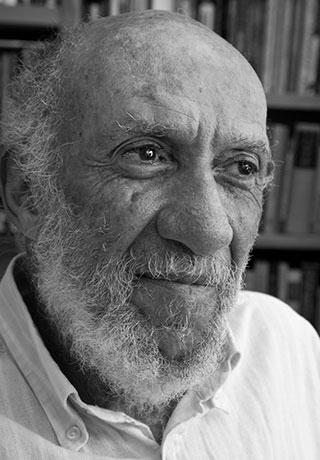

Professor Falk became an adviser to TFF when it was established in 1985.

Related Posts

It’s a matter of principles, courage, vision and pulling together – while the militarist world is falling apart… Peter Langille October 3, 2026 “Here, then, is the problem which we present to you, stark and dreadful and inescapable: Shall we put an end to the human race; or shall mankind renounce war?”The Bertrand Russell—Albert Einstein Manifesto, July 9, 1955 ⁕ The forecast for what’s ahead is worrisome. The sharp rise in armed conflicts over the past three years is adding to what was already the highest level in over seventy years. Genocides, which should be prevented are supported. A shared climate emergency that jeopardises survival is ignored. Diverse polls now suggest that people are war-weary, worried and interested in a more effective United Nations. And, there are viable policy options for a more secure world! Yet governments are doubling-down, betting on more war and investing heavily. If current trends persist,...
Johan Galtung 1930-2024October 2015 Published here on October 3, 2026 Let us focus on Civilization for conflict analysis and remedies. Major forms of disorder use violence; war is state organized violence. The most belligerent states are the United States of America and Israel, both with civilization roots. National Evangelism, the US Protestant Christian civilization– more national than evangelical–justifies US warfare as exceptionalism of a people chosen by God, with a manifest destiny to run the world. Orthodox Judaism justifies Israeli warfare to conquer and expand from Nile to Euphrates as a religious right and duty to the Eternal One. The third most belligerent country, the UK, no longer believes it is God-chosen but chosen by the USA; not quite the same but something. But the root cause of global disorder lies in the Occident–with Islam–seeing itself as the single, universal civilization valid for all at all times, all others being...
How Oxford University Press allowed a personality‑driven narrative to masquerade as scholarship. Jan Oberg, dr hc, TFF director This article has also been published on TFF Substack where more readers react and withdraw their interviews from the project. A Special Issue in a scholarly journal is not an ordinary publication. It is a collective, curated […]

Recent Articles

Tony Robinson October 4, 2026 Violence is easy to recognise when someone is being beaten, shot or killed. It becomes more difficult when nobody is holding a weapon. Poverty, discrimination, exploitation and repression can restrict a human life just as effectively, although they do so in very different ways and with very different consequences. Simply adding more categories to an ever-growing list of forms of violence does not really solve the problem. The more interesting question is what all these different situations have in common and why it makes sense to describe them using the same word. Human beings do not simply react to what happens around them. They remember the past, imagine things that do not yet exist, make plans and undertake projects. Workers organise because they imagine different working conditions; people migrate because they imagine another life somewhere else; social movements emerge because people refuse to accept the...
It’s a matter of principles, courage, vision and pulling together – while the militarist world is falling apart… Peter Langille October 3, 2026 “Here, then, is the problem which we present to you, stark and dreadful and inescapable: Shall we put an end to the human race; or shall mankind renounce war?”The Bertrand Russell—Albert Einstein Manifesto, July 9, 1955 ⁕ The forecast for what’s ahead is worrisome. The sharp rise in armed conflicts over the past three years is adding to what was already the highest level in over seventy years. Genocides, which should be prevented are supported. A shared climate emergency that jeopardises survival is ignored. Diverse polls now suggest that people are war-weary, worried and interested in a more effective United Nations. And, there are viable policy options for a more secure world! Yet governments are doubling-down, betting on more war and investing heavily. If current trends persist,...
Johan Galtung 1930-2024October 2015 Published here on October 3, 2026 Let us focus on Civilization for conflict analysis and remedies. Major forms of disorder use violence; war is state organized violence. The most belligerent states are the United States of America and Israel, both with civilization roots. National Evangelism, the US Protestant Christian civilization– more national than evangelical–justifies US warfare as exceptionalism of a people chosen by God, with a manifest destiny to run the world. Orthodox Judaism justifies Israeli warfare to conquer and expand from Nile to Euphrates as a religious right and duty to the Eternal One. The third most belligerent country, the UK, no longer believes it is God-chosen but chosen by the USA; not quite the same but something. But the root cause of global disorder lies in the Occident–with Islam–seeing itself as the single, universal civilization valid for all at all times, all others being...

TFF on Substack

Discover and subscribe to more peace materials on TFF Substack

Most Popular

Tony Robinson October 4, 2026 Violence is easy to recognise when someone is being beaten, shot or killed. It becomes more difficult when nobody is holding a weapon. Poverty, discrimination, exploitation and repression can restrict a human life just as effectively, although they do so in very different ways and with very different consequences. Simply adding more categories to an ever-growing list of forms of violence does not really solve the problem. The more interesting question is what all these different situations have in common and why it makes sense to describe them using the same word. Human beings do not simply react to what happens around them. They remember the past, imagine things that do not yet exist, make plans and undertake projects. Workers organise because they imagine different working conditions; people migrate because they imagine another life somewhere else; social movements emerge because people refuse to accept the...
It’s a matter of principles, courage, vision and pulling together – while the militarist world is falling apart… Peter Langille October 3, 2026 “Here, then, is the problem which we present to you, stark and dreadful and inescapable: Shall we put an end to the human race; or shall mankind renounce war?”The Bertrand Russell—Albert Einstein Manifesto, July 9, 1955 ⁕ The forecast for what’s ahead is worrisome. The sharp rise in armed conflicts over the past three years is adding to what was already the highest level in over seventy years. Genocides, which should be prevented are supported. A shared climate emergency that jeopardises survival is ignored. Diverse polls now suggest that people are war-weary, worried and interested in a more effective United Nations. And, there are viable policy options for a more secure world! Yet governments are doubling-down, betting on more war and investing heavily. If current trends persist,...
Johan Galtung 1930-2024October 2015 Published here on October 3, 2026 Let us focus on Civilization for conflict analysis and remedies. Major forms of disorder use violence; war is state organized violence. The most belligerent states are the United States of America and Israel, both with civilization roots. National Evangelism, the US Protestant Christian civilization– more national than evangelical–justifies US warfare as exceptionalism of a people chosen by God, with a manifest destiny to run the world. Orthodox Judaism justifies Israeli warfare to conquer and expand from Nile to Euphrates as a religious right and duty to the Eternal One. The third most belligerent country, the UK, no longer believes it is God-chosen but chosen by the USA; not quite the same but something. But the root cause of global disorder lies in the Occident–with Islam–seeing itself as the single, universal civilization valid for all at all times, all others being...
Read More
Living-Peace-Sign-Budapest-copy
Tony Robinson October 4, 2026 Violence is easy to recognise when someone is being beaten, shot or killed. It becomes more difficult when nobody is holding a weapon. Poverty, discrimination, exploitation and repression can restrict a human life just as effectively, although they do so in very different ways and with very different consequences. Simply adding more categories to an ever-growing list of forms of violence does not really solve the problem. The more interesting question is what all these different situations have in common and why it makes sense to describe them using the same word. Human beings do not simply react to what happens around them. They remember the past, imagine things that do not yet exist, make plans and undertake projects. Workers organise because they imagine different working conditions; people migrate because they imagine another life somewhere else; social movements emerge because people refuse to accept the...
b54a1f10-8c65-4f0b-9dd5-4abc0a7d04cc_2659x2659
It’s a matter of principles, courage, vision and pulling together – while the militarist world is falling apart… Peter Langille October 3, 2026 “Here, then, is the problem which we present to you, stark and dreadful and inescapable: Shall we put an end to the human race; or shall mankind renounce war?”The Bertrand Russell—Albert Einstein Manifesto, July 9, 1955 ⁕ The forecast for what’s ahead is worrisome. The sharp rise in armed conflicts over the past three years is adding to what was already the highest level in over seventy years. Genocides, which should be prevented are supported. A shared climate emergency that jeopardises survival is ignored. Diverse polls now suggest that people are war-weary, worried and interested in a more effective United Nations. And, there are viable policy options for a more secure world! Yet governments are doubling-down, betting on more war and investing heavily. If current trends persist,...
010
Johan Galtung 1930-2024October 2015 Published here on October 3, 2026 Let us focus on Civilization for conflict analysis and remedies. Major forms of disorder use violence; war is state organized violence. The most belligerent states are the United States of America and Israel, both with civilization roots. National Evangelism, the US Protestant Christian civilization– more national than evangelical–justifies US warfare as exceptionalism of a people chosen by God, with a manifest destiny to run the world. Orthodox Judaism justifies Israeli warfare to conquer and expand from Nile to Euphrates as a religious right and duty to the Eternal One. The third most belligerent country, the UK, no longer believes it is God-chosen but chosen by the USA; not quite the same but something. But the root cause of global disorder lies in the Occident–with Islam–seeing itself as the single, universal civilization valid for all at all times, all others being...
Screenshot 2026-10-02 011738
Jan ObergPhD, director, The Transnational Foundation for Peace and Future Research, TFFLund, Sweden October 2, 2026 This is my full original manuscript. The Chinese Academy of Social Science, CASS, makes two publications out if it. 1. China’s Five-year plan emphasized the capabilities of basic research and original innovation. It is regarded as the goal of the future social development, which, as required, should be significantly enhanced. Can you comment on the importance of original innovation in research and academic study? I believe it is easier to define “original innovation” in the natural sciences than in social sciences. The breaking points of what constitutes something new, or innovative, are not quite as sharp in the latter. But in both fields it is about opening up something that was closed, unseen, unexplored before – making manifest what was earlier latent. Innovations come in many forms and shapes – naming something that was not...
arctic-circle-map
The agreement is catastrophic both because of what it says and what it doesn’t mention. It reduces further the major asset of security policies: Freedom of action. Jan Oberg TFF director September 25, 2026 A couple of hours before the agreement was signed on September 22, 2026, I published the following 13 hypotheses about what it would most likely contain on TFF Substack (in English). I was wrong on only the first point. Contrary to what Trump had written on his Truth Social platform, it does not appear to come into force immediately. In fact, it turned out to be worse than even I had anticipated. After these hypotheses now come a number of reflections in light of what the agreement actually contains, and does not contain, as well as the way in which it has generally been presented by major media outlets and by the public-service broadcaster DR. My...
girl-5894831_1280
Below are TFF-related media mentions, comments, videos and social media posts published elsewhere but not on this homepage. We happen to catch and list only a fraction. Regarding video comments and debates, we recommend that you go to the TFF Video Channel on Substack where many of them are reproduced. Jan Oberg is a contributor to China Daily – 52 million daily clicks – and Global Times, CGTN and CCTV (the national television), China Investment, Xinhua News Agency and several others. Articles and videos on these media very often multiply into countless Chinese (and Western media) that re-post them from these main media. Thanks to The China Academy, his analyses, interviews and comments are frequently posted on YouTube channels such as Thinkers Forum and Wave Media. These videos are often re-posted on Bilibili (China’s YouTube), the China Content Center on TikTok, and on the Chinese edition of TikTok, Douyin.com. This means reaching hundreds of millions of viewers worldwide over a year. While there are too many to catch on all these...




