
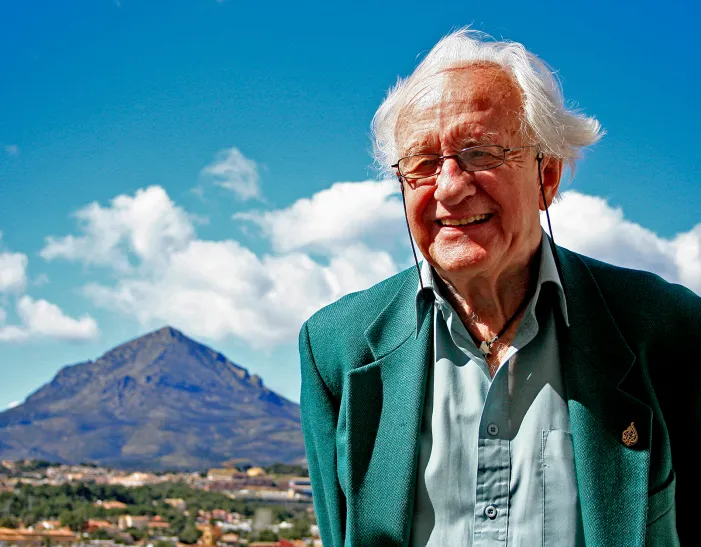
By Johan Galtung

Upon receiving the Gandhi-King-Ikeda Community Builder Prize

Atlanta, 31 Mar 2016

Dear President, dear Dean of Morehouse College, Ladies and Gentlemen,

I am deeply honored by the prize from a college in Georgia, in the US South, that has been and is a beacon in the struggle from dominion to dignity in race relations. The civil rights movement is an American Revolution, like the feminist movement it inspired–aiming at parity and dignity for all. To refuse sharing the spoils of exploiting Reds and Blacks and poor Whites with London was far from a revolution.

This college shaped Dr Martin Luther King Jr. I had the honor of meeting him twice here in Atlanta in 1960–working on desegregation without violence in Charlottesville, VA–and in 1964 in Oslo when he received the Nobel Peace Prize. This College made him use Gandhi’s clinging to truth through nonviolent struggle, satyagraha, lifting 20 million Blacks into dignity. There is a backlash: Blacks are again shot at, and used as slave labor in prisons. The struggle continues.

Building communities. There are at least two of them, the community of people, and the community of states. I will deal with both and share with you in this speech the basic ideas of TRANSCEND mediation – an NGO of more than 500 invited members, comfortable with our mantra, “Peace by Peaceful Means”. Transcend means going beyond.

Let us approach answering the question through some words on how we ought not treat each other.

It is all in our thought habits, the deep culture of our thinking. In the West we think in simple dichotomies, like positive/negative, good/bad, even evil. Either one or the other, not in-between, neither-nor, both-and. And we very easily fall into the trap of seeing ourselves as only good, and someone else as only bad, steered by God or Satan. The road to narcissism, self-love and paranoia, seeing threats everywhere, is short. Victory! not solution.

AND Narcissism + Paranoia = Psychosis, the psychiatric diagnosis.

To escape from this thought habit use ancient Chinese habits. Yin/Yang. They also think positive/negative, good/bad; but add more levels, like the positive and negative in the positive and negative, the good and bad in the good and bad. That opens for identifying the negative in Self and the positive in Other; for positive-peaceful, not negative-violent relations. Not either-or; but both-and, neither-nor.

The TRANSCEND formula: focus on the positive, good in everybody including yourself; but keep the negative, bad in the back of the mind to improve it and as possible danger, to Self and-or Other.

Then create projects linking good with good; first as vision, then reality.

Take a marriage on the rocks: he a successful salesman, she the bourgeois wife turning toward Buddhism. Verbal missives like “you are only interested in money!”, “you are so esoteric, impossible to talk with you” for years. They are experts on the bad in each other.

I talked with both following the TRANSCEND rule, one at a time, 1-on-1, and found him a conscientious, competent businessman with his accounts in good order, and her a devoted, meditating, Buddhist. But these positive aspects were overshadowed by their daily quarrels.

With more peace culture –a major goal of Morehouse College! – they would have found the creative solution themselves. In this case I proposed, not imposed, one at the time: How about running a bookstore for Buddhist books together, investing 50% each? – building on the good competence of the businessman and the good devotion of the Buddhist. Linking good and good in a concrete project, not abstract values.

That bookstore still exists as a new reality for them, not only meeting their goals but as a cooperative, equitable project, paying for itself. In addition, two small miracles happened: she got interested in accounting, and he read a Buddhist book! Marriage off the rocks.

However, some creativity was needed – and that comes with experience.

Then, the community of states-regions; right now eight big ones.

Emerging Russia, India, China (RIC in BRICS), OIC, Organization for Islamic Cooperation. Declining West, the European Union and the USA, EUSA. Waiting Third World, Africa badly colonized by 11 of 28 EU members, Latin America badly imperialized by USA.

Eight major actors on the world scene have 28 bilateral relations. They enter the world stage with negatives and positives, as:

India: the terrible caste system; and linguistic federalism, a federal India based on multiple national identities carried by languages;

China: the suppression of autonomy for Tibetans, Uighurs, Inner Mongolians; and the lifting up from the bottom 400 million, 1991-2004.

Both have strong armies and can easily focus on the bad, invoking the idea that the Other may launch a war to conceal negatives at home.

Alternatively, they can choose to focus on the positives and link the two positives in a mutual learning project: one learning how to lift the bottom up and the other how to create a big state with more local autonomy. Publicly inviting others to observe. Miracles might happen.

Or take another pair, hopefully guided by the same logic:

USA: hanging on to its declining, falling empire, with global violence; and its enormous innovative capacity in all fields, backed by freedom;

Russia: a tradition of authoritarianism, conformity; and giving up the Soviet empire, almost without violence, in favor of a commonwealth, CIS.

Their focus on the negatives may lead to a real nuclear world war, not only in Europe.

Alternative: the USA gets good ideas about how to give up what is bad and unsustainable anyhow, an empire; and for Russia the theory and practice of more freedom. Work for that.

Twenty-Six more bilaterals exist; you find them all in the book Abolishing War, TRANSCEND University Press, 2015.

Then that little community of one person: you, me. Community? Yes, four in each: the good and the bad in the good and in the bad. Identify them, build on your positives and work on the negatives.

Like you are building on me, and I on you – in deep gratitude.

Originally published by Transcend Media Service, TMS, here.
Related Posts

It’s a matter of principles, courage, vision and pulling together – while the militarist world is falling apart… Peter Langille October 3, 2026 “Here, then, is the problem which we present to you, stark and dreadful and inescapable: Shall we put an end to the human race; or shall mankind renounce war?”The Bertrand Russell—Albert Einstein Manifesto, July 9, 1955 ⁕ The forecast for what’s ahead is worrisome. The sharp rise in armed conflicts over the past three years is adding to what was already the highest level in over seventy years. Genocides, which should be prevented are supported. A shared climate emergency that jeopardises survival is ignored. Diverse polls now suggest that people are war-weary, worried and interested in a more effective United Nations. And, there are viable policy options for a more secure world! Yet governments are doubling-down, betting on more war and investing heavily. If current trends persist,...
Johan Galtung 1930-2024October 2015 Published here on October 3, 2026 Let us focus on Civilization for conflict analysis and remedies. Major forms of disorder use violence; war is state organized violence. The most belligerent states are the United States of America and Israel, both with civilization roots. National Evangelism, the US Protestant Christian civilization– more national than evangelical–justifies US warfare as exceptionalism of a people chosen by God, with a manifest destiny to run the world. Orthodox Judaism justifies Israeli warfare to conquer and expand from Nile to Euphrates as a religious right and duty to the Eternal One. The third most belligerent country, the UK, no longer believes it is God-chosen but chosen by the USA; not quite the same but something. But the root cause of global disorder lies in the Occident–with Islam–seeing itself as the single, universal civilization valid for all at all times, all others being...
How Oxford University Press allowed a personality‑driven narrative to masquerade as scholarship. Jan Oberg, dr hc, TFF director This article has also been published on TFF Substack where more readers react and withdraw their interviews from the project. A Special Issue in a scholarly journal is not an ordinary publication. It is a collective, curated […]

Recent Articles

Tony Robinson October 4, 2026 Violence is easy to recognise when someone is being beaten, shot or killed. It becomes more difficult when nobody is holding a weapon. Poverty, discrimination, exploitation and repression can restrict a human life just as effectively, although they do so in very different ways and with very different consequences. Simply adding more categories to an ever-growing list of forms of violence does not really solve the problem. The more interesting question is what all these different situations have in common and why it makes sense to describe them using the same word. Human beings do not simply react to what happens around them. They remember the past, imagine things that do not yet exist, make plans and undertake projects. Workers organise because they imagine different working conditions; people migrate because they imagine another life somewhere else; social movements emerge because people refuse to accept the...
It’s a matter of principles, courage, vision and pulling together – while the militarist world is falling apart… Peter Langille October 3, 2026 “Here, then, is the problem which we present to you, stark and dreadful and inescapable: Shall we put an end to the human race; or shall mankind renounce war?”The Bertrand Russell—Albert Einstein Manifesto, July 9, 1955 ⁕ The forecast for what’s ahead is worrisome. The sharp rise in armed conflicts over the past three years is adding to what was already the highest level in over seventy years. Genocides, which should be prevented are supported. A shared climate emergency that jeopardises survival is ignored. Diverse polls now suggest that people are war-weary, worried and interested in a more effective United Nations. And, there are viable policy options for a more secure world! Yet governments are doubling-down, betting on more war and investing heavily. If current trends persist,...
Johan Galtung 1930-2024October 2015 Published here on October 3, 2026 Let us focus on Civilization for conflict analysis and remedies. Major forms of disorder use violence; war is state organized violence. The most belligerent states are the United States of America and Israel, both with civilization roots. National Evangelism, the US Protestant Christian civilization– more national than evangelical–justifies US warfare as exceptionalism of a people chosen by God, with a manifest destiny to run the world. Orthodox Judaism justifies Israeli warfare to conquer and expand from Nile to Euphrates as a religious right and duty to the Eternal One. The third most belligerent country, the UK, no longer believes it is God-chosen but chosen by the USA; not quite the same but something. But the root cause of global disorder lies in the Occident–with Islam–seeing itself as the single, universal civilization valid for all at all times, all others being...

TFF on Substack

Discover and subscribe to more peace materials on TFF Substack

Most Popular

Tony Robinson October 4, 2026 Violence is easy to recognise when someone is being beaten, shot or killed. It becomes more difficult when nobody is holding a weapon. Poverty, discrimination, exploitation and repression can restrict a human life just as effectively, although they do so in very different ways and with very different consequences. Simply adding more categories to an ever-growing list of forms of violence does not really solve the problem. The more interesting question is what all these different situations have in common and why it makes sense to describe them using the same word. Human beings do not simply react to what happens around them. They remember the past, imagine things that do not yet exist, make plans and undertake projects. Workers organise because they imagine different working conditions; people migrate because they imagine another life somewhere else; social movements emerge because people refuse to accept the...
It’s a matter of principles, courage, vision and pulling together – while the militarist world is falling apart… Peter Langille October 3, 2026 “Here, then, is the problem which we present to you, stark and dreadful and inescapable: Shall we put an end to the human race; or shall mankind renounce war?”The Bertrand Russell—Albert Einstein Manifesto, July 9, 1955 ⁕ The forecast for what’s ahead is worrisome. The sharp rise in armed conflicts over the past three years is adding to what was already the highest level in over seventy years. Genocides, which should be prevented are supported. A shared climate emergency that jeopardises survival is ignored. Diverse polls now suggest that people are war-weary, worried and interested in a more effective United Nations. And, there are viable policy options for a more secure world! Yet governments are doubling-down, betting on more war and investing heavily. If current trends persist,...
Johan Galtung 1930-2024October 2015 Published here on October 3, 2026 Let us focus on Civilization for conflict analysis and remedies. Major forms of disorder use violence; war is state organized violence. The most belligerent states are the United States of America and Israel, both with civilization roots. National Evangelism, the US Protestant Christian civilization– more national than evangelical–justifies US warfare as exceptionalism of a people chosen by God, with a manifest destiny to run the world. Orthodox Judaism justifies Israeli warfare to conquer and expand from Nile to Euphrates as a religious right and duty to the Eternal One. The third most belligerent country, the UK, no longer believes it is God-chosen but chosen by the USA; not quite the same but something. But the root cause of global disorder lies in the Occident–with Islam–seeing itself as the single, universal civilization valid for all at all times, all others being...
Read More
Living-Peace-Sign-Budapest-copy
Tony Robinson October 4, 2026 Violence is easy to recognise when someone is being beaten, shot or killed. It becomes more difficult when nobody is holding a weapon. Poverty, discrimination, exploitation and repression can restrict a human life just as effectively, although they do so in very different ways and with very different consequences. Simply adding more categories to an ever-growing list of forms of violence does not really solve the problem. The more interesting question is what all these different situations have in common and why it makes sense to describe them using the same word. Human beings do not simply react to what happens around them. They remember the past, imagine things that do not yet exist, make plans and undertake projects. Workers organise because they imagine different working conditions; people migrate because they imagine another life somewhere else; social movements emerge because people refuse to accept the...
b54a1f10-8c65-4f0b-9dd5-4abc0a7d04cc_2659x2659
It’s a matter of principles, courage, vision and pulling together – while the militarist world is falling apart… Peter Langille October 3, 2026 “Here, then, is the problem which we present to you, stark and dreadful and inescapable: Shall we put an end to the human race; or shall mankind renounce war?”The Bertrand Russell—Albert Einstein Manifesto, July 9, 1955 ⁕ The forecast for what’s ahead is worrisome. The sharp rise in armed conflicts over the past three years is adding to what was already the highest level in over seventy years. Genocides, which should be prevented are supported. A shared climate emergency that jeopardises survival is ignored. Diverse polls now suggest that people are war-weary, worried and interested in a more effective United Nations. And, there are viable policy options for a more secure world! Yet governments are doubling-down, betting on more war and investing heavily. If current trends persist,...
010
Johan Galtung 1930-2024October 2015 Published here on October 3, 2026 Let us focus on Civilization for conflict analysis and remedies. Major forms of disorder use violence; war is state organized violence. The most belligerent states are the United States of America and Israel, both with civilization roots. National Evangelism, the US Protestant Christian civilization– more national than evangelical–justifies US warfare as exceptionalism of a people chosen by God, with a manifest destiny to run the world. Orthodox Judaism justifies Israeli warfare to conquer and expand from Nile to Euphrates as a religious right and duty to the Eternal One. The third most belligerent country, the UK, no longer believes it is God-chosen but chosen by the USA; not quite the same but something. But the root cause of global disorder lies in the Occident–with Islam–seeing itself as the single, universal civilization valid for all at all times, all others being...
Screenshot 2026-10-02 011738
Jan ObergPhD, director, The Transnational Foundation for Peace and Future Research, TFFLund, Sweden October 2, 2026 This is my full original manuscript. The Chinese Academy of Social Science, CASS, makes two publications out if it. 1. China’s Five-year plan emphasized the capabilities of basic research and original innovation. It is regarded as the goal of the future social development, which, as required, should be significantly enhanced. Can you comment on the importance of original innovation in research and academic study? I believe it is easier to define “original innovation” in the natural sciences than in social sciences. The breaking points of what constitutes something new, or innovative, are not quite as sharp in the latter. But in both fields it is about opening up something that was closed, unseen, unexplored before – making manifest what was earlier latent. Innovations come in many forms and shapes – naming something that was not...
arctic-circle-map
The agreement is catastrophic both because of what it says and what it doesn’t mention. It reduces further the major asset of security policies: Freedom of action. Jan Oberg TFF director September 25, 2026 A couple of hours before the agreement was signed on September 22, 2026, I published the following 13 hypotheses about what it would most likely contain on TFF Substack (in English). I was wrong on only the first point. Contrary to what Trump had written on his Truth Social platform, it does not appear to come into force immediately. In fact, it turned out to be worse than even I had anticipated. After these hypotheses now come a number of reflections in light of what the agreement actually contains, and does not contain, as well as the way in which it has generally been presented by major media outlets and by the public-service broadcaster DR. My...
girl-5894831_1280
Below are TFF-related media mentions, comments, videos and social media posts published elsewhere but not on this homepage. We happen to catch and list only a fraction. Regarding video comments and debates, we recommend that you go to the TFF Video Channel on Substack where many of them are reproduced. Jan Oberg is a contributor to China Daily – 52 million daily clicks – and Global Times, CGTN and CCTV (the national television), China Investment, Xinhua News Agency and several others. Articles and videos on these media very often multiply into countless Chinese (and Western media) that re-post them from these main media. Thanks to The China Academy, his analyses, interviews and comments are frequently posted on YouTube channels such as Thinkers Forum and Wave Media. These videos are often re-posted on Bilibili (China’s YouTube), the China Content Center on TikTok, and on the Chinese edition of TikTok, Douyin.com. This means reaching hundreds of millions of viewers worldwide over a year. While there are too many to catch on all these...





