
By Hans Graf Sponeck

Freiburg, 1 October 2016

1. The global sky is full of dark clouds. There is reason, there must be reason, for concern. Humanity has to take time out to reflect. To-day is a good occasion to do so, especially since we have among us Haifa al Mansour and Solmaz Panahi who, together with her mother, has joined us on behalf of Jafar Panahi, her father.

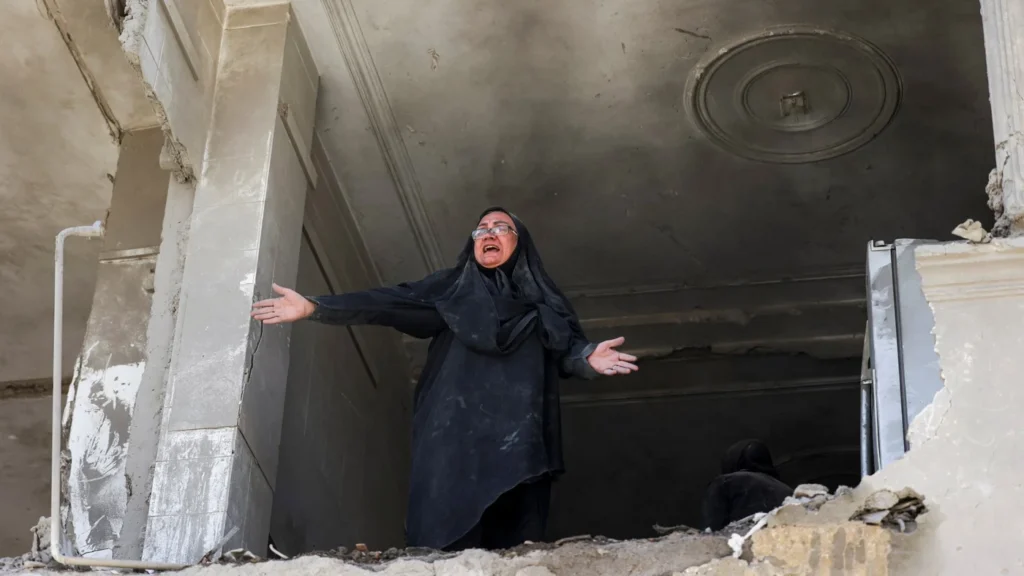
The Kant Foundation is honouring two artists from the Middle East, one from Saudi Arabia, the other from Iran. They have taken Immanuel Kant’s demand of yesteryear seriously and have shown the courage to use their minds with all the consequences that this has entailed. They have been swimming against the currents, they have built bridges and they have climbed mountains that try to separate people.

2. The community of nations has created an impressive body of law which is as densely woven as the most magnificent carpets one can find in the Middle East. Life in all its facets is well protected by such law – or so it seems! The UN Charter remains the supreme road map for human life with peace. It echoes what many thinkers and humanists throughout centuries have proclaimed. Can there be any disagreement that the usefulness of a map lies in its use?

3. Emotions? Feelings? – important as they are, must be in harmony with reason! The irrational rejection of Europe by Britain would not have happened if feelings and reason had been in balance! How much more evidence do we need to accept that humanity knows no borders?

4. Let me pause here for a moment and interject… and I know that Berthold Lange, the Founder of the Kant Foundation, does not like to hear such words: we would not be here on this occasion were it not for Berthold’s unfathomable stubbornness, his seemingly tireless reminding us of the ethical and non-material dimensions of life and his continuous and selfless generosity!

I would like to repeat this also in German and say:
Ich weiß, Berthold Lange, der Gründer der Kantstiftung hört solche Worte nicht gerne, aber ich will sie trotzdem sagen: Wir wären heute nicht beisammen, ohne Berthold Lange’s unergründliche Hartnäckigkeit, immer wieder an die ethischen und nicht-materiellen Dimensionen des Lebens zu erinnern und dies verbunden mit einer selbstlosen Großzügigkeit.

5. If indeed ‘humanity knows no borders’ and communication across borders in 2016 is easier than ever before, why then do we have at the same time so much ‘in-humanity’ across borders?

6. Why is there this immense gap between the finest rhetoric language is able to give us when our leaders speak in the halls of the United Nations and and at the same time there is the brutal reality in Syria, in Iraq, in Palestine, in Afghanistan, in Libya, in Central and Eastern Europe, in North America and elsewhere?

7. Why is the 21st century quickly becoming the ‘century of gaps’?

8. Why is there a gap between political promises and their fulfilment?

9. Why is there a gap between morality and action, between human rights and human obligations?

10. Why is there a gap between culture and civilization?

11. Why is there a widening gap between politics and people’s expectations?

12. Why do 62 individuals have more wealth than 50% of the global population? (Oxfam!)

13. Why is there a deepening gap of understanding between the young and the old?

14. Why is there a gap between our ‘inner’ and our ‘outer’ voices?

15. And why is there impunity when there should be accountability?

16. The list of gaps is much longer. I will spare you more!

17. An editorial of a respected German newspaper (SZ) recently observed:
“…. just when they need to be stronger, our societies seem fragile,
tense, stifled by powerful winds of revolt against their elites
and against an economic order that has increased inequalities?”

18. So what? You will say. What is new?
You are right if you react in this way. What needs to happen? What are the ‘whats’ to close these gaps?

19. Before turning to the ‘whats’, I must remain a moment longer with the ‘whys’!

20. The World Population Clock shows that today 7, 5 billion people inhabit our earth. Five decades spent outside of Germany give me the confidence to argue that most human beings whether they live, as my family and I have, in central Europe or in Accra, Ankara, Rangoon, New Delhi, Baghdad, New York, Islamabad or elsewhere want to live in peace.
There is no place on earth where the majority does not long for freedom from poverty and freedom from fear.

21. Why then is the eternal Machiavelli in us still gaining the upper hand? Why are politics increasingly dominated by economics and not the other way around? Why is moral integrity again and again surrendering to greed, power and other addictions in trade, in sport, even in education and culture?

22. Easy answers do not exist! However, there is one element, a major element, that cannot be left out in any answer: the imperative of ending impunity!

23. Failure to be held accountable for horrific crimes against humanity, for example in the Middle East, in South Asia or in the former Yugoslavia are major reasons why conflicts in these areas continue. Conditions in Syria, Iraq, Libya, Palestine are well documented, for all to see. These are facts and facts are stubborn!

24. Crimes against innocent people are also taking place this very moment in Yemen, in Bahrain, in Egypt, in Saudi Arabia, the country which has heavily supported ISIS in Iraq and Syria. Navid Kermani, the winner of the 2015 Peace Prize of the German book fair, makes the grave observation:

“There is a 95% identity between the ISIS ideology and the text books of Saudi Arabia!”

25. “If the camel could see its hump, it would fall and break its neck” is a Saudi-Arabian saying. Those who argue for peace should no longer save the camel’s neck!

26. Crimes against humanity? Mass murder? War crimes? Genocide? Let us not engage in a legalistic debate and by doing so deflect from the existence of horrendous crimes that have been committed allegedly in the name of human rights and justice. They have in fact deepened the wounds of injustice!

27. I know, it is time to turn to the ‘what’! What does it take to close those gaps, “ to save us from the scourge of war” and to make dignity, the worth of the human person and the sanctity of life the platform that unites us all, as demanded by the UN Charter?

28. Hear me out before you give your verdict. Let me present 5 theses to make the case for peace:

(1)
As individuals, we have inalienable human rights but, lest we forget, we also have inalienable human obligations.
It is this combination incorporated within ourselves which defines the dignity of humanity. To put it differently:” we must delve into our buried self and seek the tracts of life” to quote Allama Iqbal, the Pakistani poet and statesman who said this, when his country was born in 1948.

(2)
There is the importance of talking ‘with’ not talking ‘at’ each-other. Allow me to expand. I can not forget the excitement with which villagers in the mountains of northern Pakistan or in the Kalahari Desert of Botswana or along the Atlantic coast of Ghana would listen to each-other and absorb what the other had to say.
What a difference to the monologues and the resulting battle of words in the UN Security Council I heard when the future of Iraq was the subject in the late 1990s. Monologue invariably ends in confrontation while dialogue may lead to peaceful solutions as we have seen in the 5+1 nuclear disarmament talks with Iran.

(3)
The valuable international law of which we have created so much since 1945 must be here to stay and be respected by nations and individuals alike. No more double standards in international courts, no ICC as a ‘court for Africans’. No more exceptionalism to justify renditions and torture or prisons outside of legal jurisdiction and due process!

(4)
The G7 mentality with its tentacles of protectionism is not democratic! It promotes the turmoil and the chaos that surrounds us. Those who belong to western civilizations and western political systems – a mere 12% of the global population – have to accept that globalization must mean ‘convergence’ and ‘sharing’ of the achievements of the human mind in education, in health, in technology. This is a pre-condition for stabilizing the world order in which we live.

(5)
International communication and the tools for interaction have never been more available than to-day. Welding people from anywhere, of any age and of any background is no longer a utopia but an available opportunity. There is this chance to speak out with a global voice and in the name of ‘we, the peoples” – the first three words of the UN Charter. What an incredible but also daunting, even dangerous opportunity!
Stéphane Hessel, the great humanist, the global citizen from France whose ‘engagez-vous’ has travelled around the world in cyber speed time, would agree, were he alive. He undoubtedly would also have warned that technology must not be allowed any longer to outpace humanity!
Lena Ben Mhenni, the young female blogger from Tunesia is convinced that the social revolution in her country would not have taken place without social media.
An ancient Iranian saying comes to mind: “water will find the pot hole!”
Today, it is much easier for people with the same dreams of peace and justice to find this pot hole of like-mindedness!

29. In conclusion: human rights and human responsibilities go together. Life in peace has to do with community and dialogue, not monologue and society. Humanity must remain ahead of technology. Global order without accountability and justice is not possible. Equitable globalization means convergence of progress for all and not just for the West.

These are not small challenges, but they are doable! Sapere Aude!

H. C. Graf Sponeck,
Stiftungsrat der Kant Stiftung
&
UN Assistant Secretary-General (ret.)
&
TFF Associate

Related Posts

It’s a matter of principles, courage, vision and pulling together – while the militarist world is falling apart… Peter Langille October 3, 2026 “Here, then, is the problem which we present to you, stark and dreadful and inescapable: Shall we put an end to the human race; or shall mankind renounce war?”The Bertrand Russell—Albert Einstein Manifesto, July 9, 1955 ⁕ The forecast for what’s ahead is worrisome. The sharp rise in armed conflicts over the past three years is adding to what was already the highest level in over seventy years. Genocides, which should be prevented are supported. A shared climate emergency that jeopardises survival is ignored. Diverse polls now suggest that people are war-weary, worried and interested in a more effective United Nations. And, there are viable policy options for a more secure world! Yet governments are doubling-down, betting on more war and investing heavily. If current trends persist,...
Johan Galtung 1930-2024October 2015 Published here on October 3, 2026 Let us focus on Civilization for conflict analysis and remedies. Major forms of disorder use violence; war is state organized violence. The most belligerent states are the United States of America and Israel, both with civilization roots. National Evangelism, the US Protestant Christian civilization– more national than evangelical–justifies US warfare as exceptionalism of a people chosen by God, with a manifest destiny to run the world. Orthodox Judaism justifies Israeli warfare to conquer and expand from Nile to Euphrates as a religious right and duty to the Eternal One. The third most belligerent country, the UK, no longer believes it is God-chosen but chosen by the USA; not quite the same but something. But the root cause of global disorder lies in the Occident–with Islam–seeing itself as the single, universal civilization valid for all at all times, all others being...
How Oxford University Press allowed a personality‑driven narrative to masquerade as scholarship. Jan Oberg, dr hc, TFF director This article has also been published on TFF Substack where more readers react and withdraw their interviews from the project. A Special Issue in a scholarly journal is not an ordinary publication. It is a collective, curated […]

Recent Articles

Tony Robinson October 4, 2026 Violence is easy to recognise when someone is being beaten, shot or killed. It becomes more difficult when nobody is holding a weapon. Poverty, discrimination, exploitation and repression can restrict a human life just as effectively, although they do so in very different ways and with very different consequences. Simply adding more categories to an ever-growing list of forms of violence does not really solve the problem. The more interesting question is what all these different situations have in common and why it makes sense to describe them using the same word. Human beings do not simply react to what happens around them. They remember the past, imagine things that do not yet exist, make plans and undertake projects. Workers organise because they imagine different working conditions; people migrate because they imagine another life somewhere else; social movements emerge because people refuse to accept the...
It’s a matter of principles, courage, vision and pulling together – while the militarist world is falling apart… Peter Langille October 3, 2026 “Here, then, is the problem which we present to you, stark and dreadful and inescapable: Shall we put an end to the human race; or shall mankind renounce war?”The Bertrand Russell—Albert Einstein Manifesto, July 9, 1955 ⁕ The forecast for what’s ahead is worrisome. The sharp rise in armed conflicts over the past three years is adding to what was already the highest level in over seventy years. Genocides, which should be prevented are supported. A shared climate emergency that jeopardises survival is ignored. Diverse polls now suggest that people are war-weary, worried and interested in a more effective United Nations. And, there are viable policy options for a more secure world! Yet governments are doubling-down, betting on more war and investing heavily. If current trends persist,...
Johan Galtung 1930-2024October 2015 Published here on October 3, 2026 Let us focus on Civilization for conflict analysis and remedies. Major forms of disorder use violence; war is state organized violence. The most belligerent states are the United States of America and Israel, both with civilization roots. National Evangelism, the US Protestant Christian civilization– more national than evangelical–justifies US warfare as exceptionalism of a people chosen by God, with a manifest destiny to run the world. Orthodox Judaism justifies Israeli warfare to conquer and expand from Nile to Euphrates as a religious right and duty to the Eternal One. The third most belligerent country, the UK, no longer believes it is God-chosen but chosen by the USA; not quite the same but something. But the root cause of global disorder lies in the Occident–with Islam–seeing itself as the single, universal civilization valid for all at all times, all others being...

TFF on Substack

Discover and subscribe to more peace materials on TFF Substack

Most Popular

Tony Robinson October 4, 2026 Violence is easy to recognise when someone is being beaten, shot or killed. It becomes more difficult when nobody is holding a weapon. Poverty, discrimination, exploitation and repression can restrict a human life just as effectively, although they do so in very different ways and with very different consequences. Simply adding more categories to an ever-growing list of forms of violence does not really solve the problem. The more interesting question is what all these different situations have in common and why it makes sense to describe them using the same word. Human beings do not simply react to what happens around them. They remember the past, imagine things that do not yet exist, make plans and undertake projects. Workers organise because they imagine different working conditions; people migrate because they imagine another life somewhere else; social movements emerge because people refuse to accept the...
It’s a matter of principles, courage, vision and pulling together – while the militarist world is falling apart… Peter Langille October 3, 2026 “Here, then, is the problem which we present to you, stark and dreadful and inescapable: Shall we put an end to the human race; or shall mankind renounce war?”The Bertrand Russell—Albert Einstein Manifesto, July 9, 1955 ⁕ The forecast for what’s ahead is worrisome. The sharp rise in armed conflicts over the past three years is adding to what was already the highest level in over seventy years. Genocides, which should be prevented are supported. A shared climate emergency that jeopardises survival is ignored. Diverse polls now suggest that people are war-weary, worried and interested in a more effective United Nations. And, there are viable policy options for a more secure world! Yet governments are doubling-down, betting on more war and investing heavily. If current trends persist,...
Johan Galtung 1930-2024October 2015 Published here on October 3, 2026 Let us focus on Civilization for conflict analysis and remedies. Major forms of disorder use violence; war is state organized violence. The most belligerent states are the United States of America and Israel, both with civilization roots. National Evangelism, the US Protestant Christian civilization– more national than evangelical–justifies US warfare as exceptionalism of a people chosen by God, with a manifest destiny to run the world. Orthodox Judaism justifies Israeli warfare to conquer and expand from Nile to Euphrates as a religious right and duty to the Eternal One. The third most belligerent country, the UK, no longer believes it is God-chosen but chosen by the USA; not quite the same but something. But the root cause of global disorder lies in the Occident–with Islam–seeing itself as the single, universal civilization valid for all at all times, all others being...
Read More
Living-Peace-Sign-Budapest-copy
Tony Robinson October 4, 2026 Violence is easy to recognise when someone is being beaten, shot or killed. It becomes more difficult when nobody is holding a weapon. Poverty, discrimination, exploitation and repression can restrict a human life just as effectively, although they do so in very different ways and with very different consequences. Simply adding more categories to an ever-growing list of forms of violence does not really solve the problem. The more interesting question is what all these different situations have in common and why it makes sense to describe them using the same word. Human beings do not simply react to what happens around them. They remember the past, imagine things that do not yet exist, make plans and undertake projects. Workers organise because they imagine different working conditions; people migrate because they imagine another life somewhere else; social movements emerge because people refuse to accept the...
b54a1f10-8c65-4f0b-9dd5-4abc0a7d04cc_2659x2659
It’s a matter of principles, courage, vision and pulling together – while the militarist world is falling apart… Peter Langille October 3, 2026 “Here, then, is the problem which we present to you, stark and dreadful and inescapable: Shall we put an end to the human race; or shall mankind renounce war?”The Bertrand Russell—Albert Einstein Manifesto, July 9, 1955 ⁕ The forecast for what’s ahead is worrisome. The sharp rise in armed conflicts over the past three years is adding to what was already the highest level in over seventy years. Genocides, which should be prevented are supported. A shared climate emergency that jeopardises survival is ignored. Diverse polls now suggest that people are war-weary, worried and interested in a more effective United Nations. And, there are viable policy options for a more secure world! Yet governments are doubling-down, betting on more war and investing heavily. If current trends persist,...
010
Johan Galtung 1930-2024October 2015 Published here on October 3, 2026 Let us focus on Civilization for conflict analysis and remedies. Major forms of disorder use violence; war is state organized violence. The most belligerent states are the United States of America and Israel, both with civilization roots. National Evangelism, the US Protestant Christian civilization– more national than evangelical–justifies US warfare as exceptionalism of a people chosen by God, with a manifest destiny to run the world. Orthodox Judaism justifies Israeli warfare to conquer and expand from Nile to Euphrates as a religious right and duty to the Eternal One. The third most belligerent country, the UK, no longer believes it is God-chosen but chosen by the USA; not quite the same but something. But the root cause of global disorder lies in the Occident–with Islam–seeing itself as the single, universal civilization valid for all at all times, all others being...
Screenshot 2026-10-02 011738
Jan ObergPhD, director, The Transnational Foundation for Peace and Future Research, TFFLund, Sweden October 2, 2026 This is my full original manuscript. The Chinese Academy of Social Science, CASS, makes two publications out if it. 1. China’s Five-year plan emphasized the capabilities of basic research and original innovation. It is regarded as the goal of the future social development, which, as required, should be significantly enhanced. Can you comment on the importance of original innovation in research and academic study? I believe it is easier to define “original innovation” in the natural sciences than in social sciences. The breaking points of what constitutes something new, or innovative, are not quite as sharp in the latter. But in both fields it is about opening up something that was closed, unseen, unexplored before – making manifest what was earlier latent. Innovations come in many forms and shapes – naming something that was not...
arctic-circle-map
The agreement is catastrophic both because of what it says and what it doesn’t mention. It reduces further the major asset of security policies: Freedom of action. Jan Oberg TFF director September 25, 2026 A couple of hours before the agreement was signed on September 22, 2026, I published the following 13 hypotheses about what it would most likely contain on TFF Substack (in English). I was wrong on only the first point. Contrary to what Trump had written on his Truth Social platform, it does not appear to come into force immediately. In fact, it turned out to be worse than even I had anticipated. After these hypotheses now come a number of reflections in light of what the agreement actually contains, and does not contain, as well as the way in which it has generally been presented by major media outlets and by the public-service broadcaster DR. My...
girl-5894831_1280
Below are TFF-related media mentions, comments, videos and social media posts published elsewhere but not on this homepage. We happen to catch and list only a fraction. Regarding video comments and debates, we recommend that you go to the TFF Video Channel on Substack where many of them are reproduced. Jan Oberg is a contributor to China Daily – 52 million daily clicks – and Global Times, CGTN and CCTV (the national television), China Investment, Xinhua News Agency and several others. Articles and videos on these media very often multiply into countless Chinese (and Western media) that re-post them from these main media. Thanks to The China Academy, his analyses, interviews and comments are frequently posted on YouTube channels such as Thinkers Forum and Wave Media. These videos are often re-posted on Bilibili (China’s YouTube), the China Content Center on TikTok, and on the Chinese edition of TikTok, Douyin.com. This means reaching hundreds of millions of viewers worldwide over a year. While there are too many to catch on all these...




