
Why Europe Remains Silent: After Gaza and Venezuela now also no criticism of the illegal war on Iran. Here is exactly what the EU should have stated

Smilingly supporting gross violations of international law and the UN Charter again and again. It is the US, stupid!

Jan Oberg

March 2, 2026

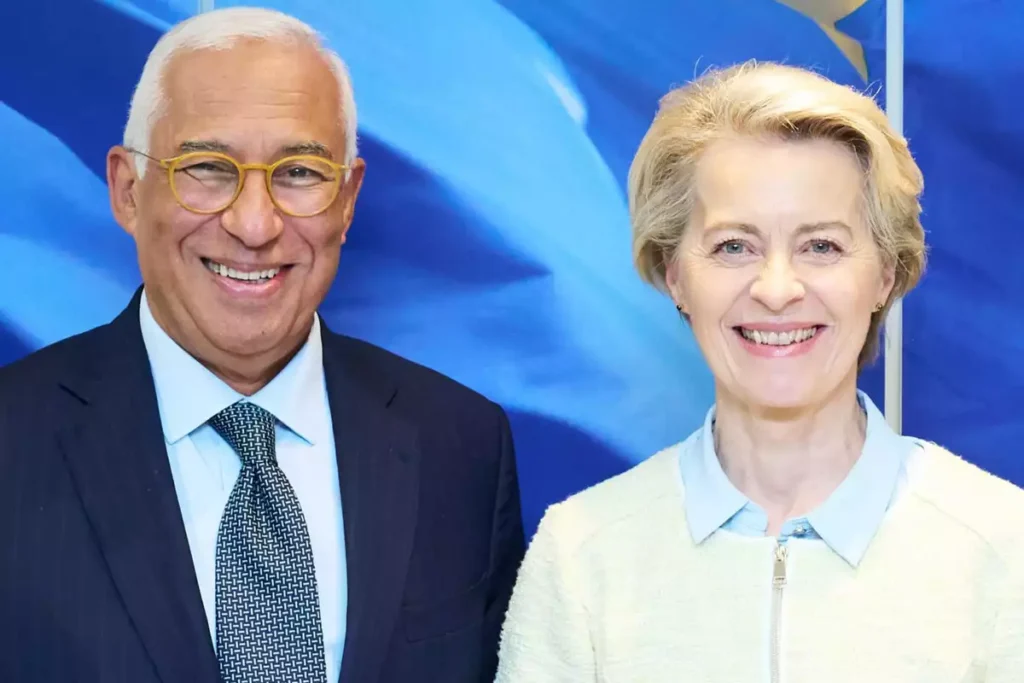
Here is all that EU Presidents von der Leyen and Costa had to say on February 28, 2026:

“The developments in Iran are greatly concerning. We remain in close contact with our partners in the region. We reaffirm our steadfast commitment to safeguarding regional security and stability. 
Ensuring nuclear safety and preventing any actions that could further escalate tensions or undermine the global non-proliferation regime is of critical importance.
The European Union has adopted extensive sanctions in response to the actions of Iran’s murderous regime and the Revolutionary Guards and has consistently promoted diplomatic efforts aimed at addressing the nuclear and ballistic programmes through a negotiated solution.
In close coordination with EU Member States, we will take all necessary steps to ensure that EU citizens in the region can count on our full support. We call on all parties to exercise maximum restraint, to protect civilians, and to fully respect international law.”

The near‑total silence from European leaders following the 28 February 2026 attack on Iran is striking, not least because the legal situation is unusually clear. The strikes were carried out without UN Security Council authorisation and without a credible claim of immediate self‑defence. Under any reasonable reading of the UN Charter, this constitutes a violation of international law. Yet European governments have avoided naming this reality. Their language has been limited to “restraint,” “concern,” and “de‑escalation”—phrases that carefully avoid the central legal and moral issue.

This silence is not a coincidence. It reflects a set of structural forces that have shaped European foreign‑policy behaviour for decades, especially when close allies act outside the law. The first of these forces is the deep entanglement of Europe’s security architecture with the United States. Even if the EU or Euro-NATO could defend itself, its political class has internalised the belief that strategic alignment with Washington must be preserved at any cost. Therefore, criticism of U.S. military action is treated as destabilising, even when the action itself destabilises the international order.

A second structural factor is the EU’s own institutional design. Foreign‑policy statements require unanimity among 27 states with divergent histories, threat perceptions, and political cultures. Some are strongly Atlanticist; some maintain close ties with Israel; others prioritise international law. Achieving consensus under these conditions almost always produces the lowest common denominator. Strong legal language becomes politically impossible, even when the facts demand it. As I wrote in an analysis about 20 years ago, the EU is not geared to make peace.

A third driver is the political cost of naming illegality. To say that an ally has violated the UN Charter is not merely rhetorical. It implies obligations: pressure for sanctions, suspension of arms exports, parliamentary scrutiny, and diplomatic consequences. European governments avoid this because it forces them into actions they do not wish to take. By framing events as “complex,” they avoid triggering the mechanisms that international law would otherwise require.

A fourth factor is Europe’s credibility dilemma. The EU has condemned Russia’s invasion of Ukraine using the strongest legal vocabulary available. If it applied the same standards to U.S. or Israeli actions, it would expose its own double standards. This is, of course, nothing but a selective application of norms and ethics. And reveals a fundamental lack of ethics and a principled policy.

A fifth structural element is the nature of EU–Israel relations. Beyond political sympathy, Europe maintains deep economic, technological, and intelligence ties with Israel. These ties create additional caution. Many governments also frame their relationship with Israel through historical responsibility – ad absurdum, given what Israel does – making them reluctant to issue strong public criticism even when they disagree privately.

The widening government-people gap in foreign and security politics

Finally, there is the widening gap between European publics and their governments. Across the continent, majorities oppose escalation, support adherence to international law, and express solidarity with civilians caught in conflict. The reaction to the genocide in Gaza shows this with abundant clarity. Yet foreign policy remains insulated from public pressure. Decisions are made within small circles of diplomats and security officials who prioritise alliance management over alignment with public sentiment. The result is a growing sense of democratic dissonance: citizens see the illegality clearly, while leaders speak in euphemisms.

In other words, it is becoming increasingly problematic that democracy does not apply to foreign and security policy-making. A few European leaders can meet and decide what they want; the citizens can only protest. Additionally, the leadership of the EU is not the result of democratic voting; they have been appointed and many – if not most – of them relate to the narrow groupthinking Military-Industrial-Media-Academic Complex, MIMAC, which represents another non-democratic actors in this policy field.

It is difficult not to get the feeling that European leaders, in their de facto supportive response to the U.S.–Israeli attack, prioritise alliance ties over the security and peace interests of their own citizens—citizens who undoubtedly view the aggression through a more legal and principled lens than their governments appear willing to acknowledge.

This is intellectually and morally troubling. Europe claims to be a defender of international law, yet it hesitates to speak when the law is broken by its closest partner.

This is what the EU should have stated

It is important to be constructive and not just critical. So, for the purpose of illustrating a truly diplomatic and law‑anchored approach, I hereby put forward the text of an EU Statement that we have every right to expect that the EU leadership had had the moral and intellectual capacity to state:

“The European Union condemns the military strikes carried out against Iran on 28 February 2026. These actions were undertaken without authorisation from the United Nations Security Council and without a credible basis in the right of self‑defence as defined under the UN Charter. They therefore constitute a serious violation of international law and pose a grave threat to regional and international stability.

The EU’s position is guided by principles, not by preferences for any government. The Union has long expressed deep concern about the nature of governance in Iran, including systemic violations of human rights and the absence of democratic accountability. However, no matter how one views the authorities in Tehran, unilateral military action, targeted killings, or externally imposed regime change cannot under any circumstances be accepted as instruments of international conduct.

The EU expresses its solidarity with the people of Iran, who now face heightened danger and uncertainty. Their safety, dignity, and fundamental rights must be protected. The EU cannot accept a world in which powerful states act outside the law. International law applies to all, without exception. The protection of civilians, the prevention of regional war, and the integrity of the multilateral system require an immediate end to hostilities and a return to diplomacy.“

Simple as that.

Related Posts

It’s a matter of principles, courage, vision and pulling together – while the militarist world is falling apart… Peter Langille October 3, 2026 “Here, then, is the problem which we present to you, stark and dreadful and inescapable: Shall we put an end to the human race; or shall mankind renounce war?”The Bertrand Russell—Albert Einstein Manifesto, July 9, 1955 ⁕ The forecast for what’s ahead is worrisome. The sharp rise in armed conflicts over the past three years is adding to what was already the highest level in over seventy years. Genocides, which should be prevented are supported. A shared climate emergency that jeopardises survival is ignored. Diverse polls now suggest that people are war-weary, worried and interested in a more effective United Nations. And, there are viable policy options for a more secure world! Yet governments are doubling-down, betting on more war and investing heavily. If current trends persist,...
Johan Galtung 1930-2024October 2015 Published here on October 3, 2026 Let us focus on Civilization for conflict analysis and remedies. Major forms of disorder use violence; war is state organized violence. The most belligerent states are the United States of America and Israel, both with civilization roots. National Evangelism, the US Protestant Christian civilization– more national than evangelical–justifies US warfare as exceptionalism of a people chosen by God, with a manifest destiny to run the world. Orthodox Judaism justifies Israeli warfare to conquer and expand from Nile to Euphrates as a religious right and duty to the Eternal One. The third most belligerent country, the UK, no longer believes it is God-chosen but chosen by the USA; not quite the same but something. But the root cause of global disorder lies in the Occident–with Islam–seeing itself as the single, universal civilization valid for all at all times, all others being...
How Oxford University Press allowed a personality‑driven narrative to masquerade as scholarship. Jan Oberg, dr hc, TFF director This article has also been published on TFF Substack where more readers react and withdraw their interviews from the project. A Special Issue in a scholarly journal is not an ordinary publication. It is a collective, curated […]

Recent Articles

Tony Robinson October 4, 2026 Violence is easy to recognise when someone is being beaten, shot or killed. It becomes more difficult when nobody is holding a weapon. Poverty, discrimination, exploitation and repression can restrict a human life just as effectively, although they do so in very different ways and with very different consequences. Simply adding more categories to an ever-growing list of forms of violence does not really solve the problem. The more interesting question is what all these different situations have in common and why it makes sense to describe them using the same word. Human beings do not simply react to what happens around them. They remember the past, imagine things that do not yet exist, make plans and undertake projects. Workers organise because they imagine different working conditions; people migrate because they imagine another life somewhere else; social movements emerge because people refuse to accept the...
It’s a matter of principles, courage, vision and pulling together – while the militarist world is falling apart… Peter Langille October 3, 2026 “Here, then, is the problem which we present to you, stark and dreadful and inescapable: Shall we put an end to the human race; or shall mankind renounce war?”The Bertrand Russell—Albert Einstein Manifesto, July 9, 1955 ⁕ The forecast for what’s ahead is worrisome. The sharp rise in armed conflicts over the past three years is adding to what was already the highest level in over seventy years. Genocides, which should be prevented are supported. A shared climate emergency that jeopardises survival is ignored. Diverse polls now suggest that people are war-weary, worried and interested in a more effective United Nations. And, there are viable policy options for a more secure world! Yet governments are doubling-down, betting on more war and investing heavily. If current trends persist,...
Johan Galtung 1930-2024October 2015 Published here on October 3, 2026 Let us focus on Civilization for conflict analysis and remedies. Major forms of disorder use violence; war is state organized violence. The most belligerent states are the United States of America and Israel, both with civilization roots. National Evangelism, the US Protestant Christian civilization– more national than evangelical–justifies US warfare as exceptionalism of a people chosen by God, with a manifest destiny to run the world. Orthodox Judaism justifies Israeli warfare to conquer and expand from Nile to Euphrates as a religious right and duty to the Eternal One. The third most belligerent country, the UK, no longer believes it is God-chosen but chosen by the USA; not quite the same but something. But the root cause of global disorder lies in the Occident–with Islam–seeing itself as the single, universal civilization valid for all at all times, all others being...

TFF on Substack

Discover and subscribe to more peace materials on TFF Substack

Most Popular

Tony Robinson October 4, 2026 Violence is easy to recognise when someone is being beaten, shot or killed. It becomes more difficult when nobody is holding a weapon. Poverty, discrimination, exploitation and repression can restrict a human life just as effectively, although they do so in very different ways and with very different consequences. Simply adding more categories to an ever-growing list of forms of violence does not really solve the problem. The more interesting question is what all these different situations have in common and why it makes sense to describe them using the same word. Human beings do not simply react to what happens around them. They remember the past, imagine things that do not yet exist, make plans and undertake projects. Workers organise because they imagine different working conditions; people migrate because they imagine another life somewhere else; social movements emerge because people refuse to accept the...
It’s a matter of principles, courage, vision and pulling together – while the militarist world is falling apart… Peter Langille October 3, 2026 “Here, then, is the problem which we present to you, stark and dreadful and inescapable: Shall we put an end to the human race; or shall mankind renounce war?”The Bertrand Russell—Albert Einstein Manifesto, July 9, 1955 ⁕ The forecast for what’s ahead is worrisome. The sharp rise in armed conflicts over the past three years is adding to what was already the highest level in over seventy years. Genocides, which should be prevented are supported. A shared climate emergency that jeopardises survival is ignored. Diverse polls now suggest that people are war-weary, worried and interested in a more effective United Nations. And, there are viable policy options for a more secure world! Yet governments are doubling-down, betting on more war and investing heavily. If current trends persist,...
Johan Galtung 1930-2024October 2015 Published here on October 3, 2026 Let us focus on Civilization for conflict analysis and remedies. Major forms of disorder use violence; war is state organized violence. The most belligerent states are the United States of America and Israel, both with civilization roots. National Evangelism, the US Protestant Christian civilization– more national than evangelical–justifies US warfare as exceptionalism of a people chosen by God, with a manifest destiny to run the world. Orthodox Judaism justifies Israeli warfare to conquer and expand from Nile to Euphrates as a religious right and duty to the Eternal One. The third most belligerent country, the UK, no longer believes it is God-chosen but chosen by the USA; not quite the same but something. But the root cause of global disorder lies in the Occident–with Islam–seeing itself as the single, universal civilization valid for all at all times, all others being...
Read More
Living-Peace-Sign-Budapest-copy
Tony Robinson October 4, 2026 Violence is easy to recognise when someone is being beaten, shot or killed. It becomes more difficult when nobody is holding a weapon. Poverty, discrimination, exploitation and repression can restrict a human life just as effectively, although they do so in very different ways and with very different consequences. Simply adding more categories to an ever-growing list of forms of violence does not really solve the problem. The more interesting question is what all these different situations have in common and why it makes sense to describe them using the same word. Human beings do not simply react to what happens around them. They remember the past, imagine things that do not yet exist, make plans and undertake projects. Workers organise because they imagine different working conditions; people migrate because they imagine another life somewhere else; social movements emerge because people refuse to accept the...
b54a1f10-8c65-4f0b-9dd5-4abc0a7d04cc_2659x2659
It’s a matter of principles, courage, vision and pulling together – while the militarist world is falling apart… Peter Langille October 3, 2026 “Here, then, is the problem which we present to you, stark and dreadful and inescapable: Shall we put an end to the human race; or shall mankind renounce war?”The Bertrand Russell—Albert Einstein Manifesto, July 9, 1955 ⁕ The forecast for what’s ahead is worrisome. The sharp rise in armed conflicts over the past three years is adding to what was already the highest level in over seventy years. Genocides, which should be prevented are supported. A shared climate emergency that jeopardises survival is ignored. Diverse polls now suggest that people are war-weary, worried and interested in a more effective United Nations. And, there are viable policy options for a more secure world! Yet governments are doubling-down, betting on more war and investing heavily. If current trends persist,...
010
Johan Galtung 1930-2024October 2015 Published here on October 3, 2026 Let us focus on Civilization for conflict analysis and remedies. Major forms of disorder use violence; war is state organized violence. The most belligerent states are the United States of America and Israel, both with civilization roots. National Evangelism, the US Protestant Christian civilization– more national than evangelical–justifies US warfare as exceptionalism of a people chosen by God, with a manifest destiny to run the world. Orthodox Judaism justifies Israeli warfare to conquer and expand from Nile to Euphrates as a religious right and duty to the Eternal One. The third most belligerent country, the UK, no longer believes it is God-chosen but chosen by the USA; not quite the same but something. But the root cause of global disorder lies in the Occident–with Islam–seeing itself as the single, universal civilization valid for all at all times, all others being...
Screenshot 2026-10-02 011738
Jan ObergPhD, director, The Transnational Foundation for Peace and Future Research, TFFLund, Sweden October 2, 2026 This is my full original manuscript. The Chinese Academy of Social Science, CASS, makes two publications out if it. 1. China’s Five-year plan emphasized the capabilities of basic research and original innovation. It is regarded as the goal of the future social development, which, as required, should be significantly enhanced. Can you comment on the importance of original innovation in research and academic study? I believe it is easier to define “original innovation” in the natural sciences than in social sciences. The breaking points of what constitutes something new, or innovative, are not quite as sharp in the latter. But in both fields it is about opening up something that was closed, unseen, unexplored before – making manifest what was earlier latent. Innovations come in many forms and shapes – naming something that was not...
arctic-circle-map
The agreement is catastrophic both because of what it says and what it doesn’t mention. It reduces further the major asset of security policies: Freedom of action. Jan Oberg TFF director September 25, 2026 A couple of hours before the agreement was signed on September 22, 2026, I published the following 13 hypotheses about what it would most likely contain on TFF Substack (in English). I was wrong on only the first point. Contrary to what Trump had written on his Truth Social platform, it does not appear to come into force immediately. In fact, it turned out to be worse than even I had anticipated. After these hypotheses now come a number of reflections in light of what the agreement actually contains, and does not contain, as well as the way in which it has generally been presented by major media outlets and by the public-service broadcaster DR. My...
girl-5894831_1280
Below are TFF-related media mentions, comments, videos and social media posts published elsewhere but not on this homepage. We happen to catch and list only a fraction. Regarding video comments and debates, we recommend that you go to the TFF Video Channel on Substack where many of them are reproduced. Jan Oberg is a contributor to China Daily – 52 million daily clicks – and Global Times, CGTN and CCTV (the national television), China Investment, Xinhua News Agency and several others. Articles and videos on these media very often multiply into countless Chinese (and Western media) that re-post them from these main media. Thanks to The China Academy, his analyses, interviews and comments are frequently posted on YouTube channels such as Thinkers Forum and Wave Media. These videos are often re-posted on Bilibili (China’s YouTube), the China Content Center on TikTok, and on the Chinese edition of TikTok, Douyin.com. This means reaching hundreds of millions of viewers worldwide over a year. While there are too many to catch on all these...




