
Non-violent resistance in Burma has history – but not all of it – on its side.

By

Jonathan Power
TFF Associate since 1991

Comments directly to JonatPower@aol.com

October 5, 2007

LONDON – The kind of non-violent protest we are now witnessing in Burma/Myanmar doesn’t always bear edible fruit – see Ukraine where last weekend’s election has just confirmed the country’s inherent instability. Neither does this holier-than-thou approach always politically disarm the enemy. It did often enough for Gandhi and for Martin Luther King but it certainly didn’t for the students of Tiananmen Square who were brutally and unsparingly crushed, despite their success in opening up immense fissures in the ruling Communist Party elite.

In Czechoslovakia in 1968 the unarmed demonstrators certainly demoralised the local Soviet soldiers and the satraps in the Czech administration. They also succeeded in bringing the economy almost to a halt but they did not undermine the hard men in Moscow who simply piled on the pressure until the resistance cracked.

But we should be sanguine about the chances of the saffron protestors. They don’t have an invincible force to overcome – or at least one of the muscle of the Soviet Union or China. Differences of opinion have already appeared among the military leaders. Moreover, external pressure has been piling up for years and has succeeded in isolating Myanmar in many important ways. The recent decision of Washington to go for the leaders’ private foreign bank accounts was long overdue.

Not least, the Burmese protestors have the non-violent traditions of Buddhism to draw upon. This may be scorned by the generals, indeed by many ordinary Burmese too, just as the early Christian non-violent teachings have been put on one side in the West since the days of Constantine, but in Burma they ring many bells at all sorts of levels, especially so since the clergy appear to be united and are out on the streets en masse.

One must contrast this with the Buddhist monks of Sri Lanka who have been at the forefront of the military attempt to turn back the Tamil insurgency. Buddhism, 1,600 years after its founder’s death, has gone in all sorts of directions, but one influence has continued – the power of the clergy, both for good and ill.

We are constantly told that the twentieth century was the “bloodiest century in history”. So it was in many ways. But it was also the greatest century for non-violent activism. “Strength”, wrote Gandhi, the century’s most successful practitioner, “does not come from physical capacity, it comes from an indomitable will.”

Detractors have always maintained that Gandhi had a civilized enemy. But if you talk to the old men among the Pathans on either side of the strategic Khyber Pass you will hear a different story. They too, from 1930 on, practised non-violence against the British but the British shot thousands of them, tortured, flogged and hung them.

Would you be reading this now,
if it wasn’t useful to you?
Then please support TFF and this homepage

The Danes also showed what could be done against an uncivilized enemy. At first the Danes, realizing they stood no chance, reacted passively to the German invasion. But by stealth they undermined the German war effort – go slows, sabotage and transport delays were the weapons at hand. When in October 1943 the Germans announced their decision to deport the Jews, the Danes hid almost the entire Jewish population and smuggled them in small boats to Sweden. The 400 or so Jews that the Germans managed to deport were not forgotten – the Danish government relentlessly pressed inquiries on their behalf. Because of this not one Danish Jew ended up in Auschwitz.

Non-violence like violence sometimes works; sometimes it doesn’t. Perhaps a lot depends on leadership – the students made a bad mistake in Tiananmen Square by refusing to link up with workers and businessmen who offered their help, mainly out of a sense of old Chinese intellectual snobbism. In Chicago, when Martin Luther King moved his campaign north, he was outwitted by Mayor Richard Daley who refused to fall into the trap of his southern colleagues and repress King’s activities on prime time television.

But against this one has Hannah Arendt’s shrewd observation: “The practice of violence changes the world, but the most probably change is a more violent world”. At the very least one can say of China and Hungary that the situation, after the clampdowns, didn’t worsen for long. Most of the protestors and reformers were able to live to work for reform another day. Massive bloodshed did not work to block their future progress.

The Palestinians need to take a hard look at non-violence as a tactic. The Intifada and its offshoots have merely reinforced Israeli resentment and bloody mindedness. A Gandhian campaign might not bring instant change, but if persisted with it it might lower the guard of the Israelis and make negotiated change again a possibility.

The Palestinians should take a good look at Burma; they might over the coming days learn a thing or two, although nothing is guaranteed.

Copyright © 2007 Jonathan Power

Last Next

Jonathan Power can be reached by phone +44 7785 351172
and e-mail: JonatPower@aol.com

Jonathan Power 2007 Book
Conundrums of Humanity
The Quest for Global Justice

“Conundrums of Humanity” poses eleven questions for our future progress, ranging from “Can we diminish War?” to “How far and fast can we push forward the frontiers of Human Rights?” to “Will China dominate the century?”
The answers to these questions, the author believes, growing out of his long experience as a foreign correspondent and columnist for the International Herald Tribune, are largely positive ones, despite the hurdles yet to be overcome. Martinus Nijhoff Publishers, London, 2007.

William Pfaff, September 17, 2007
Jonathan Power’s book “Conundrums” – A Review
“His is a powerful and comprehensive statement of ways to make the world better.
Is that worth the Nobel Prize?
I say, why not?”

Jonathan Power’s 2001 book

Like Water on Stone
The Story of Amnesty International

Follow this link to read about – and order – Jonathan Power’s book written for the 40th Anniversary of Amnesty International
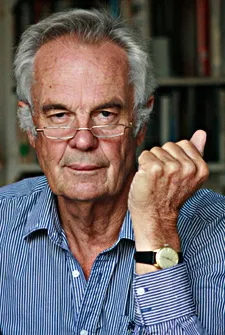

Foreign affairs columnist, film-maker and author

Related Posts

It’s a matter of principles, courage, vision and pulling together – while the militarist world is falling apart… Peter Langille October 3, 2026 “Here, then, is the problem which we present to you, stark and dreadful and inescapable: Shall we put an end to the human race; or shall mankind renounce war?”The Bertrand Russell—Albert Einstein Manifesto, July 9, 1955 ⁕ The forecast for what’s ahead is worrisome. The sharp rise in armed conflicts over the past three years is adding to what was already the highest level in over seventy years. Genocides, which should be prevented are supported. A shared climate emergency that jeopardises survival is ignored. Diverse polls now suggest that people are war-weary, worried and interested in a more effective United Nations. And, there are viable policy options for a more secure world! Yet governments are doubling-down, betting on more war and investing heavily. If current trends persist,...
Johan Galtung 1930-2024October 2015 Published here on October 3, 2026 Let us focus on Civilization for conflict analysis and remedies. Major forms of disorder use violence; war is state organized violence. The most belligerent states are the United States of America and Israel, both with civilization roots. National Evangelism, the US Protestant Christian civilization– more national than evangelical–justifies US warfare as exceptionalism of a people chosen by God, with a manifest destiny to run the world. Orthodox Judaism justifies Israeli warfare to conquer and expand from Nile to Euphrates as a religious right and duty to the Eternal One. The third most belligerent country, the UK, no longer believes it is God-chosen but chosen by the USA; not quite the same but something. But the root cause of global disorder lies in the Occident–with Islam–seeing itself as the single, universal civilization valid for all at all times, all others being...
How Oxford University Press allowed a personality‑driven narrative to masquerade as scholarship. Jan Oberg, dr hc, TFF director This article has also been published on TFF Substack where more readers react and withdraw their interviews from the project. A Special Issue in a scholarly journal is not an ordinary publication. It is a collective, curated […]

Recent Articles

Tony Robinson October 4, 2026 Violence is easy to recognise when someone is being beaten, shot or killed. It becomes more difficult when nobody is holding a weapon. Poverty, discrimination, exploitation and repression can restrict a human life just as effectively, although they do so in very different ways and with very different consequences. Simply adding more categories to an ever-growing list of forms of violence does not really solve the problem. The more interesting question is what all these different situations have in common and why it makes sense to describe them using the same word. Human beings do not simply react to what happens around them. They remember the past, imagine things that do not yet exist, make plans and undertake projects. Workers organise because they imagine different working conditions; people migrate because they imagine another life somewhere else; social movements emerge because people refuse to accept the...
It’s a matter of principles, courage, vision and pulling together – while the militarist world is falling apart… Peter Langille October 3, 2026 “Here, then, is the problem which we present to you, stark and dreadful and inescapable: Shall we put an end to the human race; or shall mankind renounce war?”The Bertrand Russell—Albert Einstein Manifesto, July 9, 1955 ⁕ The forecast for what’s ahead is worrisome. The sharp rise in armed conflicts over the past three years is adding to what was already the highest level in over seventy years. Genocides, which should be prevented are supported. A shared climate emergency that jeopardises survival is ignored. Diverse polls now suggest that people are war-weary, worried and interested in a more effective United Nations. And, there are viable policy options for a more secure world! Yet governments are doubling-down, betting on more war and investing heavily. If current trends persist,...
Johan Galtung 1930-2024October 2015 Published here on October 3, 2026 Let us focus on Civilization for conflict analysis and remedies. Major forms of disorder use violence; war is state organized violence. The most belligerent states are the United States of America and Israel, both with civilization roots. National Evangelism, the US Protestant Christian civilization– more national than evangelical–justifies US warfare as exceptionalism of a people chosen by God, with a manifest destiny to run the world. Orthodox Judaism justifies Israeli warfare to conquer and expand from Nile to Euphrates as a religious right and duty to the Eternal One. The third most belligerent country, the UK, no longer believes it is God-chosen but chosen by the USA; not quite the same but something. But the root cause of global disorder lies in the Occident–with Islam–seeing itself as the single, universal civilization valid for all at all times, all others being...

TFF on Substack

Discover and subscribe to more peace materials on TFF Substack

Most Popular

Tony Robinson October 4, 2026 Violence is easy to recognise when someone is being beaten, shot or killed. It becomes more difficult when nobody is holding a weapon. Poverty, discrimination, exploitation and repression can restrict a human life just as effectively, although they do so in very different ways and with very different consequences. Simply adding more categories to an ever-growing list of forms of violence does not really solve the problem. The more interesting question is what all these different situations have in common and why it makes sense to describe them using the same word. Human beings do not simply react to what happens around them. They remember the past, imagine things that do not yet exist, make plans and undertake projects. Workers organise because they imagine different working conditions; people migrate because they imagine another life somewhere else; social movements emerge because people refuse to accept the...
It’s a matter of principles, courage, vision and pulling together – while the militarist world is falling apart… Peter Langille October 3, 2026 “Here, then, is the problem which we present to you, stark and dreadful and inescapable: Shall we put an end to the human race; or shall mankind renounce war?”The Bertrand Russell—Albert Einstein Manifesto, July 9, 1955 ⁕ The forecast for what’s ahead is worrisome. The sharp rise in armed conflicts over the past three years is adding to what was already the highest level in over seventy years. Genocides, which should be prevented are supported. A shared climate emergency that jeopardises survival is ignored. Diverse polls now suggest that people are war-weary, worried and interested in a more effective United Nations. And, there are viable policy options for a more secure world! Yet governments are doubling-down, betting on more war and investing heavily. If current trends persist,...
Johan Galtung 1930-2024October 2015 Published here on October 3, 2026 Let us focus on Civilization for conflict analysis and remedies. Major forms of disorder use violence; war is state organized violence. The most belligerent states are the United States of America and Israel, both with civilization roots. National Evangelism, the US Protestant Christian civilization– more national than evangelical–justifies US warfare as exceptionalism of a people chosen by God, with a manifest destiny to run the world. Orthodox Judaism justifies Israeli warfare to conquer and expand from Nile to Euphrates as a religious right and duty to the Eternal One. The third most belligerent country, the UK, no longer believes it is God-chosen but chosen by the USA; not quite the same but something. But the root cause of global disorder lies in the Occident–with Islam–seeing itself as the single, universal civilization valid for all at all times, all others being...
Read More
Living-Peace-Sign-Budapest-copy
Tony Robinson October 4, 2026 Violence is easy to recognise when someone is being beaten, shot or killed. It becomes more difficult when nobody is holding a weapon. Poverty, discrimination, exploitation and repression can restrict a human life just as effectively, although they do so in very different ways and with very different consequences. Simply adding more categories to an ever-growing list of forms of violence does not really solve the problem. The more interesting question is what all these different situations have in common and why it makes sense to describe them using the same word. Human beings do not simply react to what happens around them. They remember the past, imagine things that do not yet exist, make plans and undertake projects. Workers organise because they imagine different working conditions; people migrate because they imagine another life somewhere else; social movements emerge because people refuse to accept the...
b54a1f10-8c65-4f0b-9dd5-4abc0a7d04cc_2659x2659
It’s a matter of principles, courage, vision and pulling together – while the militarist world is falling apart… Peter Langille October 3, 2026 “Here, then, is the problem which we present to you, stark and dreadful and inescapable: Shall we put an end to the human race; or shall mankind renounce war?”The Bertrand Russell—Albert Einstein Manifesto, July 9, 1955 ⁕ The forecast for what’s ahead is worrisome. The sharp rise in armed conflicts over the past three years is adding to what was already the highest level in over seventy years. Genocides, which should be prevented are supported. A shared climate emergency that jeopardises survival is ignored. Diverse polls now suggest that people are war-weary, worried and interested in a more effective United Nations. And, there are viable policy options for a more secure world! Yet governments are doubling-down, betting on more war and investing heavily. If current trends persist,...
010
Johan Galtung 1930-2024October 2015 Published here on October 3, 2026 Let us focus on Civilization for conflict analysis and remedies. Major forms of disorder use violence; war is state organized violence. The most belligerent states are the United States of America and Israel, both with civilization roots. National Evangelism, the US Protestant Christian civilization– more national than evangelical–justifies US warfare as exceptionalism of a people chosen by God, with a manifest destiny to run the world. Orthodox Judaism justifies Israeli warfare to conquer and expand from Nile to Euphrates as a religious right and duty to the Eternal One. The third most belligerent country, the UK, no longer believes it is God-chosen but chosen by the USA; not quite the same but something. But the root cause of global disorder lies in the Occident–with Islam–seeing itself as the single, universal civilization valid for all at all times, all others being...
Screenshot 2026-10-02 011738
Jan ObergPhD, director, The Transnational Foundation for Peace and Future Research, TFFLund, Sweden October 2, 2026 This is my full original manuscript. The Chinese Academy of Social Science, CASS, makes two publications out if it. 1. China’s Five-year plan emphasized the capabilities of basic research and original innovation. It is regarded as the goal of the future social development, which, as required, should be significantly enhanced. Can you comment on the importance of original innovation in research and academic study? I believe it is easier to define “original innovation” in the natural sciences than in social sciences. The breaking points of what constitutes something new, or innovative, are not quite as sharp in the latter. But in both fields it is about opening up something that was closed, unseen, unexplored before – making manifest what was earlier latent. Innovations come in many forms and shapes – naming something that was not...
arctic-circle-map
The agreement is catastrophic both because of what it says and what it doesn’t mention. It reduces further the major asset of security policies: Freedom of action. Jan Oberg TFF director September 25, 2026 A couple of hours before the agreement was signed on September 22, 2026, I published the following 13 hypotheses about what it would most likely contain on TFF Substack (in English). I was wrong on only the first point. Contrary to what Trump had written on his Truth Social platform, it does not appear to come into force immediately. In fact, it turned out to be worse than even I had anticipated. After these hypotheses now come a number of reflections in light of what the agreement actually contains, and does not contain, as well as the way in which it has generally been presented by major media outlets and by the public-service broadcaster DR. My...
girl-5894831_1280
Below are TFF-related media mentions, comments, videos and social media posts published elsewhere but not on this homepage. We happen to catch and list only a fraction. Regarding video comments and debates, we recommend that you go to the TFF Video Channel on Substack where many of them are reproduced. Jan Oberg is a contributor to China Daily – 52 million daily clicks – and Global Times, CGTN and CCTV (the national television), China Investment, Xinhua News Agency and several others. Articles and videos on these media very often multiply into countless Chinese (and Western media) that re-post them from these main media. Thanks to The China Academy, his analyses, interviews and comments are frequently posted on YouTube channels such as Thinkers Forum and Wave Media. These videos are often re-posted on Bilibili (China’s YouTube), the China Content Center on TikTok, and on the Chinese edition of TikTok, Douyin.com. This means reaching hundreds of millions of viewers worldwide over a year. While there are too many to catch on all these...




