

TFF at 40: Four Decades of Publishing Peace 2/2

PART II — Publishing Peace in a System That Prioritises Militarism

Jan Oberg, TFF director

April 10, 2026

How TFF Maintains a Daily Voice in a Digital World Built for Noise

This article is part of the series “TFF at 40″ and it invites you to learn about Four Decades of Publishing Peace. It takes a look at how a small, people‑financed peace foundation has communicated across four generations of technology — from wax stencils and fax machines to mass email and Substack — and why TFF continues to publish every single day in a system that rewards noise, conflict, and militarism.

◆

What it means to publish peace every single day in a digital system built for 24/7 news and other noise, confrontation, and militarism. How TFF’s independence, continuity, and global readership defy algorithms, donor cycles, and Western media censorhip — and why the Majority World keeps listening.

When the Transnational Foundation for Peace and Future Research turned forty on January 1, 2026, it did so in the same quiet way it has worked since 1986: by speaking into the world every single day. Not loudly or reactively, but steadily — through articles, videos, reflections, and commentary shared across X, LinkedIn, Facebook, Telegram, VK, our homepage, and Substack. After Google‑YouTube-Vimeo censorship, Substack has also become the natural home for our video collection.

This daily rhythm stands out in a field where communication is usually tied to – mostly – negative news and events, funding cycles, or geopolitical noise. Many organisations publish only when something demands attention, like when they hold a seminar or publish a report. TFF’s rhythm is different. It is not driven by campaigns or institutional calendars but by a long‑standing commitment: keeping the peace perspective alive in a world that increasingly ignores it and tramples the UN Charter underfoot.

A different kind of content

The difference is not only frequency but character. Much of what circulates in the NGO and think‑tank world is derivative — summaries of other people’s work, announcements, or material shaped to avoid friction. TFF’s output is overwhelmingly original: daily analysis, structural critique, reflections on global affairs, and explorations of alternatives rarely found in mainstream policy discourse. It’s created by our amasing TFF Associates – 150 over those 40 years of the world’s finest peace scholars, lawyers, diplomats, social scientists, journalists, former UN people and – well, you name them.

And here a rarely stated fact: Based on publicly observable publishing patterns across peace institutes, foreign‑policy think tanks, global‑studies centres, and international‑affairs NGOs, TFF’s daily output places it ahead of 90% of organisations in the field in terms of publishing frequency and continuity. This is not a boast but a structural observation. Daily original analysis is rather rare in international politics.

Why peace content struggles to travel

Peace content does not travel easily in today’s digital environment. It is not censored dramatically – and not even visibly to the recipients – but it is quietly pushed down by ranking systems that decide what appears in people’s feeds on social media and search engines like Google. These systems reward what is sensational, emotional, personalised, commercially profitable, or aligned with dominant narratives. Peace analysis with a strong emphasis on alternative ways of thinking fits none of those categories.

Anything touching on criticism of wars, geopolitics, NATO, nuclear weapons, official, constructed narratives or criticism of Western policy is automatically classified as political or sensitive. Sensitive content is shown to fewer people. Reflective writing is interpreted as low‑engagement because it does not trigger the emotional spikes that keep users scrolling. And as I said in Part 1, patterns of reading and understanding complex issues have changed towards history’s lowest attention span and highest superficiality.

And because TFF basically shares external links to its own and other valuable materials — that we post on Substack, our homepage, articles, and videos — the algorithm applies another penalty, since platforms prefer to keep users inside their own walls.

A small foundation with a steady presence

In this landscape, TFF’s way of working is unusual. Where many organisations communicate intermittently, TFF maintains a daily presence. Where others rely on institutional messaging, TFF continues to produce original analysis. Where others follow political winds, TFF follows its mandate: supporting the UN Charter’s norm that peace shall be established by peaceful means. Most Nordic peace institutes have been mainstreamed into security studies and international relations, or have been closed down by governments that don’t want peace perspectives on anything (and have also starved movements to a slow death). TFF is still around with its commitment to true peace and true peace research, not US/NATO-compatible militarised ‘peace.’

And where many depend on donors, TFF is financed only by citizens, allowing it to speak without adjusting its voice to political correctness. And its founders and all Associates deliver voluntary work only, we have no staff, and no one is paid a dime.

This sets TFF apart from all those institutes that call themselves independent. Our independence shapes the tone of the work. It allows for long‑term thinking, structural critique, and the exploration of alternatives that do not fit within dominant policy frames – and certainly not within state-financed institutes and corporation-financed think tanks.

TFF operates on about US$ 25,000 a year, financed by citizens worldwide. If you are not one of them, please consider supporting a foundation where every dime goes to activities, not bureaucracy.

And yet, people still find their way

Despite down‑ranking, link penalties, and the absence of donor amplification, people continue to find TFF. They subscribe, read, share, and return — not because the algorithm pushes the content toward them, but because they are looking for something the algorithm does not supply: a steady, independent voice willing to imagine a world organised around something other than fear and force.

While Western media continue to ignore TFF and its roughly fifty diverse Associates, non‑Western media increasingly turn to us. Interest in how to create a better future is far greater in the Majority World than in the self‑absorbed West, which makes up about 12% of humanity. We will continue to work with those who seek constructive futures — and remain open to Western media should they one day be free enough to engage with peace and with us.

And how many people do we reach each day?

Frankly, we do not know — and we do not try to know. Across our various platforms, we have roughly 45,000 subscribers and followers. We cannot track how many people read and/or share our posts, nor how many of the total actually see them. Add to that several hundred videos on different channels, YouTube in particular. Some of them have been viewed by hundreds of thousands over time, but we have no way of knowing how many more see them every day.

And when we publish on someone else’s media — not least in China, such as China Daily, CCTV, CGTN and others — we have no insight into how many people encounter those articles and videos over time.

So a very, very rough estimate is that TFF reaches somewhere between 75,000 and 100,000 people per day across all platforms and channels. This means at least 20-25 million people worldwide per year.

No, that does not change the world in a few days. But it does make a difference to each and every reader and viewer. And for a shoestring, all‑volunteer operation, we consider it a satisfactory and meaningful result — a quiet, daily contribution to a more peaceful world. Remember, we started out 40 years ago by reaching 1200 once a month or so, now we reach about 1,6 million a month.

After forty years, TFF remains what it has always been: a small, citizen‑financed peace research and public education foundation, or think tank, that speaks into the world every day. Not because the system rewards it, but because the world will always need voices for peace — and because the vast majority of humanity wants peace and solves conflict with as little violence as possible. And if I may add one more reason: Because nothing is more meaningful than working for less violence, intelligent conflict-resolution and true peace.

We will continue to serve them with solid analyses and visions of a better future. For the simple reason that if the world does not focus on, discuss and navigate toward a better future – but drives on by looking only into the rear mirror – we shall, sooner or later, have an accident.

The future is peace. Peace is the future. And it is eminently possible that we shall all see that when the US/NATO-misled Western Empire has crumbled. And you and TFF will soon witness this gigantic turning point for the better…
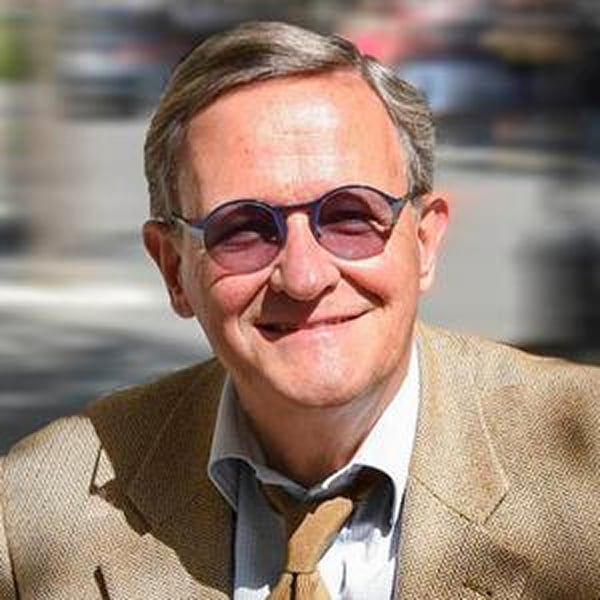

Peace & future researcher + ‌Art Photographer

2 Responses

  1. Native Americans are particularly skillful at getting to the heart of the matter, and in the process pointing toward the path, when walked, to true human happiness. World Peace Is Possible “The first peace, which is most important, is that which is found within the souls of men when they realize their relationship, their oneness with the universe and all its powers, and when they realize that at the center of the universe dwells the Great Spirit, and that this center is really everywhere, it is within each of us.” – BLACK ELK Thank you for all your good efforts.

Related Posts

Tony Robinson October 4, 2026 Violence is easy to recognise when someone is being beaten, shot or killed. It becomes more difficult when nobody is holding a weapon. Poverty, discrimination, exploitation and repression can restrict a human life just as effectively, although they do so in very different ways and with very different consequences. Simply adding more categories to an ever-growing list of forms of violence does not really solve the problem. The more interesting question is what all these different situations have in common and why it makes sense to describe them using the same word. Human beings do not simply react to what happens around them. They remember the past, imagine things that do not yet exist, make plans and undertake projects. Workers organise because they imagine different working conditions; people migrate because they imagine another life somewhere else; social movements emerge because people refuse to accept the...
It’s a matter of principles, courage, vision and pulling together – while the militarist world is falling apart… Peter Langille October 3, 2026 “Here, then, is the problem which we present to you, stark and dreadful and inescapable: Shall we put an end to the human race; or shall mankind renounce war?”The Bertrand Russell—Albert Einstein Manifesto, July 9, 1955 ⁕ The forecast for what’s ahead is worrisome. The sharp rise in armed conflicts over the past three years is adding to what was already the highest level in over seventy years. Genocides, which should be prevented are supported. A shared climate emergency that jeopardises survival is ignored. Diverse polls now suggest that people are war-weary, worried and interested in a more effective United Nations. And, there are viable policy options for a more secure world! Yet governments are doubling-down, betting on more war and investing heavily. If current trends persist,...
Johan Galtung 1930-2024October 2015 Published here on October 3, 2026 Let us focus on Civilization for conflict analysis and remedies. Major forms of disorder use violence; war is state organized violence. The most belligerent states are the United States of America and Israel, both with civilization roots. National Evangelism, the US Protestant Christian civilization– more national than evangelical–justifies US warfare as exceptionalism of a people chosen by God, with a manifest destiny to run the world. Orthodox Judaism justifies Israeli warfare to conquer and expand from Nile to Euphrates as a religious right and duty to the Eternal One. The third most belligerent country, the UK, no longer believes it is God-chosen but chosen by the USA; not quite the same but something. But the root cause of global disorder lies in the Occident–with Islam–seeing itself as the single, universal civilization valid for all at all times, all others being...

Recent Articles

Tony Robinson October 4, 2026 Violence is easy to recognise when someone is being beaten, shot or killed. It becomes more difficult when nobody is holding a weapon. Poverty, discrimination, exploitation and repression can restrict a human life just as effectively, although they do so in very different ways and with very different consequences. Simply adding more categories to an ever-growing list of forms of violence does not really solve the problem. The more interesting question is what all these different situations have in common and why it makes sense to describe them using the same word. Human beings do not simply react to what happens around them. They remember the past, imagine things that do not yet exist, make plans and undertake projects. Workers organise because they imagine different working conditions; people migrate because they imagine another life somewhere else; social movements emerge because people refuse to accept the...
It’s a matter of principles, courage, vision and pulling together – while the militarist world is falling apart… Peter Langille October 3, 2026 “Here, then, is the problem which we present to you, stark and dreadful and inescapable: Shall we put an end to the human race; or shall mankind renounce war?”The Bertrand Russell—Albert Einstein Manifesto, July 9, 1955 ⁕ The forecast for what’s ahead is worrisome. The sharp rise in armed conflicts over the past three years is adding to what was already the highest level in over seventy years. Genocides, which should be prevented are supported. A shared climate emergency that jeopardises survival is ignored. Diverse polls now suggest that people are war-weary, worried and interested in a more effective United Nations. And, there are viable policy options for a more secure world! Yet governments are doubling-down, betting on more war and investing heavily. If current trends persist,...
Johan Galtung 1930-2024October 2015 Published here on October 3, 2026 Let us focus on Civilization for conflict analysis and remedies. Major forms of disorder use violence; war is state organized violence. The most belligerent states are the United States of America and Israel, both with civilization roots. National Evangelism, the US Protestant Christian civilization– more national than evangelical–justifies US warfare as exceptionalism of a people chosen by God, with a manifest destiny to run the world. Orthodox Judaism justifies Israeli warfare to conquer and expand from Nile to Euphrates as a religious right and duty to the Eternal One. The third most belligerent country, the UK, no longer believes it is God-chosen but chosen by the USA; not quite the same but something. But the root cause of global disorder lies in the Occident–with Islam–seeing itself as the single, universal civilization valid for all at all times, all others being...

TFF on Substack

Discover and subscribe to more peace materials on TFF Substack

Most Popular

Tony Robinson October 4, 2026 Violence is easy to recognise when someone is being beaten, shot or killed. It becomes more difficult when nobody is holding a weapon. Poverty, discrimination, exploitation and repression can restrict a human life just as effectively, although they do so in very different ways and with very different consequences. Simply adding more categories to an ever-growing list of forms of violence does not really solve the problem. The more interesting question is what all these different situations have in common and why it makes sense to describe them using the same word. Human beings do not simply react to what happens around them. They remember the past, imagine things that do not yet exist, make plans and undertake projects. Workers organise because they imagine different working conditions; people migrate because they imagine another life somewhere else; social movements emerge because people refuse to accept the...
It’s a matter of principles, courage, vision and pulling together – while the militarist world is falling apart… Peter Langille October 3, 2026 “Here, then, is the problem which we present to you, stark and dreadful and inescapable: Shall we put an end to the human race; or shall mankind renounce war?”The Bertrand Russell—Albert Einstein Manifesto, July 9, 1955 ⁕ The forecast for what’s ahead is worrisome. The sharp rise in armed conflicts over the past three years is adding to what was already the highest level in over seventy years. Genocides, which should be prevented are supported. A shared climate emergency that jeopardises survival is ignored. Diverse polls now suggest that people are war-weary, worried and interested in a more effective United Nations. And, there are viable policy options for a more secure world! Yet governments are doubling-down, betting on more war and investing heavily. If current trends persist,...
Johan Galtung 1930-2024October 2015 Published here on October 3, 2026 Let us focus on Civilization for conflict analysis and remedies. Major forms of disorder use violence; war is state organized violence. The most belligerent states are the United States of America and Israel, both with civilization roots. National Evangelism, the US Protestant Christian civilization– more national than evangelical–justifies US warfare as exceptionalism of a people chosen by God, with a manifest destiny to run the world. Orthodox Judaism justifies Israeli warfare to conquer and expand from Nile to Euphrates as a religious right and duty to the Eternal One. The third most belligerent country, the UK, no longer believes it is God-chosen but chosen by the USA; not quite the same but something. But the root cause of global disorder lies in the Occident–with Islam–seeing itself as the single, universal civilization valid for all at all times, all others being...
Read More
Living-Peace-Sign-Budapest-copy
Tony Robinson October 4, 2026 Violence is easy to recognise when someone is being beaten, shot or killed. It becomes more difficult when nobody is holding a weapon. Poverty, discrimination, exploitation and repression can restrict a human life just as effectively, although they do so in very different ways and with very different consequences. Simply adding more categories to an ever-growing list of forms of violence does not really solve the problem. The more interesting question is what all these different situations have in common and why it makes sense to describe them using the same word. Human beings do not simply react to what happens around them. They remember the past, imagine things that do not yet exist, make plans and undertake projects. Workers organise because they imagine different working conditions; people migrate because they imagine another life somewhere else; social movements emerge because people refuse to accept the...
b54a1f10-8c65-4f0b-9dd5-4abc0a7d04cc_2659x2659
It’s a matter of principles, courage, vision and pulling together – while the militarist world is falling apart… Peter Langille October 3, 2026 “Here, then, is the problem which we present to you, stark and dreadful and inescapable: Shall we put an end to the human race; or shall mankind renounce war?”The Bertrand Russell—Albert Einstein Manifesto, July 9, 1955 ⁕ The forecast for what’s ahead is worrisome. The sharp rise in armed conflicts over the past three years is adding to what was already the highest level in over seventy years. Genocides, which should be prevented are supported. A shared climate emergency that jeopardises survival is ignored. Diverse polls now suggest that people are war-weary, worried and interested in a more effective United Nations. And, there are viable policy options for a more secure world! Yet governments are doubling-down, betting on more war and investing heavily. If current trends persist,...
010
Johan Galtung 1930-2024October 2015 Published here on October 3, 2026 Let us focus on Civilization for conflict analysis and remedies. Major forms of disorder use violence; war is state organized violence. The most belligerent states are the United States of America and Israel, both with civilization roots. National Evangelism, the US Protestant Christian civilization– more national than evangelical–justifies US warfare as exceptionalism of a people chosen by God, with a manifest destiny to run the world. Orthodox Judaism justifies Israeli warfare to conquer and expand from Nile to Euphrates as a religious right and duty to the Eternal One. The third most belligerent country, the UK, no longer believes it is God-chosen but chosen by the USA; not quite the same but something. But the root cause of global disorder lies in the Occident–with Islam–seeing itself as the single, universal civilization valid for all at all times, all others being...
Screenshot 2026-10-02 011738
Jan ObergPhD, director, The Transnational Foundation for Peace and Future Research, TFFLund, Sweden October 2, 2026 This is my full original manuscript. The Chinese Academy of Social Science, CASS, makes two publications out if it. 1. China’s Five-year plan emphasized the capabilities of basic research and original innovation. It is regarded as the goal of the future social development, which, as required, should be significantly enhanced. Can you comment on the importance of original innovation in research and academic study? I believe it is easier to define “original innovation” in the natural sciences than in social sciences. The breaking points of what constitutes something new, or innovative, are not quite as sharp in the latter. But in both fields it is about opening up something that was closed, unseen, unexplored before – making manifest what was earlier latent. Innovations come in many forms and shapes – naming something that was not...
arctic-circle-map
The agreement is catastrophic both because of what it says and what it doesn’t mention. It reduces further the major asset of security policies: Freedom of action. Jan Oberg TFF director September 25, 2026 A couple of hours before the agreement was signed on September 22, 2026, I published the following 13 hypotheses about what it would most likely contain on TFF Substack (in English). I was wrong on only the first point. Contrary to what Trump had written on his Truth Social platform, it does not appear to come into force immediately. In fact, it turned out to be worse than even I had anticipated. After these hypotheses now come a number of reflections in light of what the agreement actually contains, and does not contain, as well as the way in which it has generally been presented by major media outlets and by the public-service broadcaster DR. My...
girl-5894831_1280
Below are TFF-related media mentions, comments, videos and social media posts published elsewhere but not on this homepage. We happen to catch and list only a fraction. Regarding video comments and debates, we recommend that you go to the TFF Video Channel on Substack where many of them are reproduced. Jan Oberg is a contributor to China Daily – 52 million daily clicks – and Global Times, CGTN and CCTV (the national television), China Investment, Xinhua News Agency and several others. Articles and videos on these media very often multiply into countless Chinese (and Western media) that re-post them from these main media. Thanks to The China Academy, his analyses, interviews and comments are frequently posted on YouTube channels such as Thinkers Forum and Wave Media. These videos are often re-posted on Bilibili (China’s YouTube), the China Content Center on TikTok, and on the Chinese edition of TikTok, Douyin.com. This means reaching hundreds of millions of viewers worldwide over a year. While there are too many to catch on all these...




