PressInfo #200 – Why Bush won? Fear-ology and the lack of alternatives

There are good reasons why George W. Bush won. About two-thirds of America – about 60 % of the eligible electorate voted, roughly a half of them for Bush – and the rest of us must now live with both the accumulated global effects of the first four years and with more of the same, and probably worse, for four more long years. For, in the world of George Bush, God’s mandate from above has now been confirmed by the American people’s mandate from below. So there is a kind of trinity of God, Bush and the American believers. Unfortunately none of his policies, except that for re-election, work – but that seems to bother neither Bush nor his followers. Let’s at least hope that God feels a kind of guilt by (alleged) association?

1. Fear-ology

The major reason Bush won is fearology, the building of politics on manipulation of fear and the need for protection to one’s own advantage. From the perspective of mass psychology, George W. Bush had the most appealing program: “I am the Only One who can promise you protection against the evils of the world out there.” Since in response to 9/11 the President initiated the misguided and already failed “war on terror”, the deep reservoir of his performance is the syndrome of “fearology” spiced with eschatological myths and chosenness: Bush as God’s own President, American as God’s own country and the Republicans, GOP, as God’s Own Party – another trinity.

Anyone attempting to explain the Bush administration by normal political science textbook theories will miss most of what this fearology is about and what, consequently, we may be heading for.

Fearology worked; first there was a manifest attack on the US and it provided Mr. Bush with a (presumably much needed) manifest personal destiny: to fight the “Axis of Evil”, to eradicate Evil everywhere, create Paradise on earth and thus become the Protector. In spite of all the evident failures, – see TFF Feature by Craig Aaron – the majority (albeit a small one) of the American citizens have now shown that they believe (in) him and expect to be protected by him; there is a contract now that did not exist in 2000. No new disaster such as 9/11 has happened in the US, so the protector has a point, whether or not it is the merit of his administration and policies.

The rest is very simple, but requires bold vision and intelligent strategies and tactics to carry out: you tell people that they are in mortal danger and if they are actually not, you create that danger or an image of it. The smoke (screen) would not work without the fire, the fire that was 9/11. Next, you choose to deal with that attack so that it produces scepticism among most friends, hatred among enemies, mass production of terrorists, and ever decreasing legitimacy in the eyes of others. This is a very effective “fearological ” policy, because it increases both the voters’ feeling of fear and of being alone and misunderstood. Osama Bin Laden’s conspicuously well-timed video in support of President Bush was the brain product of the most gifted manipulator, whoever it was. If it was bin Laden himself, he can expect to be alive in the future too after this. (“If you let me survive, I’ll help you survive…”)

The protection is not of the defensive, healing or preventive kind. It is outward and aggressive. There is no square meter anywhere on earth where we can relax or feel safe. The world is dangerous, terrorists lurk around every corner. And if that is not enough, we go ahead with a Ballistic Missile Defence to protect America should someone anyhow penetrate to our mainland. BMD aims to increase the capability to fight a nuclear war and boosts the – mad – perception that you can survive and gain from a nuclear war; but that has not dawned upon the Americans – and, incidentally, also not upon many Europeans. Illiteracy about complex and sometimes philosophical security matters is widespread.

Fearology has its own logic: you have to provoke people all the time and everywhere to increase the self-constructed threat. Your power would disappear if no one was fearful and thought they needed your protection. If fundamentally you changed US foreign policy and got people all over to love and admire you, you would be out of the office! Why? Because you have nothing originally constructive to offer – only protection from the evil guys.

2. TANA – There Are No Alternatives

Here it the second reason; the utter lack of coherent and constructive alternative programs to George W. Bush’s foreign policy. It should not be that difficult to see that the United States is now close to a one-party system with two fractions and that John Kerry’s policies concerning terrorism and the Iraq quagmire – and all the rest – was difficult to distinguish in substance from Bush’s.

The main difference might be in the personality; Kerry has experienced the meaninglessness, cruelty and absurdity of war (however, repressed for the sake of the career, one must presume) and he seems to have less problematic relationships with his past, with God and with various fundamentalisms. He is probably also less politically autistic than Mr. Bush. Be this as it may, he comes across merely as a more “intellectual” imperialist and militarist with a slightly less unilateral, (self) isolationist view of his country’s role in the world. However, as President Mr. Kerry might have appointed Richard Holbrooke his Secretary of State and Wesley Clarke his Secretary of Defence; with their disastrous handling of Yugoslavia and Kosovo five years ago under Clinton, it would be naïve to believe that imperialism and militarism is a Republican (GOP) disease only. Both parties choose the antagonistic Empire option rather than the Democracy-Cooperation option. In the little longer run, it could spell the end of the US empire – but who cares about the longer run, say 15-20 years in today’s politics?

To put it crudely, the Americans could vote, but they didn’t have real choice. This distinction is vital in the age of increasing authoritarianism. Democracy is about choice and not only about voting. Furthermore, one must challenge every concept of democracy used about a system that precludes anyone who does not possess hundreds of millions of dollars from becoming the country’s leader.

Civil society – lovers of peace, justice, ecological balance, freedom – can now decide to continue to only talk negatively about George W. Bush and promote the – traditional on the verge of boredom – slogans of anti-war and anti-imperialism and being critical of and against every next piece of Bush policy and interventionism. We must, of course, but it won’t be enough. If anything, this election shows that the “criticism only” strategy is too easy and represent no real challenge to the system.

The failure to stop a President whose policies have created such utter, predictable chaos as in Afghanistan and Iraq indeed raises the question: what did we do wrong? George W. Bush has now been re-elected after having plunged not only America but the world into the wrong wars and having achieved absolutely nothing except physical and cultural destruction and the death of 100,000 Iraqis – on top of the sanctions-caused genocide endorsed by the Clinton administration also after Iraq had been disarmed and which killed between 500,000 and 1,000.000 innocent Iraqis and the country’s middle class.

But “we” got rid of Saddam? Well good, but it’s the wrong argument. Since other means were never tried but war, how can anyone say that war was the only way to topple him? And how high a price can we morally demand others to pay for our democratisation, freedom – and oil supplies and profits?

3. Being against is not enough. The need for constructive programmes

And that’s where the problem lies with a large part of the global resistance: it is “against” and “anti-” but it has little of what Gandhi always insisted on, constructive programs. The millions of marchers – like the governments of Germany and France – last year had very little by way of answer to the perfectly legitimate question: if not war on Iraq, then what? If not grapping the oil from someone else, then what? If not massive world violence against terror – then how to combat terror? If Saddam is the product of the world’s arm trade, then how do we stop it? What kind of education and media do we need to make people as interested in peace as they are in computers, entertainment, Coca-Cola – and violence? If “war is the only plan in town” there will be war; in most difficult situations doing nothing is no alternative.

Admittedly, it is easier to fight a common enemy together – and George W. Bush, US foreign policy and all it stands for is an enemy in the eyes of millions. But these millions have not been able, however legitimate the struggle, to develop anything close to an alternative vision of how things could be done differently. Could? Yes, by non-violence – by Gandhian “ahimsa” and “Satyagraha” through the whole arsenal of peace by peaceful means as stated in the UN Charter. The energy went to “fight Bush” rather than to develop a new paradigm and new strategies. Thus, Bush set the agenda to which most re-acted. But democracy is about citizens pro-actively setting the agenda – to which their elected representatives re-act. It’s about visions of the good society, not fearology practised the other way: dystopian images of the war, nuclear annihilations, dislike and contempt for leaders. Peace is so much more than the working against war and other types of violence.

Peace is about alternative programs built on the values of love and cooperation with the rest of the world. We need to take inspiration from the history of non-violence and from, say, Jonathan Schell’s The Unconquerable World. We must consistently say yes to non-violence and not keep silent about, for instance, the totally unacceptable violence practised by that part of the Iraqi resistance that kidnap peace and humanitarian workers.

Bush’s re-election tells us that we must try to use the next four years more constructively. There will be fears, anger and huge disappointments. We must somehow overcome them. Fearology and its develish partner, hopelessness, are tools in the hands of authoritarian leaders. Defiance and resistance, civil courgae and resilience can help constructive programs to emerge – and positive visions can kill both fears and hopelessness.

Indeed, perhaps, President Bush’ re-election represents an important opportunity for us all?

More about that in another TFF PressInfo.

© TFF and the author 2004
Peace & future researcher + ‌Art Photographer

Related Posts

The agreement is catastrophic both because of what it says and what it doesn’t mention. It reduces further the major asset of security policies: Freedom of action. Jan Oberg TFF director September 25, 2026 A couple of hours before the agreement was signed on September 22, 2026, I published the following 13 hypotheses about what it would most likely contain on TFF Substack (in English). I was wrong on only the first point. Contrary to what Trump had written on his Truth Social platform, it does not appear to come into force immediately. In fact, it turned out to be worse than even I had anticipated. After these hypotheses now come a number of reflections in light of what the agreement actually contains, and does not contain, as well as the way in which it has generally been presented by major media outlets and by the public-service broadcaster DR. My...
Below are TFF-related media mentions, comments, videos and social media posts published elsewhere but not on this homepage. We happen to catch and list only a fraction. Regarding video comments and debates, we recommend that you go to the TFF Video Channel on Substack where many of them are reproduced. Jan Oberg is a contributor to China Daily – 52 million daily clicks – and Global Times, CGTN and CCTV (the national television), China Investment, Xinhua News Agency and several others. Articles and videos on these media very often multiply into countless Chinese (and Western media) that re-post them from these main media. Thanks to The China Academy, his analyses, interviews and comments are frequently posted on YouTube channels such as Thinkers Forum and Wave Media. These videos are often re-posted on Bilibili (China’s YouTube), the China Content Center on TikTok, and on the Chinese edition of TikTok, Douyin.com. This means reaching hundreds of millions of viewers worldwide over a year. While there are too many to catch on all these...
Jan Oberg May 15, 2026 Go to this Fox News page and scroll the whole way down: President Donald Trump tells the world that his meeting with President Xi Jinping yielded a lot of very concrete political and economic results – of course, only where the Chinese side, according to him, agreed with him. He does not mention the Taiwan issue, but Secretary of State, Marco Rubio, says that it did not feature prominently in their talks and that the US policy on Taiwan has not changed. Then go to China Daily – or Global Times – and you will see that for the Chinese it is framework, principles, structure of cooperation etc. that matters – all embedded in the overall idea of “constructive bilateral relationship of strategic stability.” Nowhere is any concrete agreement or deal – all that Trump refers to – mentioned. At the general level, this gives you insights into the very different social...

Recent Articles

Tony Robinson October 4, 2026 Violence is easy to recognise when someone is being beaten, shot or killed. It becomes more difficult when nobody is holding a weapon. Poverty, discrimination, exploitation and repression can restrict a human life just as effectively, although they do so in very different ways and with very different consequences. Simply adding more categories to an ever-growing list of forms of violence does not really solve the problem. The more interesting question is what all these different situations have in common and why it makes sense to describe them using the same word. Human beings do not simply react to what happens around them. They remember the past, imagine things that do not yet exist, make plans and undertake projects. Workers organise because they imagine different working conditions; people migrate because they imagine another life somewhere else; social movements emerge because people refuse to accept the...
It’s a matter of principles, courage, vision and pulling together – while the militarist world is falling apart… Peter Langille October 3, 2026 “Here, then, is the problem which we present to you, stark and dreadful and inescapable: Shall we put an end to the human race; or shall mankind renounce war?”The Bertrand Russell—Albert Einstein Manifesto, July 9, 1955 ⁕ The forecast for what’s ahead is worrisome. The sharp rise in armed conflicts over the past three years is adding to what was already the highest level in over seventy years. Genocides, which should be prevented are supported. A shared climate emergency that jeopardises survival is ignored. Diverse polls now suggest that people are war-weary, worried and interested in a more effective United Nations. And, there are viable policy options for a more secure world! Yet governments are doubling-down, betting on more war and investing heavily. If current trends persist,...
Johan Galtung 1930-2024October 2015 Published here on October 3, 2026 Let us focus on Civilization for conflict analysis and remedies. Major forms of disorder use violence; war is state organized violence. The most belligerent states are the United States of America and Israel, both with civilization roots. National Evangelism, the US Protestant Christian civilization– more national than evangelical–justifies US warfare as exceptionalism of a people chosen by God, with a manifest destiny to run the world. Orthodox Judaism justifies Israeli warfare to conquer and expand from Nile to Euphrates as a religious right and duty to the Eternal One. The third most belligerent country, the UK, no longer believes it is God-chosen but chosen by the USA; not quite the same but something. But the root cause of global disorder lies in the Occident–with Islam–seeing itself as the single, universal civilization valid for all at all times, all others being...

TFF on Substack

Discover and subscribe to more peace materials on TFF Substack

Most Popular

Tony Robinson October 4, 2026 Violence is easy to recognise when someone is being beaten, shot or killed. It becomes more difficult when nobody is holding a weapon. Poverty, discrimination, exploitation and repression can restrict a human life just as effectively, although they do so in very different ways and with very different consequences. Simply adding more categories to an ever-growing list of forms of violence does not really solve the problem. The more interesting question is what all these different situations have in common and why it makes sense to describe them using the same word. Human beings do not simply react to what happens around them. They remember the past, imagine things that do not yet exist, make plans and undertake projects. Workers organise because they imagine different working conditions; people migrate because they imagine another life somewhere else; social movements emerge because people refuse to accept the...
It’s a matter of principles, courage, vision and pulling together – while the militarist world is falling apart… Peter Langille October 3, 2026 “Here, then, is the problem which we present to you, stark and dreadful and inescapable: Shall we put an end to the human race; or shall mankind renounce war?”The Bertrand Russell—Albert Einstein Manifesto, July 9, 1955 ⁕ The forecast for what’s ahead is worrisome. The sharp rise in armed conflicts over the past three years is adding to what was already the highest level in over seventy years. Genocides, which should be prevented are supported. A shared climate emergency that jeopardises survival is ignored. Diverse polls now suggest that people are war-weary, worried and interested in a more effective United Nations. And, there are viable policy options for a more secure world! Yet governments are doubling-down, betting on more war and investing heavily. If current trends persist,...
Johan Galtung 1930-2024October 2015 Published here on October 3, 2026 Let us focus on Civilization for conflict analysis and remedies. Major forms of disorder use violence; war is state organized violence. The most belligerent states are the United States of America and Israel, both with civilization roots. National Evangelism, the US Protestant Christian civilization– more national than evangelical–justifies US warfare as exceptionalism of a people chosen by God, with a manifest destiny to run the world. Orthodox Judaism justifies Israeli warfare to conquer and expand from Nile to Euphrates as a religious right and duty to the Eternal One. The third most belligerent country, the UK, no longer believes it is God-chosen but chosen by the USA; not quite the same but something. But the root cause of global disorder lies in the Occident–with Islam–seeing itself as the single, universal civilization valid for all at all times, all others being...
Read More
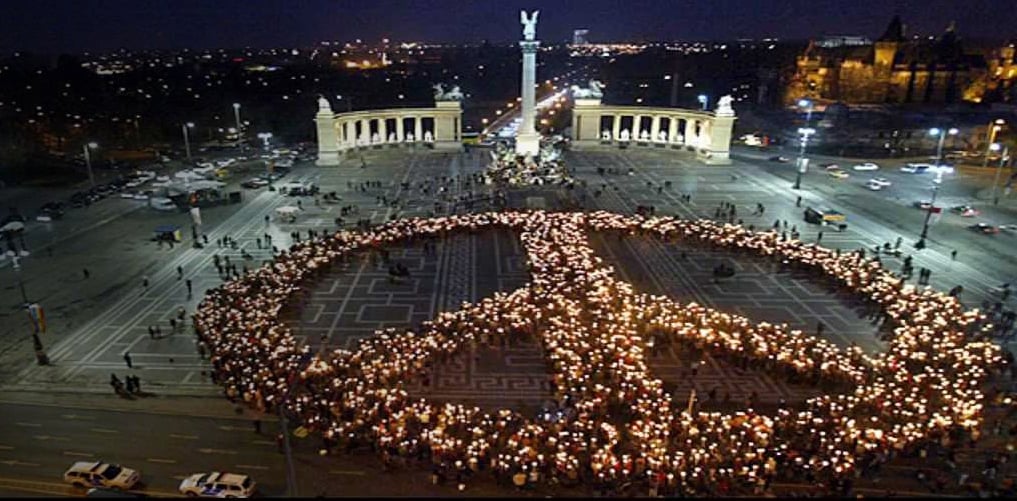
Living-Peace-Sign-Budapest-copy
Tony Robinson October 4, 2026 Violence is easy to recognise when someone is being beaten, shot or killed. It becomes more difficult when nobody is holding a weapon. Poverty, discrimination, exploitation and repression can restrict a human life just as effectively, although they do so in very different ways and with very different consequences. Simply adding more categories to an ever-growing list of forms of violence does not really solve the problem. The more interesting question is what all these different situations have in common and why it makes sense to describe them using the same word. Human beings do not simply react to what happens around them. They remember the past, imagine things that do not yet exist, make plans and undertake projects. Workers organise because they imagine different working conditions; people migrate because they imagine another life somewhere else; social movements emerge because people refuse to accept the...
b54a1f10-8c65-4f0b-9dd5-4abc0a7d04cc_2659x2659
It’s a matter of principles, courage, vision and pulling together – while the militarist world is falling apart… Peter Langille October 3, 2026 “Here, then, is the problem which we present to you, stark and dreadful and inescapable: Shall we put an end to the human race; or shall mankind renounce war?”The Bertrand Russell—Albert Einstein Manifesto, July 9, 1955 ⁕ The forecast for what’s ahead is worrisome. The sharp rise in armed conflicts over the past three years is adding to what was already the highest level in over seventy years. Genocides, which should be prevented are supported. A shared climate emergency that jeopardises survival is ignored. Diverse polls now suggest that people are war-weary, worried and interested in a more effective United Nations. And, there are viable policy options for a more secure world! Yet governments are doubling-down, betting on more war and investing heavily. If current trends persist,...
010
Johan Galtung 1930-2024October 2015 Published here on October 3, 2026 Let us focus on Civilization for conflict analysis and remedies. Major forms of disorder use violence; war is state organized violence. The most belligerent states are the United States of America and Israel, both with civilization roots. National Evangelism, the US Protestant Christian civilization– more national than evangelical–justifies US warfare as exceptionalism of a people chosen by God, with a manifest destiny to run the world. Orthodox Judaism justifies Israeli warfare to conquer and expand from Nile to Euphrates as a religious right and duty to the Eternal One. The third most belligerent country, the UK, no longer believes it is God-chosen but chosen by the USA; not quite the same but something. But the root cause of global disorder lies in the Occident–with Islam–seeing itself as the single, universal civilization valid for all at all times, all others being...
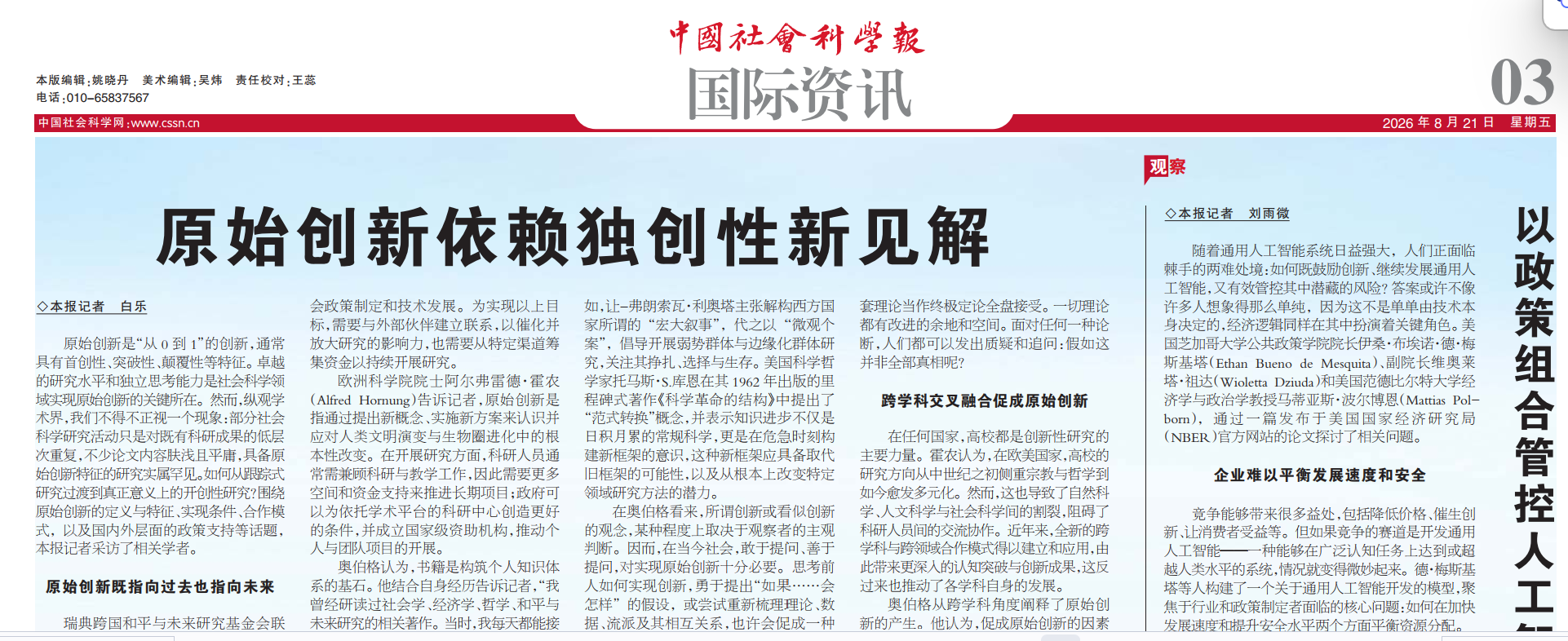
Screenshot 2026-10-02 011738
Jan ObergPhD, director, The Transnational Foundation for Peace and Future Research, TFFLund, Sweden October 2, 2026 This is my full original manuscript. The Chinese Academy of Social Science, CASS, makes two publications out if it. 1. China’s Five-year plan emphasized the capabilities of basic research and original innovation. It is regarded as the goal of the future social development, which, as required, should be significantly enhanced. Can you comment on the importance of original innovation in research and academic study? I believe it is easier to define “original innovation” in the natural sciences than in social sciences. The breaking points of what constitutes something new, or innovative, are not quite as sharp in the latter. But in both fields it is about opening up something that was closed, unseen, unexplored before – making manifest what was earlier latent. Innovations come in many forms and shapes – naming something that was not...
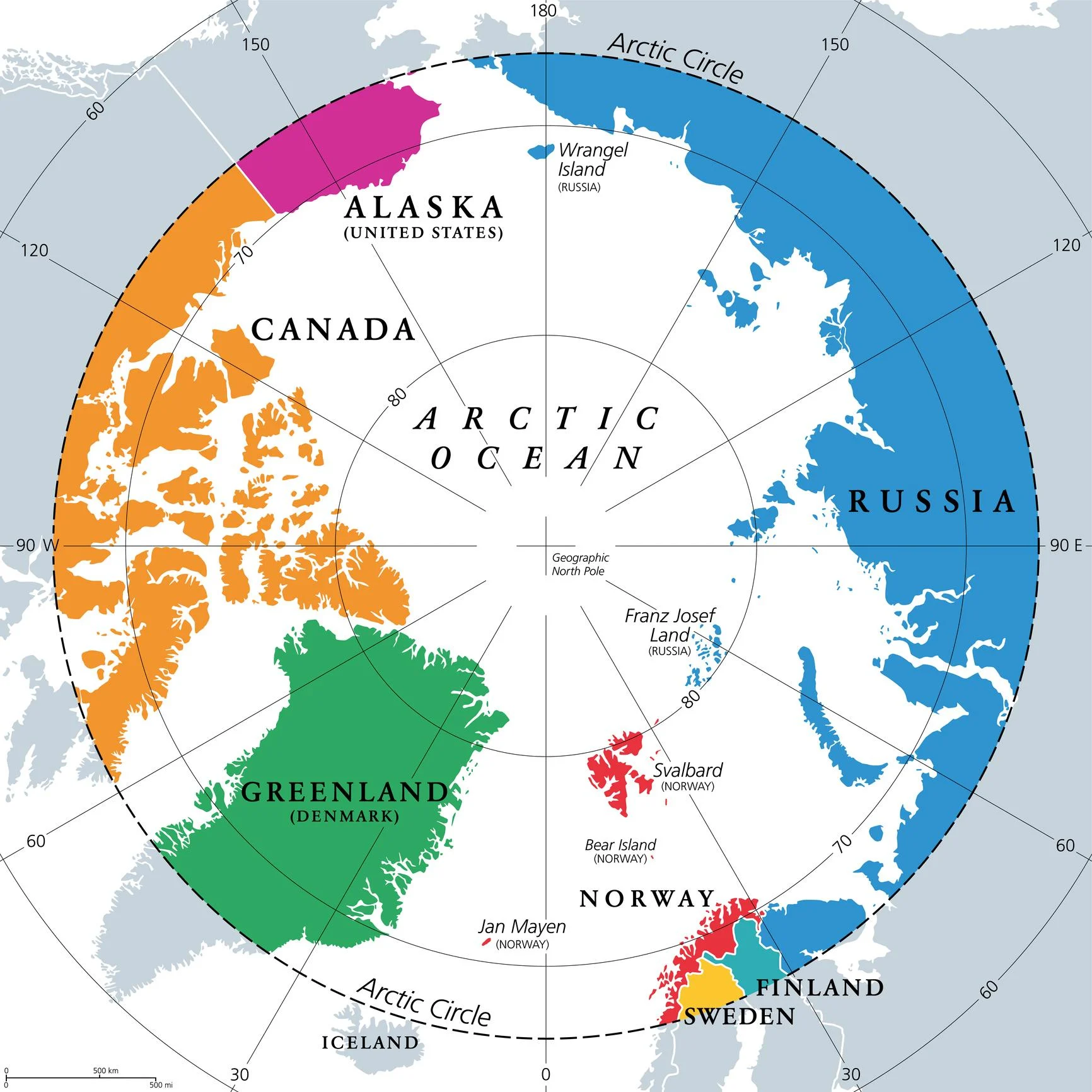
arctic-circle-map
The agreement is catastrophic both because of what it says and what it doesn’t mention. It reduces further the major asset of security policies: Freedom of action. Jan Oberg TFF director September 25, 2026 A couple of hours before the agreement was signed on September 22, 2026, I published the following 13 hypotheses about what it would most likely contain on TFF Substack (in English). I was wrong on only the first point. Contrary to what Trump had written on his Truth Social platform, it does not appear to come into force immediately. In fact, it turned out to be worse than even I had anticipated. After these hypotheses now come a number of reflections in light of what the agreement actually contains, and does not contain, as well as the way in which it has generally been presented by major media outlets and by the public-service broadcaster DR. My...
girl-5894831_1280
Below are TFF-related media mentions, comments, videos and social media posts published elsewhere but not on this homepage. We happen to catch and list only a fraction. Regarding video comments and debates, we recommend that you go to the TFF Video Channel on Substack where many of them are reproduced. Jan Oberg is a contributor to China Daily – 52 million daily clicks – and Global Times, CGTN and CCTV (the national television), China Investment, Xinhua News Agency and several others. Articles and videos on these media very often multiply into countless Chinese (and Western media) that re-post them from these main media. Thanks to The China Academy, his analyses, interviews and comments are frequently posted on YouTube channels such as Thinkers Forum and Wave Media. These videos are often re-posted on Bilibili (China’s YouTube), the China Content Center on TikTok, and on the Chinese edition of TikTok, Douyin.com. This means reaching hundreds of millions of viewers worldwide over a year. While there are too many to catch on all these...