
PressInfo #241 – Assessing the United Nations after the Lebanon War 2006

Of course, we all breathe a bit easier with the news of a ceasefire in Lebanon even if its prospects for stemming the violence altogether are not favorable at this time. And after dithering for 34 days while the bombs dripped and the rockets flew we need to acknowledge that the United Nations, for all of its weaknesses, plays indispensable roles in a wide array of international conflict situations. It is notable in this instance that despite Israel’s discomfort with UN authority, and the reluctance of the United States to accept any UN interference with its foreign policy priorities, as in Iraq, both countries were forced to turn to the UN when Israel’s war against Lebanon ran up against the unexpectedly strong Hezbollah resistance.

At the same time this is certainly not a moment to celebrate the UN for fulfilling its intended role as dedicated to war-prevention and the defense of states victimized by aggression. Perhaps, it is an occasion to take stock of what to expect from the UN in the early part of the twenty-first century, concluding that the Organization can be regarded neither as a failure nor as a success, but something inbetween that is complicated and puzzling.

The origins and the hopes

After World War II a mood of relief that the war was over was mingled with satisfaction (that the German and Italian fascism and Japanese militarism were defeated) and worry (that a future major war might well be fought with nuclear weapons, and even if not, that military technology was making wars more and more devastating for civilian society). One hopeful response was the establishment of the United Nations on the basis of a core agreement that recourse to force by a state, except in cases of strict self-defense was unconditionally prohibited. This norm was supposed to be supplemented by machinery for collective security intended to protect victims of aggression, but this undertaking although written into the UN Charter has never been implemented.

The victorious countries in World War II plus China were designated as Permanent Members of the UN Security Council and given the right to veto any decision. The intention here was to acknowledge that the UN could not hope to ensure compliance with international law by these dominant states, and to avoid raising expectations too high it was better to acknowledge this deference of ‘law’ to ‘power’ restricted the role of the UN.

But what was not anticipated in 1945, and has now again damaged the reputation of the UN, was the realization that the Organization could serve as an instrument for geopolitics in such a way as to override the most basic restraints on war making built into the UN Charter, but this is exactly what happened in the context of Israel’s war on Lebanon.

“Indicative of just how low the expectations to the UNSC have fallen…”

The UNSC stood by in silence in the face of Israel’s decision to use the pretext of the July 12th border incitement by Hezbollah, involving only a small number of Israeli military personnel, to launch all out war on an essentially defenseless Lebanon. A month of merciless Israeli air attacks on Lebanese villages and cities has taken place, while the UN refused even to demand an immediate and total ceasefire to the obvious dismay of the UN Secretary General, Kofi Annan. And even this benchmark is indicative of just how low expectations have fallen with respect to UNSC action when there exists any serious friction between the UN Charter and the policy priorities of the United States as the controlling member of the Organization.

It should be recalled that the it was the US Government that declared the UN ‘irrelevant’ in 2003 when the Security Council at least stood firm, and refused to authorize an unlawful invasion of Iraq. With Iraq, too, the experience, more than anything else, underscored the fallen expectations associated with the UNSC. It was then applauded for not mandating aggression against Iraq, but when the invasion went ahead anyway in March 2003, the UNSC was complicit with aggression by way of silence, and later went even further later on, acting as a junior partner in the American-led occupation of Iraq.

The point being stressed is that the UN is unable to prevent its Permanent Members from violating the Charter, but worse, it collaborates with such violations in support of its most powerful member.

The UN has become in these situations, sadly, more of a geopolitical instrument than an instrument for the enforcement of international law. This regression betrays the vision that the guided the architects of the UN back in 1945, chief among whom were American diplomats.

The Nuremberg Promise has long since been forgotten

It should be also recalled that when German and Japanese surviving leaders were criminally punished after World War II for waging aggressive war at the Nuremberg and Tokyo trials the prosecutors promised that the principles of law applied to judge the defendants associated with the defeated countries would in the future we applicable to assess the behavior of the victorious power then sitting in judgment. This Nuremberg Promise has been long since forgotten by governments, but it should not be ignored by public opinion and citizens of conscience everywhere.

Resolurion 1701 undermines the UN’s own authority

Nothing illustrates this fallen condition of the UN better than the one-sided UNSC Res. 1701 ceasefire resolution finally approved by unanimous vote on Aug. 11th. This resolution, although in some respects a compromise that reflects the inconclusive battlefield outcome, is tilted in many of its particulars to favor the country that both wrongfully escalated the border incident and carried out massive combat operations against civilian targets in flagrant violation of the law of war: Res. 1701 blames Hezbollah for starting the conflict; it refrains from making any critical comment on Israeli bombing and artillery campaign directed at the entire country of Lebanon; it imposes an obligation to disarm Hezbollah without placing any restrictions on Israeli military capabilities or policies; it places peacekeeping forces only on Lebanese territory, and is vague about requiring the withdrawal of Israeli armed forces; it still fails to censure Israel for expanding the scope of its ground presence in Lebanon by 300% to beat the ceasefire deadline, and it calls for the prohibition of ‘all’ attacks by Hezbollah while requiring Israel only to stop ‘offensive military operations,’ leaving the definition of what is offensive in the hands of policymakers in Tel Aviv and Washington.

We learn some important things about the United Nations from this experience. First, it is incapable of protecting any state, whatever the circumstances, that is the victim of an aggressive war initiated by the United States or its close allies. This incapacity extends even to proposing resolutions of censure.

Secondly, the UNSC, while not actually supporting such claims of aggressive war, will collaborate with the aggressor in the post-conflict situation to ratify the effects of the aggression. This combination means effectively that the Charter prohibition directed at non-defensive wars applies only to enemies of the United States. Any legal order that achieves respect treats equals equally. The UN is guilty of treating equals unequally, and thus constantly undermines its own authority.

‘Punitive self-defence’? Israel’s illegitimate use of retaliating force

There is another disturbing element that concerns the manner in which states aligned with the United States are using force against non-state actors. Such states, of which Israel is a leading example, engage in what a law commentator, Ali Khan, has called ‘punitive self-defense.’ UN Charter Article 51 deliberately tried to restrict this option to claim self-defense by requiring ‘a prior armed attack,’ which was definitely understood, as being of a much more sustained and severe initiation of violent conflict than an incident of violence due to an isolated attack or a border skirmish. More concretely, the events on the borders of Gaza and Lebanon that gave rise to sustained Israeli war making did not give Israel the legal right to act in self-defense, although it did authorize Israel to defend itself by retaliating in a proportionate manner. This distinction is crucial to the Charter conception of legitimate uses of international force.

What punitive self-defense means is a deliberate policy of over-reaction such that there is created a gross disproportion between the violence inflicted by the non-state actor, in the Lebanese instance, Hezbollah, and the response of the state actor Israel.

It also means, contrary to the UN Charter and international law, that every violent provocation by a non-state actor can be treated as an occasion for claiming a right to wage a full war based on ‘self-defense.’

This punitive approach to non-state adversaries completely negates a cardinal principle of both international law and the just war tradition by validating disproportionate uses of retaliatory force.

We must not become cynical about the role of the UN

This discouraging interpretation of what to expect from the United Nations in war/peace situations should not lead to a cynical dismissal of the Organization. We need the UN to step in, as in Lebanon, when the arbiters of geopolitics give the signal, and help with the post-conflict process of recovery and reconstruction.

But we should be under no illusions that this role adequately carries out the vision of the UN contained in its own Charter or upholds the most basic norms of international law.

How can this situation be improved?

There are three areas of effort that are worthy of attention:

• Perhaps, most important, is the recognition by major states that war is almost always a dysfunctional means of pursuing their security interests, especially with respected to addressing challenges posed by non-state actors.

In this regard, odd as it may seem, adherence to the limits imposed by international law may serve national interests better than relying on military superiority to override the restrictions on force associated with the UN Charter; note that the United States would have avoided the worst foreign policy disasters in its history if it had not ignored these restrictions in the Vietnam War and the Iraq War; in their essence, limiting war to true instances of self-defense is a practical restriction on state sovereignty agreed upon by experienced political leaders;

• Of secondary importance is for the members of the United Nations to take more seriously their own obligations to uphold the Charter; it may be appropriate in this spirit to revive attention to the so-called Uniting for Peace Resolution 337A that confers a residual responsibility on the General Assembly to act when the Security Council fails to do so.

This 1950 resolution was drafted in the setting of the Cold War, with an intention to circumvent a Soviet veto, but its use was suspended by the West in the wake of decolonization, which was perceived as making the General Assembly less supportive of Western interests than had been the case in the early years of the UN.

In present circumstances, the General Assembly could be reempowered to supplement the efforts of the Security Council where an urgent crisis involving peace and security is not being addressed in a manner consistent with the UN Charter; along similar lines, would be an increased reliance on seeking legal guidance from the International Court of Justice when issues of the sort raised by the Israeli escalation occurred. [Please see TFF’s Open Letter to the President of the General Assembly concerning the Uniting for Peace resolution that the author has supported].

• And finally, given these disappointments associated with the preeminence of geopolitics within the UN, it is important for individuals and citizen organizations to act with vigilance.

The World Tribunal on Iraq, taking place in Istanbul in June 2005, passed ‘legal’ judgment on the Iraq War and those responsible for its initiation and conduct. It made the sort of legal case that the UN was unable to make because of geopolitical considerations. It provided a comprehensive examination of the policies and their effects, and issues a judgment with recommendations drafted by a jury of conscience presided over by the renowned Indian writer and activist, Arundhati Roy.

Such pronouncements by representatives of civil society cannot obviously stop the Iraq War, but they do have two positive effects: first, they provide media and public with a comprehensive analysis of the relevance of international law and the UN Charter to a controversial ongoing war; secondly, by doing so, they highlight the shortcomings of official institutions, including the United Nations in protecting the wellbeing of the peoples of the world.
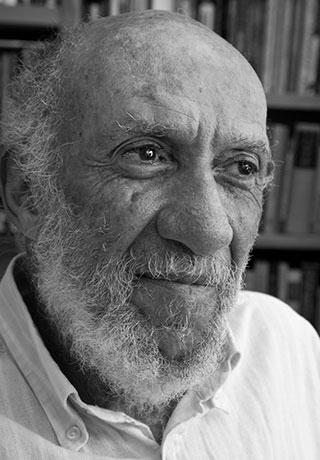

Professor Falk became an adviser to TFF when it was established in 1985.

Related Posts

The agreement is catastrophic both because of what it says and what it doesn’t mention. It reduces further the major asset of security policies: Freedom of action. Jan Oberg TFF director September 25, 2026 A couple of hours before the agreement was signed on September 22, 2026, I published the following 13 hypotheses about what it would most likely contain on TFF Substack (in English). I was wrong on only the first point. Contrary to what Trump had written on his Truth Social platform, it does not appear to come into force immediately. In fact, it turned out to be worse than even I had anticipated. After these hypotheses now come a number of reflections in light of what the agreement actually contains, and does not contain, as well as the way in which it has generally been presented by major media outlets and by the public-service broadcaster DR. My...
Below are TFF-related media mentions, comments, videos and social media posts published elsewhere but not on this homepage. We happen to catch and list only a fraction. Regarding video comments and debates, we recommend that you go to the TFF Video Channel on Substack where many of them are reproduced. Jan Oberg is a contributor to China Daily – 52 million daily clicks – and Global Times, CGTN and CCTV (the national television), China Investment, Xinhua News Agency and several others. Articles and videos on these media very often multiply into countless Chinese (and Western media) that re-post them from these main media. Thanks to The China Academy, his analyses, interviews and comments are frequently posted on YouTube channels such as Thinkers Forum and Wave Media. These videos are often re-posted on Bilibili (China’s YouTube), the China Content Center on TikTok, and on the Chinese edition of TikTok, Douyin.com. This means reaching hundreds of millions of viewers worldwide over a year. While there are too many to catch on all these...
Jan Oberg May 15, 2026 Go to this Fox News page and scroll the whole way down: President Donald Trump tells the world that his meeting with President Xi Jinping yielded a lot of very concrete political and economic results – of course, only where the Chinese side, according to him, agreed with him. He does not mention the Taiwan issue, but Secretary of State, Marco Rubio, says that it did not feature prominently in their talks and that the US policy on Taiwan has not changed. Then go to China Daily – or Global Times – and you will see that for the Chinese it is framework, principles, structure of cooperation etc. that matters – all embedded in the overall idea of “constructive bilateral relationship of strategic stability.” Nowhere is any concrete agreement or deal – all that Trump refers to – mentioned. At the general level, this gives you insights into the very different social...

Recent Articles

Tony Robinson October 4, 2026 Violence is easy to recognise when someone is being beaten, shot or killed. It becomes more difficult when nobody is holding a weapon. Poverty, discrimination, exploitation and repression can restrict a human life just as effectively, although they do so in very different ways and with very different consequences. Simply adding more categories to an ever-growing list of forms of violence does not really solve the problem. The more interesting question is what all these different situations have in common and why it makes sense to describe them using the same word. Human beings do not simply react to what happens around them. They remember the past, imagine things that do not yet exist, make plans and undertake projects. Workers organise because they imagine different working conditions; people migrate because they imagine another life somewhere else; social movements emerge because people refuse to accept the...
It’s a matter of principles, courage, vision and pulling together – while the militarist world is falling apart… Peter Langille October 3, 2026 “Here, then, is the problem which we present to you, stark and dreadful and inescapable: Shall we put an end to the human race; or shall mankind renounce war?”The Bertrand Russell—Albert Einstein Manifesto, July 9, 1955 ⁕ The forecast for what’s ahead is worrisome. The sharp rise in armed conflicts over the past three years is adding to what was already the highest level in over seventy years. Genocides, which should be prevented are supported. A shared climate emergency that jeopardises survival is ignored. Diverse polls now suggest that people are war-weary, worried and interested in a more effective United Nations. And, there are viable policy options for a more secure world! Yet governments are doubling-down, betting on more war and investing heavily. If current trends persist,...
Johan Galtung 1930-2024October 2015 Published here on October 3, 2026 Let us focus on Civilization for conflict analysis and remedies. Major forms of disorder use violence; war is state organized violence. The most belligerent states are the United States of America and Israel, both with civilization roots. National Evangelism, the US Protestant Christian civilization– more national than evangelical–justifies US warfare as exceptionalism of a people chosen by God, with a manifest destiny to run the world. Orthodox Judaism justifies Israeli warfare to conquer and expand from Nile to Euphrates as a religious right and duty to the Eternal One. The third most belligerent country, the UK, no longer believes it is God-chosen but chosen by the USA; not quite the same but something. But the root cause of global disorder lies in the Occident–with Islam–seeing itself as the single, universal civilization valid for all at all times, all others being...

TFF on Substack

Discover and subscribe to more peace materials on TFF Substack

Most Popular

Tony Robinson October 4, 2026 Violence is easy to recognise when someone is being beaten, shot or killed. It becomes more difficult when nobody is holding a weapon. Poverty, discrimination, exploitation and repression can restrict a human life just as effectively, although they do so in very different ways and with very different consequences. Simply adding more categories to an ever-growing list of forms of violence does not really solve the problem. The more interesting question is what all these different situations have in common and why it makes sense to describe them using the same word. Human beings do not simply react to what happens around them. They remember the past, imagine things that do not yet exist, make plans and undertake projects. Workers organise because they imagine different working conditions; people migrate because they imagine another life somewhere else; social movements emerge because people refuse to accept the...
It’s a matter of principles, courage, vision and pulling together – while the militarist world is falling apart… Peter Langille October 3, 2026 “Here, then, is the problem which we present to you, stark and dreadful and inescapable: Shall we put an end to the human race; or shall mankind renounce war?”The Bertrand Russell—Albert Einstein Manifesto, July 9, 1955 ⁕ The forecast for what’s ahead is worrisome. The sharp rise in armed conflicts over the past three years is adding to what was already the highest level in over seventy years. Genocides, which should be prevented are supported. A shared climate emergency that jeopardises survival is ignored. Diverse polls now suggest that people are war-weary, worried and interested in a more effective United Nations. And, there are viable policy options for a more secure world! Yet governments are doubling-down, betting on more war and investing heavily. If current trends persist,...
Johan Galtung 1930-2024October 2015 Published here on October 3, 2026 Let us focus on Civilization for conflict analysis and remedies. Major forms of disorder use violence; war is state organized violence. The most belligerent states are the United States of America and Israel, both with civilization roots. National Evangelism, the US Protestant Christian civilization– more national than evangelical–justifies US warfare as exceptionalism of a people chosen by God, with a manifest destiny to run the world. Orthodox Judaism justifies Israeli warfare to conquer and expand from Nile to Euphrates as a religious right and duty to the Eternal One. The third most belligerent country, the UK, no longer believes it is God-chosen but chosen by the USA; not quite the same but something. But the root cause of global disorder lies in the Occident–with Islam–seeing itself as the single, universal civilization valid for all at all times, all others being...
Read More
Living-Peace-Sign-Budapest-copy
Tony Robinson October 4, 2026 Violence is easy to recognise when someone is being beaten, shot or killed. It becomes more difficult when nobody is holding a weapon. Poverty, discrimination, exploitation and repression can restrict a human life just as effectively, although they do so in very different ways and with very different consequences. Simply adding more categories to an ever-growing list of forms of violence does not really solve the problem. The more interesting question is what all these different situations have in common and why it makes sense to describe them using the same word. Human beings do not simply react to what happens around them. They remember the past, imagine things that do not yet exist, make plans and undertake projects. Workers organise because they imagine different working conditions; people migrate because they imagine another life somewhere else; social movements emerge because people refuse to accept the...
b54a1f10-8c65-4f0b-9dd5-4abc0a7d04cc_2659x2659
It’s a matter of principles, courage, vision and pulling together – while the militarist world is falling apart… Peter Langille October 3, 2026 “Here, then, is the problem which we present to you, stark and dreadful and inescapable: Shall we put an end to the human race; or shall mankind renounce war?”The Bertrand Russell—Albert Einstein Manifesto, July 9, 1955 ⁕ The forecast for what’s ahead is worrisome. The sharp rise in armed conflicts over the past three years is adding to what was already the highest level in over seventy years. Genocides, which should be prevented are supported. A shared climate emergency that jeopardises survival is ignored. Diverse polls now suggest that people are war-weary, worried and interested in a more effective United Nations. And, there are viable policy options for a more secure world! Yet governments are doubling-down, betting on more war and investing heavily. If current trends persist,...
010
Johan Galtung 1930-2024October 2015 Published here on October 3, 2026 Let us focus on Civilization for conflict analysis and remedies. Major forms of disorder use violence; war is state organized violence. The most belligerent states are the United States of America and Israel, both with civilization roots. National Evangelism, the US Protestant Christian civilization– more national than evangelical–justifies US warfare as exceptionalism of a people chosen by God, with a manifest destiny to run the world. Orthodox Judaism justifies Israeli warfare to conquer and expand from Nile to Euphrates as a religious right and duty to the Eternal One. The third most belligerent country, the UK, no longer believes it is God-chosen but chosen by the USA; not quite the same but something. But the root cause of global disorder lies in the Occident–with Islam–seeing itself as the single, universal civilization valid for all at all times, all others being...
Screenshot 2026-10-02 011738
Jan ObergPhD, director, The Transnational Foundation for Peace and Future Research, TFFLund, Sweden October 2, 2026 This is my full original manuscript. The Chinese Academy of Social Science, CASS, makes two publications out if it. 1. China’s Five-year plan emphasized the capabilities of basic research and original innovation. It is regarded as the goal of the future social development, which, as required, should be significantly enhanced. Can you comment on the importance of original innovation in research and academic study? I believe it is easier to define “original innovation” in the natural sciences than in social sciences. The breaking points of what constitutes something new, or innovative, are not quite as sharp in the latter. But in both fields it is about opening up something that was closed, unseen, unexplored before – making manifest what was earlier latent. Innovations come in many forms and shapes – naming something that was not...
arctic-circle-map
The agreement is catastrophic both because of what it says and what it doesn’t mention. It reduces further the major asset of security policies: Freedom of action. Jan Oberg TFF director September 25, 2026 A couple of hours before the agreement was signed on September 22, 2026, I published the following 13 hypotheses about what it would most likely contain on TFF Substack (in English). I was wrong on only the first point. Contrary to what Trump had written on his Truth Social platform, it does not appear to come into force immediately. In fact, it turned out to be worse than even I had anticipated. After these hypotheses now come a number of reflections in light of what the agreement actually contains, and does not contain, as well as the way in which it has generally been presented by major media outlets and by the public-service broadcaster DR. My...
girl-5894831_1280
Below are TFF-related media mentions, comments, videos and social media posts published elsewhere but not on this homepage. We happen to catch and list only a fraction. Regarding video comments and debates, we recommend that you go to the TFF Video Channel on Substack where many of them are reproduced. Jan Oberg is a contributor to China Daily – 52 million daily clicks – and Global Times, CGTN and CCTV (the national television), China Investment, Xinhua News Agency and several others. Articles and videos on these media very often multiply into countless Chinese (and Western media) that re-post them from these main media. Thanks to The China Academy, his analyses, interviews and comments are frequently posted on YouTube channels such as Thinkers Forum and Wave Media. These videos are often re-posted on Bilibili (China’s YouTube), the China Content Center on TikTok, and on the Chinese edition of TikTok, Douyin.com. This means reaching hundreds of millions of viewers worldwide over a year. While there are too many to catch on all these...




