
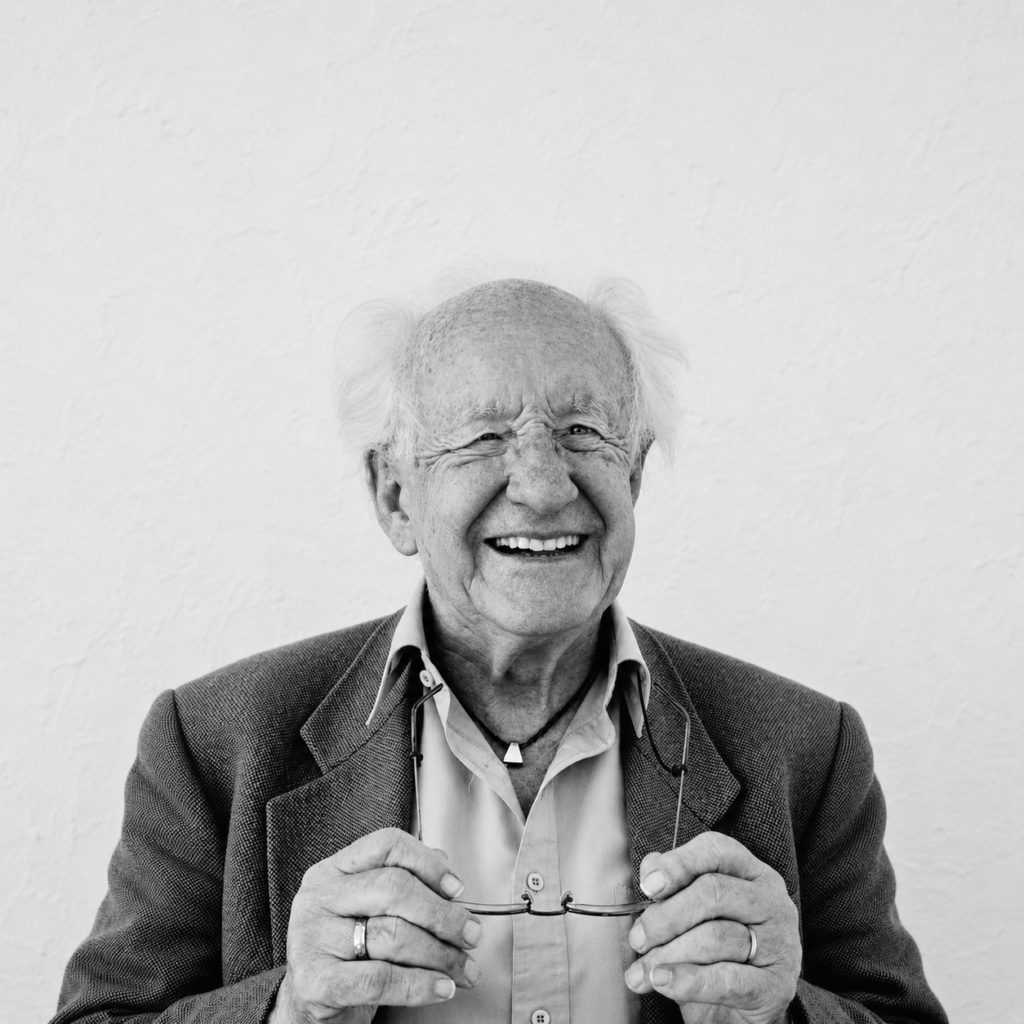
PressInfo #87 – The New Millennium – Do We Have the Courage of Optimism?

johangaltung

We are leaving behind a century with a horrible reputation. There have been many manifestations of occidental fundamentalist faith in truths that justify killing, repressing, exploiting and alienating millions, even billions: the colonialism/imperialism spearheaded by this country; genocidal hitlerism and stalinism; the blind forces of world, particularly american capitalism now even presenting itself as “globalization”; the (also occidental) islamic, counter-fundamentalism; and some similar practices in Japan and China. There has been an increasing litany of war and violence, some of it today even presented as “humanitarianism”.

There were shining lights. Two geniuses, Freud and Jung, penetrated the individual and collective human subconscious. A third genius, Gandhi, followed by King Jr and Mandela, explored the enormous potential of nonviolence. The first two, both Westerners, probed the roots of evil in the darkest recesses of the soul; the other three, none of them western whites, expanded the perimeters of the soulforce of ahimsa, nonviolence. Freud, Jung and Gandhi gave us the theory and practice to overcome the lament of St Paul: the evil I do not want to do I do–because I am driven by the subconscious!–and the good I want to do I leave undone–knowing nothing of nonviolence! Important insights for the International Year of Culture of Peace and Nonviolence!

Some centuries ago enlightened people came to a conclusion that ushered in a new era: the system of the past, feudalism, had to yield and eventually go. Feudalism blocked individual expression, the new economic forces that did not necessarily originate with Church and Nobility, and harbored an enormity of repression, exploitation and alienation. Slowly it yielded, but in our yin- yang world nothing is black or white: individualism begat egoism, enterprise begat jungle capitalism and democracy begat “one dollar one vote” electionism. The system suits the new upper classes by girth rather than birth, well protected by states ready to fight wars in their interest, and the corporate press with its new censorship of marketable minds. New problems demand new approaches, but no nostalgic return to feudalism.

Today we may come to a similar conclusion: there are two systems that have to yield and ultimately to go; statism as a dominant carrier of wars in the world system, and capitalism as a dominant producer of misery at the bottom of the world system. They are intimately linked to the preceding evil of feudalism. Some feudal lords, stripped of land and serfs, became the heads of armies, excellencies became the heads of foreign ministries, and the CEOs of major enterprises. They carried crazy ideas: what was good for them was also good for the people even when victims of the wars of conquest and exploitation; their peace was the best peace obtainable; world peace is the sum of negotiated deals among the lords; benefits will trickle down; that they were accountable both for and to the people. They usually turned out to be neither one nor the other.

They carried important, ugly baggage in their subconscious. They see each conflict as an opportunity for a new deal among the strong waging wars, running the UN and serving the dominant companies. In the concepts of “Great Power” and “Superpower”–at two, and particularly at one with no balance–feudalism and statism produced an offspring worthy of them both, with all the power and privilege of veto and monopoly of ultimate power.

Or so they think. The only remaining superpower may now have gone too far: Seattle was emblematic. Why were 100,000 in the streets, with some of the world’s best professionals backing them? Simply because the corporate press gives a wrong image, and “democratic” elections fail in voicing key problems.

Two systems to go, two alternative systems coming up: the two major forms of “neither State nor Capital” civil society.

First, an alternative territorial system: local authorities all over the world, maybe two million of them, cities, towns, villages – municipalities in general. They are diverse, in general accommodating all genders, generations, classes; sometimes also races and nations. They are mini-societies, do not have armies and are using economic and increasingly cultural power rather than military power. They can easily confederate into circles of cooperation. They are the alternative to the 200 states that have capitulated to international capital and “globalization” = americanization. They could increasingly take on the most important task of them all, neglected by the corporate world: guaranteeing subsistence for every body on earth, based on alternative technologies, local credit and money, cooperative rather than competitive economies.

Second, an alternative non-territorial system: NGOs, non- governmental organizations; well above 10,000 in numbers. They are less diverse being instruments of values and interests. They showed their immense power giving the world such instruments as the anti-personnel land mine treaty (Ottawa), the international criminal court (Rome) and the debt forgiveness instruments (Cologne). Governments still signs, but where non-governments manage to lead non-governments tend to follow. They can easily organize massive boycotts, of corporations (Deutsche Shell spoiling the North Sea), of countries (France testing nuclear arms). They take over, with the women, where the power of the working class in providing dignity is now waning.

A little glance at the media: the territorial answer to corrupt corporate media is the local bulletin in the shopping center, well researched; the non-territorial answer is already on the Internet. For sure democratic governments will only be too happy that the free word can still find an expression.

A glance at world politics: LAs and NGOs are indispensable components in a global, transnational, democracy. Only they can be the carriers of alternative, cooperative security. Only they can articulate the ways and means of sustainable development.

Two systems waning–but not yet. Two systems vexing: the process is already there. The waning may learn from them. We can all be active in all these complex processes. The purpose: basic needs, basic human rights, future and hope for us all.

A very concrete goal that covers much of what has been said above would be globalization of human rights. With the state waning in many corners of the world, having neither the moral nor the economic basis to be the guarantor of human rights, we should search for ways in which the focus on the local level and on the NGOs advocated above could be hitched to a UN reform for global governance and a focus on basic human needs and rights. The task of implementing the rights coming from the world central authority- -in the future some kind of World Parliament–could be gradually shifted from abusive states to local authorities and NGOs worthy of this important task.

The emerging GLOBAL CITIZEN has a right to expect:

  • that his/her opinion matters and has an impact;
  • that there is protection against major violence;
  • that efforts are made to provide livelihood for all; and
  • that he/she can feel at home culturally, spiritually.

More concretely, the expectations could be translated into increasingly concrete entitlements and duties, relative to a UN- based world central authority for soft global governance:

  • a global citizen is ENTITLED to free expression of how world society should be run, free assembly, and representation through free and secret ballot in something like a United Nations People’s Assembly; and the DUTY to participate in elections;
  • a global citizen is ENTITLED to protection against violence in the sense that all will be done to transform conflicts before they become violent, that violence is contained, that violence exercised by a world central authority will be minimal; and has the DUTY to serve in peace-keeping by peaceful means, military and/or civilian.
  • a global citizen is ENTITLED to livelihood through access to gainful employment with income sufficient to provide for the basic material needs; and the DUTY to pay global taxes;
  • a global citizen is ENTITLED to cultural identity based on old and new cultural material, with no right to impose his identity, but with a DUTY to show respect when engaging in dialogues with others about their identities.

This is all within the human rights tradition, but articulates human duties in addition. In the stato-cratic system they were taken for granted. The duty to VOTE for a world central authority assembly like a United Nations People’s Assembly, to SERVE in peacekeeping forces, to PAY global taxes and to RELATE to other cultures in a spirit of respect and curiosity would assume their place alongside the rights.

This is still for the future, but a less distant future than people believe. Thus, TNCs may one day wake up and discover that strong NGOs capable of organizing consumer strikes, have entered the global marketplace, taking the place of weak states, and all increasingly backed by world central authorities.

The sky is the limit! – if we have the courage to hope.

* This is the written version of a lecture given at the TRANSCEND – SGI-UK Joint Meeting, Taplow Court, England, 18 December 1999

TRANSCEND website: www.transcend.org
Related Posts

The agreement is catastrophic both because of what it says and what it doesn’t mention. It reduces further the major asset of security policies: Freedom of action. Jan Oberg TFF director September 25, 2026 A couple of hours before the agreement was signed on September 22, 2026, I published the following 13 hypotheses about what it would most likely contain on TFF Substack (in English). I was wrong on only the first point. Contrary to what Trump had written on his Truth Social platform, it does not appear to come into force immediately. In fact, it turned out to be worse than even I had anticipated. After these hypotheses now come a number of reflections in light of what the agreement actually contains, and does not contain, as well as the way in which it has generally been presented by major media outlets and by the public-service broadcaster DR. My...
Below are TFF-related media mentions, comments, videos and social media posts published elsewhere but not on this homepage. We happen to catch and list only a fraction. Regarding video comments and debates, we recommend that you go to the TFF Video Channel on Substack where many of them are reproduced. Jan Oberg is a contributor to China Daily – 52 million daily clicks – and Global Times, CGTN and CCTV (the national television), China Investment, Xinhua News Agency and several others. Articles and videos on these media very often multiply into countless Chinese (and Western media) that re-post them from these main media. Thanks to The China Academy, his analyses, interviews and comments are frequently posted on YouTube channels such as Thinkers Forum and Wave Media. These videos are often re-posted on Bilibili (China’s YouTube), the China Content Center on TikTok, and on the Chinese edition of TikTok, Douyin.com. This means reaching hundreds of millions of viewers worldwide over a year. While there are too many to catch on all these...
Jan Oberg May 15, 2026 Go to this Fox News page and scroll the whole way down: President Donald Trump tells the world that his meeting with President Xi Jinping yielded a lot of very concrete political and economic results – of course, only where the Chinese side, according to him, agreed with him. He does not mention the Taiwan issue, but Secretary of State, Marco Rubio, says that it did not feature prominently in their talks and that the US policy on Taiwan has not changed. Then go to China Daily – or Global Times – and you will see that for the Chinese it is framework, principles, structure of cooperation etc. that matters – all embedded in the overall idea of “constructive bilateral relationship of strategic stability.” Nowhere is any concrete agreement or deal – all that Trump refers to – mentioned. At the general level, this gives you insights into the very different social...

Recent Articles

Tony Robinson October 4, 2026 Violence is easy to recognise when someone is being beaten, shot or killed. It becomes more difficult when nobody is holding a weapon. Poverty, discrimination, exploitation and repression can restrict a human life just as effectively, although they do so in very different ways and with very different consequences. Simply adding more categories to an ever-growing list of forms of violence does not really solve the problem. The more interesting question is what all these different situations have in common and why it makes sense to describe them using the same word. Human beings do not simply react to what happens around them. They remember the past, imagine things that do not yet exist, make plans and undertake projects. Workers organise because they imagine different working conditions; people migrate because they imagine another life somewhere else; social movements emerge because people refuse to accept the...
It’s a matter of principles, courage, vision and pulling together – while the militarist world is falling apart… Peter Langille October 3, 2026 “Here, then, is the problem which we present to you, stark and dreadful and inescapable: Shall we put an end to the human race; or shall mankind renounce war?”The Bertrand Russell—Albert Einstein Manifesto, July 9, 1955 ⁕ The forecast for what’s ahead is worrisome. The sharp rise in armed conflicts over the past three years is adding to what was already the highest level in over seventy years. Genocides, which should be prevented are supported. A shared climate emergency that jeopardises survival is ignored. Diverse polls now suggest that people are war-weary, worried and interested in a more effective United Nations. And, there are viable policy options for a more secure world! Yet governments are doubling-down, betting on more war and investing heavily. If current trends persist,...
Johan Galtung 1930-2024October 2015 Published here on October 3, 2026 Let us focus on Civilization for conflict analysis and remedies. Major forms of disorder use violence; war is state organized violence. The most belligerent states are the United States of America and Israel, both with civilization roots. National Evangelism, the US Protestant Christian civilization– more national than evangelical–justifies US warfare as exceptionalism of a people chosen by God, with a manifest destiny to run the world. Orthodox Judaism justifies Israeli warfare to conquer and expand from Nile to Euphrates as a religious right and duty to the Eternal One. The third most belligerent country, the UK, no longer believes it is God-chosen but chosen by the USA; not quite the same but something. But the root cause of global disorder lies in the Occident–with Islam–seeing itself as the single, universal civilization valid for all at all times, all others being...

TFF on Substack

Discover and subscribe to more peace materials on TFF Substack

Most Popular

Tony Robinson October 4, 2026 Violence is easy to recognise when someone is being beaten, shot or killed. It becomes more difficult when nobody is holding a weapon. Poverty, discrimination, exploitation and repression can restrict a human life just as effectively, although they do so in very different ways and with very different consequences. Simply adding more categories to an ever-growing list of forms of violence does not really solve the problem. The more interesting question is what all these different situations have in common and why it makes sense to describe them using the same word. Human beings do not simply react to what happens around them. They remember the past, imagine things that do not yet exist, make plans and undertake projects. Workers organise because they imagine different working conditions; people migrate because they imagine another life somewhere else; social movements emerge because people refuse to accept the...
It’s a matter of principles, courage, vision and pulling together – while the militarist world is falling apart… Peter Langille October 3, 2026 “Here, then, is the problem which we present to you, stark and dreadful and inescapable: Shall we put an end to the human race; or shall mankind renounce war?”The Bertrand Russell—Albert Einstein Manifesto, July 9, 1955 ⁕ The forecast for what’s ahead is worrisome. The sharp rise in armed conflicts over the past three years is adding to what was already the highest level in over seventy years. Genocides, which should be prevented are supported. A shared climate emergency that jeopardises survival is ignored. Diverse polls now suggest that people are war-weary, worried and interested in a more effective United Nations. And, there are viable policy options for a more secure world! Yet governments are doubling-down, betting on more war and investing heavily. If current trends persist,...
Johan Galtung 1930-2024October 2015 Published here on October 3, 2026 Let us focus on Civilization for conflict analysis and remedies. Major forms of disorder use violence; war is state organized violence. The most belligerent states are the United States of America and Israel, both with civilization roots. National Evangelism, the US Protestant Christian civilization– more national than evangelical–justifies US warfare as exceptionalism of a people chosen by God, with a manifest destiny to run the world. Orthodox Judaism justifies Israeli warfare to conquer and expand from Nile to Euphrates as a religious right and duty to the Eternal One. The third most belligerent country, the UK, no longer believes it is God-chosen but chosen by the USA; not quite the same but something. But the root cause of global disorder lies in the Occident–with Islam–seeing itself as the single, universal civilization valid for all at all times, all others being...
Read More
Living-Peace-Sign-Budapest-copy
Tony Robinson October 4, 2026 Violence is easy to recognise when someone is being beaten, shot or killed. It becomes more difficult when nobody is holding a weapon. Poverty, discrimination, exploitation and repression can restrict a human life just as effectively, although they do so in very different ways and with very different consequences. Simply adding more categories to an ever-growing list of forms of violence does not really solve the problem. The more interesting question is what all these different situations have in common and why it makes sense to describe them using the same word. Human beings do not simply react to what happens around them. They remember the past, imagine things that do not yet exist, make plans and undertake projects. Workers organise because they imagine different working conditions; people migrate because they imagine another life somewhere else; social movements emerge because people refuse to accept the...
b54a1f10-8c65-4f0b-9dd5-4abc0a7d04cc_2659x2659
It’s a matter of principles, courage, vision and pulling together – while the militarist world is falling apart… Peter Langille October 3, 2026 “Here, then, is the problem which we present to you, stark and dreadful and inescapable: Shall we put an end to the human race; or shall mankind renounce war?”The Bertrand Russell—Albert Einstein Manifesto, July 9, 1955 ⁕ The forecast for what’s ahead is worrisome. The sharp rise in armed conflicts over the past three years is adding to what was already the highest level in over seventy years. Genocides, which should be prevented are supported. A shared climate emergency that jeopardises survival is ignored. Diverse polls now suggest that people are war-weary, worried and interested in a more effective United Nations. And, there are viable policy options for a more secure world! Yet governments are doubling-down, betting on more war and investing heavily. If current trends persist,...
010
Johan Galtung 1930-2024October 2015 Published here on October 3, 2026 Let us focus on Civilization for conflict analysis and remedies. Major forms of disorder use violence; war is state organized violence. The most belligerent states are the United States of America and Israel, both with civilization roots. National Evangelism, the US Protestant Christian civilization– more national than evangelical–justifies US warfare as exceptionalism of a people chosen by God, with a manifest destiny to run the world. Orthodox Judaism justifies Israeli warfare to conquer and expand from Nile to Euphrates as a religious right and duty to the Eternal One. The third most belligerent country, the UK, no longer believes it is God-chosen but chosen by the USA; not quite the same but something. But the root cause of global disorder lies in the Occident–with Islam–seeing itself as the single, universal civilization valid for all at all times, all others being...
Screenshot 2026-10-02 011738
Jan ObergPhD, director, The Transnational Foundation for Peace and Future Research, TFFLund, Sweden October 2, 2026 This is my full original manuscript. The Chinese Academy of Social Science, CASS, makes two publications out if it. 1. China’s Five-year plan emphasized the capabilities of basic research and original innovation. It is regarded as the goal of the future social development, which, as required, should be significantly enhanced. Can you comment on the importance of original innovation in research and academic study? I believe it is easier to define “original innovation” in the natural sciences than in social sciences. The breaking points of what constitutes something new, or innovative, are not quite as sharp in the latter. But in both fields it is about opening up something that was closed, unseen, unexplored before – making manifest what was earlier latent. Innovations come in many forms and shapes – naming something that was not...
arctic-circle-map
The agreement is catastrophic both because of what it says and what it doesn’t mention. It reduces further the major asset of security policies: Freedom of action. Jan Oberg TFF director September 25, 2026 A couple of hours before the agreement was signed on September 22, 2026, I published the following 13 hypotheses about what it would most likely contain on TFF Substack (in English). I was wrong on only the first point. Contrary to what Trump had written on his Truth Social platform, it does not appear to come into force immediately. In fact, it turned out to be worse than even I had anticipated. After these hypotheses now come a number of reflections in light of what the agreement actually contains, and does not contain, as well as the way in which it has generally been presented by major media outlets and by the public-service broadcaster DR. My...
girl-5894831_1280
Below are TFF-related media mentions, comments, videos and social media posts published elsewhere but not on this homepage. We happen to catch and list only a fraction. Regarding video comments and debates, we recommend that you go to the TFF Video Channel on Substack where many of them are reproduced. Jan Oberg is a contributor to China Daily – 52 million daily clicks – and Global Times, CGTN and CCTV (the national television), China Investment, Xinhua News Agency and several others. Articles and videos on these media very often multiply into countless Chinese (and Western media) that re-post them from these main media. Thanks to The China Academy, his analyses, interviews and comments are frequently posted on YouTube channels such as Thinkers Forum and Wave Media. These videos are often re-posted on Bilibili (China’s YouTube), the China Content Center on TikTok, and on the Chinese edition of TikTok, Douyin.com. This means reaching hundreds of millions of viewers worldwide over a year. While there are too many to catch on all these...





