
Global Falsehoods: How the World Bank and the UNDP Distort the Figures on Global Poverty

Until the 1998 financial meltdown (“black September” 1998), the World economy was said to be booming under the impetus of the “free market” reforms.

Without debate or discussion, so-called “sound macro-economic policies” (meaning the gamut of budgetary austerity, deregulation, downsizing and privatisation) continue to be heralded as the key to economic success and poverty alleviation. In turn, both the World Bank and the United Nations Development Programme (UNDP) have asserted authoritatively that economic growth in the late 20th Century has contributed to a reduction in the levels of World poverty. According to the UNDP, “the progress in reducing poverty over the 20th century is remarkable and unprecedented… The key indicators of human development have advanced strongly.”

The Devastating Impacts of Macro-economic Reform are casually denied
The increasing levels of global poverty resulting from macro-economic reform are casually denied by G7 governments and international institutions (including the World Bank and the IMF); social realities are concealed, official statistics are manipulated, economic concepts are turned upside down.

The World Bank Methodology: Defining Poverty at a “Dollar a Day”
The World Bank framework deliberately departs from all established concepts and procedures (eg. by the US Bureau of Census or the United Nations) for measuring poverty. It consists in arbitrarily setting a “poverty threshold” at one dollar a day per capita. It then proceeds (without even measuring) to deciding that population groups with a per capita income “above one dollar a day” are “non-poor”.

The World Bank “methodology” conveniently reduces recorded poverty without the need for collecting country-level data. This “subjective” and biased assessment is carried out irrespective of actual conditions at the country level. The one dollar a day procedure is absurd: the evidence amply confirms that population groups with per capita incomes of 2, 3 or even 5 dollars a day remain poverty stricken (ie. unable to meet basic expenditures of food, clothing, shelter, health and education).

Arithmetic Manipulation
Once the one dollar a day poverty threshold has been set (and “plugged into the computer”), the estimation of national and global poverty levels becomes an arithmetical exercise. Poverty indicators are computed in a mechanical fashion from the initial one dollar a day assumption.

“Authoritative” World Bank Numbers
These authoritative World Bank numbers are those which everybody quotes, –ie. 1.3 billion people below the poverty line. But nobody seems to have bothered to examine how the World Bank arrives at these figures.

The data is then tabulated in glossy tables with “forecasts” of declining levels of global poverty into the 21st Century. These World Bank “forecasts” of poverty are based on an assumed rate of growth of per capita income, –ie. growth of the latter implies pari passu a corresponding lowering of the levels of poverty. Its a numerical game!

World Bank “Forecasts”: Poverty in China will decline to 2.9 percent
by the Year 2000
According to the World Bank’s “simulations”, the incidence of poverty in China is to decline from 20 percent in 1985 to 2.9 percent by the year 2000. Similarly, poverty levels in India (where according to official data more than 80 percent of the population (1996) have per capita incomes below one dollar a day), the World Bank’s “simulation” (which contradicts its own “one dollar a day” methodology) indicates a lowering of poverty levels from 55 percent in 1985 to 25 percent in the year 2000. 

The whole framework (stemming from the one dollar a day assumption) is tautological; it is totally removed from an examination of real life situations. No need to analyse household expenditures on food, shelter and social services; no need to observe concrete conditions in impoverished villages or urban slums. In the World Bank framework, the “estimation” of poverty indicators has become numerical exercise.

The UNDP Framework
While the UNDP Human Development Group has in previous years provided the international community with a critical assessment of key issues of global development, the 1997 Human Development Report devoted to the eradication of poverty broadly conveys a similar viewpoint to that heralded by the Bretton Woods institutions. The UNDP’s “human poverty index” (HPI) is based on “the most basic dimensions of deprivation: a short life span, lack of basic education and lack of access to public and private resources”. 

Based on the above criteria, the UNDP Human Development Group comes up with estimates of human poverty which are totally inconsistent with country-level realties. The HPI for Colombia, Mexico or Thailand, for instance, is of order of 10-11 percent (see Table 1). The UNDP measurements point to “achievements” in poverty reduction in Sub-Saharan Africa, the Middle East and India which are totally at odds with country-level data.

The human poverty estimates put forth by the UNDP portray an even more distorted and misleading pattern than those of the World Bank). For instance, only 10.9 percent of Mexico’s population are categorised by the UNDP as “poor”. Yet this estimate contradicts the situation observed in Mexico since the mid-1980s: collapse in social services, impoverishment of small farmers and the massive decline in real earnings triggered by successive currency devaluations. A recent OECD study confirms unequivocally the mounting tide of poverty in Mexico since the signing of the North American Free Trade Agreement (NAFTA).

Double Standards in the “Scientific” Measurement of Poverty
“Double standards” prevail in the measurement of poverty: the World Bank’s one dollar a day criterion applies only to the “developing countries”. Both the Bank and the UNDP fail to acknowledge the existence of poverty in Western Europe and North America. Moreover, the one dollar a day criterion is in overt contradiction with established methodologies used by Western governments and intergovernmental organisations to define and measure poverty in the “developed countries”.

In the West, the methods for measuring poverty have been based on minimum levels of household spending required to meet essential expenditures on food, clothing, shelter, health and education. In the United States, for instance, the Social Security Administration (SSA) in the 1960s had set a “poverty threshold”which consisted of “the cost of a minimum adequate diet multiplied by three to allow for other expenses”. This measurement was based on a broad consensus within the US Administration.

The US Poverty Threshold
The US “poverty threshold” for a family of four (two adults and two children) in 1996 was of the order of $16,036. This figure translates into a per capita income of eleven dollars a day (compared to the one dollar a day criterion of the World Bank used for developing countries). In 1996, 13.1 percent of the US population and 19.6 percent of the population in central cities of metropolitan areas were below the poverty threshold.

According to the UNDP Poverty in Mexico is lower than in the United States
Neither the UNDP nor the World Bank undertake comparisons in poverty levels between “developed” and “developing” countries. Comparisons of this nature would no doubt be the source of “scientific embarrassment” –ie. the poverty indicators presented by both organisations for Third World countries are in some cases of the same order of magnitude as (or even below) the official poverty levels in the US, Canada and the European Union. In Canada, heralded by the World community as “a promised land”, occupying the first rank among all nations according to the same 1997 Human Development Report, 17.4 percent of the population are below the (official) poverty threshold compared to 10.9 percent for Mexico and 4.1 percent for Trinidad and Tobago.

Conversely, if the US Bureau of Census methodology (based on the cost of meeting a minimum diet) were applied to the developing countries, the overwhelming majority of the population would be categorised as “poor”. While this exercise of using “Western standards” and definitions has not been applied in a systematic fashion, it should be noted that with the deregulation of commodity markets, retail prices of essential consumer goods are not appreciably lower than in the US or Western Europe. The cost of living in many Third World cities is higher than in the United States.

Moreover, household budget surveys for several Latin American countries suggest that at least sixty percent of the population the region does not meet minimum calorie and protein requirements. In Peru, for instance, following the 1990 IMF sponsored “Fujishock”, 83 percent of the Peruvian population according to household census data were unable to meet minimum daily calorie and protein requirements. The prevailing situation in Sub-Saharan Africa and South Asia is more serious where a majority of the population suffer from chronic undernourishment.

The investigation on poverty by both organisations take official statistics at face value. It is largely an “office based exercise” conducted in Washington and New York with few insights or awareness of “what is happening in the field”. The 1997 UNDP Report points to a decline of one third to a half in child mortality in selected countries of Sub-Saharan despite the slide in State expenditures and income levels. What it fails to mention, however, is that the closing down of health clinics and the massive lay-offs of health professionals (often replaced by semi-illiterate health volunteers) responsible for compiling mortality data has resulted in a de facto decline in recorded mortality. The IMF-World Bank sponsored macro-economic reforms have also led to a collapse in the process of data collection.

Vindicating the “Free” Market System
These are the realities which are concealed by the World Bank and UNDP poverty studies. The poverty indicators blatantly misrepresent country level situations as well as the seriousness of global poverty. They serve the purpose of portraying the poor as a minority group representing some 20 percent of World population (1.3 billion people).

Declining levels of poverty including forecasts of future trends are derived with a view to vindicating the “free market” policies and upholding the “Washington Consensus” on macro-economic reform. The “free market” system is presented as the “solution”, namely as an instrument of poverty alleviation. The impacts of macro-economic reform are denied. Both institutions point to the benefits of the technological revolution and the contribution of foreign investment and trade liberalisation to the eradication of poverty.

Table 1
THE UNDP’S HUMAN POVERTY INDEX

Selected Developing CountriesCountry Poverty Level
(percent of the population below
the poverty line)
Trinidad and Tobago4.1
Mexico10.9
Thailand11.7
Colombia10.7
Philippines17.7
Jordan10.9
Nicaragua27.2
Jamaica12.1
Iraq30.7
Rwanda37.9
Papua New Guinea32.0
Nigeria41.6
Zimbabwe17.3

Source: Human Development Report 1997, table 1.1, p. 21

Table 2

POVERTY IN SELECTED G7 COUNTRIES, BY NATIONAL STANDARDS

CountriesCountry Poverty Level
(percent of the population below
the poverty line)
United States (1996)*13.7
Canada (1995)**17.8
United Kingdom (1993)***20.0
Italy (1993)***17.0
Germany (1993)***13.0
France (1993)***17.0

Source:
*US Bureau of Census,

** Centre for International Statistics, Canadian Council on Social Development
***European Information Service.

FOOTNOTES

1. United Nations Development Programme, Human Development Report, 1997, New York, 1997, p. 2.)

2. For a methodological review on the measurement of poverty see Jan Drewnowski, The Level of living Index, United Nations Institute for Social Research and Development (UNRISD), Geneva, 1965. See also the extensive research on poverty thresholds conducted by the US Bureau of the Census.

3. See World Bank, World Development Report, 1990, Washington DC, 1990.

4. See World Development Report, 1997, table 9.2, chapter 9.

5. Ibid., chapter 9, table 9.2.

6. Ibid., p. 5.

7. See Clement Trudel, Le Mexique subit le choc de

l’internationalisation, Le Devoir, Montreal, 28 March 1998, p.A4.

8. See US Bureau of the Census, Current Population Reports, Series P60-198, Poverty in the United States: 1996, Washington, 1997.

9. US Bureau of the Census, Poverty in the United States: 1996, Washington, 1997, p. 7.

10. According to the official definition of Statistics Canada (1995). For country ranks based on the UNDP’s Human Development index, see Table 6, Human Development Report, 1997, p. 161

11. See Michel Chossudovsky, El Ajuste Economico: El Peru Bajo el Dominio del FMI, Mosca Azul Editores, Lima, 1992, p. 83.
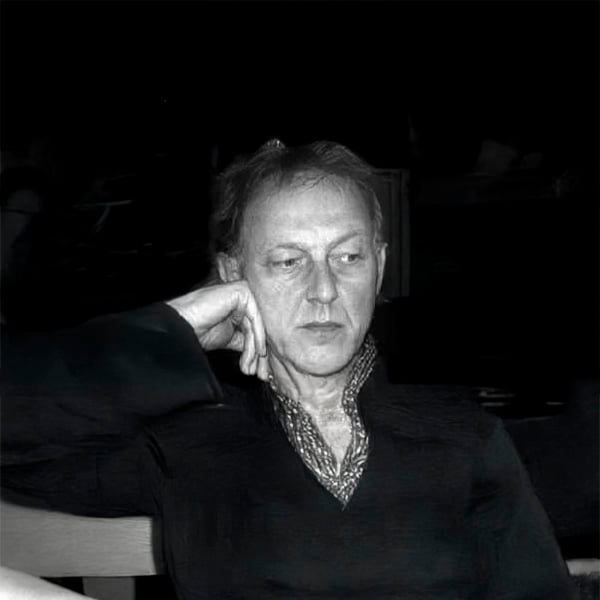

Professor Chossudovsky joined TFF as adviser in 1999.

Related Posts

LONDON – So far so good, at least on the wider level. While internally Iraq seems on the edge of chaos, the much heralded clash of civilizations between the Muslim and Judaeo-Christian worlds has yet to become apparent. We have anger and despair aplenty in the Arab and Muslim worlds. But very little rushing to the standard and there was no great pilgrimage of warriors to join the fight, as happened when the Soviet Union invaded Afghanistan twenty years ago, and then, having driven the Red Army out, were left to ferment in that mountainous redoubt. With the armaments supplied by the CIA the mujahidin were transformed into Al Qaeda that became, for a relatively brief moment as these things go, ‘the greatest threat to the homeland that America has ever known.’ Nevertheless a ‘Cold War’ between much of the Muslim world and the West is certainly in full swing. Winston...
The Challenge of Nuclear Weaponsin the Twenty-first CenturyA Path Forward The peoples and governments of the world face an urgent challenge relating to weaponry of mass destruction and particularly to nuclear weaponry.  At the crossroads of technology, terrorism, geopolitical ambition, and policies of preemption are new and potent dangers for humanity. Despite ending the nuclear standoff of the Cold War era, nuclear weaponry is again menacing the peoples of the world with catastrophic possibilities.  We recognize the need for any government to pursue its security interests in accordance with international law; and further, we recognize that distinctive threats to these interests now exist as a result of an active international terrorist network having declared war on the United States and its allies. Nonetheless, we reject the assessment of the current US administration that upgrading a reliance on nuclear weapons is in any sense justified as a response. We find it...
By Karin Wegestal MP, the Social Democratic Partyon behalf of the Swedish Committee for Solidarity with the Yugoslav People During the last decade, the Federal Republic of Yugoslavia has received more than 500,000 refugees from Croatia and Bosnia, and another 300,000 internally displaced persons, mainly from the province Kosovo and Metohia. For a country with about ten million inhabitants, such an influx of homeless people is obviously a very heavy burden – even under peaceful conditions. But in addition to that, the Federal Republic of Yugoslavia has been the subject to sanctions from the western powers for close to ten years and its infrastructure was badly hurt through Nato’s intense bombardment during 78 days in 1999. The result of all this is that Yugoslavia, once the most developed industrial country in Eastern Europe, is today the poorest country in Europe. In Serbia excluding Kosovo, with about ten million inhabitants and...

Recent Articles

Tony Robinson October 4, 2026 Violence is easy to recognise when someone is being beaten, shot or killed. It becomes more difficult when nobody is holding a weapon. Poverty, discrimination, exploitation and repression can restrict a human life just as effectively, although they do so in very different ways and with very different consequences. Simply adding more categories to an ever-growing list of forms of violence does not really solve the problem. The more interesting question is what all these different situations have in common and why it makes sense to describe them using the same word. Human beings do not simply react to what happens around them. They remember the past, imagine things that do not yet exist, make plans and undertake projects. Workers organise because they imagine different working conditions; people migrate because they imagine another life somewhere else; social movements emerge because people refuse to accept the...
It’s a matter of principles, courage, vision and pulling together – while the militarist world is falling apart… Peter Langille October 3, 2026 “Here, then, is the problem which we present to you, stark and dreadful and inescapable: Shall we put an end to the human race; or shall mankind renounce war?”The Bertrand Russell—Albert Einstein Manifesto, July 9, 1955 ⁕ The forecast for what’s ahead is worrisome. The sharp rise in armed conflicts over the past three years is adding to what was already the highest level in over seventy years. Genocides, which should be prevented are supported. A shared climate emergency that jeopardises survival is ignored. Diverse polls now suggest that people are war-weary, worried and interested in a more effective United Nations. And, there are viable policy options for a more secure world! Yet governments are doubling-down, betting on more war and investing heavily. If current trends persist,...
Johan Galtung 1930-2024October 2015 Published here on October 3, 2026 Let us focus on Civilization for conflict analysis and remedies. Major forms of disorder use violence; war is state organized violence. The most belligerent states are the United States of America and Israel, both with civilization roots. National Evangelism, the US Protestant Christian civilization– more national than evangelical–justifies US warfare as exceptionalism of a people chosen by God, with a manifest destiny to run the world. Orthodox Judaism justifies Israeli warfare to conquer and expand from Nile to Euphrates as a religious right and duty to the Eternal One. The third most belligerent country, the UK, no longer believes it is God-chosen but chosen by the USA; not quite the same but something. But the root cause of global disorder lies in the Occident–with Islam–seeing itself as the single, universal civilization valid for all at all times, all others being...

TFF on Substack

Discover and subscribe to more peace materials on TFF Substack

Most Popular

Tony Robinson October 4, 2026 Violence is easy to recognise when someone is being beaten, shot or killed. It becomes more difficult when nobody is holding a weapon. Poverty, discrimination, exploitation and repression can restrict a human life just as effectively, although they do so in very different ways and with very different consequences. Simply adding more categories to an ever-growing list of forms of violence does not really solve the problem. The more interesting question is what all these different situations have in common and why it makes sense to describe them using the same word. Human beings do not simply react to what happens around them. They remember the past, imagine things that do not yet exist, make plans and undertake projects. Workers organise because they imagine different working conditions; people migrate because they imagine another life somewhere else; social movements emerge because people refuse to accept the...
It’s a matter of principles, courage, vision and pulling together – while the militarist world is falling apart… Peter Langille October 3, 2026 “Here, then, is the problem which we present to you, stark and dreadful and inescapable: Shall we put an end to the human race; or shall mankind renounce war?”The Bertrand Russell—Albert Einstein Manifesto, July 9, 1955 ⁕ The forecast for what’s ahead is worrisome. The sharp rise in armed conflicts over the past three years is adding to what was already the highest level in over seventy years. Genocides, which should be prevented are supported. A shared climate emergency that jeopardises survival is ignored. Diverse polls now suggest that people are war-weary, worried and interested in a more effective United Nations. And, there are viable policy options for a more secure world! Yet governments are doubling-down, betting on more war and investing heavily. If current trends persist,...
Johan Galtung 1930-2024October 2015 Published here on October 3, 2026 Let us focus on Civilization for conflict analysis and remedies. Major forms of disorder use violence; war is state organized violence. The most belligerent states are the United States of America and Israel, both with civilization roots. National Evangelism, the US Protestant Christian civilization– more national than evangelical–justifies US warfare as exceptionalism of a people chosen by God, with a manifest destiny to run the world. Orthodox Judaism justifies Israeli warfare to conquer and expand from Nile to Euphrates as a religious right and duty to the Eternal One. The third most belligerent country, the UK, no longer believes it is God-chosen but chosen by the USA; not quite the same but something. But the root cause of global disorder lies in the Occident–with Islam–seeing itself as the single, universal civilization valid for all at all times, all others being...
Read More
Living-Peace-Sign-Budapest-copy
Tony Robinson October 4, 2026 Violence is easy to recognise when someone is being beaten, shot or killed. It becomes more difficult when nobody is holding a weapon. Poverty, discrimination, exploitation and repression can restrict a human life just as effectively, although they do so in very different ways and with very different consequences. Simply adding more categories to an ever-growing list of forms of violence does not really solve the problem. The more interesting question is what all these different situations have in common and why it makes sense to describe them using the same word. Human beings do not simply react to what happens around them. They remember the past, imagine things that do not yet exist, make plans and undertake projects. Workers organise because they imagine different working conditions; people migrate because they imagine another life somewhere else; social movements emerge because people refuse to accept the...
b54a1f10-8c65-4f0b-9dd5-4abc0a7d04cc_2659x2659
It’s a matter of principles, courage, vision and pulling together – while the militarist world is falling apart… Peter Langille October 3, 2026 “Here, then, is the problem which we present to you, stark and dreadful and inescapable: Shall we put an end to the human race; or shall mankind renounce war?”The Bertrand Russell—Albert Einstein Manifesto, July 9, 1955 ⁕ The forecast for what’s ahead is worrisome. The sharp rise in armed conflicts over the past three years is adding to what was already the highest level in over seventy years. Genocides, which should be prevented are supported. A shared climate emergency that jeopardises survival is ignored. Diverse polls now suggest that people are war-weary, worried and interested in a more effective United Nations. And, there are viable policy options for a more secure world! Yet governments are doubling-down, betting on more war and investing heavily. If current trends persist,...
010
Johan Galtung 1930-2024October 2015 Published here on October 3, 2026 Let us focus on Civilization for conflict analysis and remedies. Major forms of disorder use violence; war is state organized violence. The most belligerent states are the United States of America and Israel, both with civilization roots. National Evangelism, the US Protestant Christian civilization– more national than evangelical–justifies US warfare as exceptionalism of a people chosen by God, with a manifest destiny to run the world. Orthodox Judaism justifies Israeli warfare to conquer and expand from Nile to Euphrates as a religious right and duty to the Eternal One. The third most belligerent country, the UK, no longer believes it is God-chosen but chosen by the USA; not quite the same but something. But the root cause of global disorder lies in the Occident–with Islam–seeing itself as the single, universal civilization valid for all at all times, all others being...
Screenshot 2026-10-02 011738
Jan ObergPhD, director, The Transnational Foundation for Peace and Future Research, TFFLund, Sweden October 2, 2026 This is my full original manuscript. The Chinese Academy of Social Science, CASS, makes two publications out if it. 1. China’s Five-year plan emphasized the capabilities of basic research and original innovation. It is regarded as the goal of the future social development, which, as required, should be significantly enhanced. Can you comment on the importance of original innovation in research and academic study? I believe it is easier to define “original innovation” in the natural sciences than in social sciences. The breaking points of what constitutes something new, or innovative, are not quite as sharp in the latter. But in both fields it is about opening up something that was closed, unseen, unexplored before – making manifest what was earlier latent. Innovations come in many forms and shapes – naming something that was not...
arctic-circle-map
The agreement is catastrophic both because of what it says and what it doesn’t mention. It reduces further the major asset of security policies: Freedom of action. Jan Oberg TFF director September 25, 2026 A couple of hours before the agreement was signed on September 22, 2026, I published the following 13 hypotheses about what it would most likely contain on TFF Substack (in English). I was wrong on only the first point. Contrary to what Trump had written on his Truth Social platform, it does not appear to come into force immediately. In fact, it turned out to be worse than even I had anticipated. After these hypotheses now come a number of reflections in light of what the agreement actually contains, and does not contain, as well as the way in which it has generally been presented by major media outlets and by the public-service broadcaster DR. My...
girl-5894831_1280
Below are TFF-related media mentions, comments, videos and social media posts published elsewhere but not on this homepage. We happen to catch and list only a fraction. Regarding video comments and debates, we recommend that you go to the TFF Video Channel on Substack where many of them are reproduced. Jan Oberg is a contributor to China Daily – 52 million daily clicks – and Global Times, CGTN and CCTV (the national television), China Investment, Xinhua News Agency and several others. Articles and videos on these media very often multiply into countless Chinese (and Western media) that re-post them from these main media. Thanks to The China Academy, his analyses, interviews and comments are frequently posted on YouTube channels such as Thinkers Forum and Wave Media. These videos are often re-posted on Bilibili (China’s YouTube), the China Content Center on TikTok, and on the Chinese edition of TikTok, Douyin.com. This means reaching hundreds of millions of viewers worldwide over a year. While there are too many to catch on all these...




