
“62% av de unga i Bosnien skullevilja lämna sitt landom de bara kunde.”

Emina Babovic från människorättsorganisationen Medborgarforum i bosniska Tuzla, är uppgiven. “Alla vill ge sig av från Bosnien. Ingen ser någon framtid där.”

Kriget i Bosnien upphörde med Daytonavtalet 1995. Tio år senare råder en bräcklig fred. Krigsekonomin har inte ersatts av en fredsekonomi. Folk med bakgrund i paramilitära banditband och krigsprofitörer behärskar en maffiaekonomi, med förgreningar in i den politiska makten.

“Vem vann krigen på Balkan? Dayton och konsekvenserna för världsordningen” var titeln för en tvådagarskonferens i dagarna med ett 30-tal deltagare, arrangerad av Göteborgs universitet.* * *

Dayton gjorde lite eller inget för att läka och lindra de interna konflikter som låg till grund för kriget. Bosniens uppdelning i två eller rentav tre enheter har inte lett till en gynnsam fredsprocess och det stärkande av ekonomin som skulle kunna ha varit motorn i fredsbyggandet. Den bosniska civilbefolkningen far illa. Maffian i Bosnien omsätter lika mycket som statsbudgeten. Landets styrs som ett protektorat. Det internationella samfundet utser ett slags överordnad president, Den Höge Representanten, med stor personlig makt, Carl Bildt var den förste på posten. Nu regerar britten Lord Paddy Ashdown – allsmäktigt och i vissa avseenden “laglöst”.

Daytonavtalet skapade en monsterstat, menade någon. Juristen Frank Orton, mellan 2000 och 2004, JO i Sarajevo instämde.

– Det är djupt olyckligt att Dayton bygger på konstituerande folk. Och att Den Höge Representanten predikar lagen för bosnierna, samtidigt som han inte är så bra på att följa den själv och avskedar folk utan rättegång och rätt att överklaga.

I förra veckan sparkade han en av de tre som delar presidentposten, kroaten Dragan Covic.

– Bristande respekt för minoriteter och diskriminering skapar ett slags “mjuk” etnisk rensning i ex-Jugoslavien. Utbildningen har blivit nationalistisk med tre olika läroplaner, med olika tolkningar av det förflutna, av det kulturella arvet och utan “erfarenhet av de andra”, det som så djupgående kännetecknade Jugoslavien.

Srdjan Dizdarevic är pessimistisk. Han är ordförande i Helsingforskommittén i Bosnien-Hercegovina.

Bosniens ekonomi motsvarar 45 procent av förkrigsekonomin. Halva befolkningen är fattig och en sjättedel lever under fattigdomsgränsen.

Femton procent av alla har tjänat på kriget. Alla övriga är förlorare.* * *

Ljubisa Rajic, professor i skandinavistik vid universitetet i Belgrad, talar om ekonomin, där privatiseringar varit påbjudet.

– Det har ofta betytt att krigsprofitörerna köper upp industrin. Svarta pengar tvättas. Snart får jag antagligen söka stipendier från “Arkans minnesfond”.

(Arkan eller Zeljko Raznatovic var ledare för en serbisk paramilitär grupp, Arkans tigrar. Han hade ett kriminellt förflutet i bl a Sverige och mördades för fem år sedan i en hotellfoajé i Belgrad i en maffiauppgörelse.)

– Vad alla längtar efter är en politiker som Per Albin Hansson, någon som kan ge de jugoslaviska folken arbete, bostäder och social trygghet.

– Är enda lösningen att återuppfinna Jugoslavien?, undrade freds- och konfliktprofessorn Björn Hettne med glimten i ögat.

USAs roll i den process som ledde till Daytonavtalet diskuterades livligt. Hur många minns i dag att den neokonservatiove politikern Richard Perle, en av arkitekterna bakom Irakkriget, deltog i den bosniska delegationen under Daytonförhandlingarna?

Två förhållningssätt står mot varandra, sa Björn Hettne, det europeiska och det amerikanska.

– I USA är det en utbredd uppfattning att man har rätt att använda våld för att tvinga folk till frihet.* * *

Jens Sörensen, doktorand vid universitetet i Florens, diskuterade ekonomin och särskilt Kosovo.

– Daytonavtalet skapade vapenvila i Bosnien men provocerade fram krig i Kosovo.

– Dagens Kosovo är en maffiaekonomi. 70 procent av Västeuropas heroinsmuggling kommer härifrån, 80 procent av allt heroin i Sverige har passerat Kosovo. Genom handel med prostituterade, trafficking, säljer den albanska maffian 120.000 prostituerade om året. Den här verksamheten är klanbaserad och utgår från 15-talet familjer i nära samarbete med den italienska maffian.

Hur ska Kosovofrågan lösas? Det finns inga enkla lösningar.

– Om Kosovo förblir en del av Serbien, enligt gällande FN-resolution, är det mot den kosovalbanska majoritetens vilja. Då måste Nato tvinga dem att acceptera. Men om Kosovo ges självständighet innebär det att man accepterar att statsgränser kan ändras med fysiskt våld. Varför ska då inte serberna i Bosniska Republika Srpska få sin egen stat – eller tjetjenerna? Och vad händer med västra Makedonien där det finns albansk befolkningsmajoritet?* * *

I ett inlägg förde jag själv fram tanken på en ny konferens om Bosnien och ex-Jugoslavien för att mera djupgående än i det hårt USA-styrda Dayton diskutera försoningsprocesser och ekonomisk utveckling.

Jag fick glädjande medhåll av Jan Eliasson,  Sveriges ambassadör i Washington och inom kort ordförande i FN:s generalförsamling.

– Avtalet har klara brister. Det är ohållbart på sikt. Något slags omförhandling borde ske och kanske bäst i samband med EU-utvidgningen. Det måste finnas ett ljus i slutet av tunneln.

– Antagligen finns den bästa lösningen för Balkan i en europeisk dimension.

Jan Eliasson trodde också att diskussionen om Kosovos status kommer att bli intensiv under de kommande åren. Han menade att man måste undvika att dela upp världen efter etniska eller religiösa linjer, eftersom det leder till den oacceptabla principen att olika folk inte kan leva tillsammans.

Ulf Henricsson, tidigare chef för nordiska bataljonen i Bosnien och senare OSSE-chef i Bosnien, trodde att fredsbyggandet kommer att ta lång tid.

– Krigen på Balkan var inte etniska utan nomenklaturans sistra strid om makten. Nu finns inga enkla snabba lösningar. Det kommer att ta två generationer eller trettio år innan en stabil fred återskapats, i ex-Jugoslavien liksom i Afghanistan eller Irak.* * *

Krigets pris är högt. Lika lätt som det är att inleda ett krig, lika svårt är det att bygga en stabil fred. Till vapen och krigsinsatser finns alltid pengar, men sällan till fredsbyggande långsiktigt arbete.

För Bosnien och Kosovo tillkommer dilemmat att Balkan hamnat utanför massmediernas fokus. En knagglig fredsprocess, civilbefolkningens umbäranden och krigsprofitörernas maffiaekonomi – ingetdera är tillräckligt upphetsande för att bli Breaking News på CNN eller mer än notiser i svenska medier.

I december 2004 tog EUFOR, europeiska trupper över i Bosnien efter SFOR. Frågan är om det gör någon skillnad.

Omvärlden har ett stort ansvar. Att bara fortsätta som nu med Bosnien och Kosovo som odemokratiskt styrda protektorat är kostsamt, destruktivt, omoraliskt och farligt, inte bara för folken på Balkan utan för hela Europa.

Krig kan få kosta hur mycket som helst. Fredsbyggande är däremot få beredda att satsa på.

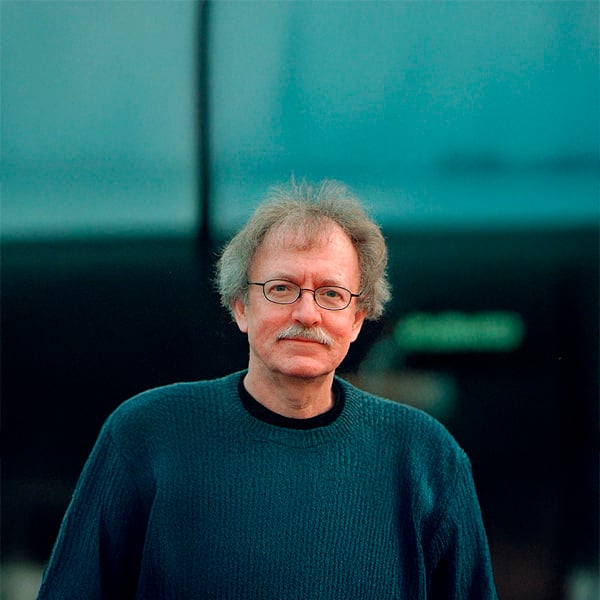
Sören Sommelius
Related Posts

LONDON – So far so good, at least on the wider level. While internally Iraq seems on the edge of chaos, the much heralded clash of civilizations between the Muslim and Judaeo-Christian worlds has yet to become apparent. We have anger and despair aplenty in the Arab and Muslim worlds. But very little rushing to the standard and there was no great pilgrimage of warriors to join the fight, as happened when the Soviet Union invaded Afghanistan twenty years ago, and then, having driven the Red Army out, were left to ferment in that mountainous redoubt. With the armaments supplied by the CIA the mujahidin were transformed into Al Qaeda that became, for a relatively brief moment as these things go, ‘the greatest threat to the homeland that America has ever known.’ Nevertheless a ‘Cold War’ between much of the Muslim world and the West is certainly in full swing. Winston...
The Challenge of Nuclear Weaponsin the Twenty-first CenturyA Path Forward The peoples and governments of the world face an urgent challenge relating to weaponry of mass destruction and particularly to nuclear weaponry.  At the crossroads of technology, terrorism, geopolitical ambition, and policies of preemption are new and potent dangers for humanity. Despite ending the nuclear standoff of the Cold War era, nuclear weaponry is again menacing the peoples of the world with catastrophic possibilities.  We recognize the need for any government to pursue its security interests in accordance with international law; and further, we recognize that distinctive threats to these interests now exist as a result of an active international terrorist network having declared war on the United States and its allies. Nonetheless, we reject the assessment of the current US administration that upgrading a reliance on nuclear weapons is in any sense justified as a response. We find it...
By Karin Wegestal MP, the Social Democratic Partyon behalf of the Swedish Committee for Solidarity with the Yugoslav People During the last decade, the Federal Republic of Yugoslavia has received more than 500,000 refugees from Croatia and Bosnia, and another 300,000 internally displaced persons, mainly from the province Kosovo and Metohia. For a country with about ten million inhabitants, such an influx of homeless people is obviously a very heavy burden – even under peaceful conditions. But in addition to that, the Federal Republic of Yugoslavia has been the subject to sanctions from the western powers for close to ten years and its infrastructure was badly hurt through Nato’s intense bombardment during 78 days in 1999. The result of all this is that Yugoslavia, once the most developed industrial country in Eastern Europe, is today the poorest country in Europe. In Serbia excluding Kosovo, with about ten million inhabitants and...

Recent Articles

Tony Robinson October 4, 2026 Violence is easy to recognise when someone is being beaten, shot or killed. It becomes more difficult when nobody is holding a weapon. Poverty, discrimination, exploitation and repression can restrict a human life just as effectively, although they do so in very different ways and with very different consequences. Simply adding more categories to an ever-growing list of forms of violence does not really solve the problem. The more interesting question is what all these different situations have in common and why it makes sense to describe them using the same word. Human beings do not simply react to what happens around them. They remember the past, imagine things that do not yet exist, make plans and undertake projects. Workers organise because they imagine different working conditions; people migrate because they imagine another life somewhere else; social movements emerge because people refuse to accept the...
It’s a matter of principles, courage, vision and pulling together – while the militarist world is falling apart… Peter Langille October 3, 2026 “Here, then, is the problem which we present to you, stark and dreadful and inescapable: Shall we put an end to the human race; or shall mankind renounce war?”The Bertrand Russell—Albert Einstein Manifesto, July 9, 1955 ⁕ The forecast for what’s ahead is worrisome. The sharp rise in armed conflicts over the past three years is adding to what was already the highest level in over seventy years. Genocides, which should be prevented are supported. A shared climate emergency that jeopardises survival is ignored. Diverse polls now suggest that people are war-weary, worried and interested in a more effective United Nations. And, there are viable policy options for a more secure world! Yet governments are doubling-down, betting on more war and investing heavily. If current trends persist,...
Johan Galtung 1930-2024October 2015 Published here on October 3, 2026 Let us focus on Civilization for conflict analysis and remedies. Major forms of disorder use violence; war is state organized violence. The most belligerent states are the United States of America and Israel, both with civilization roots. National Evangelism, the US Protestant Christian civilization– more national than evangelical–justifies US warfare as exceptionalism of a people chosen by God, with a manifest destiny to run the world. Orthodox Judaism justifies Israeli warfare to conquer and expand from Nile to Euphrates as a religious right and duty to the Eternal One. The third most belligerent country, the UK, no longer believes it is God-chosen but chosen by the USA; not quite the same but something. But the root cause of global disorder lies in the Occident–with Islam–seeing itself as the single, universal civilization valid for all at all times, all others being...

TFF on Substack

Discover and subscribe to more peace materials on TFF Substack

Most Popular

Tony Robinson October 4, 2026 Violence is easy to recognise when someone is being beaten, shot or killed. It becomes more difficult when nobody is holding a weapon. Poverty, discrimination, exploitation and repression can restrict a human life just as effectively, although they do so in very different ways and with very different consequences. Simply adding more categories to an ever-growing list of forms of violence does not really solve the problem. The more interesting question is what all these different situations have in common and why it makes sense to describe them using the same word. Human beings do not simply react to what happens around them. They remember the past, imagine things that do not yet exist, make plans and undertake projects. Workers organise because they imagine different working conditions; people migrate because they imagine another life somewhere else; social movements emerge because people refuse to accept the...
It’s a matter of principles, courage, vision and pulling together – while the militarist world is falling apart… Peter Langille October 3, 2026 “Here, then, is the problem which we present to you, stark and dreadful and inescapable: Shall we put an end to the human race; or shall mankind renounce war?”The Bertrand Russell—Albert Einstein Manifesto, July 9, 1955 ⁕ The forecast for what’s ahead is worrisome. The sharp rise in armed conflicts over the past three years is adding to what was already the highest level in over seventy years. Genocides, which should be prevented are supported. A shared climate emergency that jeopardises survival is ignored. Diverse polls now suggest that people are war-weary, worried and interested in a more effective United Nations. And, there are viable policy options for a more secure world! Yet governments are doubling-down, betting on more war and investing heavily. If current trends persist,...
Johan Galtung 1930-2024October 2015 Published here on October 3, 2026 Let us focus on Civilization for conflict analysis and remedies. Major forms of disorder use violence; war is state organized violence. The most belligerent states are the United States of America and Israel, both with civilization roots. National Evangelism, the US Protestant Christian civilization– more national than evangelical–justifies US warfare as exceptionalism of a people chosen by God, with a manifest destiny to run the world. Orthodox Judaism justifies Israeli warfare to conquer and expand from Nile to Euphrates as a religious right and duty to the Eternal One. The third most belligerent country, the UK, no longer believes it is God-chosen but chosen by the USA; not quite the same but something. But the root cause of global disorder lies in the Occident–with Islam–seeing itself as the single, universal civilization valid for all at all times, all others being...
Read More
Living-Peace-Sign-Budapest-copy
Tony Robinson October 4, 2026 Violence is easy to recognise when someone is being beaten, shot or killed. It becomes more difficult when nobody is holding a weapon. Poverty, discrimination, exploitation and repression can restrict a human life just as effectively, although they do so in very different ways and with very different consequences. Simply adding more categories to an ever-growing list of forms of violence does not really solve the problem. The more interesting question is what all these different situations have in common and why it makes sense to describe them using the same word. Human beings do not simply react to what happens around them. They remember the past, imagine things that do not yet exist, make plans and undertake projects. Workers organise because they imagine different working conditions; people migrate because they imagine another life somewhere else; social movements emerge because people refuse to accept the...
b54a1f10-8c65-4f0b-9dd5-4abc0a7d04cc_2659x2659
It’s a matter of principles, courage, vision and pulling together – while the militarist world is falling apart… Peter Langille October 3, 2026 “Here, then, is the problem which we present to you, stark and dreadful and inescapable: Shall we put an end to the human race; or shall mankind renounce war?”The Bertrand Russell—Albert Einstein Manifesto, July 9, 1955 ⁕ The forecast for what’s ahead is worrisome. The sharp rise in armed conflicts over the past three years is adding to what was already the highest level in over seventy years. Genocides, which should be prevented are supported. A shared climate emergency that jeopardises survival is ignored. Diverse polls now suggest that people are war-weary, worried and interested in a more effective United Nations. And, there are viable policy options for a more secure world! Yet governments are doubling-down, betting on more war and investing heavily. If current trends persist,...
010
Johan Galtung 1930-2024October 2015 Published here on October 3, 2026 Let us focus on Civilization for conflict analysis and remedies. Major forms of disorder use violence; war is state organized violence. The most belligerent states are the United States of America and Israel, both with civilization roots. National Evangelism, the US Protestant Christian civilization– more national than evangelical–justifies US warfare as exceptionalism of a people chosen by God, with a manifest destiny to run the world. Orthodox Judaism justifies Israeli warfare to conquer and expand from Nile to Euphrates as a religious right and duty to the Eternal One. The third most belligerent country, the UK, no longer believes it is God-chosen but chosen by the USA; not quite the same but something. But the root cause of global disorder lies in the Occident–with Islam–seeing itself as the single, universal civilization valid for all at all times, all others being...
Screenshot 2026-10-02 011738
Jan ObergPhD, director, The Transnational Foundation for Peace and Future Research, TFFLund, Sweden October 2, 2026 This is my full original manuscript. The Chinese Academy of Social Science, CASS, makes two publications out if it. 1. China’s Five-year plan emphasized the capabilities of basic research and original innovation. It is regarded as the goal of the future social development, which, as required, should be significantly enhanced. Can you comment on the importance of original innovation in research and academic study? I believe it is easier to define “original innovation” in the natural sciences than in social sciences. The breaking points of what constitutes something new, or innovative, are not quite as sharp in the latter. But in both fields it is about opening up something that was closed, unseen, unexplored before – making manifest what was earlier latent. Innovations come in many forms and shapes – naming something that was not...
arctic-circle-map
The agreement is catastrophic both because of what it says and what it doesn’t mention. It reduces further the major asset of security policies: Freedom of action. Jan Oberg TFF director September 25, 2026 A couple of hours before the agreement was signed on September 22, 2026, I published the following 13 hypotheses about what it would most likely contain on TFF Substack (in English). I was wrong on only the first point. Contrary to what Trump had written on his Truth Social platform, it does not appear to come into force immediately. In fact, it turned out to be worse than even I had anticipated. After these hypotheses now come a number of reflections in light of what the agreement actually contains, and does not contain, as well as the way in which it has generally been presented by major media outlets and by the public-service broadcaster DR. My...
girl-5894831_1280
Below are TFF-related media mentions, comments, videos and social media posts published elsewhere but not on this homepage. We happen to catch and list only a fraction. Regarding video comments and debates, we recommend that you go to the TFF Video Channel on Substack where many of them are reproduced. Jan Oberg is a contributor to China Daily – 52 million daily clicks – and Global Times, CGTN and CCTV (the national television), China Investment, Xinhua News Agency and several others. Articles and videos on these media very often multiply into countless Chinese (and Western media) that re-post them from these main media. Thanks to The China Academy, his analyses, interviews and comments are frequently posted on YouTube channels such as Thinkers Forum and Wave Media. These videos are often re-posted on Bilibili (China’s YouTube), the China Content Center on TikTok, and on the Chinese edition of TikTok, Douyin.com. This means reaching hundreds of millions of viewers worldwide over a year. While there are too many to catch on all these...





