

From April 21st to 24th Kericho will host an international conference “Globalisation for the Common Good and the Quest for Justice and Peace in Africa”, under the Patronage of the Honourable Dr. A. A. Moody Awori, EBS, MP, The Vice President and Minister for Home Affairs.

Many speakers representing, governments, religions, business, academia, civil society, charity, voluntary sector, media and young peoplecame together to address, debate and discuss the issues of globalisation, justice and peace leading to the creation of a more humane world. We admire and salute Africa’s achievements in ending colonialisation, dismantling apartheid, and initiating development, democratisation and social reform. We are also conscious of the enormous contribution Africa has to make to the rest of the world, but we are aware that many people live in poverty and are unable to achieve their full potential. For this situation to be changed ‘Globalisation for the Common Good’ is essential.

From poverty to hunger, from disease to civil strife, Sub-Saharan Africa has a host of crises. In what has been described as the greatest tragedy of our time, a scar on the conscience of the world, Africa is trying to heal its broken self. The world too, as it seems, is trying to help. However, given the consequences of our past policies and interventions, are we going to help or hinder Africa’s healing process?

As it has been noted, in the 1960s the problem (in Africa) was said to be lack of capital: provide more investment for infrastructure, and Africa would grow. In the 1970s it was exports: sell more products overseas for hard currency, and Africa would grow. In the 1980s “structural adjustment” was the prescription: cut taxes, lower barriers, and Africa would grow. By the 1990s, privatisation and good governance were the buzzwords. Discredited models of development litter the landscape of Africa, its governments being forced to manoeuvre around the shipwrecks of failed policies. Sub-Saharan Africa is the only big region of the world where living standards and life expectancy have deteriorated: by 2000 there were 75 million more Africans in poverty than a decade before.

It seems that, all manners of policies and theories have been tested on Africa. All failing and all bringing Africans a bitter harvest. This is so, because what has been tried has not been in harmony with Africa’s civilisation, spirituality and culture. Without a deep understanding of these, we cannot begin to find development strategies that are going to work in Africa or any where else in the world. “One size fits all” economic strategy of development has been nothing but a global tragedy. It would be an affront to our humanity and decency to ignore this.

However, sadly, it seems we are once again repeating the past mistakes in Africa and elsewhere. Looking at what is being recommended, we can note that, nearly all of the proposals on the global economy concern the need to unleash the power of the market, liberalise trade, deregulate and privatise- which are all purely economic considerations. It is as though humanity and the environment are irrelevant except as servants of the overarching need to expand the global economy- as if that could satisfy all human needs and aspirations. Material wellbeing, economic growth and wealth creation are important. But, to create a world of true happiness, peace and wellbeing, wealth must be created for a noble reason. Economics, commerce and trade, without a true understanding of the aspirations of the people it is affecting, cannot bring justice to all.

Would you be reading this now,
if it wasn’t useful to you?
Get more quality articles in the future

Social transformation can be achieved only when unselfish love, spirituality and a rigorous pursuit of justice are embraced. Millennium Development Goals, Commission for Africa recommendations and more will only be achieved when unselfish love and the pursuit of justice guides the motivations; nothing more, nothing less. As it has been noted observed, “Our true life is not this external, material life that passes before our eyes here on earth, but the inner life of our spirit, for which the visible life serves only as a scaffolding – a necessary aid to our spiritual growth. Seeing before him an enormously high and elaborately constructed scaffolding, while the building itself only just shows above its foundations, man is apt to make the mistake of attaching more importance to the scaffolding than to the building for whose sake the former has been temporarily put up. We must remind ourselves and one another that the scaffolding has no meaning and importance except to render possible the erection of the building itself”.

As for justice, it is my firm belief that the cultured, honoured people of Africa, the citizens of the Cradle of Civilisation, need no charity. What they require is justice. In most cases to give to charity is to numb our own pain and to give thanks that we are not like “them”. To do justice is to feel the pain and to become one with the sufferer; is to ask fundamental questions about the roots of injustice and to fight for their removals.

To this end, I recommend Globalisation for the Common Good for Africa: Rekindling the Human Spirit and Compassion in Globalisation. Globalisation for the Common Good Mission is to promote ethical, moral and spiritual values into the areas of economics, commerce, trade and international relations amongst others, as well as personal virtues, to advance understanding and action on major global issues by civil society, the private enterprise, the public sector, governments, and national and international institutions, leading to the promotion of collaborative policy solutions to the challenges posed by globalisation.

As it has been noted in Catholic social teaching for example, fostering peace by overcoming evil with good requires careful reflection on the common good and on its social and political implications. When the common good is promoted at every level, peace is promoted. Can an individual find complete fulfilment without taking account of his social nature, that is, his being “with” and “for” others? The common good closely concerns him. It closely concerns every expression of his social nature: the family, groups, associations, cities, regions, states, the community of peoples and nations. Each person, in some way, is called to work for the common good, constantly looking out for the good of others as if it were his own. This responsibility belongs in a particular way to political Authorities at every level, since they are called to create that sum of social conditions which permit and foster in human beings the integral development of their person.

The common good therefore demands respect for and the integral promotion of the person and his fundamental rights, as well as respect for and the promotion of the rights of nations on the universal plane. In this regard, the Second Vatican Council observed that “the increasingly close interdependence gradually encompassing the entire world is leading to an increasingly universal common good… and this involves rights and duties with respect to the whole human race. Every social group must take account of the needs and legitimate aspirations of other groups and the common good of the entire human family”. The good of humanity as a whole, including future generations, calls for true international cooperation, to which every nation must offer its contribution.

Moreover, at Globalisation for the Common Good, we are committed to the idea that the marketplace is not just an economic sphere, ‘it is a region of the human spirit’. Whilst considering the many economic questions and issues we should also reflect on the Divine dimension of life, and should, in contrast to what is practised today, be concerned with the world of heart and spirit. We view the problem and challenge of globalisation not only from an economic point of view, but also from ethical, spiritual and theological perspectives. I affirm that economics is, above all, concerned with human well-being and happiness in society. This cannot be separated from moral and spiritual considerations. The idea of a “value-free” economics is totally spurious. It demonstrates the complete misunderstanding of what it means to be a human being.

It is our firm belief that peace and justice will flourish when Globalisation for the Common Good is applied. As peace begins in the heart and embraces all of life. Those practicing Globalisation for the Common Good reach out to all people caught in fear, suffering, hate, oppression and violence. This involves reflection, prayer and an active, non-violent witness to the structures that cause and perpetuate injustice and violence. The goal of Globalisation for the Common Good is the wellbeing of all God’s peoples. “Love and faithfulness will meet; justice and peace will embrace. Humility’s loyalty will reach up from the earth, and God’s justice will look down from heaven” (Psalm 85:11-13).

We affirm our conviction that a genuine inter-faith dialogue and co-operation is a significant way of bringing the world together; leading to the creation of a harmonious environment needed to build a world of peace, justice and prosperity for all. The call for Globalisation for the Common Good is an appeal to our essential humanity to deal with some of the most pressing concerns of peoples the world over.

Religion has always been a major factor in the growth of human civilisation. Business and wealth creation when they are for a noble reason are blessed and vital for human survival. Bringing religions and business together for the common good will empower us with humanity, spirituality and love. It will raise us above pessimism to an ultimate optimism; turning from darkness to light; from night to day; from winter to spring.

Globalisation for the Common Good, by addressing the crises that face us all, empowers with humanity, spirituality and love. It engages people of different races, cultures and languages, from a wide variety of backgrounds, all of whom are committed to bringing about a world in which there is more solidarity and greater harmony. This spiritual ground for hope at this time of wanton destruction of our world, can help us to recall the ultimate purpose of life and of our journey in this world.

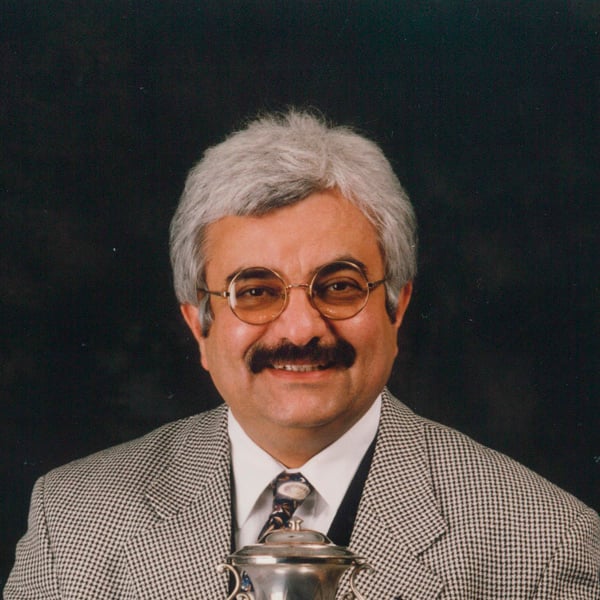
*Kamran Mofid, PhD (Econ), Founder, An Inter-faith Perspective on Globalisation for the Common Good; Co- Convenor, with Bhai Sahib Mohinder Singh, Africa and Globalisation for the Common Good: The Quest for Justice and Peace, An International Conference, Kericho, Kenya, 21-24 April, 2005. More about For The Common Good.

A New Book by Kamran Mofid and Rev. Marcus Braybrooke, Promoting the Common Good: Bringing Economics and Theology Together Again, Shepheard- Walwyn (Publishers), London, June 2005.

Book details and you can pre-order it here.
Related Posts

LONDON – So far so good, at least on the wider level. While internally Iraq seems on the edge of chaos, the much heralded clash of civilizations between the Muslim and Judaeo-Christian worlds has yet to become apparent. We have anger and despair aplenty in the Arab and Muslim worlds. But very little rushing to the standard and there was no great pilgrimage of warriors to join the fight, as happened when the Soviet Union invaded Afghanistan twenty years ago, and then, having driven the Red Army out, were left to ferment in that mountainous redoubt. With the armaments supplied by the CIA the mujahidin were transformed into Al Qaeda that became, for a relatively brief moment as these things go, ‘the greatest threat to the homeland that America has ever known.’ Nevertheless a ‘Cold War’ between much of the Muslim world and the West is certainly in full swing. Winston...
The Challenge of Nuclear Weaponsin the Twenty-first CenturyA Path Forward The peoples and governments of the world face an urgent challenge relating to weaponry of mass destruction and particularly to nuclear weaponry.  At the crossroads of technology, terrorism, geopolitical ambition, and policies of preemption are new and potent dangers for humanity. Despite ending the nuclear standoff of the Cold War era, nuclear weaponry is again menacing the peoples of the world with catastrophic possibilities.  We recognize the need for any government to pursue its security interests in accordance with international law; and further, we recognize that distinctive threats to these interests now exist as a result of an active international terrorist network having declared war on the United States and its allies. Nonetheless, we reject the assessment of the current US administration that upgrading a reliance on nuclear weapons is in any sense justified as a response. We find it...
By Karin Wegestal MP, the Social Democratic Partyon behalf of the Swedish Committee for Solidarity with the Yugoslav People During the last decade, the Federal Republic of Yugoslavia has received more than 500,000 refugees from Croatia and Bosnia, and another 300,000 internally displaced persons, mainly from the province Kosovo and Metohia. For a country with about ten million inhabitants, such an influx of homeless people is obviously a very heavy burden – even under peaceful conditions. But in addition to that, the Federal Republic of Yugoslavia has been the subject to sanctions from the western powers for close to ten years and its infrastructure was badly hurt through Nato’s intense bombardment during 78 days in 1999. The result of all this is that Yugoslavia, once the most developed industrial country in Eastern Europe, is today the poorest country in Europe. In Serbia excluding Kosovo, with about ten million inhabitants and...

Recent Articles

Tony Robinson October 4, 2026 Violence is easy to recognise when someone is being beaten, shot or killed. It becomes more difficult when nobody is holding a weapon. Poverty, discrimination, exploitation and repression can restrict a human life just as effectively, although they do so in very different ways and with very different consequences. Simply adding more categories to an ever-growing list of forms of violence does not really solve the problem. The more interesting question is what all these different situations have in common and why it makes sense to describe them using the same word. Human beings do not simply react to what happens around them. They remember the past, imagine things that do not yet exist, make plans and undertake projects. Workers organise because they imagine different working conditions; people migrate because they imagine another life somewhere else; social movements emerge because people refuse to accept the...
It’s a matter of principles, courage, vision and pulling together – while the militarist world is falling apart… Peter Langille October 3, 2026 “Here, then, is the problem which we present to you, stark and dreadful and inescapable: Shall we put an end to the human race; or shall mankind renounce war?”The Bertrand Russell—Albert Einstein Manifesto, July 9, 1955 ⁕ The forecast for what’s ahead is worrisome. The sharp rise in armed conflicts over the past three years is adding to what was already the highest level in over seventy years. Genocides, which should be prevented are supported. A shared climate emergency that jeopardises survival is ignored. Diverse polls now suggest that people are war-weary, worried and interested in a more effective United Nations. And, there are viable policy options for a more secure world! Yet governments are doubling-down, betting on more war and investing heavily. If current trends persist,...
Johan Galtung 1930-2024October 2015 Published here on October 3, 2026 Let us focus on Civilization for conflict analysis and remedies. Major forms of disorder use violence; war is state organized violence. The most belligerent states are the United States of America and Israel, both with civilization roots. National Evangelism, the US Protestant Christian civilization– more national than evangelical–justifies US warfare as exceptionalism of a people chosen by God, with a manifest destiny to run the world. Orthodox Judaism justifies Israeli warfare to conquer and expand from Nile to Euphrates as a religious right and duty to the Eternal One. The third most belligerent country, the UK, no longer believes it is God-chosen but chosen by the USA; not quite the same but something. But the root cause of global disorder lies in the Occident–with Islam–seeing itself as the single, universal civilization valid for all at all times, all others being...

TFF on Substack

Discover and subscribe to more peace materials on TFF Substack

Most Popular

Tony Robinson October 4, 2026 Violence is easy to recognise when someone is being beaten, shot or killed. It becomes more difficult when nobody is holding a weapon. Poverty, discrimination, exploitation and repression can restrict a human life just as effectively, although they do so in very different ways and with very different consequences. Simply adding more categories to an ever-growing list of forms of violence does not really solve the problem. The more interesting question is what all these different situations have in common and why it makes sense to describe them using the same word. Human beings do not simply react to what happens around them. They remember the past, imagine things that do not yet exist, make plans and undertake projects. Workers organise because they imagine different working conditions; people migrate because they imagine another life somewhere else; social movements emerge because people refuse to accept the...
It’s a matter of principles, courage, vision and pulling together – while the militarist world is falling apart… Peter Langille October 3, 2026 “Here, then, is the problem which we present to you, stark and dreadful and inescapable: Shall we put an end to the human race; or shall mankind renounce war?”The Bertrand Russell—Albert Einstein Manifesto, July 9, 1955 ⁕ The forecast for what’s ahead is worrisome. The sharp rise in armed conflicts over the past three years is adding to what was already the highest level in over seventy years. Genocides, which should be prevented are supported. A shared climate emergency that jeopardises survival is ignored. Diverse polls now suggest that people are war-weary, worried and interested in a more effective United Nations. And, there are viable policy options for a more secure world! Yet governments are doubling-down, betting on more war and investing heavily. If current trends persist,...
Johan Galtung 1930-2024October 2015 Published here on October 3, 2026 Let us focus on Civilization for conflict analysis and remedies. Major forms of disorder use violence; war is state organized violence. The most belligerent states are the United States of America and Israel, both with civilization roots. National Evangelism, the US Protestant Christian civilization– more national than evangelical–justifies US warfare as exceptionalism of a people chosen by God, with a manifest destiny to run the world. Orthodox Judaism justifies Israeli warfare to conquer and expand from Nile to Euphrates as a religious right and duty to the Eternal One. The third most belligerent country, the UK, no longer believes it is God-chosen but chosen by the USA; not quite the same but something. But the root cause of global disorder lies in the Occident–with Islam–seeing itself as the single, universal civilization valid for all at all times, all others being...
Read More
Living-Peace-Sign-Budapest-copy
Tony Robinson October 4, 2026 Violence is easy to recognise when someone is being beaten, shot or killed. It becomes more difficult when nobody is holding a weapon. Poverty, discrimination, exploitation and repression can restrict a human life just as effectively, although they do so in very different ways and with very different consequences. Simply adding more categories to an ever-growing list of forms of violence does not really solve the problem. The more interesting question is what all these different situations have in common and why it makes sense to describe them using the same word. Human beings do not simply react to what happens around them. They remember the past, imagine things that do not yet exist, make plans and undertake projects. Workers organise because they imagine different working conditions; people migrate because they imagine another life somewhere else; social movements emerge because people refuse to accept the...
b54a1f10-8c65-4f0b-9dd5-4abc0a7d04cc_2659x2659
It’s a matter of principles, courage, vision and pulling together – while the militarist world is falling apart… Peter Langille October 3, 2026 “Here, then, is the problem which we present to you, stark and dreadful and inescapable: Shall we put an end to the human race; or shall mankind renounce war?”The Bertrand Russell—Albert Einstein Manifesto, July 9, 1955 ⁕ The forecast for what’s ahead is worrisome. The sharp rise in armed conflicts over the past three years is adding to what was already the highest level in over seventy years. Genocides, which should be prevented are supported. A shared climate emergency that jeopardises survival is ignored. Diverse polls now suggest that people are war-weary, worried and interested in a more effective United Nations. And, there are viable policy options for a more secure world! Yet governments are doubling-down, betting on more war and investing heavily. If current trends persist,...
010
Johan Galtung 1930-2024October 2015 Published here on October 3, 2026 Let us focus on Civilization for conflict analysis and remedies. Major forms of disorder use violence; war is state organized violence. The most belligerent states are the United States of America and Israel, both with civilization roots. National Evangelism, the US Protestant Christian civilization– more national than evangelical–justifies US warfare as exceptionalism of a people chosen by God, with a manifest destiny to run the world. Orthodox Judaism justifies Israeli warfare to conquer and expand from Nile to Euphrates as a religious right and duty to the Eternal One. The third most belligerent country, the UK, no longer believes it is God-chosen but chosen by the USA; not quite the same but something. But the root cause of global disorder lies in the Occident–with Islam–seeing itself as the single, universal civilization valid for all at all times, all others being...
Screenshot 2026-10-02 011738
Jan ObergPhD, director, The Transnational Foundation for Peace and Future Research, TFFLund, Sweden October 2, 2026 This is my full original manuscript. The Chinese Academy of Social Science, CASS, makes two publications out if it. 1. China’s Five-year plan emphasized the capabilities of basic research and original innovation. It is regarded as the goal of the future social development, which, as required, should be significantly enhanced. Can you comment on the importance of original innovation in research and academic study? I believe it is easier to define “original innovation” in the natural sciences than in social sciences. The breaking points of what constitutes something new, or innovative, are not quite as sharp in the latter. But in both fields it is about opening up something that was closed, unseen, unexplored before – making manifest what was earlier latent. Innovations come in many forms and shapes – naming something that was not...
arctic-circle-map
The agreement is catastrophic both because of what it says and what it doesn’t mention. It reduces further the major asset of security policies: Freedom of action. Jan Oberg TFF director September 25, 2026 A couple of hours before the agreement was signed on September 22, 2026, I published the following 13 hypotheses about what it would most likely contain on TFF Substack (in English). I was wrong on only the first point. Contrary to what Trump had written on his Truth Social platform, it does not appear to come into force immediately. In fact, it turned out to be worse than even I had anticipated. After these hypotheses now come a number of reflections in light of what the agreement actually contains, and does not contain, as well as the way in which it has generally been presented by major media outlets and by the public-service broadcaster DR. My...
girl-5894831_1280
Below are TFF-related media mentions, comments, videos and social media posts published elsewhere but not on this homepage. We happen to catch and list only a fraction. Regarding video comments and debates, we recommend that you go to the TFF Video Channel on Substack where many of them are reproduced. Jan Oberg is a contributor to China Daily – 52 million daily clicks – and Global Times, CGTN and CCTV (the national television), China Investment, Xinhua News Agency and several others. Articles and videos on these media very often multiply into countless Chinese (and Western media) that re-post them from these main media. Thanks to The China Academy, his analyses, interviews and comments are frequently posted on YouTube channels such as Thinkers Forum and Wave Media. These videos are often re-posted on Bilibili (China’s YouTube), the China Content Center on TikTok, and on the Chinese edition of TikTok, Douyin.com. This means reaching hundreds of millions of viewers worldwide over a year. While there are too many to catch on all these...





