

This War is Immoral, and There Is an Alternative

LONDON- By one of those quirks of opportunity I was able to spend most of the morning of Good Friday talking with Jose Saramago, last year’s winner of the Nobel Prize for Literature, near neighbour to my daughter’s home in the Canary Islands. The writer, who left his native country, Portugal, because of the outcry over his book, “The Gospel according to Jesus Christ”, was outraged at the bombing of Yugoslavia, angry in particular at those who tried to put a moral gloss on it. “We are in the hands of inconsequential people. Sensible people have little influence in the world. We do what we can, we can’t do much”. “What irony”, I replied, “that an anti-Vietnam war protestor who went to Oxford on a Rhodes scholarship should have re-ignited the Cold War”.

As usual in war time, the anti-war faction is in a minority. It is painful to see how the relatively cultured (never have there been so many good books read) and now very broadly educated western peoples still rally instinctively to their leaders’ call to war, for no better reason than their chauvinistic juices are being stirred. If only patriotism were the last refuge of scoundrels such as Slobodan Milosevic, but sadly all over western Europe and North America war is making a lot of people’s blood run faster. It was the same at the onset of the war in Vietnam, a state of affairs seemingly wiped from the consciousness of our present leaders, as were their own early dallyings with sex and dope and all the other trimmings of the defining nineteen sixties and early seventies. Never has a generation so quickly taken on the sins of the fathers, despite having been nurtured on their mistakes. Are we no better than those human beings whom Erasmus chided for being worse than animals “who don’t in packs hunt their own kind”?

The lesson of millenia of war-making is that it doesn’t take us very far: that the cost in the blood of our loved ones is rarely commensurate with the outcome. Who today can put up a case for the First World War or Vietnam or the three wars between India and Pakistan? World War 2 still remains the only defensible war of this bloody century (in which the Anglo-Saxons have fought more than anyone else)–because of the concentration camps which, in point of fact, were nothing to do with the initial reasons for declaring war. Hitler at first was merely applying a larger-than-life version of the Wilsonian principle of self-determination for German minorities outside the Reich. Only when it came to Hitler trying to reclaim Danzig and the West Prussian corridor from Poland did Britain say “enough”.

President Bill Clinton, Prime Minister Tony Blair and, not least, “Green” German foreign minister Joschka Fischer, have all in their time struggled against the kind of war-making they are now authorizing. But once in office they have discarded their beliefs in the face of the juggernaut of “professional” foreign policy advice, over-awed by the sophistication, knowledge and self-confidence of this class when meeting them face to face in a sustained way for perhaps the first time in their lives. It is true that the intellectuals of the foreign policy establishment, whether they be Zbigniew Brzezinski, Pierre Lellouche or Pauline Neville-Jones, are no fools. There is nothing wrong with the size of their brains or their skill (the “fatal felicity”) in presentation. Yet they are all profoundly both amoral and philosophically short-sighted. Amoral because although they may appeal to moral sensibilities by underlining the humanitarian crisis brought on by the growing numbers of refugees, they discount the appalling consequences of going to war–the obliteration of much of Vietnam and Cambodia, leading in the latter case to creating the conditions in which the genocidal Khmer Rouge thrived, or the suffering of the children in contemporary Iraq. Not to mention, with the fall out from Vietnam, the social disturbances that are still at work in the U.S. today–the drug taking culture, the destabilised families, the sophistication of the gun culture, all of which, of course, had antecedents but which were given an enormous boost by the war.

For all their academic self-discipline, these foreign policy professionals and their friends in the military-industrial complex and the intelligence services are often incapable of taking the long view either forward or historical. Just to take the most obvious casualty of the war with Belgrade–can there be any good reason for discarding the central and most important policy aim of post Cold War Europe, to integrate Russia fully into the western world?

How do we get out of the hole we have dug for ourselves? The first law of holes is to stop digging. Nato would compound the mistakes it has already made if it were to commit ground troops–although if helping refugees were its real concern that would actually make much more practical sense than the Yugoslav-nation-uniting aerial bombardment.

The second would be to understand that a new peaceful Kosovo, where the lion and the lamb lie down together, is no longer feasible. We must accept, as we once were forced to accept for Cyprus, a divided Kosovo. We have to work with Albania–and Macedonia too–once a divorce of the Serb and Albanian areas has been agreed, to build a greater Albania, as an Albanian rump in ex-Kosovo is not a viable national state.

Given Albania’s quasi-anarchic, precarious state of being this will be difficult. If the prize for Albania is a greater Albania then they should be prepared in return to allow themselves to be run for some years as a European Union protectorate. The vast sums of money that Nato today spends on a war should go instead to putting a new Albania on its feet. There is a precedent: Bosnia today is effectively an international protectorate.

Of course, Milosevic may get too much if we compromise, and also live to do damage another day. But we always have to keep his malevolence in perspective, asking ourselves a hundred times over, do the means justify the end? Are we making a bad situation worse? What price are we paying for the policies we self-righteously pursue? And, most important, how what we do will look in the cold light of twenty years hence?
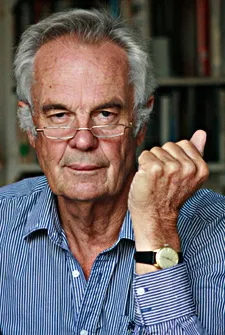

Foreign affairs columnist, film-maker and author

Related Posts

LONDON – So far so good, at least on the wider level. While internally Iraq seems on the edge of chaos, the much heralded clash of civilizations between the Muslim and Judaeo-Christian worlds has yet to become apparent. We have anger and despair aplenty in the Arab and Muslim worlds. But very little rushing to the standard and there was no great pilgrimage of warriors to join the fight, as happened when the Soviet Union invaded Afghanistan twenty years ago, and then, having driven the Red Army out, were left to ferment in that mountainous redoubt. With the armaments supplied by the CIA the mujahidin were transformed into Al Qaeda that became, for a relatively brief moment as these things go, ‘the greatest threat to the homeland that America has ever known.’ Nevertheless a ‘Cold War’ between much of the Muslim world and the West is certainly in full swing. Winston...
The Challenge of Nuclear Weaponsin the Twenty-first CenturyA Path Forward The peoples and governments of the world face an urgent challenge relating to weaponry of mass destruction and particularly to nuclear weaponry.  At the crossroads of technology, terrorism, geopolitical ambition, and policies of preemption are new and potent dangers for humanity. Despite ending the nuclear standoff of the Cold War era, nuclear weaponry is again menacing the peoples of the world with catastrophic possibilities.  We recognize the need for any government to pursue its security interests in accordance with international law; and further, we recognize that distinctive threats to these interests now exist as a result of an active international terrorist network having declared war on the United States and its allies. Nonetheless, we reject the assessment of the current US administration that upgrading a reliance on nuclear weapons is in any sense justified as a response. We find it...
By Karin Wegestal MP, the Social Democratic Partyon behalf of the Swedish Committee for Solidarity with the Yugoslav People During the last decade, the Federal Republic of Yugoslavia has received more than 500,000 refugees from Croatia and Bosnia, and another 300,000 internally displaced persons, mainly from the province Kosovo and Metohia. For a country with about ten million inhabitants, such an influx of homeless people is obviously a very heavy burden – even under peaceful conditions. But in addition to that, the Federal Republic of Yugoslavia has been the subject to sanctions from the western powers for close to ten years and its infrastructure was badly hurt through Nato’s intense bombardment during 78 days in 1999. The result of all this is that Yugoslavia, once the most developed industrial country in Eastern Europe, is today the poorest country in Europe. In Serbia excluding Kosovo, with about ten million inhabitants and...

Recent Articles

Tony Robinson October 4, 2026 Violence is easy to recognise when someone is being beaten, shot or killed. It becomes more difficult when nobody is holding a weapon. Poverty, discrimination, exploitation and repression can restrict a human life just as effectively, although they do so in very different ways and with very different consequences. Simply adding more categories to an ever-growing list of forms of violence does not really solve the problem. The more interesting question is what all these different situations have in common and why it makes sense to describe them using the same word. Human beings do not simply react to what happens around them. They remember the past, imagine things that do not yet exist, make plans and undertake projects. Workers organise because they imagine different working conditions; people migrate because they imagine another life somewhere else; social movements emerge because people refuse to accept the...
It’s a matter of principles, courage, vision and pulling together – while the militarist world is falling apart… Peter Langille October 3, 2026 “Here, then, is the problem which we present to you, stark and dreadful and inescapable: Shall we put an end to the human race; or shall mankind renounce war?”The Bertrand Russell—Albert Einstein Manifesto, July 9, 1955 ⁕ The forecast for what’s ahead is worrisome. The sharp rise in armed conflicts over the past three years is adding to what was already the highest level in over seventy years. Genocides, which should be prevented are supported. A shared climate emergency that jeopardises survival is ignored. Diverse polls now suggest that people are war-weary, worried and interested in a more effective United Nations. And, there are viable policy options for a more secure world! Yet governments are doubling-down, betting on more war and investing heavily. If current trends persist,...
Johan Galtung 1930-2024October 2015 Published here on October 3, 2026 Let us focus on Civilization for conflict analysis and remedies. Major forms of disorder use violence; war is state organized violence. The most belligerent states are the United States of America and Israel, both with civilization roots. National Evangelism, the US Protestant Christian civilization– more national than evangelical–justifies US warfare as exceptionalism of a people chosen by God, with a manifest destiny to run the world. Orthodox Judaism justifies Israeli warfare to conquer and expand from Nile to Euphrates as a religious right and duty to the Eternal One. The third most belligerent country, the UK, no longer believes it is God-chosen but chosen by the USA; not quite the same but something. But the root cause of global disorder lies in the Occident–with Islam–seeing itself as the single, universal civilization valid for all at all times, all others being...

TFF on Substack

Discover and subscribe to more peace materials on TFF Substack

Most Popular

Tony Robinson October 4, 2026 Violence is easy to recognise when someone is being beaten, shot or killed. It becomes more difficult when nobody is holding a weapon. Poverty, discrimination, exploitation and repression can restrict a human life just as effectively, although they do so in very different ways and with very different consequences. Simply adding more categories to an ever-growing list of forms of violence does not really solve the problem. The more interesting question is what all these different situations have in common and why it makes sense to describe them using the same word. Human beings do not simply react to what happens around them. They remember the past, imagine things that do not yet exist, make plans and undertake projects. Workers organise because they imagine different working conditions; people migrate because they imagine another life somewhere else; social movements emerge because people refuse to accept the...
It’s a matter of principles, courage, vision and pulling together – while the militarist world is falling apart… Peter Langille October 3, 2026 “Here, then, is the problem which we present to you, stark and dreadful and inescapable: Shall we put an end to the human race; or shall mankind renounce war?”The Bertrand Russell—Albert Einstein Manifesto, July 9, 1955 ⁕ The forecast for what’s ahead is worrisome. The sharp rise in armed conflicts over the past three years is adding to what was already the highest level in over seventy years. Genocides, which should be prevented are supported. A shared climate emergency that jeopardises survival is ignored. Diverse polls now suggest that people are war-weary, worried and interested in a more effective United Nations. And, there are viable policy options for a more secure world! Yet governments are doubling-down, betting on more war and investing heavily. If current trends persist,...
Johan Galtung 1930-2024October 2015 Published here on October 3, 2026 Let us focus on Civilization for conflict analysis and remedies. Major forms of disorder use violence; war is state organized violence. The most belligerent states are the United States of America and Israel, both with civilization roots. National Evangelism, the US Protestant Christian civilization– more national than evangelical–justifies US warfare as exceptionalism of a people chosen by God, with a manifest destiny to run the world. Orthodox Judaism justifies Israeli warfare to conquer and expand from Nile to Euphrates as a religious right and duty to the Eternal One. The third most belligerent country, the UK, no longer believes it is God-chosen but chosen by the USA; not quite the same but something. But the root cause of global disorder lies in the Occident–with Islam–seeing itself as the single, universal civilization valid for all at all times, all others being...
Read More
Living-Peace-Sign-Budapest-copy
Tony Robinson October 4, 2026 Violence is easy to recognise when someone is being beaten, shot or killed. It becomes more difficult when nobody is holding a weapon. Poverty, discrimination, exploitation and repression can restrict a human life just as effectively, although they do so in very different ways and with very different consequences. Simply adding more categories to an ever-growing list of forms of violence does not really solve the problem. The more interesting question is what all these different situations have in common and why it makes sense to describe them using the same word. Human beings do not simply react to what happens around them. They remember the past, imagine things that do not yet exist, make plans and undertake projects. Workers organise because they imagine different working conditions; people migrate because they imagine another life somewhere else; social movements emerge because people refuse to accept the...
b54a1f10-8c65-4f0b-9dd5-4abc0a7d04cc_2659x2659
It’s a matter of principles, courage, vision and pulling together – while the militarist world is falling apart… Peter Langille October 3, 2026 “Here, then, is the problem which we present to you, stark and dreadful and inescapable: Shall we put an end to the human race; or shall mankind renounce war?”The Bertrand Russell—Albert Einstein Manifesto, July 9, 1955 ⁕ The forecast for what’s ahead is worrisome. The sharp rise in armed conflicts over the past three years is adding to what was already the highest level in over seventy years. Genocides, which should be prevented are supported. A shared climate emergency that jeopardises survival is ignored. Diverse polls now suggest that people are war-weary, worried and interested in a more effective United Nations. And, there are viable policy options for a more secure world! Yet governments are doubling-down, betting on more war and investing heavily. If current trends persist,...
010
Johan Galtung 1930-2024October 2015 Published here on October 3, 2026 Let us focus on Civilization for conflict analysis and remedies. Major forms of disorder use violence; war is state organized violence. The most belligerent states are the United States of America and Israel, both with civilization roots. National Evangelism, the US Protestant Christian civilization– more national than evangelical–justifies US warfare as exceptionalism of a people chosen by God, with a manifest destiny to run the world. Orthodox Judaism justifies Israeli warfare to conquer and expand from Nile to Euphrates as a religious right and duty to the Eternal One. The third most belligerent country, the UK, no longer believes it is God-chosen but chosen by the USA; not quite the same but something. But the root cause of global disorder lies in the Occident–with Islam–seeing itself as the single, universal civilization valid for all at all times, all others being...
Screenshot 2026-10-02 011738
Jan ObergPhD, director, The Transnational Foundation for Peace and Future Research, TFFLund, Sweden October 2, 2026 This is my full original manuscript. The Chinese Academy of Social Science, CASS, makes two publications out if it. 1. China’s Five-year plan emphasized the capabilities of basic research and original innovation. It is regarded as the goal of the future social development, which, as required, should be significantly enhanced. Can you comment on the importance of original innovation in research and academic study? I believe it is easier to define “original innovation” in the natural sciences than in social sciences. The breaking points of what constitutes something new, or innovative, are not quite as sharp in the latter. But in both fields it is about opening up something that was closed, unseen, unexplored before – making manifest what was earlier latent. Innovations come in many forms and shapes – naming something that was not...
arctic-circle-map
The agreement is catastrophic both because of what it says and what it doesn’t mention. It reduces further the major asset of security policies: Freedom of action. Jan Oberg TFF director September 25, 2026 A couple of hours before the agreement was signed on September 22, 2026, I published the following 13 hypotheses about what it would most likely contain on TFF Substack (in English). I was wrong on only the first point. Contrary to what Trump had written on his Truth Social platform, it does not appear to come into force immediately. In fact, it turned out to be worse than even I had anticipated. After these hypotheses now come a number of reflections in light of what the agreement actually contains, and does not contain, as well as the way in which it has generally been presented by major media outlets and by the public-service broadcaster DR. My...
girl-5894831_1280
Below are TFF-related media mentions, comments, videos and social media posts published elsewhere but not on this homepage. We happen to catch and list only a fraction. Regarding video comments and debates, we recommend that you go to the TFF Video Channel on Substack where many of them are reproduced. Jan Oberg is a contributor to China Daily – 52 million daily clicks – and Global Times, CGTN and CCTV (the national television), China Investment, Xinhua News Agency and several others. Articles and videos on these media very often multiply into countless Chinese (and Western media) that re-post them from these main media. Thanks to The China Academy, his analyses, interviews and comments are frequently posted on YouTube channels such as Thinkers Forum and Wave Media. These videos are often re-posted on Bilibili (China’s YouTube), the China Content Center on TikTok, and on the Chinese edition of TikTok, Douyin.com. This means reaching hundreds of millions of viewers worldwide over a year. While there are too many to catch on all these...




