

The vast majority of people around the world are much better off in peacetime than in war.  Only a few arms merchants and power-hungry politicians benefit from war, at the expense of soldiers who are sent into battle, and the ever growing number of civilian victims of war.

Iceland is in a unique position to promote a new agenda for world peace, based on its history of the Althing, the world’s oldest democratic legislative assembly, established in 930.  It is a forum where differences can be aired and mutually acceptable solutions explored.  In the year 1000, Norwegian missionaries wanted to impose Christianity in Iceland.  A religious war threatened.  But at the Althing, it was decided to adopt Christianity, without outlawing traditional rituals if done in private, and this helped avoid a war.  While people talk, they don’t shoot.

In addition, Icelanders have never served in military forces. This may well be a key reason why Iceland has enjoyed centuries of peace.  Similarly, Costa Rica has enjoyed peace since it abolished its army after a brief civil war in 1948, while its Central American neighbors suffered from war, and Costa Rica’s per capita income is twice that of its neighbors, because it invested in its civilian economy what its neighbors spent for their military.

In November 2002, the current government of Iceland proposed to use Icelandic passenger aircraft to carry U.S. weapons and troops to the Gulf.  Thor Magnusson, founder of Peace 2000 (www.peace2000.org, www.althing.us), was arrested and imprisoned after sending an email to the police, aviation authorities, airlines and government officials warning that if Icelandic aircraft would carry weapons and troops to support an illegal war against Iraq, the airlines would become legitimate war targets and could be attacked by terrorist organizations.  The Icelandic government tried to get Thor sentenced for up to 16 years in prison based on new terrorist laws.  In February 2004, Thor won the case both in Reykjavik District Court and the Icelandic High Court.  “Our victory is not winning the case in court, it is that we stopped this crazy plan of using passenger aircraft of Icelandair to carry weapons and troops to the Gulf” said Thor.

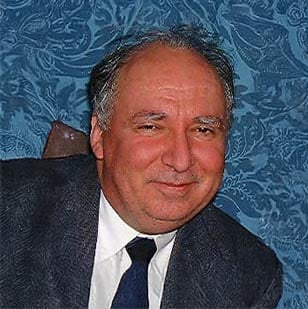
If Iceland elects Thor Magnusson as President, he will give voice to the vast majority of people around the world who want peace, but are seldom heard.  His platform includes three key points: (1) setting up an institute for democratic studies that will help develop true democracy, as a model for the entire world; (2) converting the US military base in Iceland into the headquarters of a United Nations peacekeeping force; (3) creating an institute for conflict resolution where conflict parties from around the world can meet with experienced mediators.

The history of Iceland can serve as a blueprint for a peaceful world and the transition of nations from national military forces to common security.  Negotiating a peaceful agreement before violence breaks out is not only much less costly, but can save many lives.

Dialogue forums, modelled after the Icelandic Althing, can be formed in conflict regions around the world, including such places as the Middle East, where citizens with different positions and viewpoints can assemble and explore peaceful solutions to the conflict.

The current justice minister wants to introduce an Icelandic army.  Thor has a much better plan.  As the American troops are now scheduled to leave their military base in Iceland, he proposes to use it as headquarters of an international peace-keeping force.  Nations that want to abolish their national military can sign a contract to be protected by that force, for a relatively small annual fee, as Alan F. Kay and Hazel Henderson (www.alanfkay.com) have long advocated.  For each country to maintain its own military forces is as wasteful as if each building in a town had its own fire brigade, instead of the house owners pooling their resources for one fire brigade that can be deployed wherever and whenever needed.  Countries that take steps to avoid war, such as accepting binding arbitration in international disputes, can get reduced rates, in the same way as households that keep a fire-extinguisher can get reduced fire insurance rates.

Thor also plans to establish an International Conflict Resolution Center, where parties to conflicts from around the world can be invited for talks, assisted by experienced, creative mediators, who can help the parties find solutions that meet everyone’s essential needs.

There are many examples from history where individuals were able to avert bloodshed through original proposals that were acceptable to all sides.  For example, a civil war in Romania between the ethnic Rumanian majority and the country’s ethnic Hungarian minority was averted through mediation that produced a solution that allows the Hungarians to use their own language in schools and local newspapers, in return for a promise not to seek secession.  This involved only a few people, for a relatively short time, whereas sending a peacekeeping force to quell fighting after violence has erupted takes tens of thousands of troops, for years,  and costs many lives.

The series of wars between Ecuador an Peru over an uninhabited small border territory ended when the Norwegian peace researcher Johan Galtung proposed to make the disputed territory a “bi-national zone”, jointly administered by both governments, with a natural park to attract tourists and bring more income to both countries.  He pointed out that this cost only $250 for a meal with the incoming president and a night in a hotel, whereas the first Gulf war cost $100 billion, not counting the destruction it caused, and the lives lost.

What the world needs is an active peace policy that anticipates dangers and avoids them before they are upon us, instead of reacting afterwards, as is usually the case.  Better a fence at the top of a cliff than an ambulance waiting at the bottom.

The new threat of international terrorism cannot be conquered with force alone.  Killing terrorists turns them into martyrs, which attract more followers.  Terrorism resembles the ancient dragon, the “hydra,” with multiple heads, and each time a head is cut off, ten new ones grow.  It is necessary to find the root causes, what motivates men and women to commit suicide for a cause they believe in.  Only if we address the roots, can we hope to eliminate terrorism.

The policy of nuclear deterrence pursued by the great powers is absurd.  It is a mutual suicide pact.  It is as if we packed our car full of dynamite, to explode on impact, in order to deter others from hitting our car.  But accidents do happen.  We better establish traffic rules for international relations to prevent deadly clashes.

Is a peace policy utopian?  On the contrary, it is the only realistic approach that can save us.  The greatest utopians are those who call themselves “realists”, because they believe we can survive the nuclear age with power politics of the past.

The world needs a peace president who can help lift the veil from our eyes that has blinded us for too long, and help us initiate the institutions and policies that can help restore peace in the world.  Thor Magnusson can and will do that.  Iceland has a great opportunity to lead the world to peace.  I hope Iceland’s voters will seize that opportunity.

A smaller country like Iceland is in a much better position to undertake peace initiatives than one of the big powers, like the United States or Russia, or the former colonial powers UK, France, Germany and Italy, because they would be suspected of pursuing their own interests.  Iceland, without a history of colonization, is above that suspicion.

There are precedents.  In 1973, Finnish President Urho Kekkonen invited all European countries to send delegations to the Helsinki Conference on Security and Cooperation in Europe, which lasted until 1975, and prepared the way for the end of the Cold War.  All European countries except Albania came.  As President, Kekkonen had the status to convene such a meeting.

A second example is Costa Rican President Oscar Arias Sanchez.  After he was elected in 1986, he consulted with all the other Central American Presidents about the unsuccessful draft agreements produced during the Contadora process.  He rewrote them based on his consultations, and in a meeting in Guatemala City on August 7, 1987, he got the Presidents of Honduras, Guatemala, El Salvador and Nicaragua to sign with him an agreement that provided for dialogue between governments and opposition groups, ending the shipment of arms to insurgents, amnesty for insurgents if they lay down their arms, democracy, and free elections.  The agreement, Esquipulas II, named after the location of the initial meeting in Guatemala, became the basis for peace agreements not only for the Contra war in Nicaragua, but also for later peace agreements in El Salvador and Guatemala.  Oscar Arias won the 1987 Nobel Peace Prize.

Thor Magnusson, as President of Iceland, will make use of the opportunities offered by this position to put Iceland on the map as a source of peace in the world.  It has already happened elsewhere, which proves that it is possible.
Related Posts

LONDON – So far so good, at least on the wider level. While internally Iraq seems on the edge of chaos, the much heralded clash of civilizations between the Muslim and Judaeo-Christian worlds has yet to become apparent. We have anger and despair aplenty in the Arab and Muslim worlds. But very little rushing to the standard and there was no great pilgrimage of warriors to join the fight, as happened when the Soviet Union invaded Afghanistan twenty years ago, and then, having driven the Red Army out, were left to ferment in that mountainous redoubt. With the armaments supplied by the CIA the mujahidin were transformed into Al Qaeda that became, for a relatively brief moment as these things go, ‘the greatest threat to the homeland that America has ever known.’ Nevertheless a ‘Cold War’ between much of the Muslim world and the West is certainly in full swing. Winston...
The Challenge of Nuclear Weaponsin the Twenty-first CenturyA Path Forward The peoples and governments of the world face an urgent challenge relating to weaponry of mass destruction and particularly to nuclear weaponry.  At the crossroads of technology, terrorism, geopolitical ambition, and policies of preemption are new and potent dangers for humanity. Despite ending the nuclear standoff of the Cold War era, nuclear weaponry is again menacing the peoples of the world with catastrophic possibilities.  We recognize the need for any government to pursue its security interests in accordance with international law; and further, we recognize that distinctive threats to these interests now exist as a result of an active international terrorist network having declared war on the United States and its allies. Nonetheless, we reject the assessment of the current US administration that upgrading a reliance on nuclear weapons is in any sense justified as a response. We find it...
By Karin Wegestal MP, the Social Democratic Partyon behalf of the Swedish Committee for Solidarity with the Yugoslav People During the last decade, the Federal Republic of Yugoslavia has received more than 500,000 refugees from Croatia and Bosnia, and another 300,000 internally displaced persons, mainly from the province Kosovo and Metohia. For a country with about ten million inhabitants, such an influx of homeless people is obviously a very heavy burden – even under peaceful conditions. But in addition to that, the Federal Republic of Yugoslavia has been the subject to sanctions from the western powers for close to ten years and its infrastructure was badly hurt through Nato’s intense bombardment during 78 days in 1999. The result of all this is that Yugoslavia, once the most developed industrial country in Eastern Europe, is today the poorest country in Europe. In Serbia excluding Kosovo, with about ten million inhabitants and...

Recent Articles

Tony Robinson October 4, 2026 Violence is easy to recognise when someone is being beaten, shot or killed. It becomes more difficult when nobody is holding a weapon. Poverty, discrimination, exploitation and repression can restrict a human life just as effectively, although they do so in very different ways and with very different consequences. Simply adding more categories to an ever-growing list of forms of violence does not really solve the problem. The more interesting question is what all these different situations have in common and why it makes sense to describe them using the same word. Human beings do not simply react to what happens around them. They remember the past, imagine things that do not yet exist, make plans and undertake projects. Workers organise because they imagine different working conditions; people migrate because they imagine another life somewhere else; social movements emerge because people refuse to accept the...
It’s a matter of principles, courage, vision and pulling together – while the militarist world is falling apart… Peter Langille October 3, 2026 “Here, then, is the problem which we present to you, stark and dreadful and inescapable: Shall we put an end to the human race; or shall mankind renounce war?”The Bertrand Russell—Albert Einstein Manifesto, July 9, 1955 ⁕ The forecast for what’s ahead is worrisome. The sharp rise in armed conflicts over the past three years is adding to what was already the highest level in over seventy years. Genocides, which should be prevented are supported. A shared climate emergency that jeopardises survival is ignored. Diverse polls now suggest that people are war-weary, worried and interested in a more effective United Nations. And, there are viable policy options for a more secure world! Yet governments are doubling-down, betting on more war and investing heavily. If current trends persist,...
Johan Galtung 1930-2024October 2015 Published here on October 3, 2026 Let us focus on Civilization for conflict analysis and remedies. Major forms of disorder use violence; war is state organized violence. The most belligerent states are the United States of America and Israel, both with civilization roots. National Evangelism, the US Protestant Christian civilization– more national than evangelical–justifies US warfare as exceptionalism of a people chosen by God, with a manifest destiny to run the world. Orthodox Judaism justifies Israeli warfare to conquer and expand from Nile to Euphrates as a religious right and duty to the Eternal One. The third most belligerent country, the UK, no longer believes it is God-chosen but chosen by the USA; not quite the same but something. But the root cause of global disorder lies in the Occident–with Islam–seeing itself as the single, universal civilization valid for all at all times, all others being...

TFF on Substack

Discover and subscribe to more peace materials on TFF Substack

Most Popular

Tony Robinson October 4, 2026 Violence is easy to recognise when someone is being beaten, shot or killed. It becomes more difficult when nobody is holding a weapon. Poverty, discrimination, exploitation and repression can restrict a human life just as effectively, although they do so in very different ways and with very different consequences. Simply adding more categories to an ever-growing list of forms of violence does not really solve the problem. The more interesting question is what all these different situations have in common and why it makes sense to describe them using the same word. Human beings do not simply react to what happens around them. They remember the past, imagine things that do not yet exist, make plans and undertake projects. Workers organise because they imagine different working conditions; people migrate because they imagine another life somewhere else; social movements emerge because people refuse to accept the...
It’s a matter of principles, courage, vision and pulling together – while the militarist world is falling apart… Peter Langille October 3, 2026 “Here, then, is the problem which we present to you, stark and dreadful and inescapable: Shall we put an end to the human race; or shall mankind renounce war?”The Bertrand Russell—Albert Einstein Manifesto, July 9, 1955 ⁕ The forecast for what’s ahead is worrisome. The sharp rise in armed conflicts over the past three years is adding to what was already the highest level in over seventy years. Genocides, which should be prevented are supported. A shared climate emergency that jeopardises survival is ignored. Diverse polls now suggest that people are war-weary, worried and interested in a more effective United Nations. And, there are viable policy options for a more secure world! Yet governments are doubling-down, betting on more war and investing heavily. If current trends persist,...
Johan Galtung 1930-2024October 2015 Published here on October 3, 2026 Let us focus on Civilization for conflict analysis and remedies. Major forms of disorder use violence; war is state organized violence. The most belligerent states are the United States of America and Israel, both with civilization roots. National Evangelism, the US Protestant Christian civilization– more national than evangelical–justifies US warfare as exceptionalism of a people chosen by God, with a manifest destiny to run the world. Orthodox Judaism justifies Israeli warfare to conquer and expand from Nile to Euphrates as a religious right and duty to the Eternal One. The third most belligerent country, the UK, no longer believes it is God-chosen but chosen by the USA; not quite the same but something. But the root cause of global disorder lies in the Occident–with Islam–seeing itself as the single, universal civilization valid for all at all times, all others being...
Read More
Living-Peace-Sign-Budapest-copy
Tony Robinson October 4, 2026 Violence is easy to recognise when someone is being beaten, shot or killed. It becomes more difficult when nobody is holding a weapon. Poverty, discrimination, exploitation and repression can restrict a human life just as effectively, although they do so in very different ways and with very different consequences. Simply adding more categories to an ever-growing list of forms of violence does not really solve the problem. The more interesting question is what all these different situations have in common and why it makes sense to describe them using the same word. Human beings do not simply react to what happens around them. They remember the past, imagine things that do not yet exist, make plans and undertake projects. Workers organise because they imagine different working conditions; people migrate because they imagine another life somewhere else; social movements emerge because people refuse to accept the...
b54a1f10-8c65-4f0b-9dd5-4abc0a7d04cc_2659x2659
It’s a matter of principles, courage, vision and pulling together – while the militarist world is falling apart… Peter Langille October 3, 2026 “Here, then, is the problem which we present to you, stark and dreadful and inescapable: Shall we put an end to the human race; or shall mankind renounce war?”The Bertrand Russell—Albert Einstein Manifesto, July 9, 1955 ⁕ The forecast for what’s ahead is worrisome. The sharp rise in armed conflicts over the past three years is adding to what was already the highest level in over seventy years. Genocides, which should be prevented are supported. A shared climate emergency that jeopardises survival is ignored. Diverse polls now suggest that people are war-weary, worried and interested in a more effective United Nations. And, there are viable policy options for a more secure world! Yet governments are doubling-down, betting on more war and investing heavily. If current trends persist,...
010
Johan Galtung 1930-2024October 2015 Published here on October 3, 2026 Let us focus on Civilization for conflict analysis and remedies. Major forms of disorder use violence; war is state organized violence. The most belligerent states are the United States of America and Israel, both with civilization roots. National Evangelism, the US Protestant Christian civilization– more national than evangelical–justifies US warfare as exceptionalism of a people chosen by God, with a manifest destiny to run the world. Orthodox Judaism justifies Israeli warfare to conquer and expand from Nile to Euphrates as a religious right and duty to the Eternal One. The third most belligerent country, the UK, no longer believes it is God-chosen but chosen by the USA; not quite the same but something. But the root cause of global disorder lies in the Occident–with Islam–seeing itself as the single, universal civilization valid for all at all times, all others being...
Screenshot 2026-10-02 011738
Jan ObergPhD, director, The Transnational Foundation for Peace and Future Research, TFFLund, Sweden October 2, 2026 This is my full original manuscript. The Chinese Academy of Social Science, CASS, makes two publications out if it. 1. China’s Five-year plan emphasized the capabilities of basic research and original innovation. It is regarded as the goal of the future social development, which, as required, should be significantly enhanced. Can you comment on the importance of original innovation in research and academic study? I believe it is easier to define “original innovation” in the natural sciences than in social sciences. The breaking points of what constitutes something new, or innovative, are not quite as sharp in the latter. But in both fields it is about opening up something that was closed, unseen, unexplored before – making manifest what was earlier latent. Innovations come in many forms and shapes – naming something that was not...
arctic-circle-map
The agreement is catastrophic both because of what it says and what it doesn’t mention. It reduces further the major asset of security policies: Freedom of action. Jan Oberg TFF director September 25, 2026 A couple of hours before the agreement was signed on September 22, 2026, I published the following 13 hypotheses about what it would most likely contain on TFF Substack (in English). I was wrong on only the first point. Contrary to what Trump had written on his Truth Social platform, it does not appear to come into force immediately. In fact, it turned out to be worse than even I had anticipated. After these hypotheses now come a number of reflections in light of what the agreement actually contains, and does not contain, as well as the way in which it has generally been presented by major media outlets and by the public-service broadcaster DR. My...
girl-5894831_1280
Below are TFF-related media mentions, comments, videos and social media posts published elsewhere but not on this homepage. We happen to catch and list only a fraction. Regarding video comments and debates, we recommend that you go to the TFF Video Channel on Substack where many of them are reproduced. Jan Oberg is a contributor to China Daily – 52 million daily clicks – and Global Times, CGTN and CCTV (the national television), China Investment, Xinhua News Agency and several others. Articles and videos on these media very often multiply into countless Chinese (and Western media) that re-post them from these main media. Thanks to The China Academy, his analyses, interviews and comments are frequently posted on YouTube channels such as Thinkers Forum and Wave Media. These videos are often re-posted on Bilibili (China’s YouTube), the China Content Center on TikTok, and on the Chinese edition of TikTok, Douyin.com. This means reaching hundreds of millions of viewers worldwide over a year. While there are too many to catch on all these...





