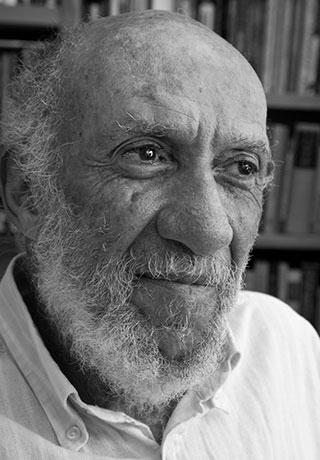
Foreword to THE NEW PEARL HARBOR: Disturbing Questions about the Bush Administration and 9/11 by David Ray Griffin.
David Ray Griffin has written an extraordinary book. If carefully read with only a 30% open mind, it is almost certain to alter negatively the way we understand the workings of constitutional democracy in the United States at the highest levels of government. As such, this is a disturbing book, depicting a profound crisis of political legitimacy for the most powerful sovereign state in the history of the world, and furthermore, a country embarked on the first ever borderless war with no markers of victory and defeat. If The New Pearl Harbor receives the sort of public and media attention that it abundantly deserves, it should alter the public debate, and exert a positive influence on how the future unfolds. It is rare, indeed, that any book has this potentiality to become a force of history.
What makes The New Pearl Harbor so special is that it explores the most sensitive and controversial terrain&emdash;the broad landscape of official behavior in relation to the 9/11 disaster&emdash;in the best spirit of academic detachment coupled with an exemplary display of the strongest scholarly virtue: a willingness to allow inquiry to follow the path of evidence and reason wherever it leads. And it leads here to explosive destinations that raise severe doubts about the integrity and worldview of our leadership in those parts of the government that exercise the greatest control over the behavior and destiny of the country, particularly in the area of national security, including war overseas and the stifling of liberties at home. But Griffin’s relentless questioning on the basis of evidence assembled by others that cannot be reconciled with the official accounts of 9/11 is just that. It does not purport to be conclusionary or accusatory. What it does do brilliantly is to create an overwhelming argument for a comprehensive, unhampered, and fully funded investigation, with suitable prominence, of the entire story of how and why 9/11 happened, as well as why such an unprecedented breakdown of national security was not fully and immediately investigated as a matter of the most urgent national priority. There are so many gaping holes in the official accounts of 9/11 that no plausible coherent narrative remains, and we must go forward as if the truth about these traumatic events no longer matters.
Griffin shows, with insight and a firm grasp of the many dimensions of global security policy of the Bush Administration, that getting 9/11 right, even belatedly, matters desperately. The layer upon layer of unexplained facts, the multiple efforts by those in power to foreclose independent inquiry, and the evidence of a pre-9/11 blueprint by Bush insiders to do what they are doing on the basis of a 9/11 mandate is why the Griffin assessment does not even require a reader with a normally open mind. As suggested, 30% receptivity will do, which means that all but the most dogmatically blinded adherents of the Bush presidency will be convinced by the basic argument of The New Pearl Harbor.
It should be underscored that this book does not belong in the genre of “conspiracy theories.” It is a painstakingly scrupulous look at the evidence, and an accounting of the numerous discrepancies between the official account provided by the U.S. Government and the best information available. It refrains from explaining these discrepancies, except by implication. It refrains also from pointing fingers at those who are responsible for this disregard of the obligation of our democratically elected government to show respect for the right of citizens to know the truth about the momentous events that have shaken the foundations of the republic as never before. A growing number of observers here and abroad no longer consider the United States to be a republic, but more accurately understood as an empire, aspiring to be the first truly global empire in history.
Of course, it is fair to wonder, if Griffin has the facts straight, why this story of the century has not been clearly told before. Why has the media been asleep? Why has Congress been so passive about fulfilling its role as a watchdog branch of government, above all protective of the American people? Why have there been no resignations from on high by principled public servants followed by electrifying revelations? There have been questions raised here and there and allegations of official complicity made almost from the day of the attacks, especially in Europe, but no one until Griffin has had the patience, the fortitude, the courage, and the intelligence to put the pieces together in a single coherent account. Part of the difficulty in achieving credibility in relation to issues that are so profoundly disturbing to public confidence in the basic legitimacy of state power is that the accusatory voices most often heard are strident and irresponsible, making them easily dismissed as “paranoid” or “outrageous” without further consideration of whether the concerns raised warrant investigation. In contrast, Griffin’s tone and approach is calm and his argument consistently well-reasoned, making the basic drift of the analysis impossible for a fair-minded reader to ignore.
But there are troubling forces at work that block our access to the truth about 9/11. Ever since 9/11 the mainstream media has worked hand-in-glove with the government in orchestrating a mood of patriotic fervor making any expressions of doubts about the official leadership of the country appear to be conclusive evidence of disloyalty. Media personalities, such as Bill Maher, who questioned, even casually, the official narrative were given pink slips, sidelined, and silenced, sending a chilling message of intimidation to anyone tempted to voice dissident opinions. Waving the American flag became a substitute for critical and independent thought, and slogans such as “United We Stand” were used as blankets to obscure whatever critical impulses existed. It is here that the Pearl Harbor antecedent becomes so relevant, an earlier occasion on which a dramatic, surprise attack galvanized the country for war, shut down robust pre-attack anti-war dissent once and for all, and ended meaningful policy debate.
As with Pearl Harbor there are ample reasons to receive news of massive attack with some skepticism. As with the difficulties of the Roosevelt presidency in rallying the country for war, here too, the neocon advisers shaping the foreign policy of the Bush Administration had been frustrated by their inability to mobilize the country for war. These prominent advisors had made no secret of their fervent wish for some sort of hostile attack of dramatic magnitude that would awaken the American people to their sense of the dangers of the post-cold war world, as well as of the opportunities for global domination, a vision of global empire that was openly embraced by neocon leading lights. One of the most ardent proponents of this outlook, Donald Rumfeld, Secretary of Defense, acknowledged in an apparently unguarded moment, during a TV interview with Jim Lehrer on the second anniversary of the attacks, that 9/11 was “a blessing in disguise.” Such a sentiment, besides being monumentally insensitive to the suffering of families of the victims, confirms long after the fact that 9/11 was not at all experienced by the leadership in Washington as a national tragedy, but rather was precisely the mandate for which they were so impatiently waiting!
What is increasingly demonstratable, beyond conjecture and circumstantial evidence, is that the Iraq War was planned before 9/11 by the Bush insiders, and that it went ahead despite its manifest irrelevance to the real national security interests of the United States. This irrelevance, or worse, was disguised only because it was possible to connect Iraq, by way of fabricated evidence and confusing rhetoric, with the blinding patriotism generated by 9/11. From the perspectives of law, morality, and politics, the war seemed so unjustifiable that most of America’s traditionally subordinate NATO allies, who had been accustomed for decades to go along with whatever Washington proposed in the security area, finally balked at lending their support for the Iraq War.
Now even reactionary establishment figures, most notably to date, Paul O’Neill, former Secretary of the Treasury, are beginning to come forth with disclosures that undermine the official presentation of the case for the Iraq War. It has been reported in January 2004 that an official report prepared under the auspices of the Army War College has concluded that the Iraq War was neither “relevant” to the terrorist threat or “necessary” for American security. It now appears conclusively that the supposedly documented claims that Iraq posed a danger to the United States because of its arsenal of weaponry of mass destruction was crafted by spin doctors in the White House and Pentagon, suppressing evidence from their own intelligence agencies that did not fit in with their war plans and building a case based on information about weaponry of mass destruction that has proved altogether false. What was, perhaps, the most deplorable facet of this war scenario was the cynical suggestion that Saddam Hussein had to be eliminated because he was connected with the 9/11 attacks.
That this contention was swallowed by over half of the American people without even a shred of evidence is a frightening demonstration of how much room for maneuver is possessed by the White House and Pentagon at this point in our national history, and makes even contentions that we are flirting with a fascist future seem prudent, rather than being hysterical and irresponsible. Even the realities of a hostile occupation, the mounting casualties, and the failure to find a single weapon of mass destruction have yet to generate the tidal wave of public criticism of the Iraq policies that one would expect in a healthy democratic republic. Only now after months of disappointment and failure in Iraq are issues about the viability of the occupation and exit plans being discussed, although timidly, in the media. It remains to be seen whether “regime change” in Baghdad will live up to the claims of Washington to bring “democracy” to Iraq and the region rather than either civil war or a grotesque authoritarian sequel to the cruel brutality of Saddam Hussein’s dictatorial rule.
As the spell cast by patrioteering has begun to wear off, there is another related dynamic at work to keep us from the truth, what psychiatrists describe as “denial.” The unpleasant realities of the Iraq occupation make it difficult for most Americans to acknowledge that the whole undertaking, including especially the death and maiming of young Americans, was based on the willful distortion of realities by the elected leadership of the country. This unpleasantness is magnified many times over if what is at stake is the possibility that the terrible events of 9/11 were from the outset, or before, obscured by deliberately woven networks of falsehoods. Part of the impulse to deny is to avoid coming face-to-face with gruesome realities that are embedded in the power structure of government that controls our lives. In an important sense, Griffin’s book could serve as a much antidote for this process of collective denial that has paralyzed the conscience and consciousness of the nation during these past few years. At the very least, it should give rise to a debate that is late, but far better late than never. Long ago Thomas Jefferson warned that “the price of liberty was the vigilance of the citizenry.”
There is no excuse at this stage of American development for a posture of political innocence, including an unquestioning acceptance of the good faith of our government. After all, there has been a long history of manipulated public beliefs in high-profile situations, especially bearing on matters of war and peace. Historians are in increasing agreement that the facts were manipulated in the explosion of USS Maine to justify the start of the Spanish-American War (1898), with respect to the Japanese attack on Pearl Harbor to justify the previously unpopular entry into World War II, in relation to the Gulf of Tonkin incident of 1964 that was used by the White House to justify the dramatic extension of the Vietnam War to North Vietnam, and, of course, most recently to portray Iraq as harboring a menacing arsenal of weaponry of mass destruction justifying recourse to a war defying international law and the United Nations. The official explanations of such historic events as the atomic bombing of Hiroshima and Nagasaki and the assassination of President Kennedy have also not stood up to scrutiny by objective scholars. In these respects, the breaking of trust between government and citizenry in the United States has deep historical roots, and is not at all merely a partisan indictment of the current leadership associated with the right wing of the Republican Party. But it does pose for all of us a fundamental, haunting question. Why should the official account of 9/11 be treated as sacrosanct and accepted at face value, especially as it is the rationale for some of the most dangerous undertakings in the whole history of the world?
A central point here that distinguishes 9/11 from some of the historical antecedents, and especially Pearl Harbor itself, is that the policy favored by the elected leadership seemed in greater accord with the values and interests of the society than the isolationist sentiments of the citizenry. World War II was a notable, necessary, and just cause. American participation was essential for the effort to defeat the Nazi drive for world domination in collaboration with Japanese militarism and Italian fascism. In contrast, the White House response to 9/11 is avoiding the real challenges to security posed by political extremists associated with the al Qaeda network and leading this country in directions that are destructive of our most cherished values and endangering world order in apocalyptic ways that even put human survival at risk.
As Griffin shows, it is not necessary to accept every suspicious fact as demonstrative of the failure of the official account of 9/11 to put reasonable doubts to rest. His approach is based on the cumulative impact of the many soft spots in what is officially claimed to happened, soft spots that relate to advance notice and several indications of actions facilitating the prospects of attack, to the peculiar gaps between the portrayal of the attack by the media and government and independent evidence of what actually occurred, and to the unwillingness of the government to cooperate with what meager efforts at inquiry have been mounted. Any part of this story is enough to vindicate the basic call by David Ray Griffin that this country and the world deserves a thorough, credible, and immediate accounting of the how and why of that fateful day. We have been repeatedly told that 9/11 “changed everything,” but what it did not change was the appalling reluctance of the American people to demand truthfulness from their government with respect to vital happenings of ultimate consequence. Recall Ben Franklin’s celebrated response when asked what the Constitutional Convention in Philadelphia had accomplished: “a republic, if you keep it.”