
Reviving Global Justice, Addressing Legitimate Grievances

Since its founding moments, the United States has been bedeviled by a morally self-congratulatory image of American exceptionalism, despite engaging in practices that violate the most fundamental precepts of human decency. This dualism, constituted by dynamics of denial and myth-making, has achieved a public posture of innocence throughout a national history that includes slavery, racism, dispossession and destruction of native peoples, continuous interventions in weaker countries, war-making and exploitative economic arrangements with autocratic Third World elites. A dramatic instance of this contradictory reality was the celebration of victory over fascism as a just war coupled with the mega-terrorist use of atomic bombs against the civilian populations of Hiroshima and Nagasaki in 1945.

In some notable respects, the disappointments of the 1990s represented a parallel disconnect, due to US preeminence, between impressive achievements on the level of global justice and immobility, or worse, on the level of existential human suffering, when that suffering could have been mitigated. Nowhere was this more true than in Africa and the Middle East. The African region was seen as not worth the candle of strategic engagement by the geopolitical forces that govern the world; in the Middle East, those forces accorded priority to sustaining an artificial and oppressive status quo. In one instance, the region was geopolitically insignificant, and in the other, the region was treated as a matter of vital strategic interest. Yet the results of neglect and excessive attentiveness were essentially the same for the local peoples.

The Disconnect

The failure of the United Nations in 1994 to protect the threatened population of Rwanda against genocide is illustrative of the refusal of the organized world community to lift a finger under conditions of humanitarian emergency. This same refusal to act locally was dramatically evident in relation to the struggle over Israel-Palestine, where the illusion of a Ågpeace processÅh was coupled with the concrete realities of settlement expansion and a humiliating Israeli occupation of Palestinian territories in defiance of international law. There were many other expressions of this pattern, including a willed indifference to poverty and disease in the South, as well as the minimal engagement with Ågethnic cleansingÅh in former Yugoslavia, culminating in the horrendous massacre at Srebrenica in 1995, while UN peacekeepers looked on as virtual bystanders. Such examples of local injustice could be multiplied indefinitely, although these salient examples of either regional inattention or preoccupation by geopolitical forces provide a revealing profile of recent world politics.

Despite these failures, there were encouraging suggestions of an awakening sense of human solidarity, exhibiting a deepening global moral and legal consciousness. The pursuit of former Chilean dictator Augusto Pinochet demonstrated an increasing willingness to hold leaders of states legally responsible for crimes of state. There was a dramatic increase in attention to severe violations of human rights, including even a selective willingness to engage in humanitarian interventions under the auspices of the UN. There were a variety of moves to address historic injustices, including long-deferred compensation for forced labor during the Nazi era, recovery of bank deposits by Holocaust survivors, serious discussion of reparations for victims of slavery, and acknowledgement of and apology for crimes perpetuated long ago, including the dispossession of numerous indigenous peoples, colonial domination and the humiliation of so-called Ågcomfort womenÅh throughout Asia during the time of Japanese military expansion.

These moves reflected the rise and influence of global civil society, providing an expanding number of arenas that were receptive to constituencies that felt variously victimized by current political, economic and cultural arrangements. During the final decade of the bloody twentieth century, there seemed to be an emergent sense of global responsibility that transcended borders, and defied the amorality of geopolitics. A new internationalism arose that involved coalitions between transnational social forces organized as civil society actors and moderate governments, achieving an anti-personnel land mines treaty and the establishment of an International Criminal Court over the vigorous opposition of such leading states as the US and China. The behavioral impact of such initiatives remain to be seen, and will be a strong indicator of whether the specific conduct of controlling geopolitical forces can be made responsive to the claims of global justice.

Resilience of Power

The question that remains is how to explain this stultifying disconnect arising from the persistence, and even intensification, of particular injustices in the face of general moves in the direction of global justice. I think there are two lines of explanation, either of which seems sufficient. The first line of explanation is quite simply a matter of geopolitical ascendancy, either highlighting a commitment to the status quo by hegemonic actors or revealing an essential unwillingness by these actors to expend resources and give attention to matters of marginal relevance to their perceived interests. Since the collapse of the Soviet Union, the Middle East has replaced Europe as the vital pivot of world politics, and support for Israel is central to the regional hegemonic strategy of the US, as well as representing an entrenched domestic commitment in official American politics. At the same time, the symbolic prominence of the Palestinian struggle, as the most significant instance of thwarted self-determination and disrupted decolonization, requires the appearance of attention to the dynamics of the conflict.

The result of such conflicting pressures is a phony peace process, a gesture toward global justice, accompanied by a worsening Palestinian reality, the embodiment of local injustice, that ironically gives rise to forms of local resistance that simultaneously, although unwittingly, diminish Israeli security and economic wellbeing. Indeed, this tragic downward spiral for both peoples is characteristic of the effects of denying specific injustices so as to realize geopolitical priorities, which in this instance include oil, military presence and the suppression of political Islam. We witness a powerful negative dialectic at work in the Middle East that couples the language of peace with governing policies of extreme violence. The US war of aggression against Iraq followed by a hostile and exploitative occupation, replete with sweetheart deals worth billions for such insider corporations as Halliburton and Bechtel, is illustrative of a new type of post-colonial colonialism, which seems unlikely to prevail over the nationalist resistance being mounted by Iraqi anti-colonialist forces.

Would you be reading this now,
if it wasn’t useful to you?
Get more quality articles in the future

The second main explanation of the disconnect involves the resilience of state sovereignty. During recent decades, power differentials have become increasingly difficult to translate into political outcomes in the face of nationalist resistance. Most current injustices are matters of either state-society relations in which an abusive government imposes its will or cruelties embedded in popular culture that governments lack the means (or the will) to prevent, as is the case with Åghonor killingsÅh in such countries as Turkey and Jordan. Perhaps, over time, the endorsement of standards of international human rights, as well as decades of relevant peace education and the homogenizing impact of globalization, will lead to a gradual and uneven process of Ågharmonization,Åh softening the behavior of governments toward their own citizens and challenging regressive aspects of cultural practice.

But the main explanation of local injustice continues to be what it has been for several centuries: the Westphalian framework of a world of territorially sovereign states, empowered to act as an insulating sanctuary for the commission of what Ken Booth has so tellingly called Åghuman wrongs.Åh In other words, the imperatives of global justice are continuously being trumped by the unjust realities of territorial authority. Thinking back to the Nazi era, it is chastening to realize that so long as Hitler carried on his genocidal policies within German borders, there was no geopolitical willingness whatsoever to challenge the persecution of the Jews and others. It was only when Germany and its partners deeply threatened the global order by waging European wars of aggression that a defensive alliance took shape. As long as Germany acted domestically, there was no political will to protect the victims of acute local injustice. The liberal democracies were quite willing to participate in the 1936 Olympics and to be entertained by their hosts at Berlin, knowingly presenting the Nazi regime with a major propaganda victory.

Reversing the Momentum

Such an assessment of this complex relationship between the globally articulated demands for justice and the persistence of local injustice has proceeded without discussing either the complicating relevance of corporate and other forms of globalization and without a mention of the September 11 attacks.

Very superficially, there was a new dialectical movement at work during the 1990s with respect to globalization, combining an economistic indifference to the human fallout of neo-liberal global economic policy and a moral and religious resurgence partly arising as a defensive reaction to corporate globalization. This reaction was notable by its selective attentiveness to specific injustices, as well as its embrace of a normative discourse on a global level, especially with respect to human rights. Multinational companies such as Shell, with notorious records of local abuse, suddenly purchased prominent advertising space to proclaim their dedication to human rights and environmental responsibility. Of course, such initiatives were in large part cynical public relations gestures, but were also significant as acknowledgements that the moral demands of global civil society could not be ignored. It may still be a stretch to claim that global civil society is Ågthe other superpower,Åh but it would be equally ahistorical to ignore this transnational capacity to endow certain global justice demands with political force.

The impact of September 11 is significant, obscuring the dialectical links between claims of global justice and the persistence of local injustice by restoring issues of war and peace to center stage. When global civil society mounted its extraordinary protests of February 15, 2003 against the prospect of a US attack on Iraq, it signified the adoption by civil society of a war/peace agenda, as well as the impotence of grassroots forces to reverse the geopolitical momentum associated with the US drive to convert its defense against the al-Qaeda network into a pretext for global empire. By so shifting the focus of concern, the encouraging developments of the 1990s that had mounted a potentially positive dialectic, generating a normative climate in which political legitimacy of elites was at least provisionally dependent on upholding human rights, were canceled overnight. As in the Cold War, a negative dialectic prevailed, in which geopolitical alignments were privileged to the extent that abusive rule at home was ignored, or even reinforced, provided support was given in the struggle against world communism. Now the political language has shifted to Ågterrorism,Åh but the effects are similar, granting states an exemption from global accountability so long as they sign up as acquiescent in US moves to consolidate its imperial grip on the world political and economic system.

Whether the more hopeful dialectic of the 1990s can be restored to historical relevance is an uncertainty likely to be resolved in the next few years. Crucial to this resolution is the outcome of the Iraq occupation and the 2004 presidential elections in the US. Unfortunately, hope in the near term depends on the continuing failure of US policy in Iraq, as well as on an economic ÅgrecoveryÅh that restores corporate profits without overcoming joblessness. If the response to September 11 can be converted from ÅgwarÅh to Åglaw enforcement,Åh and the Bush presidency repudiated at the polls, then there is a strong prospect that the momentum of the 1990s in support of global justice will reappear, quite possibly with enhanced stature and a greater sense of urgency.

In such an atmosphere, it is not unreasonable to hope that the most symbolically powerful instances of injustice will attract growing attention, which could finally bring some relief and balance to the struggle of the Palestinian people to achieve their rights, especially the right of self-determination. It is helpful to remember that the downfall of apartheid at the outset of the 1990s seemed ÅgimpossibleÅh only a few years before it happened, but that it too had acquired the status of an intolerable specific injustice for the world as a whole. It is this possibility, as reinforced by the courage of the Palestinian people, which gives us some reason to believe that the decade ahead will give rise to progress with respect to this grossest form of collective injustice, as well as allow for a revival of attention to an array of other legitimate grievances around the world.
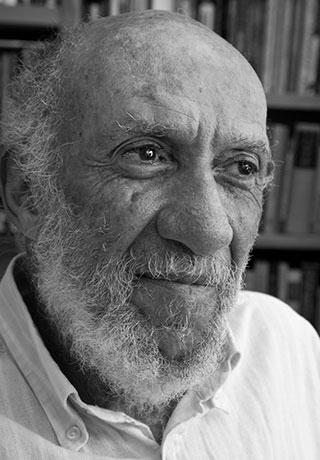

Professor Falk became an adviser to TFF when it was established in 1985.

Related Posts

LONDON – So far so good, at least on the wider level. While internally Iraq seems on the edge of chaos, the much heralded clash of civilizations between the Muslim and Judaeo-Christian worlds has yet to become apparent. We have anger and despair aplenty in the Arab and Muslim worlds. But very little rushing to the standard and there was no great pilgrimage of warriors to join the fight, as happened when the Soviet Union invaded Afghanistan twenty years ago, and then, having driven the Red Army out, were left to ferment in that mountainous redoubt. With the armaments supplied by the CIA the mujahidin were transformed into Al Qaeda that became, for a relatively brief moment as these things go, ‘the greatest threat to the homeland that America has ever known.’ Nevertheless a ‘Cold War’ between much of the Muslim world and the West is certainly in full swing. Winston...
The Challenge of Nuclear Weaponsin the Twenty-first CenturyA Path Forward The peoples and governments of the world face an urgent challenge relating to weaponry of mass destruction and particularly to nuclear weaponry.  At the crossroads of technology, terrorism, geopolitical ambition, and policies of preemption are new and potent dangers for humanity. Despite ending the nuclear standoff of the Cold War era, nuclear weaponry is again menacing the peoples of the world with catastrophic possibilities.  We recognize the need for any government to pursue its security interests in accordance with international law; and further, we recognize that distinctive threats to these interests now exist as a result of an active international terrorist network having declared war on the United States and its allies. Nonetheless, we reject the assessment of the current US administration that upgrading a reliance on nuclear weapons is in any sense justified as a response. We find it...
By Karin Wegestal MP, the Social Democratic Partyon behalf of the Swedish Committee for Solidarity with the Yugoslav People During the last decade, the Federal Republic of Yugoslavia has received more than 500,000 refugees from Croatia and Bosnia, and another 300,000 internally displaced persons, mainly from the province Kosovo and Metohia. For a country with about ten million inhabitants, such an influx of homeless people is obviously a very heavy burden – even under peaceful conditions. But in addition to that, the Federal Republic of Yugoslavia has been the subject to sanctions from the western powers for close to ten years and its infrastructure was badly hurt through Nato’s intense bombardment during 78 days in 1999. The result of all this is that Yugoslavia, once the most developed industrial country in Eastern Europe, is today the poorest country in Europe. In Serbia excluding Kosovo, with about ten million inhabitants and...

Recent Articles

Tony Robinson October 4, 2026 Violence is easy to recognise when someone is being beaten, shot or killed. It becomes more difficult when nobody is holding a weapon. Poverty, discrimination, exploitation and repression can restrict a human life just as effectively, although they do so in very different ways and with very different consequences. Simply adding more categories to an ever-growing list of forms of violence does not really solve the problem. The more interesting question is what all these different situations have in common and why it makes sense to describe them using the same word. Human beings do not simply react to what happens around them. They remember the past, imagine things that do not yet exist, make plans and undertake projects. Workers organise because they imagine different working conditions; people migrate because they imagine another life somewhere else; social movements emerge because people refuse to accept the...
It’s a matter of principles, courage, vision and pulling together – while the militarist world is falling apart… Peter Langille October 3, 2026 “Here, then, is the problem which we present to you, stark and dreadful and inescapable: Shall we put an end to the human race; or shall mankind renounce war?”The Bertrand Russell—Albert Einstein Manifesto, July 9, 1955 ⁕ The forecast for what’s ahead is worrisome. The sharp rise in armed conflicts over the past three years is adding to what was already the highest level in over seventy years. Genocides, which should be prevented are supported. A shared climate emergency that jeopardises survival is ignored. Diverse polls now suggest that people are war-weary, worried and interested in a more effective United Nations. And, there are viable policy options for a more secure world! Yet governments are doubling-down, betting on more war and investing heavily. If current trends persist,...
Johan Galtung 1930-2024October 2015 Published here on October 3, 2026 Let us focus on Civilization for conflict analysis and remedies. Major forms of disorder use violence; war is state organized violence. The most belligerent states are the United States of America and Israel, both with civilization roots. National Evangelism, the US Protestant Christian civilization– more national than evangelical–justifies US warfare as exceptionalism of a people chosen by God, with a manifest destiny to run the world. Orthodox Judaism justifies Israeli warfare to conquer and expand from Nile to Euphrates as a religious right and duty to the Eternal One. The third most belligerent country, the UK, no longer believes it is God-chosen but chosen by the USA; not quite the same but something. But the root cause of global disorder lies in the Occident–with Islam–seeing itself as the single, universal civilization valid for all at all times, all others being...

TFF on Substack

Discover and subscribe to more peace materials on TFF Substack

Most Popular

Tony Robinson October 4, 2026 Violence is easy to recognise when someone is being beaten, shot or killed. It becomes more difficult when nobody is holding a weapon. Poverty, discrimination, exploitation and repression can restrict a human life just as effectively, although they do so in very different ways and with very different consequences. Simply adding more categories to an ever-growing list of forms of violence does not really solve the problem. The more interesting question is what all these different situations have in common and why it makes sense to describe them using the same word. Human beings do not simply react to what happens around them. They remember the past, imagine things that do not yet exist, make plans and undertake projects. Workers organise because they imagine different working conditions; people migrate because they imagine another life somewhere else; social movements emerge because people refuse to accept the...
It’s a matter of principles, courage, vision and pulling together – while the militarist world is falling apart… Peter Langille October 3, 2026 “Here, then, is the problem which we present to you, stark and dreadful and inescapable: Shall we put an end to the human race; or shall mankind renounce war?”The Bertrand Russell—Albert Einstein Manifesto, July 9, 1955 ⁕ The forecast for what’s ahead is worrisome. The sharp rise in armed conflicts over the past three years is adding to what was already the highest level in over seventy years. Genocides, which should be prevented are supported. A shared climate emergency that jeopardises survival is ignored. Diverse polls now suggest that people are war-weary, worried and interested in a more effective United Nations. And, there are viable policy options for a more secure world! Yet governments are doubling-down, betting on more war and investing heavily. If current trends persist,...
Johan Galtung 1930-2024October 2015 Published here on October 3, 2026 Let us focus on Civilization for conflict analysis and remedies. Major forms of disorder use violence; war is state organized violence. The most belligerent states are the United States of America and Israel, both with civilization roots. National Evangelism, the US Protestant Christian civilization– more national than evangelical–justifies US warfare as exceptionalism of a people chosen by God, with a manifest destiny to run the world. Orthodox Judaism justifies Israeli warfare to conquer and expand from Nile to Euphrates as a religious right and duty to the Eternal One. The third most belligerent country, the UK, no longer believes it is God-chosen but chosen by the USA; not quite the same but something. But the root cause of global disorder lies in the Occident–with Islam–seeing itself as the single, universal civilization valid for all at all times, all others being...
Read More
Living-Peace-Sign-Budapest-copy
Tony Robinson October 4, 2026 Violence is easy to recognise when someone is being beaten, shot or killed. It becomes more difficult when nobody is holding a weapon. Poverty, discrimination, exploitation and repression can restrict a human life just as effectively, although they do so in very different ways and with very different consequences. Simply adding more categories to an ever-growing list of forms of violence does not really solve the problem. The more interesting question is what all these different situations have in common and why it makes sense to describe them using the same word. Human beings do not simply react to what happens around them. They remember the past, imagine things that do not yet exist, make plans and undertake projects. Workers organise because they imagine different working conditions; people migrate because they imagine another life somewhere else; social movements emerge because people refuse to accept the...
b54a1f10-8c65-4f0b-9dd5-4abc0a7d04cc_2659x2659
It’s a matter of principles, courage, vision and pulling together – while the militarist world is falling apart… Peter Langille October 3, 2026 “Here, then, is the problem which we present to you, stark and dreadful and inescapable: Shall we put an end to the human race; or shall mankind renounce war?”The Bertrand Russell—Albert Einstein Manifesto, July 9, 1955 ⁕ The forecast for what’s ahead is worrisome. The sharp rise in armed conflicts over the past three years is adding to what was already the highest level in over seventy years. Genocides, which should be prevented are supported. A shared climate emergency that jeopardises survival is ignored. Diverse polls now suggest that people are war-weary, worried and interested in a more effective United Nations. And, there are viable policy options for a more secure world! Yet governments are doubling-down, betting on more war and investing heavily. If current trends persist,...
010
Johan Galtung 1930-2024October 2015 Published here on October 3, 2026 Let us focus on Civilization for conflict analysis and remedies. Major forms of disorder use violence; war is state organized violence. The most belligerent states are the United States of America and Israel, both with civilization roots. National Evangelism, the US Protestant Christian civilization– more national than evangelical–justifies US warfare as exceptionalism of a people chosen by God, with a manifest destiny to run the world. Orthodox Judaism justifies Israeli warfare to conquer and expand from Nile to Euphrates as a religious right and duty to the Eternal One. The third most belligerent country, the UK, no longer believes it is God-chosen but chosen by the USA; not quite the same but something. But the root cause of global disorder lies in the Occident–with Islam–seeing itself as the single, universal civilization valid for all at all times, all others being...
Screenshot 2026-10-02 011738
Jan ObergPhD, director, The Transnational Foundation for Peace and Future Research, TFFLund, Sweden October 2, 2026 This is my full original manuscript. The Chinese Academy of Social Science, CASS, makes two publications out if it. 1. China’s Five-year plan emphasized the capabilities of basic research and original innovation. It is regarded as the goal of the future social development, which, as required, should be significantly enhanced. Can you comment on the importance of original innovation in research and academic study? I believe it is easier to define “original innovation” in the natural sciences than in social sciences. The breaking points of what constitutes something new, or innovative, are not quite as sharp in the latter. But in both fields it is about opening up something that was closed, unseen, unexplored before – making manifest what was earlier latent. Innovations come in many forms and shapes – naming something that was not...
arctic-circle-map
The agreement is catastrophic both because of what it says and what it doesn’t mention. It reduces further the major asset of security policies: Freedom of action. Jan Oberg TFF director September 25, 2026 A couple of hours before the agreement was signed on September 22, 2026, I published the following 13 hypotheses about what it would most likely contain on TFF Substack (in English). I was wrong on only the first point. Contrary to what Trump had written on his Truth Social platform, it does not appear to come into force immediately. In fact, it turned out to be worse than even I had anticipated. After these hypotheses now come a number of reflections in light of what the agreement actually contains, and does not contain, as well as the way in which it has generally been presented by major media outlets and by the public-service broadcaster DR. My...
girl-5894831_1280
Below are TFF-related media mentions, comments, videos and social media posts published elsewhere but not on this homepage. We happen to catch and list only a fraction. Regarding video comments and debates, we recommend that you go to the TFF Video Channel on Substack where many of them are reproduced. Jan Oberg is a contributor to China Daily – 52 million daily clicks – and Global Times, CGTN and CCTV (the national television), China Investment, Xinhua News Agency and several others. Articles and videos on these media very often multiply into countless Chinese (and Western media) that re-post them from these main media. Thanks to The China Academy, his analyses, interviews and comments are frequently posted on YouTube channels such as Thinkers Forum and Wave Media. These videos are often re-posted on Bilibili (China’s YouTube), the China Content Center on TikTok, and on the Chinese edition of TikTok, Douyin.com. This means reaching hundreds of millions of viewers worldwide over a year. While there are too many to catch on all these...




