
MIDDLE EAST ILLUSIONS
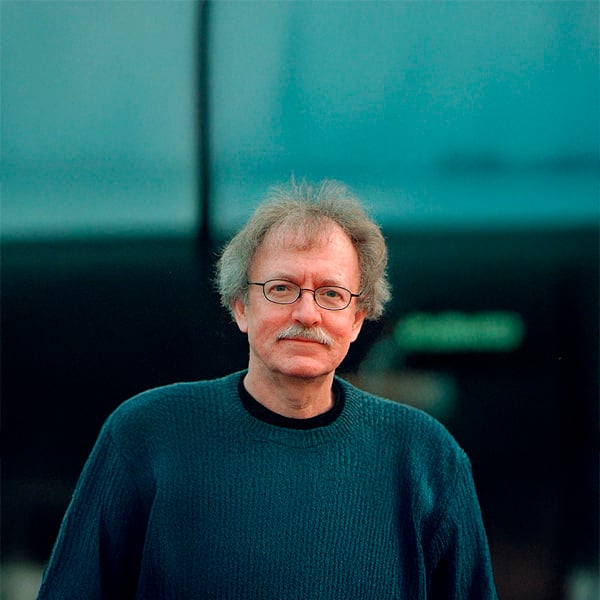
Av: Noam Chomsky
Rowman & Littlefeld
Lanham, Boulder, New York, Oxford 2003.

USA har motiverat tre stora krig efter varandra med moraliska argument. Bombningarna av Jugoslavien 1999 kallades en “humanitär intervention”. Kriget mot Afghanistan två år senare motiverades till slut med att man ville krossa den förhatliga talibanregimen. Och bombningarna av Irak i år gällde ju inte bara de massförstörelsevapen (som inte verkar ha funnits) utan i lika hög grad en misshaglig regim. I alla tre krigen fanns på köpet män som i propagandan personifierade “ondskan”, Slobodan Milosevic, Osama bin Ladin och Saddam Hussein. Krigen framställdes som de goda krafternas krig mot de onda.

Bedriver USA krig efter krig mot “de onda” för att upprätthålla respekten för de mänskliga rättigheterna?

Nej, knappast, konstaterar Noam Chomsky i sin senaste bok, “Middle East Illusions”, en samling texter om Mellanöstern och särskilt USA:s politik gentemot regionen. Bokens första del behandlar åren 1968 – 73 och har tidigare publicerats i bokform 1974 i “Peace in Middle East?”. Ett följande avsnitt behandlar liknande ämnen trettio år senare, 1997 – 2002 och ett avslutande kapitel utgår från kriget mot terrorismen.

USA säger sig skydda mänskliga rättigheter, men det gäller enbart när det ligger i det egna politiska intresset, påpekar Chomsky. Det motsatta är vanligare. Saddam Hussein anklagades upprepade gånger av USA:s president under förspelet till kriget för att ha “gasat sin egen befolkning”. Det är riktigt skriver Chomsky, men tre ord fattas, “with our support”. USA:s hjälp till Irak fortsatte och ökade efter gasningen av Halabja.

Offren där var kurder. I Turkiet har kurderna länge diskriminerats. Ändå har USA gett massiv militär hjälp till den turkiska regimen. 1997 var den större än till något annat land, Israel och Egypten undantagna. USA stod länge för 80 procent av Turkiets vapen, jetplan, stridsvagnar, napalm – som användes mot den kurdiska befolkningen i landet, med tiotusentals döda, två till tre miljoner flyktingar och bortåt 3.500 förstörda kurdiska byar.

Chomsky jämför Turkiets operationer in i Iraks kurdiska områden med Israels krig i södra Libanon under 22 år, också de ett brott mot FN-resolutioner. Enligt libanesiska källor dödades under de åren omkring 45.000 – med amerikanskt stöd.

“Hur uppmärksammades allt detta i USA?”, undrar Chomsky retoriskt. “Mycket enkelt: med tystnad.”

Under en tid ersattes Turkiet av El Salvador som gynnad mottagare av militärt stöd. Det skedde under en period då regimen slaktade sin egen befolkning. 1999 fick Columbia samma position, det land på västra halvklotet som gjort sig känt för värst kränkningar av de mänskliga rättigheterna.

I september 2000 inleddes i Israel-Palestina det som kommit att kallas al-Aqsa-intifadan, efter Ariel Sharons besök på tempelberget i Jerusalem. Några dagar efter denna begivenhet angrep israeliska helikoptrar palestinska bostadsområden och dödade dussintals. Attackhelikoptrarna hade givetvis levererats av USA. Amnesty protesterade och krävde att leveranserna skulle stoppas. Några månader senare skrev USA kontrakt med den israeliska regeringen på nya avancerade Apache attackhelikoptrar för fyra miljarder kronor. Också detta förbigicks i amerikanska medier med nästan total tystnad. Israels krig mot den palestinska befolkningen skulle knappast kunna föras som nu utan det massiva militära amerikanska stödet.

Chomsky uppmärksammar i bokens sista avsnitt USA:s krig mot terrorismen. Det är inget nytt, konstaterar han. Han citerar en amerikansk utrikesminister: Den mest alarmerande formen av terror är skrämmande nära USA, “en cancer på vår egen kontinent, något som vi måste operera bort”. I samma tal handlade det om ett land som öppet förnyat samma mål som i Hitlers Mein Kampf.

Nu gällde det inte Mellanöstern. Nej landet som utgjorde ett allvarligt hot mot USA på detta skrämmande vis var – Nicaragua, vid slutet av 80-talet. Utrikesminister George Schultz i Ronald Reagans regering var beredd att ta till alla medel mot denna nicaraguanska cancer. Schultz fördömde de som menade att “problemet Nicaragua” borde lösas med “utopiska, legala medel” via FN eller Internationella domstolen. I stället skulle Nicaragua attackeras med legosoldater från Honduras, där vid denna tid John Negroponte var ambassadör, samme politiker som nu under Bush är USA:s FN-ambassadör.

Finns det några möjligheter till fred i Mellanöstern? Chomsky diskuterar “fredsprocessen” som en del av USA:s globala strategi. Med den nuvarande ultrakonservativa amerikanska regimens politiska dubbelspel är det sannerligen inte lätt att se öppningar.

Related Posts

LONDON – So far so good, at least on the wider level. While internally Iraq seems on the edge of chaos, the much heralded clash of civilizations between the Muslim and Judaeo-Christian worlds has yet to become apparent. We have anger and despair aplenty in the Arab and Muslim worlds. But very little rushing to the standard and there was no great pilgrimage of warriors to join the fight, as happened when the Soviet Union invaded Afghanistan twenty years ago, and then, having driven the Red Army out, were left to ferment in that mountainous redoubt. With the armaments supplied by the CIA the mujahidin were transformed into Al Qaeda that became, for a relatively brief moment as these things go, ‘the greatest threat to the homeland that America has ever known.’ Nevertheless a ‘Cold War’ between much of the Muslim world and the West is certainly in full swing. Winston...
The Challenge of Nuclear Weaponsin the Twenty-first CenturyA Path Forward The peoples and governments of the world face an urgent challenge relating to weaponry of mass destruction and particularly to nuclear weaponry.  At the crossroads of technology, terrorism, geopolitical ambition, and policies of preemption are new and potent dangers for humanity. Despite ending the nuclear standoff of the Cold War era, nuclear weaponry is again menacing the peoples of the world with catastrophic possibilities.  We recognize the need for any government to pursue its security interests in accordance with international law; and further, we recognize that distinctive threats to these interests now exist as a result of an active international terrorist network having declared war on the United States and its allies. Nonetheless, we reject the assessment of the current US administration that upgrading a reliance on nuclear weapons is in any sense justified as a response. We find it...
By Karin Wegestal MP, the Social Democratic Partyon behalf of the Swedish Committee for Solidarity with the Yugoslav People During the last decade, the Federal Republic of Yugoslavia has received more than 500,000 refugees from Croatia and Bosnia, and another 300,000 internally displaced persons, mainly from the province Kosovo and Metohia. For a country with about ten million inhabitants, such an influx of homeless people is obviously a very heavy burden – even under peaceful conditions. But in addition to that, the Federal Republic of Yugoslavia has been the subject to sanctions from the western powers for close to ten years and its infrastructure was badly hurt through Nato’s intense bombardment during 78 days in 1999. The result of all this is that Yugoslavia, once the most developed industrial country in Eastern Europe, is today the poorest country in Europe. In Serbia excluding Kosovo, with about ten million inhabitants and...

Recent Articles

Tony Robinson October 4, 2026 Violence is easy to recognise when someone is being beaten, shot or killed. It becomes more difficult when nobody is holding a weapon. Poverty, discrimination, exploitation and repression can restrict a human life just as effectively, although they do so in very different ways and with very different consequences. Simply adding more categories to an ever-growing list of forms of violence does not really solve the problem. The more interesting question is what all these different situations have in common and why it makes sense to describe them using the same word. Human beings do not simply react to what happens around them. They remember the past, imagine things that do not yet exist, make plans and undertake projects. Workers organise because they imagine different working conditions; people migrate because they imagine another life somewhere else; social movements emerge because people refuse to accept the...
It’s a matter of principles, courage, vision and pulling together – while the militarist world is falling apart… Peter Langille October 3, 2026 “Here, then, is the problem which we present to you, stark and dreadful and inescapable: Shall we put an end to the human race; or shall mankind renounce war?”The Bertrand Russell—Albert Einstein Manifesto, July 9, 1955 ⁕ The forecast for what’s ahead is worrisome. The sharp rise in armed conflicts over the past three years is adding to what was already the highest level in over seventy years. Genocides, which should be prevented are supported. A shared climate emergency that jeopardises survival is ignored. Diverse polls now suggest that people are war-weary, worried and interested in a more effective United Nations. And, there are viable policy options for a more secure world! Yet governments are doubling-down, betting on more war and investing heavily. If current trends persist,...
Johan Galtung 1930-2024October 2015 Published here on October 3, 2026 Let us focus on Civilization for conflict analysis and remedies. Major forms of disorder use violence; war is state organized violence. The most belligerent states are the United States of America and Israel, both with civilization roots. National Evangelism, the US Protestant Christian civilization– more national than evangelical–justifies US warfare as exceptionalism of a people chosen by God, with a manifest destiny to run the world. Orthodox Judaism justifies Israeli warfare to conquer and expand from Nile to Euphrates as a religious right and duty to the Eternal One. The third most belligerent country, the UK, no longer believes it is God-chosen but chosen by the USA; not quite the same but something. But the root cause of global disorder lies in the Occident–with Islam–seeing itself as the single, universal civilization valid for all at all times, all others being...

TFF on Substack

Discover and subscribe to more peace materials on TFF Substack

Most Popular

Tony Robinson October 4, 2026 Violence is easy to recognise when someone is being beaten, shot or killed. It becomes more difficult when nobody is holding a weapon. Poverty, discrimination, exploitation and repression can restrict a human life just as effectively, although they do so in very different ways and with very different consequences. Simply adding more categories to an ever-growing list of forms of violence does not really solve the problem. The more interesting question is what all these different situations have in common and why it makes sense to describe them using the same word. Human beings do not simply react to what happens around them. They remember the past, imagine things that do not yet exist, make plans and undertake projects. Workers organise because they imagine different working conditions; people migrate because they imagine another life somewhere else; social movements emerge because people refuse to accept the...
It’s a matter of principles, courage, vision and pulling together – while the militarist world is falling apart… Peter Langille October 3, 2026 “Here, then, is the problem which we present to you, stark and dreadful and inescapable: Shall we put an end to the human race; or shall mankind renounce war?”The Bertrand Russell—Albert Einstein Manifesto, July 9, 1955 ⁕ The forecast for what’s ahead is worrisome. The sharp rise in armed conflicts over the past three years is adding to what was already the highest level in over seventy years. Genocides, which should be prevented are supported. A shared climate emergency that jeopardises survival is ignored. Diverse polls now suggest that people are war-weary, worried and interested in a more effective United Nations. And, there are viable policy options for a more secure world! Yet governments are doubling-down, betting on more war and investing heavily. If current trends persist,...
Johan Galtung 1930-2024October 2015 Published here on October 3, 2026 Let us focus on Civilization for conflict analysis and remedies. Major forms of disorder use violence; war is state organized violence. The most belligerent states are the United States of America and Israel, both with civilization roots. National Evangelism, the US Protestant Christian civilization– more national than evangelical–justifies US warfare as exceptionalism of a people chosen by God, with a manifest destiny to run the world. Orthodox Judaism justifies Israeli warfare to conquer and expand from Nile to Euphrates as a religious right and duty to the Eternal One. The third most belligerent country, the UK, no longer believes it is God-chosen but chosen by the USA; not quite the same but something. But the root cause of global disorder lies in the Occident–with Islam–seeing itself as the single, universal civilization valid for all at all times, all others being...
Read More
Living-Peace-Sign-Budapest-copy
Tony Robinson October 4, 2026 Violence is easy to recognise when someone is being beaten, shot or killed. It becomes more difficult when nobody is holding a weapon. Poverty, discrimination, exploitation and repression can restrict a human life just as effectively, although they do so in very different ways and with very different consequences. Simply adding more categories to an ever-growing list of forms of violence does not really solve the problem. The more interesting question is what all these different situations have in common and why it makes sense to describe them using the same word. Human beings do not simply react to what happens around them. They remember the past, imagine things that do not yet exist, make plans and undertake projects. Workers organise because they imagine different working conditions; people migrate because they imagine another life somewhere else; social movements emerge because people refuse to accept the...
b54a1f10-8c65-4f0b-9dd5-4abc0a7d04cc_2659x2659
It’s a matter of principles, courage, vision and pulling together – while the militarist world is falling apart… Peter Langille October 3, 2026 “Here, then, is the problem which we present to you, stark and dreadful and inescapable: Shall we put an end to the human race; or shall mankind renounce war?”The Bertrand Russell—Albert Einstein Manifesto, July 9, 1955 ⁕ The forecast for what’s ahead is worrisome. The sharp rise in armed conflicts over the past three years is adding to what was already the highest level in over seventy years. Genocides, which should be prevented are supported. A shared climate emergency that jeopardises survival is ignored. Diverse polls now suggest that people are war-weary, worried and interested in a more effective United Nations. And, there are viable policy options for a more secure world! Yet governments are doubling-down, betting on more war and investing heavily. If current trends persist,...
010
Johan Galtung 1930-2024October 2015 Published here on October 3, 2026 Let us focus on Civilization for conflict analysis and remedies. Major forms of disorder use violence; war is state organized violence. The most belligerent states are the United States of America and Israel, both with civilization roots. National Evangelism, the US Protestant Christian civilization– more national than evangelical–justifies US warfare as exceptionalism of a people chosen by God, with a manifest destiny to run the world. Orthodox Judaism justifies Israeli warfare to conquer and expand from Nile to Euphrates as a religious right and duty to the Eternal One. The third most belligerent country, the UK, no longer believes it is God-chosen but chosen by the USA; not quite the same but something. But the root cause of global disorder lies in the Occident–with Islam–seeing itself as the single, universal civilization valid for all at all times, all others being...
Screenshot 2026-10-02 011738
Jan ObergPhD, director, The Transnational Foundation for Peace and Future Research, TFFLund, Sweden October 2, 2026 This is my full original manuscript. The Chinese Academy of Social Science, CASS, makes two publications out if it. 1. China’s Five-year plan emphasized the capabilities of basic research and original innovation. It is regarded as the goal of the future social development, which, as required, should be significantly enhanced. Can you comment on the importance of original innovation in research and academic study? I believe it is easier to define “original innovation” in the natural sciences than in social sciences. The breaking points of what constitutes something new, or innovative, are not quite as sharp in the latter. But in both fields it is about opening up something that was closed, unseen, unexplored before – making manifest what was earlier latent. Innovations come in many forms and shapes – naming something that was not...
arctic-circle-map
The agreement is catastrophic both because of what it says and what it doesn’t mention. It reduces further the major asset of security policies: Freedom of action. Jan Oberg TFF director September 25, 2026 A couple of hours before the agreement was signed on September 22, 2026, I published the following 13 hypotheses about what it would most likely contain on TFF Substack (in English). I was wrong on only the first point. Contrary to what Trump had written on his Truth Social platform, it does not appear to come into force immediately. In fact, it turned out to be worse than even I had anticipated. After these hypotheses now come a number of reflections in light of what the agreement actually contains, and does not contain, as well as the way in which it has generally been presented by major media outlets and by the public-service broadcaster DR. My...
girl-5894831_1280
Below are TFF-related media mentions, comments, videos and social media posts published elsewhere but not on this homepage. We happen to catch and list only a fraction. Regarding video comments and debates, we recommend that you go to the TFF Video Channel on Substack where many of them are reproduced. Jan Oberg is a contributor to China Daily – 52 million daily clicks – and Global Times, CGTN and CCTV (the national television), China Investment, Xinhua News Agency and several others. Articles and videos on these media very often multiply into countless Chinese (and Western media) that re-post them from these main media. Thanks to The China Academy, his analyses, interviews and comments are frequently posted on YouTube channels such as Thinkers Forum and Wave Media. These videos are often re-posted on Bilibili (China’s YouTube), the China Content Center on TikTok, and on the Chinese edition of TikTok, Douyin.com. This means reaching hundreds of millions of viewers worldwide over a year. While there are too many to catch on all these...




