By
Patti M. Marxsen of the Boston Research Center for the 21st Century
and
Nur Yalman,
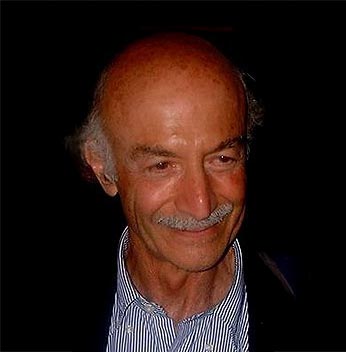
Nur Yalman is Professor of Social Anthropology and of Middle Eastern Studies at Harvard University. He has published numerous books and articles, from his first entitled Under the Bo Tree: Studies of Caste, Kinship, and Marriage in the Interior of Ceylon (University of California Press, 1967) to recent essays on the role of science in international conflicts and the relationship between terror and cultural diversity. Since September 11, 2001, Professor Yalman has been a compassionate critic of the U.S. military response to global terrorism. In the Fall of 2001, his course entitled Thought and Change in the Contemporary Middle East was overwhelmingly popular among students. Patti Marxsen, BRC publications manager, spoke with Professor Yalman as the first anniversary of September 11th approached.
——————
PM: I’d like to start by just asking you about your own journey. Could share with us some of the experiences and motivations that brought you to your interest in cultures, religions, identity, and the condition of humanity?
NY: I was brought up in Istanbul, Turkey, which is a very cosmopolitan and very complicated place in the middle of many cultures and continents: Europe, Asia, Africa. I had a German governess and before that I had an Austrian governess, both of whom taught me German. My mother and father also spoke French. And at school I had English. That combination, with Turkish of course, opened up to an interest in other cultures and how they relate to each other. I think the experience of really being involved in other languages early on opens you up to an interest in other cultures.
PM: When did you first get a chance to do the field work of anthropology?
Cambridge University gave me a good background and, later, I worked on my Ph.D. in Sri Lanka. I spent numerous years in Sri Lanka in very out of the way places. And that was wonderful because it really opened my eyes to the riches of Asian cultures and civilizations. I went back to Cambridge where I was elected as a fellow of one of their old colleges, Peterhouse. Then I went back to Turkey and, meanwhile, I had an invitation from a research center in California. I was still very young and the idea of California was… paradise.
PM: Has this study of anthropology turned out to be what you thought it would when you were first embarking your career?
NY: I had not realized how very exciting it was going to turn out to be. It has indeed turned out to be the most interesting and the most fascinating study, because you really deal with the immense variety of human experience and human behavior, human thoughts, and human imagination. I really can’t think of many other fields which really open you up in the same way.
PM: Your field, social anthropology, is all about how humans interact with one another, how we structure our societies, and work out our differences. As Americans reflect on our post-9/11 stance in the world&emdash; which has been militaristic and often mistrustful of foreign cultures&emdash;I’d like to know if it’s valid to suggest that the policies in democratic states typically mirror the values of the culture?
NY: Yes and no. The degree to which the best American values are expressed in the American government would be a controversial question because democracies have very positive aspects&emdash; the openness, the desire for equality, the hospitality, the openness to immigrants&emdash; but they also have some negative aspects. That is to say they lend themselves to mass manipulation. Also, there is a violent edge to American society and, regrettably, some of the American reactions to terrorism have tended to go in an extremely violent direction.
PM: What is the source of this tendency toward violence?
NY: The metaphor of ‘control’ is an aspect of American society. We see this when it comes to controlling crime, especially in black neighborhoods which are vigorously policed and controlled. There are other ways of handling social problems. We could give much more attention to education, to improving the lives of the poor, to improving the lives of the racially disadvantaged people in a much more serious way.
PM: How does this controlling instinct play out in the international arena?
NY: The metaphor of controlling other people through police action is something that the U.S. has been willing to do in many parts of the world. And it is a method that doesn’t work terribly well when you don’t understand what is going on in these other places. That’s my criticism of the kind of violent reaction we have had to either the Taliban regime or to the Palestinian matter.
PM: What could we have done differently in response to the Taliban regime?
NY: I would have preferred to have much more international involvement, particularly involving the Islamic societies, to put pressure on this nasty regime. We could have used the more liberal Islamic countries&emdash;all of which indicated that they were very unhappy with what was going on&emdash;to put pressure on these people. I think we would have had a much less violent result and I think we might have achieved the same thing in the end. We might even have achieved a somewhat more stable Afghanistan. At the moment, Afghanistan looks very unstable and the instability has affected Pakistan, Kashmir and India, all of which are nuclear powers.
PM: It sounds like you’re saying that our ‘violent edge’ draws other peoples and regions into our way of resolving conflicts. Is this how the ‘metaphor of control’ operates?
NY: Yes. The violent reaction has had widening effects both in the region of India and Pakistan, which is very dangerous, and also in the Israel-Palestine affair. Since September 11th, we have witnessed the Israelis using the same excuse as the United States to declare “war on terrorism.”
PM: Has this period since 9/11 taught Americans anything about how we operate as a society?
NY: There is the blind following of the desire to get revenge, to get even with these nasty fellows. At the same time, I think we’re beginning to see slowly quite a lot of thoughtful material coming out in some publications, such as the New York Review of Books, the New York Times, and the Washington Post.
PM: What do you think accounts for that shift toward a more thoughtful approach?
NY: This has been a very profound trauma for America. In a real sense, this cocoon in which we were living in here in America, this beautiful sense of security, this isolation from the rest of the world&emdash;isolation by two great oceans and by a very friendly north and a somewhat less friendly south&emdash;has allowed Americans to feel that they are in a charmed continent. It’s not too surprising that it has taken time for Americans to assimilate the threat of terrorism. I don’t think other societies have had that kind of shock out of a period in which they felt as secure.
PM: Were you as shocked as the rest of us?
NY: For those of us who had been watching the terrible things that were taking place in the Middle East, it came as no surprise whatsoever. I was growing fearful of where we might be heading with the kind of tensions that were rising in the Middle East. I thought the most desperate reactions might be expected, even nuclear reactions could be expected.
PM: So it could have been worse?
NY: It could have been much worse. And it is possible that it might be worse yet, unless the root cause of this is settled.
PM: What is the root cause?
NY: I do think the root of the problem has to do with racism. And the root of racism has to do with the way so many countries, including the United States, have regarded Muslims and Arabs in the past. That is to say, they have always considered these people to be second-rate persons. From World War I onwards, once Britain and France took over the Arab countries and dominated them, they did not really consider their interests. When you look at the historical background, it is quite clear that Jews and Muslims existed for centuries in great peace together all over the Middle East. The Jews have contributed immensely to the civilization of Islam: they contributed to music, to the arts, to literature. Everything gets turned around after World War II, for it is then that the European problem of racism&emdash;racism against the Jews, anti-Semitism&emdash;is transferred to the Middle East.
PM: How do we reconcile the rich history of Islamic culture with the violent acts that have now become associated with Islamic societies?
NY: The kind of terror and militancy we are seeing in Islam today has to do with something very particular, a particular problem in the Middle East that has been festering for almost all of the last century&emdash;that is to say the problem of Palestine.
PM: Knowing and understanding all the pieces of the situation as well as you do, if you could have given Ariel Sharon advice earlier this year, what would you have said to him?
NY: I would have said make peace, not war. I would have said give up those settlements and make an arrangement with these people.
PM: A two-state solution?
NY: A two-state solution.
PM: Why not Edward Said’s recommendation of a one-state solution?
NY: I think we must maintain hope that we can have complex states, rather like the direction in which the European Union is going, in which human rights are respected.. This can happen when very different people from divergent cultures come together around certain high ideals, as in the United States where we have the high ideals of the Constitution.
PM: But isn’t that the idea behind a one-state solution? Is it possible that the Israelis and the Palestinians might live under a Constitution that extends rights to Jews and Muslims?
NY: It’s not possible for the time being because their cultures, as yet, are too different. Most of the Israelis are very much attuned to a kind of European culture. Most of the Palestinians are not. It will take time for them to come to terms with each other.
PM: Do you believe these two societies will be able to find common ground?
Right now, of course, all bets are off. Everything is so shaken up that one wonders what sort of society can exist there. But the future for the Israelis must involve coming to terms with the fact that they live in a Middle Eastern environment and they will have to make friends with the people around them. They can’t keep relating to their neighbors as enemies, because that will make them very uncomfortable for the future. They must make some adjustments, and maybe even some sacrifices. The most important sacrifice they must make, in my opinion, is that they should get out of those settlements, which they have no right to anyway.
PM: What can the United States do to help get us to an era of peace and stability in this region?
NY: The United States is in a very difficult position because there is a very powerful internal dynamic which does not recognize the significance and importance of the Palestinian cause and is very much geared to supporting the most extreme kinds of Israeli actions.
PM: It’s troubling for many Americans to be in a position of endorsing this kind of disconnect, this racism, with our Middle East policy. Do you imagine that our policies might change?
NY: It looks very difficult for the policies to change and this is the reason why the matter appears to terribly intractable. The United States that is the only power with the keys to a solution, and yet the keys are in the pocket of the President and he will not, or is not able, to bring them out.
PM: Couldn’t the Islamic countries still get together, as you have suggested elsewhere, and craft a solution to the Israli-Palestinian conflict or act independently to bring Osama bin Laden to justice?
NY: Of course they could. But because the United States has taken the initiative and is, in fact, involved in very elaborate military action, there is really no space there for the Islamic countries to get in on in this activity. It would have to be organized with the United States.
PM: America has supported the Israeli government to such a huge extent that we are clearly in the thick of it. But why do Islamic leaders still need our keys, so to speak, to unlock a solution to the bin Laden matter in particular and to the threat of global terrorism in general?
NY: As long as the United States supports Israel so strongly, a position which makes life impossible for the Palestinians, it is very difficult for the Palestinians and their circle of supporters&emdash;first of all the Arab states&emdash;to take a position in which they criticize those who are supporting their cause. Bin Laden is, effectively, supporting the cause of the Palestinians, the Arabs, against the colonial powers. This becomes a very compelling argument.
PM: So you’re saying that the Palestinian cause remains central to all of the Arab states.
NY: That has not changed and it is not going to change. And worse, I think the Palestinian cause is bringing about something that is totally unexpected which is a kind of national consciousness among Arabs. The Arabs have been, so far, totally divided; they have been totally diverse in their governments, attitudes, relations with the West, and with each other. But this cause is bringing the people together. In time, we are going to see much more of a national consciousness emerge among the Arabs, which is going to be much more difficult to handle all around, for Israel especially, but also for the United States.
PM: Do you see a contradiction in America’s declaration of war on terrorism and our support for what the Palestinians experience as terrorism on a day-to-day basis?
NY: That is exactly what the Palestinians think. But of course, it is ironic that the Israelis think the same thing in a parallel way and regard Palestinians as terrorists.
PM: So what is terrorism? If we’re all terrorists, what does it mean?
NY: The United Nations spent a lot of time trying to figure out what terrorism is and they didn’t reach any conclusion. Then there was a meeting of the Islamic countries and they tried to come to an agreement, and they didn’t come up with anything. It cannot be easily defined.
PM: I read an article recently not long ago by a Women’s Studies professor, Catherine McKinnon, who was proposing that domestic violence be understood as a form of terrorism.
NY: I would entirely agree with that. Domestic terror is the worst kind of terror because it’s very intimate terror. One of the things one sees as an anthropologist is the terrible treatment of women in culture after culture after culture. That really must change through education.
PM: You’ve said elsewhere that we need to be better governed on ‘spaceship Earth.’ What would better governments look like? Could you make a few suggestions?
NY: Well, I am very much in the mind of the principles of the French Revolution.
PM: Let’s not forget, they were terrorists too.
NY: Well, yes, Robespierre said that terror was a form of virtue, to his eternal misfortune. But a good society, a well-governed society, is one in which people feel they have equal chances to find fulfillment and where there is a sense of justice. How do we achieve that in the world? I believe that this idea of human rights&emdash;the rights of individuals &emdash;must be respected throughout the world. And I must add that this is a highly idealistic, highly impractical position.
PM: How might your idealism become reality?
NY: The way to begin is by supporting institutions like the International Criminal Court. We also need to think about human rights in regional terms, because there are sufficient cultural differences between regions and their concepts of human beings and their concepts of what is proper and what is acceptable and so on. We need to encourage the United Nations to begin to develop regional courts of human rights.
PM: How would this work?
NY: For instance, the European Union has now a Court of Human Rights. Citizens of different countries can appeal to it. It passes judgements and it exacts punishments which are payments from governments involved. I know this because Turkish citizens have been applying to the European Court of Human Rights and they have been getting justice. They are getting the Turkish government to pay them for the miseries that have been visited upon them.
Step by step, we’ll get to a larger concept of a supreme court of human rights within the context of the United Nations. I think it would be extremely short sited of the U.S. to think that its tremendous military power is good enough, that we don’t need the international institutions. Now we need the international institutions more than ever.
PM: And yet, we, along with Somalia, are the only two nations who have refused sign on to the ICC. It’s an embarrassment.
NY: I agree. It has been an embarrassment for my colleagues at Harvard Law School here. They have all been throwing up their arms. And as I travel throughout the world, I am asked about this. People are absolutely stunned.
PM: If you could gather 100 leaders in a room together and initiate a dialogue, what would you ask them to talk about?
NY: Human rights, the rights of each individual human being. Andre Gide said once that the individual was the most irreplaceable of beings. A moment’s thought indicates how true this is. Individuals are irreplaceable. Therefore, their rights are absolutely vital and extremely precious.
PM: Can one envision peace without human rights being honored?
NY: No.
PM: So we have to start there…
NY: I think so, yes. And I think the United States is in a particularly good position in this respect because notwithstanding all that we have heard about how much people hate us, in fact the U.S. with its wonderful Constitution, with its wonderful record of welcoming people to this country and giving them the opportunity to flourish in this country, has been a beacon of liberty and hope for peace for the rest of the world. It pains me to see that that immense source of good will is being lost.