The issue of women’s right is a matter of universal concern, given that they constitute about half of the entire population of the world. The status of women in most Islamic countries, which adhere to old-fashioned patriarchal principles, is under international scrutiny. Most Muslim governments that wish to cover up for their own male-dominated views of women hide behind Islam, alleging that they wish to bring about sexual equality but they are forbidden from doing so on the basis of Islamic teachings. This is a deeply flawed argument, because Islam like any other religion has many interpretations. The best proof of this is that some Islamic countries have been able to bring about sexual equality without compromising their Islamic principles. Some Muslim countries, such as Indonesia, Bangladesh, Pakistan and Turkey have already had female presidents or prime ministers.
In fact, it could be argued that Islam has done more for enhancing the status of women than any other traditional religion. Many Muslim commentators have argued that instead of sticking to the literal interpretation of some Koranic verses, one has to look at the spirit of the teachings that have been progressive given the circumstances of the time when they were revealed. At a time when polygamy was widespread in all societies Islam limited the number of wives to four, and even that on the basis of absolute equality. It encouraged the economic independence of women by providing them with a share of inheritance, allowing them to own property, and alimony in case of divorce. As the world has moved on and the relationship between the sexes has changed, reformist Muslim thinkers argue that Islam must be in the forefront of change in the status of women.
The present inequality of men and women in most Islamic countries is particularly incongruous, given the present level of the education and sophistication of women in those countries. They reveal a sharp contradiction between dogma and reality. The present social situation in Iran is also replete with these contradictions.
This month a film and a book have brilliantly exposed some of these paradoxes. Offside, a film by the multiple award-winning Iranian filmmaker Jafar Panahi that was released to coincide with Iran’s participation in the World Cup, reveals some of the absurdities of the clerical rule in the present Iranian society. Jafar Panahi who has achieved international fame for his earlier film successes, such as the White Balloon, the Crimson Gold and The Circle, won the Silver Bear Prize (shared with ‘En Soap’ by Pernille Fischer Christensen) at this year’s Berlin Film Festival.
Yet, despite the international acclaim, the film has not been cleared for release in Iran. Indeed, he faced a great deal of difficulty in producing the film. He only managed to make the film by withholding his name as its producer, editor and director, as well as claiming that the film was only about football. Very late in shooting, when the authorities discovered the real identity of the producer, they tried to stop it but the film was nearly complete and the last scene was shot quietly outside Tehran.
The film depicts an incident during the 2005 World Cup qualification match between Iran and Bahrain at the large Azadi Stadium in Tehran, built under the shah. A girl disguised as a boy tries to gain entry into the stadium where the match is due to kick off. But women are not allowed into stadiums, allegedly because the rowdy behaviour of the spectators is not suitable for girls and women. The girl is discovered and is held along with some street-smart female fans. Eight years ago when Iran beat Australia and qualified for World Cup, the Iranian players returned in triumph and a rally was held for them in Azadi Stadium. On that occasion, over 5000 women turned up and the authorities had no choice but to allow them in. On another occasion, when the spectators were leaving the stadium there was a stampede at the gates and nine people were killed. Newspapers published the names and pictures of only eight of them, because allegedly the ninth one was a girl who had sneaked to the stadium unnoticed.
Offside is a hilarious tragi-comedy and reveals the absurdity of the situation in which Iranian women find themselves and the daily humiliations that they have to suffer. The female fans are kept under guard outside the stadium, while one of the guards who can see the match through a fence acts as a commentator for them. Another naïve guard who comes from a rural area wants to help the girls, but is torn between his loyalty to the regime and Islam and his desire to be rational and humane. The girls get the better of the guards, and as they are transported to the headquarters of the vice squad after the match they all get out of the bus and join the vast crowds singing a popular patriotic song and are swept away with the guards in a feeling of euphoria.
Panahi insists that he is not interested in politics, but is a social film-maker who simply wishes to expose some of the ills and contradictions in contemporary Iranian society.
Shirin Ebadi, the only Iranian and the first Muslim woman to receive the Nobel Peace Prize in 2003, has just published her memoirs, called Iran Awakening (1). Just like Offside that has been refused permission to be screened in Iran, Shirin Ebadi’s book that has been translated into 16 languages and is already among the top ten best sellers in Germany and Canada has not been allowed publication in Iran.
Ebadi’s memoirs demonstrate better than weighty academic tomes the state of decadence and decay under a fundamentalist Islamic regime. She too insists that she is not interested in politics, is not the leader of an opposition group, but simply a human rights lawyer who is interested in the plight of the oppressed, especially women and children.
Ebadi reveals that she was initially a supporter of the Islamic Revolution as she was attracted to its slogans of ‘freedom’ and ‘independence’. However, within the first month after the victory of the revolution when women were forced to wear Islamic hijab, she discovered that the talk of freedom had been an empty slogan. Women played an important role in the revolution, yet no sooner did it succeed than they were relegated to the status of second-class citizens. They organised the first massive anti-regime demonstration in Iran to protest against the wearing of the veil, but to no avail.
This ardent supporter of the revolution was put under solitary confinement by the revolutionary courts for defending the students who had been attacked in their dormitories by a bunch of paid thugs in 1999. At least one student was killed and dozens were badly wounded. In her book she even recounts the chilly moment when while looking through official papers for a court case against those responsible for ‘the serial murders’ of a number of intellectuals and political activists, she came upon the transcript of a conversation between a government minister and a member of a death squad: “The next person to be killed is Shirin Ebadi.” Fortunately, the case became public and the culprits were caught before they could carry out their murderous intent against her.
Iranian women had won the right to vote and to serve as members of parliament or Majlis in 1962, ahead of women in Switzerland. Since 1962 Iranian women had served as cabinet ministers, judges, lawyers, university presidents and directors of big companies. Since the revolution, as the universities were ‘Islamised’, traditional fathers who refused to send their daughters to universities could no longer claim that education corrupts. So girls rushed to universities in ever-larger numbers. At the moment, girls constitute more than 60 percent of some three million students in Iranian universities. Allegedly, there are more female doctors and dentists in Iran than male. Women form more than 35 percent of Iranian workforce, a higher figure than in any other Muslim country in the Middle East.
Iran has the strongest feminist movement of any Islamic country. So, paradoxically, despite – or may be because of – the restrictions imposed on women, they have proved that they are equal or even superior to men. Iran has the unique distinction of being a country where women are better educated than men. Even after the revolution there have been more than a dozen women MPs in the Iranian parliament and even the present fundamentalist president has a female vice-president. In Ebadi’s words, women have been forced “to confront a visceral consciousness of their oppression.”
Yet despite all these advances, women have to face arbitrary medieval laws that are completely out of keeping with their level of education and social status. According to the laws of the Islamic Republic, the life of a woman is worth half that of a man. If a man and a woman are involved in a traffic accident, the man receives twice the amount of damages than the woman. The testimony of two women is equal to the testimony of one man. Men can divorce their wives at will, while it is very difficult and sometimes impossible for women to divorce their husbands. Men can legally have up to four wives. A woman cannot leave the country without the written permission of her husband, etc.
Ebadi writes of a bizarre incident when a few years ago she took her two daughters on a skiing holiday. At a checkpoint, a guard ordered Ebadi who was then 45, and her two teenage daughters out of the bus enquiring where they were going on their own unaccompanied by a male relative. After learning that they wished to stay a few days at the ski resort, the guard tells this former judge and human rights lawyer: “You need your parents’ permission to sleep out overnight.” After her pleadings prove pointless, she gives her mother’s number to the guard to phone and ask permission if they could stay away on their own. She jokes that after that incident the mother asked her to be good, otherwise she would refuse her permission next time!
The film and the book show not only the absurd nature of those laws, but the way that they bring Islam into disrepute. All those restrictions are due to the vengeful attitudes of a male-dominated society and have nothing to do with Islam. Ebadi insists: “I am against patriarchy, not Islam”.
The best proof of their arbitrariness is that, despite the fact that some fundamentalist mullahs claim that they are Islamic laws and cannot be changed, under intense pressure they do change them. For instance, up to a few years ago, mothers were given custody of their sons up to the age of two and daughters up to the age of seven, and then the children were forcefully removed from the mother and given to the father. As the result of a campaign led by Shirin Ebadi the custody law was changed. She acted as the lawyer of the mother of a seven-year old girl who had been forcibly returned to her father and had died under abuse. That case produced such a backlash that the reformist sixth Majlis changed the law. Now mothers have custody of their sons and daughters up to the age of seven, and then family courts decide custody on the basis of the children’s interest, and in most cases custody is given to the mother.
The inconsistent nature of those laws also proves that they are not based on divine laws, but on the whims of some narrow-minded lawmakers. The age of criminal responsibility in Iran is 15. If a child of 15 commits an offence, he or she would be liable to the same punishment – in some cases execution – as a grown up person. Yet a 45-year old woman cannot go on holiday on her own without the permission of her mother or husband. While at the beginning of the revolution women judges were dismissed on the grounds that Islam would not allow it, a few years later again as the result of campaigns by Shirin Ebadi and others the judiciary admitted its mistake and is appointing women judges. Ebadi refuses to act as a judge now because she says that she cannot implement the present unjust laws.
In Iran, books, plays, films and poems have had an impact on society that goes beyond anything one is accustomed to in the West. The person who was really responsible for the Islamic Revolution and who popularised political and militant Islam was not Ayatollah Ruhollah Khomeini, but a little known writer and speaker, Ali Shari’ati. In the 60’s and 70’s through a series of lectures in Tehran that attracted vast audiences and were later published as books, he popularised politicised Islam and turned it into a rival ideology to Marxism. He paved the way for Ayatollah Khomeini to reap the benefits of his campaign.
The anti-shah movement was bolstered by a few poems by the likes of Forugh Farrokhzad, Ahmad Shamlu and Akhavan-Thaleth who gave voice to the people’s feeling of frustration with the lack of political freedom.
Forugh Farrokhzad’s famous poem ‘Someone is Coming’ produced a feeling of expectation for a stern Messiah-like figure who would put an end to oppression and injustice:
I have dreamed
that someone is coming …
Someone different
someone better
someone who isn’t like anyone,
isn’t like father
like Jonah
like John
like mother,
but is just like the one that should beAnd his name is
(just as mother says in the beginning and the end of her prayer)
the Judge of all Judges,
the way of all the ways….
Ahmad Shamlu, a severe critic of the shah, lived long enough to see that he who came was not the ‘Promised One’. In a bitter poem entitled ‘Dar in Bonbast’ (In this Dead End) written a year after the revolution he described a new kind of hell:
They sniff your mouth
lest you’ve said ‘I love you’,
They sniff your heartThese are strange times, darling…
And they whip Love
on the barricades…
We must hide Love in the backroom of the houseThey keep the fire burning
in this crooked dead-end of the Cold,
with fuel of songs and poems.
Don’t endanger yourself
by thinkingThese are strange times, darling…
Yet, despite all the talk of doom and gloom, the Iranian society is very dynamic. The reform movement is still alive and some brave artists, poets, political activists and intellectuals keep the torch of enlightenment burning at real risk to their lives. The way to change the Iranian society is through such peaceful and lasting campaigns, rather than through bombs and missiles. One can only hope that films like Offside, and books like Iran Awakening could have a similar effect in rousing the people against the absurdities of the life under the mullahs as did similar works under the previous regime.
1. Iran Awakening is confirmed for Book of the Week on BBC Radio 4 from Monday 18th to Friday 22nd September (0945-1000 with a repeat 2430-2445). Fantastic news for this very special memoir:
– “Illuminating and inspirational” Woman and Home on Iran Awakening
– “An incredible memoir. beautifully written. This is a book infused with humanity and astounding hope” 4 stars The Works, May 2006.
– “One of the most remarkable resistance heroines of our dangerous times” Saturday Telegraph 15th April, 2006
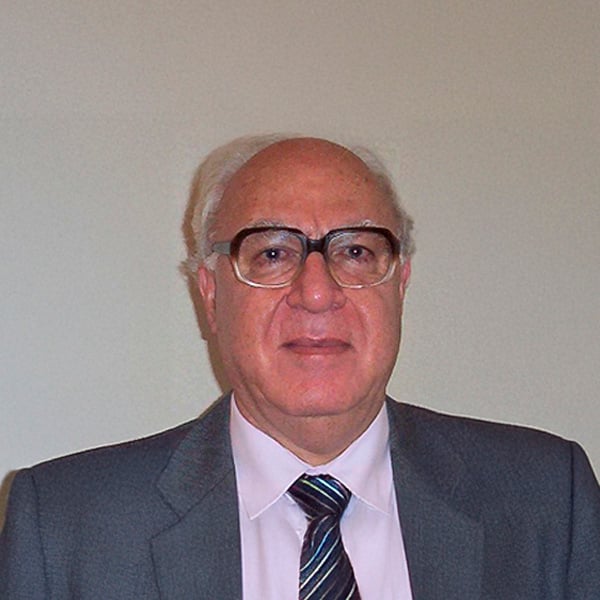
* Farhang Jahanpour is a former professor of comparative literature at the University of Isfahan. For the past 20 years he has been a part-time tutor at the Department of Continuing Education at the University of Oxford.