

There has been much commentary on the significance of the Lebanon War. There is an unresolved debate about whether there was a victorious side in the war, and even what the idea of victory means. There are various suggestions about how to prevent a new war between Israel and Hezbollah, whether by relying mainly on the UN stabilization force or by reviving diplomacy between Israel and its various adversaries. Is it time to talk with Hezbollah and Hamas? What does the inconclusiveness of the war tell us about the benefits and limitations of military superiority in such a conflict? Could Israel have used its military capabilities more effectively, or were deeper structural restraints operative? These are all important issues, deserving of reflection and dialogue, and hopefully encourage a turn away from violence by all sides in their search for peace and security.

Beyond these immediate concerns lies the question of world order, and the extent to which some gaps and weaknesses were disclosed by the Lebanon War and its outcome. In a deep sense this question of the shape of world order has been present at least since the collapse of the Soviet Union in the early 1990s. It was given a temporary spin by the first Bush president, George H.W, Bush, who introduced the phrase `a new world order’ to describe the possibility of using the UN Security Council as an effective instrument of collective security in the aftermath of the Cold War. The Security Council was no longer gridlocked by the pervasive antagonism between East and West, as was shown by the mandate to reverse Iraqi aggression against Kuwait in the first Gulf War. It seemed possible to implement the Charter promise to protect victims of aggression and conquest by enlisting the world community as a whole in an undertaking of collective self-defense.

There were many criticisms of the manner in which the UNSC gave unrestricted discretion to an American-led coalition in 1991 to take over the conduct of the war, determine its goals, and control the dynamics of post-conflict diplomacy. But the undertaking did effectively restore Kuwaiti sovereignty, and in that sense could properly proclaim `mission accomplished.’ But no sooner were the guns silent in Iraq than the idea of a new world order was quietly abandoned by Washington, put back `on the shelf’ as one senior American diplomat described the new mood. On reflection, the US Government seemed reluctant to affirm UN authority to such an extent, or to find itself assigned unwelcome undertakings in the future by a more confident Security Council.

In any event, subsequent developments during the 1990s moved the United States away from a reliance on the UN to address world order challenges. The failure of peacekeeping in Somalia (1993), the non-response to genocide in Rwanda (1994), and the apparent ineptitude of the UN in Bosnia, especially the dismal spectacle of UN peacekeepers standing by as virtual spectators during a series of events, culminating in what most of the world has regarded as the massacre of some 6,000 Muslim males at Srebrenica in 1995, a perception that continues to be contested be some responsible critics.

To blame the UN for these world order setbacks is to miss the central point that the UN can only do as much as it is authorized to do by its major members, above all the United States. These developments that did so much to undermine the UN took place during the presidency of Bill Clinton, a moderate, supposedly internationally minetworked world civil society acting in unison. And still others emphasized the revolutionary relevance of climate change, bringing about extreme weather in the form of tsunamis, hurricanes, polar melting, droughts, and disease, threatening human catastrophe that could be averted only if effective global governance were established as a matter of urgency.

All of these developments have greatly complicated our understanding of the nature of world order in the 21st century, but we have yet to absorb the implications of the 9/11 attacks on the United States, and the American decision to declare a `global war on terror’ in response. The Lebanon War (as well as the Iraq War) reinforces what I would call the unlearned lessons of 9/11.

The most important of these is the change in the nature of power and security: even the most traditionally powerful state is now vulnerable to a devastating attack by a determined and skilled non-state actor, and unlike an enemy state, this adversary is itself basically invulnerable to a debilitating counter-attack by military means. Such an actor occupies no territory, and offers no targets, and has no leadership that can be persuaded to surrender. The failure to heed the lesson of 9/11 resulted in relying on a war strategy to address the adversary instead of adapting the response to the non-state nature of the threat. What was appropriate after 9/11 was not a generalized war, but a set of particularized responses associated with greatly improved international law enforcement possibly supplemented in exceptional situations by special forces operations undertaken with the consent of either the territorial government or the UN. Such a police approach, to be successful, would need to be combined with concerted efforts to address whatever legitimate grievances had played some part in motivating such extreme violence.

What does the Lebanon War add to this picture? It reinforces in a more vivid fashion this new ratio of power with respect to combat between state power and a non-state adversary. The military machine of the state can inflict virtually unlimited destruction and cause great suffering to civilian society, and yet it cannot consistently destroy the capacity of its non-state adversary to strike back.

Israel had repeatedly defeated and deterred Arab states that had challenged its security in a number of wars. Its military might and skill had been successfully used in the past to achieve a series of political victories in a series of wars that expanded its territory, raised its prestige, intimidated its neighbors, while creating a reputation of invincibility. But in this different world order, relying on military muscle against a seemingly weakly armed opponent will not yield a victory, even for Israel. Instead, militarism now exposes the vulnerability of supposed military powerhouses to the increasingly effective tactics of non-state political adversaries. Of course, both sides learn within their respective paradigms. Israel adapts future war plans to overcome failure in Lebanon, while Hezbollah tries to anticipate these adjustments in planning to mount an even more devastating resistance in the course of the next flair-up.

In the face of experiences in Iraq and Lebanon, the frustrated states, addicted as they seem to be to military solutions for political problems, are likely to go back to their drawing boards, devising new weapons and tactics, but convinced that in the future it will be possible to restore the relevance of superior military power as measured by wealth and technological capacity. This will be a costly mistake. It overlooks the extent to which war is becoming dysfunctional in the 21st century, wasting incredible amounts of resources that could be put to much better uses in raising living standards and creating a more stable, cooperative world.

If military power is not the answer, what is? It has never been more important to find sustainable solutions to the deep, unresolved conflicts of the Middle East. The problems of Israel could be most reliably addressed by a fair political compromise that acknowledges Palestinian rights, restores Syrian territory, and produces a full withdrawal from Lebanese territory.

The United States could similarly gain security and confidence by disengaging from wars that have no foundation in law or morality, and joining with other countries to protect the societies of the world from extremist violence, constructing arrangements for improved international cooperation and for global governance. It is instructive to take account of the greatest achievement of Europe since 1945, which is not, as generally believed, the high level of economic integration, but rather the truly remarkable establishment of a culture of peace that has made the outbreak of war within the boundaries of the EU virtually unthinkable.

An appreciation of the Lebanon War from the perspective of world order may encourage this perception that the viability of the war system was based on being able to limit the playing field of international conflict to sovereign states exercising governmental control within recognized international boundaries. Even this role for war has been earlier deeply challenged by the advent of weaponry of mass destruction, especially nuclear weapons, the existence of which continues to threaten humanity in a variety of ways.

But with the rise of non-state actors as international players, modalities of war are more and more likely to lead to the persistence of deadly conflict rather than to victory. The United States currently spends more on its military capabilities than the rest of the world combined, and yet it has never in its history felt as vulnerable to attack or as unable to translate battlefield outcomes into desired political results.

All in all, the Lebanon War is likely to be remembered not for the birth pains of ‘a new Middle East’ (Condoleezza Rice), but as the death throes of a system of world order that accepted war as the inevitable basis of stability and change in relations among sovereign states.
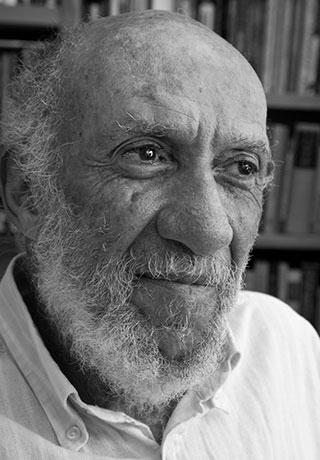

Professor Falk became an adviser to TFF when it was established in 1985.

Related Posts

LONDON – So far so good, at least on the wider level. While internally Iraq seems on the edge of chaos, the much heralded clash of civilizations between the Muslim and Judaeo-Christian worlds has yet to become apparent. We have anger and despair aplenty in the Arab and Muslim worlds. But very little rushing to the standard and there was no great pilgrimage of warriors to join the fight, as happened when the Soviet Union invaded Afghanistan twenty years ago, and then, having driven the Red Army out, were left to ferment in that mountainous redoubt. With the armaments supplied by the CIA the mujahidin were transformed into Al Qaeda that became, for a relatively brief moment as these things go, ‘the greatest threat to the homeland that America has ever known.’ Nevertheless a ‘Cold War’ between much of the Muslim world and the West is certainly in full swing. Winston...
The Challenge of Nuclear Weaponsin the Twenty-first CenturyA Path Forward The peoples and governments of the world face an urgent challenge relating to weaponry of mass destruction and particularly to nuclear weaponry.  At the crossroads of technology, terrorism, geopolitical ambition, and policies of preemption are new and potent dangers for humanity. Despite ending the nuclear standoff of the Cold War era, nuclear weaponry is again menacing the peoples of the world with catastrophic possibilities.  We recognize the need for any government to pursue its security interests in accordance with international law; and further, we recognize that distinctive threats to these interests now exist as a result of an active international terrorist network having declared war on the United States and its allies. Nonetheless, we reject the assessment of the current US administration that upgrading a reliance on nuclear weapons is in any sense justified as a response. We find it...
By Karin Wegestal MP, the Social Democratic Partyon behalf of the Swedish Committee for Solidarity with the Yugoslav People During the last decade, the Federal Republic of Yugoslavia has received more than 500,000 refugees from Croatia and Bosnia, and another 300,000 internally displaced persons, mainly from the province Kosovo and Metohia. For a country with about ten million inhabitants, such an influx of homeless people is obviously a very heavy burden – even under peaceful conditions. But in addition to that, the Federal Republic of Yugoslavia has been the subject to sanctions from the western powers for close to ten years and its infrastructure was badly hurt through Nato’s intense bombardment during 78 days in 1999. The result of all this is that Yugoslavia, once the most developed industrial country in Eastern Europe, is today the poorest country in Europe. In Serbia excluding Kosovo, with about ten million inhabitants and...

Recent Articles

Tony Robinson October 4, 2026 Violence is easy to recognise when someone is being beaten, shot or killed. It becomes more difficult when nobody is holding a weapon. Poverty, discrimination, exploitation and repression can restrict a human life just as effectively, although they do so in very different ways and with very different consequences. Simply adding more categories to an ever-growing list of forms of violence does not really solve the problem. The more interesting question is what all these different situations have in common and why it makes sense to describe them using the same word. Human beings do not simply react to what happens around them. They remember the past, imagine things that do not yet exist, make plans and undertake projects. Workers organise because they imagine different working conditions; people migrate because they imagine another life somewhere else; social movements emerge because people refuse to accept the...
It’s a matter of principles, courage, vision and pulling together – while the militarist world is falling apart… Peter Langille October 3, 2026 “Here, then, is the problem which we present to you, stark and dreadful and inescapable: Shall we put an end to the human race; or shall mankind renounce war?”The Bertrand Russell—Albert Einstein Manifesto, July 9, 1955 ⁕ The forecast for what’s ahead is worrisome. The sharp rise in armed conflicts over the past three years is adding to what was already the highest level in over seventy years. Genocides, which should be prevented are supported. A shared climate emergency that jeopardises survival is ignored. Diverse polls now suggest that people are war-weary, worried and interested in a more effective United Nations. And, there are viable policy options for a more secure world! Yet governments are doubling-down, betting on more war and investing heavily. If current trends persist,...
Johan Galtung 1930-2024October 2015 Published here on October 3, 2026 Let us focus on Civilization for conflict analysis and remedies. Major forms of disorder use violence; war is state organized violence. The most belligerent states are the United States of America and Israel, both with civilization roots. National Evangelism, the US Protestant Christian civilization– more national than evangelical–justifies US warfare as exceptionalism of a people chosen by God, with a manifest destiny to run the world. Orthodox Judaism justifies Israeli warfare to conquer and expand from Nile to Euphrates as a religious right and duty to the Eternal One. The third most belligerent country, the UK, no longer believes it is God-chosen but chosen by the USA; not quite the same but something. But the root cause of global disorder lies in the Occident–with Islam–seeing itself as the single, universal civilization valid for all at all times, all others being...

TFF on Substack

Discover and subscribe to more peace materials on TFF Substack

Most Popular

Tony Robinson October 4, 2026 Violence is easy to recognise when someone is being beaten, shot or killed. It becomes more difficult when nobody is holding a weapon. Poverty, discrimination, exploitation and repression can restrict a human life just as effectively, although they do so in very different ways and with very different consequences. Simply adding more categories to an ever-growing list of forms of violence does not really solve the problem. The more interesting question is what all these different situations have in common and why it makes sense to describe them using the same word. Human beings do not simply react to what happens around them. They remember the past, imagine things that do not yet exist, make plans and undertake projects. Workers organise because they imagine different working conditions; people migrate because they imagine another life somewhere else; social movements emerge because people refuse to accept the...
It’s a matter of principles, courage, vision and pulling together – while the militarist world is falling apart… Peter Langille October 3, 2026 “Here, then, is the problem which we present to you, stark and dreadful and inescapable: Shall we put an end to the human race; or shall mankind renounce war?”The Bertrand Russell—Albert Einstein Manifesto, July 9, 1955 ⁕ The forecast for what’s ahead is worrisome. The sharp rise in armed conflicts over the past three years is adding to what was already the highest level in over seventy years. Genocides, which should be prevented are supported. A shared climate emergency that jeopardises survival is ignored. Diverse polls now suggest that people are war-weary, worried and interested in a more effective United Nations. And, there are viable policy options for a more secure world! Yet governments are doubling-down, betting on more war and investing heavily. If current trends persist,...
Johan Galtung 1930-2024October 2015 Published here on October 3, 2026 Let us focus on Civilization for conflict analysis and remedies. Major forms of disorder use violence; war is state organized violence. The most belligerent states are the United States of America and Israel, both with civilization roots. National Evangelism, the US Protestant Christian civilization– more national than evangelical–justifies US warfare as exceptionalism of a people chosen by God, with a manifest destiny to run the world. Orthodox Judaism justifies Israeli warfare to conquer and expand from Nile to Euphrates as a religious right and duty to the Eternal One. The third most belligerent country, the UK, no longer believes it is God-chosen but chosen by the USA; not quite the same but something. But the root cause of global disorder lies in the Occident–with Islam–seeing itself as the single, universal civilization valid for all at all times, all others being...
Read More
Living-Peace-Sign-Budapest-copy
Tony Robinson October 4, 2026 Violence is easy to recognise when someone is being beaten, shot or killed. It becomes more difficult when nobody is holding a weapon. Poverty, discrimination, exploitation and repression can restrict a human life just as effectively, although they do so in very different ways and with very different consequences. Simply adding more categories to an ever-growing list of forms of violence does not really solve the problem. The more interesting question is what all these different situations have in common and why it makes sense to describe them using the same word. Human beings do not simply react to what happens around them. They remember the past, imagine things that do not yet exist, make plans and undertake projects. Workers organise because they imagine different working conditions; people migrate because they imagine another life somewhere else; social movements emerge because people refuse to accept the...
b54a1f10-8c65-4f0b-9dd5-4abc0a7d04cc_2659x2659
It’s a matter of principles, courage, vision and pulling together – while the militarist world is falling apart… Peter Langille October 3, 2026 “Here, then, is the problem which we present to you, stark and dreadful and inescapable: Shall we put an end to the human race; or shall mankind renounce war?”The Bertrand Russell—Albert Einstein Manifesto, July 9, 1955 ⁕ The forecast for what’s ahead is worrisome. The sharp rise in armed conflicts over the past three years is adding to what was already the highest level in over seventy years. Genocides, which should be prevented are supported. A shared climate emergency that jeopardises survival is ignored. Diverse polls now suggest that people are war-weary, worried and interested in a more effective United Nations. And, there are viable policy options for a more secure world! Yet governments are doubling-down, betting on more war and investing heavily. If current trends persist,...
010
Johan Galtung 1930-2024October 2015 Published here on October 3, 2026 Let us focus on Civilization for conflict analysis and remedies. Major forms of disorder use violence; war is state organized violence. The most belligerent states are the United States of America and Israel, both with civilization roots. National Evangelism, the US Protestant Christian civilization– more national than evangelical–justifies US warfare as exceptionalism of a people chosen by God, with a manifest destiny to run the world. Orthodox Judaism justifies Israeli warfare to conquer and expand from Nile to Euphrates as a religious right and duty to the Eternal One. The third most belligerent country, the UK, no longer believes it is God-chosen but chosen by the USA; not quite the same but something. But the root cause of global disorder lies in the Occident–with Islam–seeing itself as the single, universal civilization valid for all at all times, all others being...
Screenshot 2026-10-02 011738
Jan ObergPhD, director, The Transnational Foundation for Peace and Future Research, TFFLund, Sweden October 2, 2026 This is my full original manuscript. The Chinese Academy of Social Science, CASS, makes two publications out if it. 1. China’s Five-year plan emphasized the capabilities of basic research and original innovation. It is regarded as the goal of the future social development, which, as required, should be significantly enhanced. Can you comment on the importance of original innovation in research and academic study? I believe it is easier to define “original innovation” in the natural sciences than in social sciences. The breaking points of what constitutes something new, or innovative, are not quite as sharp in the latter. But in both fields it is about opening up something that was closed, unseen, unexplored before – making manifest what was earlier latent. Innovations come in many forms and shapes – naming something that was not...
arctic-circle-map
The agreement is catastrophic both because of what it says and what it doesn’t mention. It reduces further the major asset of security policies: Freedom of action. Jan Oberg TFF director September 25, 2026 A couple of hours before the agreement was signed on September 22, 2026, I published the following 13 hypotheses about what it would most likely contain on TFF Substack (in English). I was wrong on only the first point. Contrary to what Trump had written on his Truth Social platform, it does not appear to come into force immediately. In fact, it turned out to be worse than even I had anticipated. After these hypotheses now come a number of reflections in light of what the agreement actually contains, and does not contain, as well as the way in which it has generally been presented by major media outlets and by the public-service broadcaster DR. My...
girl-5894831_1280
Below are TFF-related media mentions, comments, videos and social media posts published elsewhere but not on this homepage. We happen to catch and list only a fraction. Regarding video comments and debates, we recommend that you go to the TFF Video Channel on Substack where many of them are reproduced. Jan Oberg is a contributor to China Daily – 52 million daily clicks – and Global Times, CGTN and CCTV (the national television), China Investment, Xinhua News Agency and several others. Articles and videos on these media very often multiply into countless Chinese (and Western media) that re-post them from these main media. Thanks to The China Academy, his analyses, interviews and comments are frequently posted on YouTube channels such as Thinkers Forum and Wave Media. These videos are often re-posted on Bilibili (China’s YouTube), the China Content Center on TikTok, and on the Chinese edition of TikTok, Douyin.com. This means reaching hundreds of millions of viewers worldwide over a year. While there are too many to catch on all these...




