
Meine Eingangsstatements als Teilnehmer am „Politischen Gespräch” des Ortsverbandes Harrislee der SPD am 8.10.2001 im Gasthaus Isabella, Harrislee, Süderstraße zum Thema

“Terror &endash; Herausforderung des Friedens. “Gesprächsteilnehmer: Dirk Peddinghaus (BMVg), Klaus Peter Heldt (BGS), Wilhelm Nolte (draft), Leitung: Dr. Susanne Staemmler.

Militärische Wahrnehmungen und Aussichten

Für viele hat sich die Welt seit dem 11.9.2001, seit den Terrorakten in den USA, grundlegend geändert. Seit gestern sieht die Welt auch für mich anders aus. Bis gestern konnte man warnen, appellieren, fordern, besser wissen, Optimismen pflegen.

Seit gestern müssen wir von Krieg reden, – der am 11. September 2001 begann. Mit Clausewitz &endash; und wenige Streitkräfte schätzen Clausewitz so sehr wie die US-Streitkräfte – beginnt Krieg mit der Verteidigung. Auch die Hamburger Kriegsursachenforschung spricht von Krieg erst dann, wenn wenigstens zwei Parteien &endash; ein Angreifer und ein Verteidiger &endash; gegeneinander kämpfen.

Vor dem Gestern hatte der Gegner der USA nicht erkennbar militärisch operiert, weder nach seinen Kampfmitteln, noch nach seinen Organisationsstrukturen, noch nach seinen Einsatzverfahren. Vor dem Gestern hatte der Gegner der USA sich nicht zu seinem Angriff erklärt. Ihren Angreifer, gegen den sich ihre Verteidigung richten soll, haben die USA selbst identifiziert und definiert.

Seit gestern bekennt sich der Gegner zu seiner Gegnerschaft und kündigt weltweiten Terrorkrieg an. Gestern haben die USA ihren weltweit und zugleich langwierig gedachten Krieg gegen den Terror begonnen. Im je eigenartig intendierten Terrorkrieg treffen sich Gegner und Verteidiger – auch im Zielwert ihrer je eigenartig gedachten Totalität:

Der Gegner will die USA vernichten. Die USA wollen den Terror vernichten.

Ich habe mich heute früh gefragt, was bloß ist Terrorkrieg? Was war Guerillakrieg?

Auf der Suche nach einer Antwort bin ich auf Mao Tse Tung verfallen, der als siegreicher Experte für Guerillakrieg gilt, und habe in der sog. „Roten Bibel” (Worte des Vorsitzenden Mao Tse Tung) nachgelesen.

Da steht auf Seite 76.: „Wir treten dafür ein, daß der Krieg abgeschafft wird, wir wollen keinen Krieg; man kann aber den Krieg nur durch Krieg abschaffen, und wenn man will, daß es keine Gewehre mehr geben soll, muß man die Gewehre in die Hand nehmen.”

Jede der Parteien will Frieden. Aber keine der Parteien will den Gegner mit Gewehren, jede will ihn ohne Gewehre, jede greift hierfür zum Gewehr.

Und auf Seite 100 steht: „Wenn jemand über uns herfällt und die Umstände für einen Kampf günstig sind, wird unsere Partei unbedingt zur Selbstverteidigung schreiten und den Angreifer entschlossen, gründlich, restlos und vollständig vernichten (man darf sich nicht leichtfertig auf einen Kampf einlassen; wenn man den Kampf aufnimmt, dann muss er zum Sieg führen).”

Die USA haben ihre Gegner über sich herfallen sehen, sie erachten die Umstände für ihren Kampf für günstig, sie schreiten nun unbedingt zur Selbstverteidigung und wollen den Angreifer entschlossen, gründlich, restlos und vollständig vernichten. Auch die Gegner zeigen sich in solcher Entschlossenheit.

Doch können die USA den Krieg gewinnen?

Schon Guerillakrieg hat sich in dem halben Jahrhundert nach dem Zweiten Weltkrieg als eine Kriegsform erwiesen, die mit herkömmlichen Streitkräften nicht oder nur äußerst verlustreich zu gewinnen ist. In der Regel gewinnt/obsiegt die Guerilla, gerade gegen high-tech-gerüstete und noch so mächtige Streitkräfte. (Vietnam und Afghanistan stehen für einschlägige Erfahrungen der USA wie der Sowjetunion).

Wir haben es in der Tat mit einer neuen Kategorie von Krieg zu tun: Terrorkrieg. Der Gegner, der mittels Terror kämpft, ist noch weniger sichtbar, noch weniger greifbar, noch weniger fassbar als jede Guerilla. Ein Terrorkrieg ist mithin umso weniger militärisch zu gewinnen, um je mehr der Verteidiger sich auf mächtige, high-tech-gerüstete und typisch „militärisch” geführte Streitkräfte verlässt.

Kurz: je militärischer der Verteidiger, desto geringer seine Siegchance im Terrorkrieg.

Zivile Einschätzungen und Fragen

In dem Terrorangriff auf Amerika sehen viele, auch Bundeskanzler Gerhard Schröder, einen Angriff auf die Wertegemeinschaft der westlichen Welt. Hier stellt sich mir die Frage, wie es um unsere Werteorientierung und Wertebindung wirklich bestellt ist. Ich skizziere hierzu drei Wertepaare:

a) Rechtsstaat & Augenmaß (Verhältnismäßigkeit)

Bald nach den Terroranschlägen hat der Präsident der USA, eine Art „Oberhaupt” der westlichen Wertegemeinschaft, gefordert, ihm den verdächtigten Bin Laden „dead or alive!” vorzuführen. Unser oberster Wertehüter hat nichts anderes als Lynchjustiz gefordert &endash; fern/außerhalb von jeder Rechtsstaatlichkeit &endash; und ohne jedes Augenmaß. Fernsehbilder aus dem Amerika von heute zeigen solche Forderungen in aller Öffentlichkeit in großen Fahndungsplakaten &endash; etwa an Tankstellen &endash; wie zu Zeiten des „Wilden Westens”.

b) Verantwortung & Menschenwürde

Gegenüber den in weit größeren Massen binnen zweier weit geringerer Zeiträume durch US-Streitkräfte in Hiroshima und Nagasaki getöteten japanischen Menschen &endash; im Krieg und durch diesen nur vordergründig legitimiert &endash; haben sich die USA bis auf den heutigen Tag nicht „verantwortet”, diese ihre ganz eigene Massentötungsgeschichte haben sie bis heute nicht offen und vorbehaltlos aufgearbeitet, den zigtausenden getöteten Menschen haben sie ihre Würde bis heute nicht zurückzugeben sich bemüht. Solange Amerika dies nicht leistet, wird es ihm an Glaubwürdigkeit gerade in der Behauptung einer besonderen Wertebindung mangeln.

c) Liberalismus & Kapitalismus

Dieses Begriffspaar begründet die Lebensgewohnheiten und Lebensansprüche der westlichen Gesellschaften. Die Begriffe bedingen einander und profitieren von einander, sie erzeugen und gewährleisten in ihrem fortdauernden Zusammenwirken unser Wohlergehen wie unseren Wohlstand. Sie scheinen mir zugleich aber strukturell kriegsursächlich – nicht für jeden oder einen bestimmten Krieg, wohl aber auf der Ebene einer Tiefenstruktur von Kriegsursächlichkeit. Liberalismus & Kapitalismus fokussieren auf Vorteil und Gewinn, sie schließen Benachteiligungen selbstredend ein, sie fördern Empfindungen von Zurückbleiben und Unterlegenheit, von Ausnutzung und Verlierertum. Sie begünstigen syndromatische Selbstunterschätzungen und erweisen sich als so gerechtigkeitsfremd, wie sie Hass zu beleben vermögen.

Die Terroristen haben ihre Angriffe nicht von ungefähr auf herausragende Symbole der vorgeblichen Wertebindungen gerichtet: auf den Liberalismus&Kapitalismus in den World-Trade-Kapital-Zentren, auf die Militärmacht- und Streitkräfteführungszentren im Pentagon und – wenn auch misslungen – auf den obersten “Wertehüter”, den Präsidenten im Weißen Haus.

Friedensforscherliche Einschätzungen

a) Wir machen Rückschritte/Schritte zurück in eine Krieg-als-selbstverständliches-politisches-Instrument-Politik in eine Krieg-als-Nibelungentreuefall-Politik.

b) Wir machen auch „Fortschritte”, wir gehen weiter in der Aufweichung herkömmlicher und kriegsvölkerrechtlich mühsam verfestigter Trennlinien zwischen:

Zivil und Militär:
Wir lernen, Terror als Krieg zu verstehen.

Frieden und Krieg:
Wir lassen uns auf einen “langen” Krieg einstimmen, nicht auf Frieden.

Polizei und Soldaten:
Wir wollen immer häufiger militärisch einsetzbare Polizei und polizeilich einsetzbares Militär.

Wir gehen weiter in der Aufgabe, im Aufgeben, im Hintanstellen des noch jungen Zielhorizontes völliger Gewaltfreiheit, gerade in Außenbeziehungen, jenes Zielhorizontes, unter dem vor Jahren unter dem Eindruck der weltuntergangsdräuenden Atomwaffen ein „Nie wieder Krieg!” zu gelten begonnen hatte, auch ein ostdeutsch-westdeutsch-gemeinsames: Von deutschem Boden soll nie wieder Krieg ausgehen.

Wir gehen weiter – und das ist sarkastisch gemeint – in der Verwischung von Kernbegriffen, die unsere Wertebindung einst unverwechselbar zu charakterisieren vermochten. Wir sehen mit großen Augen, wie die Amerikaner in Afghanistan mit den Bomben und Raketen zugleich Lebensmittel und Versorgungsgüter abwerfen, sprichwörtlich: „Zuckerbrot und Peitsche”.

Wir halten dies gar für „löblich”, lässt es sich doch als „humanitär” andienen: humanitäres Bomben also – nach den sog. „humanitären Interventionen”. So fällt ein Abglanz von Humanität auf die Spreng- und Zerstörungswaffen?

Fast wird die Kriegführung, die unsere Regierung und ihre Opposition “ohne jeden Vorbehalt” unterstützen, auf diese Weise irgendwie “geheiligt”. So stehen wir dann im eigenen, “humanitär” selbst geheiligten Krieg – gegen die Kämpfer des „Heiligen Krieges”?

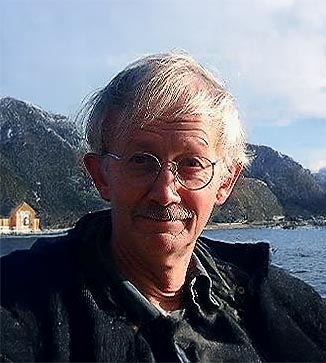
Wilhelm Nolte, Hamburg, 9.10.01
Related Posts

LONDON – So far so good, at least on the wider level. While internally Iraq seems on the edge of chaos, the much heralded clash of civilizations between the Muslim and Judaeo-Christian worlds has yet to become apparent. We have anger and despair aplenty in the Arab and Muslim worlds. But very little rushing to the standard and there was no great pilgrimage of warriors to join the fight, as happened when the Soviet Union invaded Afghanistan twenty years ago, and then, having driven the Red Army out, were left to ferment in that mountainous redoubt. With the armaments supplied by the CIA the mujahidin were transformed into Al Qaeda that became, for a relatively brief moment as these things go, ‘the greatest threat to the homeland that America has ever known.’ Nevertheless a ‘Cold War’ between much of the Muslim world and the West is certainly in full swing. Winston...
The Challenge of Nuclear Weaponsin the Twenty-first CenturyA Path Forward The peoples and governments of the world face an urgent challenge relating to weaponry of mass destruction and particularly to nuclear weaponry.  At the crossroads of technology, terrorism, geopolitical ambition, and policies of preemption are new and potent dangers for humanity. Despite ending the nuclear standoff of the Cold War era, nuclear weaponry is again menacing the peoples of the world with catastrophic possibilities.  We recognize the need for any government to pursue its security interests in accordance with international law; and further, we recognize that distinctive threats to these interests now exist as a result of an active international terrorist network having declared war on the United States and its allies. Nonetheless, we reject the assessment of the current US administration that upgrading a reliance on nuclear weapons is in any sense justified as a response. We find it...
By Karin Wegestal MP, the Social Democratic Partyon behalf of the Swedish Committee for Solidarity with the Yugoslav People During the last decade, the Federal Republic of Yugoslavia has received more than 500,000 refugees from Croatia and Bosnia, and another 300,000 internally displaced persons, mainly from the province Kosovo and Metohia. For a country with about ten million inhabitants, such an influx of homeless people is obviously a very heavy burden – even under peaceful conditions. But in addition to that, the Federal Republic of Yugoslavia has been the subject to sanctions from the western powers for close to ten years and its infrastructure was badly hurt through Nato’s intense bombardment during 78 days in 1999. The result of all this is that Yugoslavia, once the most developed industrial country in Eastern Europe, is today the poorest country in Europe. In Serbia excluding Kosovo, with about ten million inhabitants and...

Recent Articles

Tony Robinson October 4, 2026 Violence is easy to recognise when someone is being beaten, shot or killed. It becomes more difficult when nobody is holding a weapon. Poverty, discrimination, exploitation and repression can restrict a human life just as effectively, although they do so in very different ways and with very different consequences. Simply adding more categories to an ever-growing list of forms of violence does not really solve the problem. The more interesting question is what all these different situations have in common and why it makes sense to describe them using the same word. Human beings do not simply react to what happens around them. They remember the past, imagine things that do not yet exist, make plans and undertake projects. Workers organise because they imagine different working conditions; people migrate because they imagine another life somewhere else; social movements emerge because people refuse to accept the...
It’s a matter of principles, courage, vision and pulling together – while the militarist world is falling apart… Peter Langille October 3, 2026 “Here, then, is the problem which we present to you, stark and dreadful and inescapable: Shall we put an end to the human race; or shall mankind renounce war?”The Bertrand Russell—Albert Einstein Manifesto, July 9, 1955 ⁕ The forecast for what’s ahead is worrisome. The sharp rise in armed conflicts over the past three years is adding to what was already the highest level in over seventy years. Genocides, which should be prevented are supported. A shared climate emergency that jeopardises survival is ignored. Diverse polls now suggest that people are war-weary, worried and interested in a more effective United Nations. And, there are viable policy options for a more secure world! Yet governments are doubling-down, betting on more war and investing heavily. If current trends persist,...
Johan Galtung 1930-2024October 2015 Published here on October 3, 2026 Let us focus on Civilization for conflict analysis and remedies. Major forms of disorder use violence; war is state organized violence. The most belligerent states are the United States of America and Israel, both with civilization roots. National Evangelism, the US Protestant Christian civilization– more national than evangelical–justifies US warfare as exceptionalism of a people chosen by God, with a manifest destiny to run the world. Orthodox Judaism justifies Israeli warfare to conquer and expand from Nile to Euphrates as a religious right and duty to the Eternal One. The third most belligerent country, the UK, no longer believes it is God-chosen but chosen by the USA; not quite the same but something. But the root cause of global disorder lies in the Occident–with Islam–seeing itself as the single, universal civilization valid for all at all times, all others being...

TFF on Substack

Discover and subscribe to more peace materials on TFF Substack

Most Popular

Tony Robinson October 4, 2026 Violence is easy to recognise when someone is being beaten, shot or killed. It becomes more difficult when nobody is holding a weapon. Poverty, discrimination, exploitation and repression can restrict a human life just as effectively, although they do so in very different ways and with very different consequences. Simply adding more categories to an ever-growing list of forms of violence does not really solve the problem. The more interesting question is what all these different situations have in common and why it makes sense to describe them using the same word. Human beings do not simply react to what happens around them. They remember the past, imagine things that do not yet exist, make plans and undertake projects. Workers organise because they imagine different working conditions; people migrate because they imagine another life somewhere else; social movements emerge because people refuse to accept the...
It’s a matter of principles, courage, vision and pulling together – while the militarist world is falling apart… Peter Langille October 3, 2026 “Here, then, is the problem which we present to you, stark and dreadful and inescapable: Shall we put an end to the human race; or shall mankind renounce war?”The Bertrand Russell—Albert Einstein Manifesto, July 9, 1955 ⁕ The forecast for what’s ahead is worrisome. The sharp rise in armed conflicts over the past three years is adding to what was already the highest level in over seventy years. Genocides, which should be prevented are supported. A shared climate emergency that jeopardises survival is ignored. Diverse polls now suggest that people are war-weary, worried and interested in a more effective United Nations. And, there are viable policy options for a more secure world! Yet governments are doubling-down, betting on more war and investing heavily. If current trends persist,...
Johan Galtung 1930-2024October 2015 Published here on October 3, 2026 Let us focus on Civilization for conflict analysis and remedies. Major forms of disorder use violence; war is state organized violence. The most belligerent states are the United States of America and Israel, both with civilization roots. National Evangelism, the US Protestant Christian civilization– more national than evangelical–justifies US warfare as exceptionalism of a people chosen by God, with a manifest destiny to run the world. Orthodox Judaism justifies Israeli warfare to conquer and expand from Nile to Euphrates as a religious right and duty to the Eternal One. The third most belligerent country, the UK, no longer believes it is God-chosen but chosen by the USA; not quite the same but something. But the root cause of global disorder lies in the Occident–with Islam–seeing itself as the single, universal civilization valid for all at all times, all others being...
Read More
Living-Peace-Sign-Budapest-copy
Tony Robinson October 4, 2026 Violence is easy to recognise when someone is being beaten, shot or killed. It becomes more difficult when nobody is holding a weapon. Poverty, discrimination, exploitation and repression can restrict a human life just as effectively, although they do so in very different ways and with very different consequences. Simply adding more categories to an ever-growing list of forms of violence does not really solve the problem. The more interesting question is what all these different situations have in common and why it makes sense to describe them using the same word. Human beings do not simply react to what happens around them. They remember the past, imagine things that do not yet exist, make plans and undertake projects. Workers organise because they imagine different working conditions; people migrate because they imagine another life somewhere else; social movements emerge because people refuse to accept the...
b54a1f10-8c65-4f0b-9dd5-4abc0a7d04cc_2659x2659
It’s a matter of principles, courage, vision and pulling together – while the militarist world is falling apart… Peter Langille October 3, 2026 “Here, then, is the problem which we present to you, stark and dreadful and inescapable: Shall we put an end to the human race; or shall mankind renounce war?”The Bertrand Russell—Albert Einstein Manifesto, July 9, 1955 ⁕ The forecast for what’s ahead is worrisome. The sharp rise in armed conflicts over the past three years is adding to what was already the highest level in over seventy years. Genocides, which should be prevented are supported. A shared climate emergency that jeopardises survival is ignored. Diverse polls now suggest that people are war-weary, worried and interested in a more effective United Nations. And, there are viable policy options for a more secure world! Yet governments are doubling-down, betting on more war and investing heavily. If current trends persist,...
010
Johan Galtung 1930-2024October 2015 Published here on October 3, 2026 Let us focus on Civilization for conflict analysis and remedies. Major forms of disorder use violence; war is state organized violence. The most belligerent states are the United States of America and Israel, both with civilization roots. National Evangelism, the US Protestant Christian civilization– more national than evangelical–justifies US warfare as exceptionalism of a people chosen by God, with a manifest destiny to run the world. Orthodox Judaism justifies Israeli warfare to conquer and expand from Nile to Euphrates as a religious right and duty to the Eternal One. The third most belligerent country, the UK, no longer believes it is God-chosen but chosen by the USA; not quite the same but something. But the root cause of global disorder lies in the Occident–with Islam–seeing itself as the single, universal civilization valid for all at all times, all others being...
Screenshot 2026-10-02 011738
Jan ObergPhD, director, The Transnational Foundation for Peace and Future Research, TFFLund, Sweden October 2, 2026 This is my full original manuscript. The Chinese Academy of Social Science, CASS, makes two publications out if it. 1. China’s Five-year plan emphasized the capabilities of basic research and original innovation. It is regarded as the goal of the future social development, which, as required, should be significantly enhanced. Can you comment on the importance of original innovation in research and academic study? I believe it is easier to define “original innovation” in the natural sciences than in social sciences. The breaking points of what constitutes something new, or innovative, are not quite as sharp in the latter. But in both fields it is about opening up something that was closed, unseen, unexplored before – making manifest what was earlier latent. Innovations come in many forms and shapes – naming something that was not...
arctic-circle-map
The agreement is catastrophic both because of what it says and what it doesn’t mention. It reduces further the major asset of security policies: Freedom of action. Jan Oberg TFF director September 25, 2026 A couple of hours before the agreement was signed on September 22, 2026, I published the following 13 hypotheses about what it would most likely contain on TFF Substack (in English). I was wrong on only the first point. Contrary to what Trump had written on his Truth Social platform, it does not appear to come into force immediately. In fact, it turned out to be worse than even I had anticipated. After these hypotheses now come a number of reflections in light of what the agreement actually contains, and does not contain, as well as the way in which it has generally been presented by major media outlets and by the public-service broadcaster DR. My...
girl-5894831_1280
Below are TFF-related media mentions, comments, videos and social media posts published elsewhere but not on this homepage. We happen to catch and list only a fraction. Regarding video comments and debates, we recommend that you go to the TFF Video Channel on Substack where many of them are reproduced. Jan Oberg is a contributor to China Daily – 52 million daily clicks – and Global Times, CGTN and CCTV (the national television), China Investment, Xinhua News Agency and several others. Articles and videos on these media very often multiply into countless Chinese (and Western media) that re-post them from these main media. Thanks to The China Academy, his analyses, interviews and comments are frequently posted on YouTube channels such as Thinkers Forum and Wave Media. These videos are often re-posted on Bilibili (China’s YouTube), the China Content Center on TikTok, and on the Chinese edition of TikTok, Douyin.com. This means reaching hundreds of millions of viewers worldwide over a year. While there are too many to catch on all these...





