
Serbiens barn och andraflyktinger fem år senare

Förslaget om en barnombudsman i Serbien skulle inte lösa alla problem, men kanske något, skrev Barombudsmannen, BO i Sverige, Lena Nyberg i ett veckobrev i somras. I Serbien pågick en diskussion om att inrätta en motsvarighet till Barnombudsmannen i Sverige. Hon har därför besökt Belgrad, för att beskriva den svenska verksamheten och försöka dela med sig av sina erfarenheter.

Intresset för det svenska arbetet är stort, men hon insåg, att ett barnrättsarbete i Serbien, måste se helt annorlunda ut än det gör i Sverige. BO skriver att hennes besök i ett flyktingläger med hundratals barn, kommer hon aldrig att glömma.

Det är alltid barnen, som får betala det högsta priset när vuxna väljer krig istället för fredliga lösningar, påpekar hon. Krig innebär att barn växer upp med våld och otrygghet, förlust av hem och anhöriga och det ger dem sämre förutsättningar.

Den stora frågan är varför få – nästan ingen – förvånats över att Sveriges regering, av alla, valde kriget, för dessa barn. Det är också en fråga för FN:s Barnkonvention. Hur kan man i vår förhållandevis rika del av världen, låta barn leva år efter år i läger, vars förhållanden vi i Sverige aldrig skulle acceptera, undrar BO. Det är också en s.k. bra fråga, för FN:s barnkonvention.

I lägret träffade Lena Nyberg en familj med fyra barn, som bott de senaste fyra åren i en förfallen industribyggnad. Familjen är serbisk, men bodde tidigare i Kosovo. De tvingades fly från Kosovo, när det blev för farligt där.

Detta veckobrev, av Barnombudsmannen Lena Nyberg, är det första brev, där en offentlig person i Sverige, uttalar någon form av medkänsla med de serber, som i hundratusentals föll offer för de olagliga bombningarna av Jugoslavien, under våren 1999. Sveriges regering har däremot uttryckt sin stora förståelse för kriget om Kosovo, trots att det var olagligt.

Jag var i Serbien i början av oktober 2004, då jag träffade chefen för det serbiska Röda korset. Hon berättade att det finns en miljon arbetslösa i Serbien och att 500 000 av dem idag lever på svältgränsen. Röda Korset i Serbien vet nu, att hälften av de arbetslösa måste lämnas för att dö av svält, under den kommande vintern.

Detta sker just nu i Europa!!!

Innan den serbiska ekonomin slagits sönder av krig, sanktioner och bombningar, kunde Röda Korset ge de mest utsatta ett mål mat om dagen från soppköken. Nu finns det inga sådana resurser mer. Det civila serbiska samhället slogs ut av bombningarna. Befolkningens försörjningsmöjligheter förstördes. Till detta kommer att Sverige och de andra EU-länderna, under mer än tio år, belagt Serbien med sanktioner, för att straffa den demoniserade presidenten, men det vet ju alla: att det drabbar folket.

Bombningar, sanktioner och restriktioner har fått detta land, som under 70-talet var ett välkomnande semesterparadis för nordbor, till att nu bli Europas fattigaste, fråntaget sina försörjningsmöjligheter.

När muren föll behövdes inte Jugoslavien längre, som buffert mellan öst och väst. Det jugoslaviska ekonomiska systemet rämnade, när de mest välmående jugoslaviska områdena erbjöds medlemskap i rikemansklubben, mot att man lämnade den Jugoslaviska gemenskapen. Följden blev ett blodigt inbördeskrig. Det får inte kallas inbördeskrig. Västmakterna som iscensatte och stödde sönderfallet har hela tiden pekat ut Serbien som ensam skyldigt till dessa krig.

Sanningen finns skildrad på olika håll. I Bo Pellnäs bok “Utan slut”, utgiven 1995, beskiver han sin avsky för de kroatiska soldaterna, som i det serbiska Krajina gick från hus till hus och slaktade allt i sin väg. Anfallet inleddes med amerikansk-stödda flyganfall den 4 augusti 1995.

Carl Bildt beskriver också denna händelse, som han anser vara den värsta massakern och etniska rensningen under sina år som EU:s främste representant i Bosnien, under arbetet med Daytonavtalet.

Anfallet på Knin, huvudstaden i det helt serbiska Krajina den 4 augusti 1995, samma år som massakern i Srebrenica skedde den 6 juli, men det klara folkmordet i Knin, är inte är lika uppmärksammat. Ingen har heller anklagats för det. Får se vad som händer i samband med 10-års dagen 4 augusti 2005?

Företagen, kommunikationerna, elsystemen, bostäderna, skolorna och sjukhusen slogs ut, när det serbiska samhället bombades dag och natt, under 80 dygn av USA, Nato och EU, från den 24 mars till den 19 juni 1999. Nato fick därefter ta över ansvaret för Kosovo, istället för FN, som det var planerat – men som USA lyckades ändra på, genom att krångla till en översättning. (Chomsky, “The New Military Humanism.- Lessons from Kosovo”).

Därefter vidtog under överinseende av Nato ock K-for, etnisk rensning av den icke-albanska befolkningen i Kosovo – serber, och romer. Den etniska rensningen omfattade minst 300 000 av den icke-albanska befolkningen, som tog sin tillflykt till det fattiga, bombade Serbien, med redan en miljon flyktingar.

Jag besökte ett läger för romer, som flytt från Kosovo, när jag var i Belgrad, i början av oktober 2004. Dessa romer hade också tidigare bott i Kosovo, men tvingats fly till Serbien. Romerna i lägret bodde i några brädskjul, med breda springor mellan bräderna. Flera spädbarn kröp omkring på golvet. En baby sov fastbunden i en vagga. Alla de unga kvinnorna, som uppskattningsvis var mellan 14 och 18 år, var gravida.

Ute i leran lekte ett tjugotal småbarn, smutsiga, okammade, nyfikna och helt underbara! Det var 24 grader varmt när jag var där, men inlandsklimatet gör, att vintern kommer tidigt till området. Risken är stor, att dessa våra minsta, på grund av den allt sämre ekonomin, inte kommer att överleva vintern med sina svavelstickor vid det rika Europas port.

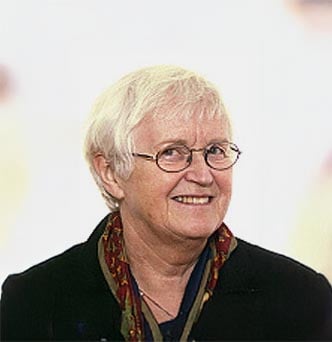
Karin Wegestål

Socionom. F.d. riksdagsledamot (s) & TFF rådgivare
Related Posts

LONDON – So far so good, at least on the wider level. While internally Iraq seems on the edge of chaos, the much heralded clash of civilizations between the Muslim and Judaeo-Christian worlds has yet to become apparent. We have anger and despair aplenty in the Arab and Muslim worlds. But very little rushing to the standard and there was no great pilgrimage of warriors to join the fight, as happened when the Soviet Union invaded Afghanistan twenty years ago, and then, having driven the Red Army out, were left to ferment in that mountainous redoubt. With the armaments supplied by the CIA the mujahidin were transformed into Al Qaeda that became, for a relatively brief moment as these things go, ‘the greatest threat to the homeland that America has ever known.’ Nevertheless a ‘Cold War’ between much of the Muslim world and the West is certainly in full swing. Winston...
The Challenge of Nuclear Weaponsin the Twenty-first CenturyA Path Forward The peoples and governments of the world face an urgent challenge relating to weaponry of mass destruction and particularly to nuclear weaponry.  At the crossroads of technology, terrorism, geopolitical ambition, and policies of preemption are new and potent dangers for humanity. Despite ending the nuclear standoff of the Cold War era, nuclear weaponry is again menacing the peoples of the world with catastrophic possibilities.  We recognize the need for any government to pursue its security interests in accordance with international law; and further, we recognize that distinctive threats to these interests now exist as a result of an active international terrorist network having declared war on the United States and its allies. Nonetheless, we reject the assessment of the current US administration that upgrading a reliance on nuclear weapons is in any sense justified as a response. We find it...
By Karin Wegestal MP, the Social Democratic Partyon behalf of the Swedish Committee for Solidarity with the Yugoslav People During the last decade, the Federal Republic of Yugoslavia has received more than 500,000 refugees from Croatia and Bosnia, and another 300,000 internally displaced persons, mainly from the province Kosovo and Metohia. For a country with about ten million inhabitants, such an influx of homeless people is obviously a very heavy burden – even under peaceful conditions. But in addition to that, the Federal Republic of Yugoslavia has been the subject to sanctions from the western powers for close to ten years and its infrastructure was badly hurt through Nato’s intense bombardment during 78 days in 1999. The result of all this is that Yugoslavia, once the most developed industrial country in Eastern Europe, is today the poorest country in Europe. In Serbia excluding Kosovo, with about ten million inhabitants and...

Recent Articles

Tony Robinson October 4, 2026 Violence is easy to recognise when someone is being beaten, shot or killed. It becomes more difficult when nobody is holding a weapon. Poverty, discrimination, exploitation and repression can restrict a human life just as effectively, although they do so in very different ways and with very different consequences. Simply adding more categories to an ever-growing list of forms of violence does not really solve the problem. The more interesting question is what all these different situations have in common and why it makes sense to describe them using the same word. Human beings do not simply react to what happens around them. They remember the past, imagine things that do not yet exist, make plans and undertake projects. Workers organise because they imagine different working conditions; people migrate because they imagine another life somewhere else; social movements emerge because people refuse to accept the...
It’s a matter of principles, courage, vision and pulling together – while the militarist world is falling apart… Peter Langille October 3, 2026 “Here, then, is the problem which we present to you, stark and dreadful and inescapable: Shall we put an end to the human race; or shall mankind renounce war?”The Bertrand Russell—Albert Einstein Manifesto, July 9, 1955 ⁕ The forecast for what’s ahead is worrisome. The sharp rise in armed conflicts over the past three years is adding to what was already the highest level in over seventy years. Genocides, which should be prevented are supported. A shared climate emergency that jeopardises survival is ignored. Diverse polls now suggest that people are war-weary, worried and interested in a more effective United Nations. And, there are viable policy options for a more secure world! Yet governments are doubling-down, betting on more war and investing heavily. If current trends persist,...
Johan Galtung 1930-2024October 2015 Published here on October 3, 2026 Let us focus on Civilization for conflict analysis and remedies. Major forms of disorder use violence; war is state organized violence. The most belligerent states are the United States of America and Israel, both with civilization roots. National Evangelism, the US Protestant Christian civilization– more national than evangelical–justifies US warfare as exceptionalism of a people chosen by God, with a manifest destiny to run the world. Orthodox Judaism justifies Israeli warfare to conquer and expand from Nile to Euphrates as a religious right and duty to the Eternal One. The third most belligerent country, the UK, no longer believes it is God-chosen but chosen by the USA; not quite the same but something. But the root cause of global disorder lies in the Occident–with Islam–seeing itself as the single, universal civilization valid for all at all times, all others being...

TFF on Substack

Discover and subscribe to more peace materials on TFF Substack

Most Popular

Tony Robinson October 4, 2026 Violence is easy to recognise when someone is being beaten, shot or killed. It becomes more difficult when nobody is holding a weapon. Poverty, discrimination, exploitation and repression can restrict a human life just as effectively, although they do so in very different ways and with very different consequences. Simply adding more categories to an ever-growing list of forms of violence does not really solve the problem. The more interesting question is what all these different situations have in common and why it makes sense to describe them using the same word. Human beings do not simply react to what happens around them. They remember the past, imagine things that do not yet exist, make plans and undertake projects. Workers organise because they imagine different working conditions; people migrate because they imagine another life somewhere else; social movements emerge because people refuse to accept the...
It’s a matter of principles, courage, vision and pulling together – while the militarist world is falling apart… Peter Langille October 3, 2026 “Here, then, is the problem which we present to you, stark and dreadful and inescapable: Shall we put an end to the human race; or shall mankind renounce war?”The Bertrand Russell—Albert Einstein Manifesto, July 9, 1955 ⁕ The forecast for what’s ahead is worrisome. The sharp rise in armed conflicts over the past three years is adding to what was already the highest level in over seventy years. Genocides, which should be prevented are supported. A shared climate emergency that jeopardises survival is ignored. Diverse polls now suggest that people are war-weary, worried and interested in a more effective United Nations. And, there are viable policy options for a more secure world! Yet governments are doubling-down, betting on more war and investing heavily. If current trends persist,...
Johan Galtung 1930-2024October 2015 Published here on October 3, 2026 Let us focus on Civilization for conflict analysis and remedies. Major forms of disorder use violence; war is state organized violence. The most belligerent states are the United States of America and Israel, both with civilization roots. National Evangelism, the US Protestant Christian civilization– more national than evangelical–justifies US warfare as exceptionalism of a people chosen by God, with a manifest destiny to run the world. Orthodox Judaism justifies Israeli warfare to conquer and expand from Nile to Euphrates as a religious right and duty to the Eternal One. The third most belligerent country, the UK, no longer believes it is God-chosen but chosen by the USA; not quite the same but something. But the root cause of global disorder lies in the Occident–with Islam–seeing itself as the single, universal civilization valid for all at all times, all others being...
Read More
Living-Peace-Sign-Budapest-copy
Tony Robinson October 4, 2026 Violence is easy to recognise when someone is being beaten, shot or killed. It becomes more difficult when nobody is holding a weapon. Poverty, discrimination, exploitation and repression can restrict a human life just as effectively, although they do so in very different ways and with very different consequences. Simply adding more categories to an ever-growing list of forms of violence does not really solve the problem. The more interesting question is what all these different situations have in common and why it makes sense to describe them using the same word. Human beings do not simply react to what happens around them. They remember the past, imagine things that do not yet exist, make plans and undertake projects. Workers organise because they imagine different working conditions; people migrate because they imagine another life somewhere else; social movements emerge because people refuse to accept the...
b54a1f10-8c65-4f0b-9dd5-4abc0a7d04cc_2659x2659
It’s a matter of principles, courage, vision and pulling together – while the militarist world is falling apart… Peter Langille October 3, 2026 “Here, then, is the problem which we present to you, stark and dreadful and inescapable: Shall we put an end to the human race; or shall mankind renounce war?”The Bertrand Russell—Albert Einstein Manifesto, July 9, 1955 ⁕ The forecast for what’s ahead is worrisome. The sharp rise in armed conflicts over the past three years is adding to what was already the highest level in over seventy years. Genocides, which should be prevented are supported. A shared climate emergency that jeopardises survival is ignored. Diverse polls now suggest that people are war-weary, worried and interested in a more effective United Nations. And, there are viable policy options for a more secure world! Yet governments are doubling-down, betting on more war and investing heavily. If current trends persist,...
010
Johan Galtung 1930-2024October 2015 Published here on October 3, 2026 Let us focus on Civilization for conflict analysis and remedies. Major forms of disorder use violence; war is state organized violence. The most belligerent states are the United States of America and Israel, both with civilization roots. National Evangelism, the US Protestant Christian civilization– more national than evangelical–justifies US warfare as exceptionalism of a people chosen by God, with a manifest destiny to run the world. Orthodox Judaism justifies Israeli warfare to conquer and expand from Nile to Euphrates as a religious right and duty to the Eternal One. The third most belligerent country, the UK, no longer believes it is God-chosen but chosen by the USA; not quite the same but something. But the root cause of global disorder lies in the Occident–with Islam–seeing itself as the single, universal civilization valid for all at all times, all others being...
Screenshot 2026-10-02 011738
Jan ObergPhD, director, The Transnational Foundation for Peace and Future Research, TFFLund, Sweden October 2, 2026 This is my full original manuscript. The Chinese Academy of Social Science, CASS, makes two publications out if it. 1. China’s Five-year plan emphasized the capabilities of basic research and original innovation. It is regarded as the goal of the future social development, which, as required, should be significantly enhanced. Can you comment on the importance of original innovation in research and academic study? I believe it is easier to define “original innovation” in the natural sciences than in social sciences. The breaking points of what constitutes something new, or innovative, are not quite as sharp in the latter. But in both fields it is about opening up something that was closed, unseen, unexplored before – making manifest what was earlier latent. Innovations come in many forms and shapes – naming something that was not...
arctic-circle-map
The agreement is catastrophic both because of what it says and what it doesn’t mention. It reduces further the major asset of security policies: Freedom of action. Jan Oberg TFF director September 25, 2026 A couple of hours before the agreement was signed on September 22, 2026, I published the following 13 hypotheses about what it would most likely contain on TFF Substack (in English). I was wrong on only the first point. Contrary to what Trump had written on his Truth Social platform, it does not appear to come into force immediately. In fact, it turned out to be worse than even I had anticipated. After these hypotheses now come a number of reflections in light of what the agreement actually contains, and does not contain, as well as the way in which it has generally been presented by major media outlets and by the public-service broadcaster DR. My...
girl-5894831_1280
Below are TFF-related media mentions, comments, videos and social media posts published elsewhere but not on this homepage. We happen to catch and list only a fraction. Regarding video comments and debates, we recommend that you go to the TFF Video Channel on Substack where many of them are reproduced. Jan Oberg is a contributor to China Daily – 52 million daily clicks – and Global Times, CGTN and CCTV (the national television), China Investment, Xinhua News Agency and several others. Articles and videos on these media very often multiply into countless Chinese (and Western media) that re-post them from these main media. Thanks to The China Academy, his analyses, interviews and comments are frequently posted on YouTube channels such as Thinkers Forum and Wave Media. These videos are often re-posted on Bilibili (China’s YouTube), the China Content Center on TikTok, and on the Chinese edition of TikTok, Douyin.com. This means reaching hundreds of millions of viewers worldwide over a year. While there are too many to catch on all these...





