
Kalejdoskop 82 – Ett expanderande NATOär konfliktbevarande

Nato expanderar i en värld där de samlade militärutgifterna motsvarar årsinkomsten för jordens 49 procent fattigaste, skriver fredsforskaren Jan Øberg. Satsningen på Nato:s utvidgning går ut på att kämpa mot fiktiva hot och skapar exakt det man säger sig vilja undvika, ekonomisk kris, instabilitet och nya hot.

Nato expanderar. De globala militära utgifterna har årligen fallit med några få procent. Men den nya teknologins slagkraft ökar. Kärnvapenindustrins forskare hotas inte av arbetslöshet. Enbart USA har en militär budget på drygt 250 miljarder dollar och världens samlade militärutgifter motsvarar årsinkomsten för de 49 procent fattigaste på klotet.

Tyskland expanderar. En gång i tiden förstod man att ett förenat Tyskland måste vara neutralt. Men Gorbatjov, som gav Sovjetunionens och Warszawapaktens upplösning till Västvärlden i tron att han skulle få någonting i gengäld, serverade också ett förenat Tyskland till Nato på en silverbricka. Delvis kärnvapen-nedrustning följde liksom ryska försvarets sociala och militära nedrustning. Triumfatoriskt utropade sig Väst till det kalla krigets segerherre.

Saddam en älskad fiende
Det samlade Tysklands första markanta utrikespolitiska initiativ bestod i att söndra Jugoslavien. Medvetet om att re-militariseringen måste gå långsamt började man med fältsjukhus i Bosnien. Nu blir den tyska stabilitetsframtvingande närvaron successivt mer militant – vilket kanske kan uppfattas som ett naturligt element i den ständigt djupare och bredare tyskfranska konventionella och atomära militärintegrationen. Somliga kanske minns Tom Lehrers profetia från 60-talet om att “one of the fingers on the Button will be German”?

USA expanderar. I den Bush-Clintonska världsbilden var och är Saddam Hussein en Muhammeds gåva till Väst. Om han inte redan var störtrik hade han platsat väl på CIA:s lönelista; utöver att spela rollen som älskad fiende hjälper Hussein oss att hålla Irans fundamentalism, som i inte ringa omfattning är ett resultat av amerikansk-västlig politik sedan 1953, på komfortabelt avstånd.

Samtidigt skapar det av FN sanktionerade folkmordet på över 500 000 oskyldiga irakiska medborgare naturligtvis ett bottenlöst hat mot väst i generationer framöver – bra, alltså, att Nato expanderar och kan tillmötesgå hot av just det slaget.

Nato till Baltikum?
Som om Jugoslaviens sammanbrott inte var illa nog, fumlade EU och sedan USA så mycket med krishanteringen att Nato-SFOR blev nödvändig. Nato expanderar geografiskt genom USA:s dominerande inflytande i Kroatien, Federations-Bosnien, delvis i Kosovo, i Albanien och i Makedonien och genom amerikansk ledning i Daytonprocessen och SFOR, i OSCE, i Brcko-skiljedomen och i den internationella Kontaktgruppen. Det sker på bekostnad av EU men också av FN:s intellektuella, moraliska, politiska och militära auktoritet. Nato expanderar alltså i takt med att militär-humanitära och andra interventioner legitimeras.

Den senaste Nato-expansionen handlar om Polen, Ungern och Tjeckien. De nästa blir förmodligen de baltiska staterna, sedan Slovenien, Kroatien och Makedonien samt – varför inte med tiden Kaukasus? Sverige och Finland positionerar sig för närvarande för de facto integration, även om inte för de jure medlemskap. Men ju fler som kommer in, ju fler kommer att känna sig tvingade att knacka på – “utvecklingen” är oundviklig, besluten är “nödvändiga” och den “valda” vägen oåterkallelig.

En moralisk papperstiger
Nato är emellertid en intellektuell och moralisk papperstiger. Det framgår att det finns tre orsaker till att Nato ska expandera: 1: det ska Nato därför att Nato har beslutat det, 2: trollformeln att det skapar ökad stabilitet och 3: att de forna öststaterna tigger och ber om skydd. En idé som inte kan säljas med bättre argument är förmodligen ganska usel!

Mycket talar mot expansion. Ingen kan se hot av det slag som Nato är utvecklat för att möta; däremot är expansion ett säkert sätt att skapa dem på. Ryska ledare uttalar inte hot utan uttrycker sitt bekymmer över att expansionen kommer att spela nationalister, gammalkommunister och militärer i händerna och försvaga de demokratiska krafterna. De har givetvis rätt. Men statslojala säkerhetsexperter och ledarskribenter i väst tolkar deras bekymmer med överseende: ryssarna är ju lite efter, har inte fattat vad den nya tiden innebär. För övrigt ska Väst inte ge upp expansionen bara för att ryssarna inte tycker om den, sägs det med förakt för vad som är orsak och verkan.

Ett förödmjukat Ryssland
Länder som inte inlemmas i Nato nu kommer i kläm och sandwichas mellan expansionen och ett Ryssland som känner sig förödmjukat och av det skälet kan bli hotfullt. Oundvikligen kommer samarbetet mellan Ryssland och väst att påverkas negativt av expansionen. Om man beaktar det ryska försvarets eländiga tillstånd ska man inte förvånas ifall ryska strateger kommer att uppgradera kärnvapnens relativa betydelse. Och politiska kretsar kan se det som fördelaktigt att på sikt vända väst ryggen och närma sig Kina. Vad bra alltså att man i Nato inte ett ögonblick tillåter den kätterska tanken, den fria debatten, om huruvida atomvapnen bör vara alliansens fundament.

Genom att satsa på expansion förslösas en mängd pengar som kunde användas bättre, inte bara bland de 49 procenten fattigaste i världen utan till gemensamma projekt i Öst- och Västeuropa och till bekämpning av den växande arbetslösheten, som för Tysklands vidkommande av en rena slump sammanfaller med landets markering av utåtriktad styrka.

Satsningen på Nato:s expansion kommer att ta politisk och intellektuell energi och andra resurser från utvecklingen av alternativ såsom defensivt försvar, gemensam säkerhet, nya typer av konflikthantering, tidig varning, OSCE/FN-baserat fredsbevarande, försoning och återuppbyggnad. Nato har ingen som helst erfarenhet av dessa saker utan bara av militär planering, avspänning och konflikt-bevarande i det avlidna tvåpaktsystemet under det avslutade kalla kriget.

Medan den verkliga världen har behov av kraftfulla lösningar på manifesta problem sitter realpolitiken autistiskt fast i en expansiv kamp mot fiktiva hot, som skapar exakt det man deklamatoriskt säger sig vilja undvika, nämligen ekonomisk kris, instabilitet och nya hot.

Västvärldens expansion
Varför göra något som så mycket talar emot och så litet talar för? Jag tror det kan besvaras ganska enkelt: Nato:s expansion blev nödvändig därför att Nato inte längre var nödvändigt. Vi har nu fått en debatt om Nato:s utvidgning, inte om Nato. Och sedan kan man gissa på åtminstone tre outtalade orsaker: 1: västs ångest för att på sikt bli omkört av andra civilisationer, 2: Balkans fortsatta kaos, samt 3: den växande konflikten om de nya oljefyndigheterna i Azerbaijzan och Kaspiska havet (stora som eller större än Mellersta österns) och “pipeline”-kriget om hur man skall säkra transporten av denna olja till Väst.

Den patologiskt energi- och varumissbrukande kapitalistiska västvärlden, som också är programmerad för monoteistisk mission, måste nödvändigtvis expandera både horisontellt – till ständigt fler länder – och vertikalt, ständigt djupare ned i rötterna på varje samhälle. De som inte tycker att detta är en strålande idé utgör hoten.

Så länge leve det ny-expansiva Nato. Om inte det hade funnits fanns det ju risk för att folk började tro att mycket borde – och kunde – göras på mångahanda andra sätt.
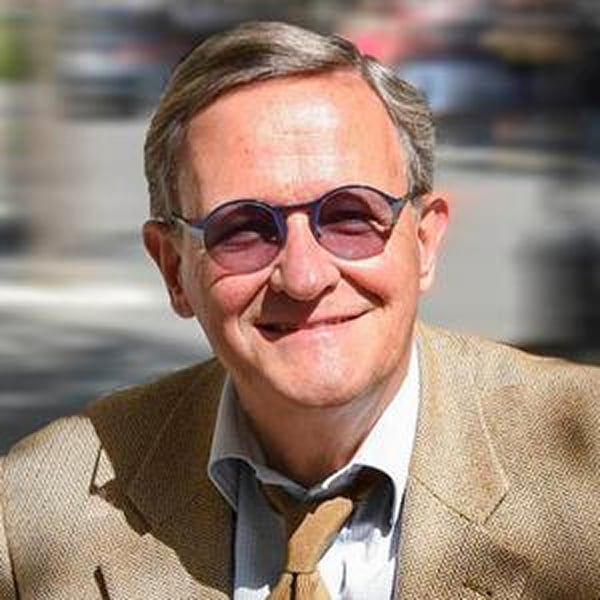

Peace & future researcher + ‌Art Photographer

Related Posts

LONDON – So far so good, at least on the wider level. While internally Iraq seems on the edge of chaos, the much heralded clash of civilizations between the Muslim and Judaeo-Christian worlds has yet to become apparent. We have anger and despair aplenty in the Arab and Muslim worlds. But very little rushing to the standard and there was no great pilgrimage of warriors to join the fight, as happened when the Soviet Union invaded Afghanistan twenty years ago, and then, having driven the Red Army out, were left to ferment in that mountainous redoubt. With the armaments supplied by the CIA the mujahidin were transformed into Al Qaeda that became, for a relatively brief moment as these things go, ‘the greatest threat to the homeland that America has ever known.’ Nevertheless a ‘Cold War’ between much of the Muslim world and the West is certainly in full swing. Winston...
The Challenge of Nuclear Weaponsin the Twenty-first CenturyA Path Forward The peoples and governments of the world face an urgent challenge relating to weaponry of mass destruction and particularly to nuclear weaponry.  At the crossroads of technology, terrorism, geopolitical ambition, and policies of preemption are new and potent dangers for humanity. Despite ending the nuclear standoff of the Cold War era, nuclear weaponry is again menacing the peoples of the world with catastrophic possibilities.  We recognize the need for any government to pursue its security interests in accordance with international law; and further, we recognize that distinctive threats to these interests now exist as a result of an active international terrorist network having declared war on the United States and its allies. Nonetheless, we reject the assessment of the current US administration that upgrading a reliance on nuclear weapons is in any sense justified as a response. We find it...
By Karin Wegestal MP, the Social Democratic Partyon behalf of the Swedish Committee for Solidarity with the Yugoslav People During the last decade, the Federal Republic of Yugoslavia has received more than 500,000 refugees from Croatia and Bosnia, and another 300,000 internally displaced persons, mainly from the province Kosovo and Metohia. For a country with about ten million inhabitants, such an influx of homeless people is obviously a very heavy burden – even under peaceful conditions. But in addition to that, the Federal Republic of Yugoslavia has been the subject to sanctions from the western powers for close to ten years and its infrastructure was badly hurt through Nato’s intense bombardment during 78 days in 1999. The result of all this is that Yugoslavia, once the most developed industrial country in Eastern Europe, is today the poorest country in Europe. In Serbia excluding Kosovo, with about ten million inhabitants and...

Recent Articles

Tony Robinson October 4, 2026 Violence is easy to recognise when someone is being beaten, shot or killed. It becomes more difficult when nobody is holding a weapon. Poverty, discrimination, exploitation and repression can restrict a human life just as effectively, although they do so in very different ways and with very different consequences. Simply adding more categories to an ever-growing list of forms of violence does not really solve the problem. The more interesting question is what all these different situations have in common and why it makes sense to describe them using the same word. Human beings do not simply react to what happens around them. They remember the past, imagine things that do not yet exist, make plans and undertake projects. Workers organise because they imagine different working conditions; people migrate because they imagine another life somewhere else; social movements emerge because people refuse to accept the...
It’s a matter of principles, courage, vision and pulling together – while the militarist world is falling apart… Peter Langille October 3, 2026 “Here, then, is the problem which we present to you, stark and dreadful and inescapable: Shall we put an end to the human race; or shall mankind renounce war?”The Bertrand Russell—Albert Einstein Manifesto, July 9, 1955 ⁕ The forecast for what’s ahead is worrisome. The sharp rise in armed conflicts over the past three years is adding to what was already the highest level in over seventy years. Genocides, which should be prevented are supported. A shared climate emergency that jeopardises survival is ignored. Diverse polls now suggest that people are war-weary, worried and interested in a more effective United Nations. And, there are viable policy options for a more secure world! Yet governments are doubling-down, betting on more war and investing heavily. If current trends persist,...
Johan Galtung 1930-2024October 2015 Published here on October 3, 2026 Let us focus on Civilization for conflict analysis and remedies. Major forms of disorder use violence; war is state organized violence. The most belligerent states are the United States of America and Israel, both with civilization roots. National Evangelism, the US Protestant Christian civilization– more national than evangelical–justifies US warfare as exceptionalism of a people chosen by God, with a manifest destiny to run the world. Orthodox Judaism justifies Israeli warfare to conquer and expand from Nile to Euphrates as a religious right and duty to the Eternal One. The third most belligerent country, the UK, no longer believes it is God-chosen but chosen by the USA; not quite the same but something. But the root cause of global disorder lies in the Occident–with Islam–seeing itself as the single, universal civilization valid for all at all times, all others being...

TFF on Substack

Discover and subscribe to more peace materials on TFF Substack

Most Popular

Tony Robinson October 4, 2026 Violence is easy to recognise when someone is being beaten, shot or killed. It becomes more difficult when nobody is holding a weapon. Poverty, discrimination, exploitation and repression can restrict a human life just as effectively, although they do so in very different ways and with very different consequences. Simply adding more categories to an ever-growing list of forms of violence does not really solve the problem. The more interesting question is what all these different situations have in common and why it makes sense to describe them using the same word. Human beings do not simply react to what happens around them. They remember the past, imagine things that do not yet exist, make plans and undertake projects. Workers organise because they imagine different working conditions; people migrate because they imagine another life somewhere else; social movements emerge because people refuse to accept the...
It’s a matter of principles, courage, vision and pulling together – while the militarist world is falling apart… Peter Langille October 3, 2026 “Here, then, is the problem which we present to you, stark and dreadful and inescapable: Shall we put an end to the human race; or shall mankind renounce war?”The Bertrand Russell—Albert Einstein Manifesto, July 9, 1955 ⁕ The forecast for what’s ahead is worrisome. The sharp rise in armed conflicts over the past three years is adding to what was already the highest level in over seventy years. Genocides, which should be prevented are supported. A shared climate emergency that jeopardises survival is ignored. Diverse polls now suggest that people are war-weary, worried and interested in a more effective United Nations. And, there are viable policy options for a more secure world! Yet governments are doubling-down, betting on more war and investing heavily. If current trends persist,...
Johan Galtung 1930-2024October 2015 Published here on October 3, 2026 Let us focus on Civilization for conflict analysis and remedies. Major forms of disorder use violence; war is state organized violence. The most belligerent states are the United States of America and Israel, both with civilization roots. National Evangelism, the US Protestant Christian civilization– more national than evangelical–justifies US warfare as exceptionalism of a people chosen by God, with a manifest destiny to run the world. Orthodox Judaism justifies Israeli warfare to conquer and expand from Nile to Euphrates as a religious right and duty to the Eternal One. The third most belligerent country, the UK, no longer believes it is God-chosen but chosen by the USA; not quite the same but something. But the root cause of global disorder lies in the Occident–with Islam–seeing itself as the single, universal civilization valid for all at all times, all others being...
Read More
Living-Peace-Sign-Budapest-copy
Tony Robinson October 4, 2026 Violence is easy to recognise when someone is being beaten, shot or killed. It becomes more difficult when nobody is holding a weapon. Poverty, discrimination, exploitation and repression can restrict a human life just as effectively, although they do so in very different ways and with very different consequences. Simply adding more categories to an ever-growing list of forms of violence does not really solve the problem. The more interesting question is what all these different situations have in common and why it makes sense to describe them using the same word. Human beings do not simply react to what happens around them. They remember the past, imagine things that do not yet exist, make plans and undertake projects. Workers organise because they imagine different working conditions; people migrate because they imagine another life somewhere else; social movements emerge because people refuse to accept the...
b54a1f10-8c65-4f0b-9dd5-4abc0a7d04cc_2659x2659
It’s a matter of principles, courage, vision and pulling together – while the militarist world is falling apart… Peter Langille October 3, 2026 “Here, then, is the problem which we present to you, stark and dreadful and inescapable: Shall we put an end to the human race; or shall mankind renounce war?”The Bertrand Russell—Albert Einstein Manifesto, July 9, 1955 ⁕ The forecast for what’s ahead is worrisome. The sharp rise in armed conflicts over the past three years is adding to what was already the highest level in over seventy years. Genocides, which should be prevented are supported. A shared climate emergency that jeopardises survival is ignored. Diverse polls now suggest that people are war-weary, worried and interested in a more effective United Nations. And, there are viable policy options for a more secure world! Yet governments are doubling-down, betting on more war and investing heavily. If current trends persist,...
010
Johan Galtung 1930-2024October 2015 Published here on October 3, 2026 Let us focus on Civilization for conflict analysis and remedies. Major forms of disorder use violence; war is state organized violence. The most belligerent states are the United States of America and Israel, both with civilization roots. National Evangelism, the US Protestant Christian civilization– more national than evangelical–justifies US warfare as exceptionalism of a people chosen by God, with a manifest destiny to run the world. Orthodox Judaism justifies Israeli warfare to conquer and expand from Nile to Euphrates as a religious right and duty to the Eternal One. The third most belligerent country, the UK, no longer believes it is God-chosen but chosen by the USA; not quite the same but something. But the root cause of global disorder lies in the Occident–with Islam–seeing itself as the single, universal civilization valid for all at all times, all others being...
Screenshot 2026-10-02 011738
Jan ObergPhD, director, The Transnational Foundation for Peace and Future Research, TFFLund, Sweden October 2, 2026 This is my full original manuscript. The Chinese Academy of Social Science, CASS, makes two publications out if it. 1. China’s Five-year plan emphasized the capabilities of basic research and original innovation. It is regarded as the goal of the future social development, which, as required, should be significantly enhanced. Can you comment on the importance of original innovation in research and academic study? I believe it is easier to define “original innovation” in the natural sciences than in social sciences. The breaking points of what constitutes something new, or innovative, are not quite as sharp in the latter. But in both fields it is about opening up something that was closed, unseen, unexplored before – making manifest what was earlier latent. Innovations come in many forms and shapes – naming something that was not...
arctic-circle-map
The agreement is catastrophic both because of what it says and what it doesn’t mention. It reduces further the major asset of security policies: Freedom of action. Jan Oberg TFF director September 25, 2026 A couple of hours before the agreement was signed on September 22, 2026, I published the following 13 hypotheses about what it would most likely contain on TFF Substack (in English). I was wrong on only the first point. Contrary to what Trump had written on his Truth Social platform, it does not appear to come into force immediately. In fact, it turned out to be worse than even I had anticipated. After these hypotheses now come a number of reflections in light of what the agreement actually contains, and does not contain, as well as the way in which it has generally been presented by major media outlets and by the public-service broadcaster DR. My...
girl-5894831_1280
Below are TFF-related media mentions, comments, videos and social media posts published elsewhere but not on this homepage. We happen to catch and list only a fraction. Regarding video comments and debates, we recommend that you go to the TFF Video Channel on Substack where many of them are reproduced. Jan Oberg is a contributor to China Daily – 52 million daily clicks – and Global Times, CGTN and CCTV (the national television), China Investment, Xinhua News Agency and several others. Articles and videos on these media very often multiply into countless Chinese (and Western media) that re-post them from these main media. Thanks to The China Academy, his analyses, interviews and comments are frequently posted on YouTube channels such as Thinkers Forum and Wave Media. These videos are often re-posted on Bilibili (China’s YouTube), the China Content Center on TikTok, and on the Chinese edition of TikTok, Douyin.com. This means reaching hundreds of millions of viewers worldwide over a year. While there are too many to catch on all these...




