
PressInfo #228 – Kosovo: Many options but independence

The Serbian province of Kosovo, largely populated by the Albanian separatist-minded majority, has failed to meet basic human rights and political standards set as prerequisites by the international community, but it should nevertheless enter in the months to come talks on its future status.

This basic conclusion of the long-awaited report by UN special envoy Kai Eide was approved by the UN secretary general Kofi Annan and fully supported by the EU and the US, but it fails to demystify the paradox.

Only two a half years ago, the international community had charged that talks on status could not start before a set of basic human rights standards was achieved.

Since then, however, as it became clearer that the Kosovo Albanian majority was unwilling to meet the criteria and the UN unable to enforce them, there was a permanent watering down of prerequisites, until the proclaimed policy of “standards before status” was finally buried with Mr. Eide’s report.

Why has it failed? Is it because of the fear of the Kosovo Albanian threat of inciting violence if talks on status did not start soon, or was this policy a bluff from the start?

What kind of signal does it offer for the fairness of the upcoming talks? Will threats of ethnic violence in case “the only option for Kosovo Albanians – independence” – is not achieved again play a role? Or will the international community overcome its fear and offer both Pristina and Belgrade reasons to believe that the solution would negotiated and long-lasting rather than imposed, one-sided and conflict-prone?

Advocates of Kosovo’s independence such as the International Crisis Group, Wesley Clark, Richard Holbrooke and various US members of Congress argue “independence is the only solution.” The U.S. has more urgent problems elsewhere. But full independence cannot be negotiated, it can only be imposed. “Independent Kosova” implies that the Kosovo-Albanians achieve their maximalist goal with military means while Belgrade and the Kosovo Serbs and Roma would not even get their minimum — a recipe for future troubles.

It would be also counterproductive for Europe and the U.S.: to side with the Kosovo-Albanians and isolate Serbia – a highly multi-ethnic, strategically important, constitutional state with a market of 10 million people – would be foolish. Keeping punishing Serbia and Serbs collectively for Milosevic’s brutality would be immoral.

An “independent Kosova” would set a dangerous precedent for the region, not least in Bosnia and Macedonia, for international law, for European integration. And if Kosovo, why not Taiwan, Tibet, Chechenya, Tamil Eelam, Kashmir? The world has about 200 states and 5,000 ethnic groups. Who would like 4,800 new states? The future is about human globalization and integration.

Independence would also violate UN Security Council Resolution 1244 of 1999 on Kosovo. Not even liberally interpreted does it endorse independence. Independence would reward Albanian extremists who have been behind the ethnic cleansing campaign against the non-Albanian communities, encourage those who exported violence from Kosovo to the neighbouring southern Serbia and to Macedonia. The ‘disarmed’ protectorate of Kosovo was a major player in all that.

The results of Milosevic’s authoritarian policies clearly prevent Kosovo from returning to its pre-1999 status. Belgrade recognizes that today. The international community on its side refuses to see that the UN, NATO, EU and OSCE in Kosovo have failed miserably in creating the multi-ethnic, tolerant and safe Kosovo that it thought the bombings would facilitate. There has been virtually no return of the 200,000 Serbs and tens of thousands of other non-Albanians who felt threatened by Albanian nationalists and terrorists in 1999-2000.

Proportionately this is the largest ethnic cleansing in ex-Yugoslavia. Half a million Serbs in today’s Serbia, driven out of Croatia, Bosnia and Kosovo, make up Europe’s largest – but ignored – refugee problem. The economy of Kosovo remains in shambles – 70% unemployment -and mafia-integrated.

There is never only one solution to a complex problem. Between the old autonomy for Kosovo and full independence is a myriad of thinkable options – combining internal and regional features. They should all be on the negotiation table: a citizens’ Kosovo where ethnic background is irrelevant, cantonisation, consociation, confederation, condominium, double autonomy for minorities there and in Southern Serbia, partition, trusteeship, independence with special features such as soft borders, no army and guarantees for never joining Albania. Least creative of all is the “only-one-solution” that all main actors today propose – completely incompatible with every other “only-one solution.”

Finally, no formal status will work if the people continue to hate and see no development opportunities. If we ignore human needs for fear-reduction, deep reconciliation and economic recovery, independent Kosovo will become another failed state, perhaps consumed by civil war. Even an ethnically pure, only-Albanian Kosovo is no guarantee for regional stability. It could soon become a dangerous burden on the EU.

Kosovo is about the future of that province and of Serbia, but also about the region and the EU. Indeed, Kosovo is about global politics. In this 11th hour, the UN, EU and the U.S. should re-evaluate their post-1990 policies and recognize the need for much more intellectually open and politically pluralist approaches than those that have been promoted so far. Rigidity, lack of principle and wishful thinking could once again prove to be the enemies of sustainable peace in the region.

TFF has been conducting conflict-mitigation work in all parts of ex-Yugoslavia since 1991. TFF teams served in the 1990s as goodwill advisers to both Yugoslav governments and the Kosovo-Albanian leadership of present President Ibrahim Rugova.

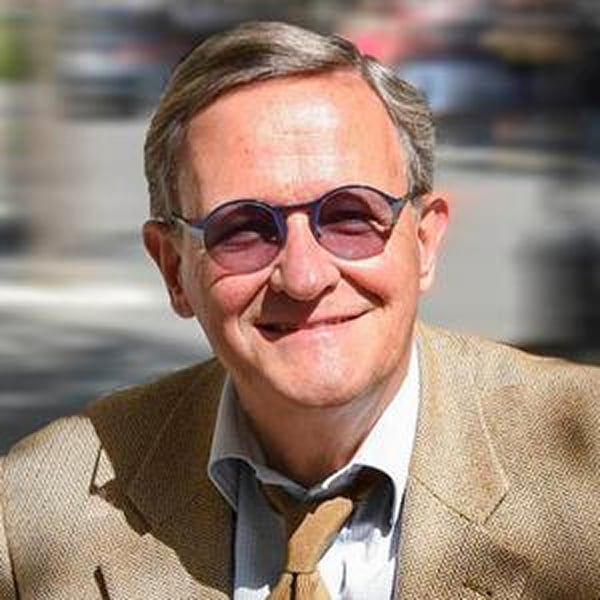
"September 2003 - present: PhD in Journalism and Communications, University of Belgrade. Working on the PhD thesis « Journalistic Responsibility in Crisis Situations : a Case-study Analysis of the Relationship between Media Management and Ethical Reporting ». 1996- 1997: Masters (M.A.) in International Affairs-Conflict Analysis, Carleton University, Ottawa Norman Paterson School of International Affairs, Carleton University, Ottawa. A-level GPA - Defended thesis ""with distinction"": ""Influence of the Media on Preventive Diplomacy: Three Cases from the Yugoslav Conflict"". 1992-1996: Bachelor of Journalism (B.J.) - Highest Honors in Journalism and Political Science, Carleton University, Ottawa"

Peace & future researcher + ‌Art Photographer

Related Posts

The agreement is catastrophic both because of what it says and what it doesn’t mention. It reduces further the major asset of security policies: Freedom of action. Jan Oberg TFF director September 25, 2026 A couple of hours before the agreement was signed on September 22, 2026, I published the following 13 hypotheses about what it would most likely contain on TFF Substack (in English). I was wrong on only the first point. Contrary to what Trump had written on his Truth Social platform, it does not appear to come into force immediately. In fact, it turned out to be worse than even I had anticipated. After these hypotheses now come a number of reflections in light of what the agreement actually contains, and does not contain, as well as the way in which it has generally been presented by major media outlets and by the public-service broadcaster DR. My...
Below are TFF-related media mentions, comments, videos and social media posts published elsewhere but not on this homepage. We happen to catch and list only a fraction. Regarding video comments and debates, we recommend that you go to the TFF Video Channel on Substack where many of them are reproduced. Jan Oberg is a contributor to China Daily – 52 million daily clicks – and Global Times, CGTN and CCTV (the national television), China Investment, Xinhua News Agency and several others. Articles and videos on these media very often multiply into countless Chinese (and Western media) that re-post them from these main media. Thanks to The China Academy, his analyses, interviews and comments are frequently posted on YouTube channels such as Thinkers Forum and Wave Media. These videos are often re-posted on Bilibili (China’s YouTube), the China Content Center on TikTok, and on the Chinese edition of TikTok, Douyin.com. This means reaching hundreds of millions of viewers worldwide over a year. While there are too many to catch on all these...
Jan Oberg May 15, 2026 Go to this Fox News page and scroll the whole way down: President Donald Trump tells the world that his meeting with President Xi Jinping yielded a lot of very concrete political and economic results – of course, only where the Chinese side, according to him, agreed with him. He does not mention the Taiwan issue, but Secretary of State, Marco Rubio, says that it did not feature prominently in their talks and that the US policy on Taiwan has not changed. Then go to China Daily – or Global Times – and you will see that for the Chinese it is framework, principles, structure of cooperation etc. that matters – all embedded in the overall idea of “constructive bilateral relationship of strategic stability.” Nowhere is any concrete agreement or deal – all that Trump refers to – mentioned. At the general level, this gives you insights into the very different social...

Recent Articles

Tony Robinson October 4, 2026 Violence is easy to recognise when someone is being beaten, shot or killed. It becomes more difficult when nobody is holding a weapon. Poverty, discrimination, exploitation and repression can restrict a human life just as effectively, although they do so in very different ways and with very different consequences. Simply adding more categories to an ever-growing list of forms of violence does not really solve the problem. The more interesting question is what all these different situations have in common and why it makes sense to describe them using the same word. Human beings do not simply react to what happens around them. They remember the past, imagine things that do not yet exist, make plans and undertake projects. Workers organise because they imagine different working conditions; people migrate because they imagine another life somewhere else; social movements emerge because people refuse to accept the...
It’s a matter of principles, courage, vision and pulling together – while the militarist world is falling apart… Peter Langille October 3, 2026 “Here, then, is the problem which we present to you, stark and dreadful and inescapable: Shall we put an end to the human race; or shall mankind renounce war?”The Bertrand Russell—Albert Einstein Manifesto, July 9, 1955 ⁕ The forecast for what’s ahead is worrisome. The sharp rise in armed conflicts over the past three years is adding to what was already the highest level in over seventy years. Genocides, which should be prevented are supported. A shared climate emergency that jeopardises survival is ignored. Diverse polls now suggest that people are war-weary, worried and interested in a more effective United Nations. And, there are viable policy options for a more secure world! Yet governments are doubling-down, betting on more war and investing heavily. If current trends persist,...
Johan Galtung 1930-2024October 2015 Published here on October 3, 2026 Let us focus on Civilization for conflict analysis and remedies. Major forms of disorder use violence; war is state organized violence. The most belligerent states are the United States of America and Israel, both with civilization roots. National Evangelism, the US Protestant Christian civilization– more national than evangelical–justifies US warfare as exceptionalism of a people chosen by God, with a manifest destiny to run the world. Orthodox Judaism justifies Israeli warfare to conquer and expand from Nile to Euphrates as a religious right and duty to the Eternal One. The third most belligerent country, the UK, no longer believes it is God-chosen but chosen by the USA; not quite the same but something. But the root cause of global disorder lies in the Occident–with Islam–seeing itself as the single, universal civilization valid for all at all times, all others being...

TFF on Substack

Discover and subscribe to more peace materials on TFF Substack

Most Popular

Tony Robinson October 4, 2026 Violence is easy to recognise when someone is being beaten, shot or killed. It becomes more difficult when nobody is holding a weapon. Poverty, discrimination, exploitation and repression can restrict a human life just as effectively, although they do so in very different ways and with very different consequences. Simply adding more categories to an ever-growing list of forms of violence does not really solve the problem. The more interesting question is what all these different situations have in common and why it makes sense to describe them using the same word. Human beings do not simply react to what happens around them. They remember the past, imagine things that do not yet exist, make plans and undertake projects. Workers organise because they imagine different working conditions; people migrate because they imagine another life somewhere else; social movements emerge because people refuse to accept the...
It’s a matter of principles, courage, vision and pulling together – while the militarist world is falling apart… Peter Langille October 3, 2026 “Here, then, is the problem which we present to you, stark and dreadful and inescapable: Shall we put an end to the human race; or shall mankind renounce war?”The Bertrand Russell—Albert Einstein Manifesto, July 9, 1955 ⁕ The forecast for what’s ahead is worrisome. The sharp rise in armed conflicts over the past three years is adding to what was already the highest level in over seventy years. Genocides, which should be prevented are supported. A shared climate emergency that jeopardises survival is ignored. Diverse polls now suggest that people are war-weary, worried and interested in a more effective United Nations. And, there are viable policy options for a more secure world! Yet governments are doubling-down, betting on more war and investing heavily. If current trends persist,...
Johan Galtung 1930-2024October 2015 Published here on October 3, 2026 Let us focus on Civilization for conflict analysis and remedies. Major forms of disorder use violence; war is state organized violence. The most belligerent states are the United States of America and Israel, both with civilization roots. National Evangelism, the US Protestant Christian civilization– more national than evangelical–justifies US warfare as exceptionalism of a people chosen by God, with a manifest destiny to run the world. Orthodox Judaism justifies Israeli warfare to conquer and expand from Nile to Euphrates as a religious right and duty to the Eternal One. The third most belligerent country, the UK, no longer believes it is God-chosen but chosen by the USA; not quite the same but something. But the root cause of global disorder lies in the Occident–with Islam–seeing itself as the single, universal civilization valid for all at all times, all others being...
Read More
Living-Peace-Sign-Budapest-copy
Tony Robinson October 4, 2026 Violence is easy to recognise when someone is being beaten, shot or killed. It becomes more difficult when nobody is holding a weapon. Poverty, discrimination, exploitation and repression can restrict a human life just as effectively, although they do so in very different ways and with very different consequences. Simply adding more categories to an ever-growing list of forms of violence does not really solve the problem. The more interesting question is what all these different situations have in common and why it makes sense to describe them using the same word. Human beings do not simply react to what happens around them. They remember the past, imagine things that do not yet exist, make plans and undertake projects. Workers organise because they imagine different working conditions; people migrate because they imagine another life somewhere else; social movements emerge because people refuse to accept the...
b54a1f10-8c65-4f0b-9dd5-4abc0a7d04cc_2659x2659
It’s a matter of principles, courage, vision and pulling together – while the militarist world is falling apart… Peter Langille October 3, 2026 “Here, then, is the problem which we present to you, stark and dreadful and inescapable: Shall we put an end to the human race; or shall mankind renounce war?”The Bertrand Russell—Albert Einstein Manifesto, July 9, 1955 ⁕ The forecast for what’s ahead is worrisome. The sharp rise in armed conflicts over the past three years is adding to what was already the highest level in over seventy years. Genocides, which should be prevented are supported. A shared climate emergency that jeopardises survival is ignored. Diverse polls now suggest that people are war-weary, worried and interested in a more effective United Nations. And, there are viable policy options for a more secure world! Yet governments are doubling-down, betting on more war and investing heavily. If current trends persist,...
010
Johan Galtung 1930-2024October 2015 Published here on October 3, 2026 Let us focus on Civilization for conflict analysis and remedies. Major forms of disorder use violence; war is state organized violence. The most belligerent states are the United States of America and Israel, both with civilization roots. National Evangelism, the US Protestant Christian civilization– more national than evangelical–justifies US warfare as exceptionalism of a people chosen by God, with a manifest destiny to run the world. Orthodox Judaism justifies Israeli warfare to conquer and expand from Nile to Euphrates as a religious right and duty to the Eternal One. The third most belligerent country, the UK, no longer believes it is God-chosen but chosen by the USA; not quite the same but something. But the root cause of global disorder lies in the Occident–with Islam–seeing itself as the single, universal civilization valid for all at all times, all others being...
Screenshot 2026-10-02 011738
Jan ObergPhD, director, The Transnational Foundation for Peace and Future Research, TFFLund, Sweden October 2, 2026 This is my full original manuscript. The Chinese Academy of Social Science, CASS, makes two publications out if it. 1. China’s Five-year plan emphasized the capabilities of basic research and original innovation. It is regarded as the goal of the future social development, which, as required, should be significantly enhanced. Can you comment on the importance of original innovation in research and academic study? I believe it is easier to define “original innovation” in the natural sciences than in social sciences. The breaking points of what constitutes something new, or innovative, are not quite as sharp in the latter. But in both fields it is about opening up something that was closed, unseen, unexplored before – making manifest what was earlier latent. Innovations come in many forms and shapes – naming something that was not...
arctic-circle-map
The agreement is catastrophic both because of what it says and what it doesn’t mention. It reduces further the major asset of security policies: Freedom of action. Jan Oberg TFF director September 25, 2026 A couple of hours before the agreement was signed on September 22, 2026, I published the following 13 hypotheses about what it would most likely contain on TFF Substack (in English). I was wrong on only the first point. Contrary to what Trump had written on his Truth Social platform, it does not appear to come into force immediately. In fact, it turned out to be worse than even I had anticipated. After these hypotheses now come a number of reflections in light of what the agreement actually contains, and does not contain, as well as the way in which it has generally been presented by major media outlets and by the public-service broadcaster DR. My...
girl-5894831_1280
Below are TFF-related media mentions, comments, videos and social media posts published elsewhere but not on this homepage. We happen to catch and list only a fraction. Regarding video comments and debates, we recommend that you go to the TFF Video Channel on Substack where many of them are reproduced. Jan Oberg is a contributor to China Daily – 52 million daily clicks – and Global Times, CGTN and CCTV (the national television), China Investment, Xinhua News Agency and several others. Articles and videos on these media very often multiply into countless Chinese (and Western media) that re-post them from these main media. Thanks to The China Academy, his analyses, interviews and comments are frequently posted on YouTube channels such as Thinkers Forum and Wave Media. These videos are often re-posted on Bilibili (China’s YouTube), the China Content Center on TikTok, and on the Chinese edition of TikTok, Douyin.com. This means reaching hundreds of millions of viewers worldwide over a year. While there are too many to catch on all these...





