PressInfo #225 – The Real Threat isNuclear Terrorism

Yet this tragedy only foreshadows much worse future catastrophes if the world continues on its current course.


Tricycle and helmet found 1,500 m from hypocenter
Hiroshima Memorial Museum
© Jan Oberg 2004


The trappings of nuclearism

As long as the big powers insist on maintaining nuclear weapons, claiming they need them to protect their security, they cannot expect to prevent other countries and terrorist organizations from acquiring such weapons–and some day using them.

The atomic bomb dropped on Hiroshima killed over 200,000 people.Today’s nuclear bombs are vastly more powerful. If even one nuclear device had been detonated in a parked car or a boat on the Thames, the Center of London would be strewn with smoking, radioactive rubble and over a million people might have been killed outright, and scores more would die slowly from radiation disease.

The double standard, “Nuclear weapons are good for us, but bad for you”, is stupid and unconvincing. Believing that nuclear weapons technology can be kept secret forever is naive.

Those who still believe in the fairy-tale of “deterrence theory” better wake up to the age of suicide bombers. Anyone convinced to go straight to paradise if blown up cannot be “deterred” by the threat of horrendous retaliation.

Governments that order tons of bombs to be rained on Iraq and Afghanistan should not be surprised if they plant ideas in the minds of eager imitators. Osama bin Laden once benefitted from support and training financed by the CIA.

Richard Falk, long a Professor of International Law at Princeton University, rightly pointed out: “The greatest utopians are those who call themselves ‘realists,’ because they falsely believe that we can survive the nuclear age with politics as usual. The true realists are those who recognize the need for change.”


Four changes we must make

What changes must we make if we want humanity to survive?

[1] We must stop believing that problems can be solved by applying offensive military force.

That only encourages others to pay back in kind. Policing to stop criminals, and defense against a foreign attack, are justified, but not military interventions abroad, except peacekeeping operations ordered by the UN security council to stop genocide or humanitarian disasters.


Hiroshima Memorial Dome © Jan Oberg 2004


[2] Thirty-seven years after signing the Nuclear Non-Proliferation Treaty, it is time for the nuclear powers to fulfill their commitment to nuclear disarmament.

We also need a vastly more open world, where all nuclear weapons are verifiably destroyed, and the manufacturing of new ones cannot be hidden.

The International Atomic Energy Agency (IAEA) can now inspect only sites that member countries voluntarily place under its supervision. If a suspected weapons smuggler could tell a border guard, “You may check under my seat, but don’t open the trunk,” such an “inspection” would be meaningless. The IAEA must have the power to inspect any suspected nuclear facilities, anywhere in the world, without advance warning, otherwise it is impossible to prevent the spread of nuclear weapons.

The governments that now possess nuclear weapons object to such intrusive inspections as a “violation of their sovereignty.” Yet many airline passengers also protested at first against having their luggage searched for guns or explosives, when such searches were introduced after a series of fatal hijackings. Today, passengers realize that such inspections protect their own security.

Those who have nothing to hide have nothing to fear. Sooner or later, governments will reach the same conclusion. The question is only whether this will happen before or after the first terrorist nuclear bomb explodes.


[3] We need to address the root causes of terrorism: long festering unresolved conflicts.

Particularly in situations of asymmetric power relations, the weaker side may be tempted to resort to random attacks against vulnerable targets of the more powerful antagonist, as in the 1970s the Red Brigades in Italy, the Red Army Faction in West Germany and the Irish Republican Army in Britain. More recently the Tamil Tigers have set off bombs in public places in their fight against the militarily superior Sri Lankan army and government. Today, car bombs explode almost daily in Iraq.

Of course, the killing of civilians with bombs dropped from the air, instead of being transported in cars and backpacks, also represents a form of “state terrorism” that stimulates violent popular resistance, which is then used as justification for an intensified hunt for terrorists, in a vicious cycle.

The meeting between President Franklin Delano Roosevelt and King Ibn Saud of Saudi Arabia aboard the cruiser USS Quincy in Egypt on 14 February 1945, in which Roosevelt committed the United States to support the Saudi Royal Family against internal opposition, in return for guaranteed access to oil, may partly explain why 15 of the 19 suicide bombers of 11 September 2001 in New York and Washington were Saudi citizens.

Arms exports to oppressive, dictatorial regimes produce dissatisfaction among those who suffer as a result.

The Middle East conflict, where Palestinians have lived for generations in refugee camps and suffer from high unemployment, is a breeding ground for suicide bombers.

At a broader level, a world economic system in which every day over 100,000 people, mostly children, die needlessly from hunger and preventable diseases, while there is enormous luxury and waste in wealthy countries, breeds discontent.

The fact that the United States has undertaken 67 foreign military interventions since World War II, in which an estimated 12 million people have been killed (3 million in vietnam alone) has not endeared it in many parts of the world.

Terrorism cannot be ended by killing terrorists. Doing so only enrages their admirers and provokes them to seek revenge. It is necessary to redress the sources of grievance and great injustice that drives people to sacrifice their own life in order to seek revenge.

The West must enter into dialogue with those who fight against it, to remove the motivation for resort to violence, including random violence against innocent citizens. The violence in the Northern Ireland conflict ended when the British government agreed to talks, instead of relying exclusively on the army to silence the grievances of the opposition.

Would you be reading this now,
if it wasn’t useful to you?
Get more quality articles in the future


[4] It is also important to transform conflicts peacefully before they erupt in violence.

This is a skill that can be taught and learned. For example, Johan Galtung, widely regarded as founder of the field of peace research, was able to help end a longstanding border conflict between Ecuador and Peru over which they had fought four wars by suggesting to make the disputed territory into a “binational zone with a natural park”, jointly administered. This peaceful intervention cost nearly nothing compared with a military peacekeeping operation.

We need a UN Organization for Mediation, with several hundred trained mediators who can help prevent conflicts from erupting into violence. This is a very inexpensive, worthwhile investment in human survival, compared with the trillion dollars the world spends each year to arm millions of troops, which only make the world collectively less secure.

If we cling to obsolete ways of thinking — that threatening others will make us safe –we face extinction as a human species, like other species that failed to adapt to new conditions.


It is realistic to get rid of nuclear weapons

Is it a realistic prospect to get rid of all nuclear weapons? Certainly more realistic than waiting until they are used, whether deliberately or by accident.

Some have argued that we cannot disinvent nuclear weapons and therefore will have to live with them as long as civilization exists. But nobody has disinvented cannibalism either, we have simply learned to abhor it.

Can’t we learn to abhor equally the incineration of entire cities with nuclear weapons?


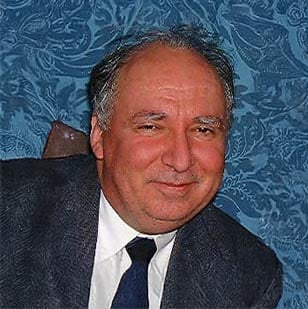
Dietrich Fischer, a TFF Associate, is Academic Director of the European University Center for Peace Studies in Stadtschlaining, Austria, and Co-Director of TRANSCEND, a peace and development network.


Get free articles & updates

Få gratis artikler og info fra TFF

© TFF and the author 2005


mail
Tell a friend about this article

Send to:

From:

Message and your name


 You are welcome to reprint, copy, archive, quote or re-post this item, but please retain the source.


Would you – or a friend – like to receive TFF PressInfo by email?


S P E C I A L S & F O R U M S

Iraq Forum

Gandhi & India

Burundi Forum

Photo galleries

Nonviolence Forum

TFF News Navigator

Become a TFF Friend

TFF Online Bookstore

Reconciliation project

EU conflict-management

Make an online donation

Foundation update and more

TFF Peace Training Network

Make a donation via bank or postal giro

Basic menu below


Related Posts

The agreement is catastrophic both because of what it says and what it doesn’t mention. It reduces further the major asset of security policies: Freedom of action. Jan Oberg TFF director September 25, 2026 A couple of hours before the agreement was signed on September 22, 2026, I published the following 13 hypotheses about what it would most likely contain on TFF Substack (in English). I was wrong on only the first point. Contrary to what Trump had written on his Truth Social platform, it does not appear to come into force immediately. In fact, it turned out to be worse than even I had anticipated. After these hypotheses now come a number of reflections in light of what the agreement actually contains, and does not contain, as well as the way in which it has generally been presented by major media outlets and by the public-service broadcaster DR. My...
Below are TFF-related media mentions, comments, videos and social media posts published elsewhere but not on this homepage. We happen to catch and list only a fraction. Regarding video comments and debates, we recommend that you go to the TFF Video Channel on Substack where many of them are reproduced. Jan Oberg is a contributor to China Daily – 52 million daily clicks – and Global Times, CGTN and CCTV (the national television), China Investment, Xinhua News Agency and several others. Articles and videos on these media very often multiply into countless Chinese (and Western media) that re-post them from these main media. Thanks to The China Academy, his analyses, interviews and comments are frequently posted on YouTube channels such as Thinkers Forum and Wave Media. These videos are often re-posted on Bilibili (China’s YouTube), the China Content Center on TikTok, and on the Chinese edition of TikTok, Douyin.com. This means reaching hundreds of millions of viewers worldwide over a year. While there are too many to catch on all these...
Jan Oberg May 15, 2026 Go to this Fox News page and scroll the whole way down: President Donald Trump tells the world that his meeting with President Xi Jinping yielded a lot of very concrete political and economic results – of course, only where the Chinese side, according to him, agreed with him. He does not mention the Taiwan issue, but Secretary of State, Marco Rubio, says that it did not feature prominently in their talks and that the US policy on Taiwan has not changed. Then go to China Daily – or Global Times – and you will see that for the Chinese it is framework, principles, structure of cooperation etc. that matters – all embedded in the overall idea of “constructive bilateral relationship of strategic stability.” Nowhere is any concrete agreement or deal – all that Trump refers to – mentioned. At the general level, this gives you insights into the very different social...

Recent Articles

Tony Robinson October 4, 2026 Violence is easy to recognise when someone is being beaten, shot or killed. It becomes more difficult when nobody is holding a weapon. Poverty, discrimination, exploitation and repression can restrict a human life just as effectively, although they do so in very different ways and with very different consequences. Simply adding more categories to an ever-growing list of forms of violence does not really solve the problem. The more interesting question is what all these different situations have in common and why it makes sense to describe them using the same word. Human beings do not simply react to what happens around them. They remember the past, imagine things that do not yet exist, make plans and undertake projects. Workers organise because they imagine different working conditions; people migrate because they imagine another life somewhere else; social movements emerge because people refuse to accept the...
It’s a matter of principles, courage, vision and pulling together – while the militarist world is falling apart… Peter Langille October 3, 2026 “Here, then, is the problem which we present to you, stark and dreadful and inescapable: Shall we put an end to the human race; or shall mankind renounce war?”The Bertrand Russell—Albert Einstein Manifesto, July 9, 1955 ⁕ The forecast for what’s ahead is worrisome. The sharp rise in armed conflicts over the past three years is adding to what was already the highest level in over seventy years. Genocides, which should be prevented are supported. A shared climate emergency that jeopardises survival is ignored. Diverse polls now suggest that people are war-weary, worried and interested in a more effective United Nations. And, there are viable policy options for a more secure world! Yet governments are doubling-down, betting on more war and investing heavily. If current trends persist,...
Johan Galtung 1930-2024October 2015 Published here on October 3, 2026 Let us focus on Civilization for conflict analysis and remedies. Major forms of disorder use violence; war is state organized violence. The most belligerent states are the United States of America and Israel, both with civilization roots. National Evangelism, the US Protestant Christian civilization– more national than evangelical–justifies US warfare as exceptionalism of a people chosen by God, with a manifest destiny to run the world. Orthodox Judaism justifies Israeli warfare to conquer and expand from Nile to Euphrates as a religious right and duty to the Eternal One. The third most belligerent country, the UK, no longer believes it is God-chosen but chosen by the USA; not quite the same but something. But the root cause of global disorder lies in the Occident–with Islam–seeing itself as the single, universal civilization valid for all at all times, all others being...

TFF on Substack

Discover and subscribe to more peace materials on TFF Substack

Most Popular

Tony Robinson October 4, 2026 Violence is easy to recognise when someone is being beaten, shot or killed. It becomes more difficult when nobody is holding a weapon. Poverty, discrimination, exploitation and repression can restrict a human life just as effectively, although they do so in very different ways and with very different consequences. Simply adding more categories to an ever-growing list of forms of violence does not really solve the problem. The more interesting question is what all these different situations have in common and why it makes sense to describe them using the same word. Human beings do not simply react to what happens around them. They remember the past, imagine things that do not yet exist, make plans and undertake projects. Workers organise because they imagine different working conditions; people migrate because they imagine another life somewhere else; social movements emerge because people refuse to accept the...
It’s a matter of principles, courage, vision and pulling together – while the militarist world is falling apart… Peter Langille October 3, 2026 “Here, then, is the problem which we present to you, stark and dreadful and inescapable: Shall we put an end to the human race; or shall mankind renounce war?”The Bertrand Russell—Albert Einstein Manifesto, July 9, 1955 ⁕ The forecast for what’s ahead is worrisome. The sharp rise in armed conflicts over the past three years is adding to what was already the highest level in over seventy years. Genocides, which should be prevented are supported. A shared climate emergency that jeopardises survival is ignored. Diverse polls now suggest that people are war-weary, worried and interested in a more effective United Nations. And, there are viable policy options for a more secure world! Yet governments are doubling-down, betting on more war and investing heavily. If current trends persist,...
Johan Galtung 1930-2024October 2015 Published here on October 3, 2026 Let us focus on Civilization for conflict analysis and remedies. Major forms of disorder use violence; war is state organized violence. The most belligerent states are the United States of America and Israel, both with civilization roots. National Evangelism, the US Protestant Christian civilization– more national than evangelical–justifies US warfare as exceptionalism of a people chosen by God, with a manifest destiny to run the world. Orthodox Judaism justifies Israeli warfare to conquer and expand from Nile to Euphrates as a religious right and duty to the Eternal One. The third most belligerent country, the UK, no longer believes it is God-chosen but chosen by the USA; not quite the same but something. But the root cause of global disorder lies in the Occident–with Islam–seeing itself as the single, universal civilization valid for all at all times, all others being...
Read More
Living-Peace-Sign-Budapest-copy
Tony Robinson October 4, 2026 Violence is easy to recognise when someone is being beaten, shot or killed. It becomes more difficult when nobody is holding a weapon. Poverty, discrimination, exploitation and repression can restrict a human life just as effectively, although they do so in very different ways and with very different consequences. Simply adding more categories to an ever-growing list of forms of violence does not really solve the problem. The more interesting question is what all these different situations have in common and why it makes sense to describe them using the same word. Human beings do not simply react to what happens around them. They remember the past, imagine things that do not yet exist, make plans and undertake projects. Workers organise because they imagine different working conditions; people migrate because they imagine another life somewhere else; social movements emerge because people refuse to accept the...
b54a1f10-8c65-4f0b-9dd5-4abc0a7d04cc_2659x2659
It’s a matter of principles, courage, vision and pulling together – while the militarist world is falling apart… Peter Langille October 3, 2026 “Here, then, is the problem which we present to you, stark and dreadful and inescapable: Shall we put an end to the human race; or shall mankind renounce war?”The Bertrand Russell—Albert Einstein Manifesto, July 9, 1955 ⁕ The forecast for what’s ahead is worrisome. The sharp rise in armed conflicts over the past three years is adding to what was already the highest level in over seventy years. Genocides, which should be prevented are supported. A shared climate emergency that jeopardises survival is ignored. Diverse polls now suggest that people are war-weary, worried and interested in a more effective United Nations. And, there are viable policy options for a more secure world! Yet governments are doubling-down, betting on more war and investing heavily. If current trends persist,...
010
Johan Galtung 1930-2024October 2015 Published here on October 3, 2026 Let us focus on Civilization for conflict analysis and remedies. Major forms of disorder use violence; war is state organized violence. The most belligerent states are the United States of America and Israel, both with civilization roots. National Evangelism, the US Protestant Christian civilization– more national than evangelical–justifies US warfare as exceptionalism of a people chosen by God, with a manifest destiny to run the world. Orthodox Judaism justifies Israeli warfare to conquer and expand from Nile to Euphrates as a religious right and duty to the Eternal One. The third most belligerent country, the UK, no longer believes it is God-chosen but chosen by the USA; not quite the same but something. But the root cause of global disorder lies in the Occident–with Islam–seeing itself as the single, universal civilization valid for all at all times, all others being...
Screenshot 2026-10-02 011738
Jan ObergPhD, director, The Transnational Foundation for Peace and Future Research, TFFLund, Sweden October 2, 2026 This is my full original manuscript. The Chinese Academy of Social Science, CASS, makes two publications out if it. 1. China’s Five-year plan emphasized the capabilities of basic research and original innovation. It is regarded as the goal of the future social development, which, as required, should be significantly enhanced. Can you comment on the importance of original innovation in research and academic study? I believe it is easier to define “original innovation” in the natural sciences than in social sciences. The breaking points of what constitutes something new, or innovative, are not quite as sharp in the latter. But in both fields it is about opening up something that was closed, unseen, unexplored before – making manifest what was earlier latent. Innovations come in many forms and shapes – naming something that was not...
arctic-circle-map
The agreement is catastrophic both because of what it says and what it doesn’t mention. It reduces further the major asset of security policies: Freedom of action. Jan Oberg TFF director September 25, 2026 A couple of hours before the agreement was signed on September 22, 2026, I published the following 13 hypotheses about what it would most likely contain on TFF Substack (in English). I was wrong on only the first point. Contrary to what Trump had written on his Truth Social platform, it does not appear to come into force immediately. In fact, it turned out to be worse than even I had anticipated. After these hypotheses now come a number of reflections in light of what the agreement actually contains, and does not contain, as well as the way in which it has generally been presented by major media outlets and by the public-service broadcaster DR. My...
girl-5894831_1280
Below are TFF-related media mentions, comments, videos and social media posts published elsewhere but not on this homepage. We happen to catch and list only a fraction. Regarding video comments and debates, we recommend that you go to the TFF Video Channel on Substack where many of them are reproduced. Jan Oberg is a contributor to China Daily – 52 million daily clicks – and Global Times, CGTN and CCTV (the national television), China Investment, Xinhua News Agency and several others. Articles and videos on these media very often multiply into countless Chinese (and Western media) that re-post them from these main media. Thanks to The China Academy, his analyses, interviews and comments are frequently posted on YouTube channels such as Thinkers Forum and Wave Media. These videos are often re-posted on Bilibili (China’s YouTube), the China Content Center on TikTok, and on the Chinese edition of TikTok, Douyin.com. This means reaching hundreds of millions of viewers worldwide over a year. While there are too many to catch on all these...