
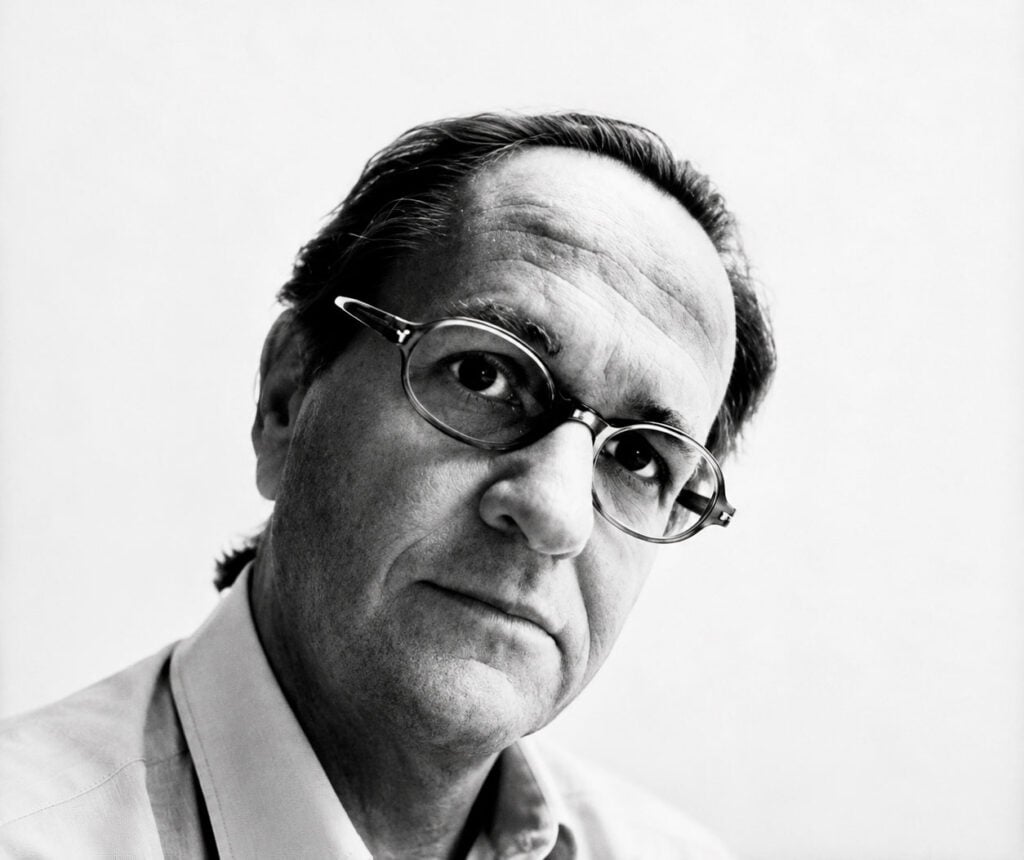
PressInfo #55 – Rambouillet – Imperialism in Disguise

“What happens now in Rambouillet has little to do with
creating peace for the suffering citizens in the Yugoslav
province of Kosovo/a. Disguised as “negotiations” about a
“peace” plan, the international so-called community promotes
less noble values and long-term goals in the region and use
the Serbs and Albanians as supernumeraries in its drama.
It’s time we ask what the self-proclaimed “conflict
managers” are actually up to. If peace in Kosovo or the
wider Balkans had been the real aim, we would have witnessed
a completely different approach leading up to Rambouillet.
We come closer to the truth about Rambouillet if we use
words such as globalisation, strategic expansion, Caspian
oil, Greater NATO, containment policy and imperialism
disguised as conflict-management and peace-making,” says Dr.
Jan Oberg upon returning from the 34th TFF mission to the
region since 1992, this time to Skopje, Belgrade and Kosovo.

“If PEACE was their profession, the governments of the
international community would – around 1992 – have put
enough diplomatic and other civilian pressure on the parties
to begin a dialogue, not negotiations. It would have
provided 5-10 different secluded meeting places for
Albanians, Serbs and other peoples – NGOs, teachers,
intellectuals, journalists, doctors etc. – to explore their
problems and possible solutions. In short, an international
brainstorm to produce creative ideas for later elaboration
at a complex negotiation process that would take at least a
year.

Today, instead, we are left with only one – legalistic
and formal – plan developed by U.S. ambassador Christopher
Hill. It is not the result of neutral mediation, contains no
creative ideas and is so unattractive to the parties that it
has to be imposed as a fait accompli by bombing threats and
by arrogant talking down to the delegations (“they must be
brought to understand their own best..”)

Six years ago, the international community would have
announced that it was well aware that extreme Albanian
factions had begun to develop an army and, when Albania fell
apart, it would have prevented the spill-over into the
Kosovo province by sealing the border.

When trouble started becoming manifest it would have
negotiated with Belgrade to allow an expansion of the
excellent UN mission in Macedonia, UNPREDEP, and the equally
excellent OSCE mission in Skopje to cover also the Kosovo
province. The success of preventive diplomacy in Macedonia
could have been boosted by taking on Kosovo. In terms of
substance, this would be well-founded as the two problems
and regions are intimately related, strategically connected
and it would permit a wider Balkan policy to take shape. It
would have signalled respect for Serbia/Yugoslavia and all
its citizens. For a fraction of what NATO deployment will
cost for 10 years ahead or so, it could have prevented the
war from breaking out. Trust- and peacebuilding could have
been vibrant throughout Kosovo today.

Furthermore, ANY peace-related activity would have looked
at the BASIC PROBLEMS in Kosovo which are: deep poverty,
overall economic crisis, corruption, lack of human trust,
manifest human alienation, miserable schools, miserable
transport, miserable health facilities, miserable media,
miserable politics – everywhere. The international community
would have sided with the citizens living there, promised
them a better future through aid and co-operation and
offered Belgrade and the Kosovo Serbs and Albanians an
alternative future, an alternative perspective – and thus
cultivated and empowered alternative leaders. Of course, the
economic sanctions against Yugoslavia would have been lifted
as their psychological effects boosted authoritarian Serb
and hardline Albanian leaders alike.

As social misery and deteriorating life opportunities as
well as psychological despair creates a fertile ground for
ethnic hatred and extremism, the vicious circle we have seen
since 1989 would have been stopped. People would stop
believing in the propaganda about “the world being against
us Serbs and we must protect our sovereignty at all costs
‘on the one hand and the equally propagandistic argument on
the Albanian side that’ independent Kosova will solve all
our problems.”

In short, the whole situation would have moved away from
deadlocked POSITIONS and ATTACK on human beings – leading to
war – toward a common exploration of PROBLEMS and possible
SOLUTIONS leading to hope. It would have promoted democracy
too, because it would be building PEACE from the ground up,
with citizens¥ participation.

The international community ignored dialogues or
negotiations before, during and after Dayton. Early warnings
fell on deaf ears. It failed miserably to support Dr.
Rugova¥s nonviolent line on the one hand and the
changes in Belgrade during the period when Milan Panic was a
prime minister and Dobrica Cosic president. It did nothing
to help dissidents or support the millions who marched the
streets in Belgrade for democratisation, economic
development and a civil society in peace. (But it did sell
arms and turn a blind eye to years of militarization,
smuggling and black market profiteering in the wake of its
sanctions).

Governments of the international community – some of
which conduct what is euphemistically called a ‘moral
foreign policy’ and Green non-violent values – DID NOTHING
until the conflict became violent. They thus rewarded
political hardliners on all sides and the Serbian police,
paramilitaries and army units as well as the Kosovo
Liberation Army. And they proved to have learnt NOTHING from
the Dayton process.

So, what is really going on in Rambouillet? Rambouillet
is a magnificent cover-up for the tremendous lack of advance
analysis, early warning, early action and preventive
diplomacy. But there is more:

1. The international community wants us to believe that
its true mission is peace – that it is a civilising force in
regions where primitive people fight atavistic conflicts.
But Rambouillet is, however, nothing but gunboat diplomacy
and interventionism with other means.

2. It wants to present NATO as the new world peacekeeper
and marginalizes the United Nations – which, by the way, is
the only organization with an accumulated experience in
peace-keeping, peace-making and peace-building and which
could do it much better than NATO if given the necessary
resources and political legitimacy. Even small countries
like Denmark and Norway no longer seem to care.

3. Through Rambouillet, NATO will expand. NATO country
troops are already positioned in Bosnia, Hungary, Italy, the
Adriatic and Macedonia, the latter having virtually no
choice and a new inexperienced government. If Macedonia
cannot formally get into NATO as it wants, it can lie down
and let NATO into Macedonia. Besides direct, formal NATO
expansion, we see an indirect one – making the alliance ‘the
indispensable protector’ in war zones and grow its roots
over the years: bases, infrastructure, equipment sales,
training, intelligence, influence.

4. By stationing up to 30.000 NATO ground troops in
Kosovo, NATO will not only expand. With US/NATO influence in
Turkey, Greece, Georgia (and Azerbaijan?) and in Croatia,
Bosnia, Albania, Hungary, Macedonia and Serbia, the goal of
connecting NATO West and NATO East becomes more reachable,
leading in the longer perspective to more control with the
‘devilish triangle’ of the Balkans, Middle East and the
Caucasus – the end stations of which are a) permanent
containment of Russia and b) access to the oil in the
Caspian Sea region. Kosovo is nothing but a pawn in that
game. Control over it and over Serbia proper is much more
important than peace in it.

5. And where did the figure 30.000 ground troops come
from? 5.000-10.000 robust peacekeepers would be enough to
keep Serbian police and Albanian armed peasants separated
and monitor a ceasefire. The KLA is not exactly a formidable
force for NATO. A reasonable hypothesis is that 30.000 is
what it may take to de facto terminate Yugoslavia’s status
as a sovereign state. Incrementalism being a Western
politico-military specialty, some of these troops may later
be available for deployment as “peacekeepers” in e.g.
Voivodina, Sandzak or elsewhere to control Serbia, i.e. when
the self-destructive policies of the
Markovic/Milosevic¥ leadership hits those areas – which
is exactly what the West needs.

6. Kosovo¥s quagmire can be exploited also to
“permit” the international community to disregard
international law with (false) reference to high human
values and norms. Unfortunately for that argument, the
following must be remembered: a) if the term ‘ethnic
cleansing’ is to be used, it has been committed by both
Albanians and Serbs over the last 20 years when no
international intervention took place, b) a genocide has not
taken place and the killings is so far much smaller than
other conflicts such as Algeria or Eritrea-Ethiopia; c)
Yugoslavia is a legitimate, sovereign state recognised by
the international community with Kosovo inside it, d) it has
not committed aggression against any neighbouring state,
rather e) it is being threatened by neighbouring Albania as
a KLA base and by Macedonia as a NATO base. Irrespective of
what one may think of President Milosevic or other Yugoslav
leaders, these are indisputable facts conveniently forgotten
by interventionists on the right as well as on the left.

7. So, the Rambouillet ‘peace talks’ is a paradoxical
replica of the norm that “might makes right” and “some of us
are more equal before the law than others.” To the new
‘conflict-managers,’ wars are no disasters, they are
opportunities to expand their power even when violating
universal norms and the UN Charter. Their best allies are
extremists and ‘war lords’ whose policies deliver the
legitimation for this new contemporary peace imperialism.
This emergent “jungle law” in international affairs bodes
ill for world order and human security in the millennium to
come.

Rambouillet is all for the cameras. It¥s imperialism
in disguise. With this type of ‘peace’ and “negotiations”
the people living in Kosovo and the rest of Yugoslavia are
doomed to suffer for years ahead,” Jan Oberg concludes.

© TFF 1999

• You are welcome to re-print, copy, archive, quote
from or re-post this item, but please retain the source.

• TFF’s website has all the relevant links to Iraq,
the Balkans, including media there + peace research, and
non-violence

• Teacher, activist, journalist?? You’ll always find
something interesting at TFF.

• Get your daily global news from the leading media
on TFF’s site, all in one place.
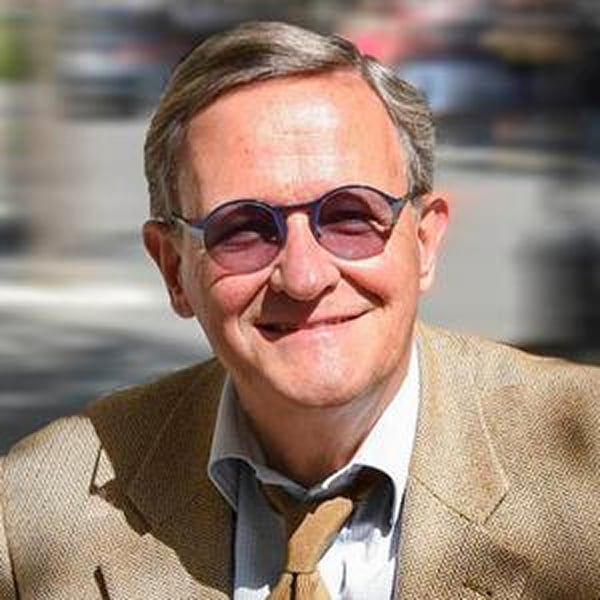
Peace & future researcher + ‌Art Photographer

Related Posts

The agreement is catastrophic both because of what it says and what it doesn’t mention. It reduces further the major asset of security policies: Freedom of action. Jan Oberg TFF director September 25, 2026 A couple of hours before the agreement was signed on September 22, 2026, I published the following 13 hypotheses about what it would most likely contain on TFF Substack (in English). I was wrong on only the first point. Contrary to what Trump had written on his Truth Social platform, it does not appear to come into force immediately. In fact, it turned out to be worse than even I had anticipated. After these hypotheses now come a number of reflections in light of what the agreement actually contains, and does not contain, as well as the way in which it has generally been presented by major media outlets and by the public-service broadcaster DR. My...
Below are TFF-related media mentions, comments, videos and social media posts published elsewhere but not on this homepage. We happen to catch and list only a fraction. Regarding video comments and debates, we recommend that you go to the TFF Video Channel on Substack where many of them are reproduced. Jan Oberg is a contributor to China Daily – 52 million daily clicks – and Global Times, CGTN and CCTV (the national television), China Investment, Xinhua News Agency and several others. Articles and videos on these media very often multiply into countless Chinese (and Western media) that re-post them from these main media. Thanks to The China Academy, his analyses, interviews and comments are frequently posted on YouTube channels such as Thinkers Forum and Wave Media. These videos are often re-posted on Bilibili (China’s YouTube), the China Content Center on TikTok, and on the Chinese edition of TikTok, Douyin.com. This means reaching hundreds of millions of viewers worldwide over a year. While there are too many to catch on all these...
Jan Oberg May 15, 2026 Go to this Fox News page and scroll the whole way down: President Donald Trump tells the world that his meeting with President Xi Jinping yielded a lot of very concrete political and economic results – of course, only where the Chinese side, according to him, agreed with him. He does not mention the Taiwan issue, but Secretary of State, Marco Rubio, says that it did not feature prominently in their talks and that the US policy on Taiwan has not changed. Then go to China Daily – or Global Times – and you will see that for the Chinese it is framework, principles, structure of cooperation etc. that matters – all embedded in the overall idea of “constructive bilateral relationship of strategic stability.” Nowhere is any concrete agreement or deal – all that Trump refers to – mentioned. At the general level, this gives you insights into the very different social...

Recent Articles

Tony Robinson October 4, 2026 Violence is easy to recognise when someone is being beaten, shot or killed. It becomes more difficult when nobody is holding a weapon. Poverty, discrimination, exploitation and repression can restrict a human life just as effectively, although they do so in very different ways and with very different consequences. Simply adding more categories to an ever-growing list of forms of violence does not really solve the problem. The more interesting question is what all these different situations have in common and why it makes sense to describe them using the same word. Human beings do not simply react to what happens around them. They remember the past, imagine things that do not yet exist, make plans and undertake projects. Workers organise because they imagine different working conditions; people migrate because they imagine another life somewhere else; social movements emerge because people refuse to accept the...
It’s a matter of principles, courage, vision and pulling together – while the militarist world is falling apart… Peter Langille October 3, 2026 “Here, then, is the problem which we present to you, stark and dreadful and inescapable: Shall we put an end to the human race; or shall mankind renounce war?”The Bertrand Russell—Albert Einstein Manifesto, July 9, 1955 ⁕ The forecast for what’s ahead is worrisome. The sharp rise in armed conflicts over the past three years is adding to what was already the highest level in over seventy years. Genocides, which should be prevented are supported. A shared climate emergency that jeopardises survival is ignored. Diverse polls now suggest that people are war-weary, worried and interested in a more effective United Nations. And, there are viable policy options for a more secure world! Yet governments are doubling-down, betting on more war and investing heavily. If current trends persist,...
Johan Galtung 1930-2024October 2015 Published here on October 3, 2026 Let us focus on Civilization for conflict analysis and remedies. Major forms of disorder use violence; war is state organized violence. The most belligerent states are the United States of America and Israel, both with civilization roots. National Evangelism, the US Protestant Christian civilization– more national than evangelical–justifies US warfare as exceptionalism of a people chosen by God, with a manifest destiny to run the world. Orthodox Judaism justifies Israeli warfare to conquer and expand from Nile to Euphrates as a religious right and duty to the Eternal One. The third most belligerent country, the UK, no longer believes it is God-chosen but chosen by the USA; not quite the same but something. But the root cause of global disorder lies in the Occident–with Islam–seeing itself as the single, universal civilization valid for all at all times, all others being...

TFF on Substack

Discover and subscribe to more peace materials on TFF Substack

Most Popular

Tony Robinson October 4, 2026 Violence is easy to recognise when someone is being beaten, shot or killed. It becomes more difficult when nobody is holding a weapon. Poverty, discrimination, exploitation and repression can restrict a human life just as effectively, although they do so in very different ways and with very different consequences. Simply adding more categories to an ever-growing list of forms of violence does not really solve the problem. The more interesting question is what all these different situations have in common and why it makes sense to describe them using the same word. Human beings do not simply react to what happens around them. They remember the past, imagine things that do not yet exist, make plans and undertake projects. Workers organise because they imagine different working conditions; people migrate because they imagine another life somewhere else; social movements emerge because people refuse to accept the...
It’s a matter of principles, courage, vision and pulling together – while the militarist world is falling apart… Peter Langille October 3, 2026 “Here, then, is the problem which we present to you, stark and dreadful and inescapable: Shall we put an end to the human race; or shall mankind renounce war?”The Bertrand Russell—Albert Einstein Manifesto, July 9, 1955 ⁕ The forecast for what’s ahead is worrisome. The sharp rise in armed conflicts over the past three years is adding to what was already the highest level in over seventy years. Genocides, which should be prevented are supported. A shared climate emergency that jeopardises survival is ignored. Diverse polls now suggest that people are war-weary, worried and interested in a more effective United Nations. And, there are viable policy options for a more secure world! Yet governments are doubling-down, betting on more war and investing heavily. If current trends persist,...
Johan Galtung 1930-2024October 2015 Published here on October 3, 2026 Let us focus on Civilization for conflict analysis and remedies. Major forms of disorder use violence; war is state organized violence. The most belligerent states are the United States of America and Israel, both with civilization roots. National Evangelism, the US Protestant Christian civilization– more national than evangelical–justifies US warfare as exceptionalism of a people chosen by God, with a manifest destiny to run the world. Orthodox Judaism justifies Israeli warfare to conquer and expand from Nile to Euphrates as a religious right and duty to the Eternal One. The third most belligerent country, the UK, no longer believes it is God-chosen but chosen by the USA; not quite the same but something. But the root cause of global disorder lies in the Occident–with Islam–seeing itself as the single, universal civilization valid for all at all times, all others being...
Read More
Living-Peace-Sign-Budapest-copy
Tony Robinson October 4, 2026 Violence is easy to recognise when someone is being beaten, shot or killed. It becomes more difficult when nobody is holding a weapon. Poverty, discrimination, exploitation and repression can restrict a human life just as effectively, although they do so in very different ways and with very different consequences. Simply adding more categories to an ever-growing list of forms of violence does not really solve the problem. The more interesting question is what all these different situations have in common and why it makes sense to describe them using the same word. Human beings do not simply react to what happens around them. They remember the past, imagine things that do not yet exist, make plans and undertake projects. Workers organise because they imagine different working conditions; people migrate because they imagine another life somewhere else; social movements emerge because people refuse to accept the...
b54a1f10-8c65-4f0b-9dd5-4abc0a7d04cc_2659x2659
It’s a matter of principles, courage, vision and pulling together – while the militarist world is falling apart… Peter Langille October 3, 2026 “Here, then, is the problem which we present to you, stark and dreadful and inescapable: Shall we put an end to the human race; or shall mankind renounce war?”The Bertrand Russell—Albert Einstein Manifesto, July 9, 1955 ⁕ The forecast for what’s ahead is worrisome. The sharp rise in armed conflicts over the past three years is adding to what was already the highest level in over seventy years. Genocides, which should be prevented are supported. A shared climate emergency that jeopardises survival is ignored. Diverse polls now suggest that people are war-weary, worried and interested in a more effective United Nations. And, there are viable policy options for a more secure world! Yet governments are doubling-down, betting on more war and investing heavily. If current trends persist,...
010
Johan Galtung 1930-2024October 2015 Published here on October 3, 2026 Let us focus on Civilization for conflict analysis and remedies. Major forms of disorder use violence; war is state organized violence. The most belligerent states are the United States of America and Israel, both with civilization roots. National Evangelism, the US Protestant Christian civilization– more national than evangelical–justifies US warfare as exceptionalism of a people chosen by God, with a manifest destiny to run the world. Orthodox Judaism justifies Israeli warfare to conquer and expand from Nile to Euphrates as a religious right and duty to the Eternal One. The third most belligerent country, the UK, no longer believes it is God-chosen but chosen by the USA; not quite the same but something. But the root cause of global disorder lies in the Occident–with Islam–seeing itself as the single, universal civilization valid for all at all times, all others being...
Screenshot 2026-10-02 011738
Jan ObergPhD, director, The Transnational Foundation for Peace and Future Research, TFFLund, Sweden October 2, 2026 This is my full original manuscript. The Chinese Academy of Social Science, CASS, makes two publications out if it. 1. China’s Five-year plan emphasized the capabilities of basic research and original innovation. It is regarded as the goal of the future social development, which, as required, should be significantly enhanced. Can you comment on the importance of original innovation in research and academic study? I believe it is easier to define “original innovation” in the natural sciences than in social sciences. The breaking points of what constitutes something new, or innovative, are not quite as sharp in the latter. But in both fields it is about opening up something that was closed, unseen, unexplored before – making manifest what was earlier latent. Innovations come in many forms and shapes – naming something that was not...
arctic-circle-map
The agreement is catastrophic both because of what it says and what it doesn’t mention. It reduces further the major asset of security policies: Freedom of action. Jan Oberg TFF director September 25, 2026 A couple of hours before the agreement was signed on September 22, 2026, I published the following 13 hypotheses about what it would most likely contain on TFF Substack (in English). I was wrong on only the first point. Contrary to what Trump had written on his Truth Social platform, it does not appear to come into force immediately. In fact, it turned out to be worse than even I had anticipated. After these hypotheses now come a number of reflections in light of what the agreement actually contains, and does not contain, as well as the way in which it has generally been presented by major media outlets and by the public-service broadcaster DR. My...
girl-5894831_1280
Below are TFF-related media mentions, comments, videos and social media posts published elsewhere but not on this homepage. We happen to catch and list only a fraction. Regarding video comments and debates, we recommend that you go to the TFF Video Channel on Substack where many of them are reproduced. Jan Oberg is a contributor to China Daily – 52 million daily clicks – and Global Times, CGTN and CCTV (the national television), China Investment, Xinhua News Agency and several others. Articles and videos on these media very often multiply into countless Chinese (and Western media) that re-post them from these main media. Thanks to The China Academy, his analyses, interviews and comments are frequently posted on YouTube channels such as Thinkers Forum and Wave Media. These videos are often re-posted on Bilibili (China’s YouTube), the China Content Center on TikTok, and on the Chinese edition of TikTok, Douyin.com. This means reaching hundreds of millions of viewers worldwide over a year. While there are too many to catch on all these...





