

he Smallpox Threat – Fright Propaganda or Instinct of Self Preservation

The threat of an outbreak of smallpox anywhere in the world is indeed a frightening prospect. It’s quite obvious that even a very small terrorist organisation could easily spread the disease globally without technically advanced vectors – provided it had access to the pathogenic virus. Furthermore, smallpox belongs to the category of biological weapons of mass destruction. It is extremely contagious and will easily spread outside the area of conflict. Thus completely “innocent” or only peripherally affected people can be stricken with disease.

This is a severe, global threat against one and all!

As a Swedish citizen one must ask: can we handle an attack even if we are affected only in the second-hand? Have those who have been delegated the power created a realistic preparedness against what may happen?

In 1980 smallpox was officially declared eradicated following an internationally successful vaccination campaign. Simultaneously the former – sometimes compulsory – inoculation against smallpox was terminated all over the world.

The smallpox virus, variola, was internationally saved in two qualified high risk laboratories: the Center for Disease Control and Prevention in Atlanta, Georgia and the Russian State Centre for Research on Virology and Biotechnology, Koltsovo, in the Novosibirsk region.

There are rumours that smallpox virus – intentionally or unintentionally – has been released from one of the two and that Iraq, for example, has had access to it.

In the present-day situation, it’s fairly obvious that the American preparations for war on Iraq are close to a point of no return and that the risk of war must be judged as very great.

The only clearly stated motive to begin a war against Iraq are to prevent weapons of mass destruction from getting into the wrong hands and perhaps be used on an unprotected civilian populations, particularly in the USA.

The American way of acting is characterised by a very strong resolution to use unreserved force – war.

It’s also very clear that the USA is taking the threat from biological weapons of mass destruction, especially smallpox, in earnest and, in parallel with the war preparations, is planning protective measures against this particular disease. This planning is extensive and includes plans for the vaccination of key personnel and military troops all within five days after a smallpox outbreak. Detailed plans for all regions of the nation have been submitted and quarantine measures have been taken. Using old stores of vaccine, new purchases of 400 million doses, and research to minimise the untoward inoculation side effects, have secured vaccine assets. In addition, research has been initiated towards a cure of the actual disease, a cure that is today non-existent .

It’s obvious that in the USA, many important decision-makers find the risk of a global smallpox epidemic impending and one of the main reason for finding Iraq such a threat. It’s possible that striking first and rendering the weapons harmless will solve the problem. Naturally, failure isn’t part of this plan. Neither does it seem to have been taken into consideration that an act of war may provoke a counterattack using terror weapons against a third party.

Another solution could be to abstain from open acts of war, at least until a global defence system against the actual weapon systems is in operation. There should be a preparedness that will reasonably guarantee the survival of the world population.

The fact is that if all nations were effectively protected against smallpox, the motive to use this particular weapon will be non-existent, as will the motive to make war to destroy it.

If a despotic leader is convinced that his country will be attacked in order to kill him, then certainly there will be a risk that he’ll use his weapons of mass destruction before his opponent is ready to start the war.

There is also a risk that he’ll chose to strike the first blow against the opponent’s sympathisers and allies, which will probably be easier to hit and more severely hurt than the main enemy with an effective defence already in operation.

In plain language: a war in Iraq could involve the risk of an attack on, for example, European countries.

What weapons could then be used?

Nuclear weapons are difficult to hide and can only be used with technically complicated weapon carriers to reach far-away countries. Iraq probably does not have access to such weapons today.

Likewise chemical weapons must have carriers and technically complicated dispersing systems. To obtain an adequately high concentration of e.g. a nerve gas to kill more than a very limited number of people, it takes well equipped military units or administration in semi-closed places like department stores, underground railways etc. It is difficult but not impossible to unveil preparations for such operations. The probability, however, for that type of terror attack is judged to be relatively small.

The use of biological weapons for the transmission of infectious diseases remains the biggest risk. From the terrorist’s point of view only smallpox, by being highly contagious and having a relatively high mortality, is an effective weapon of mass destruction. Consequently, the risk is high that not only the main enemy, but loyal allies as well, will be struck with disease.

Human beings all have experiences with being ill, but still find it difficult to understand what a smallpox epidemic would really involve.

The cessation of general vaccination against smallpox has made all young people vulnerable when exposed to the virus.

The virus – when released – will spread by itself without any help by sophisticated technical equipment. The mortality is high – every third patient will die – and the strain on the medical care organisation will be enormous. No effective treatment, like antibiotics for bacterial infections, exists.

Many experts judge the risk of a global spread with mass cases and casualties to be very high. The experiences from earlier epidemics make others claim that the harmful effects can be limited, particularly if strong quarantine measures and immediate mass vaccinations are applied.

The smallpox virus can survive only in body fluids and human secretions. It is transferred between people by droplets of saliva and mucus from infected airways. That makes it the perfect weapon for a suicidal agent. The only thing required is someone prepared to sacrifice oneself. Loaded with the virus, the agent then begins globetrotting to come in contact with as many people as possible. During the final seven days of the incubation period he or she still has no or only slight symptoms but is extremely contagious. Such an agent in an aircraft could, with a high probability, infect the other passengers by the air-conditioning system. They will then spread the disease further on. If the agent is able to withdraw before the disease becomes too severe, the world won’t understand what has happened until the huge epidemic is a fact.

Within the medical world, tthere is still knowledge about the disease, but very few doctors have personal experience.

The defence against smallpox has mainly been vaccination, stimulating the immune system of the body to produce antibodies. Vaccination was compulsory in many countries until 1976, but from then on all newborns of the world were unprotected. It is common knowledge that having smallpox and recovering or being vaccinated will render the individual immune for a very long time. It is now understood that this immunity is not lifelong but will begin to deteriorate after about 20 years.

In humans it’s possible to watch the virus develop by symptoms that can be chronologically predicted with a high level of accuracy. Mathematical models have been constructed that can predict the development of an outbreak with reasonable precision and also act as a foundation for planning vaccine requirements and the isolation and quarantine of cases of smallpox.

The fact that the disease can, and must, be prevented gives the people the right to demand not only that realistic and well-planned protective measures are undertaken in ample time, but also to demand instructions about individual actions and decisions to be taken in case of an epidemic.

What can be done to increase instant preparedness? Global mass vaccination with very short notice will probably be very difficult or impossible. Firstly, because time will not allow for more than inoculation of certain key groups of personnel and secondly, because there will not be enough vaccine available.

Almost all the vaccine doses available on the world market have been bought by USA and UK except for small amounts for national vaccine production programmes. Extensive scientific research is trying to find an effective antiviral medicine, but so far no preparations are available.

Without effective treatment, old techniques of medical care must be used. If the patient and those near to him can be quickly isolated, the risk of further spread is limited.

Therefore observations from a professional medical staff will be vital to prevent the spread. High fever, initial rash progressing to maculae and vesicles that finally become encrusted are unmistakable signs. To gain time everyone must know what actions to take. Unfortunately, that applies not only to the medical staff but also to borders and customs officers, security officers, and the airline staff at the check-in desks. They all must be aware what to do if a passenger who shows signs of disease wants to get onboard.

The key words in case of an outbreak must be isolation of the patient and quarantine for those who may have been infected. It may sound simple, but is in fact very complicated. It takes knowledge and careful planning of what decisions to make and which coercive measures to use. Another problem is the gigantic resources necessary for medical care and induced quarantine measures.

Central authorities have probably planned all this in detail. However, it is time to disperse ample parts not only to the personnel groups in question, but also to the general public.

-What are the quantities of vaccine available?

– If the supply is limited, who are the first to be vaccinated?

– If the supply is adequate, how will a mass vaccination be carried out?

– How shall quarantine be arranged?

– How long will the incarceration last?

– What preparations have been made?

– If you are placed in quarantine on the suspicion of being infected, won’t incarceration virtually guarantee that you will contract the disease?

– How will the public be informed of the first case of smallpox?

– What will happen to the economy when all travel stops?

– How will our grandchildren get the vaccine and be protected?

The authors are of the definite opinion that all this will be impossible to carry out when the first case is a fact – in Sweden or elsewhere.

The well-intentioned strategy – to avoid panic by saying nothing – is perhaps not too well thought-out. In any case, the authors are not reassured.

Some references:

Henderson, Donald A., T.V. Inglesby, J.G. Bartlett, M.S. Ascher, E. Eitzen, P.B. Jahrling, J. Hauer, M. Layton, J. McDade, M.T. Osterholm, T. O’Toole, G. Parker, T. Perl, P.K. Russell, and K. Tonat, for the Working Group on Civilian Biodefense. “Smallpox as a Biological Weapon: Medical and Public Health Management,” Journal of the American Medical Association 281, No. 22 (June 9, 1999): 2127-2137.

Smallpox as a biological weapon

Donald A. Henderson, MD, MPH; Thomas V. Inglesby, MD; John G. Bartlett, MD; Michael S. Ascher, MD; Edward Eitzen, MD, MPH; Peter B. Jahrling, PhD; Jerome Hauer, MPH; Marcelle Layton, MD; Joseph McDade, PhD; Michael T. Osterholm, PhD, MPH; Tara O’Toole, MD, MPH; Gerald Parker, PhD, DVM; Trish Perl, MD, MSc; Philip K. Russell, MD; Kevin Tonat, PhD; for the Working Group on Civilian Biodefense

Alibek K., Biohazard. New York, NY: Random House Inc; 1999

Emerging Infectious Diseases Journal

National Center for Infectious Diseases

Centers for Disease Control and Prevention

http://www.bt.cdc.gov/agent/smallpox/index.asp

http://www.cdc.gov/ncidod/EID/vol5no4/henderson.htm

A ProMED-mail post
http://www.promedmail.org
where you can see:

SMALLPOX VACCINATION STRATEGIES – USA (04)

SMALLPOX VACCINATION STRATEGIES – USA (05)

SMALLPOX VACCINATION STRATEGIES – USA (07)

SMALLPOX VIRUS, RETENTION OF STOCKS (02)

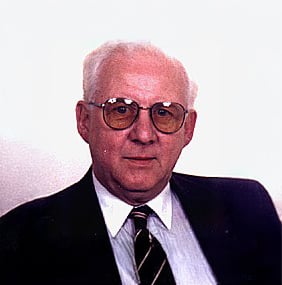
Birger Schantz

Born 10 June 1932 in Stockholm. 1962 VMD, 1974 Ph. 1979 Full Professor of Surgery at the Faculty of Veterinary Medicine, Swedish University of Agricultural Sciences, SLU, Uppsala. 1986 Director and Head of the Division of Human Sciences, National Defence Research Establishment, FOA, Stockholm.1993 Elected Member of the Royal Swedish Academy of War Sciences. “Kungl. Krigsvetenskapsakademien”. 1994 Appointed Member of the FOA Directorate as Research and Quality Director particularly responsible for scientific quality. 1997 Retired from FOA on 31 May. Emeritus Professor of Surgery, SLU. Henceforth engaged by Bo Rybeck Research AB, Stockholm.

© TFF & the authors 2002
Related Posts

LONDON – So far so good, at least on the wider level. While internally Iraq seems on the edge of chaos, the much heralded clash of civilizations between the Muslim and Judaeo-Christian worlds has yet to become apparent. We have anger and despair aplenty in the Arab and Muslim worlds. But very little rushing to the standard and there was no great pilgrimage of warriors to join the fight, as happened when the Soviet Union invaded Afghanistan twenty years ago, and then, having driven the Red Army out, were left to ferment in that mountainous redoubt. With the armaments supplied by the CIA the mujahidin were transformed into Al Qaeda that became, for a relatively brief moment as these things go, ‘the greatest threat to the homeland that America has ever known.’ Nevertheless a ‘Cold War’ between much of the Muslim world and the West is certainly in full swing. Winston...
The Challenge of Nuclear Weaponsin the Twenty-first CenturyA Path Forward The peoples and governments of the world face an urgent challenge relating to weaponry of mass destruction and particularly to nuclear weaponry.  At the crossroads of technology, terrorism, geopolitical ambition, and policies of preemption are new and potent dangers for humanity. Despite ending the nuclear standoff of the Cold War era, nuclear weaponry is again menacing the peoples of the world with catastrophic possibilities.  We recognize the need for any government to pursue its security interests in accordance with international law; and further, we recognize that distinctive threats to these interests now exist as a result of an active international terrorist network having declared war on the United States and its allies. Nonetheless, we reject the assessment of the current US administration that upgrading a reliance on nuclear weapons is in any sense justified as a response. We find it...
By Karin Wegestal MP, the Social Democratic Partyon behalf of the Swedish Committee for Solidarity with the Yugoslav People During the last decade, the Federal Republic of Yugoslavia has received more than 500,000 refugees from Croatia and Bosnia, and another 300,000 internally displaced persons, mainly from the province Kosovo and Metohia. For a country with about ten million inhabitants, such an influx of homeless people is obviously a very heavy burden – even under peaceful conditions. But in addition to that, the Federal Republic of Yugoslavia has been the subject to sanctions from the western powers for close to ten years and its infrastructure was badly hurt through Nato’s intense bombardment during 78 days in 1999. The result of all this is that Yugoslavia, once the most developed industrial country in Eastern Europe, is today the poorest country in Europe. In Serbia excluding Kosovo, with about ten million inhabitants and...

Recent Articles

Tony Robinson October 4, 2026 Violence is easy to recognise when someone is being beaten, shot or killed. It becomes more difficult when nobody is holding a weapon. Poverty, discrimination, exploitation and repression can restrict a human life just as effectively, although they do so in very different ways and with very different consequences. Simply adding more categories to an ever-growing list of forms of violence does not really solve the problem. The more interesting question is what all these different situations have in common and why it makes sense to describe them using the same word. Human beings do not simply react to what happens around them. They remember the past, imagine things that do not yet exist, make plans and undertake projects. Workers organise because they imagine different working conditions; people migrate because they imagine another life somewhere else; social movements emerge because people refuse to accept the...
It’s a matter of principles, courage, vision and pulling together – while the militarist world is falling apart… Peter Langille October 3, 2026 “Here, then, is the problem which we present to you, stark and dreadful and inescapable: Shall we put an end to the human race; or shall mankind renounce war?”The Bertrand Russell—Albert Einstein Manifesto, July 9, 1955 ⁕ The forecast for what’s ahead is worrisome. The sharp rise in armed conflicts over the past three years is adding to what was already the highest level in over seventy years. Genocides, which should be prevented are supported. A shared climate emergency that jeopardises survival is ignored. Diverse polls now suggest that people are war-weary, worried and interested in a more effective United Nations. And, there are viable policy options for a more secure world! Yet governments are doubling-down, betting on more war and investing heavily. If current trends persist,...
Johan Galtung 1930-2024October 2015 Published here on October 3, 2026 Let us focus on Civilization for conflict analysis and remedies. Major forms of disorder use violence; war is state organized violence. The most belligerent states are the United States of America and Israel, both with civilization roots. National Evangelism, the US Protestant Christian civilization– more national than evangelical–justifies US warfare as exceptionalism of a people chosen by God, with a manifest destiny to run the world. Orthodox Judaism justifies Israeli warfare to conquer and expand from Nile to Euphrates as a religious right and duty to the Eternal One. The third most belligerent country, the UK, no longer believes it is God-chosen but chosen by the USA; not quite the same but something. But the root cause of global disorder lies in the Occident–with Islam–seeing itself as the single, universal civilization valid for all at all times, all others being...

TFF on Substack

Discover and subscribe to more peace materials on TFF Substack

Most Popular

Tony Robinson October 4, 2026 Violence is easy to recognise when someone is being beaten, shot or killed. It becomes more difficult when nobody is holding a weapon. Poverty, discrimination, exploitation and repression can restrict a human life just as effectively, although they do so in very different ways and with very different consequences. Simply adding more categories to an ever-growing list of forms of violence does not really solve the problem. The more interesting question is what all these different situations have in common and why it makes sense to describe them using the same word. Human beings do not simply react to what happens around them. They remember the past, imagine things that do not yet exist, make plans and undertake projects. Workers organise because they imagine different working conditions; people migrate because they imagine another life somewhere else; social movements emerge because people refuse to accept the...
It’s a matter of principles, courage, vision and pulling together – while the militarist world is falling apart… Peter Langille October 3, 2026 “Here, then, is the problem which we present to you, stark and dreadful and inescapable: Shall we put an end to the human race; or shall mankind renounce war?”The Bertrand Russell—Albert Einstein Manifesto, July 9, 1955 ⁕ The forecast for what’s ahead is worrisome. The sharp rise in armed conflicts over the past three years is adding to what was already the highest level in over seventy years. Genocides, which should be prevented are supported. A shared climate emergency that jeopardises survival is ignored. Diverse polls now suggest that people are war-weary, worried and interested in a more effective United Nations. And, there are viable policy options for a more secure world! Yet governments are doubling-down, betting on more war and investing heavily. If current trends persist,...
Johan Galtung 1930-2024October 2015 Published here on October 3, 2026 Let us focus on Civilization for conflict analysis and remedies. Major forms of disorder use violence; war is state organized violence. The most belligerent states are the United States of America and Israel, both with civilization roots. National Evangelism, the US Protestant Christian civilization– more national than evangelical–justifies US warfare as exceptionalism of a people chosen by God, with a manifest destiny to run the world. Orthodox Judaism justifies Israeli warfare to conquer and expand from Nile to Euphrates as a religious right and duty to the Eternal One. The third most belligerent country, the UK, no longer believes it is God-chosen but chosen by the USA; not quite the same but something. But the root cause of global disorder lies in the Occident–with Islam–seeing itself as the single, universal civilization valid for all at all times, all others being...
Read More
Living-Peace-Sign-Budapest-copy
Tony Robinson October 4, 2026 Violence is easy to recognise when someone is being beaten, shot or killed. It becomes more difficult when nobody is holding a weapon. Poverty, discrimination, exploitation and repression can restrict a human life just as effectively, although they do so in very different ways and with very different consequences. Simply adding more categories to an ever-growing list of forms of violence does not really solve the problem. The more interesting question is what all these different situations have in common and why it makes sense to describe them using the same word. Human beings do not simply react to what happens around them. They remember the past, imagine things that do not yet exist, make plans and undertake projects. Workers organise because they imagine different working conditions; people migrate because they imagine another life somewhere else; social movements emerge because people refuse to accept the...
b54a1f10-8c65-4f0b-9dd5-4abc0a7d04cc_2659x2659
It’s a matter of principles, courage, vision and pulling together – while the militarist world is falling apart… Peter Langille October 3, 2026 “Here, then, is the problem which we present to you, stark and dreadful and inescapable: Shall we put an end to the human race; or shall mankind renounce war?”The Bertrand Russell—Albert Einstein Manifesto, July 9, 1955 ⁕ The forecast for what’s ahead is worrisome. The sharp rise in armed conflicts over the past three years is adding to what was already the highest level in over seventy years. Genocides, which should be prevented are supported. A shared climate emergency that jeopardises survival is ignored. Diverse polls now suggest that people are war-weary, worried and interested in a more effective United Nations. And, there are viable policy options for a more secure world! Yet governments are doubling-down, betting on more war and investing heavily. If current trends persist,...
010
Johan Galtung 1930-2024October 2015 Published here on October 3, 2026 Let us focus on Civilization for conflict analysis and remedies. Major forms of disorder use violence; war is state organized violence. The most belligerent states are the United States of America and Israel, both with civilization roots. National Evangelism, the US Protestant Christian civilization– more national than evangelical–justifies US warfare as exceptionalism of a people chosen by God, with a manifest destiny to run the world. Orthodox Judaism justifies Israeli warfare to conquer and expand from Nile to Euphrates as a religious right and duty to the Eternal One. The third most belligerent country, the UK, no longer believes it is God-chosen but chosen by the USA; not quite the same but something. But the root cause of global disorder lies in the Occident–with Islam–seeing itself as the single, universal civilization valid for all at all times, all others being...
Screenshot 2026-10-02 011738
Jan ObergPhD, director, The Transnational Foundation for Peace and Future Research, TFFLund, Sweden October 2, 2026 This is my full original manuscript. The Chinese Academy of Social Science, CASS, makes two publications out if it. 1. China’s Five-year plan emphasized the capabilities of basic research and original innovation. It is regarded as the goal of the future social development, which, as required, should be significantly enhanced. Can you comment on the importance of original innovation in research and academic study? I believe it is easier to define “original innovation” in the natural sciences than in social sciences. The breaking points of what constitutes something new, or innovative, are not quite as sharp in the latter. But in both fields it is about opening up something that was closed, unseen, unexplored before – making manifest what was earlier latent. Innovations come in many forms and shapes – naming something that was not...
arctic-circle-map
The agreement is catastrophic both because of what it says and what it doesn’t mention. It reduces further the major asset of security policies: Freedom of action. Jan Oberg TFF director September 25, 2026 A couple of hours before the agreement was signed on September 22, 2026, I published the following 13 hypotheses about what it would most likely contain on TFF Substack (in English). I was wrong on only the first point. Contrary to what Trump had written on his Truth Social platform, it does not appear to come into force immediately. In fact, it turned out to be worse than even I had anticipated. After these hypotheses now come a number of reflections in light of what the agreement actually contains, and does not contain, as well as the way in which it has generally been presented by major media outlets and by the public-service broadcaster DR. My...
girl-5894831_1280
Below are TFF-related media mentions, comments, videos and social media posts published elsewhere but not on this homepage. We happen to catch and list only a fraction. Regarding video comments and debates, we recommend that you go to the TFF Video Channel on Substack where many of them are reproduced. Jan Oberg is a contributor to China Daily – 52 million daily clicks – and Global Times, CGTN and CCTV (the national television), China Investment, Xinhua News Agency and several others. Articles and videos on these media very often multiply into countless Chinese (and Western media) that re-post them from these main media. Thanks to The China Academy, his analyses, interviews and comments are frequently posted on YouTube channels such as Thinkers Forum and Wave Media. These videos are often re-posted on Bilibili (China’s YouTube), the China Content Center on TikTok, and on the Chinese edition of TikTok, Douyin.com. This means reaching hundreds of millions of viewers worldwide over a year. While there are too many to catch on all these...





