
Smittkoppshotet – skrämselpropaganda eller självbevarelsedrift

Hotet att smittkoppor skulle bryta ut någonstans i världen skrämmer många. Det står också klart att även en liten terroristorganisation skulle kunna sprida sjukdomen globalt utan särskilt avancerade vapenbärare – förutsatt att den hade tillgång till det sjukdomsframkallande viruset.

Smittkoppor tillhör också kategorin biologiska massförstörelsevapen vilka utmärker sig framför allt genom att drabba många människor och sprida sig långt utanför en konflikthärd och i princip skada människor som inte alls, eller bara perifert, har med konflikten att göra.

Detta skapar hot mot allas säkerhet.

Som medborgare måste man fråga sig, kan vi klara en attack även om effekten bara når oss i andra hand. Och – har de som vi delegerat makten till verkligen byggt upp en realistisk beredskap mot det som kan hända?

Smittkoppor förklarades 1980 som utrotad, efter en framgångsrik internationell vaccinationskampanj. Ungefär samtidigt avbröts i hela världen den tidigare ofta obligatoriska vaccineringen mot smittkoppor.

Avsiktligt sparades smittkoppsvirus på två kvalificerade högrisklaboratorier: Centers for Disease Control and Prevention i Atlanta, Georgia, och Russian State Centre for Research on Virology and Biotechnology, Koltsovo i Novosibirskregionen.

Det har ryktats, och bedömts som möjligt, att smittkoppsvirus medvetet eller utanför laboratoriets kontroll har spritts från ett av de två och att bl. a Irak skulle fått tillgång till det.

I dagsläget är det ganska uppenbart att de amerikanska krigsförberedelserna för en attack mot Irak nu kommit så långt att krigsrisken måste bedömas som mycket stor.

Det enda tydligt redovisade motivet för a starta ett krig mot Irak är att förhindra att massförstörelsevapen kommer i orätta händer och kanske till användning mot oskyddad civilbefolkning främst då i USA.

Det amerikanska handlandet karakteriseras av en mycket stark beslutsamhet att använda öppet våld – krig.

Det är också uppenbart att USA tar hotet från biologiska massförstörelsevapen, främst smittkoppor, på största allvar och samtidigt med krigsförberedelserna noggrant planerar för skyddsåtgärder mot just denna sjukdom. Förberedelserna är omfattande och inkluderar planer för vaccination av nyckelpersonal, militär trupp och inom fem dagar efter ett smittkoppsutbrott vaccination av hela USA:s befolkning. Detaljerade planer har underställts alla regioner i USA och karantänsåtgärder vidtagits. Vaccintillgång har säkrats genom gamla lager, nyinköp (400 miljoner doser) och forskning för att motverka vaccinets biverkningar samt för att få fram ett direkt botemedel mot smittkoppor (saknas i dag).

I varje fall i USA finns det uppenbarligen många beslutsfattare som anser att risken för en global smittkoppsepidemi är överhängande och att det främst är detta som gör Irak så hotfullt Tanken att slå till först och oskadliggöra vapnen löser möjligen problemet. Självklart ingår inte ett misslyckande i denna kalkyl och att en krigsinsats skulle kunna provocera en motinsats med terrorvapen som drabbar också tredje part. tycks sällan vara föremål för diskussion.

En annan lösning skulle kunna vara att avstå från alla öppna krigshandlingar åtminstone tills man byggt upp ett globalt försvar mot verkan av de vapen som kan vara aktuella. Det bör ju finnas en beredskap som rimligt garanterar världsmedborgarnas möjlighet att överleva.

Faktum är, att om alla har effektivt skydd mot smittkoppor, bortfaller motivet att använda detta biologiska vapen – men också motivet att överhuvud taget starta kriget för att förstöra dem. Detta gäller åtminstone om Irak avhåller sig från att i sin tur använda dem i förekommande syfte under uppbyggnaden av skyddet och under direkt krigshot.

Om en maktfullkomlig ledare vet att hans land kommer att anfallas i avsikt att döda honom, så finns det naturligtvis en risk att han använder sina förintelsevapen innan den andre hinner starta sitt krig.

Det finns också risk att han väljer att först slå till mot motståndarens sympatisörer som är lättare att träffa och där skadan blir större än hos motståndaren, som hunnit bygga upp ett försvar.

I klartext innebär det därför att ett krig i Irak kan skapa risker för attacker också eller enbart mot tex. Europa.

Vilka vapen kan då komma till användning för sådana syften?

Kärnvapen är svåra att dölja och ställer stora krav på vapenbärare om man skall kunna nå motståndarens hemmafront. Debatten i dag synes också relativt ense om att Irak i dag inte har denna kapacitet.

Inte heller kemiska vapen kan få annat än begränsad effekt utan spridningsutrustning. För att kunna skapa tillräckligt stor koncentration av t.ex. nervgas för att döda mer än ett begränsat antal människor krävs välutrustade militära enheter eller tillförsel till slutna rum som varuhus, tunnelbanor och liknande. Det är svårt men inte omöjligt att upptäcka förberedelser för sådana attacker. Sannolikheten för användande av kemiska vapen som en styrd terrorattack bedöms därför också som relativt liten.

Den största risken är användningen av biologiska vapen d.v.s. att sprida sjukdomssmitta.

Det är egentligen bara smittkoppor som genom sin smittsamhet och höga dödlighet ur terroristens synpunkt utgör ett effektivt biologiskt massförstörelsevapen. Samtidigt är naturligtvis riskerna uppenbara att egna sympatisörer drabbas lika som “motståndaren”.

Alla människor har personlig erfarenhet av att bli sjuka men ändå är det så svårt att ta till sig det hot som en smittkoppsepidemi kan innebära.

Den avbrutna allmänna smittkoppsvaccinationen har på nytt gjort alla människor mer eller mindre skyddslösa mot sjukdomen.

Viruset, när det väl kommer fritt, sprider sig själv utan sofistikerad tekniskt utrustning. Smittkoppor är en sjukdom med hög dödlighet (ungefär var tredje insjuknad person avlider) och sjukvården belastas hårt. Någon verksam behandling av typ antibiotika finns i dag inte mot smittkoppsviruset.

Många experter bedömer att risken för global spridning är stor med massdöd som följd. Andra hävdar att skadan kan begränsas utifrån den erfarenhet man har från tidigare epidemier särskilt om hårda karantänsbestämmelser och snabb massvaccination tillämpas.

Smittkoppsvirus kan bara överleva i kroppsvätskor och mänskligt sekret. Det överföres mellan människor i droppar av saliv och slem från den smittades luftvägar, vilket gör det till det perfekta vapnet för en självmordsagent. Det enda som krävs är att någon som är beredd att offra sig, “laddar” sig med smittkoppsvirus och sedan reser ut i världen för att träffa människor. Under de sista 7 dagarna av inkubationstiden är han/hon fortfarande i stort sett symptomfri men högeligen smittsam. Sätter han/hon sig då på ett flygplan så är sannolikheten mycket stor att via luftkonditioneringssystemet smitta samtliga ombord och dessa kommer att föra smittan vidare. Lyckas han eller hon dessutom att dra sig undan innan sjukdomen blir för svår kommer världen inte att veta om vad som skett förrän alla de som smittas blir sjuka och i sin tur smittat ned många andra.

Det finns i den medicinska världen fortfarande kunskap om sjukdomen, men få läkare har personlig erfarenhet.

Försvaret mot smittkoppor har huvudsakligen varit vaccination dvs. att skapa antikroppar mot viruset genom stimulering av kroppens immunsystem. Att så skydda sig var allmän skyldighet fram till 1976 men efter denna tid är världens befolkning ovaccinerad. Man vet att genomgången sjukdom eller vaccinering ger långvarig immunitet. Att denna immunitet inte är livslång har man nu fått klart för sig liksom att den avtar redan efter 20 års tid.

På människa kan man direkt kan se hur viruset utvecklas genom symtom som tidsmässigt kan förutsägas med stor säkerhet. Man har med hjälp av detta skapat matematiska modeller som med rimlig precision kan förutsäga vad som händer vid ett utbrott och som kan användas som planeringsunderlag för vaccinbehov och krav på isolering och karantän av sjuka.

Det faktum att sjukdomen kan och måste förhindras gör naturligtvis att medborgarna har rätt att kräva att väl genomtänkta och realistiska skyddsåtgärder sätts in i god tid men också öppen information om eget förhållningssätt om sjukdomen bryter ut.

Vad kan då göras om beredskapen skall höjas snabbt? Att på kort tid genomföra global massvaccinering är sannolikt omöjligt, dels därför tiden inte räcker för annat än vaccinering av vissa nyckelgrupper av personal, dels därför att det inte finns tillräckligt med vaccin. Det vaccin som har funnits på världsmarknaden har köpts upp av USA och England frånsett mindre mängder för nationella vaccinproduktionsprogram. En omfattande forskning pågår för att få fram ett läkemedel som dödar viruset i kroppen liknande antibiotika men inga produkter finns ännu tillgängliga.

I avsaknad av effektiv behandling måste man därför tillgripa gammal vårdteknik. Om den sjuke och personer i hans omgivning snabbt kan isoleras begränsas möjligheten till ytterligare spridning.

Observationer från en kunnig sjukvårdspersonal blir därför väsentliga för att begränsa smittans spridning. Hög feber, röda utslag, blåsor och koppor är otvetydiga tecken på sjukdomens anslag och skall man vinna tid måste alla veta hur man skall ingripa. Tyvärr är det inte bara sjukvårdpersonal som måste veta hur man gör. Gränspersonal, flygpersonal vid incheckningsdiskar och andra som arbetar med resande måste vara uppmärksamma men också veta hur man handlar om någon med sjukdomstecken står i kön och vill resa med.

Nyckelorden vid ett utbrott av sjukdomen måste vara isolering av den sjuke och karantän av alla som kan ha smittats. Detta kan låta enkelt men kräver kunskap och noggrann planering och beslut om vilka tvångsåtgärder som får tillgripas. Problemet är att karantän kräver mycket resurser särskilt inom sjukvården.

Allt detta har säkert centrala myndigheter i detalj planerat för men det börjar bli hög tid att lämpliga delar av denna kunskap och dessa planer sprides till både berörd personal och allmänhet.

– Hur mycket vaccin finns det?

– Om tillgången är begränsad vilka skall vaccineras i första hand?

– Om tillräckligt mängd finnes hur skall massvaccinering gå till?

– Hur går karantän till?

– Hur länge skall varje individ vara i karantän?

– Vilka förberedelser är gjorda?

– Om man hamnar i karantän pga. att man möjligen är smittad blir man då inte definitivt smittad på karantänanstalten?

– Hur skall informationen till allmänheten vara när det första smittkoppsfallet kommer ?

– Hur blir ekonomin när allt resande i världen upphör?

– Hur skall våra barnbarn få vaccin och skydd??

Det är författarnas bestämda uppfattning att allt detta inte går att ordna först när det första smittkoppsfallet har inträffat – och detta oavsett om det inträffar i något annat land.

Det vällovliga syftet att inget säga för att inte skapa panik är kanske inte så väl genomtänkt.

I varje fall lugnar det inte författarna.

Kopper som ett biologiskt vapen

Donald A. Henderson, MD, MPH; Thomas V. Inglesby, MD; John G. Bartlett, MD; Michael S. Ascher, MD; Edward Eitzen, MD, MPH; Peter B. Jahrling, PhD; Jerome Hauer, MPH; Marcelle Layton, MD; Joseph McDade, PhD; Michael T. Osterholm, PhD, MPH; Tara O’Toole, MD, MPH; Gerald Parker, PhD, DVM; Trish Perl, MD, MSc; Philip K. Russell, MD; Kevin Tonat, PhD; for the Working Group on Civilian Biodefense

Alibek K., Biohazard. New York, NY: Random House Inc; 1999

Emerging Infectious Diseases Journal

National Center for Infectious Diseases

Centers for Disease Control and Prevention

http://www.bt.cdc.gov/agent/smallpox/index.asp

http://www.cdc.gov/ncidod/EID/vol5no4/henderson.htm

A ProMED-mail post
http://www.promedmail.org
där du kan se:

SMALLPOX VACCINATION STRATEGIES – USA (04)

SMALLPOX VACCINATION STRATEGIES – USA (05)

SMALLPOX VACCINATION STRATEGIES – USA (07)

SMALLPOX VIRUS, RETENTION OF STOCKS (02)

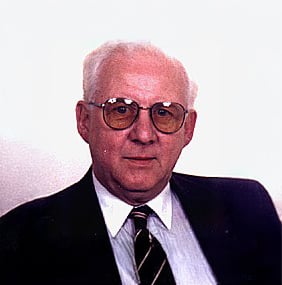
Birger Schantz

Born 10 June 1932 in Stockholm. 1962 VMD, 1974 Ph. 1979 Full Professor of Surgery at the Faculty of Veterinary Medicine, Swedish University of Agricultural Sciences, SLU, Uppsala. 1986 Director and Head of the Division of Human Sciences, National Defence Research Establishment, FOA, Stockholm.1993 Elected Member of the Royal Swedish Academy of War Sciences. “Kungl. Krigsvetenskapsakademien”. 1994 Appointed Member of the FOA Directorate as Research and Quality Director particularly responsible for scientific quality. 1997 Retired from FOA on 31 May. Emeritus Professor of Surgery, SLU. Henceforth engaged by Bo Rybeck Research AB, Stockholm.

© TFF & the authors 2002  
Related Posts

LONDON – So far so good, at least on the wider level. While internally Iraq seems on the edge of chaos, the much heralded clash of civilizations between the Muslim and Judaeo-Christian worlds has yet to become apparent. We have anger and despair aplenty in the Arab and Muslim worlds. But very little rushing to the standard and there was no great pilgrimage of warriors to join the fight, as happened when the Soviet Union invaded Afghanistan twenty years ago, and then, having driven the Red Army out, were left to ferment in that mountainous redoubt. With the armaments supplied by the CIA the mujahidin were transformed into Al Qaeda that became, for a relatively brief moment as these things go, ‘the greatest threat to the homeland that America has ever known.’ Nevertheless a ‘Cold War’ between much of the Muslim world and the West is certainly in full swing. Winston...
The Challenge of Nuclear Weaponsin the Twenty-first CenturyA Path Forward The peoples and governments of the world face an urgent challenge relating to weaponry of mass destruction and particularly to nuclear weaponry.  At the crossroads of technology, terrorism, geopolitical ambition, and policies of preemption are new and potent dangers for humanity. Despite ending the nuclear standoff of the Cold War era, nuclear weaponry is again menacing the peoples of the world with catastrophic possibilities.  We recognize the need for any government to pursue its security interests in accordance with international law; and further, we recognize that distinctive threats to these interests now exist as a result of an active international terrorist network having declared war on the United States and its allies. Nonetheless, we reject the assessment of the current US administration that upgrading a reliance on nuclear weapons is in any sense justified as a response. We find it...
By Karin Wegestal MP, the Social Democratic Partyon behalf of the Swedish Committee for Solidarity with the Yugoslav People During the last decade, the Federal Republic of Yugoslavia has received more than 500,000 refugees from Croatia and Bosnia, and another 300,000 internally displaced persons, mainly from the province Kosovo and Metohia. For a country with about ten million inhabitants, such an influx of homeless people is obviously a very heavy burden – even under peaceful conditions. But in addition to that, the Federal Republic of Yugoslavia has been the subject to sanctions from the western powers for close to ten years and its infrastructure was badly hurt through Nato’s intense bombardment during 78 days in 1999. The result of all this is that Yugoslavia, once the most developed industrial country in Eastern Europe, is today the poorest country in Europe. In Serbia excluding Kosovo, with about ten million inhabitants and...

Recent Articles

Tony Robinson October 4, 2026 Violence is easy to recognise when someone is being beaten, shot or killed. It becomes more difficult when nobody is holding a weapon. Poverty, discrimination, exploitation and repression can restrict a human life just as effectively, although they do so in very different ways and with very different consequences. Simply adding more categories to an ever-growing list of forms of violence does not really solve the problem. The more interesting question is what all these different situations have in common and why it makes sense to describe them using the same word. Human beings do not simply react to what happens around them. They remember the past, imagine things that do not yet exist, make plans and undertake projects. Workers organise because they imagine different working conditions; people migrate because they imagine another life somewhere else; social movements emerge because people refuse to accept the...
It’s a matter of principles, courage, vision and pulling together – while the militarist world is falling apart… Peter Langille October 3, 2026 “Here, then, is the problem which we present to you, stark and dreadful and inescapable: Shall we put an end to the human race; or shall mankind renounce war?”The Bertrand Russell—Albert Einstein Manifesto, July 9, 1955 ⁕ The forecast for what’s ahead is worrisome. The sharp rise in armed conflicts over the past three years is adding to what was already the highest level in over seventy years. Genocides, which should be prevented are supported. A shared climate emergency that jeopardises survival is ignored. Diverse polls now suggest that people are war-weary, worried and interested in a more effective United Nations. And, there are viable policy options for a more secure world! Yet governments are doubling-down, betting on more war and investing heavily. If current trends persist,...
Johan Galtung 1930-2024October 2015 Published here on October 3, 2026 Let us focus on Civilization for conflict analysis and remedies. Major forms of disorder use violence; war is state organized violence. The most belligerent states are the United States of America and Israel, both with civilization roots. National Evangelism, the US Protestant Christian civilization– more national than evangelical–justifies US warfare as exceptionalism of a people chosen by God, with a manifest destiny to run the world. Orthodox Judaism justifies Israeli warfare to conquer and expand from Nile to Euphrates as a religious right and duty to the Eternal One. The third most belligerent country, the UK, no longer believes it is God-chosen but chosen by the USA; not quite the same but something. But the root cause of global disorder lies in the Occident–with Islam–seeing itself as the single, universal civilization valid for all at all times, all others being...

TFF on Substack

Discover and subscribe to more peace materials on TFF Substack

Most Popular

Tony Robinson October 4, 2026 Violence is easy to recognise when someone is being beaten, shot or killed. It becomes more difficult when nobody is holding a weapon. Poverty, discrimination, exploitation and repression can restrict a human life just as effectively, although they do so in very different ways and with very different consequences. Simply adding more categories to an ever-growing list of forms of violence does not really solve the problem. The more interesting question is what all these different situations have in common and why it makes sense to describe them using the same word. Human beings do not simply react to what happens around them. They remember the past, imagine things that do not yet exist, make plans and undertake projects. Workers organise because they imagine different working conditions; people migrate because they imagine another life somewhere else; social movements emerge because people refuse to accept the...
It’s a matter of principles, courage, vision and pulling together – while the militarist world is falling apart… Peter Langille October 3, 2026 “Here, then, is the problem which we present to you, stark and dreadful and inescapable: Shall we put an end to the human race; or shall mankind renounce war?”The Bertrand Russell—Albert Einstein Manifesto, July 9, 1955 ⁕ The forecast for what’s ahead is worrisome. The sharp rise in armed conflicts over the past three years is adding to what was already the highest level in over seventy years. Genocides, which should be prevented are supported. A shared climate emergency that jeopardises survival is ignored. Diverse polls now suggest that people are war-weary, worried and interested in a more effective United Nations. And, there are viable policy options for a more secure world! Yet governments are doubling-down, betting on more war and investing heavily. If current trends persist,...
Johan Galtung 1930-2024October 2015 Published here on October 3, 2026 Let us focus on Civilization for conflict analysis and remedies. Major forms of disorder use violence; war is state organized violence. The most belligerent states are the United States of America and Israel, both with civilization roots. National Evangelism, the US Protestant Christian civilization– more national than evangelical–justifies US warfare as exceptionalism of a people chosen by God, with a manifest destiny to run the world. Orthodox Judaism justifies Israeli warfare to conquer and expand from Nile to Euphrates as a religious right and duty to the Eternal One. The third most belligerent country, the UK, no longer believes it is God-chosen but chosen by the USA; not quite the same but something. But the root cause of global disorder lies in the Occident–with Islam–seeing itself as the single, universal civilization valid for all at all times, all others being...
Read More
Living-Peace-Sign-Budapest-copy
Tony Robinson October 4, 2026 Violence is easy to recognise when someone is being beaten, shot or killed. It becomes more difficult when nobody is holding a weapon. Poverty, discrimination, exploitation and repression can restrict a human life just as effectively, although they do so in very different ways and with very different consequences. Simply adding more categories to an ever-growing list of forms of violence does not really solve the problem. The more interesting question is what all these different situations have in common and why it makes sense to describe them using the same word. Human beings do not simply react to what happens around them. They remember the past, imagine things that do not yet exist, make plans and undertake projects. Workers organise because they imagine different working conditions; people migrate because they imagine another life somewhere else; social movements emerge because people refuse to accept the...
b54a1f10-8c65-4f0b-9dd5-4abc0a7d04cc_2659x2659
It’s a matter of principles, courage, vision and pulling together – while the militarist world is falling apart… Peter Langille October 3, 2026 “Here, then, is the problem which we present to you, stark and dreadful and inescapable: Shall we put an end to the human race; or shall mankind renounce war?”The Bertrand Russell—Albert Einstein Manifesto, July 9, 1955 ⁕ The forecast for what’s ahead is worrisome. The sharp rise in armed conflicts over the past three years is adding to what was already the highest level in over seventy years. Genocides, which should be prevented are supported. A shared climate emergency that jeopardises survival is ignored. Diverse polls now suggest that people are war-weary, worried and interested in a more effective United Nations. And, there are viable policy options for a more secure world! Yet governments are doubling-down, betting on more war and investing heavily. If current trends persist,...
010
Johan Galtung 1930-2024October 2015 Published here on October 3, 2026 Let us focus on Civilization for conflict analysis and remedies. Major forms of disorder use violence; war is state organized violence. The most belligerent states are the United States of America and Israel, both with civilization roots. National Evangelism, the US Protestant Christian civilization– more national than evangelical–justifies US warfare as exceptionalism of a people chosen by God, with a manifest destiny to run the world. Orthodox Judaism justifies Israeli warfare to conquer and expand from Nile to Euphrates as a religious right and duty to the Eternal One. The third most belligerent country, the UK, no longer believes it is God-chosen but chosen by the USA; not quite the same but something. But the root cause of global disorder lies in the Occident–with Islam–seeing itself as the single, universal civilization valid for all at all times, all others being...
Screenshot 2026-10-02 011738
Jan ObergPhD, director, The Transnational Foundation for Peace and Future Research, TFFLund, Sweden October 2, 2026 This is my full original manuscript. The Chinese Academy of Social Science, CASS, makes two publications out if it. 1. China’s Five-year plan emphasized the capabilities of basic research and original innovation. It is regarded as the goal of the future social development, which, as required, should be significantly enhanced. Can you comment on the importance of original innovation in research and academic study? I believe it is easier to define “original innovation” in the natural sciences than in social sciences. The breaking points of what constitutes something new, or innovative, are not quite as sharp in the latter. But in both fields it is about opening up something that was closed, unseen, unexplored before – making manifest what was earlier latent. Innovations come in many forms and shapes – naming something that was not...
arctic-circle-map
The agreement is catastrophic both because of what it says and what it doesn’t mention. It reduces further the major asset of security policies: Freedom of action. Jan Oberg TFF director September 25, 2026 A couple of hours before the agreement was signed on September 22, 2026, I published the following 13 hypotheses about what it would most likely contain on TFF Substack (in English). I was wrong on only the first point. Contrary to what Trump had written on his Truth Social platform, it does not appear to come into force immediately. In fact, it turned out to be worse than even I had anticipated. After these hypotheses now come a number of reflections in light of what the agreement actually contains, and does not contain, as well as the way in which it has generally been presented by major media outlets and by the public-service broadcaster DR. My...
girl-5894831_1280
Below are TFF-related media mentions, comments, videos and social media posts published elsewhere but not on this homepage. We happen to catch and list only a fraction. Regarding video comments and debates, we recommend that you go to the TFF Video Channel on Substack where many of them are reproduced. Jan Oberg is a contributor to China Daily – 52 million daily clicks – and Global Times, CGTN and CCTV (the national television), China Investment, Xinhua News Agency and several others. Articles and videos on these media very often multiply into countless Chinese (and Western media) that re-post them from these main media. Thanks to The China Academy, his analyses, interviews and comments are frequently posted on YouTube channels such as Thinkers Forum and Wave Media. These videos are often re-posted on Bilibili (China’s YouTube), the China Content Center on TikTok, and on the Chinese edition of TikTok, Douyin.com. This means reaching hundreds of millions of viewers worldwide over a year. While there are too many to catch on all these...





