
In his first overseas trip since moving into the White House, Donald Trump is leaving behind the frustrations, allegations, rumors, and an increasing sense of implosion that seems to be dooming his presidency during its second hundred days.

At the same time, a mixture of curiosity and apprehension awaits this new leader wherever he goes making his visit to the Middle East and Europe momentous occasions for the host governments, wide eyed public, and rapacious media.

We need to remember that in this era of popular autocrats and surging right-wing populists, Trump is a ‘hero of our time.’

Even if all had gone smoothly for the new president in his home country, there should be expressions of deep concern about his travel itinerary.

He visits first the two countries with which the United States has ‘special relationships’ in the Middle East, Saudi Arabia and Israel. What has long made them ‘special’ are a series of pre-Trump departures from realist and normative foreign policy orientations by successive American presidencies. These departures were motivated by oil geopolitics, arms sales and strategic alliances, hostility to Iran, and a disguised American sweet spot for foreign royalty.

It is has long been obvious that uncritical deference to Israeli priorities has seriously undermined U.S. foreign policy in the Middle East, which would have benefitted much more from policies designed to encourage peace and stability by refraining from regime-changing interventions, massive arms sales, and a diplomacy of respect for the politics of national self-determination.

Most remarkably, the U.S. Government has for decades winked at the billions of support given by Saudi members of the royal family to Wahabism, that is, to promote fundamentalist Islam, throughout the Muslim world. The first words uttered by Trump on his arrival in Riyadh were that it ‘an honor’ to be visiting.

Then came signed deals adding up to $110 billions in arms sales and the declaration of a common strategic vision, that is, a super-alliance, called an ‘Arab NATO’ in some circles, a dagger aimed at Iran’s heart. Why turn a blind eye toward the Saudi role in fanning the flames of jihadism while ramping up a military threat to relatively passive Iran that reelected Hassan Rouhani as its president, who has consistently championed moderation at home and normalization abroad.

How can we explain this?

Trump has been critical of most aspects of the foreign policy agenda of his predecessors, but on the promotion of the special relationships he seems intent on doubling down on the most misguided aspects of earlier approaches to the region.

The shape of his travel itinerary during his days confirms this impression. In this regard, Trump repudiates Obama’s hesitant, but in the end successful, efforts to bring Iran in from the cold, while trying to please Saudi Arabia by ignoring its extreme denial of human rights to its own people as well as its contributions to anti-Western terrorism.

If Trump was truly intent on putting America first, as he insistently asserts, then he could do so very directly and effectively by taking three major steps toward the protection of national interests:

1) First, demand a firm commitment from the Saudi government to cease using private funds and public diplomacy to spread Wahabism beyond its borders.
Any credible public statement along these lines would weaken ISIS and other terrorist movements throughout the world far more than cascades of Tomahawk missiles dumped on a Syrian airfield.

Such a challenge to Saudi policies also raises the possibility, however remote, of an endgame in the ‘war on terror.’

If such a reset of Saudi relations could be coupled with an indefinite freeze on arms sales to the Gulf countries that would have been even better, sending a signal throughout the region that America will no longer engage with the bloody conflicts that have brought so much suffering and devastation to the Middle East.

This might give some belated meaning to ‘America first.’

2) The second step would have been even harder for an American president to take. It would require Trump to tell Mr. Netanyahu that no further military assistance for Israel would be authorized until an unconditional freeze on settlement expansion was in place and enforced, and the blockade of Gaza lifted once and for all.

3) It does not require a PhD in Middle Eastern Studies to appreciate that the establishment of a nuclear free zone in the region and the adoption of effective steps to minimize the sectarian divide between Sunni and Shia Islam would improve future prospects for this horrendously disrupted political realities, at last reducing tensions and risks of wars.

Nor does it require special knowledge to identify the obstacles such actions — the one government that already possesses nuclear weapons and the government that feels threatened by a challenge to its regional preeminence.

Saudi Arabia and Israel both regard Iran as enemy number one, although it poses no existential threat to either one, and Israel will not even discuss giving up its nuclear arsenal despite being assured by Washington that its qualitative edge in conventional weaponry relative to its neighbors will be upheld.

The special relationships block even the consideration of enlightened initiatives, take them entirely off the table. This contrasts with the American proclivity for coercive diplomacy, which always assertively leaves the military option on the table.

Without tension-reducing measures, a few false moves could easily give rise to a major war with Iran, which might bring smiles to leaders in Riyadh and Tel Aviv, but would be disastrous for the societies involved and for the United States, as well as for the region.

Given the leverage and militancy of pro-Israeli lobbies in the United States, more realistically pursuing American national interests toward Israel and the Middle East, seems tantamount to issuing invitations to Trump’s beheading, and despite his wildly gyrations of policy and mood, he has shown no disposition whatsoever to take on AIPAC, inc.. Quite the contrary.

Of course, I am not so naïve to think that the advocacy of rationality in foreign policy will have the slightest echo in Washington in the course of Trump’s current diplomatic foray into uncharted territories. What I wish to point out is that this kind of foreign policy fantasy, however desirable if it were to be enacted, has become a species of political suicide.

Any political leader who moved in more rational directions would be risking his own life, at least politically. The proposals mentioned above tells us what an American president should do if a rational and humane political system was in place and organized in such ways as to allow the pursuit of national interests, the realization of values associated with peace and human rights, and to attain the benefits of just and sustainable Isreali/Palestinian peace arrangements.

As long as these dysfunctional special relationships are relied upon to define American national interests in the Middle East, violent extremism and turmoil will persist, the authority of the United Nations and international law will suffer, and the credibility of American regional and global leadership will further erode.

And maybe worst of all, the mounting ecological and nuclear challenges of global scope and apocalyptical risk will be remain unattended in what has become the greatest display of species indifference to its own survival throughout human history.

Mainstream advice on the Middle East being proffered to the Trump presidency by Beltway sharpshooters takes for granted the geopolitical status quo questioned above.

The problems presented by the two special relationships are not even mentioned. Given these perspectives there are three broad kinds of approaches recommended for the region:

(1) Don’t aim too high, lower expectations, and don’t touch raw nerves in Israel or the Arab world (e.g. moving the American embassy to Jerusalem or telling Israel to dismantle the separation wall, stop expanding settlements, or handle the ongoing hunger strike humanely) [See Aaron David Miller, “From My Twenty Years of Failing at Middle East Peace,” Foreign Policy online, May 19, 2017];

(2) Gang up on Iran, which will please both Israel and Saudi Arabia, and will have some positive resonance back in the United States [e.g. Michael Doran, “A Trump Plan for the Middle East,” NY Times, May 19, 2017];

(3) Adopt the Israeli hard right view, now pushed within the United States, that the best road to ‘peace’ is to give Israel a green light to exert even greater pressure on the Palestinians to the point of their surrender. This is a position repeatedly advocated by Daniel Pipes on the online listserv Middle East Forum and elsewhere, see Pipes, “The Way to Peace: Israeli Victory and Palestinian Defeat,” Commentary, Jan. 2017; Pipes boasts of his work with the Congressional Israel Victory Caucus that wants the U.S. Government to stop talking about ‘the two state solution,’ and support an Israeli shift from managing the status quo to launching a campaign to defeat Palestinians so decisively as to end the conflict.

The first of these approaches is a cautionary warning to Trump the maker of grand deals not to exceed the boundaries of the feasible. The Israel/Palestine conflict is not ripe for resolution, Israel has no incentive or inclination to reach a fair compromise and even if it were, the Palestinians are currently too fragmented and poorly led to provide a reliable negotiating partner.

The second geopolitically oriented approach makes matters worse, pushing the sectarian and secular divides in the direction of a regional confrontation, even combat.

The third is geopolitically triumphalist, assuming that the Palestinians can be induced to give up their century old struggle, and go the way of other indigenous lost causes that have succumbed to predatory settler movements.

As Trump dominates the news by his visits to Saudi Arabia and Israel we should not be tricked into thinking that his ‘achievements’ are hopeful developments.

The only true beacons of hope for the peoples of the Middle East are the contrarian affirmations of the Palestinian hunger strike, the Rouhani electoral victory, and the BDS Campaign.

The fact that such developments are ignored or condemned by the dominant political forces in the West should at least alert us to gathering storm clouds in that tormented region and elsewhere.
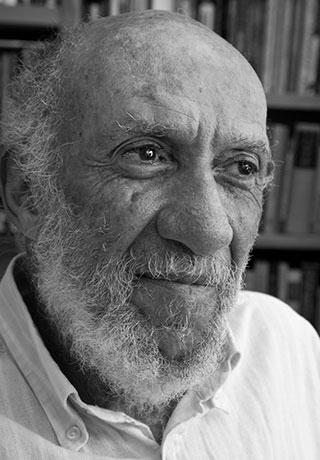

Professor Falk became an adviser to TFF when it was established in 1985.

Related Posts

The agreement is catastrophic both because of what it says and what it doesn’t mention. It reduces further the major asset of security policies: Freedom of action. Jan Oberg TFF director September 25, 2026 A couple of hours before the agreement was signed on September 22, 2026, I published the following 13 hypotheses about what it would most likely contain on TFF Substack (in English). I was wrong on only the first point. Contrary to what Trump had written on his Truth Social platform, it does not appear to come into force immediately. In fact, it turned out to be worse than even I had anticipated. After these hypotheses now come a number of reflections in light of what the agreement actually contains, and does not contain, as well as the way in which it has generally been presented by major media outlets and by the public-service broadcaster DR. My...
Photos © TFF 2000 Read PressInfo 90 “Lift the Sanctions and Bring More Aid to Yugoslavia” See Pictures from Belgrade © TFF 2000 Please reprint, copy, archive, quote or re-post this item, but please retain the source.
By Jan ObergTFF co-founder and director February 11, 2026 PART 3 — ECONOMICS, TRADE & FINANCIAL SOVEREIGNTY A. Trade Measures & Market Signaling Economic pressure can be applied instantly and scaled without violence. Immediate Measures (within a week) Government boycott US goods and services  A very powerful signal which over time will be felt. Targeted tariffs on selected U.S. goods Symbolic but high-visibility sectors send a clear message. Suspend trade facilitation talks A peaceful pause that signals deep concern. Freeze U.S. participation in public procurement – military procurement in particular A nonviolent way to reduce influence. Competition law review of U.S. corporations A legal tool to scrutinise market dominance. Longer-Term Measures EU–Asia–Africa trade corridors Reducing reliance on U.S. markets. European supply chains for critical minerals Strategic autonomy in resource access. European Strategic Trade Authority Monitoring coercive practices globally. Euro-denominated commodity markets Weakening the dollar’s pricing monopoly. The EU must resume contacts and negotiations with Russia, focusing on energy cooperation To...

Recent Articles

Tony Robinson October 4, 2026 Violence is easy to recognise when someone is being beaten, shot or killed. It becomes more difficult when nobody is holding a weapon. Poverty, discrimination, exploitation and repression can restrict a human life just as effectively, although they do so in very different ways and with very different consequences. Simply adding more categories to an ever-growing list of forms of violence does not really solve the problem. The more interesting question is what all these different situations have in common and why it makes sense to describe them using the same word. Human beings do not simply react to what happens around them. They remember the past, imagine things that do not yet exist, make plans and undertake projects. Workers organise because they imagine different working conditions; people migrate because they imagine another life somewhere else; social movements emerge because people refuse to accept the...
It’s a matter of principles, courage, vision and pulling together – while the militarist world is falling apart… Peter Langille October 3, 2026 “Here, then, is the problem which we present to you, stark and dreadful and inescapable: Shall we put an end to the human race; or shall mankind renounce war?”The Bertrand Russell—Albert Einstein Manifesto, July 9, 1955 ⁕ The forecast for what’s ahead is worrisome. The sharp rise in armed conflicts over the past three years is adding to what was already the highest level in over seventy years. Genocides, which should be prevented are supported. A shared climate emergency that jeopardises survival is ignored. Diverse polls now suggest that people are war-weary, worried and interested in a more effective United Nations. And, there are viable policy options for a more secure world! Yet governments are doubling-down, betting on more war and investing heavily. If current trends persist,...
Johan Galtung 1930-2024October 2015 Published here on October 3, 2026 Let us focus on Civilization for conflict analysis and remedies. Major forms of disorder use violence; war is state organized violence. The most belligerent states are the United States of America and Israel, both with civilization roots. National Evangelism, the US Protestant Christian civilization– more national than evangelical–justifies US warfare as exceptionalism of a people chosen by God, with a manifest destiny to run the world. Orthodox Judaism justifies Israeli warfare to conquer and expand from Nile to Euphrates as a religious right and duty to the Eternal One. The third most belligerent country, the UK, no longer believes it is God-chosen but chosen by the USA; not quite the same but something. But the root cause of global disorder lies in the Occident–with Islam–seeing itself as the single, universal civilization valid for all at all times, all others being...

TFF on Substack

Discover and subscribe to more peace materials on TFF Substack

Most Popular

Tony Robinson October 4, 2026 Violence is easy to recognise when someone is being beaten, shot or killed. It becomes more difficult when nobody is holding a weapon. Poverty, discrimination, exploitation and repression can restrict a human life just as effectively, although they do so in very different ways and with very different consequences. Simply adding more categories to an ever-growing list of forms of violence does not really solve the problem. The more interesting question is what all these different situations have in common and why it makes sense to describe them using the same word. Human beings do not simply react to what happens around them. They remember the past, imagine things that do not yet exist, make plans and undertake projects. Workers organise because they imagine different working conditions; people migrate because they imagine another life somewhere else; social movements emerge because people refuse to accept the...
It’s a matter of principles, courage, vision and pulling together – while the militarist world is falling apart… Peter Langille October 3, 2026 “Here, then, is the problem which we present to you, stark and dreadful and inescapable: Shall we put an end to the human race; or shall mankind renounce war?”The Bertrand Russell—Albert Einstein Manifesto, July 9, 1955 ⁕ The forecast for what’s ahead is worrisome. The sharp rise in armed conflicts over the past three years is adding to what was already the highest level in over seventy years. Genocides, which should be prevented are supported. A shared climate emergency that jeopardises survival is ignored. Diverse polls now suggest that people are war-weary, worried and interested in a more effective United Nations. And, there are viable policy options for a more secure world! Yet governments are doubling-down, betting on more war and investing heavily. If current trends persist,...
Johan Galtung 1930-2024October 2015 Published here on October 3, 2026 Let us focus on Civilization for conflict analysis and remedies. Major forms of disorder use violence; war is state organized violence. The most belligerent states are the United States of America and Israel, both with civilization roots. National Evangelism, the US Protestant Christian civilization– more national than evangelical–justifies US warfare as exceptionalism of a people chosen by God, with a manifest destiny to run the world. Orthodox Judaism justifies Israeli warfare to conquer and expand from Nile to Euphrates as a religious right and duty to the Eternal One. The third most belligerent country, the UK, no longer believes it is God-chosen but chosen by the USA; not quite the same but something. But the root cause of global disorder lies in the Occident–with Islam–seeing itself as the single, universal civilization valid for all at all times, all others being...
Read More
Living-Peace-Sign-Budapest-copy
Tony Robinson October 4, 2026 Violence is easy to recognise when someone is being beaten, shot or killed. It becomes more difficult when nobody is holding a weapon. Poverty, discrimination, exploitation and repression can restrict a human life just as effectively, although they do so in very different ways and with very different consequences. Simply adding more categories to an ever-growing list of forms of violence does not really solve the problem. The more interesting question is what all these different situations have in common and why it makes sense to describe them using the same word. Human beings do not simply react to what happens around them. They remember the past, imagine things that do not yet exist, make plans and undertake projects. Workers organise because they imagine different working conditions; people migrate because they imagine another life somewhere else; social movements emerge because people refuse to accept the...
b54a1f10-8c65-4f0b-9dd5-4abc0a7d04cc_2659x2659
It’s a matter of principles, courage, vision and pulling together – while the militarist world is falling apart… Peter Langille October 3, 2026 “Here, then, is the problem which we present to you, stark and dreadful and inescapable: Shall we put an end to the human race; or shall mankind renounce war?”The Bertrand Russell—Albert Einstein Manifesto, July 9, 1955 ⁕ The forecast for what’s ahead is worrisome. The sharp rise in armed conflicts over the past three years is adding to what was already the highest level in over seventy years. Genocides, which should be prevented are supported. A shared climate emergency that jeopardises survival is ignored. Diverse polls now suggest that people are war-weary, worried and interested in a more effective United Nations. And, there are viable policy options for a more secure world! Yet governments are doubling-down, betting on more war and investing heavily. If current trends persist,...
010
Johan Galtung 1930-2024October 2015 Published here on October 3, 2026 Let us focus on Civilization for conflict analysis and remedies. Major forms of disorder use violence; war is state organized violence. The most belligerent states are the United States of America and Israel, both with civilization roots. National Evangelism, the US Protestant Christian civilization– more national than evangelical–justifies US warfare as exceptionalism of a people chosen by God, with a manifest destiny to run the world. Orthodox Judaism justifies Israeli warfare to conquer and expand from Nile to Euphrates as a religious right and duty to the Eternal One. The third most belligerent country, the UK, no longer believes it is God-chosen but chosen by the USA; not quite the same but something. But the root cause of global disorder lies in the Occident–with Islam–seeing itself as the single, universal civilization valid for all at all times, all others being...
Screenshot 2026-10-02 011738
Jan ObergPhD, director, The Transnational Foundation for Peace and Future Research, TFFLund, Sweden October 2, 2026 This is my full original manuscript. The Chinese Academy of Social Science, CASS, makes two publications out if it. 1. China’s Five-year plan emphasized the capabilities of basic research and original innovation. It is regarded as the goal of the future social development, which, as required, should be significantly enhanced. Can you comment on the importance of original innovation in research and academic study? I believe it is easier to define “original innovation” in the natural sciences than in social sciences. The breaking points of what constitutes something new, or innovative, are not quite as sharp in the latter. But in both fields it is about opening up something that was closed, unseen, unexplored before – making manifest what was earlier latent. Innovations come in many forms and shapes – naming something that was not...
arctic-circle-map
The agreement is catastrophic both because of what it says and what it doesn’t mention. It reduces further the major asset of security policies: Freedom of action. Jan Oberg TFF director September 25, 2026 A couple of hours before the agreement was signed on September 22, 2026, I published the following 13 hypotheses about what it would most likely contain on TFF Substack (in English). I was wrong on only the first point. Contrary to what Trump had written on his Truth Social platform, it does not appear to come into force immediately. In fact, it turned out to be worse than even I had anticipated. After these hypotheses now come a number of reflections in light of what the agreement actually contains, and does not contain, as well as the way in which it has generally been presented by major media outlets and by the public-service broadcaster DR. My...
girl-5894831_1280
Below are TFF-related media mentions, comments, videos and social media posts published elsewhere but not on this homepage. We happen to catch and list only a fraction. Regarding video comments and debates, we recommend that you go to the TFF Video Channel on Substack where many of them are reproduced. Jan Oberg is a contributor to China Daily – 52 million daily clicks – and Global Times, CGTN and CCTV (the national television), China Investment, Xinhua News Agency and several others. Articles and videos on these media very often multiply into countless Chinese (and Western media) that re-post them from these main media. Thanks to The China Academy, his analyses, interviews and comments are frequently posted on YouTube channels such as Thinkers Forum and Wave Media. These videos are often re-posted on Bilibili (China’s YouTube), the China Content Center on TikTok, and on the Chinese edition of TikTok, Douyin.com. This means reaching hundreds of millions of viewers worldwide over a year. While there are too many to catch on all these...




