
TFF PressInfo # 413: The U.S. Attack on al-Shayrat Airfield

In early morning darkness on April 7th the United States fired 59 Tomahawk cruise missiles at the Syrian al-Shayrat Airfield from two American destroyers stationed in the Eastern Mediterranean. It described the targets as Syrian fighter jets, radar, fuel facilities used for the aircraft. It asserted prior notification of Russian authorities, and offered the assurance that precautions were taken to avoid risks to Russian or Syrian military personnel.

Pentagon spokespersons suggested that in addition to doing damage to the airfield, the attack had the intended effect of “reducing the Syrian government’s ability to deliver chemical weapons.”

President Donald Trump in a short public statement justified the attack as a proportionate response to the Syrian use of chemical weapons against the town of Khan Sheikhoun in the western Syrian province of Idlib a few days earlier, which killed an estimated 80 persons, wounding hundreds more.

Although there were denials of Syrian responsibility for the attack from Damascus and Moscow, a strong international consensus supported the U.S. view that Bashar al-Assad had ordered the attack allegedly as a means of convincing opposition forces concentrated in Idlib that it was time to surrender.

In the background, is the conviction among the more militaristic policy advisors and political figures, including Trump, that President Barack Obama’s failure to enforce his 2012 ‘red line’ warning to Syria emboldened Assad to launch this latest attack with chemical weapons.

Of course, this is all hawkish speculation that can be neither proven nor disproven, but it undoubtedly influenced the Trump entourage to suppose that it was presented with an opportunity to exhibit a greater readiness to use American military force in the Syrian conflict, incidentally, an outlook long advocated by Hillary Clinton and many of her advisors and foreign policy supporters.

To do so, abandoned one of Trump’s signature pledges, to avoid military engagement in the conflicts raging throughout the Middle East, which he portrayed as a costly failure of prior American political leaders.

Trump under pressure due to the growing evidence of ties with Russian political leaders during the 2016 presidential campaign may have welcomed an occasion on which to demonstrate his independence from Moscow and Putin.

The departure from the Trump campaign agenda is particularly pointed as there were no American casualties resulting from the attack on Khan Sheikhoun 60 hours earlier than the Tomahawk response.

In Trump’s brief public rationale, the red line argument was not relied upon, but rather the combination of humanitarian outrage and grief with an assertion of the “national security interest of the United States to prevent and deter the spread and use of deadly chemical weapons.”

This geopolitical purpose was reinforced by a cursory appeal to international law and even the UN Security Council: “There can be no dispute that Syria used banned chemical weapons, violated its obligations under the Chemical Weapons Convention and ignored the urging of the U.N. Security Council.”

Yet identifying Syria’s evident violation of international law should not be confused with an international law justification for the use of retaliatory force.

In using this language Trump was evidently seeking to weaken the impression of an irresponsible unilateral American recourse to non-defensive force without bothering to seek an endorsement from the U.S. Congress or the UN.

Not surprisingly Moscow and Damascus both condemned the attack as an act of ‘aggression’ and ‘a flagrant violation of international law.’

Trump used some additional words designed to draw attention away from the unilateral nature of the attack by contending that it fulfilled the common goals of “civilized nations” to deter Assad and defeat terrorism, thereby linking the American initiative to what he called ‘justice’ rather than basing legitimacy exclusively on an appeal to ‘law’ or ‘order.’

Trump expressed this sentiment as follows: “And we hope that as long as America stands for justice, that peace and harmony will in the end prevail.” This is very different in tone, substance, and policy from Trump’s campaign rhetoric, which stridently stressed ‘America first,’ clarified as a call to act with reinvigorated resolve to devote military capabilities exclusively to promoting U.S. material national interests, and to stop wasting resources and energy by trying to address the larger concerns of the world, especially in the Middle East.

This abrupt affinity with an internationalist spirit is made explicit in Trump’s final words — “Good night, and God bless America and the entire world.” As far as I know, this ritualistic invocation of God so much associated with George W. Bush and mimicked by Barack Obama never was extended to include “the entire world,” which is such an unfamiliar wording as to suggest that it was deliberately inserted to stake a quite unexpected and renewed claim to American moral leadership in world affairs.

As with the attack itself, it seems likely to be a one/off embrace of cosmopolitan sentiments, but it is still worth noting. After all, language matters.

As has been suggested, bombing a Syrian airfield is unlikely to help Syrian children exposed to the terrible ravages of this war, that is, unless it does create a new momentum for a sustainable ceasefire.

Already, the Russian reaction signals a worsening of relations with the United States in Syria and generally, and may end up producing the kind of confrontation that had led Republicans in the national security establishment to abandon Trump during the presidential campaign a year ago.

With the removal of Bannon from the National Security Council it may not be premature to suggest that the deep state has found ways to reestablish its influence on national security policy after all seemed lost due to Trump’s electoral victory and vindictive attitude toward ‘the intelligence community.’

It is far too early to say that bureaucratic wars are over, but there is at the very least clear movement evident toward the restoration of the pre-Trump established order in Washington.

The Khan Sheikhoun attack raises more fundamental questions that are neither raised nor resolved by Trump’s speech.

Despite making a gesture in the direction of international law by reference to the Chemical Weapons Convention and Security Council directives, the strike against al-Shayrat Airfield was a non-defensive use of force by the United States that violates the core UN Charter prohibition unless carried out on the basis of an explicit Security Council authorization.

It is precisely the sort of unilateralism that the Charter, and post-1945 international law, made unlawful.

In this context there was no urgency or necessity to strike immediately that might have made the departure from Charter norms seem more reasonable.

Of course, Security Council authorization would not have been forthcoming, given the near certainty that Russia would use its veto.

In that sense, assuming the attribution of responsibility for the chemical weapons attack to the Assad regime holds up, which is by no means assured, there is a dilemma presented when the moral and political case for action is strong, but lacks an ample justification in international law.

Of course, international law has for more three decades given way to the dictates of counterterrorism policies, which have featured retaliatory strikes ordered by American presidents without international authorization.

Has this pattern of essentially unchallenged practice by the U.S. Government done away with the legal constraints of the UN Charter?

Some jurists suggest that state practice of this character creates new expectations about the scope of legality of international uses of force by states in addressing security threats posed by non-state actors or by internal threats of state/society atrocities as here and in the Kosovo War of 1999.

In a decentralized world, lacking governmental authority at regional and global levels, it seems regressive to endorse this return to a state of affairs where warfare is discretionary, and international law and respect for the authority of the United Nations are reduced to considerations of convenience and self-interest, and thus, as here, when inconvenient, a powerful state can use force with unconditional impunity in pursuit of its foreign policy goals.

There are also accompanying prudential questions about recourse to a military response in this instance where the intended target is the internationally recognized government of a sovereign state that is engaged in a protracted civil war.

Is this a further challenge to state-centric world order?

Will the attack magnify the conflict still further rather than deter Assad and make a political compromise more likely?

Will the antagonism of Russia and Iran make it more difficult to bring the conflict to an end by reliance on diplomacy?

There is no way to answer such questions beyond the observation that where, as here, international law opposes recourse to force, the risks of further escalation are considerable, and the rise of geopolitical tensions inevitable, the presumption should be strongly against a military response.

Then there are domestic questions about whether it is okay for an American president to resort to an international use of force without some sort of Congressional debate and authorization (short of a Declaration of War).

Again Trump has plenty of precedents for acting without a specific Congressional authorization from the presidencies of Ronald Reagan, Bill Clinton, and George W. Bush. Executive warmaking authority was definitely increased after the 9/11 attacks, and given a limited, although broad, legislative imprimatur in the Authorization for the Use of Military Force (AUMF) statute of 2001.

AUMF is limited to those forces responsible for the 9/11 attacks and ‘associated forces,’ which the Obama presidency interpreted to extend to Al Qaeda wherever located, and without any time horizon. It seems beyond doubt that constitutionalism in the war/peace context has been severely weakened over the course of the last 70 years, and this latest episode just continues the trend.

It would seem that where there is no necessity to act instantly and where there is no formal UN authorization, the underlying republican commitment to checks and balances to avoid abuses of power, should have led Trump to seek authorization from Congress, and in light of his failure to do so, a critical reaction from Congress.

There are two clusters of serious questions raised:

Is this a new turn toward belligerent internationalism by the Trump presidency that will shape the near future of American foreign policy in the Middle East, and possibly elsewhere?

Does the reversion to unilateralism with respect to international uses of force heighten the risks of geopolitical escalation and large-scale warfare, including possibly the threat or use of nuclear weapons?
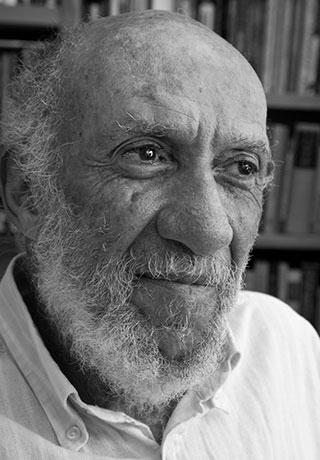

Professor Falk became an adviser to TFF when it was established in 1985.

Related Posts

Tony Robinson October 4, 2026 Violence is easy to recognise when someone is being beaten, shot or killed. It becomes more difficult when nobody is holding a weapon. Poverty, discrimination, exploitation and repression can restrict a human life just as effectively, although they do so in very different ways and with very different consequences. Simply adding more categories to an ever-growing list of forms of violence does not really solve the problem. The more interesting question is what all these different situations have in common and why it makes sense to describe them using the same word. Human beings do not simply react to what happens around them. They remember the past, imagine things that do not yet exist, make plans and undertake projects. Workers organise because they imagine different working conditions; people migrate because they imagine another life somewhere else; social movements emerge because people refuse to accept the...
It’s a matter of principles, courage, vision and pulling together – while the militarist world is falling apart… Peter Langille October 3, 2026 “Here, then, is the problem which we present to you, stark and dreadful and inescapable: Shall we put an end to the human race; or shall mankind renounce war?”The Bertrand Russell—Albert Einstein Manifesto, July 9, 1955 ⁕ The forecast for what’s ahead is worrisome. The sharp rise in armed conflicts over the past three years is adding to what was already the highest level in over seventy years. Genocides, which should be prevented are supported. A shared climate emergency that jeopardises survival is ignored. Diverse polls now suggest that people are war-weary, worried and interested in a more effective United Nations. And, there are viable policy options for a more secure world! Yet governments are doubling-down, betting on more war and investing heavily. If current trends persist,...
Johan Galtung 1930-2024October 2015 Published here on October 3, 2026 Let us focus on Civilization for conflict analysis and remedies. Major forms of disorder use violence; war is state organized violence. The most belligerent states are the United States of America and Israel, both with civilization roots. National Evangelism, the US Protestant Christian civilization– more national than evangelical–justifies US warfare as exceptionalism of a people chosen by God, with a manifest destiny to run the world. Orthodox Judaism justifies Israeli warfare to conquer and expand from Nile to Euphrates as a religious right and duty to the Eternal One. The third most belligerent country, the UK, no longer believes it is God-chosen but chosen by the USA; not quite the same but something. But the root cause of global disorder lies in the Occident–with Islam–seeing itself as the single, universal civilization valid for all at all times, all others being...

Recent Articles

Tony Robinson October 4, 2026 Violence is easy to recognise when someone is being beaten, shot or killed. It becomes more difficult when nobody is holding a weapon. Poverty, discrimination, exploitation and repression can restrict a human life just as effectively, although they do so in very different ways and with very different consequences. Simply adding more categories to an ever-growing list of forms of violence does not really solve the problem. The more interesting question is what all these different situations have in common and why it makes sense to describe them using the same word. Human beings do not simply react to what happens around them. They remember the past, imagine things that do not yet exist, make plans and undertake projects. Workers organise because they imagine different working conditions; people migrate because they imagine another life somewhere else; social movements emerge because people refuse to accept the...
It’s a matter of principles, courage, vision and pulling together – while the militarist world is falling apart… Peter Langille October 3, 2026 “Here, then, is the problem which we present to you, stark and dreadful and inescapable: Shall we put an end to the human race; or shall mankind renounce war?”The Bertrand Russell—Albert Einstein Manifesto, July 9, 1955 ⁕ The forecast for what’s ahead is worrisome. The sharp rise in armed conflicts over the past three years is adding to what was already the highest level in over seventy years. Genocides, which should be prevented are supported. A shared climate emergency that jeopardises survival is ignored. Diverse polls now suggest that people are war-weary, worried and interested in a more effective United Nations. And, there are viable policy options for a more secure world! Yet governments are doubling-down, betting on more war and investing heavily. If current trends persist,...
Johan Galtung 1930-2024October 2015 Published here on October 3, 2026 Let us focus on Civilization for conflict analysis and remedies. Major forms of disorder use violence; war is state organized violence. The most belligerent states are the United States of America and Israel, both with civilization roots. National Evangelism, the US Protestant Christian civilization– more national than evangelical–justifies US warfare as exceptionalism of a people chosen by God, with a manifest destiny to run the world. Orthodox Judaism justifies Israeli warfare to conquer and expand from Nile to Euphrates as a religious right and duty to the Eternal One. The third most belligerent country, the UK, no longer believes it is God-chosen but chosen by the USA; not quite the same but something. But the root cause of global disorder lies in the Occident–with Islam–seeing itself as the single, universal civilization valid for all at all times, all others being...

TFF on Substack

Discover and subscribe to more peace materials on TFF Substack

Most Popular

Tony Robinson October 4, 2026 Violence is easy to recognise when someone is being beaten, shot or killed. It becomes more difficult when nobody is holding a weapon. Poverty, discrimination, exploitation and repression can restrict a human life just as effectively, although they do so in very different ways and with very different consequences. Simply adding more categories to an ever-growing list of forms of violence does not really solve the problem. The more interesting question is what all these different situations have in common and why it makes sense to describe them using the same word. Human beings do not simply react to what happens around them. They remember the past, imagine things that do not yet exist, make plans and undertake projects. Workers organise because they imagine different working conditions; people migrate because they imagine another life somewhere else; social movements emerge because people refuse to accept the...
It’s a matter of principles, courage, vision and pulling together – while the militarist world is falling apart… Peter Langille October 3, 2026 “Here, then, is the problem which we present to you, stark and dreadful and inescapable: Shall we put an end to the human race; or shall mankind renounce war?”The Bertrand Russell—Albert Einstein Manifesto, July 9, 1955 ⁕ The forecast for what’s ahead is worrisome. The sharp rise in armed conflicts over the past three years is adding to what was already the highest level in over seventy years. Genocides, which should be prevented are supported. A shared climate emergency that jeopardises survival is ignored. Diverse polls now suggest that people are war-weary, worried and interested in a more effective United Nations. And, there are viable policy options for a more secure world! Yet governments are doubling-down, betting on more war and investing heavily. If current trends persist,...
Johan Galtung 1930-2024October 2015 Published here on October 3, 2026 Let us focus on Civilization for conflict analysis and remedies. Major forms of disorder use violence; war is state organized violence. The most belligerent states are the United States of America and Israel, both with civilization roots. National Evangelism, the US Protestant Christian civilization– more national than evangelical–justifies US warfare as exceptionalism of a people chosen by God, with a manifest destiny to run the world. Orthodox Judaism justifies Israeli warfare to conquer and expand from Nile to Euphrates as a religious right and duty to the Eternal One. The third most belligerent country, the UK, no longer believes it is God-chosen but chosen by the USA; not quite the same but something. But the root cause of global disorder lies in the Occident–with Islam–seeing itself as the single, universal civilization valid for all at all times, all others being...
Read More
Living-Peace-Sign-Budapest-copy
Tony Robinson October 4, 2026 Violence is easy to recognise when someone is being beaten, shot or killed. It becomes more difficult when nobody is holding a weapon. Poverty, discrimination, exploitation and repression can restrict a human life just as effectively, although they do so in very different ways and with very different consequences. Simply adding more categories to an ever-growing list of forms of violence does not really solve the problem. The more interesting question is what all these different situations have in common and why it makes sense to describe them using the same word. Human beings do not simply react to what happens around them. They remember the past, imagine things that do not yet exist, make plans and undertake projects. Workers organise because they imagine different working conditions; people migrate because they imagine another life somewhere else; social movements emerge because people refuse to accept the...
b54a1f10-8c65-4f0b-9dd5-4abc0a7d04cc_2659x2659
It’s a matter of principles, courage, vision and pulling together – while the militarist world is falling apart… Peter Langille October 3, 2026 “Here, then, is the problem which we present to you, stark and dreadful and inescapable: Shall we put an end to the human race; or shall mankind renounce war?”The Bertrand Russell—Albert Einstein Manifesto, July 9, 1955 ⁕ The forecast for what’s ahead is worrisome. The sharp rise in armed conflicts over the past three years is adding to what was already the highest level in over seventy years. Genocides, which should be prevented are supported. A shared climate emergency that jeopardises survival is ignored. Diverse polls now suggest that people are war-weary, worried and interested in a more effective United Nations. And, there are viable policy options for a more secure world! Yet governments are doubling-down, betting on more war and investing heavily. If current trends persist,...
010
Johan Galtung 1930-2024October 2015 Published here on October 3, 2026 Let us focus on Civilization for conflict analysis and remedies. Major forms of disorder use violence; war is state organized violence. The most belligerent states are the United States of America and Israel, both with civilization roots. National Evangelism, the US Protestant Christian civilization– more national than evangelical–justifies US warfare as exceptionalism of a people chosen by God, with a manifest destiny to run the world. Orthodox Judaism justifies Israeli warfare to conquer and expand from Nile to Euphrates as a religious right and duty to the Eternal One. The third most belligerent country, the UK, no longer believes it is God-chosen but chosen by the USA; not quite the same but something. But the root cause of global disorder lies in the Occident–with Islam–seeing itself as the single, universal civilization valid for all at all times, all others being...
Screenshot 2026-10-02 011738
Jan ObergPhD, director, The Transnational Foundation for Peace and Future Research, TFFLund, Sweden October 2, 2026 This is my full original manuscript. The Chinese Academy of Social Science, CASS, makes two publications out if it. 1. China’s Five-year plan emphasized the capabilities of basic research and original innovation. It is regarded as the goal of the future social development, which, as required, should be significantly enhanced. Can you comment on the importance of original innovation in research and academic study? I believe it is easier to define “original innovation” in the natural sciences than in social sciences. The breaking points of what constitutes something new, or innovative, are not quite as sharp in the latter. But in both fields it is about opening up something that was closed, unseen, unexplored before – making manifest what was earlier latent. Innovations come in many forms and shapes – naming something that was not...
arctic-circle-map
The agreement is catastrophic both because of what it says and what it doesn’t mention. It reduces further the major asset of security policies: Freedom of action. Jan Oberg TFF director September 25, 2026 A couple of hours before the agreement was signed on September 22, 2026, I published the following 13 hypotheses about what it would most likely contain on TFF Substack (in English). I was wrong on only the first point. Contrary to what Trump had written on his Truth Social platform, it does not appear to come into force immediately. In fact, it turned out to be worse than even I had anticipated. After these hypotheses now come a number of reflections in light of what the agreement actually contains, and does not contain, as well as the way in which it has generally been presented by major media outlets and by the public-service broadcaster DR. My...
girl-5894831_1280
Below are TFF-related media mentions, comments, videos and social media posts published elsewhere but not on this homepage. We happen to catch and list only a fraction. Regarding video comments and debates, we recommend that you go to the TFF Video Channel on Substack where many of them are reproduced. Jan Oberg is a contributor to China Daily – 52 million daily clicks – and Global Times, CGTN and CCTV (the national television), China Investment, Xinhua News Agency and several others. Articles and videos on these media very often multiply into countless Chinese (and Western media) that re-post them from these main media. Thanks to The China Academy, his analyses, interviews and comments are frequently posted on YouTube channels such as Thinkers Forum and Wave Media. These videos are often re-posted on Bilibili (China’s YouTube), the China Content Center on TikTok, and on the Chinese edition of TikTok, Douyin.com. This means reaching hundreds of millions of viewers worldwide over a year. While there are too many to catch on all these...




