
TFF PressInfo #411 – Defending the UN against Trump’s erasing the UN

Donald Trump has articulated clearly, if somewhat vaguely and incoherently, his anti-globalist, anti-UN approach on foreign policy.

For instance, in late February he told a right-wing audience at the Conservative Political Action Conference that “there is no such thing as a global anthem, a global currency, or a global flag. This is the United States that I am representing. I am not representing the globe.”

A similar sentiment was expressed to Congress a few days later in a tone of voice and choice of words praised by media wonks as ‘presidential.’ On this occasion Trump said, “[m]y job is not to represent the world. My job is to represent the United States of America.”

Such rhetoric coming from a normal American leader would probably be interpreted as an expression of geopolitical humility, implicitly rejecting the standard insistence on American exceptionalism, exemplified in recent times by the project to create and maintain the first global state in human history.

This potentially self-limiting language might even be understood as renouncing earlier claims to assert American global leadership as the keystone of world order.

George W. Bush in 2002 gave this bold leadership claim a sharp edge when he insisted that only the US model of market-based constitutionalism was a legitimate form of governance for sovereign states in the 21st century.

Or even more grandiosely, in the spirit of Michael Mandelbaum and Thomas Friedman, that the United States as a consequence of its martial strength, technological prowess, democratic values and institutions, and skills of leadership provides the world with the benevolent reality of virtual ‘world government.’

Let’s face it, Donald Trump is not a normal political leader, nor is he someone disposed to embrace humility in any form, so we should take his pledge to represent American interests while leaving the world to fend for itself with many grains of salt, especially if we consider the specifics of the Trump worldview.

What Trump seems to be offering is maximum disengagement from international and global arrangements designed to institutionalize cooperation among sovereign states, and that is where the UN figures in Trump’s unfolding game plan.

Even before being sworn in as president Trump engaged in UN-bashing on behalf of, and in concert with the Israeli Prime Minister, Netanyahu. His dismissive comment contained in a tweet is rather revealing: “The UN has great potential, but right now it is just a club for people to get together, talk, and have a good time. So sad!”

Of course, we are not told what Trump thinks might bring into being this ‘great potential’ of the UN. Also not surprisingly, the tweet was provoked by Security Resolution 2334, adopted December 23rd by a 14-0 vote, which sharply criticized Israeli settlement expansion as unlawful and as creating a major obstacles to establishing peace with the Palestinians.

The Obama presidency was sharply criticized by Trump and others, including many Democrats, for allowing passage of this resolution at the UN by failing to do what it had consistently done for the prior eight years, shield Israel from often fully deserved, and long overdue, UN censure by casting a veto.

It seems that Trump, a bipartisan consensus in Congress, and the new US Representative at the UN, Nikki Haley evaluate the usefulness of the UN through an ‘Israel first’ optic, that is, the significance of UN is actually reduced to its attitude toward Israel, which is viewed through Israeli eyes, and is unmindful toward the wide spectrum of UN activities and contributions to human wellbeing.

It must be acknowledged that the Obama presidency did only slightly better when it comes to both the UN and Israel.

True, Barack Obama in his annual addresses to the General Assembly affirmed the importance and contributions of the UN by concrete reference to achievements, and used these occasions to set forth his vision of a better world that included a major role for the UN.

Also, Obama recognized the importance of the UN in dealing with the challenge of climate change, and joined with China to ensure a multilateralist triumph under UN auspices by having the 194 assembled government successfully conclude the 2015 Paris Agreement on Climate Change.

However, when it came to war/peace issues such as drone warfare, threats of war directed at Iran, modernization of nuclear weapons, and the defense of Israel, the Obama Administration flexed its geopolitical muscles with disdain for the constraining limits imposed by international law and international morality. In this core respect, Trump’s approach, while blunter and oblivious to the etiquette of global diplomacy, appears to maintain fundamental continuity with the Obama approach.

With respect to defending Israel even when it faces responsible criticism, I can report from my own experience while serving as UN Special Rapporteur on Occupied Palestine, that the defense of Israel’s unlawful behavior within the UN during the Obama years was unconditional, and deeply irresponsible toward respect for international legal obligations, especially in relation to upholding international humanitarian law and norms governing recourse to non-defensive force.

American chief representatives at the UN, Susan Rice and Samantha Power, both called for my dismissal from my unpaid post in vitriolic language without ever confronting the substance of my criticisms of Israel’s murderous periodic attacks on Gaza, its excessive use of force in sustaining the occupation, its expansion of unlawful settlements, and its discriminatory administration of the West Bank and East Jerusalem.

I mention this personal experience to underscore the willingness of the Obama presidency to go all in with Israel despite the awkward fact that Obama was being harshly attacked in Israel, including by government leasers, and hence also in the US. Obama was being wrongly accused of being unfriendly to Israel as compared to earlier American presidents. Israel has high expectations that Trump will sway with the wind from Tel Aviv.

More to the point, Trump’s view of foreign policy at this stage appears to be a primitive mixture of state-centrism, militarism, nationalism, overall what had qualified until World War I as realpolitik.

There was back then no UN, few international institutions, no international law prohibition on aggressive war, no Nuremberg Principles imposing criminal accountability on political and military leaders, no tradition of protection for international human rights, and no affirmation of the inalienable right of all peoples to self-determination.

It was a Eurocentric state system that combined the interaction of sovereign states in the West with colonial rule extended directly and indirectly to most of Asia, Africa, and Latin America. Of course, now the colonial system has formally collapsed, China, Russia, and India have risen, Europe has declined, nuclear weapons continue to shadow human existence, and the specter of global warming dangles a sword of Damocles over the human condition.

Trump seeks to restore a simpler world with his raucous rally cries of ‘America First.’

This is to be accomplished by carrying out a series of promises: to renegotiate trade arrangements, build walls, crush terrorism, terrorize undocumented immigrants, liberate police from accountability, bar Muslim immigration, and develop the world’s most feared nuclear arsenal.

It is not a pretty picture, but also it involves a reckless disregard of the fragility of our interconnected and networked world order that mandates a globalizing framework for common problem-solving rather that a retreat to a glorious past that never was.

Of course, it would be misleading to leave the impression that the Trump worldview is bereft of any constructive thoughts about how to engage with the world.

Trump’s controversial connections with Putin and Russia impart a contradictory impression: what is favorable is an evident interest in exploring prospects for a cooperative relationship, which goes against the grain of the American national security establishment, including several Republican heavyweights, which seemed likely in an expected Clinton presidency to be readying the country for a dangerous plunge into a second cold war.

It would be ignited with reckless bravado by confronting Russia along its borders; in contrast, what is dubious about the Trump overtures to the Kremlin are the backdoor dealings with Russian officials during the presidential campaign and subsequently, reinforced by the ‘golden shower’ innuendo and unresolved concerns that Trump’s withheld tax returns might reveal awkward information about indebtedness or business dealings or both.

Whether Trump is going to abandon this effort to smooth things with Moscow under this pressure from the US intelligence and security bureaucracy will be a defining feature of whether his foreign policy gets early stuck in the Washington swamp, or risks the governmentally unsettling effects of discontinuity with the past.

There are some cynical interpretations of Trump’s opening to Russia as primarily intended to set the stage for intensified confrontations with China.

If this view is even partially correct it could easily generate a cold war of its own, although with new alignments. It might quickly lead to hot battlefield incidents that could further escalate, giving rise to renewed fears of nuclear war.

Trump occasionally expresses an appreciation of international cooperation for mutual benefit with other states, as well as recognizing the benefits of keeping traditional alliances (NATO, Japan, South Korea) alive and threatening those countries that menace the global or regional status quo (North Korea).

What is totally absent is any acknowledgement of global challenges that cannot be met by states acting on their own or cooperatively through bilateral arrangements.

It is here where the erasure of the UN from political consciousness is so troublesome substantively as well as symbolically.

To some degree this erasure preceded Trump and is widespread. It has not been challenged as yet by even the Sanders’ end of the political spectrum in the US. I found it telling that Obama made no reference to the UN in his Chicago farewell speech, which can be most accurately understood as a more positive and polite version of Trump’s ‘America First’ engagement with the world.

Even better, on an abstract level, Trump expressed some sentiments that if concretized could overcome some of the forebodings being voiced here.

In his speech to Congress on February 28th Trump said “[w]e want harmony and stability, not war and conflict. We want peace wherever peace can be found.” He went on to point out that “America is friends today with former enemies. Some of our closest allies, decades ago, fought on the opposite sides of these World Wars. This history should give us all faith in the possibilities for a better world.”

If this outlook ever comes to inform the actual policies of the Trump presidency it would give grounds for hope, but as of now, any such hopes are mere indulgences of wishful thinking, and as such, diversions from the one true progressive imperative of this historic moment – political resistance to Trumpism in all its manifestations.

Dark lines of policy have also been set forth by Trump.

The angry defiance of his Inaugural Address, the belligerence toward China, threats toward North Korea, exterminist language in references to ‘radical Islamic’ extremism and ISIS.

Trump’s belligerence toward the world is reinforced by lauding military virtues and militarism, by appointing generals and civilian advisors to top positions, and by boosting the military budget at a time when the United States already spends almost as much on its military machine as is the total of military expenditures by all other countries, and has only a string of political defeats to show for it.

These contrasting Trump imaginaries create an atmosphere of foreboding and uncertainty. Such a future can unfold in contradictory ways. At present, the forebodings clearly outweigh the hopes.

Although Trump speaks of fixing the decaying infrastructure of the United States and not wasting trillions on futile wars, especially in the Middle East, his inclinations so far suggest continuity in such brutal war theaters as Syria, Yemen, and Libya.

We have reached a stage of human development where future prospects are tied to finding institutional mechanisms that can serve human and global interests in addition to national interests, whether pursued singly or in aggregate.

In this central respect, Trump’s ardent embrace of American nationalism is an anachronistic dead end.

What I find particularly discouraging about the present bipartisan political mood is its near total erasure of the United Nations and international law.

These earlier efforts to modify and ameliorate international anarchy have virtually disappeared from the political horizons of American leaders.

This reflects a loss of the kind of idealism that earlier energized the political imagination of those who spoke for the United States ever since the American Revolution.

There was admittedly always much hypocrisy and self-deception attached to this rhetoric, which conveniently overlooked American geopolitical ambitions, slavery, and devastation visited on native Americans.

It also overlooked imperial maneuvers in the Western Hemisphere and the ideologically driven foreign policy of the Cold War era that brought death, destruction, and despair to many distant lands, while keeping a dying European colonialism alive for many years by deferring to the warped logic of the Cold War.

Finally, I believe that the agenda of resistance to Trumpism includes a defense of the United Nations, and what its Charter proposes for the peoples of the world.

We need a greatly empowered UN, not an erased UN.
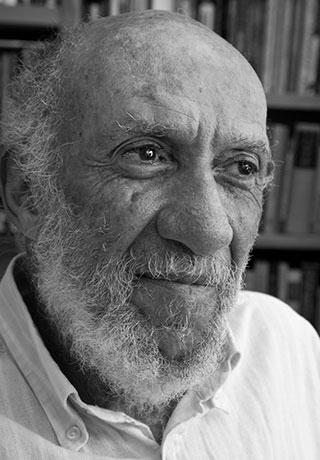
Professor Falk became an adviser to TFF when it was established in 1985.

Related Posts

Tony Robinson October 4, 2026 Violence is easy to recognise when someone is being beaten, shot or killed. It becomes more difficult when nobody is holding a weapon. Poverty, discrimination, exploitation and repression can restrict a human life just as effectively, although they do so in very different ways and with very different consequences. Simply adding more categories to an ever-growing list of forms of violence does not really solve the problem. The more interesting question is what all these different situations have in common and why it makes sense to describe them using the same word. Human beings do not simply react to what happens around them. They remember the past, imagine things that do not yet exist, make plans and undertake projects. Workers organise because they imagine different working conditions; people migrate because they imagine another life somewhere else; social movements emerge because people refuse to accept the...
It’s a matter of principles, courage, vision and pulling together – while the militarist world is falling apart… Peter Langille October 3, 2026 “Here, then, is the problem which we present to you, stark and dreadful and inescapable: Shall we put an end to the human race; or shall mankind renounce war?”The Bertrand Russell—Albert Einstein Manifesto, July 9, 1955 ⁕ The forecast for what’s ahead is worrisome. The sharp rise in armed conflicts over the past three years is adding to what was already the highest level in over seventy years. Genocides, which should be prevented are supported. A shared climate emergency that jeopardises survival is ignored. Diverse polls now suggest that people are war-weary, worried and interested in a more effective United Nations. And, there are viable policy options for a more secure world! Yet governments are doubling-down, betting on more war and investing heavily. If current trends persist,...
Johan Galtung 1930-2024October 2015 Published here on October 3, 2026 Let us focus on Civilization for conflict analysis and remedies. Major forms of disorder use violence; war is state organized violence. The most belligerent states are the United States of America and Israel, both with civilization roots. National Evangelism, the US Protestant Christian civilization– more national than evangelical–justifies US warfare as exceptionalism of a people chosen by God, with a manifest destiny to run the world. Orthodox Judaism justifies Israeli warfare to conquer and expand from Nile to Euphrates as a religious right and duty to the Eternal One. The third most belligerent country, the UK, no longer believes it is God-chosen but chosen by the USA; not quite the same but something. But the root cause of global disorder lies in the Occident–with Islam–seeing itself as the single, universal civilization valid for all at all times, all others being...

Recent Articles

Tony Robinson October 4, 2026 Violence is easy to recognise when someone is being beaten, shot or killed. It becomes more difficult when nobody is holding a weapon. Poverty, discrimination, exploitation and repression can restrict a human life just as effectively, although they do so in very different ways and with very different consequences. Simply adding more categories to an ever-growing list of forms of violence does not really solve the problem. The more interesting question is what all these different situations have in common and why it makes sense to describe them using the same word. Human beings do not simply react to what happens around them. They remember the past, imagine things that do not yet exist, make plans and undertake projects. Workers organise because they imagine different working conditions; people migrate because they imagine another life somewhere else; social movements emerge because people refuse to accept the...
It’s a matter of principles, courage, vision and pulling together – while the militarist world is falling apart… Peter Langille October 3, 2026 “Here, then, is the problem which we present to you, stark and dreadful and inescapable: Shall we put an end to the human race; or shall mankind renounce war?”The Bertrand Russell—Albert Einstein Manifesto, July 9, 1955 ⁕ The forecast for what’s ahead is worrisome. The sharp rise in armed conflicts over the past three years is adding to what was already the highest level in over seventy years. Genocides, which should be prevented are supported. A shared climate emergency that jeopardises survival is ignored. Diverse polls now suggest that people are war-weary, worried and interested in a more effective United Nations. And, there are viable policy options for a more secure world! Yet governments are doubling-down, betting on more war and investing heavily. If current trends persist,...
Johan Galtung 1930-2024October 2015 Published here on October 3, 2026 Let us focus on Civilization for conflict analysis and remedies. Major forms of disorder use violence; war is state organized violence. The most belligerent states are the United States of America and Israel, both with civilization roots. National Evangelism, the US Protestant Christian civilization– more national than evangelical–justifies US warfare as exceptionalism of a people chosen by God, with a manifest destiny to run the world. Orthodox Judaism justifies Israeli warfare to conquer and expand from Nile to Euphrates as a religious right and duty to the Eternal One. The third most belligerent country, the UK, no longer believes it is God-chosen but chosen by the USA; not quite the same but something. But the root cause of global disorder lies in the Occident–with Islam–seeing itself as the single, universal civilization valid for all at all times, all others being...

TFF on Substack

Discover and subscribe to more peace materials on TFF Substack

Most Popular

Tony Robinson October 4, 2026 Violence is easy to recognise when someone is being beaten, shot or killed. It becomes more difficult when nobody is holding a weapon. Poverty, discrimination, exploitation and repression can restrict a human life just as effectively, although they do so in very different ways and with very different consequences. Simply adding more categories to an ever-growing list of forms of violence does not really solve the problem. The more interesting question is what all these different situations have in common and why it makes sense to describe them using the same word. Human beings do not simply react to what happens around them. They remember the past, imagine things that do not yet exist, make plans and undertake projects. Workers organise because they imagine different working conditions; people migrate because they imagine another life somewhere else; social movements emerge because people refuse to accept the...
It’s a matter of principles, courage, vision and pulling together – while the militarist world is falling apart… Peter Langille October 3, 2026 “Here, then, is the problem which we present to you, stark and dreadful and inescapable: Shall we put an end to the human race; or shall mankind renounce war?”The Bertrand Russell—Albert Einstein Manifesto, July 9, 1955 ⁕ The forecast for what’s ahead is worrisome. The sharp rise in armed conflicts over the past three years is adding to what was already the highest level in over seventy years. Genocides, which should be prevented are supported. A shared climate emergency that jeopardises survival is ignored. Diverse polls now suggest that people are war-weary, worried and interested in a more effective United Nations. And, there are viable policy options for a more secure world! Yet governments are doubling-down, betting on more war and investing heavily. If current trends persist,...
Johan Galtung 1930-2024October 2015 Published here on October 3, 2026 Let us focus on Civilization for conflict analysis and remedies. Major forms of disorder use violence; war is state organized violence. The most belligerent states are the United States of America and Israel, both with civilization roots. National Evangelism, the US Protestant Christian civilization– more national than evangelical–justifies US warfare as exceptionalism of a people chosen by God, with a manifest destiny to run the world. Orthodox Judaism justifies Israeli warfare to conquer and expand from Nile to Euphrates as a religious right and duty to the Eternal One. The third most belligerent country, the UK, no longer believes it is God-chosen but chosen by the USA; not quite the same but something. But the root cause of global disorder lies in the Occident–with Islam–seeing itself as the single, universal civilization valid for all at all times, all others being...
Read More
Living-Peace-Sign-Budapest-copy
Tony Robinson October 4, 2026 Violence is easy to recognise when someone is being beaten, shot or killed. It becomes more difficult when nobody is holding a weapon. Poverty, discrimination, exploitation and repression can restrict a human life just as effectively, although they do so in very different ways and with very different consequences. Simply adding more categories to an ever-growing list of forms of violence does not really solve the problem. The more interesting question is what all these different situations have in common and why it makes sense to describe them using the same word. Human beings do not simply react to what happens around them. They remember the past, imagine things that do not yet exist, make plans and undertake projects. Workers organise because they imagine different working conditions; people migrate because they imagine another life somewhere else; social movements emerge because people refuse to accept the...
b54a1f10-8c65-4f0b-9dd5-4abc0a7d04cc_2659x2659
It’s a matter of principles, courage, vision and pulling together – while the militarist world is falling apart… Peter Langille October 3, 2026 “Here, then, is the problem which we present to you, stark and dreadful and inescapable: Shall we put an end to the human race; or shall mankind renounce war?”The Bertrand Russell—Albert Einstein Manifesto, July 9, 1955 ⁕ The forecast for what’s ahead is worrisome. The sharp rise in armed conflicts over the past three years is adding to what was already the highest level in over seventy years. Genocides, which should be prevented are supported. A shared climate emergency that jeopardises survival is ignored. Diverse polls now suggest that people are war-weary, worried and interested in a more effective United Nations. And, there are viable policy options for a more secure world! Yet governments are doubling-down, betting on more war and investing heavily. If current trends persist,...
010
Johan Galtung 1930-2024October 2015 Published here on October 3, 2026 Let us focus on Civilization for conflict analysis and remedies. Major forms of disorder use violence; war is state organized violence. The most belligerent states are the United States of America and Israel, both with civilization roots. National Evangelism, the US Protestant Christian civilization– more national than evangelical–justifies US warfare as exceptionalism of a people chosen by God, with a manifest destiny to run the world. Orthodox Judaism justifies Israeli warfare to conquer and expand from Nile to Euphrates as a religious right and duty to the Eternal One. The third most belligerent country, the UK, no longer believes it is God-chosen but chosen by the USA; not quite the same but something. But the root cause of global disorder lies in the Occident–with Islam–seeing itself as the single, universal civilization valid for all at all times, all others being...
Screenshot 2026-10-02 011738
Jan ObergPhD, director, The Transnational Foundation for Peace and Future Research, TFFLund, Sweden October 2, 2026 This is my full original manuscript. The Chinese Academy of Social Science, CASS, makes two publications out if it. 1. China’s Five-year plan emphasized the capabilities of basic research and original innovation. It is regarded as the goal of the future social development, which, as required, should be significantly enhanced. Can you comment on the importance of original innovation in research and academic study? I believe it is easier to define “original innovation” in the natural sciences than in social sciences. The breaking points of what constitutes something new, or innovative, are not quite as sharp in the latter. But in both fields it is about opening up something that was closed, unseen, unexplored before – making manifest what was earlier latent. Innovations come in many forms and shapes – naming something that was not...
arctic-circle-map
The agreement is catastrophic both because of what it says and what it doesn’t mention. It reduces further the major asset of security policies: Freedom of action. Jan Oberg TFF director September 25, 2026 A couple of hours before the agreement was signed on September 22, 2026, I published the following 13 hypotheses about what it would most likely contain on TFF Substack (in English). I was wrong on only the first point. Contrary to what Trump had written on his Truth Social platform, it does not appear to come into force immediately. In fact, it turned out to be worse than even I had anticipated. After these hypotheses now come a number of reflections in light of what the agreement actually contains, and does not contain, as well as the way in which it has generally been presented by major media outlets and by the public-service broadcaster DR. My...
girl-5894831_1280
Below are TFF-related media mentions, comments, videos and social media posts published elsewhere but not on this homepage. We happen to catch and list only a fraction. Regarding video comments and debates, we recommend that you go to the TFF Video Channel on Substack where many of them are reproduced. Jan Oberg is a contributor to China Daily – 52 million daily clicks – and Global Times, CGTN and CCTV (the national television), China Investment, Xinhua News Agency and several others. Articles and videos on these media very often multiply into countless Chinese (and Western media) that re-post them from these main media. Thanks to The China Academy, his analyses, interviews and comments are frequently posted on YouTube channels such as Thinkers Forum and Wave Media. These videos are often re-posted on Bilibili (China’s YouTube), the China Content Center on TikTok, and on the Chinese edition of TikTok, Douyin.com. This means reaching hundreds of millions of viewers worldwide over a year. While there are too many to catch on all these...





